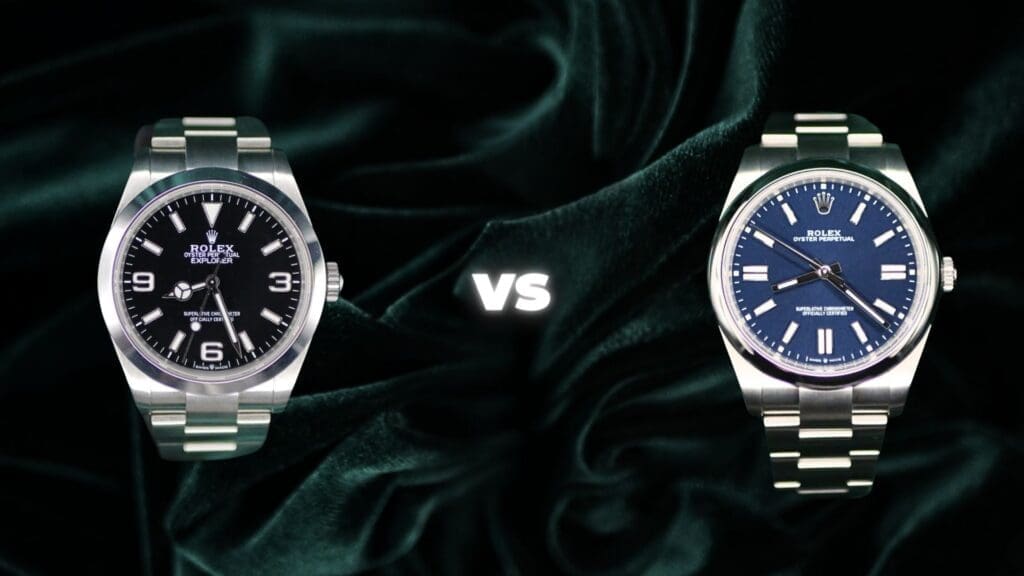
Choosing between the Rolex Explorer and the Rolex Oyster Perpetual is one of the most common back-and-forths we hear from first-time Rolex buyers. Both watches share the same DNA, but they’re built for very different lives.
The Rolex Explorer was released in 1953, inspired by the Mount Everest climb of Sir Edmund Hillary and Tenzing Norgay. It’s a tool watch, plain and simple. The black dial, the 3-6-9 numerals, and the brushed Oystersteel case are all built to handle cold, shock, and altitude.
The Rolex Oyster Perpetual goes back further, to 1931, when it became the world’s first self-winding wristwatch. Every automatic Rolex traces back to that 1931 design. Today, the OP is best known for its colorful lacquer dials and clean, minimalist looks, and as of 2026, the line just got a refresh at Watches & Wonders, with a brand-new reference and a 100-year anniversary edition.
In this comparison, we’ll break down how the two watches differ in design, size, movement, and long-term value, including the latest 2026 changes, so you can decide which one actually fits your wrist and your day.
Rolex Explorer vs Oyster Perpetual Comparison
The OP collection had a major shake-up at Watches & Wonders 2026. The long-running 41mm ref. 124300 was discontinued and replaced by the ref. 134300. So this comparison focuses on the current-production Oyster Perpetual 41 (Ref. 134300) and the Explorer 40 (Ref. 224270), with notes on the older 124300 where they’re still relevant on the secondary market.
If you want a deeper dive on either model on its own, our full Rolex Explorer buying guide and our Oyster Perpetual buying guide cover each line in more detail. Here’s how they stack up side by side.
1. Case Dimensions and Proportions

The Rolex Explorer comes in two sizes: 36 mm (ref. 124270) and 40 mm (ref. 224270), both crafted from solid Oystersteel. The 36 mm version stays close to the original proportions from the 1953 model, which works well on most wrists, including smaller ones. The 40 mm option, added at Watches & Wonders 2023, gives the Explorer more wrist presence without losing the clean, balanced look the line is known for.
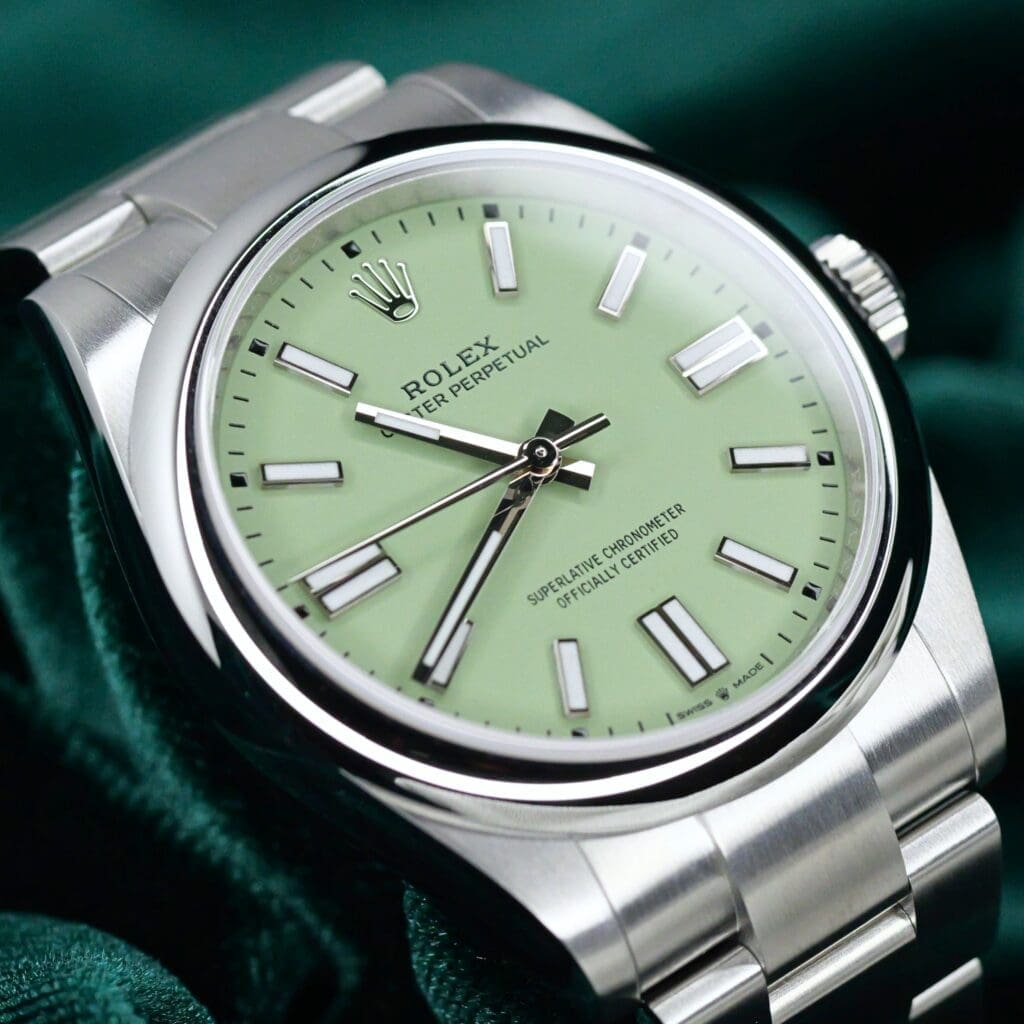
The Oyster Perpetual line is broader, with case sizes from 28 mm up to 41 mm. The new Oyster Perpetual 41 (ref. 134300) shares a similar silhouette with the Explorer 40 but feels a touch slimmer in the hand. On paper they’re nearly identical, but the slimmer lugs and thinner bezel of the 134300 make it wear a bit more refined, and the polished finish gives it a softer, more dress-leaning character.
If you have an average to larger wrist, both watches will land in the same general zone. If your wrist is on the smaller side, the 36mm Explorer (124270) or the 36mm OP (ref. 126000) are the more comfortable picks.

2. Dial and Aesthetic Details

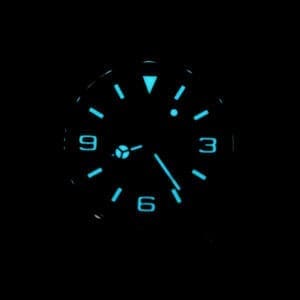
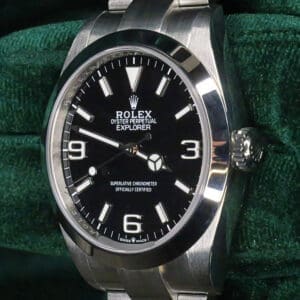
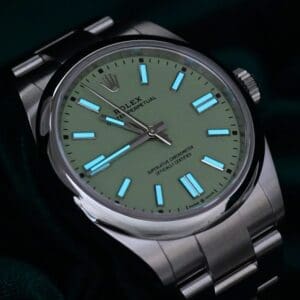
The Rolex Explorer keeps its dial design simple and highly legible, exactly what it was designed for. You get the signature 3-6-9 Arabic numerals, Mercedes-style hands, and a glossy black background that cuts glare. The Chromalight lume gives a long blue glow, so it stays readable in the dark.
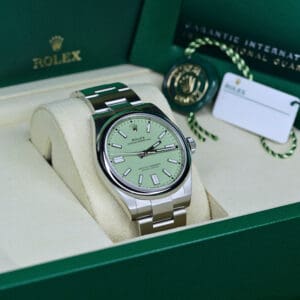
The Oyster Perpetual is the colorful one. It drops the numerals for baton-style hour markers, with double batons at 3, 6, and 9 o’clock. The 134300 launched with five core dial colors: bright black, bright blue, green, silver, and the celebration turquoise blue. At Watches & Wonders 2026, Rolex added a beige dial and a candy pink dial, both already pulling premiums on the secondary market.
The 36mm Oyster Perpetual (ref. 126000) got the headline-grabber this year: a multicolored Jubilee-motif lacquer dial with the Rolex name spelled out in ten different colors. It’s the most playful Rolex anyone has put out in a long time.
If you want quiet, the Explorer is the easy pick. If you want a watch that gets noticed, the OP is doing things in 2026 that nothing else in the Rolex catalog does.
3. Movement and Performance
Both the Rolex Explorer 40 and the Oyster Perpetual 41 run on the same engine, the in-house Caliber 3230. It beats at 28,800 vibrations per hour and offers a 70-hour power reserve, so you can take it off Friday night and it’ll still be running Monday morning.
The Chronergy escapement improves energy efficiency, and the Parachrom hairspring keeps the watch accurate when exposed to shocks or magnetic fields. Each movement carries Rolex’s Superlative Chronometer certification, with precision rated at -2/+2 seconds per day, twice as strict as the standard COSC chronometer test. If you’re new to how Rolex calibers actually work, we break down the Rolex movement family in a separate guide.
In day-to-day wear, you won’t feel a meaningful difference between the two. Same accuracy, same power reserve, same servicing schedule (Rolex recommends every 10 years).
4. Water Resistance and Durability

The Explorer 40 is built as a tool watch first. It’s rated to 100 meters thanks to the Twinlock screw-down crown and solid Oystersteel case, and the case is engineered to handle shock, temperature swings, and magnetic fields. It’s the kind of watch you wear hiking, traveling, and showering in without a second thought.
The Oyster Perpetual is also rated to 100 meters and uses the same Twinlock crown system. On paper, the durability is identical. Where they differ is finish and intent. The OP’s polished bezel and case sides will pick up swirls and hairlines faster than the brushed-and-polished Explorer if you wear it hard. It’s not less durable. It just shows wear more visibly.
The short version: same mechanical toughness, different aesthetic temperament.
5. Retail and Secondary Market Prices (as of 2025)
Pricing has shifted in 2026. Both watches saw the standard Rolex retail bump, and the OP transition from 124300 to 134300 reset some of the secondary market dynamics.
Rolex Explorer 40 (Ref. 224270)
The Explorer 40 retails for around $8,350 USD at authorized dealers as of 2026. Demand is still strong but supply has loosened, so secondary market prices typically run $8,500–$9,500 for full-set examples in good condition, with newer 2025–2026 pieces commanding the upper end. The 36mm Explorer (ref. 124270) trades close to its retail of around $7,900, sometimes a touch below, one of the few Rolex sports models currently sitting near or under MSRP.
Rolex Oyster Perpetual 41 (Ref. 134300)
The new OP 41 134300 retails at around $6,500 USD for standard dial colors. Secondary market values vary widely by dial. Standard dials (black, silver, blue, green) trade between $8,000 and $11,000, with the new 2026 candy pink and beige dials currently fetching $11,000–$15,000+ while supply is tight.
The discontinued 124300 dials are where things get interesting on the pre-owned market. Standard 124300s now trade in the $7,500–$10,000 range, but the holy-grail dials (turquoise blue, coral red, and yellow) still command $15,000 to over $20,000 in clean condition. The discontinuation gave them another lift.
The 2026 Anniversary Piece
Worth flagging separately: the Oyster Perpetual 41 ref. 134303, the 100-Years Oyster celebration model with a yellow Rolesor (Oystersteel and yellow gold) bezel and crown. Retail is around $9,650 USD. Demand at launch is strong and it’s already commanding meaningful premiums on the secondary market, likely a long-term collector piece given the anniversary tie-in.
Quick Comparison (at a Glance)

| Feature | Rolex Explorer 40 (Ref. 224270) | Rolex Oyster Perpetual 41 (Ref. 134300) |
| Production | Ongoing | Ongoing (2025–present) |
| Case Diameter | 40 mm | 41 mm |
| Case Thickness | 11.6 mm | 11.6 mm |
| Lug-to-Lug | 48 mm | ~47.5 mm |
| Lug Width | 21 mm | 21 mm |
| Case Material | Oystersteel | Oystersteel |
| Bezel | Smooth, polished | Smooth, polished (slightly thinner than 124300) |
| Dial Options | Black only, 3-6-9 Arabic numerals | Black, blue, silver, green, turquoise, beige, candy pink |
| Hands | Mercedes-style, 18k white gold | Baton-style, 18k white gold |
| Movement | Caliber 3230 (in-house) | Caliber 3230 (in-house) |
| Power Reserve | 70 hours | 70 hours |
| Accuracy | -2/+2 sec/day | -2/+2 sec/day |
| Functions | Time only (no date) | Time only (no date) |
| Crystal | Sapphire | Sapphire |
| Crown | Twinlock screw-down | Twinlock screw-down (larger on 134300) |
| Water Resistance | 100 m / 330 ft | 100 m / 330 ft |
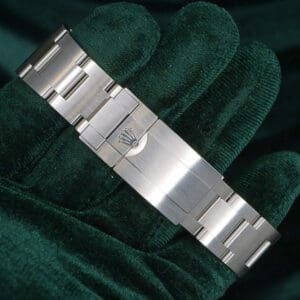
| Bracelet | Oyster, brushed with polished sides | Oyster, fully brushed |
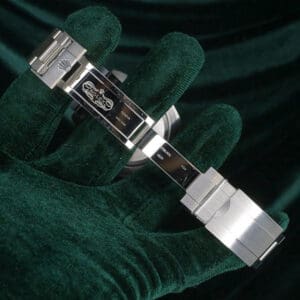
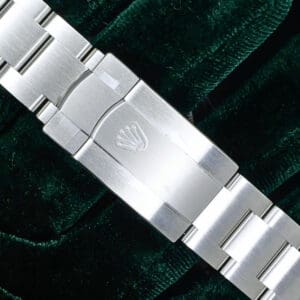
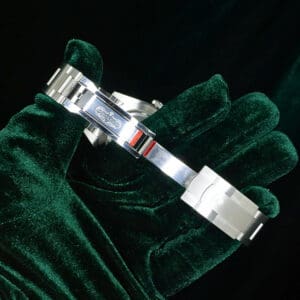
| Clasp | Oysterlock with Easylink | Oysterclasp with Easylink (slimmer on 134300) |
| Retail (2026) | ~$8,350 USD | ~$6,500 USD |
| Secondary Market (2026) | $8,500–$9,500 | $8,000–$15,000+ (dial-dependent) |
| Best For | Outdoor wear, travel, daily tool watch | Daily wear, office, casual luxury |
| Design Character | Rugged, purpose-built | Refined, minimalist, colorful |
Both watches ship on the Oyster bracelet. If you’ve also been weighing the Jubilee, our Jubilee vs Oyster bracelet breakdown covers how the two feel and wear differently.
Other References of the Rolex Explorer and Oyster Perpetual
Here’s how each line evolved across generations.
| Model | Release Date | Case Size | Movement | Power Reserve | Dial | Notable |
| Explorer Ref. 6350 | 1953 | 36mm | A296 | ~42h | Black, 3-6-9 numerals | First official Explorer, Everest heritage |
| Explorer Ref. 1016 | 1963 | 36mm | 1560/1570 | ~48h | Matte black, painted indices | The vintage Explorer, longest production run |
| Explorer Ref. 14270 | 1989 | 36mm | 3000 | ~42h | Glossy black, white gold markers | First sapphire crystal |
| Explorer Ref. 114270 | 2001 | 36mm | 3130 | ~48h | Black, Chromalight lume | Improved accuracy |
| Explorer Ref. 214270 | 2010 | 39mm | 3132 | ~48h | Black lacquer, 3-6-9 | Larger case, Paraflex shock absorbers |
| Explorer Ref. 124270 | 2021 | 36mm | 3230 | ~70h | Black, Chromalight | Return to 36mm, upgraded movement |
| Explorer Ref. 224270 | 2023 | 40mm | 3230 | ~70h | Black, Chromalight | First 40mm Explorer |
| OP Ref. 1002 | 1950s | 34mm | 1560 | ~48h | Silver, champagne | Mid-century classic |
| OP Ref. 14233 | 1990s | 34mm | 3000 | ~42h | Silver, white | Two-tone option introduced |
| OP Ref. 116000 | 2008 | 36mm | 3130 | ~48h | Silver, blue, black | Polished, understated |
| OP Ref. 114300 | 2015 | 39mm | 3132 | ~48h | Blue, rhodium, grape | First 39mm OP |
| OP Ref. 124300 | 2020 | 41mm | 3230 | ~70h | Turquoise, green, red, yellow, black | Vibrant dials, discontinued 2025 |
| OP Ref. 126000 | 2020 | 36mm | 3230 | ~70h | Multiple colors | Versatile everyday size |
| OP Ref. 134300 | 2025 | 41mm | 3230 | ~70h | Black, blue, silver, green, beige, pink | Refined case, slimmer clasp |
| OP Ref. 134303 | 2026 | 41mm | 3230 | ~70h | Slate sunray, “100 years” signature | Yellow Rolesor anniversary edition |
Which Rolex Should You Choose?
Choose the Rolex Explorer if you want:
- A tool watch you can wear hiking, traveling, and through bad weather without thinking
- A minimalist, no-nonsense black dial with classic 3-6-9 numerals
- A piece with real mountaineering heritage and steady collector interest
- A brushed-finish bracelet that hides daily wear better than the OP’s polished sides
Choose the Rolex Oyster Perpetual if you want:
- A versatile daily Rolex that works in casual and dressier settings
- A clean, elegant design with a wide range of dial colors and sizes
- A lower retail entry into the Rolex catalog
- The flexibility to choose between subtle (black, silver) or bold (turquoise, candy pink) dials
- The option to pick up the 2026 100-Years anniversary 134303, a piece with built-in collector appeal
Both watches share Rolex’s precision and durability. The decision comes down to whether you lean rugged or refined.
Where to Buy Authentic Watches Online
There are a handful of legitimate places to buy a Rolex Explorer or Oyster Perpetual on the secondary market. Chrono24 is the largest online marketplace for luxury watches, with thousands of dealer and private listings, escrow protection, and a “buyer protection” program on most transactions; though knowing what to watch for on Chrono24 before you commit is worth a few minutes. eBay runs an Authenticity Guarantee program on Rolex listings above a certain price, where the watch is inspected by a third-party authenticator before reaching the buyer. Grailzee is a smaller auction-format marketplace popular with enthusiasts who like the bidding dynamic.
Wherever you buy, knowing how to spot a fake Oyster Perpetual is worth the read; even big marketplaces have had counterfeits slip through.
We also sell, buy, and trade luxury watches at Majestix Collection. The reason clients pick us over a big marketplace is the layered communication before any deal closes. Before you commit to a watch, we send you full tour videos of the actual piece you’re buying, not stock photos, along with detailed condition notes on the bracelet, case sides, dial, and clasp. If something has a hairline or a tiny ding, we tell you. You’re not buying blind off a listing photo, and you’re talking to a real person who has the watch in hand.
That’s reflected in our 4.9-star Google rating, which comes from clients who appreciate getting the truth before they wire money on a Rolex.
If you want that kind of walkthrough on a specific Explorer or Oyster Perpetual, browse our current Rolex selection or reach out and we’ll put together a few options that match your wrist and your budget.
Frequently Asked Questions
Is the Rolex Explorer or Oyster Perpetual better for daily wear?
Both work as a daily watch. The difference is the kind of day you have. The Explorer’s brushed-and-polished case and bracelet hide micro-scratches better, which makes it the more forgiving choice if you’re typing at a desk, throwing on a backpack, or wearing it actively. The Oyster Perpetual’s polished sides and bezel will show hairlines sooner, but it dresses up more easily under a cuff. If your daily life skews more outdoor or active, go Explorer. If it skews more office and dinners, go OP.
Does the Rolex Oyster Perpetual hold its value better than the Explorer?
It depends entirely on which dial you pick. Standard OP dials (black, silver, blue, green) tend to trade close to retail, sometimes a small premium, similar to the current Explorer 40. The unicorn dials (discontinued turquoise, coral red, yellow, and the 2026 candy pink and beige) are a different story, and can run two to three times retail. The Explorer 224270 is steadier and more predictable. The OP 134300 has more upside on specific dials, but more downside on standard ones if you buy at a premium and the market softens. We dig deeper into whether Rolex watches hold their value and which references reliably do.
Can a woman wear the Oyster Perpetual 41 or Explorer 40?
Plenty do, especially if you like a larger watch on the wrist. Both pieces sit at 11.6mm thick with around 21mm lug width, so they wear on the chunkier side of unisex. If you have a wrist under about 6.25 inches, the 36mm Explorer (124270) or 36mm OP (126000) are usually the more comfortable picks. Try both sizes on in person before deciding. The 5mm difference is bigger than it sounds.
Why was the Rolex Oyster Perpetual 124300 discontinued?
Rolex discontinued the 124300 in 2025 and replaced it with the ref. 134300, which is essentially a refined version of the same watch: slimmer lugs, a thinner bezel, a larger Twinlock crown, and an updated Oysterclasp. The case is still 41mm, the movement is still the Caliber 3230, and most of the dial colors carried over. Think of it as a quiet generational update, not a dramatic redesign. The 124300 still trades actively on the secondary market, and the discontinued dials (turquoise, coral red, yellow) became more desirable after the news.
Is the Explorer or Oyster Perpetual a better first Rolex?
The Oyster Perpetual is the more common entry point because it costs less at retail (~$6,500 vs. ~$8,350) and has more dial choice. That said, the Explorer is the better first Rolex if you want one watch that handles every situation without thinking about it. The brushed finish, the legible 3-6-9 dial, and the heritage tied to the Hillary expedition give it a kind of versatility the OP doesn’t quite match. Both are smart first picks. The OP is friendlier on the wallet. The Explorer is friendlier on a busy life.
Final Thoughts on Rolex Explorer vs Oyster Perpetual
The Rolex Explorer and Oyster Perpetual share the same DNA but live very different lives. The Explorer is the tool watch: brushed, legible, built for the outdoors, with mountaineering heritage that still matters in 2026. The Oyster Perpetual is the daily-luxury watch: colorful, polished, and freshly refreshed with the new 134300 and the 100-Years anniversary 134303.
One thing nobody mentions until you own one is bracelet finish. The brushed Explorer bracelet hides daily wear way better than the OP’s polished sides, which start showing swirls within weeks if you wear it hard. And if you’re tempted by an OP for color, try a 36mm before committing to the 41. The smaller case wears more elegantly with bold dials, and the proportions just work better when the dial itself is the statement.
Still narrowing things down across the broader catalog? Our full Rolex buying guide walks through every active line and where each one fits.
999+ Timepieces Available
Explore Our Timepieces
Authenticated, unworn, and ready to ship worldwide.
Rolex · Audemars Piguet · Patek Philippe · Omega · Cartier · Richard Mille · Hublot · Tudor
Newly Listed
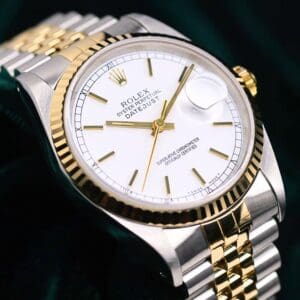
Rolex Datejust White Dial Fluted Bezel Jubilee Bracelet Two-Tone 18K Yellow Gold Stainless Steel 36mm MINT CONDITION 16233
$8,663.00
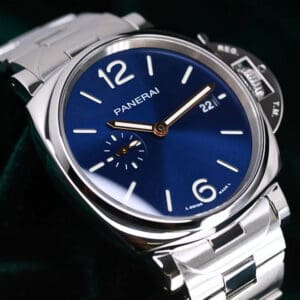
Panerai Luminor Due Blue Dial Stainless Steel 42mm MINT CONDITION COMPLETE SET PAM01124
$7,681.00
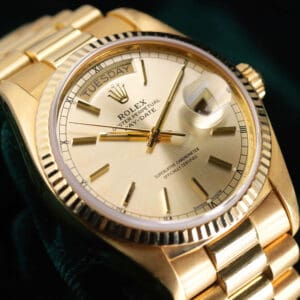
Rolex Day-Date Champagne Dial Fluted Bezel President Bracelet 18k Yellow Gold 36mm MINT CONDITION 18038
$25,849.00
Panerai Luminor Marina 1950 3 Days Black Dial Black Rubber Strap Stainless Steel 44mm MINT CONDITION COMPLETE SET PAM01359
$6,353.00
Rolex Yacht-Master Rhodium Slate Dial Platinum Bezel Oyster Bracelet Stainless Steel 40mm MINT CONDITION COMPLETE SET 126622
$15,740.00
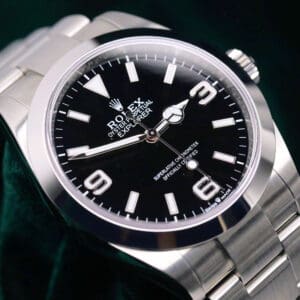
2025 Rolex Explorer Black Dial Oyster Bracelet Stainless Steel 40mm MINT CONDITION COMPLETE SET 224270
$10,495.00
Rolex Submariner Date "Starbucks" Black Dial Green Ceramic Bezel Oyster Bracelet Stainless Steel 41mm MINT CONDITION COMPLETE SET 126610LV-0002
$14,992.00
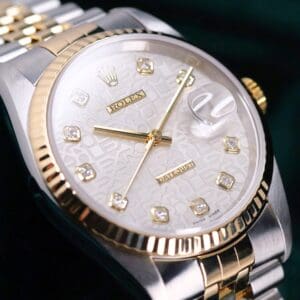
Rolex Datejust 36 Silver Anniversary Jubilee Diamond Dial Two-Tone 18K Yellow Gold Stainless Steel 36mm MINT CONDITION COMPLETE SET 16233
$10,739.00
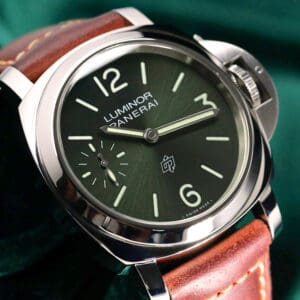
2025 Panerai Luminor Logo Green Dial Stainless Steel Brown Leather Strap 44mm MINT CONDITION COMPLETE SET PAM01624
$6,529.00
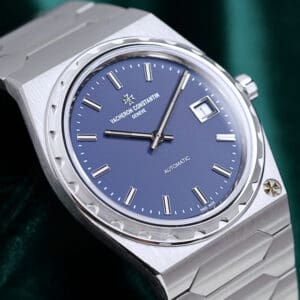
2026 NEW UNWORN Vacheron Constantin Historiques 222 "Jumbo" Blue Dial Stainless Steel 37mm COMPLETE SET 4200H/222A-B934
$60,895.00
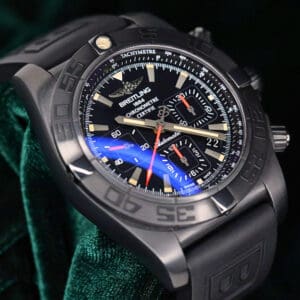
Breitling Chronomat 44 Blacksteel Black Dial Red Accents Black Rubber Strap Black DLC Stainless Steel 44mm MINT CONDITION COMPLETE SET MB0111C3/BE35
$6,526.00
Patek Philippe Aquanaut Travel Time Black Dial Stainless Steel Black Rubber Strap 40.8mm Caliber 324 MINT CONDITION COMPLETE SET 5164A-001
$99,745.00