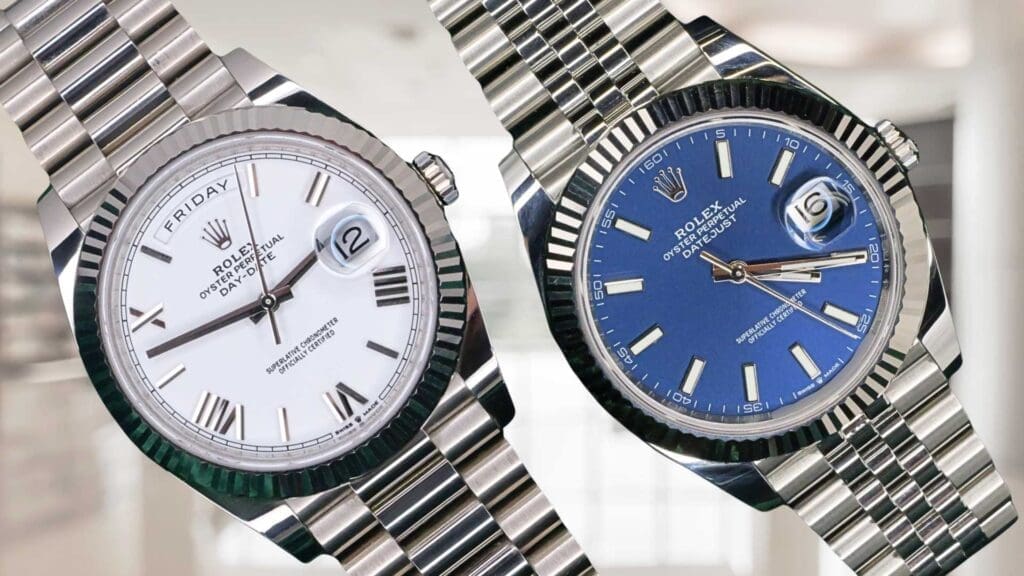
The Rolex Day-Date vs Rolex Datejust comparison brings together two of the brand’s most recognizable classics. They sit in different tiers of Rolex’s lineup, but buyers cross-shop them constantly when deciding how far up the Rolex ladder to go.
The Datejust is the everyday Rolex. The Day-Date is the flagship classic, in precious metals only, with the added day display and the President bracelet. They share DNA, but they’re built to do different jobs on the wrist.
The price gap is large and real. So is the difference in how each one wears and what each one signals. This guide breaks down the key differences in materials, sizing, pricing, and long-term ownership so you can decide which fits your life better.
What Is the Rolex Day-Date
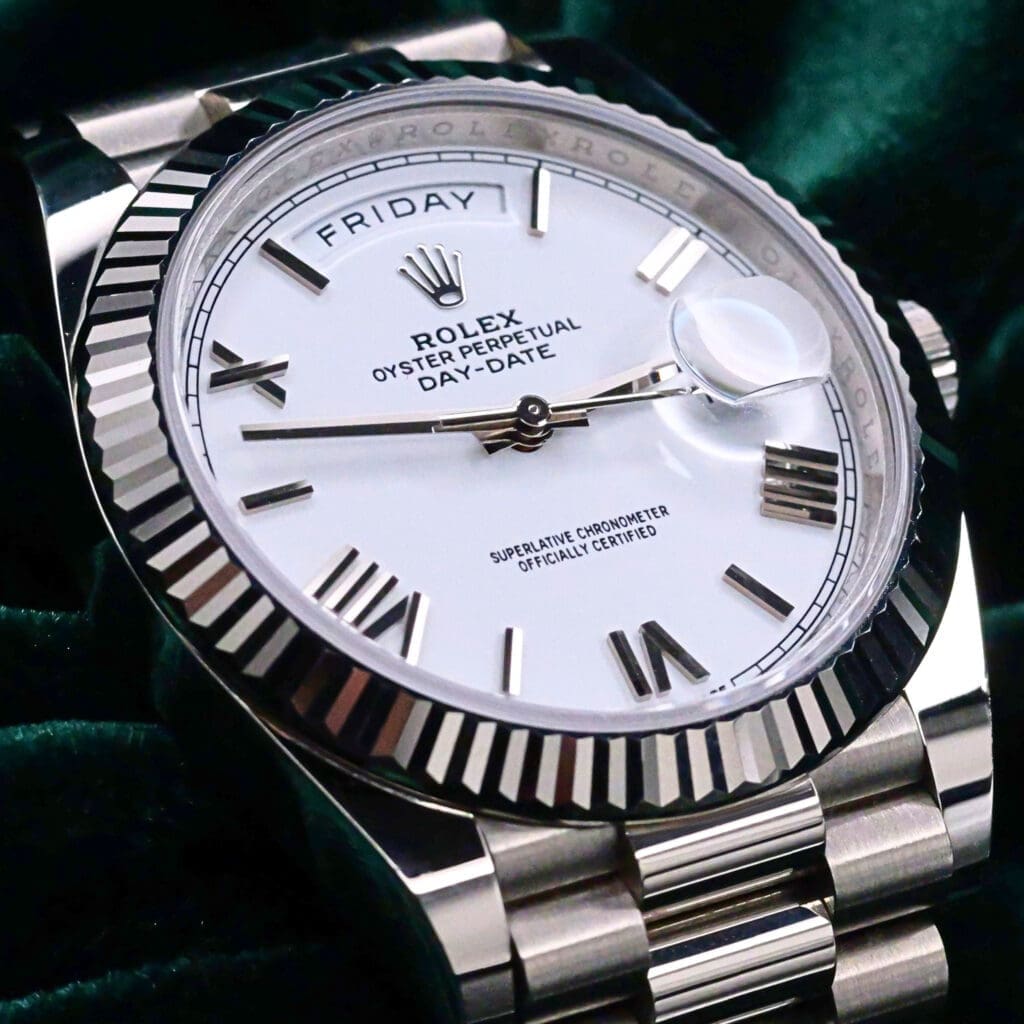
The Rolex Day-Date is Rolex’s flagship classic. Introduced in 1956, it was the first wristwatch to display both the day of the week spelled out in full and the date. A real first, not marketing language. Rolex paired it with a brand new bracelet design called the President, which is still exclusive to the Day-Date today.
The “President’s Watch” nickname stuck after Lyndon B. Johnson wore one publicly, and it’s been worn by U.S. presidents, CEOs, and global figures ever since. That association built the Day-Date’s identity as a status piece more than a sport piece.
The Day-Date is never made in steel. Every modern Day-Date is 18k yellow gold, white gold, Everose gold, or 950 platinum. That alone places it at the top of Rolex’s classic catalog and explains the price gap to everything else in the brand outside of grand complications.
For a deeper look at the lineup beyond what’s in this comparison, our full Day-Date buying guide walks through the references model by model.

Notable Day-Date References
- Day-Date 40 Ref. 228238 (18k yellow gold, fluted bezel). The most recognizable Day-Date in the modern lineup and the reference most people picture when they hear “President.” Retails at $48,000 in 2026.
- Day-Date 40 Ref. 228239 (18k white gold, fluted bezel). Lower visual impact than yellow gold but the same weight on the wrist. Often chosen by buyers who want the watch read as expensive only by the people who already know.
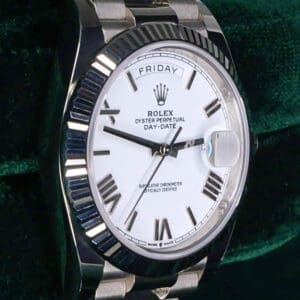
- Day-Date 40 Ref. 228236 (platinum, fluted bezel, ice-blue dial). Worth flagging clearly: this reference now has a fluted bezel, not a smooth one. Rolex made the switch in 2022. The discontinued ref. 228206 was the smooth-bezel platinum, and ice-blue remains a Rolex platinum-only color cue. Retail starts around $64,000 and climbs above $73,000 with baguette markers.
- Day-Date 40 Ref. 228235 (Everose gold, fluted bezel). A warmer, more contemporary look than yellow gold. Popular with buyers who like rose gold tones but don’t want a two-tone watch.Day-Date 36 Ref. 128238 (18k yellow gold, fluted bezel). The original Day-Date proportions, still in production. The 36mm size is closer to the 1956 design intent and wears noticeably smaller than the 40.

What Is the Rolex Datejust
The Rolex Datejust is the most important watch in Rolex’s everyday lineup. Introduced in 1945, it was the first self-winding wristwatch with a date window that snapped over instantly at midnight. Another genuine first that shaped the rest of the industry.
In the lineup, it sits in the practical middle. It still reads as Rolex from across a room, but it doesn’t carry the price or the visual weight of the Day-Date. That’s why it’s the model most people end up with as their first Rolex, and why it remains one of the brand’s best-sellers worldwide.
What makes the Datejust different from the Day-Date is range. Multiple case sizes, two bracelet styles, two main bezel options, and a long list of dial colors mean the same model can be styled sporty or dressy depending on configuration. Few Rolex models pivot between settings as easily.We cover the full lineup in our Datejust buying guide for readers who want the deep version.

Notable Datejust References
- Datejust 41 Ref. 126300 (Oystersteel, smooth bezel). The clean, sportier configuration of the modern Datejust 41. Retails around $10,400 in 2026 and is the most low-key way into the line.
- Datejust 41 Ref. 126334 (Oystersteel with 18k white gold fluted bezel). The most popular Datejust 41 on the secondary market. The fluted bezel is always white gold even when the rest of the watch is steel. Retails at $11,650.
- Datejust 36 Ref. 126200 (Oystersteel, smooth bezel). The original Datejust size in its modern form. Genuinely unisex sizing and the easiest Datejust to wear under a dress shirt.
- Datejust 36 Ref. 126234 (Oystersteel with white gold fluted bezel). The closest current production watch to the classic 1980s and 1990s Datejust look most people picture in their head.
- Datejust Turn-O-Graph “Thunderbird.” Discontinued. A vintage-collector pick with a rotating bezel and a name tied to the U.S. Air Force Thunderbirds team. Different watch from the modern Datejust, but worth knowing about if you’re shopping pre-owned and see one come up.
Rolex Day-Date vs Datejust: Key Differences Explained
Both are Rolex classics built for long-term ownership, but they’re designed to communicate very different priorities. Here’s how they differ when you put them next to each other.
1. Materials and Construction
The Day-Date is precious metal only: 18k yellow gold, white gold, Everose gold, or 950 platinum. No steel option, no Rolesor. That’s the rule that defines the line.
The Datejust is the opposite. It comes in Oystersteel, two-tone Rolesor combinations (steel with yellow, white, or rose gold), and full precious-metal versions. That range is why the Datejust can sit at $10,400 on one end and well past $40,000 on the other, depending on what materials you pick.
2. Complications and Dial Layout
The Day-Date shows the day of the week spelled out in full at 12 o’clock, plus the date at 3 o’clock under the Cyclops lens. That second window is what makes the dial feel a little fuller and a little more formal. It’s also what gives the watch its name and its identity.
The Datejust keeps it simple with just the date at 3 o’clock. Cleaner dial, less visual weight, easier to dress up or down. For most buyers the absence of the day display isn’t something they miss. It’s part of why the Datejust feels lighter aesthetically, not just physically.
3. Case Sizes and Wearability
The Day-Date is offered in 36mm and 40mm. The Datejust is offered in 36mm and 41mm. They’re close, but they aren’t the same. There is no modern 41mm Day-Date. The Day-Date II ran from 2008 to 2015 and was replaced by the 40mm version specifically because collectors found 41mm too sporty for the model’s character.
On the Datejust side, choosing between Datejust 41 vs 36 is its own decision worth a separate read.
Weight is the bigger difference, and it matters more than diameter. A Day-Date 40 in yellow gold sits at roughly 195g on the bracelet. A Datejust 41 in steel comes in around 134g.
That 60-gram gap is noticeable from the moment you put either one on, and it changes how the watch feels through a full day of wear. The Day-Date feels like an event. The Datejust disappears into routine.
If you wear a watch daily through commutes, gym mornings, and a desk job, that weight difference compounds. If the watch is for client dinners and weekends, the Day-Date’s heft is part of what you’re paying for.
4. Bracelet and Bezel Identity
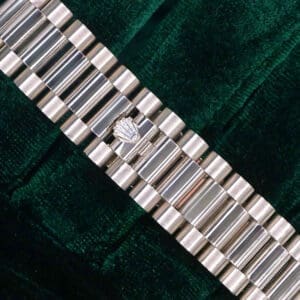
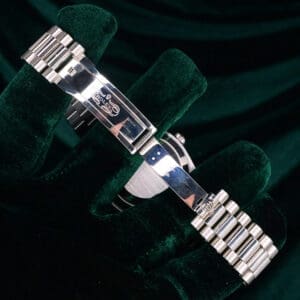
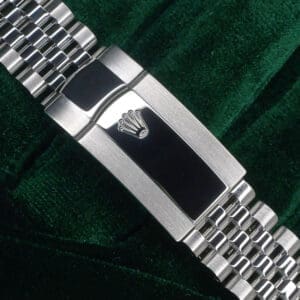
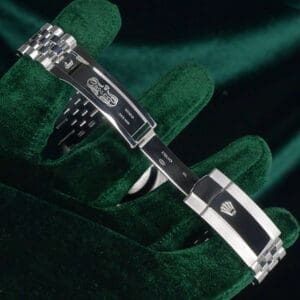
The President bracelet is exclusive to the Day-Date. Three semi-circular links, hidden Crownclasp, and only ever in the same precious metal as the case. You can’t put a President on a Datejust from the factory and you can’t get one without buying a Day-Date.
If you’re weighing the two against each other on bracelet alone, our Jubilee vs President breakdown covers the differences in detail.
The Datejust gets the Oyster (three-link, sportier) or the Jubilee (five-link, dressier). Bezels split between smooth and fluted, with the fluted always in white gold even on a steel watch. That gives the Datejust four standard combinations to pick from, which is a big part of why no two Datejusts on the secondary market look exactly alike.
If you’re stuck between Jubilee vs Oyster on a Datejust, that one is worth its own read.
5. Visual Presence and Status Signaling
The Day-Date is built to be noticed. Solid gold or platinum case, the day display, the President bracelet. Every element signals what it is. People who recognize watches recognize a Day-Date instantly, and that’s the point of buying one.
The Datejust takes a softer approach. Still unmistakably Rolex, still refined, but it adapts to the room instead of dominating it. A Datejust on a Jubilee with a fluted bezel reads as a successful person’s daily watch. A Day-Date on a President reads as a statement.
6. Price and Market Demand
This is the section where the two models drift the furthest apart, and where the original article’s numbers needed the biggest update. As of 2026, the gap looks like this at retail.
Day-Date 40 retail prices (2026):
- Ref. 228238 (yellow gold, fluted): $48,000
- Ref. 228239 (white gold, fluted): around $50,000
- Ref. 228235 (Everose gold, fluted): around $50,000
- Ref. 228236 (platinum, fluted, ice-blue dial): $64,000 base, up to $73,550 with baguette markers
Datejust 41 retail prices (2026):
- Ref. 126300 (steel, smooth bezel): $10,400
- Ref. 126334 (steel with white gold fluted bezel): $11,650
- Two-tone and gem-set variants run higher, but those two are the volume references.
The pre-owned market is where the comparison gets more interesting. Day-Date pricing is metal-driven more than hype-driven. A pre-owned Day-Date 40 in yellow gold typically trades in the $32,000–$40,000 range with papers, depending on dial and condition.
White gold sits slightly higher. Everose tracks similarly. Platinum holds the closest to retail because the metal itself is most of the value.
The Datejust 41 behaves differently. Steel 126300 examples run $9,500–$12,500 pre-owned, often dipping just under retail.
The 126334 with the white gold fluted bezel is the bigger story. It consistently trades above retail on the secondary market, with most examples landing between $13,500 and $19,500 depending on dial. Wimbledon and mint green dials sit at the top of that range.
What that tells you in plain terms: the Datejust 126334 is one of the few watches in this comparison where buying pre-owned doesn’t always save you money. The Day-Date, by contrast, is one of the rare modern Rolex flagships that often trades at or below retail pre-owned, which makes the secondary market a more honest deal on that side.

7. Resale Value and Long-Term Ownership
Both watches hold value well over the long run, but they hold value for different reasons, and that affects how you should think about ownership.
The Day-Date’s resale floor is essentially the metal. A 40mm yellow gold Day-Date contains a substantial amount of 18k gold, with the bracelet alone accounting for most of the watch’s weight. That gives the watch an intrinsic value floor that moves with gold prices.
Even if the secondary watch market softens, the metal itself doesn’t go to zero, which is why Day-Date prices change slowly. Most owners hold them long term and pass them down, not flip them.
The Datejust is the opposite kind of long-term hold. It doesn’t have a metal floor in the steel references. Its value retention is purely about brand strength and Datejust demand, both of which have been steady for decades.
A steel Datejust 41 you bought five years ago has likely held or appreciated mildly. It hasn’t doubled, but it hasn’t dropped either, and the liquidity is excellent. You can sell a 126300 in a week. (For a wider snapshot of where current Rolex prices sit, our Rolex pricing guide breaks down the catalog model by model.)
If you’re thinking about a Rolex partly as a store of value, the Day-Date is the more direct play. If you want a watch that’s easy to own, easy to enjoy, and easy to sell when life changes, the Datejust is the cleaner answer.

Side-by-Side Summary
| Feature | Rolex Day-Date | Rolex Datejust |
| First introduced | 1956 | 1945 |
| Materials | 18k gold or 950 platinum only | Steel, Rolesor, gold, platinum |
| Case sizes (modern) | 36mm, 40mm | 36mm, 41mm |
| Complications | Day + date | Date only |
| Bracelet | President (exclusive) | Oyster or Jubilee |
| Movement | Caliber 3255 | Caliber 3235 |
| 2026 entry retail | $43,700 (Day-Date 36) | $8,300 (Datejust 36 steel) |
| 2026 popular reference retail | $48,000 (228238) | $10,400 (126300) / $11,650 (126334) |
Should You Buy the Rolex Day-Date or Datejust?
Choose the Rolex Day-Date if:
- You want a flagship Rolex that signals status and ownership in solid precious metal
- You like the day display and the heavier wrist feel that comes with gold or platinum
- You’re buying a long-term piece, not a daily knockabout
- You’re thinking partly about gold or platinum content as a value floor
- You want the President bracelet, which you can only get on this model
Choose the Rolex Datejust if:
- You want a Rolex that genuinely works as an everyday watch in steel or two-tone
- You value the lighter wrist feel and easier transition between casual and formal
- You want to choose your bracelet (Oyster or Jubilee) and bezel (smooth or fluted)
- You’d rather put $30,000+ of the budget difference into something else
- You want strong liquidity if you ever decide to sell
A practical note that doesn’t fit anywhere else: if your wrist measures under 6.75 inches, the Datejust 36 or Day-Date 36 will likely fit you better than the larger versions, regardless of which model you pick.
Wrist size beats brand decision in terms of how the watch wears.
What Watches & Wonders 2026 Means for This Comparison
A quick note on current production. At Watches & Wonders 2026, Rolex refreshed the Datejust 41 with a new green ombré dial on the ref. 126334-0033 ($11,650) and added an exceptional 18k Jubilee gold Day-Date 40 with a green aventurine dial.
Neither release changes the fundamental Day-Date vs Datejust calculus, but the 2026 Datejust catalog has more dial options than the 2025 catalog did, and the green ombré 126334 is already hard to find at AD level.
If you’ve been waiting on either model, current production is the most varied it has been in several years.
Where to Buy an Authentic Rolex Day-Date or Datejust
There are a few legitimate online channels for buying either watch pre-owned. Chrono24 is the largest marketplace for Rolex and lets you filter by reference, year, and dial. The volume gives you a real sense of where current pricing sits.
There are real things to watch for on Chrono24 too, which we cover in our guide to buying a watch on Chrono24.
eBay’s Authenticity Guarantee program inspects watches over $2,000 before they ship, which makes it a safer eBay than the eBay of ten years ago. Grailzee runs auction-format sales of pre-owned and vintage watches with a vetting process, which is useful for harder-to-find references like a Turn-O-Graph or older Day-Date.
We also sell, buy, and trade luxury watches, including Day-Dates and Datejusts across all the modern references covered in this guide. The reason clients reach out instead of going straight to a marketplace is the layered communication before the purchase.
You get a tour video of the actual watch (not stock photos), a clear written rundown of the condition, and a real conversation with someone who has had the piece in hand. That’s harder to get on a listing page where the seller might be six time zones away.
That approach is reflected in our 4.9-star Google rating, which comes from clients who appreciate not buying blind. You can also browse our current collection if you want to see what’s in stock right now.
If you want that kind of walkthrough on a specific Day-Date or Datejust reference, reach out and we’ll line up options that match what you’re looking for.
Final Thoughts on Rolex Day-Date vs Datejust
The Day-Date is the flagship classic: precious metal only, heavier on the wrist, more substantial price tag, and the President bracelet you can’t get on anything else. The Datejust is the daily Rolex: lighter, more flexible, easier to own, and easier to sell. The choice isn’t about quality. It’s about which job you’re hiring the watch for.
Two practical tips before you commit. First: try both on. The 60-gram weight gap between a gold Day-Date and a steel Datejust isn’t something you can simulate by reading specs.
Second: if you’re shopping pre-owned, prioritize papers over polish. A clean, papered Datejust 126334 from a real seller is worth more than a buffed-out one that “looks new.” That distinction shows up the day you go to sell.
If you’re considering a piece without papers, it’s worth reading whether you should buy a Rolex without box and papers before you commit.
If you’re earlier in the process and still narrowing down which Rolex makes sense for you, our broader Rolex buying guide covers the lineup beyond just these two.
Pick the one that fits how you’ll wear it, and you’ll get this right.
999+ Timepieces Available
Explore Our Timepieces
Authenticated, unworn, and ready to ship worldwide.
Rolex · Audemars Piguet · Patek Philippe · Omega · Cartier · Richard Mille · Hublot · Tudor
Newly Listed
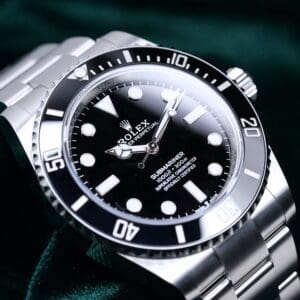
2026 NEW UNWORN Rolex Submariner No Date Black Dial Black Ceramic Bezel Oyster Bracelet Stainless Steel 41mm COMPLETE SET 124060
$15,219.00
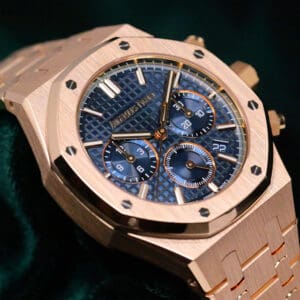
Audemars Piguet Royal Oak Selfwinding Chronograph Bleu Nuit Nuage 50 Blue Dial Bracelet 18k Rose Gold 38mm MINT CONDITION COMPLETE SET 26715OR.OO.1356OR.01
$104,942.00
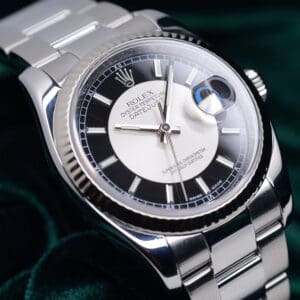
Rolex Datejust “Tuxedo” Black and Silver Dial 18K White Gold Fluted Bezel Stainless Steel Oyster 36mm MINT CONDITION COMPLETE SET 116234
$10,671.00
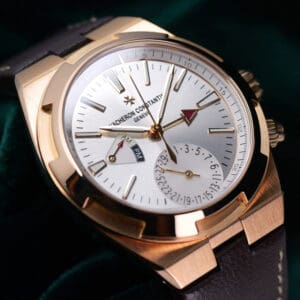
Vacheron Constantin Overseas Dual Time Silver Dial Brown Leather Strap 18K Rose Gold 41mm MINT CONDITION COMPLETE SET 7900V/000R-B336
$41,894.00
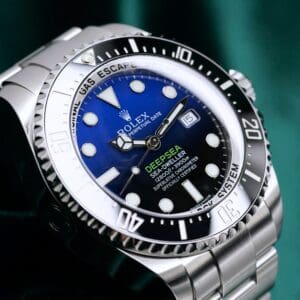
Rolex Sea-Dweller Deepsea James Cameron D-Blue Dial Black Ceramic Bezel Oyster Bracelet Stainless Steel 44mm MINT CONDITION 116660-0003
$14,272.00
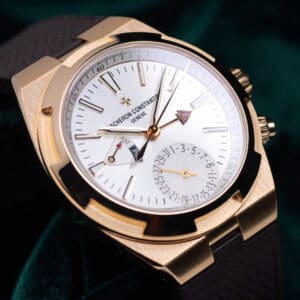
Vacheron Constantin Overseas Dual Time Silver Dial 18K Rose Gold Brown Rubber Strap 41mm MINT CONDITION COMPLETE SET 7900V/000R-B336
$41,894.00
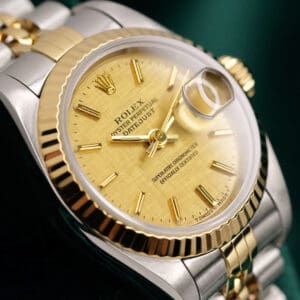
Rolex Lady-Datejust Champagne Linen Dial 18k Yellow Gold Fluted Bezel Jubilee Bracelet Two Tone Steel & Gold 26mm MINT CONDITION COMPLETE SET 69173
$9,345.00
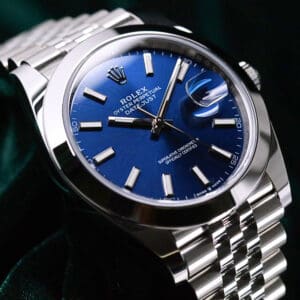
2026 Rolex Datejust Blue Dial Smooth Bezel Jubilee Bracelet Stainless Steel 41mm MINT CONDITION COMPLETE SET 126300
$13,796.00
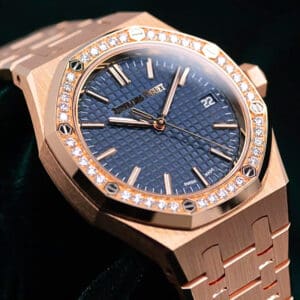
Audemars Piguet Royal Oak Selfwinding "50th Anniversary" Bleu Nuit Nuage 50 Blue Dial Diamond Bezel 18K Rose Gold 37mm MINT CONDITION COMPLETE SET 15551OR.ZZ.1356OR.02
$99,745.00
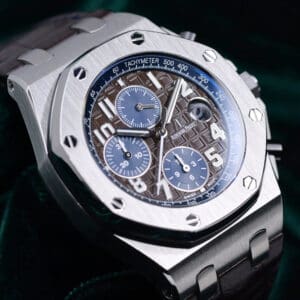
Audemars Piguet Royal Oak Offshore Chronograph "Havana" Brown Dial Blue Subdials Brown Leather Strap Stainless Steel 42mm MINT CONDITION COMPLETE SET 26470ST.OO.A099CR.01
$24,827.00
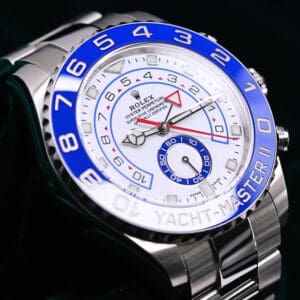
Rolex Yacht-Master II White Dial Blue Ceramic Bezel Oyster Bracelet Stainless Steel 44mm MINT CONDITION COMPLETE SET 116680
$19,409.00
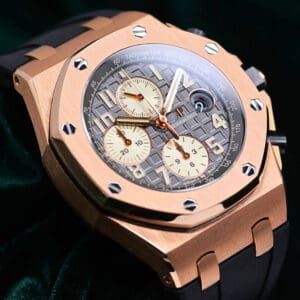
Audemars Piguet Royal Oak Offshore Chronograph “Half Brick” Ruthenium Grey Dial 18K Rose Gold Black Rubber Strap 42mm MINT CONDITION COMPLETE SET 26470OR.OO.A125CR.01
$40,892.00