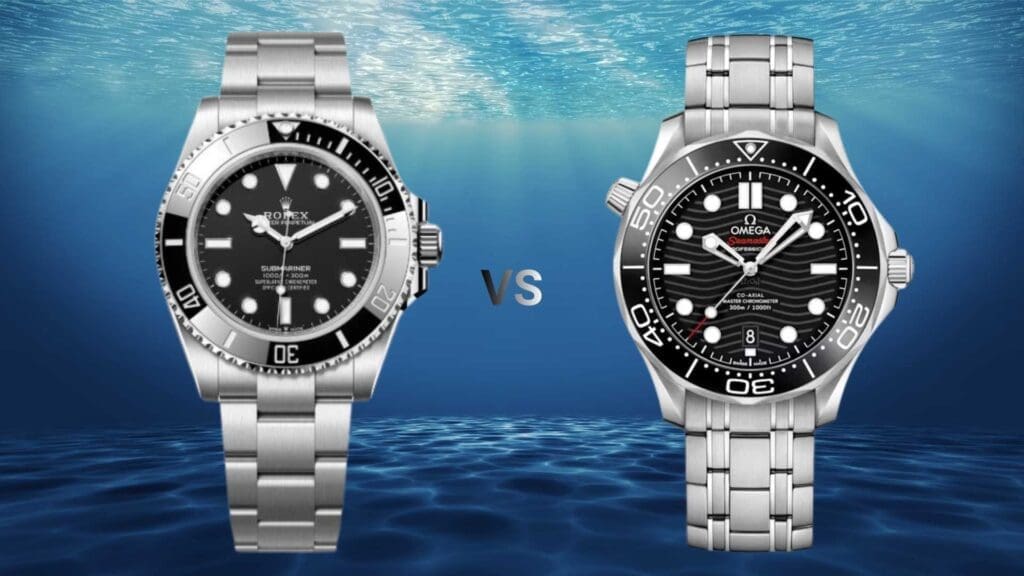
The Submariner and the Seamaster are the two dive watches buyers compare more than any others. In the Submariner vs Seamaster conversation, both sit in the same category, offer similar capabilities, and carry decades of real-world credibility. If you’re choosing a serious dive watch, these two are usually the starting point.
Both are icons, but they get there in opposite ways. The Rolex Submariner refines one template year after year. The Omega Seamaster Diver 300M redesigns itself every few generations, with two distinct design languages running side by side in 2026.
Below are the real differences, the 2026 pricing, and which dive watch fits which kind of buyer. The goal is to help you choose based on how you’ll wear it day to day, not the spec sheet.
Rolex Submariner Overview

The Rolex Submariner was introduced in 1953 as one of the first wristwatches built specifically for professional diving. Early models solved real underwater problems: readable dials, reliable timing, and cases that held up under pressure. That foundation became the template for the modern dive watch.
Unlike many competitors, Rolex refined the Submariner gradually instead of reinventing it. Improvements came in small steps over the decades: better water resistance, stronger materials, upgraded movements, while the core look stayed familiar. That slow evolution is why a current Submariner still feels closely connected to its early ancestors.
Because of this approach, the Submariner built a reputation for consistency and long-term ownership. Many buyers choose it as a watch to wear regularly, service when needed, and keep for years without worrying it will feel outdated.
If you want the deeper background on the line, our full Submariner buying guide walks through the references, generations, and what to look for.


Notable Modern References
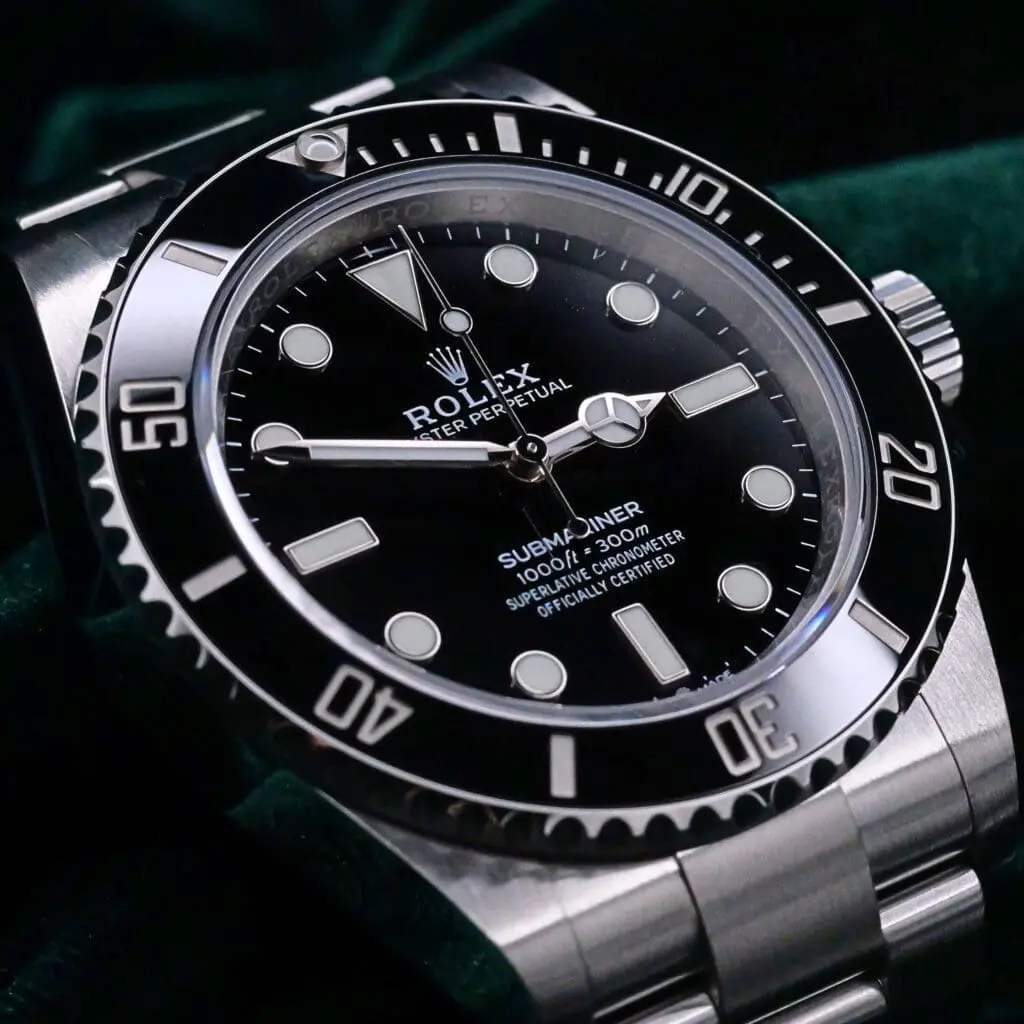
- Rolex Submariner 124060 — No-Date version with a symmetrical dial and a classic tool-watch feel
- Rolex Submariner 126610LN — Date version with a black Cerachrom bezel and the signature Cyclops lens
If you’re stuck between the two, our Date vs No-Date comparison goes deeper on the trade-offs.
Key Features
- Reference: 124060 (No-Date) / 126610LN (Date)
- Case Size: 41mm Oystersteel, 12.5mm thick, lug-to-lug around 48mm
- Bezel Material: Black Cerachrom ceramic, unidirectional 60-minute scale
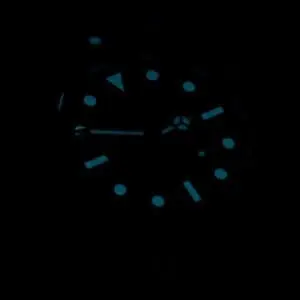
- Dial and Lume: Black gloss dial with large applied markers, Chromalight blue-glow lume
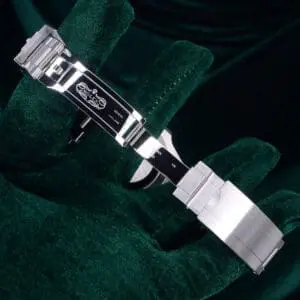
- Bracelet and Clasp: Oyster bracelet with Oysterlock safety clasp and Glidelock micro-adjustment
- Movement: In-house Caliber 3230 (No-Date) / Caliber 3235 (Date) with Chronergy escapement, around 70 hours of power reserve
- Water Resistance: 300 meters / 1,000 feet
Positioning: Restrained, long-term ownership-focused, holds its value better than almost any other steel sport watch
Omega Seamaster Diver 300M Overview

The Omega Seamaster Diver 300M traces its modern roots to 1993, when Omega introduced it as a professional dive watch built for real underwater use. It gained mainstream recognition through its long association with the James Bond films, which helped fix its identity as both functional and contemporary.
Unlike watches that evolve slowly, Omega has used the Seamaster as a platform for visible change. Case shape, dial pattern, materials, and movements have all been updated over the years, often more than once in the same decade.
That preference for visible change defined a major shift in 2024. Daniel Craig debuted a new generation of stainless steel Diver 300M models at the Paris Olympics, drawing on the “No Time to Die” 007 Edition. The new design drops the classic ceramic wave dial in favor of a sandblasted aluminum dial with skeletonized hands.
The older wave-dial ceramic versions are still in production. The modern Diver 300M now lives in two distinct visual identities at the same time, and buyers picking one up in 2026 are choosing between them.
If you want a broader look at the Seamaster line and its variations, our Seamaster buying guide covers the family in detail.
Notable Modern References
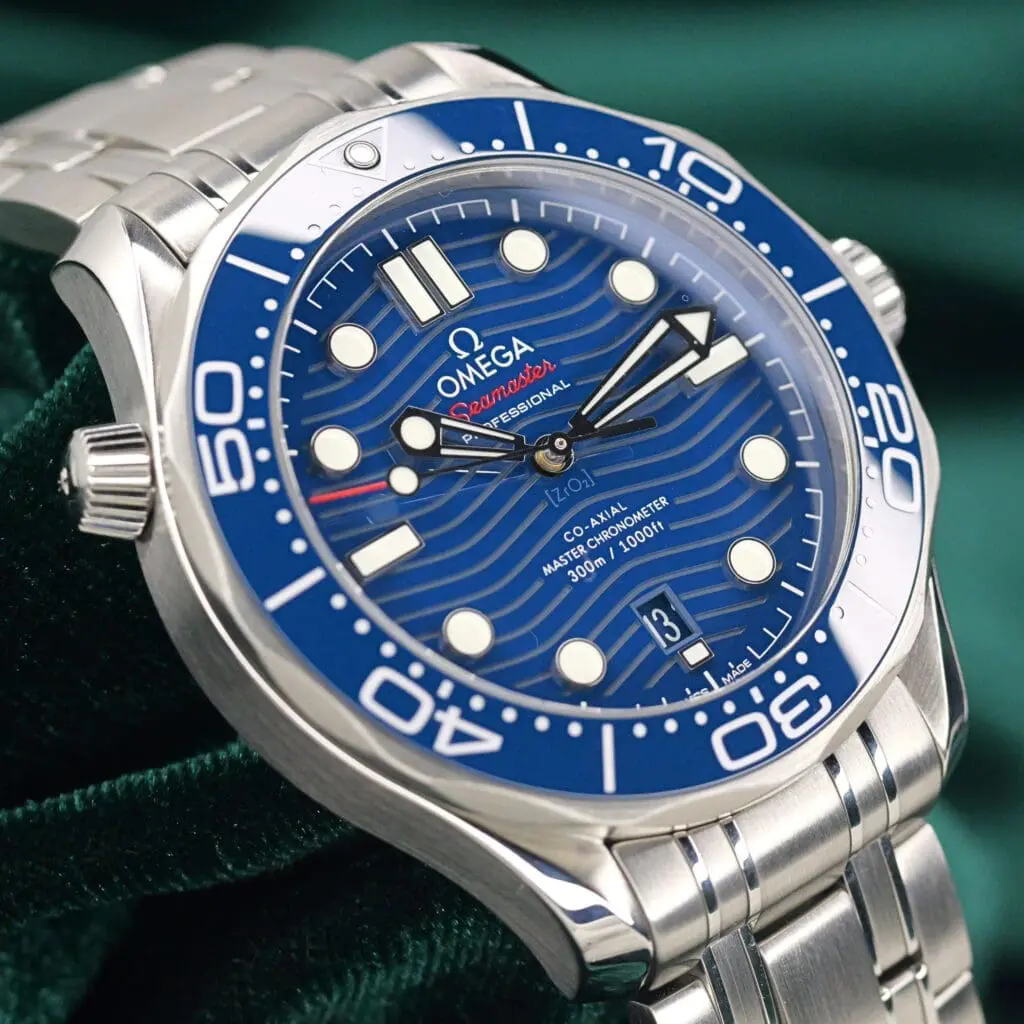
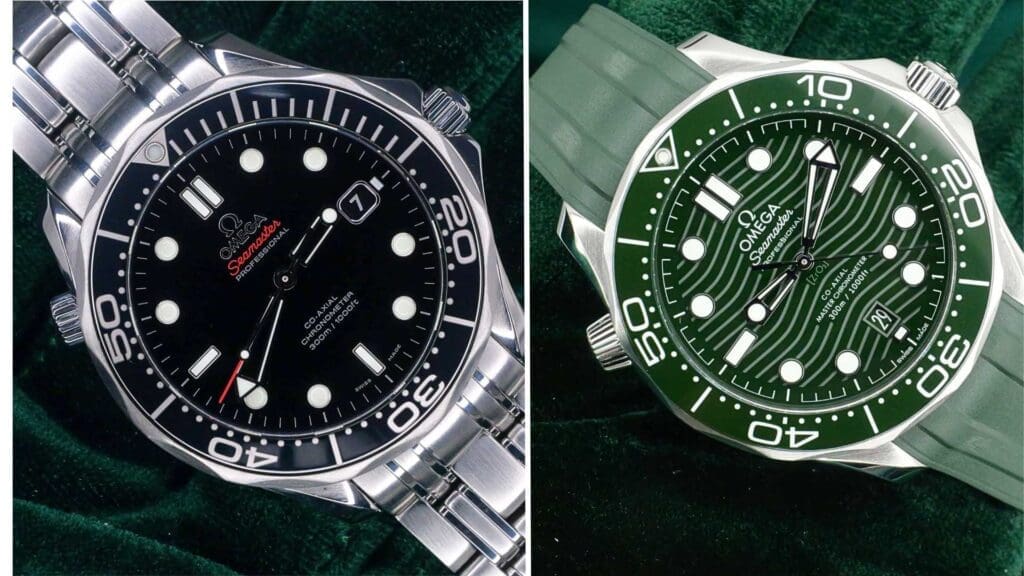
- Seamaster Diver 300M 210.30.42.20.03.001 — The wave-dial classic on a steel bracelet, the version most people picture when they hear “Seamaster”
- Seamaster Diver 300M 210.30.42.20.01.001 — Same wave-dial format with a fitted rubber strap
- Seamaster Diver 300M 210.30.42.20.01.018 — Mesh bracelet variant from the 2024-onward refresh with sandblasted aluminum dial
Key Features
- Reference Family: Seamaster Diver 300M
- Case Size: 42mm stainless steel, 13.6–13.7mm thick, lug-to-lug around 50mm, prominent crown guards and helium escape valve at 10 o’clock
- Bezel: Ceramic dive bezel with laser-engraved scale (wave-dial models) or oxalic anodized aluminum (refreshed 007-style models)
- Dial: Two parallel design languages — ceramic wave-pattern with skeletonized hands, or sandblasted aluminum with skeletonized hands and no date window
- Bracelet or Strap: Stainless steel five-link bracelet, mesh, or fitted rubber strap with the patented quick-change system
- Movement: Co-Axial Master Chronometer Caliber 8800 (or 8806 on date-free variants), about 55 hours of power reserve, METAS-certified resistance to magnetic fields up to 15,000 gauss
- Water Resistance: 300 meters / 1,000 feet
- Positioning: Modern, feature-forward, more accessible price point, trades below retail on the secondary market
Submariner vs Seamaster: What Makes Them Different?
This comparison focuses on the modern steel Submariner (124060 / 126610LN) and Seamaster Diver 300M to show how Rolex and Omega approach dive watches from very different angles. Both meet the same functional requirements. They feel very different on the wrist.
Case Size and Wrist Presence
The Submariner is 41mm wide, 12.5mm thick, and around 48mm lug-to-lug. The case tapers cleanly into slim lugs, which is why a 41mm Sub often wears closer to a 40mm watch in practice. It sits flat, slips under a cuff, and disappears during long days at a desk.
The Seamaster Diver 300M is 42mm wide, 13.6–13.7mm thick, and roughly 50mm lug-to-lug. The lugs don’t taper, so it wears closer to its specs — a bit more wrist coverage, a bit more height, more presence overall.
Whether that’s a plus depends on the wrist. On a 7.5-inch wrist, the Seamaster looks intentional. On a 6.5-inch wrist, the Submariner usually wears more comfortably.
Bezel Design and Materials
The Submariner’s Cerachrom bezel is clean and tool-focused: large numerals, a deep coin-edge grip, and excellent legibility. The 120-click unidirectional action has a confident, tactile feel that holds up with wet hands and gloves.
The Seamaster uses a scalloped ceramic bezel on wave-dial models and an oxalic anodized aluminum bezel on the refreshed 007-inspired versions. The scalloped edge looks distinctive but is a more divisive design — some buyers love it, others find it harder to grip than the Submariner’s coin edge, particularly when wet.
Dial, Markers, and Visual Identity
The Submariner dial is built around legibility. Large applied markers, the Mercedes hour hand, and a clean black gloss layout. No surface texture, no skeletonized hands, very little visual noise. It hasn’t changed substantially in decades and isn’t meant to.
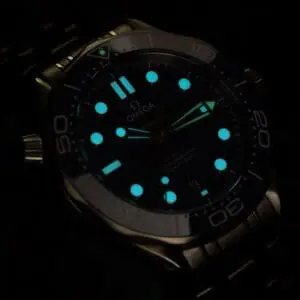
The Seamaster is the opposite. The classic wave-dial version has a laser-engraved ceramic surface that catches light differently throughout the day, skeletonized lume-filled hands, and a color-matched date wheel.
The 2024 refresh trades the waves for a matte sandblasted aluminum dial. More industrial, less decorative, no date, but keeps the skeleton hands. Either way, the Seamaster makes a clearer visual statement than the Submariner.
Movement and Technical Philosophy
The Submariner runs the in-house Caliber 3230 (No-Date) or 3235 (Date) with the Chronergy escapement and Rolex’s Parachrom hairspring. Around 70 hours of power reserve, Superlative Chronometer certification at -2/+2 seconds per day after casing, and long service intervals (typically 8–10 years).
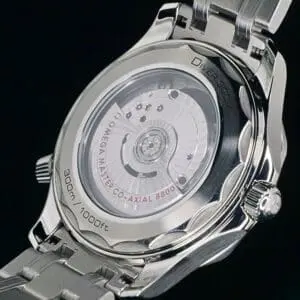
The Seamaster runs the Co-Axial Master Chronometer Caliber 8800 (or 8806 on three-handed no-date models). About 55 hours of power reserve, but METAS certification at 0/+5 seconds per day and resistance to magnetic fields up to 15,000 gauss. The display caseback on most variants lets you see the movement at work.
On paper, the Seamaster wins on magnetism and visible movement tech. The Submariner wins on power reserve and accuracy tolerance. In daily use, the gap is smaller than the spec sheet suggests — both are excellent.
Bracelet, Strap Options, and Comfort
The Submariner’s Oyster bracelet is one of the reasons people stay loyal to Rolex. The Oysterlock clasp with Glidelock lets you adjust the bracelet in 2mm increments without tools — useful in summer when your wrist swells, or over a wetsuit. The Easylink extension adds another 5mm for quick changes. Tapered lugs and solid links give it a refined, balanced feel.
If you’re curious how the two adjustment systems differ, we break down Easylink vs Glidelock in detail in a separate guide.
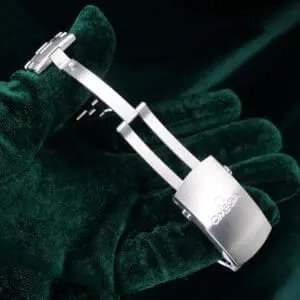
The Seamaster bracelet is heavier and doesn’t taper as much, which gives it a more substantial feel some buyers love and others find too dense. The clasp adjusts with a folding extension rather than a tool-free micro-adjust system, so it’s less convenient day to day.
Where the Seamaster pulls ahead is strap variety. The fitted rubber strap is genuinely excellent, and the new quick-change system at the end-links makes swaps fast. The watch transforms from sporty to casual without buying aftermarket.
Price and Market Demand
The 2026 numbers tell a clear story.
The Rolex Submariner 126610LN has a 2026 retail MSRP of $11,350, up 5.8% from 2025. On the secondary market, unworn current examples typically trade $13,000–$16,500, with full-set 2026 production pieces commonly listed $15,500–$16,500 on Chrono24 and eBay.
Authorized dealer waitlists have shortened from their 2022 peak but still run 12 months or longer at most boutiques. The 126610LN sells in a median of around 18 days on the secondary market — faster than 94% of watches tracked.
The Omega Seamaster Diver 300M (ref. 210.30.42.20.03.001 on the steel bracelet) has a 2026 retail price of $6,700. On the secondary market, it trades around $4,200–$4,300 according to WatchCharts — about 36% below retail. Availability at authorized dealers is normal: walk in, buy, walk out.
So the Submariner costs roughly twice what the Seamaster costs at retail, and three to four times what the Seamaster costs on the secondary market. The premium pays for scarcity and resale strength. The Seamaster offers stronger specs-per-dollar but gives up most of its value the moment it leaves the boutique.
That brand-level pattern holds across most models — we walk through how Omega and Rolex compare on resale in a dedicated piece.

Submariner vs Seamaster: Quick Side-by-Side Comparison
The table below summarizes how the two dive watches stack up across the areas buyers care about most.
| Feature | Rolex Submariner (126610LN) | Omega Seamaster Diver 300M |
| Case Size | 41mm × 12.5mm thick, ~48mm L2L | 42mm × 13.6–13.7mm thick, ~50mm L2L |
| Bezel | Cerachrom ceramic, coin-edge grip | Ceramic (wave) or aluminum (refreshed), scalloped edge |
| Movement | Caliber 3230 / 3235, ~70hr reserve | Caliber 8800 / 8806, ~55hr reserve |
| Magnetism | Parachrom hairspring | METAS-certified to 15,000 gauss |
| Water Resistance | 300m / 1,000ft | 300m / 1,000ft |
| 2026 Retail | $11,350 (Date) | $6,700 (steel bracelet) |
| 2026 Secondary Market | $13,000–$16,500 (above retail) | ~$4,200–$4,300 (below retail) |
| Resale Behavior | Above retail, fast turnover | Below retail, easy to buy |
| Overall Personality | Classic, understated, long-term | Modern, expressive, tech-forward |
Common Questions Buyers Ask in 2026
Is the Seamaster a better value than the Submariner? On specs-per-dollar, yes. The Seamaster trades around $4,300 secondary against the Submariner’s $13,000-plus, and you get METAS certification and 15,000-gauss magnetic resistance.
On resale value and long-term hold, the Submariner is in a different category. It usually appreciates or holds steady, while the Seamaster usually depreciates from retail. Value depends on what you’re optimizing for.
Which holds resale value better? The Submariner, by a wide margin. The 126610LN has traded above retail every year it has been in production, and the 124060 No-Date follows the same pattern. The Seamaster Diver 300M trades roughly 36% below retail on average, which is in line with most Omega sport models.
Does the Submariner’s premium make sense? That depends on whether you value scarcity and resale or specs-per-dollar. If you want a watch you can sell later without losing money, the Sub justifies its price. If you want the most watch for the budget and don’t care about resale, the Seamaster delivers more on paper.
Is the new Seamaster design a downgrade from the wave dial? Neither — they’re both in production. The 2024 refresh added a new design direction (sandblasted aluminum dial, no date) but kept the wave-dial ceramic versions on sale. Buyers can choose between them.
Should You Buy the Submariner or the Seamaster?
Both watches are excellent dive watches, but they suit different types of owners. The right choice depends on what you value most once the watch is on your wrist.
When the Submariner Is the Right Pick
- You want a timeless design that holds up after years of wear without going out of style
- You value resale strength and want to recover most or all of your money if you ever sell
- You prefer quiet, understated luxury that doesn’t draw attention
- You’re willing to pay a roughly $9,000 premium over the Seamaster on the secondary market for those qualities
When the Seamaster Is the Right Pick
- You want visible design character — wave dial or skeleton hands and aluminum, your pick
- You value modern technical specs (15,000-gauss magnetism, helium escape valve, display caseback)
- You want strong specs-per-dollar and an easy buying experience without paying secondary-market premiums
- You’re not buying primarily for resale and would rather put the price difference toward a second watch or a vacation
The summary version: the Submariner suits buyers who want stability and resale strength. The Seamaster fits those who enjoy modern design, modern movement tech, and a much easier path to ownership.
Where to Buy Authentic Watches Online
There are a handful of legitimate online channels for both of these watches. Chrono24 is the largest marketplace for pre-owned luxury watches and lists both the Submariner and Seamaster from dealers worldwide. eBay runs an Authenticity Guarantee program on watches over $2,000, which puts a third-party inspection between you and the seller.
If Chrono24 is new to you, our walkthrough on what to watch for when buying on Chrono24 covers the basics.
Grailzee runs timed auctions with lower fees, useful when you want to set a hard ceiling on what you’ll pay. Independent watch forums like WatchUSeek and Rolex Forums also have active classifieds, though the buyer protection is up to you.
For the broader landscape, our overview of where to buy pre-owned watches covers each channel and the trade-offs.
We also sell, buy, and trade luxury watches, and the reason clients pick us over a big marketplace is the conversation before the purchase. Before you commit, we send tour videos of the actual watch on a wrist, walk through condition notes with anything we noticed under loupe, and answer questions over text or call.
You’re not buying off a stock photo. If something doesn’t sit right, you find out before the money moves.
That’s reflected in our 4.9-star Google rating, which mostly comes from clients who say the layered communication was what made the difference.
If you want that kind of walkthrough on a specific Submariner or Seamaster reference, reach out and we’ll line up the current options that match what you’re looking for. You can also browse what’s available now if you’d rather see the current lineup first.
Key Takeaways on Submariner vs Seamaster
The Submariner vs Seamaster decision in 2026 comes down to which trade-off you’re more comfortable with. The Submariner costs more, holds resale, and stays restrained. The Seamaster costs less, depreciates from retail, and offers more visible tech.
Two tips worth thinking about before you decide. First, try both on by wrist size if you can. The spec sheet doesn’t capture how differently they sit on a 6.5-inch wrist versus a 7.5-inch one, and that comfort difference matters more than any feature comparison.
Second, if resale isn’t a priority for you, the $9,000-ish gap between them on the secondary market is real money you could put toward something else. The “better” watch is the one you still want to wear five years from now.
999+ Timepieces Available
Explore Our Timepieces
Authenticated, unworn, and ready to ship worldwide.
Rolex · Audemars Piguet · Patek Philippe · Omega · Cartier · Richard Mille · Hublot · Tudor
Newly Listed
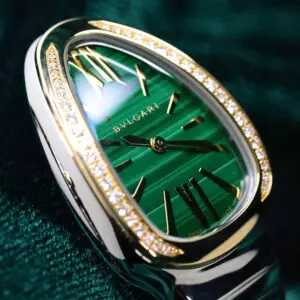
2026 NEW UNWORN Bvlgari Serpenti Tubogas Studs Capsule Limited Edition Green Dial Diamond Bezel Steel & 18k Yellow Gold 35mm COMPLETE SET 104360
$24,255.00
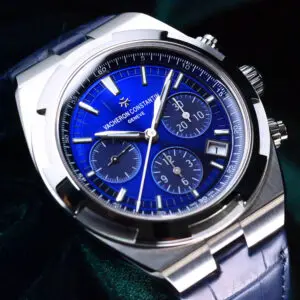
Vacheron Constantin Overseas Chronograph Blue Dial Blue Leather Strap Stainless Steel 42.5mm MINT CONDITION COMPLETE SET 5500V/110A-B148
$37,793.00
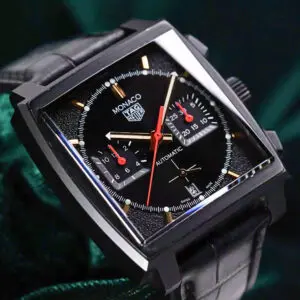
Tag Heuer Monaco Chronograph “Dark Lord” Special Edition Black Dial Black Leather Strap DLC Titanium 39mm MINT CONDITION COMPLETE SET CBL2180.FC6497
$8,135.00
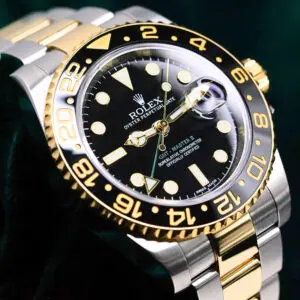
Rolex GMT-Master II “Green Arrow” Black Dial Black Ceramic Bezel Oyster Bracelet Two-Tone 18K Yellow Gold Stainless Steel 40mm MINT CONDITION COMPLETE SET 116713LN
$15,740.00
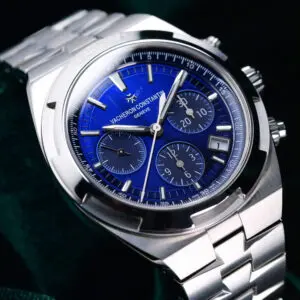
Vacheron Constantin Overseas Chronograph Blue Dial Stainless Steel 42.5mm MINT CONDITION COMPLETE SET 5500V/110A-B148
$37,793.00
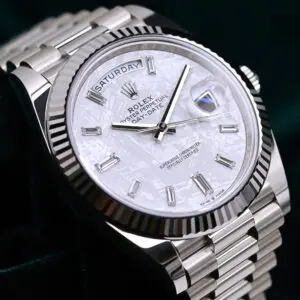
Rolex Day-Date Meteorite Baguette Diamond Dial Fluted Bezel President 18K White Gold 40mm MINT CONDITION COMPLETE SET 228239
$78,629.00
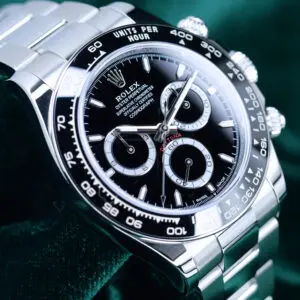
2026 Rolex Cosmograph Daytona Black Dial Black Ceramic Bezel Oyster Bracelet Stainless Steel 40mm MINT CONDITION COMPLETE SET 126500LN
$33,594.00
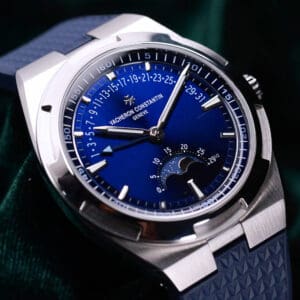
2025 Vacheron Constantin Overseas Moonphase Retrograde Date Blue Dial Blue Rubber Strap Stainless Steel 41mm MINT CONDITION COMPLETE SET 4000V/210A-B911
$52,800.00
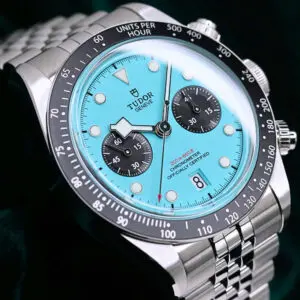
2025 Tudor Black Bay Chrono "Flamingo Blue" Turquoise Dial Black Bezel Stainless Steel 41mm MINT CONDITION COMPLETE SET 79360N-0024
$10,494.00

Audemars Piguet Royal Oak Offshore Chronograph "Batman" Black Dial Blue Accents Black Rubber Strap Stainless Steel 42mm MINT CONDITION COMPLETE SET 26470ST.OO.A028CR.01
$25,715.00
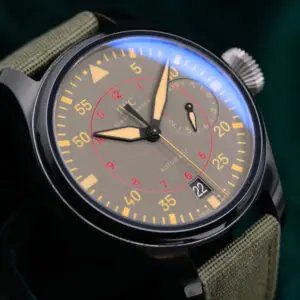
IWC Big Pilot's Watch Top Gun Miramar Grey Dial Green Textile Strap Black Ceramic 48mm MINT CONDITION COMPLETE SET IW501902
$7,240.00
Audemars Piguet Royal Oak Offshore Chronograph "Elephant" Gray Dial Stainless Steel Rubber Strap 42mm 26470ST.OO.A104CR.01
$23,974.50