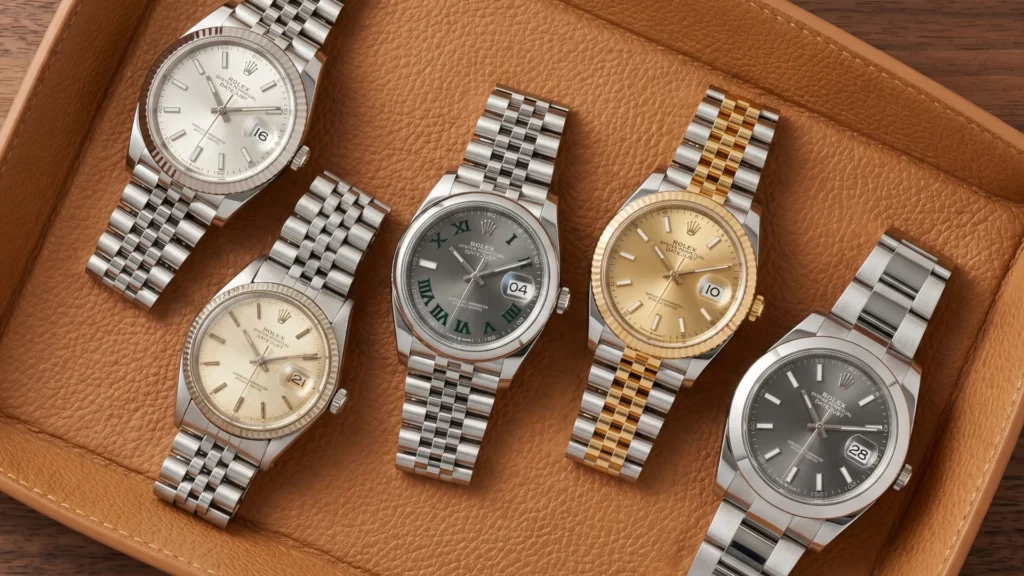
A buyer walks into our shop with $10,000 and leaves more confused than when he arrived. Not because the staff was unhelpful. We showed him twelve different Datejusts in the same hour, and every one of them was a reasonable buy.
That’s the Datejust problem in one sentence. It’s the only Rolex you can buy in a dozen versions and have all of them be the wrong choice for you.
This Rolex Datejust buying guide fixes that. We’ll walk through every decision a real buyer makes, with current 2026 pre-owned prices. Browse our inventory if you know what you want, or keep reading to find the one that fits you.
A Quick History of the Rolex Datejust
The Datejust was launched in 1945 to mark Rolex’s 40th anniversary. It was the first self-winding wristwatch with a date window that changed automatically at midnight. The original came in solid yellow gold on a Jubilee bracelet, the bracelet Rolex made specifically for the launch.
Most of what you see on a current Datejust 36 was already there in 1945: round Oyster case, fluted bezel, date window at three, automatic winding. The Cyclops lens came in 1953. The instant-jump date mechanism arrived in 1956. By the late 1950s, the “Datejust” name was always on the dial.
A 1965 Datejust 1601 and a 2026 Datejust 126234 look like cousins. That’s why a 60-year-old Datejust still wears like a current watch, and why the secondary market for vintage references is so active.
Which Rolex Datejust Should You Buy?
Before you start shopping, make four decisions in this order: era, case size, material, then configuration. Each decision narrows the next, and getting the order wrong is how buyers end up overpaying for the wrong watch.
Here’s how those choices translate into specific Datejust picks.
Best Datejust for First-Time Rolex Buyers
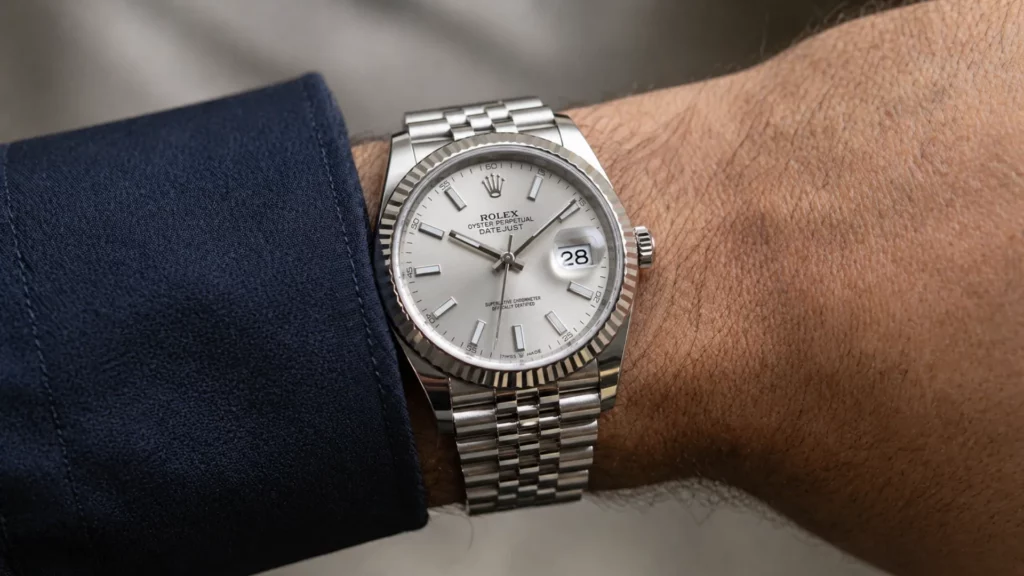
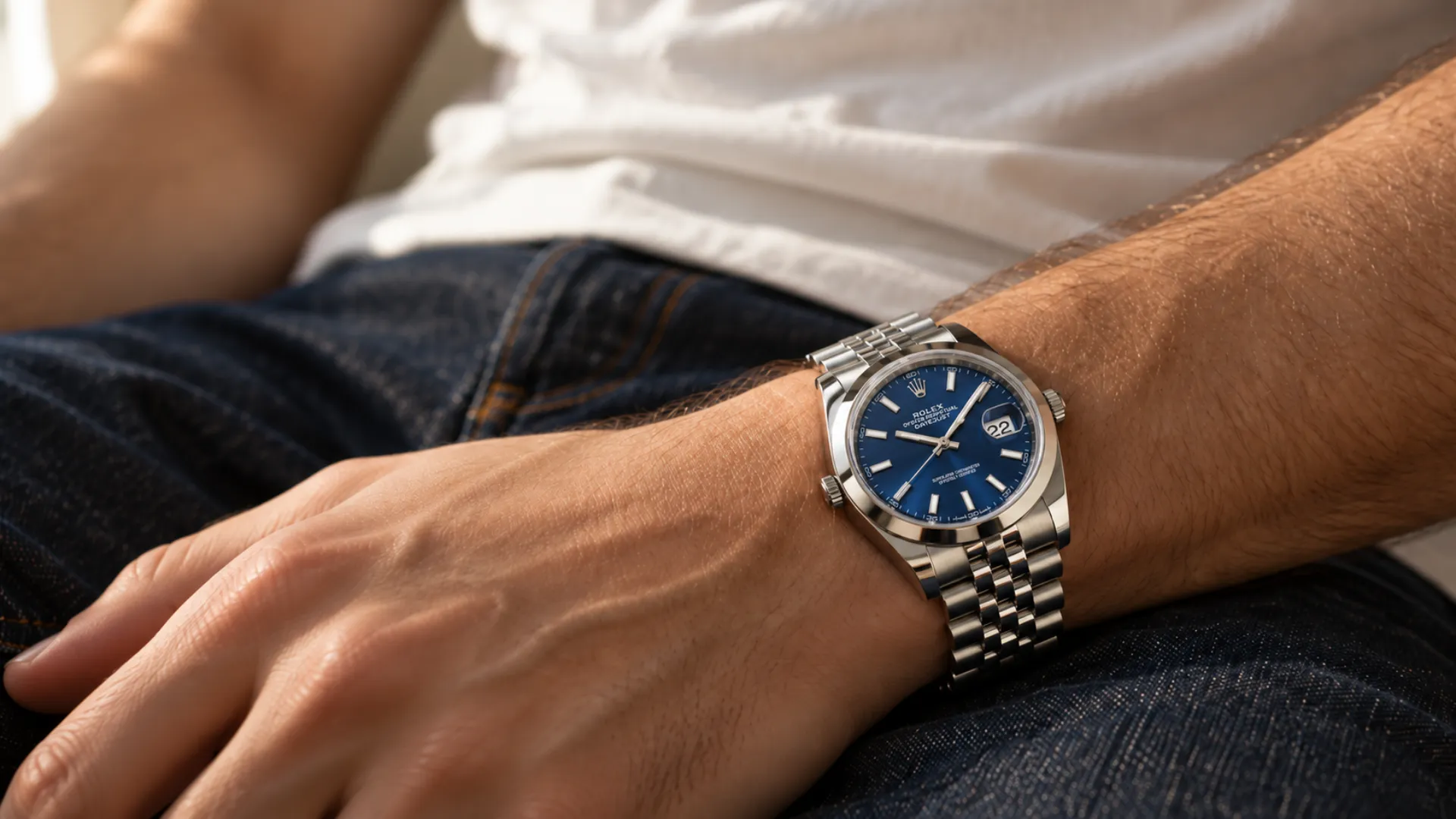
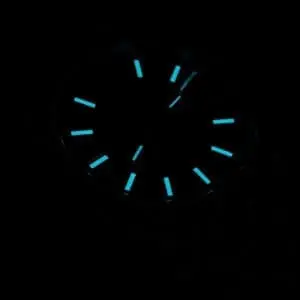
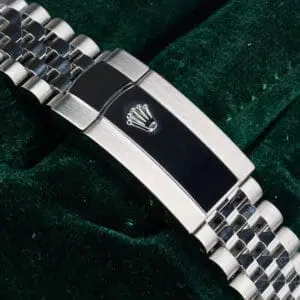
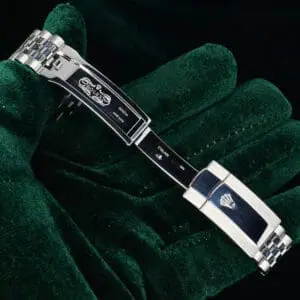
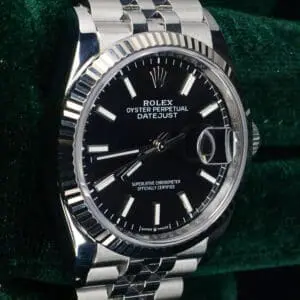
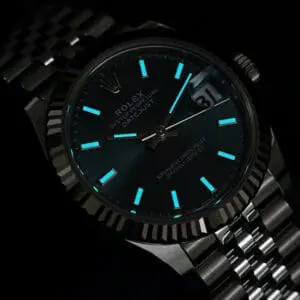
The steel Datejust 36 reference 126234 with a fluted bezel and Jubilee bracelet is the safest first Rolex anyone can buy. Pre-owned pricing sits between $9,500 and $11,500, and retail is around $9,900 after the January 2026 price increase.
The 41mm version, reference 126334, runs $11,500 to $14,500 pre-owned for the same configuration. If your wrist is 7 inches or larger, this is the smarter pick. Our Datejust 41 vs 36 breakdown covers the wrist-size choice in detail.
Either reference gives you the latest Caliber 3235 movement, 70-hour power reserve, and the full Rolex five-year warranty if you buy new from an authorized dealer. From a pre-owned dealer with a strong warranty, you get the same watch for similar money and skip the waitlist.
Best Datejust for Collectors
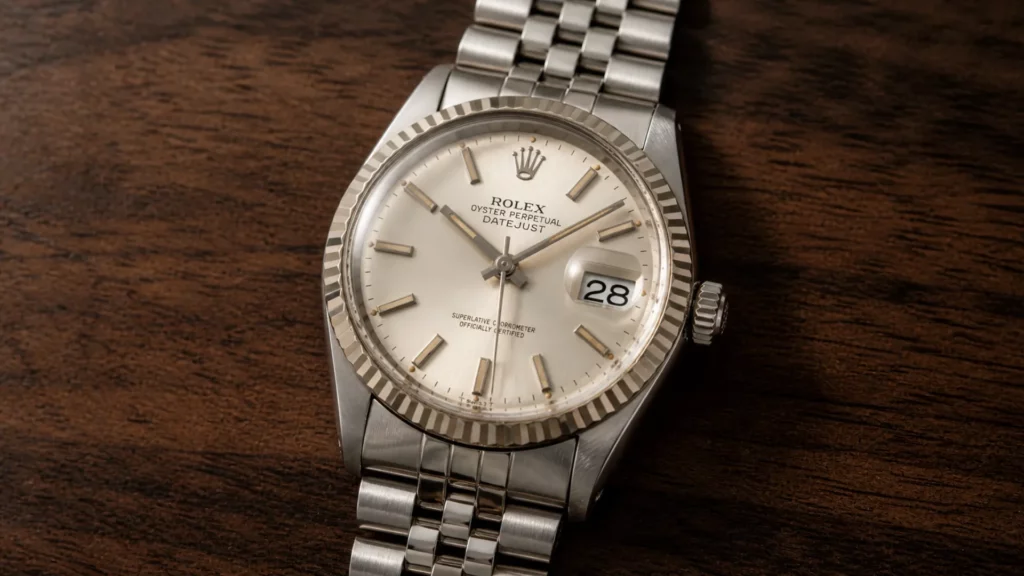
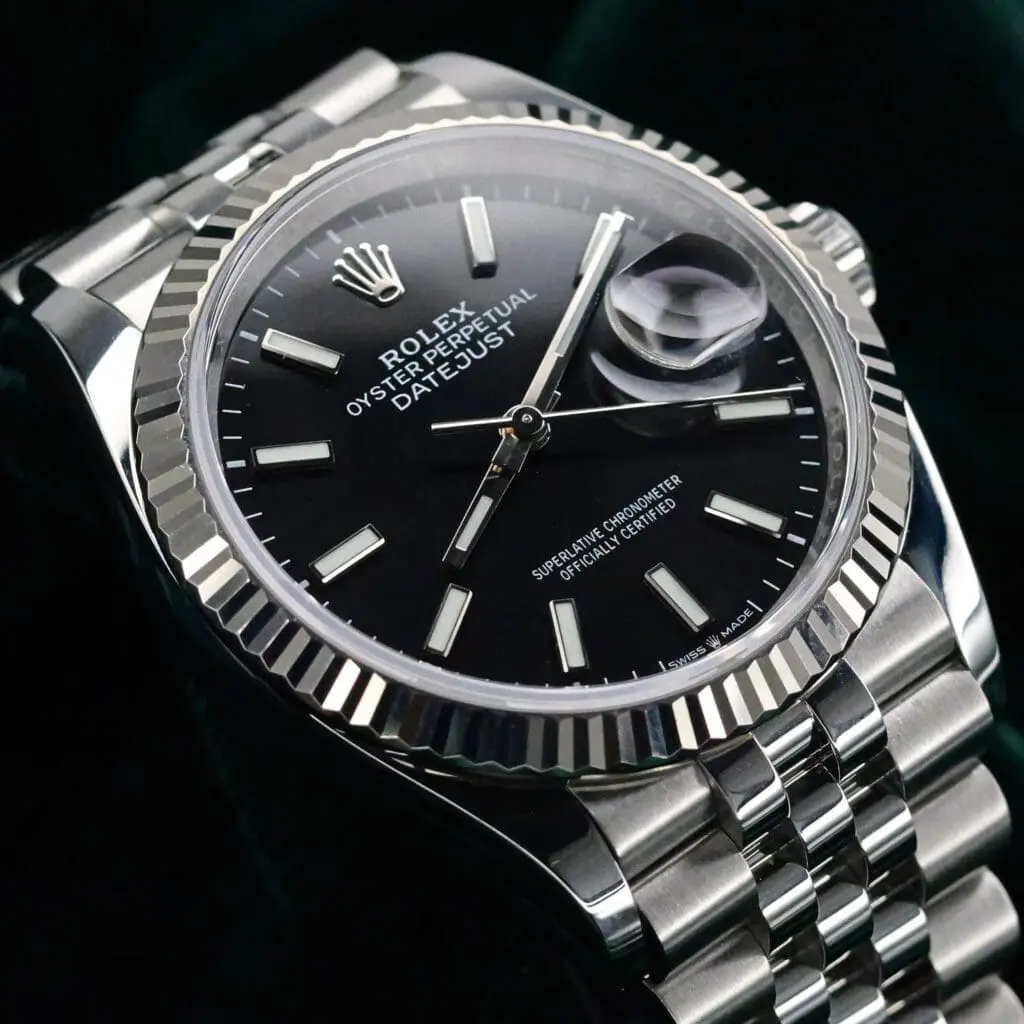
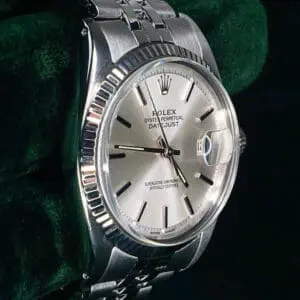
The vintage 1601 in steel with a fluted white gold bezel is the collector’s gateway Datejust. Clean examples trade between $5,500 and $7,500. The 16014, the late-1970s and 1980s update, runs $6,000 to $8,500.
Both are watches you can wear daily and still hold their value. The 1601 has appreciated steadily over the last decade as vintage Rolex collecting expanded beyond Submariners and Daytonas.
The Oysterquartz Datejust reference 17000 is the wildcard here. The angular case, integrated bracelet, and quartz movement look like nothing else Rolex makes. Clean examples sit between $4,500 and $7,000, which is low for what it is.

Best Datejust for Daily Wear
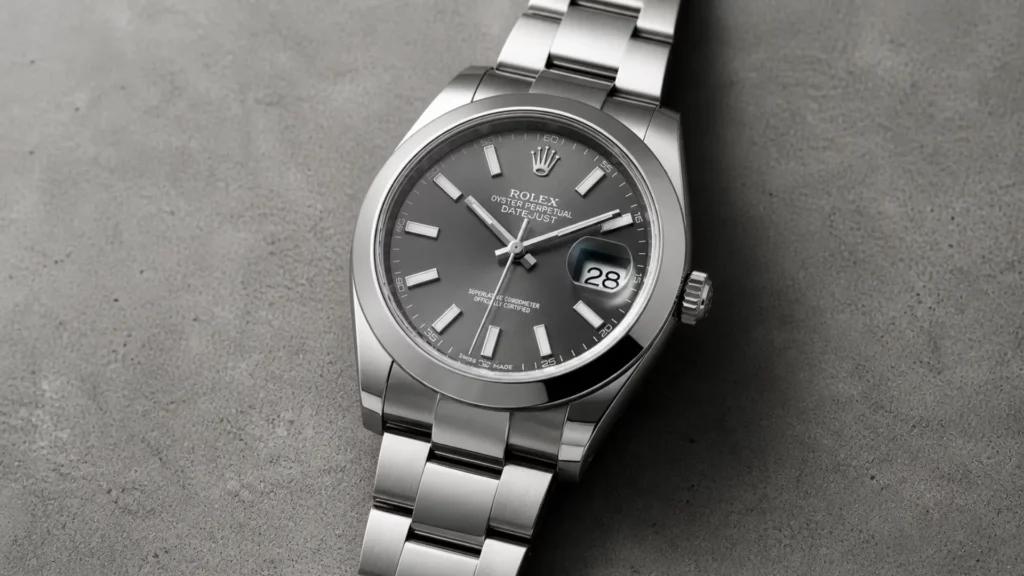
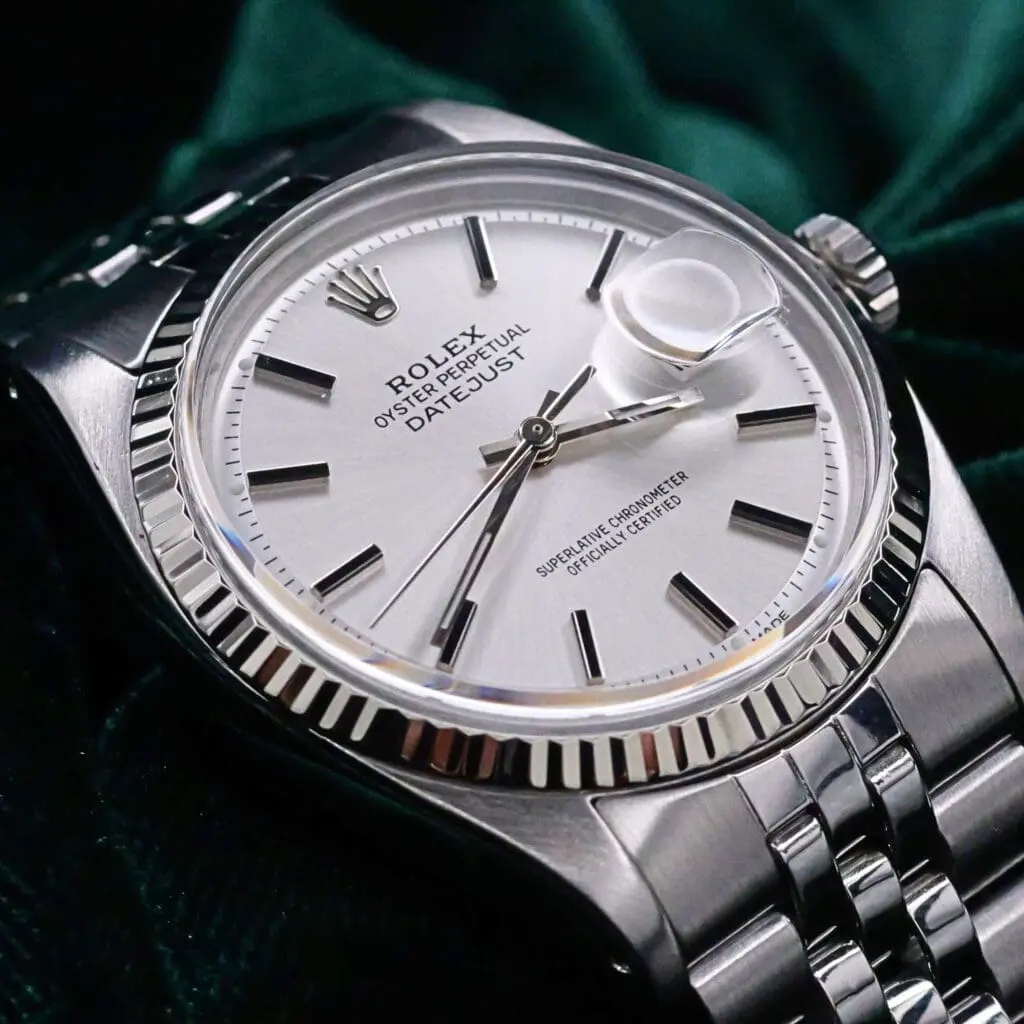
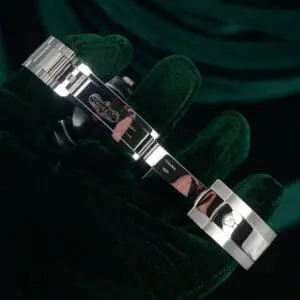
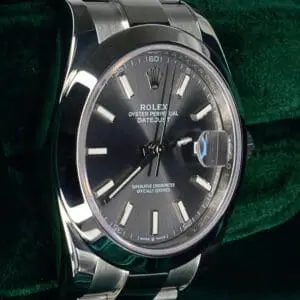
The steel Datejust 41 reference 126300 on an Oyster bracelet with a sundust or slate dial is the most versatile watch in the Rolex catalog. It works with a suit. It works with a t-shirt. And the 100m water resistance handles anything short of diving.
People notice it without it being flashy. Pre-owned pricing is $9,000 to $13,000 for this configuration, which is below the fluted-bezel 126334 because the smooth-and-Oyster combo is less popular.
That’s the buying advantage. You get the better daily wearer for less money.

Best Datejust for Smaller Wrists
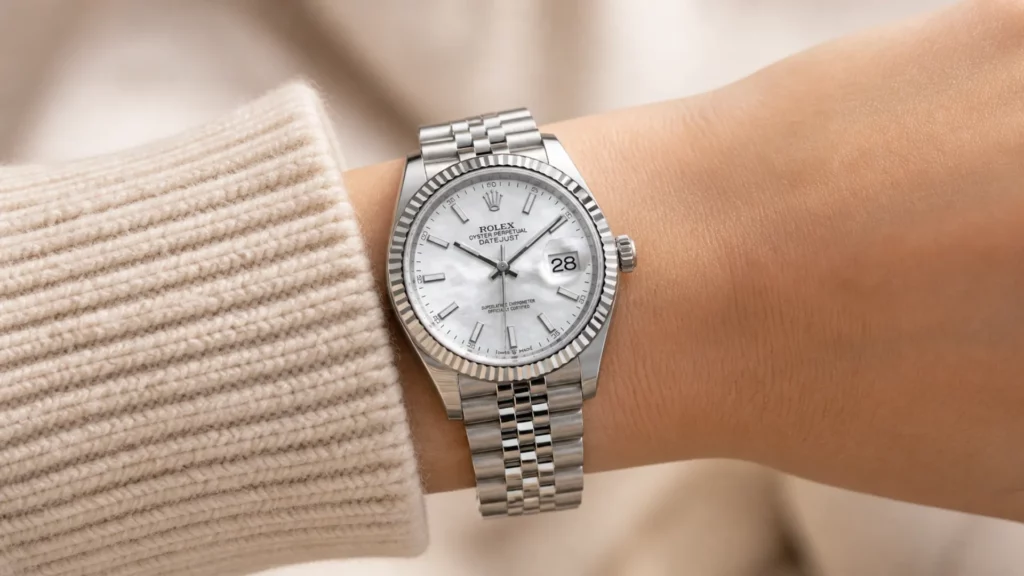
For wrists under 6.25 inches, the midsize Datejust 31 (reference 278274 in steel, 278384 in white gold Rolesor) is a better fit than the 36mm. It avoids the styling cues that make the Lady-Datejust read as a women’s watch. Pricing on the steel 31 runs $7,500 to $9,000 pre-owned.
The Lady-Datejust 28mm reference 279174 is the right call if you want a clearly feminine watch. It trades between $7,500 and $10,000 in steel.
A note before you commit. Don’t buy a 28 or 31 because you’ve decided the 36 is “too big” without trying both on first. Most buyers who expect to need the smaller size end up preferring the 36 once it’s on the wrist.
For context on the larger sizes: wrist under 7 inches typically goes 36, over 7 inches goes 41. Pre-owned data from Chrono24 and WatchCharts shows steel 41mm references appreciating faster than steel 36mm right now, so 7-inch borderline buyers should lean 41 for resale.
Best Datejust for Resale Value
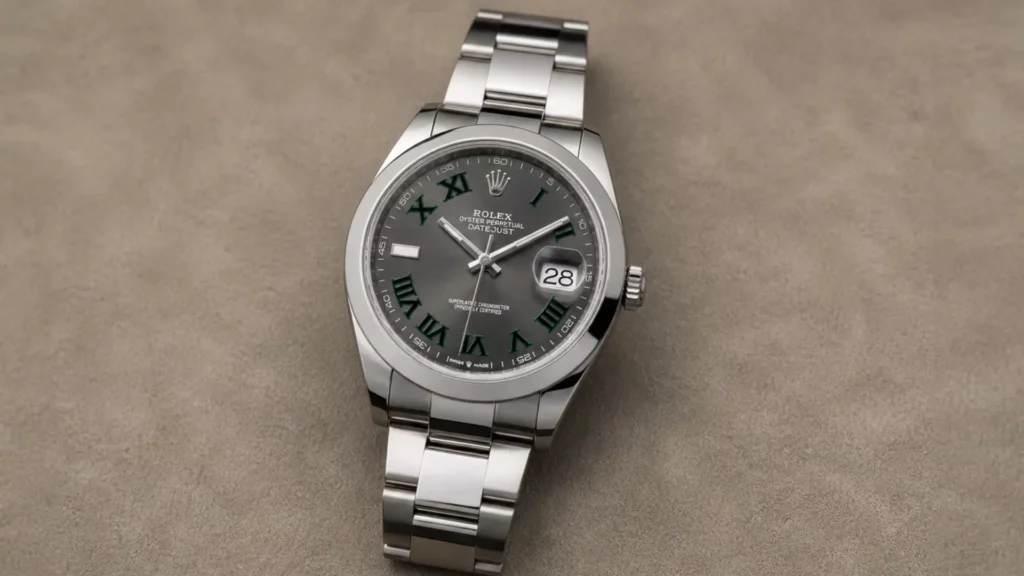
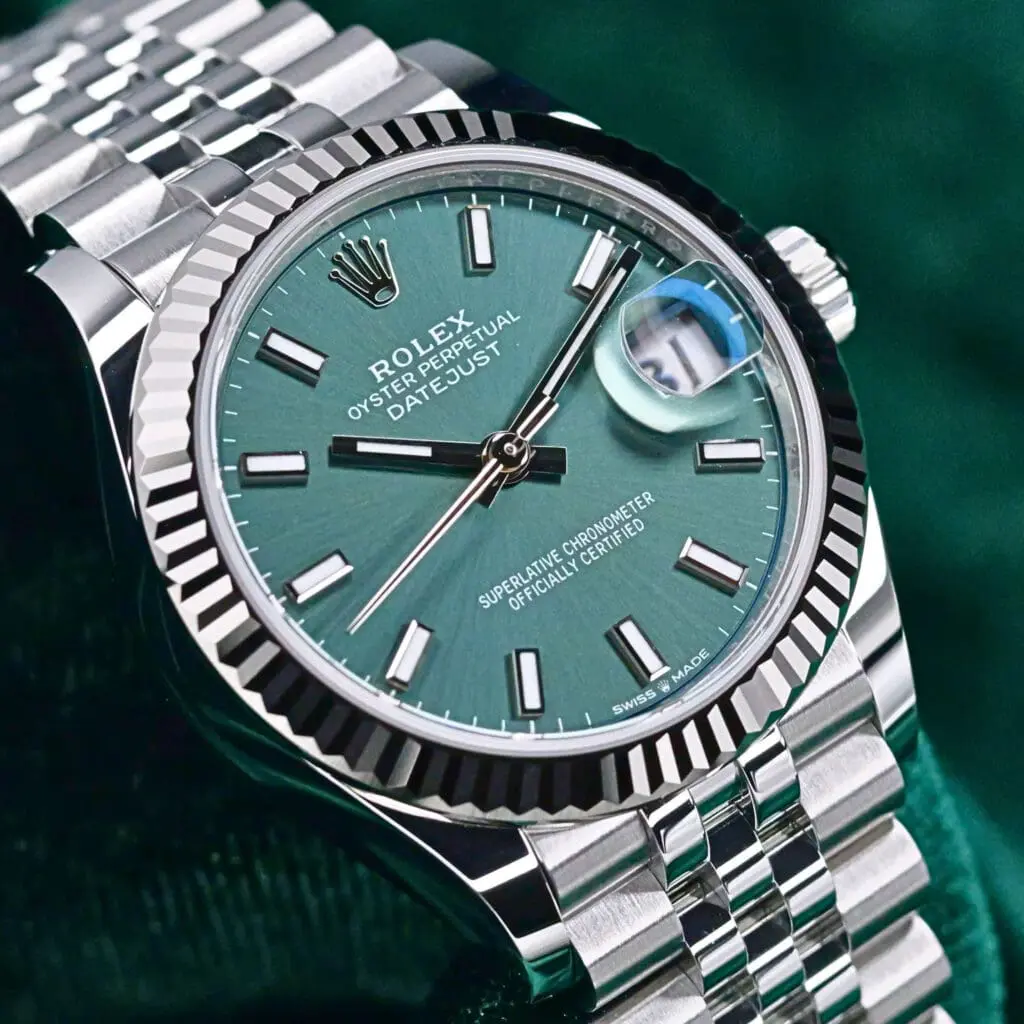
Configuration matters more than reference here. The three most liquid Datejust configurations on the secondary market in 2026 are: the steel 41 with fluted bezel and Jubilee (126334), the two-tone Everose 126331, and the steel 36 with a Wimbledon dial.
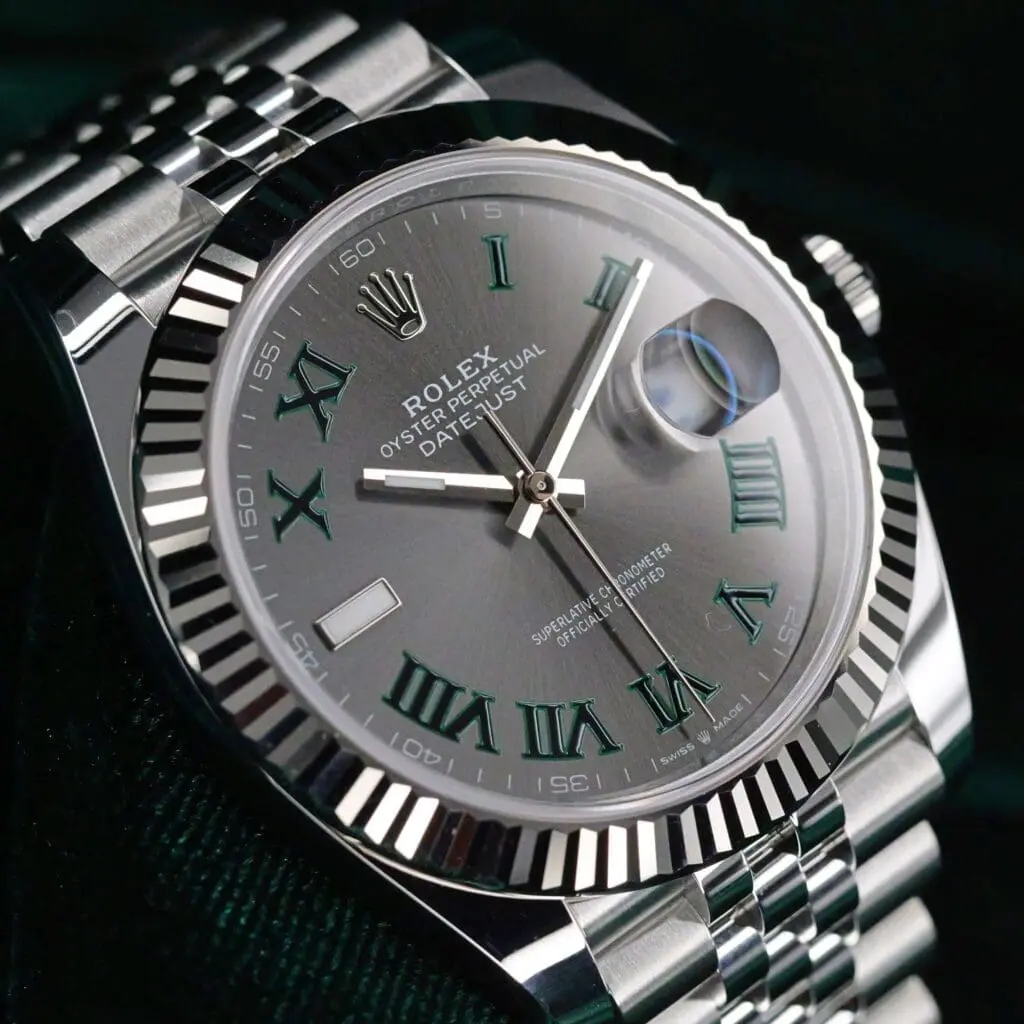
The Wimbledon dial (slate grey with green Roman numerals, available on the 126300 and 126234) carries a 15 to 25 percent premium over the same reference with a standard dial. That premium has held for five-plus years, which means it’s a structural part of the configuration’s value. Our Wimbledon 36 vs 41 breakdown covers which size wears the dial best.
If you care most about resale, avoid solid gold Datejusts, diamond-set bezels and dials outside collector configurations, and full yellow gold without provenance.
Smooth-bezel configurations also move 5 to 10 percent slower on resale than fluted-bezel equivalents. That’s a small buyer’s advantage if you don’t care about the fluted look.
Datejust References by Era
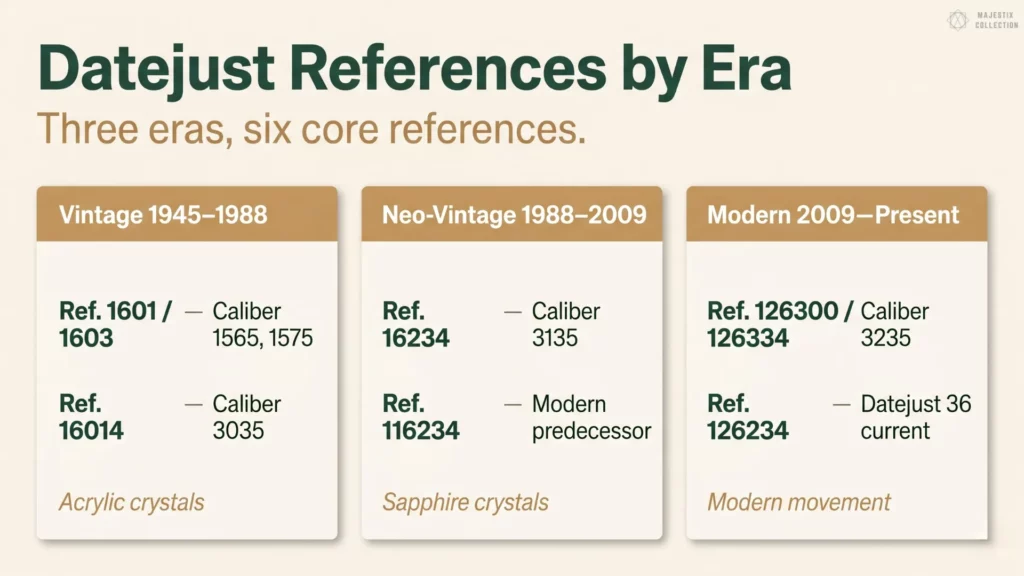
Reference numbers tell you what you’re buying before you pick it up. Each era has its own movement family, crystal type, and condition risks to know about.
Vintage Datejust References (1945 to 1988)
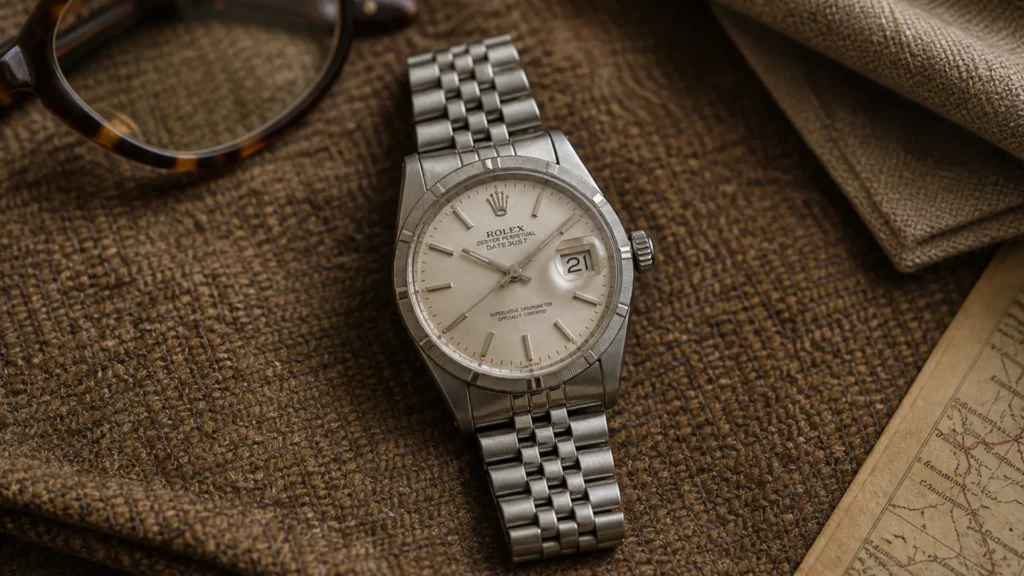
Vintage Datejusts use acrylic crystals and start around $4,500 for clean 1601s. Collector pieces with rare dials run into five figures. They carry the most character, the most history, and the most risk: bracelet stretch, polished cases, service dials, and movement quirks.
Ref. 1601 and 1603 (1959 to 1977). The bread-and-butter vintage Datejusts. The 1601 has a fluted bezel, the 1603 has an engine-turned bezel. Powered first by the Caliber 1565, then the Caliber 1575 in 1965. Hacking seconds was added in 1972. Movement bridges stamped “1570” instead of “1575” are normal because Rolex used the same engraved plates across the family.
Ref. 16014, 16030, 16013 (late 1970s to 1980s). The Caliber 3035 brought the quickset date function. The 16014 has the fluted bezel, 16030 has smooth, 16013 is two-tone fluted. All price similarly.
Ref. 17000 Oysterquartz (1977 to 2001, some stock through 2003). Used the in-house quartz Caliber 5035. Angular case and integrated bracelet, which no other Rolex of the period had.
What to look for: matching serial numbers between case and bracelet end-links, an original dial, sharp bevels on the lugs (over-polished cases lose 10 to 15 percent of value), and a bracelet that hasn’t stretched.
What to avoid: aftermarket dials sold as “custom” (instant 30 percent value loss), polished-flat cases, and bracelets with broken or stretched links unless priced accordingly.
Bubbleback first-series Datejusts (1945 to 1957) are a separate collector market and pricing varies wildly with condition and dial.
Neo-Vintage Datejust References (1988 to 2009)
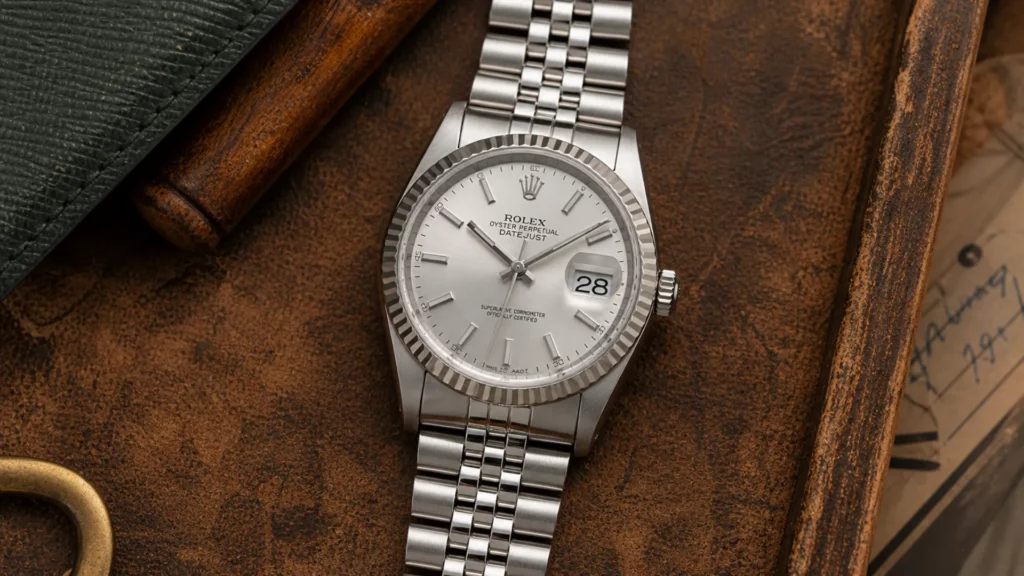
Neo-vintage is the value sweet spot: sapphire crystals, modern movement, current case proportions, and prices well below current production. Clean examples sit between $5,000 and $8,500.
Ref. 16200 and 16234 (late 1980s onward). Introduced sapphire crystals while keeping the slim case proportions of the five-digit era. The 16200 is steel with a smooth bezel; the 16234 is steel with a white gold fluted bezel. Both run the Caliber 3135, the workhorse movement that powered Datejusts for nearly three decades.
Ref. 16233 (yellow gold Rolesor, fluted bezel). One of the slowest-moving Datejust references on the secondary market in 2026. Decent examples go for $6,000 to $8,000; condition-A pieces with box and papers go for $9,000 to $10,500.
Ref. 116234 (mid-2000s onward). The direct predecessor of the current 126234. Offers 90 percent of the wearing experience for two-thirds of the price, at $6,500 to $8,500.
Modern Datejust References (2009 to Present)
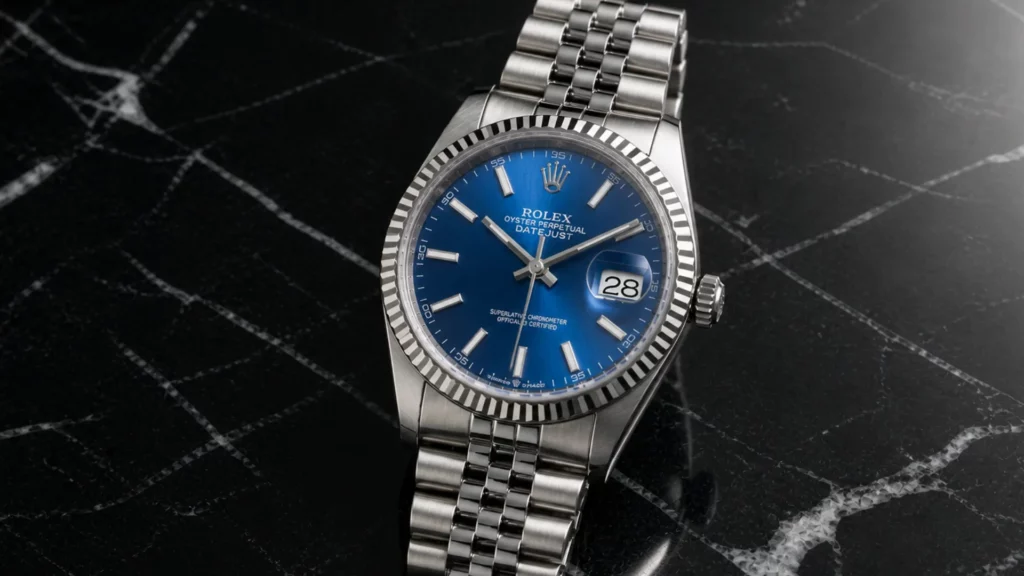
Modern Datejusts start around $7,500 for a Datejust II 116300 and climb to $16,000 and up for current 41mm fluted-bezel configurations. You’re paying for the latest movement, full warranty support, and lower buying risk.
Ref. 116300 Datejust II (2009 to 2016). The 41mm steel smooth-bezel model that bridged the catalog. Caliber 3136, 48-hour power reserve. Discontinued. Clean examples trade between $7,500 and $10,000. The yellow gold Rolesor 116333 sits at $11,000 to $14,000, and the white gold Rolesor 116334 falls between the two.
Ref. 126300 and 126334 (Datejust 41, 2016 onward). The 126300 is steel with a smooth bezel only. The 126334 is steel with a white gold fluted bezel. Both run the Caliber 3235 with a 70-hour reserve. The Everose Rolesor 126331 and yellow Rolesor 126333 both sit at $13,500 to $15,500.
Ref. 126200, 126231, 126233, 126234 (Datejust 36, 2018 onward). Steel smooth, Everose Rolesor, yellow Rolesor, and steel with white gold fluted bezel respectively. The 126234 with Wimbledon dial is the most popular premium dial in the lineup.
Datejust Pricing on the Secondary Market in 2026
Rolex raised retail prices roughly 7 percent on average in January 2026, closer to 5.6 percent on steel models and 8 to 9 percent on gold. The pre-owned market has absorbed about half of that increase so far. Our Rolex pricing guide tracks similar movement across the rest of the catalog.
Several popular Datejust configurations now trade at or above retail on the secondary market because waitlists at authorized dealers are still long enough that buyers will pay a small premium for immediate availability.
The table below pulls current pre-owned pricing from active Chrono24, WatchCharts, and r/WatchExchange listings as of early 2026. Prices reflect clean examples with full sets where applicable.
| Reference | Configuration | Pre-Owned Range |
| 126234 | Steel 36mm, fluted, Jubilee | $9,500 to $11,500 |
| 126234 | Steel 36mm, Wimbledon dial | $11,000 to $14,000 |
| 126200 | Steel 36mm, smooth, Oyster | $8,500 to $10,500 |
| 126334 | Steel 41mm, fluted, Jubilee | $11,500 to $14,500 |
| 126300 | Steel 41mm, smooth, Oyster or Jubilee | $9,000 to $13,000 |
| 126331 | Everose Rolesor 41mm | $13,500 to $15,500 |
| 116300 | Steel 41mm Datejust II | $7,500 to $10,000 |
| 116234 | Steel 36mm, fluted | $6,500 to $8,500 |
| 16234 | Neo-vintage steel 36mm | $5,000 to $7,500 |
| 1601 | Vintage steel 36mm, fluted | $5,500 to $7,500 |
| 16014 | Vintage steel 36mm, fluted | $6,000 to $8,500 |
| 279174 | Lady-Datejust 28mm steel | $7,500 to $10,000 |
Browse our pre-owned Datejust inventory to compare what’s available right now against the table above.
A quick note on the depreciation curve. A one to two year old example trades at 90 to 100 percent of current retail. A three to five year old sits at 75 to 90 percent. A six to ten year old runs 60 to 75 percent, which is the discontinued Datejust II zone right now. Vintage references break the curve entirely because they’re priced on collector demand, not depreciation math.
The smartest value tier is usually six to ten years old. You’re getting a watch that’s mechanically modern, visually identical to current production, and 30 to 40 percent cheaper.
Bracelet and Dial: The Final Configuration Choices
Two final variables that shape what you buy and what you’ll pay for.
Oyster vs Jubilee Bracelet
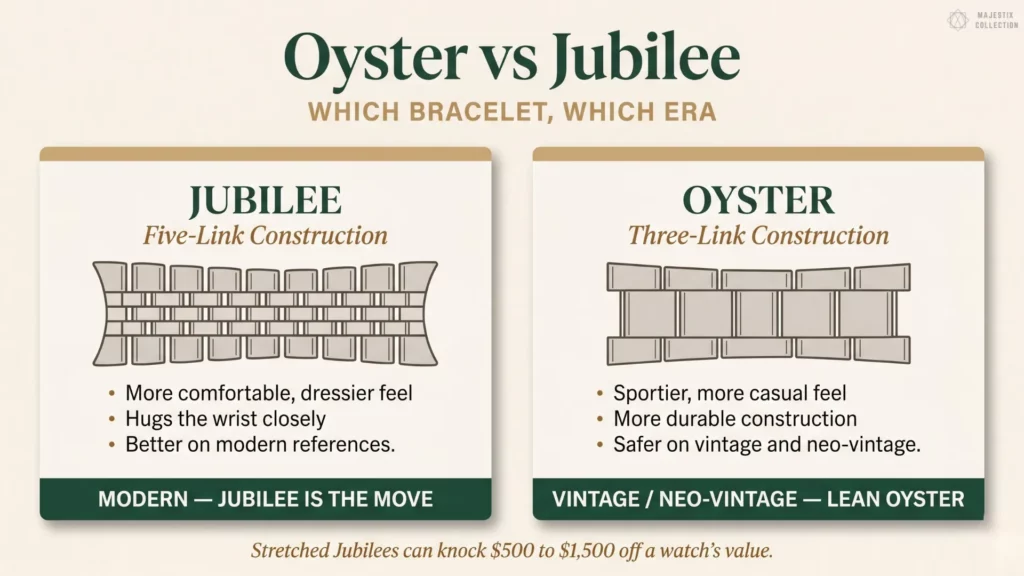
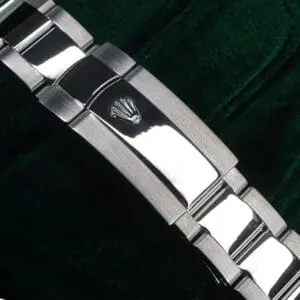
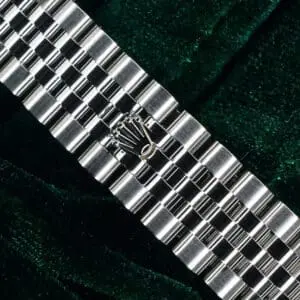
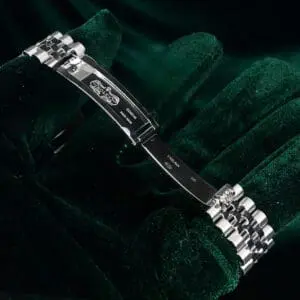
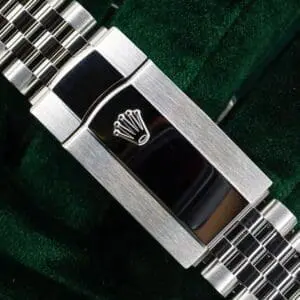
The Jubilee bracelet was made for the Datejust’s launch in 1945 and is the more comfortable, dressier option. Five-link construction, smaller individual links, hugs the wrist more closely. The Oyster has three flatter links and reads sportier. Most collectors consider the Jubilee the proper Datejust pairing.
Here’s the era-dependent insight no other guide makes clearly: the Jubilee is the better bracelet on modern references and the riskier bracelet on older ones. On a current 126234, the Jubilee is virtually maintenance-free for the first 10 years.
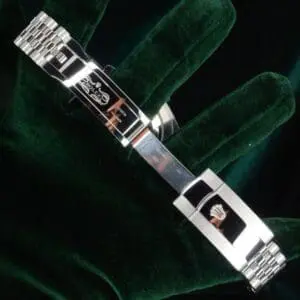
On a 16234 from 1995, the Jubilee has had 30 years to develop bracelet stretch (where the link pins loosen and create a droopy, jangly feel). Stretched Jubilees are expensive to replace and can knock $500 to $1,500 off a watch’s value.
If you’re buying neo-vintage or older, lean Oyster. If you’re buying modern, Jubilee is the move. We walk through Jubilee vs Oyster in detail in a separate guide.
Dial Configurations Worth Paying For
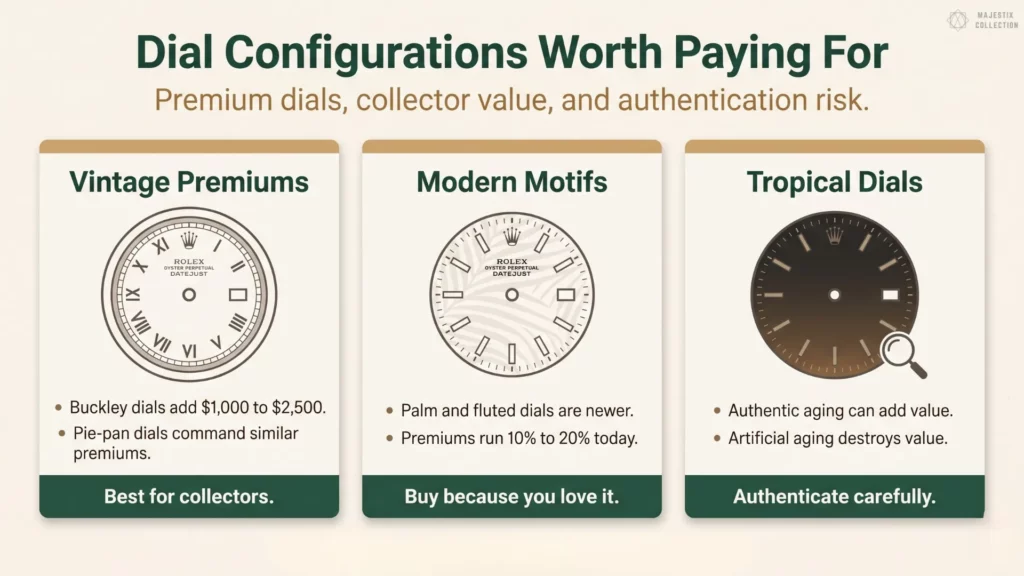
A few dial configurations carry premiums on the secondary market. Three categories matter most to a buyer:
1. Vintage premiums. Buckley dials (printed Roman numerals in place of applied markers) on vintage 1601s and 16014s add $1,000 to $2,500 to the watch’s value. Pie pan dials with sloped edges command similar premiums on first-series vintage references. Best for collectors.
2. Modern motifs. The palm motif and fluted dials (introduced 2021 to 2023) are still finding their price. Premiums run 10 to 20 percent over standard dials, but the market hasn’t decided if these are collector pieces or trends. Buy them because you love them.
3. Tropical dials. Black or grey dials that have aged to brown over the decades. Authentic tropical dials add value. Fake tropical dials, made by artificially aging the surface, destroy it. Authenticate carefully.
This is one of the harder authentication calls on vintage Datejusts, and a place where forum posts on Watchuseek and r/RolexWatches genuinely help.
What to Inspect Before Buying a Pre-Owned Datejust
Seven things to check before you pay. The first three are the ones most buyers skip.
1. Test the bracelet for stretch. Hold the watch by the clasp and let the head hang. A healthy bracelet stays mostly straight. A stretched bracelet droops and the links rattle. This is the most common condition issue on older Jubilees, and a replacement bracelet from Rolex costs $1,500 to $2,500. Factor it into your offer. Our guide on preventing Jubilee bracelet stretch covers maintenance to keep yours tight.
2. Check the Cyclops lens alignment. The Cyclops should sit dead-centered over the date window with the date magnified clearly to 2.5x. A lens that’s off-center, scratched, or separating from the crystal points to a bad service or a counterfeit.
3. Inspect the case for over-polishing. Run your fingernail along the lug edges. They should feel like edges, not gentle slopes. Over-polished cases have rounded lugs, washed-out bezel transitions, and reduced case thickness. They’re worth 10 to 20 percent less than unpolished examples. Our breakdown of polished vs unpolished Rolex value covers what to look for.
4. Verify dial originality. Service dials (replacement dials installed during a Rolex service) are factory-correct but reduce value by 15 to 25 percent on vintage and neo-vintage references. Look for lume plot color matching the era, font kerning consistent with original production, and no “service” markings on the dial back.
5. Confirm the reference number matches the configuration. Every Datejust reference encodes specific case, bezel, and material combinations. A 126300 should have a smooth bezel, not fluted. If the reference on the rehaut doesn’t match what the watch looks like, it’s a Frankenwatch (assembled from mismatched parts) or a counterfeit. Our guide to spotting a fake Datejust walks through every authentication checkpoint.
6. Check the movement and date wheel. If the seller will let you see the movement, look for a clean, original Rolex movement matching the era. The date should snap cleanly at midnight on a quickset reference. Sluggish date changes or ones that take several minutes point to a movement that needs service ($800 to $1,200).
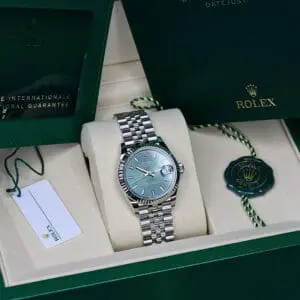
7. Review the box, papers, and service history. A full set (box, warranty card or punched papers, hangtags, original receipt) adds $500 to $1,500 over a watch-only configuration. Recent service from Rolex or an independent watchmaker helps. No service history is fine if the watch runs accurately.
Where to Buy Authentic Rolex Datejust Watches
Four paths, ranked from lowest to highest authentication risk: authorized dealer, pre-owned dealer, online marketplace, private seller.
Buying New From an Authorized Dealer
Authorized dealers carry current production at fixed retail. Popular Datejust configurations (steel, fluted bezel, Jubilee) involve waitlists of three to six months, though the line is more available than a Submariner or Daytona.
You get the full five-year Rolex warranty, factory paperwork, and zero authentication risk. You pay retail and you wait.
Buying Pre-Owned From a Reputable Dealer
Pre-owned dealers like Majestix Collection carry watches that have been inspected, authenticated, and serviced if needed. You get a written warranty (typically one to two years), the dealer’s reputation behind the authentication, and immediate availability.
Prices vary from below retail to slightly above depending on configuration demand. This is the path most experienced buyers take after their first Rolex.
Buying From Marketplaces
Marketplaces give you the widest selection and often the best pricing. The trade-off is you’re vetting individual sellers, and authentication risk varies by seller.
Chrono24 has buyer protection programs that help. Our guide to buying on Chrono24 covers what to verify before paying. r/WatchExchange (the Reddit subreddit) is collector-to-collector and works best if you already know what you’re doing. We’d buy from either platform with careful seller vetting.
Buying From a Private Seller
Direct private sales (Craigslist, Facebook Marketplace, in-person cash deals) are the highest-risk path. No warranty, no authentication backing, no recourse if the watch turns out to be a Frankenwatch or counterfeit. The savings rarely justify the risk on a $10,000 watch. If you’re going to buy private, get the watch authenticated by a third party before paying.
999+ Timepieces Available
Explore Our Timepieces
Authenticated, unworn, and ready to ship worldwide.
Rolex · Audemars Piguet · Patek Philippe · Omega · Cartier · Richard Mille · Hublot · Tudor
Newly Listed
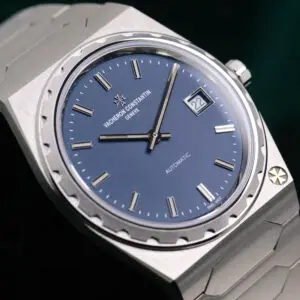
2026 NEW UNWORN Vacheron Constantin Historiques 222 Blue Dial Stainless Steel 37mm COMPLETE SET 4200H/222A-B934
$58,795.00
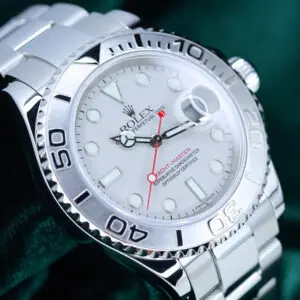
Rolex Yacht-Master Rolesium Platinum Dial Platinum Bezel Oyster Stainless Steel 40mm MINT CONDITION COMPLETE SET 16622
$14,690.00

Audemars Piguet Royal Oak Offshore Chronograph “Vampire” Black Dial Red Accents Black Ceramic Bezel Stainless Steel 42mm MINT CONDITION 26470SO.OO.A002CA.01
$34,649.00
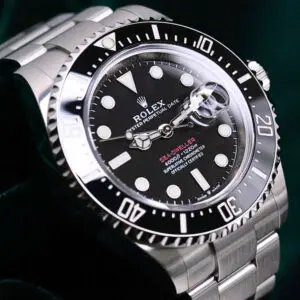
Rolex Sea-Dweller "Red Letter" Black Dial Black Cerachrom Bezel Oyster Bracelet Stainless Steel 43mm MINT CONDITION COMPLETE SET 126600
$13,120.00
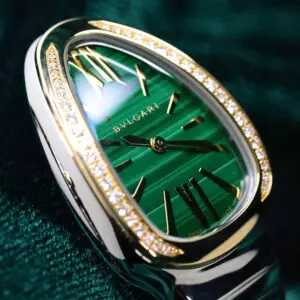
2026 NEW UNWORN Bvlgari Serpenti Tubogas Studs Capsule Limited Edition Green Dial Diamond Bezel Steel & 18k Yellow Gold 35mm COMPLETE SET 104360
$24,255.00
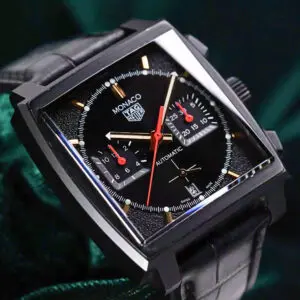
Tag Heuer Monaco Chronograph “Dark Lord” Special Edition Black Dial Black Leather Strap DLC Titanium 39mm MINT CONDITION COMPLETE SET CBL2180.FC6497
$8,135.00
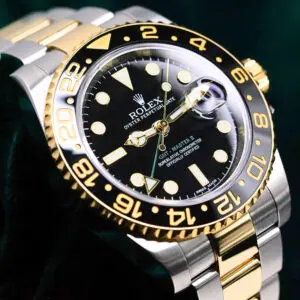
Rolex GMT-Master II “Green Arrow” Black Dial Black Ceramic Bezel Oyster Bracelet Two-Tone 18K Yellow Gold Stainless Steel 40mm MINT CONDITION COMPLETE SET 116713LN
$15,740.00
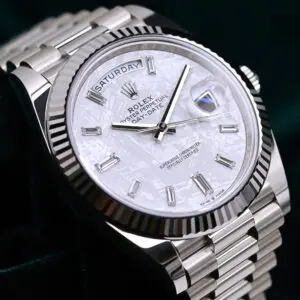
Rolex Day-Date Meteorite Baguette Diamond Dial Fluted Bezel President 18K White Gold 40mm MINT CONDITION COMPLETE SET 228239
$78,629.00
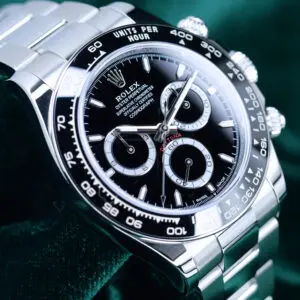
2026 Rolex Cosmograph Daytona Black Dial Black Ceramic Bezel Oyster Bracelet Stainless Steel 40mm MINT CONDITION COMPLETE SET 126500LN
$33,594.00
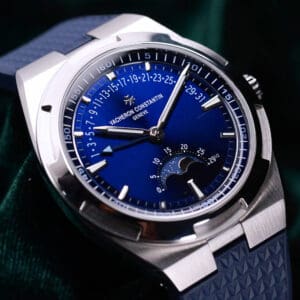
2025 Vacheron Constantin Overseas Moonphase Retrograde Date Blue Dial Blue Rubber Strap Stainless Steel 41mm MINT CONDITION COMPLETE SET 4000V/210A-B911
$52,800.00
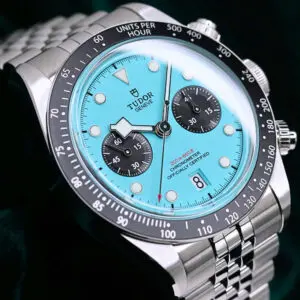
2025 Tudor Black Bay Chrono "Flamingo Blue" Turquoise Dial Black Bezel Stainless Steel 41mm MINT CONDITION COMPLETE SET 79360N-0024
$10,494.00
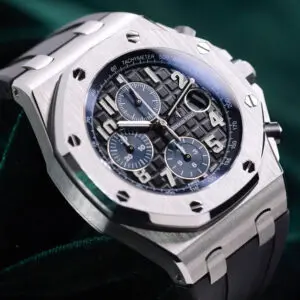
Audemars Piguet Royal Oak Offshore Chronograph "Batman" Black Dial Blue Accents Black Rubber Strap Stainless Steel 42mm MINT CONDITION COMPLETE SET 26470ST.OO.A028CR.01
$25,715.00
When the Datejust Is the Wrong Watch for You
If you want a tool watch or something built for active use, look elsewhere. The 100m water resistance handles swimming, but the Datejust isn’t built for diving, climbing, or hard daily abuse. The Submariner, Sea-Dweller, or Explorer are the right calls. Our Rolex buying guide covers each model side by side if you want to compare across the catalog.
If your wrist is under 6 inches and you don’t want something that reads as feminine, the Datejust line struggles to fit. The 31mm midsize is the closest option, but some buyers find even that reads as a women’s watch and end up looking at the 36mm Air-King or 39mm Oyster Perpetual instead.
If you’re chasing pure investment appreciation, the Datejust holds value but doesn’t appreciate like a Daytona, GMT-Master II in steel, or vintage Submariner. It’s a watch you buy because you’ll wear it for 30 years, not because you expect it to beat inflation by much.
And if you want to be the loudest person in the room about your watch, the Datejust will quietly disappoint you. It’s the most-recognized Rolex and also the least-bragged-about. People who notice it tend to know watches. People who don’t won’t even register that it’s a Rolex.
Final Thoughts on the Rolex Datejust Buying Guide
This Rolex Datejust buying guide covered the four-decision order, the references worth knowing, current 2026 pre-owned prices, what to inspect before paying, and where to buy with the lowest risk. The Datejust is the most versatile watch in the Rolex catalog and the easiest one to buy wrong.
The reference 126334 is the safest first-Rolex move, and the vintage 1601 is the smartest entry into vintage collecting. If you’re spending over $8,000 outside an authorized dealer, get a $100 to $150 pre-purchase inspection from an independent watchmaker before paying.
Browse our pre-owned Datejust inventory to see what’s available right now, or contact the Majestix team if you want us to source a specific reference, dial, or condition for you.