You’re staring at a $30,000-plus watch. Solid gold case, President bracelet, and a wall of reference numbers to pick from. That’s the moment most buyers freeze.
The Rolex Day-Date is the brand’s flagship dress watch. It is also the only Rolex made exclusively in gold and platinum. Pick the wrong reference and it costs you more than picking wrong on any other Rolex.
This Rolex Day-Date buying guide is built for that moment. It covers the four real decisions every buyer faces, current prices, what to inspect, and where to buy without getting burned. Start here before you spend.
What Makes the Day-Date Different
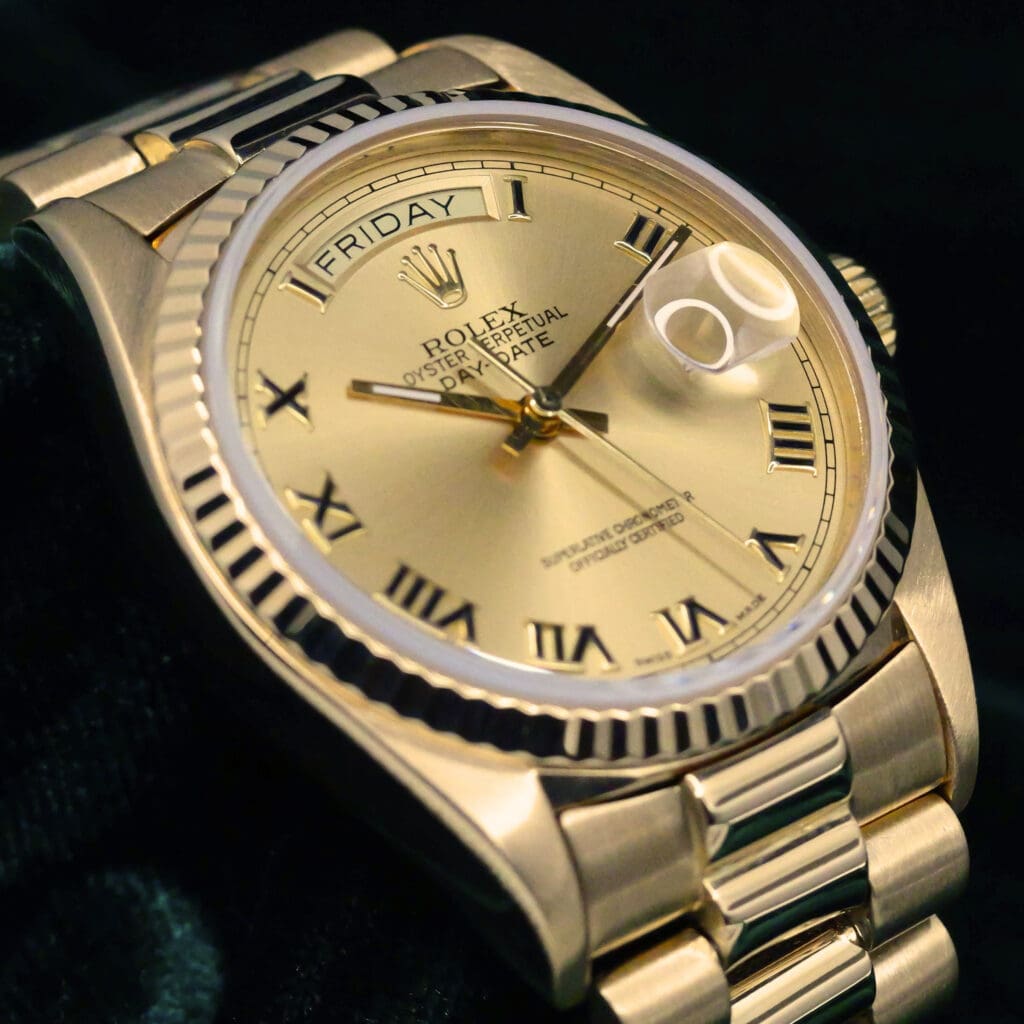
The Rolex Day-Date is the only Rolex made exclusively in 18k gold and 950 platinum. It pairs that case with the President bracelet and a dial that spells out the full day of the week at the top. That all-precious-metal build is why Day-Date pricing behaves differently from every other Rolex on the secondary market.
Rolex launched the Day-Date in 1956 with the ref. 6510 and ref. 6511. It was the first wristwatch to spell out the full day of the week. The day disc has been offered in dozens of languages over the years. English, Arabic, and Hebrew discs carry the most collector demand today.
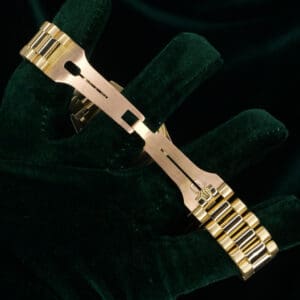
The President bracelet is the second defining feature. It’s a three-piece link design with a hidden clasp, introduced shortly after the Day-Date’s launch and standard on the line ever since. The “President” nickname is most often credited to Lyndon B. Johnson wearing one in office.
Every Day-Date has a gold value floor most luxury watches don’t have. A fully linked ref. 18238 contains roughly 114 grams of 18k gold.
4 Decisions to Make Before Buying a Rolex Day-Date
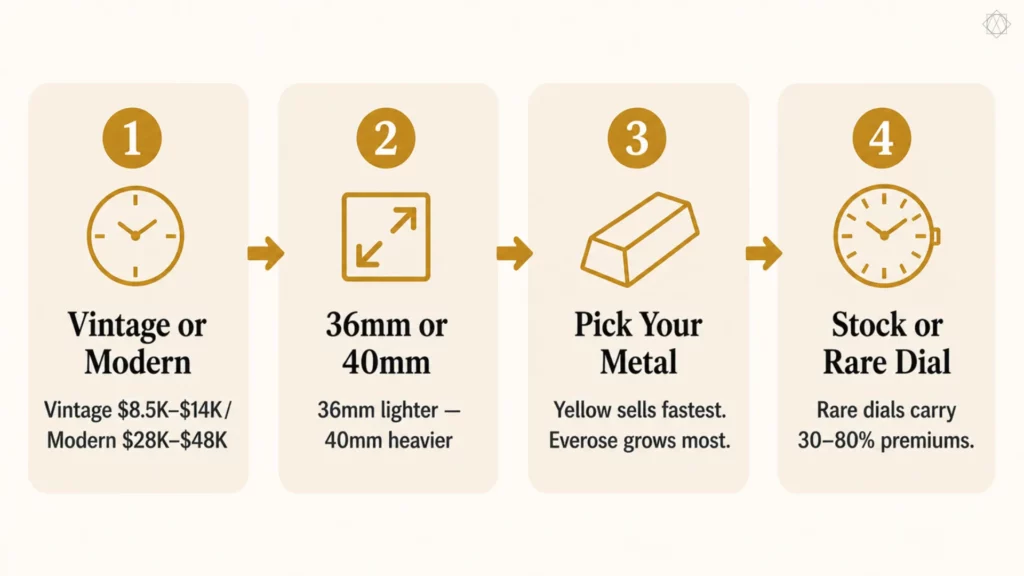
Picking the right Day-Date comes down to vintage or modern, 36mm or 40mm, which metal, and stock or rare dial. Most buyers get lost in the reference numbers because they skip this step. Answer the four questions in order, and the reference picks itself.
1. Decide Between Vintage and Modern
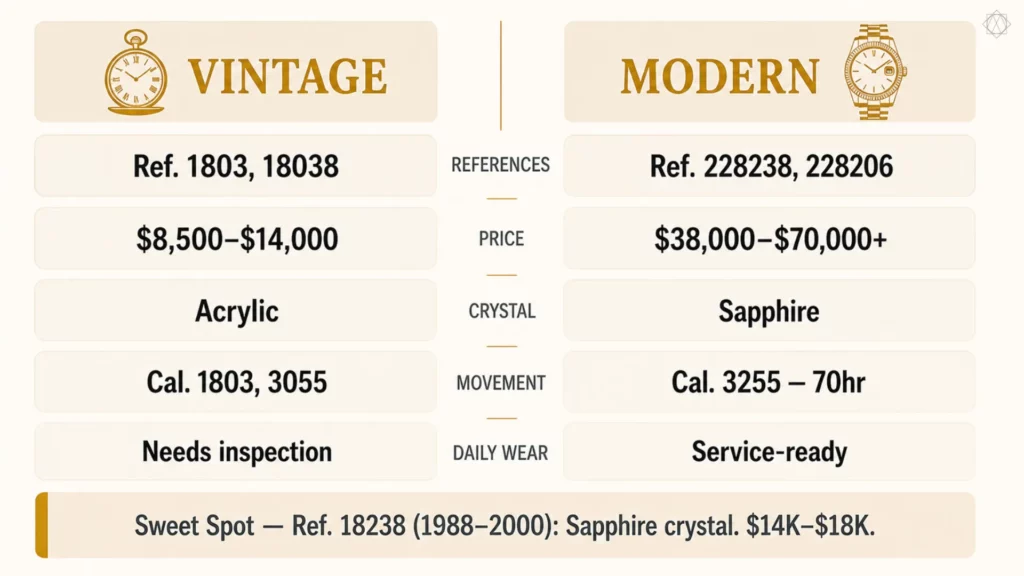
Vintage Day-Dates (the 1803 and 18038 era) cost less. They also need more inspection. Bracelet stretch and dial originality are the big risks. Modern references from the 228238 era cost more, but they wear better and Rolex still services them.
The ref. 1803 from 1959 to 1977 is the cheapest way into a Day-Date. Clean examples with original dials run $8,500 to $12,000. The ref. 18038 from 1977 to 1988 added the quickset date function and trades around $10,000 to $14,000. If you’re considering anything pre-1988, our vintage Rolex playbook covers what changes about the inspection process.
The neo-vintage sweet spot is the ref. 18238 from 1988 through 2000. Sapphire crystal, double quickset, and modern reliability, all for $14,000 to $18,000. For daily-wear confidence without spending modern money, this is the pick.
The ref. 228238 from 2015 onward sits at $38,000 to $48,000 pre-owned. Inside is the Caliber 3255: a 70-hour power reserve and accuracy of -2/+2 seconds per day. It’s the most accurate Day-Date movement Rolex has shipped.
2. Choose Your Case Size — 36mm or 40mm
The Day-Date 36 fits most wrists comfortably and weighs less. The Day-Date 40 is what most modern buyers reach for, but solid gold at 40mm is real weight by the end of the day. The 41mm Day-Date II from 2008 to 2015 falls between the two and trades at a discount.
The 36mm case has been the core size since 1956. It works on wrists from 6 to 7.5 inches and looks like a classic dress watch. Current 36mm references like the ref. 128238 in yellow gold sell for $28,000 to $35,000.
The Day-Date 40 is the modern flagship. It wears like a modern watch should, but the gold weight is something you feel after a long day. This comes up regularly on Watchuseek and r/Watches. Buyers who pick 40mm often switch to 36mm after a year.
The Day-Date II ref. 218238 at 41mm trades 20 to 30 percent below the comparable 228238, even though they carry the same gold weight. It was a short-lived generation, which is why most buyers skip it. If you don’t mind the proportions, it’s the best value play in the modern lineup.
3. Pick Your Metal
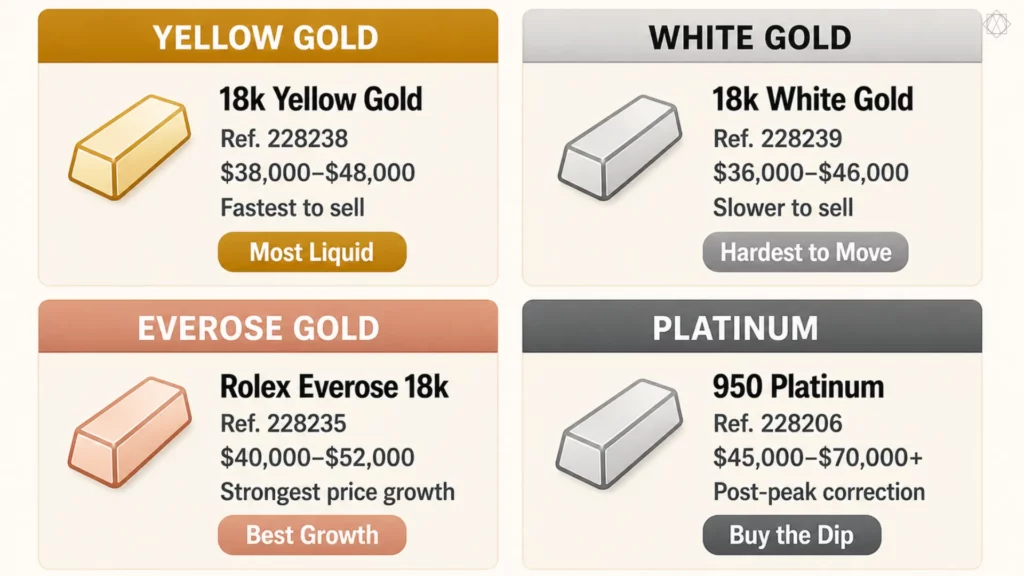
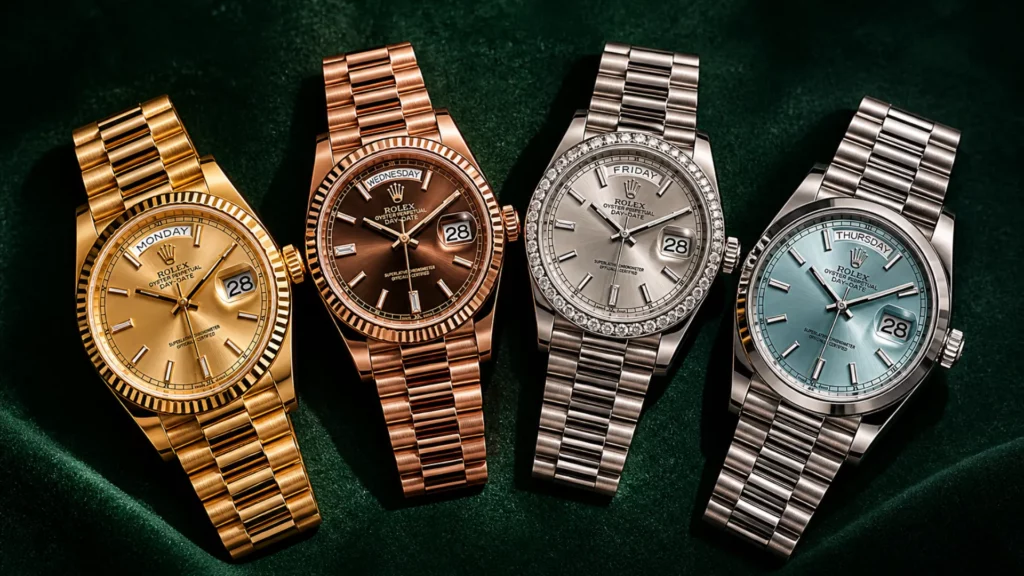
Yellow gold Day-Dates sell the fastest on the secondary market. White gold sits longer because it looks too much like steel. Everose has the strongest price growth of any modern metal. Platinum is the most expensive, but the ice blue 228206 has been correcting from its 2022 peak.
Yellow gold with a champagne dial is the fastest-moving Day-Date in the pre-owned market. Buyers want a Day-Date to look like one, and yellow gold reads as gold from across the room. White gold is harder to sell because buyers paying gold money want the gold to be obvious. We go deeper on the white gold vs platinum trade-off in a separate piece if you’re stuck between the two.
Everose is Rolex’s own rose gold, introduced in 2005. It’s shown the strongest price growth of the four metals over the last five years. Chocolate dial Everose 228235 examples regularly trade at the top of the modern range.
The platinum 228206 with the ice blue dial sits at $45,000 and reaches well past $60,000 for clean examples. Speculation drove prices over $90,000 in 2022, and they have come back down. If you’re buying one now, you’re catching a softening market. Price your offer to match.
4. Decide Between a Stock Dial and a Rare Dial
Stock dials (champagne, silver, black) are easy to sell and easy to verify. Rare dials (Stella, hardstone, meteorite) carry premiums of 30 to 80 percent, but fakes are everywhere. The dial decides 30 to 50 percent of the final price on most Day-Dates.
Stella dials are hard-fired enamel in saturated colors like coral, turquoise, and bright green. They were made mostly in the late 1970s and into the 1980s. White gold and pink gold Stellas are the rarest.
Fakes are everywhere, so buy these only from a trusted dealer with deep vintage Rolex experience like Majestix Collection. If you want to learn the tells yourself, our breakdown on how to spot a fake Day-Date walks through the most common giveaways.
Hardstone dials use real stone like onyx, lapis lazuli, malachite, and bloodstone, cut and fitted into the case. They show up most often in 18238 and 118238. Premiums run 30 to 60 percent over a champagne dial of the same reference.
Meteorite and mother-of-pearl dials show up on modern Day-Dates. They add roughly $3,000 to $8,000 over a stock dial, depending on the reference and condition.
Rolex Day-Date Reference Guide and Current Prices
The table below shows current pre-owned prices for each major Day-Date reference in early 2026, pulled from Chrono24, WatchCharts, and recent dealer transactions.
Prices reflect clean yellow gold examples with original dials. White gold and Everose vary by 5-15 percent from these baselines.
| Reference | Era | Case Size | Typical Price (2026) | Buying Note |
| 1803 | 1959–1977 | 36mm | $8,500–$12,000 | Vintage entry. Watch for bracelet stretch. |
| 18038 | 1977–1988 | 36mm | $10,000–$14,000 | First quickset. Neo-vintage value. |
| 18238 | 1988–2000 | 36mm | $14,000–$18,000 | Best dollar-for-dollar Day-Date. |
| 118238 | ~2008–2015 | 36mm | $18,000–$24,000 | Most underrated. Often discounted. |
| 128238 | 2015–present | 36mm | $28,000–$35,000 | Modern 36mm baseline. |
| 228238 | 2015–present | 40mm | $38,000–$48,000 | Current production reference. |
| 228206 | 2015–present | 40mm | $45,000–$70,000+ | Platinum. Ice blue dial speculative. |
The 118238 is the most overlooked reference in this table. Most buyers skip it because the 128238 replaced it, so the 118238 sells for 20 to 30 percent less than newer 36mm models that are nearly identical. If you want modern reliability without paying modern money, the 118238 is worth a closer look.
The vintage-modern crossover sits around $18,000. Below that, you’re looking at the 18238 with full sapphire crystal and modern feel. Above $25,000, the features barely change but the price keeps climbing.
The gold weight floor is part of why Day-Date prices don’t crash the way steel sport watches do in soft markets. That floor is also why a clean 18238 holds value almost as well as a modern 228238.



Is the Rolex Day-Date a Good Investment?
The Day-Date holds value better than most luxury watches because of its precious-metal floor. Standard production references keep their worth, but they won’t make you money.
A fully linked 18k gold Day-Date carries roughly $8,000 to $10,000 in melt value at current spot prices. That puts a hard floor under any clean example, even in a soft market. It’s the reason a 30-year-old 18238 still trades for $15,000 while a 30-year-old steel Datejust of the same generation trades for $4,000. If you’re cross-shopping the two, the Day-Date vs Datejust comparison lays out where each one makes sense.
Where Day-Dates appreciate:
- Discontinued modern references with strong demand. The platinum 228206 with the ice blue dial appreciated past $90,000 in 2022 before correcting. Even after the correction, clean examples still trade well above retail.
- Rare dial configurations. Stella dials, hardstone dials, and meteorite examples can appreciate 30 to 80 percent over a stock dial of the same reference, and the gap widens over time as supply tightens.
- Early references in collector condition. A clean 6510 or 6511 with original dial and bracelet has appreciated steadily for two decades and shows no sign of slowing.
Standard production Day-Dates in stock dials don’t go up in value. A new 128238 or 228238 holds its purchase price for a year or two, then moves with gold prices and Rolex’s retail changes. You can wear it and resell without losing money, but it won’t grow in value.
A Day-Date works as a wearable luxury that holds its value. As an appreciation play, you’re buying the wrong reference.
4 Things to Inspect Before Buying a Pre-Owned Day-Date
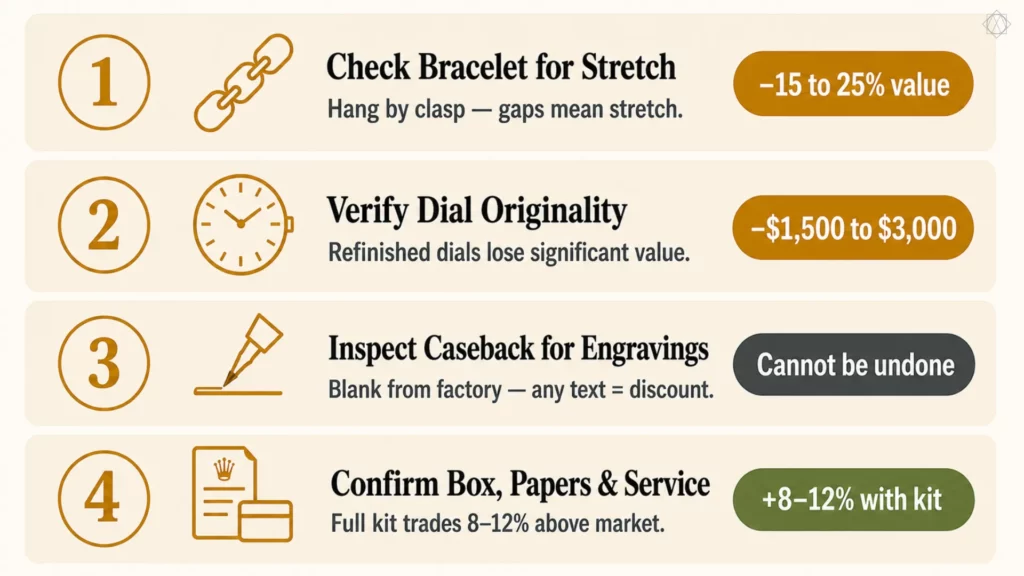
Every pre-owned Day-Date should pass these four checks before you buy. Bracelet stretch, dial refinishes, caseback engravings, and missing service history are what knock the most off the price.
1. Check the President Bracelet for Stretch
Pick the watch up by the clasp and let the bracelet hang. If the links sag or the gaps between them look uneven, the bracelet has stretched.
This is the single biggest deduction on a vintage Day-Date. A bracelet restoration at Rolex service typically runs $2,000 to $4,000 depending on the work needed, and visible stretch knocks 15 to 25 percent off market value.
Post-2015 Day-Date 40 bracelets use updated link construction that reduces the problem on modern references.
2. Verify Dial Originality and Refinish Status
A refinished dial knocks $1,500 to $3,000 off a vintage Day-Date. Check the printing crispness, the font era, and the integrity of applied markers. On 1803 and 18038 dials, the pie-pan profile should still be visible. Service dials from the 1980s and 1990s are common on vintage references and should be priced as such, not as factory originals.
3. Inspect the Caseback for Engravings
Day-Date casebacks are unsigned and screw-down from the factory. Any engraving like a name, a date, or a company logo signals a customized example. These trade at significant discounts because the engraving can’t be undone without compromising the case. On modern references, also check that the inner caseback markings match the model and serial.
4. Confirm Box, Papers, and Service History
A Day-Date with a full kit (original box, papers, hang tags) trades 8 to 12 percent above the same watch sold alone. Service receipts from Rolex or a known watchmaker add buyer confidence. If the watch is over 10 years old with no service record, factor a $1,000 to $1,500 service into your offer.
The Caliber 3155 and 3255 are robust, but Rolex recommends service roughly every 10 years to keep seals and gaskets in spec.
Where to Buy Authentic Rolex Day-Date Watches
There are three good places to buy an authentic Day-Date. Each one is a trade-off between price and how much you have to verify yourself.
1. Rolex Certified Pre-Owned — Lowest Risk, Highest Price
Certified Pre-Owned (CPO) is Rolex’s own program, sold only through authorized dealers. You get premium pricing, a two-year guarantee, and full Rolex authentication. Best for buyers who want zero risk and don’t mind paying 15 to 25 percent over private-sale price.
The CPO catalog is the most limited of the three channels. Vintage references rarely show up here, so if you’re hunting an 18238 or earlier, this isn’t the right channel.
2. Trusted Independent Dealers — Best for First Time Buyers
This is where most Day-Date buyers actually land. A good dealer authenticates every piece, photographs it in detail, and stands behind the sale.
At Majestix Collection, every Day-Date is hand-inspected before listing. Bracelet stretch, dial originality, caseback engravings, and full kit are all verified. You pay a dealer markup over a private sale, but you skip the inspection burden and the risk. Best for first time buyers and for anyone buying north of $15,000.
3. Marketplace Platforms — Lower Prices, More Risk
Marketplace platforms like Chrono24, eBay, and Grailzee give you wider selection and lower prices than dealers. The trade-off is that you have to verify the watch yourself.
On Chrono24, use Trusted Checkout or escrow. Always require detailed photos of the dial, clasp, and caseback before paying. We cover what to watch for on Chrono24 in a separate guide if you’ve never used the platform before. On eBay, stick to sellers with strong watch-specific feedback and use the platform’s authenticity guarantee where eligible.
Grailzee runs timed watch auctions with shorter cycles, which works well for clean modern references if you know what you’re inspecting. Best for buyers who already know what to look for.
If you’re not sure which channel is right for you, go through a trusted dealer like Majestix Collection for your first Day-Date. The premium over a private sale is small compared to the cost of an unverified bracelet stretch, a refinished dial, or a service-replacement movement.
999+ Timepieces Available
Explore Our Timepieces
Authenticated, unworn, and ready to ship worldwide.
Rolex · Audemars Piguet · Patek Philippe · Omega · Cartier · Richard Mille · Hublot · Tudor
Newly Listed

Vacheron Constantin Overseas Chronograph "Reverse Panda" Black Dial Silver Subdials Stainless Steel 42.5mm MINT CONDITION COMPLETE SET 5500V/110A-B481
$34,095.00

Rolex Sky-Dweller Black Dial 18K White Gold Fluted Bezel Oyster Bracelet Stainless Steel 42mm MINT CONDITION COMPLETE SET 336934-0007
$21,945.00

2026 Rolex Datejust Green Ombre Dial Smooth Bezel Jubilee Bracelet Stainless Steel 41mm MINT CONDITION COMPLETE SET 126300
$16,480.00

2026 NEW UNWORN Cartier Santos-Dumont Silver Dial Platinum Mesh Bracelet Platinum 31mm COMPLETE SET WGSA0124
$64,790.00

2026 Tudor Black Bay 58 Black Dial Jubilee Bracelet Stainless Steel 39mm MINT CONDITION COMPLETE SET 7939A1A0NU
$5,717.00

NEW UNWORN Rolex Submariner Date “Sub Date” Black Dial Black Ceramic Bezel Oyster Bracelet Stainless Steel 41mm COMPLETE SET 126610LN
$15,595.00
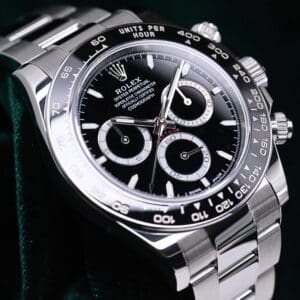
Rolex Cosmograph Daytona "Reverse Panda" Black Dial Black Ceramic Bezel Oyster Bracelet Stainless Steel 40mm MINT CONDITION COMPLETE SET 126500LN
$32,009.00
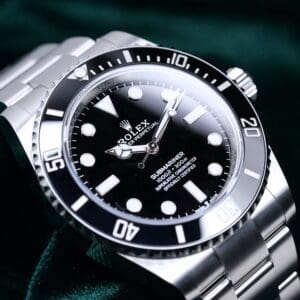
2026 NEW UNWORN Rolex Submariner No Date Black Dial Black Ceramic Bezel Oyster Bracelet Stainless Steel 41mm COMPLETE SET 124060
$15,219.00
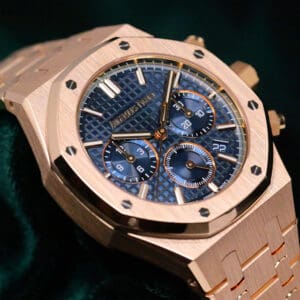
Audemars Piguet Royal Oak Selfwinding Chronograph Bleu Nuit Nuage 50 Blue Dial Bracelet 18k Rose Gold 38mm MINT CONDITION COMPLETE SET 26715OR.OO.1356OR.01
$104,942.00
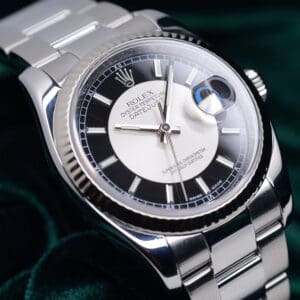
Rolex Datejust “Tuxedo” Black and Silver Dial 18K White Gold Fluted Bezel Stainless Steel Oyster 36mm MINT CONDITION COMPLETE SET 116234
$10,671.00
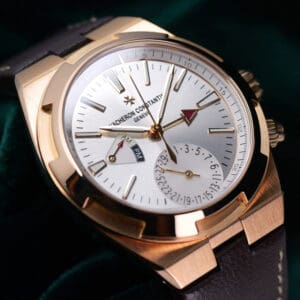
Vacheron Constantin Overseas Dual Time Silver Dial Brown Leather Strap 18K Rose Gold 41mm MINT CONDITION COMPLETE SET 7900V/000R-B336
$41,894.00
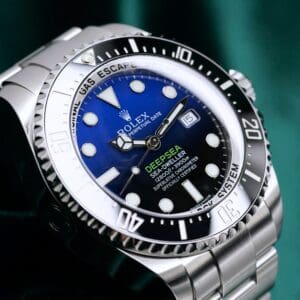
Rolex Sea-Dweller Deepsea James Cameron D-Blue Dial Black Ceramic Bezel Oyster Bracelet Stainless Steel 44mm MINT CONDITION 116660-0003
$14,272.00
Final Thoughts on the Rolex Day-Date Buying Guide
Buying a Day-Date comes down to four decisions: vintage or modern, 36mm or 40mm, metal, and stock or rare dial. Run the four inspection checks before you pay. The 18238 is the best dollar-for-dollar pick. The 228238 is the modern sweet spot. The 118238 is the most overlooked deal.
Two tips not in the body. A Day-Date worn weekly ages better than one in the safe. The gold develops a softer color over years of regular wear. And if the price gap is wide, pick a clean original dial over full papers. Missing papers can be backed up through Rolex service archives, but a repainted dial can’t be undone. We go deeper on buying a Rolex without box and papers if that trade-off is on the table for you.
For the wider Rolex picture beyond the Day-Date, our full Rolex buying guide covers how the line fits together and where the Day-Date sits in it.
Use this Rolex Day-Date buying guide as your checklist when you’re shopping. If you want to skip the inspection work, our available Day-Date inventory is hand-inspected against the four checks above. Browse our selection or message us with your shortlist.