
Fake Rolex Day-Date watches are getting harder to spot, and that’s exactly why so many buyers end up making an expensive mistake. If you’ve been researching how to spot a fake Rolex, you’ve probably noticed that some listings look convincing at first glance, almost too convincing. You might catch yourself thinking that everything seems right, yet something still feels off. That hesitation is exactly the gap counterfeiters rely on.
The good news is you don’t need to be a watchmaker or luxury dealer to protect yourself. By knowing the telltale details that real Day-Date models never get wrong, you can confidently spot authentic watches and avoid costly mistakes.
In this guide, you’ll learn the key signs that separate an authentic Rolex from a convincing fake, so you can shop with confidence instead of guessing.
Overview of the Rolex Day-Date
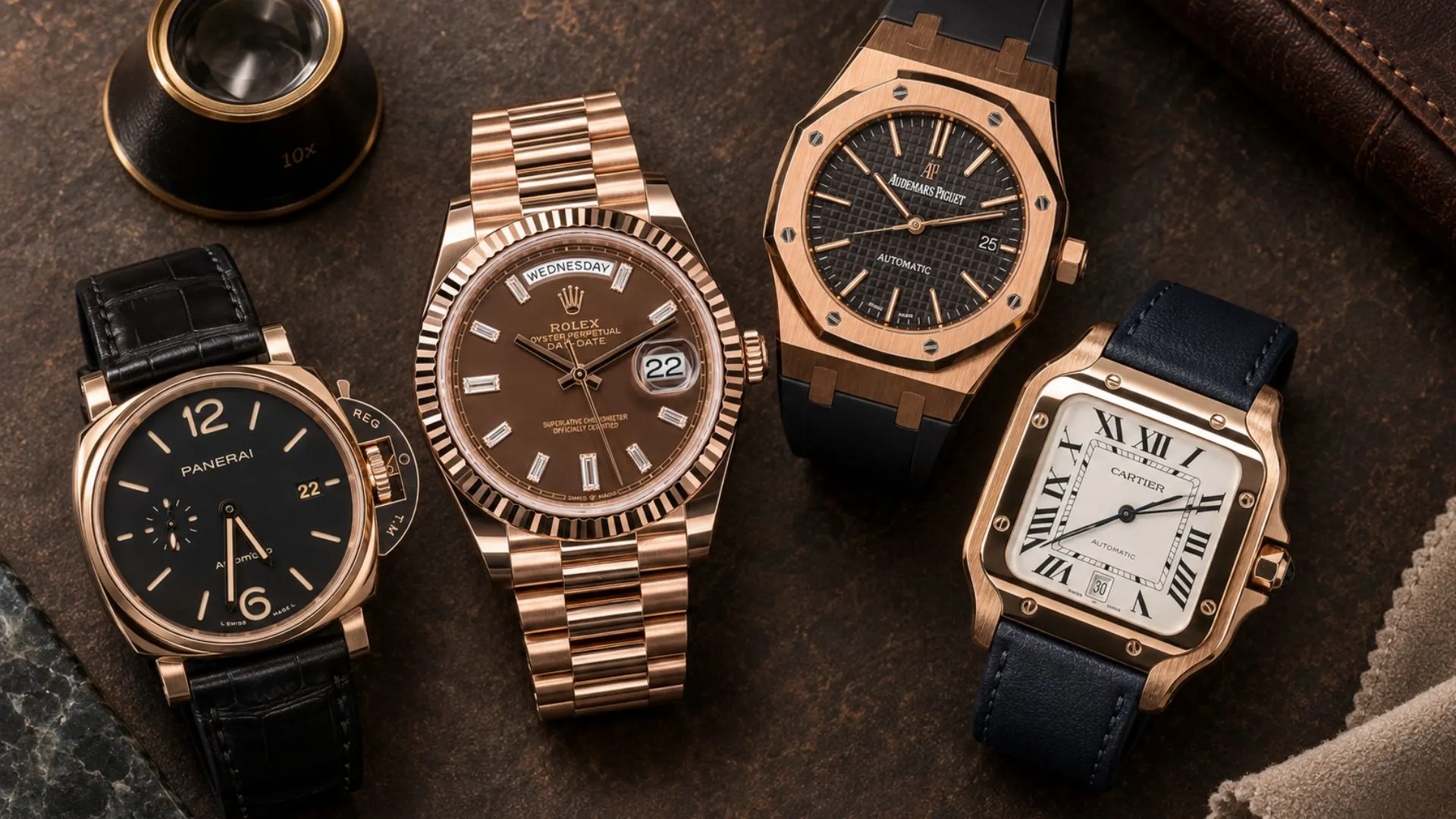
The Rolex Day-Date is a prestigious watch first introduced in 1956, often called the “President” for its association with world leaders. It comes in various materials, including yellow gold, white gold, rose gold, and platinum, and features a signature day display at 12 o’clock alongside the date at 3 o’clock.
The Day-Date also offers different dial colors, markers, and bracelet styles, such as the classic President bracelet and the modern Oyster bracelet. Understanding these variations helps you identify authentic models and spot inconsistencies when checking for a fake.
Different Day-Date Sizes
Rolex offers the Day-Date in several case sizes to suit different preferences, including the classic 36mm, the 41mm Day-Date II, and the modern 40mm version. Knowing these size variations helps collectors and buyers recognize authentic models and spot counterfeit watches.
- Day-Date 36: The classic 36mm case is the most recognizable and balanced, offering a timeless look that has defined the model for decades.
- Day-Date II (41mm): Introduced a larger 41mm case for a bolder wrist presence, while retaining the iconic day and date functions.
- Day-Date 40: Replacing the Day-Date II, this modern 40mm case features slimmer lugs, updated movements, and refined finishing, offering a contemporary design while honoring the model’s classic heritage.
Vintage vs. 5-Digit vs. Modern 6-Digit Day-Date Differences
Rolex Day-Date watches have evolved over decades, and understanding the differences between vintage models, 5-digit references, and modern 6-digit references helps buyers and collectors identify authenticity and design changes. Each generation offers distinct traits in case style, bezel options, bracelet construction, and dial design.
This table highlights the key differences that can help you spot inconsistencies and verify authenticity when examining a Rolex Day-Date.
| Feature | Vintage Day-Date | 5-Digit Day-Date | Modern 6-Digit Day-Date |
| Case Style | Slim lugs, smaller profile | Slightly thicker lugs, refined case | Wider lugs, polished edges, more robust profile |
| Bezel Options | Mostly fluted, smooth, rare | Fluted and smooth more common | Fluted, smooth, and more intricate options |
| Bracelet Construction | Hollow links, folded clasps | Solid links, improved clasp | Fully solid links, modern concealed Crownclasp |
| Dial Design Traits | Simpler markers, painted text | Applied markers, more color options | Applied markers, modern fonts, enhanced finishing |
Day-Date Uses Only Gold or Platinum
Rolex has designed the Day-Date exclusively in precious metals, including yellow gold, white gold, rose gold, and platinum. The brand has never produced a stainless-steel version, making this a critical detail for authentication.
Every genuine Day-Date features the weight, luster, and finishing unique to these metals, from the polished fluted bezel to the solid links of the bracelet. Counterfeit models often attempt to mimic this look in stainless steel or plated metals, but they fail to match the heft and craftsmanship of a real Day-Date.
Recognizing that Rolex reserves this model for gold and platinum helps buyers quickly eliminate fake options and focus on authentic pieces.
President Bracelet Generations
The Rolex Day-Date has always featured the iconic President bracelet, but it has evolved across generations. Examining the differences in link construction, clasp design, and end-link style helps collectors and buyers identify authentic models and spot fakes.
| Feature | Early Generation | 5-Digit Generation | Modern 6-Digit Generation |
| Link Construction | Hollow center links, lighter feel | Solid center links, more durable | Fully solid links, substantial weight |
| Clasp Design | Folded clasp, simpler mechanism | Improved folding clasp, more secure | Modern concealed Crownclasp, sleek and robust |
| End-Link Style | Hollow end-links, less integrated | Solid end-links, better fit | Fully integrated solid end-links, seamless connection |
| Dial Design Traits | Simpler markers, painted text | Applied markers, more color options | Applied markers, modern fonts, enhanced finishing |
How to Spot a Fake Rolex Day-Date

Spotting a fake Rolex Day-Date comes down to carefully examining the watch’s physical features, movement, and documentation. Counterfeiters can mimic the look but rarely match Rolex’s precise craftsmanship and finishing.
Reviewing each element closely allows you to confidently tell a genuine watch from a fake.
Physical Checks
Start by examining the watch’s physical features, as these are the most obvious indicators of authenticity. Paying close attention to the case, dial, and bracelet can quickly reveal discrepancies commonly found in counterfeit models.
1. Weight and Feel
Genuine Day-Date watches made from gold or platinum have substantial weight. Counterfeits often feel lighter due to cheaper metals.
2. Case and Bezel Finish
Examine the fluted or smooth bezel and case edges. Authentic Rolex finishes are sharp and precise, while fakes may show rough or uneven edges.
3. Dial Details
Look at the markers, fonts, and date magnification. Real Day-Date dials have perfectly applied markers, consistent text, and a clear cyclops lens magnifying the date 2.5x.
4. Bracelet and Clasp
Check the President bracelet links and clasp. Authentic bracelets have solid links and smooth operation; fake bracelets often rattle or have hollow links.
Movement Checks
After reviewing the watch’s exterior, focus on the movement, as Rolex’s precise mechanics are difficult to replicate. Checking the movement confirms that the watch functions correctly and matches genuine specifications.
1. Smooth Sweeping Seconds Hand
Rolex movements feature a near-perfect smooth sweep. Quartz or poorly replicated movements on fakes cause ticking or uneven motion.
2. Movement Engravings
Open the caseback if possible. Genuine Rolex movements have precise engravings, serial numbers, and high-quality finishing. Fakes often have sloppy or missing engravings.
3. Function Accuracy
Test the day and date changes. Authentic Day-Date watches switch both precisely at midnight, whereas counterfeit watches may lag or misalign.
Documentation & Packaging Checks
Verify the watch’s paperwork and packaging, as authentic Rolex documents and boxes are carefully produced. These items provide additional confirmation that the watch is genuine and not a counterfeit.
1. Original Papers
Verify the warranty card or certificate with the watch’s serial and model numbers. Counterfeit papers often contain errors or poor printing.
2. Box and Accessories
Check the Rolex box, manuals, and tags. Authentic packaging has consistent colors, textures, and logos. Fakes may use cheaper materials or incorrect branding.
3. Serial and Reference Matching
Verify that the serial number on the watch matches the paperwork. Mismatched numbers indicate a fake or a swapped watch.
Complete Rolex Day-Date Authenticity Checklist

To confirm a Rolex Day-Date is genuine, examine key details systematically. The table highlights the most important elements so you can quickly spot inconsistencies and red flags that indicate a counterfeit.
| Item to Check | What to Look For | Red Flags |
| Case Material | Solid gold or platinum, flawless finishing | Lightweight, stainless steel, or poorly polished surfaces |
| Bezel | Precise fluted or smooth bezel with sharp edges | Rough, uneven, or inconsistent fluting |
| Dial | Applied markers, consistent fonts, clear cyclops lens | Misaligned markers, faded text, magnification off |
| Bracelet & Clasp | Solid links, smooth operation, concealed Crownclasp | Hollow links, rattling, loose or poorly finished clasp |
| Movement | Smooth sweeping seconds hand, engraved movement, precise day/date change | Ticking seconds, sloppy engravings, lagging day/date function |
| Serial & Reference Numbers | Match paperwork, crisp engravings | Missing, altered, or mismatched numbers |
| Box & Packaging | High-quality materials, correct logos, manuals included | Cheap materials, incorrect logos, missing accessories |
| Warranty Papers | Correct model and serial, clean printing | Errors, low-quality printing, inconsistencies |
Key Takeaways on How to Spot a Fake Rolex Day Date
Identifying a fake Rolex Day-Date also involves noticing subtle details that counterfeiters often overlook. Check for consistent weight distribution across the watch, precise alignment of the day and date windows, and the quality of engravings on the inner bezel or rehaut. Authentic models feature perfectly finished edges and uniform spacing in the bracelet links that many replicas fail to replicate.
Examine the watch under magnification for tiny inconsistencies in the text or logos that reveal poor craftsmanship. Consulting official Rolex references or trusted experts can provide added confirmation, giving you confidence that your watch is truly genuine.
FAQs About How to Spot a Fake Rolex Day-Date
What is the fastest way to tell if a Rolex Day-Date is fake?
Check for inconsistencies in engraving depth, crown logo placement, and bezel symmetry. These subtle flaws are difficult for counterfeiters to replicate and can quickly reveal a fake without requiring inspection of the movement or other internal components during an evaluation.
Are gold and platinum Day-Date models commonly counterfeited?
Yes, these models are frequently targeted. Many replicas fail to replicate authentic hallmark stamps, precise edge finishing, and the true shine of genuine precious metals, making close inspection of the metal’s texture and surface details essential for identifying fake pieces.
Can I authenticate a Day-Date without opening the caseback?
Yes, focus on serial engraving clarity, clasp precision, and bezel alignment. These external details often reveal inconsistencies, enabling confident authenticity checks without opening the watch as subtle irregularities in craftsmanship appear on visible components before internal movement inspection becomes necessary.
Is it safe to buy a Day-Date without original papers?
Purchasing without papers carries extra risk. Rely on professional verification, inspect fine engravings, and review any available provenance, as the lack of official documentation significantly raises the likelihood of unknowingly buying a counterfeit and makes careful authentication even more essential.