
Most Audemars Piguet Royal Oak buying guides waste your time with a long history lesson before they get to anything useful. We’re keeping the background short. You already know it’s the watch Genta drew on a napkin, and you don’t need a quartz-crisis detour to choose one.
What you really need is a clear answer on which Royal Oak is right for you, what it costs in 2026, and what to check before you wire $50,000 to a stranger online.
This guide breaks the buying decision into three steps and gives you real grey market numbers from WatchCharts and Chrono24. Let’s get into it.
Audemars Piguet Royal Oak Background
The Royal Oak is the watch that turned stainless steel into a luxury proposition. When AP launched the original 5402 in 1972 at 3,300 Swiss francs, it cost roughly four times what a steel Rolex Submariner did, and the market thought AP had lost its mind. Five decades later, that same MSRP ratio still holds.
Today, the Royal Oak is one of the three most cross-shopped luxury sports watches in the world, alongside the Patek Nautilus and the Vacheron Overseas.
The collection now spans 33mm quartz models all the way up to grand complications clearing $300,000, and the steel core references trade well above retail on the secondary market. If you want the broader picture of where the Royal Oak sits in the maison’s lineup, our full Audemars Piguet buying guide covers the rest of the collections.
How to Choose a Royal Oak in Three Steps

Every Royal Oak buyer makes three decisions in order: which sub-collection, which size and material, and whether to buy new, pre-owned, or vintage. Most of the regret we see in this market traces back to one of those three.
Decision 1: Pick Your Royal Oak Sub-Collection
The Royal Oak family has four sub-collections you’ll shop. Each one solves a different problem, and most buyers regret crossing wires on this step more than any other.
1. Jumbo Extra-Thin — Best for Heritage Buyers

The Jumbo is the closest living relative of the original 5402 from 1972. The reference most heritage buyers want is the 15202ST, the 39mm steel Jumbo that AP discontinued in 2022, powered by the famous Calibre 2121.
The 2121 is a 2.75 Hz JLC-based movement with a 40-hour power reserve, one of the thinnest full-rotor automatics ever made. AP retired it in 2022 and launched the in-house Calibre 7121 in the new 16202ST. That makes the 15202ST the last Jumbo with the original Royal Oak movement.
It launched at around $33,200 in steel and now trades around $95,000 to $130,000 on the secondary market, depending on condition, dial color, and whether it has a full set. If you want the truest expression of the Royal Oak design, this is the one. We walk through how the standard Royal Oak stacks up against the Jumbo if you’re torn between the two.


2. Selfwinding 41mm — Best Daily Wearer for Most Buyers

The 15510ST is the watch most first-time AP buyers should own. It’s 41mm, has a central seconds hand, lume on the indices, and uses Calibre 4302 with a 70-hour power reserve. Retail is $31,900.
Market price sits around $46,979, a 47.3% premium. That’s significant, but it’s the most reasonable entry point into a current steel Royal Oak.
The 15510 replaced the older 15500 in 2022. The biggest functional change was the addition of luminescent material to the hour markers and hands, which the 15500 didn’t have. If you can’t tell the two apart at arm’s length, that’s the point.



3. Chronograph — Best for Functionality and Wrist Presence

The 26240ST is the current 41mm Royal Oak Chronograph, powered by Calibre 4401, AP’s first in-house integrated flyback chronograph. Retail is $44,400 and market price runs around $55,064, a 24% premium. That’s one of the lower markups in the current lineup.
The chronograph wears thicker than the Selfwinding because of the movement and pushers. If you’re between this and the 15510ST and you don’t use the chrono function, save the money and buy the 15510.




4. Offshore — Best for Bolder, Sportier Wearers

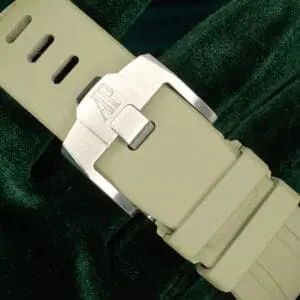
The Offshore is the muscular cousin Emmanuel Gueit drew up in 1993 to broaden the Royal Oak’s reach. The current-generation reference is the 26420SO, a 43mm steel chronograph with a ceramic bezel and the same Calibre 4401 powering the 26240. Bigger case, thicker profile, more visible gaskets. If the Offshore is on your radar, our dedicated Royal Oak Offshore buying guide goes deep on references, sizes, and pricing.
Offshore prices have softened more than core Royal Oak prices over the past 18 months. The Offshore buyer base skews younger and sportier, and that crowd flips watches faster than the core Royal Oak buyer. If you genuinely want the Offshore aesthetic, prices haven’t been this reasonable since 2020. Still torn between the two? Our Royal Oak vs Royal Oak Offshore breakdown covers the differences in detail.




Decision 2: Choose the Right Size and Material
Sub-collection locked in? Case size and material come next. This is the step buyers get wrong most often, and the one that drives the highest resale rate inside a year of purchase.
Match the Case Size to Your Wrist

The Royal Oak is sold in 33mm, 34mm, 37mm, 39mm, and 41mm sizes. The 39mm Jumbo and the 41mm Selfwinding are the two most-shopped configurations. Use your wrist measurement as the deciding factor:
- Under 7 inches: The 39mm Jumbo sits closer to the original Royal Oak proportions and wears better than the 41mm.
- 7 to 7.5 inches: Both work, though the 41mm Selfwinding gives the bolder presence most modern buyers want.
- Above 7.5 inches: The 41mm and Offshore make more sense.
The 37mm 15550ST is worth knowing about if you have a sub-7-inch wrist and want the modern Selfwinding feature set in a smaller case. AP markets it as a “ladies” reference, which is silly. Plenty of male collectors with 6.5-to-7-inch wrists wear the 15550ST as a daily wearer, and on a smaller wrist it sits more comfortably than the 41mm.
A first Royal Oak should also be a daily Royal Oak. Plan to spend at least $30,000 to $50,000 for a current steel reference in good condition with a full set, with the 15510ST as the realistic floor for a current Selfwinding on the secondary market.
Older 15300 and 15400 references can be found in the low-to-mid $30Ks. Below that, you’re in 33mm or 34mm quartz territory, which is a different watch entirely.
Steel vs Gold vs Ceramic: Real Price Deltas

Steel is the most liquid configuration on the secondary market and trades the highest premium over retail. Rose gold versions of the same reference can cost roughly 2x to 2.5x the steel retail. Platinum runs even higher.
Ceramic Royal Oaks (especially the 41mm chronographs) are polarizing. Collectors either love them or skip them. AP applies the same hand-finishing to ceramic that they do to steel, and the brushing and bevels hold up to close inspection.
For a first Royal Oak, steel is the default answer. It holds value, it’s universally recognized, and it costs less to insure.
Decision 3: Pick New, Pre-Owned, or Vintage

This is the decision that confuses new buyers most. Walking into an AP boutique sounds like the right play. For most people, it isn’t.
Why the Boutique Path Doesn’t Work for Most Buyers
AP doesn’t work with multi-brand authorized dealers anymore. Every new Royal Oak is sold through AP-owned boutiques and AP Houses, and allocations are based on purchase history, not a first-come-first-served list.
Typical waitlist times by buyer profile:
- Walk-in client with no AP history: 12 to 24 months, and may never be offered the steel Royal Oak they want.
- Established client with prior purchases: 3 to 12 months.
- Top-tier collector with multi-watch history: Sometimes weeks.
The boutique gets you authenticity, full warranty, and the relationship for future purchases. The trade-off is years of waiting and often buying watches you don’t want first to “earn” allocation. For most buyers, that math doesn’t work. If you’re still weighing the authorized dealer route against the grey market, we’ve laid out the real trade-offs in a separate piece.
The Pre-Owned Market: Where Most Buyers Land
Most Royal Oak buyers end up on the secondary market. Prices are set by supply and demand instead of allocation history, and you’ll often pay a premium over retail for the privilege of skipping the line.
You need to know what you’re looking at. A pre-owned Royal Oak with the wrong service history or a polished case is worth significantly less than a clean example, and the sticker price doesn’t always reflect that. The pre-purchase checklist below covers exactly what to look for.
When a Vintage Royal Oak Makes Sense
Vintage references like the 5402, 14802, and 15002 are a different world. These watches are bought for design history and originality. Sharp original cases, untouched tropical dials, and known provenance command real money, and exceptional 5402 A-Series examples can clear seven figures at auction.
Vintage isn’t a value play. It’s a passion play. Buy one because you love the watch, not because you think you’re getting a deal.
Real 2026 Royal Oak Prices: Retail vs Grey Market
The pricing table below uses current data from WatchCharts as of May 2026 and AP’s published US retail prices.
| Reference | Sub-Collection | Retail (USD) | Market Avg (USD) | Premium Over Retail |
| 15202ST | Jumbo Extra-Thin 39mm (discontinued) | $33,200 (last list) | ~$110,000 | ~231% |
| 15510ST | Selfwinding 41mm | $31,900 | $46,979 | 47.3% |
| 26240ST | Chronograph 41mm | $44,400 | $55,064 | 24.0% |
| 26331ST | Chronograph (older, discontinued) | n/a | $43,159 | n/a |
The full Royal Oak collection averages around $48,000 on the secondary market, with the cheapest entry-level steel models running $7,000 and the highest grand complications clearing $300,000.
Which Royal Oaks Are Cooling, Holding, or Rising

Royal Oak prices peaked in early 2022. Since then, the market has corrected, but unevenly. Knowing which references are cooling and which are holding is the difference between a smart buy and an overpaid one.
References Cooling Off
The 15500ST is the clearest sleeper-pick story in the lineup. It’s discontinued, uses the same Calibre 4302 movement as the current 15510, and trades 30-40% below the 15510 on the secondary market. The only meaningful difference is the lume on the indices. If you don’t dive in the dark with your watch, this is one of the best Royal Oak values available.
The 15400ST (the older 41mm) has bottomed in the low $30Ks for clean examples. Many Offshore references have softened 15-25% from peak, especially the 42mm 26470 and 26480 chronographs.
References Holding Steady
The 15202ST Jumbo is up 8.2% over the past year while the broader AP market has softened, making it one of the strongest performers in the lineup since its 2022 discontinuation.
The 15510ST holds steady demand at its current premium. The current-production 16202ST (the 7121-powered successor to the Jumbo) trades around an 85.7% premium over its $40,100 retail, which is the steepest current markup in the steel lineup.
References Still Climbing
Vintage 5402 A-Series, certain anniversary editions, and rare dial variants continue to climb. Clean A-Series and B-Series 5402s have been hammering between $50,000 and $80,000 at major auction houses through 2025, and the very earliest examples (the first 100 produced) trade in seven figures.
These are collector pieces, not buyer pieces. They appreciate, but they’re slow to resell at the appreciated price because the buyer pool is small. If this is your first Royal Oak, skip these references entirely.
4 Things to Check Before Buying a Pre-Owned AP Royal Oak

The pre-owned market is where most Royal Oaks change hands. It’s also where the most expensive mistakes happen. Run through this checklist on every watch before wiring funds.
1. Inspect the Case for Over-Polishing
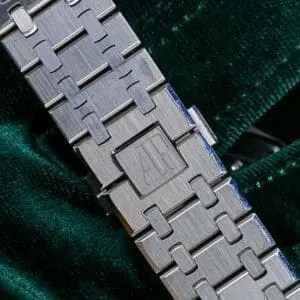
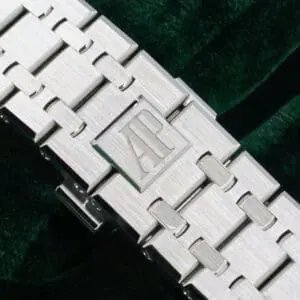
The Royal Oak’s case finishing is its defining feature. Each case has alternating brushed surfaces on the top with polished bevels along the chamfer. A non-AP service center that polishes the case will round those sharp transitions and ruin the original lines.
Look for crisp, parallel brushing on the top of the case and a clean, mirror-bright bevel. If the bevel looks soft or the top brushing is worn into a haze, the watch has been polished. Expect a 15-25% market discount on a polished case. If you’ve never paid close attention to what a polish actually does to a case, it’s worth knowing before you start inspecting Royal Oaks.
2. Verify the Full Set and Service Papers
A “full set” means the original AP box, outer box, warranty card, and all included links. Without papers, expect a 10-15% discount.
Service history matters too. AP-authorized service centers are the safest choice for these movements, and any non-AP stamp in the service papers is a flag worth pricing in.
3. Test the Bracelet for Stretch
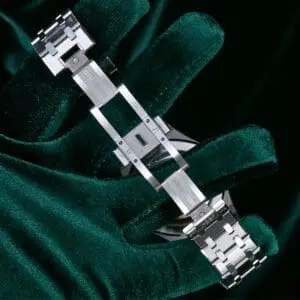
Older Royal Oak bracelets stretch over years of wear, especially on watches worn daily for a decade or more. Pre-2010 references stretch more than current ones because AP tightened the bracelet construction over time.
Lift the bracelet by one end while it’s flat. If the links sag visibly between your fingers, the bracelet has stretched. AP can refurbish or replace it through its service centers. Costs run anywhere from a few hundred to over a thousand dollars depending on whether you need clasp work, new links, or a full replacement on an older reference.
4. Confirm the Production Year and Reference
Decode the reference from the case back. The two-letter material code tells you what it’s made of: ST is steel, OR is rose gold, BA is yellow gold, BC is white gold, PT is platinum, CE is ceramic, TI is titanium.
So 26240OR is a rose gold chronograph and 15510ST is the steel Selfwinding. The serial number combined with an AP Extract from the Archives will confirm the production year.
Royal Oak vs Patek Nautilus vs Vacheron Overseas

The Royal Oak, Patek Nautilus, and Vacheron Constantin Overseas are the three watches that define the integrated-bracelet luxury sports category. Each one is the right answer for a different buyer.
Patek Nautilus — Maximum Prestige, Maximum Patience Required
The current steel Patek Nautilus is the hardest to get and the most expensive on the secondary market in this category. Allocation is even tighter than AP’s, and steel models trade at the highest premiums of the trio. If you want maximum prestige and you can wait years (or have a grey market budget that doesn’t flinch), the Nautilus wins.
We go deeper in our dedicated Nautilus buying guide, and the full Royal Oak vs Nautilus comparison lays out the head-to-head if you’re cross-shopping.
Audemars Piguet Royal Oak — Most Accessible of the Three
The AP Royal Oak has the widest sub-collection range and the highest transaction volume of the trio. Stock exists on the open market, and you can choose between Jumbo, Selfwinding, Chronograph, and Offshore in steel, gold, ceramic, or titanium. The premium over retail is real, but the watches are findable.
Vacheron Constantin Overseas — The Value Pick
The Vacheron Overseas trades closest to retail. It has an interchangeable bracelet system with quick-change steel bracelet, rubber strap, and leather strap, comes in three case sizes, and runs in-house movements across the line. It also has the strongest finishing-to-price ratio of the trio. The trade-off is lower brand recognition outside the watch community.
Our Overseas buying guide covers the current references, and the Royal Oak vs Overseas breakdown walks through the side-by-side if you’re choosing between them.
Pick the Nautilus for prestige if you can wait. Pick the Royal Oak for the original integrated-bracelet design with real availability. Pick the Overseas for the best value.
Where to Buy Authentic Audemars Piguet Royal Oak Watches
If the boutique allocation isn’t realistic, the secondary market is where you’ll find the watch. The question is which corner of it.
Trusted dealers are the cleanest path for most buyers. A real dealer inspects every watch in person, verifies the movement, checks the bracelet for stretch, confirms the case has not been over-polished, and backs every watch with a warranty.
You pay slightly more than the lowest sticker on Chrono24, but you get a vetted watch and a real person you can call if something is off. This is what we do at Majestix Collection, and it’s how every Royal Oak listed on our site is sourced. For a wider look at where to safely buy pre-owned luxury watches, our pillar guide covers every legitimate channel.
Other secondary market routes worth knowing:
- Chrono24: The largest aggregator of pre-owned watches, useful for gauging market pricing across thousands of listings. Each listing is a different seller with their own standards, so use it as a price reference and only buy from dealers with strong long-term track records and Trusted Seller status. We’ve written a full walkthrough on safely buying through Chrono24 if you plan to shop there.
- eBay: Real bargains and real disasters. The eBay Authenticity Guarantee program has improved things, but Royal Oaks attract a high volume of polished, refinished, and franken-watch listings. Only buy from sellers with extensive watch-specific feedback after cross-checking reference and serial numbers.
- Grailzee: The auction-format option for buyers comfortable with bidding. The platform vets sellers, but you’re still committing to a watch sight unseen until delivery.
Whichever route you choose, the rule is the same. Never wire money to a seller you can’t reach by phone, and never skip the pre-purchase checklist above.
999+ Timepieces Available
Explore Our Timepieces
Authenticated, unworn, and ready to ship worldwide.
Rolex · Audemars Piguet · Patek Philippe · Omega · Cartier · Richard Mille · Hublot · Tudor
Newly Listed
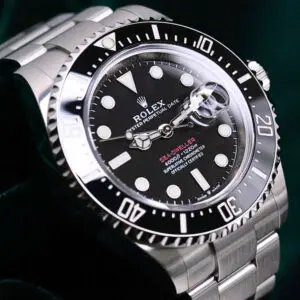
Rolex Sea-Dweller "Red Letter" Black Dial Black Cerachrom Bezel Oyster Bracelet Stainless Steel 43mm MINT CONDITION COMPLETE SET 126600
$13,120.00
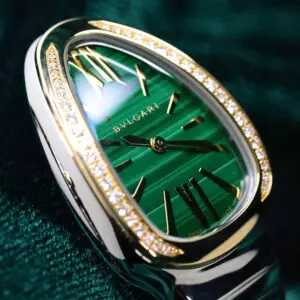
2026 NEW UNWORN Bvlgari Serpenti Tubogas Studs Capsule Limited Edition Green Dial Diamond Bezel Steel & 18k Yellow Gold 35mm COMPLETE SET 104360
$24,255.00

Vacheron Constantin Overseas Chronograph Blue Dial Blue Leather Strap Stainless Steel 42.5mm MINT CONDITION COMPLETE SET 5500V/110A-B148
$37,793.00

Tag Heuer Monaco Chronograph “Dark Lord” Special Edition Black Dial Black Leather Strap DLC Titanium 39mm MINT CONDITION COMPLETE SET CBL2180.FC6497
$8,135.00
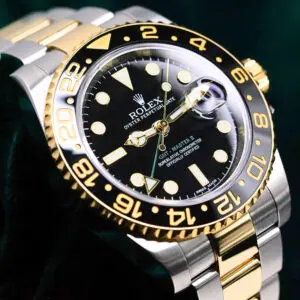
Rolex GMT-Master II “Green Arrow” Black Dial Black Ceramic Bezel Oyster Bracelet Two-Tone 18K Yellow Gold Stainless Steel 40mm MINT CONDITION COMPLETE SET 116713LN
$15,740.00

Vacheron Constantin Overseas Chronograph Blue Dial Stainless Steel 42.5mm MINT CONDITION COMPLETE SET 5500V/110A-B148
$37,793.00
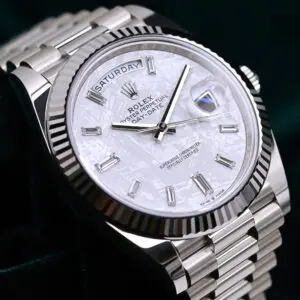
Rolex Day-Date Meteorite Baguette Diamond Dial Fluted Bezel President 18K White Gold 40mm MINT CONDITION COMPLETE SET 228239
$78,629.00

2026 Rolex Cosmograph Daytona Black Dial Black Ceramic Bezel Oyster Bracelet Stainless Steel 40mm MINT CONDITION COMPLETE SET 126500LN
$33,594.00

2025 Vacheron Constantin Overseas Moonphase Retrograde Date Blue Dial Blue Rubber Strap Stainless Steel 41mm MINT CONDITION COMPLETE SET 4000V/210A-B911
$52,800.00
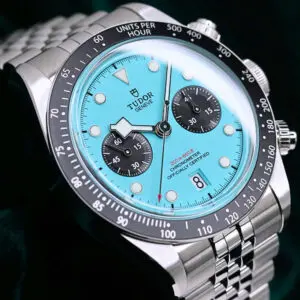
2025 Tudor Black Bay Chrono "Flamingo Blue" Turquoise Dial Black Bezel Stainless Steel 41mm MINT CONDITION COMPLETE SET 79360N-0024
$10,494.00

Audemars Piguet Royal Oak Offshore Chronograph "Batman" Black Dial Blue Accents Black Rubber Strap Stainless Steel 42mm MINT CONDITION COMPLETE SET 26470ST.OO.A028CR.01
$25,715.00

IWC Big Pilot's Watch Top Gun Miramar Grey Dial Green Textile Strap Black Ceramic 48mm MINT CONDITION COMPLETE SET IW501902
$7,240.00
Frequently Asked Questions About Buying a Royal Oak
These are the questions that come up in nearly every consultation we have with first-time Royal Oak buyers.
Is the Royal Oak a Good Investment in 2026?
The Royal Oak is a stable luxury asset, not a guaranteed investment. A more useful way to think about it is the total cost of ownership over five years.
You’ll pay a grey-market premium up front, the service costs covered in the next FAQ, and a few hundred a year for proper insurance through a specialist like Hodinkee Insurance or Chubb.
Resale liquidity is rarely a problem on steel references, but the spread you absorb on a sale plus service costs is the real number to compare against any return.
Buy a Royal Oak because you want to wear it, not because you expect it to outperform an index fund.
How Much Does a Royal Oak Service Cost?
A standard Royal Oak service runs roughly $1,200 to $1,800 for a time-only model, more for chronographs and complications. AP recommends service every 4 to 5 years.
Service must be done at an AP service center to maintain warranty and resale value. A clean record of AP-authorized service is something buyers pay extra for on the secondary market, so keep every service receipt and every box stamp from day one.
What Does the Reference Number Tell You About a Royal Oak?
The reference number encodes the watch’s material, model, and production batch. The two-letter material code is the most useful piece for a buyer: ST (steel), OR (rose gold), BA (yellow gold), BC (white gold), PT (platinum), CE (ceramic), TI (titanium).
The first two digits identify the model family. The 16202 is the current Jumbo, the 15510 is the current Selfwinding 41mm, and the 26240 is the current 41mm Chronograph. For a full production year, request an AP Extract from the Archives. Sellers who can’t or won’t provide one are sellers worth questioning.
Final Takeaways on the Audemars Piguet Royal Oak Buying Guide
This Audemars Piguet Royal Oak buying guide breaks the decision into three steps: pick the sub-collection, narrow by size and material, then choose new, pre-owned, or vintage. For most first-time buyers, the secondary market through a trusted dealer beats the boutique waitlist, paired with the four pre-purchase checks above.
Two bonus tips not covered earlier. First, line up watch insurance through Hodinkee Insurance or Chubb before the watch arrives, since homeowner’s policies cap jewelry coverage well below a Royal Oak’s value. Second, decide on the bracelet feel before the dial color. A bracelet that doesn’t sit comfortably is a daily annoyance, no matter how good the dial looks.
Send us your wrist size, your budget, and what you’d really wear it for. We’ll come back with three Royal Oaks worth your time, sourced and inspected to the standards in this guide. Or browse the current Royal Oak inventory if you already know what you’re after.