
Royal Oak vs Overseas is one of the most important comparisons in modern luxury watchmaking. Both watches sit in the same category. They do not give you the same experience once you look past the integrated bracelet.
One has a stronger design identity and a deeper link to the early rise of the luxury sports watch. The other leans on versatility, and it tends to feel easier to wear across different settings.
If you are trying to decide between them, this guide covers what matters in real ownership, what each one costs right now, and what changed in 2026. Two things shifted this year, and one of them affects which reference you should be asking for.
Audemars Piguet Royal Oak Background

Audemars Piguet introduced the Royal Oak in 1972, when Swiss mechanical watchmaking was under heavy pressure from quartz. The brand wanted something different from the dress watches that had long defined high-end watchmaking.
The result was a steel sports watch that still carried the finishing, detailing, and movement quality expected from a top-tier manufacturer. Gérald Genta gave it a design that stood apart right away.
The octagonal bezel, exposed hex screws, and integrated bracelet gave the Royal Oak a clear identity that still defines it today. Audemars Piguet built it for buyers who wanted serious watchmaking in a more modern, casual form.
The Royal Oak matters because it changed the industry’s direction. It helped establish the modern luxury sports watch as a real category, and that remains the main reason the model holds such an important place in watch history.
If you are still mapping the family before committing, our full Royal Oak buying guide walks through the lineup reference by reference.
Collectors still focus on the same details because those details shape the whole experience. The Grande Tapisserie dial (the large waffle-grid texture stamped into the dial surface), the sharp brushed and polished finishing, the slim case profile on key references, and the bracelet’s seamless construction are what made the Royal Oak iconic.
Four references carry most of the Royal Oak conversation today. Three are steel Selfwinding models, and the fourth is the Extra-Thin that started it all.

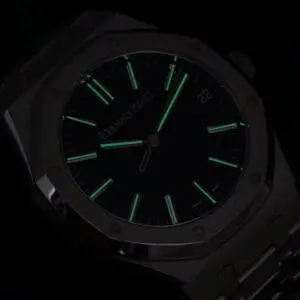

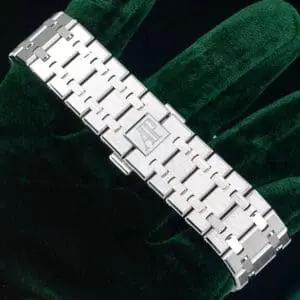
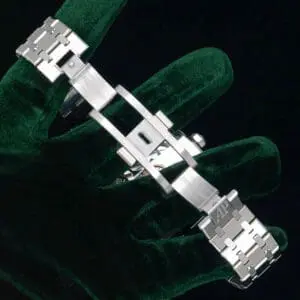
Audemars Piguet Royal Oak notable references:
- Royal Oak Selfwinding Ref. 15510ST
- Royal Oak Selfwinding Chronograph Ref. 26240ST
- Royal Oak Selfwinding Ref. 15550ST
- Royal Oak “Jumbo” Extra-Thin Ref. 16202ST
Vacheron Constantin Overseas Background

Vacheron Constantin introduced the Overseas in 1996 as its modern luxury sports watch. The model followed the earlier 222, which had already shown that the brand could bring its watchmaking standards into a sportier design.
Vacheron Constantin built it for collectors who wanted a watch they could wear more often and in more places. It kept the brand’s refinement but put it in a format better suited to travel, daily use, and a less formal style of wear. That purpose still defines the line.
The Overseas changed most in 2016, when the collection was redesigned with a clearer modern direction. That generation brought in-house calibers, a more complete case and bracelet design, and a tool-free strap system that made the watch easier to live with.
Then it changed again in 2024, and this is the part most older articles miss. The 4520V replaced the 4500V generation. Same 41mm footprint, several small fit changes, and it is covered in full further down.
Collectors tend to value the Overseas for balance and restraint. The Maltese cross bezel, the mix of brushed and polished surfaces, and the quick strap swap are the details that stand out most.
The Overseas is easier to map because each generation has one defining reference. These four cover thirty years of the line.
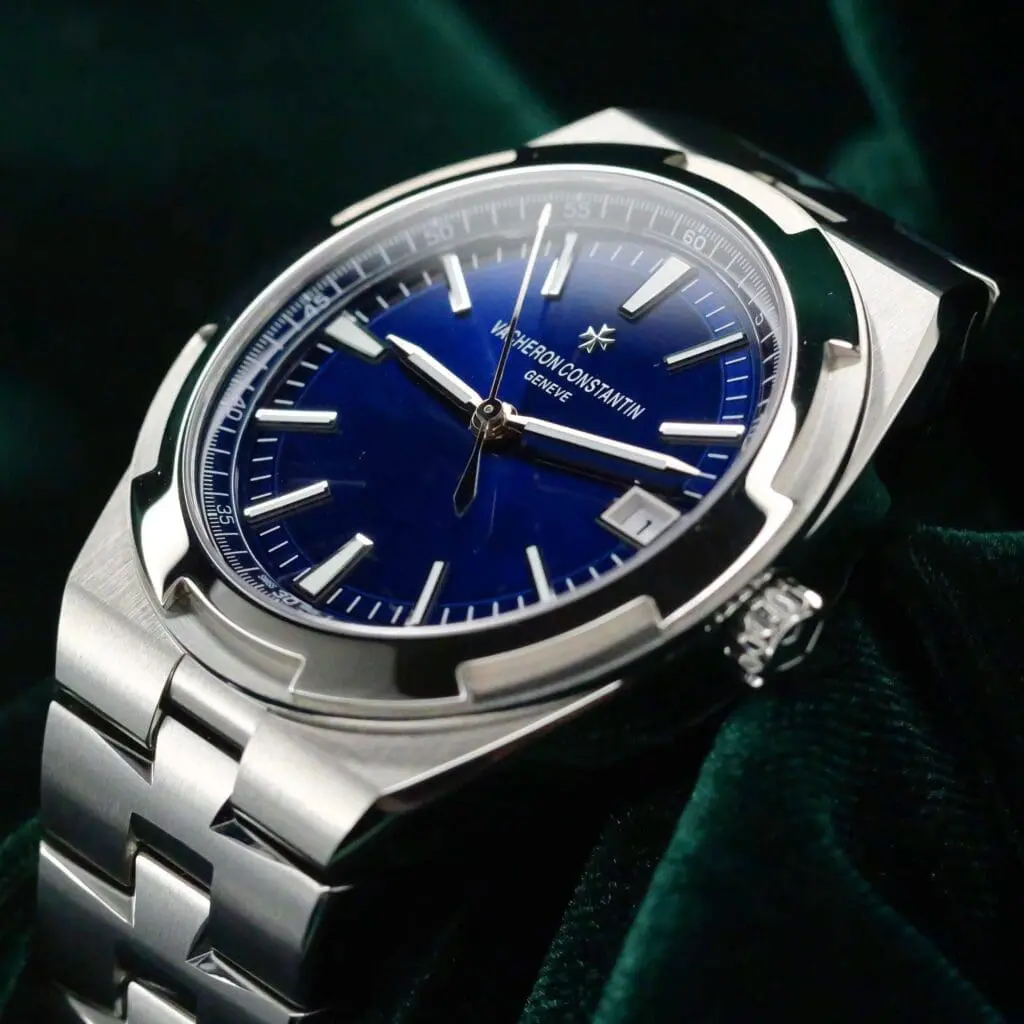
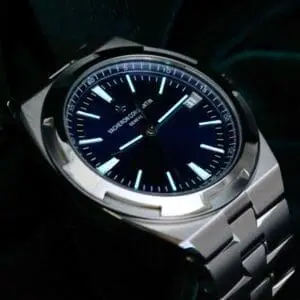
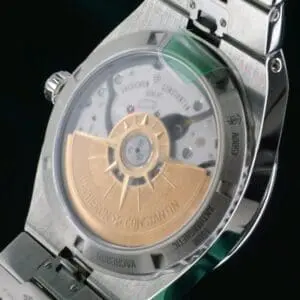
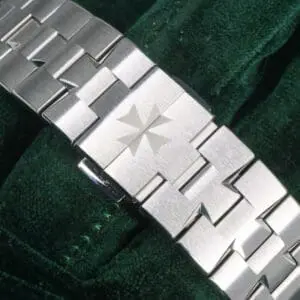
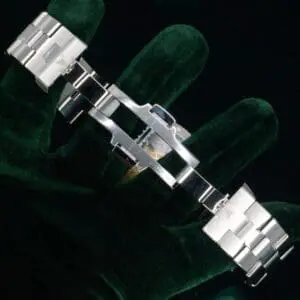
Vacheron Constantin Overseas notable references:
- Overseas Ref. 42042
- Overseas Chronograph Ref. 49150
- Overseas Self-Winding Ref. 4500V
- Overseas Self-Winding Ref. 4520V
Royal Oak vs Overseas: Most Notable Differences
Both are steel luxury sports watches with integrated bracelets, but they do not feel the same on the wrist. Here are the five differences that change the ownership experience.
1. Bezel Shape

The Royal Oak starts with an octagonal bezel and eight visible hexagonal screw heads. That detail sets the geometry for everything else, so the case and bracelet follow the same sharp lines.
A rounder bezel defines the Overseas, shaped around the Maltese cross motif. The case reads softer, with less of the visual rigidity you get on the Royal Oak, and the same language carries into the bracelet.
Who it favors: the Royal Oak suits you if you want the watch to announce itself. The Overseas suits you if you would rather it stay quiet until someone looks closely.
2. Bracelet and Strap Design

A strong taper is one of the best things about the Royal Oak bracelet. Thin links, brushed top surfaces, polished bevels, and a tight case transition give it a structured fit. The bracelet is not a secondary part of the design.
The Overseas answers with flexibility. Every current example ships with three straps, and all of them swap without tools. The same case moves between a formal setup and a beach setup in under a minute.
Who it favors: anyone who wears one watch for everything will get more out of the Overseas. Anyone who puts a watch on a bracelet and leaves it there will not miss the strap system.
3. Dial Character

The dial is one of the clearest visual traits of the Royal Oak. The Tapisserie pattern adds surface depth and creates a stronger response to light, which is a big part of why the watch is so easy to recognize at a glance.
A cleaner dial treatment sets the Overseas apart. Sunburst and lacquered finishes still add detail, but they work through light and color rather than raised texture.
Who it favors: the Royal Oak, if you like a dial that changes as your wrist moves. The Overseas, if you want something calmer to look at every day.
4. Water Resistance and Daily Durability
This is the gap most comparisons skip. The Royal Oak Selfwinding is rated to 50 meters. The Overseas is rated to 150 meters, and it carries antimagnetic protection built into the case, meaning a soft iron shield that stops magnetic fields from throwing the movement off time.
Fifty meters covers hand washing and rain. It does not cover a pool day, and most owners treat the Royal Oak accordingly. The Overseas has no such hesitation attached to it.
Who it favors: if the watch is going on holiday with you and only one watch is coming, the Overseas removes a decision you would otherwise have to make every morning.
5. Retail Access and Waiting Time
Audemars Piguet has moved toward selling directly through its own boutiques and AP Houses, closing many third-party dealer relationships along the way. Steel Royal Oak waitlists are long, often quoted in years rather than months, and allocation is never promised.
The trade-offs between buying from an authorized dealer and going grey market apply to both watches, but they bite harder on the Royal Oak.
Vacheron Constantin is easier, though nobody would call it easy. Steel Overseas references turn up at boutiques more often, and the secondary market is not fighting over them the same way.
Who it favors: if you want the watch this month rather than next year, the Overseas is the more realistic retail path. The Royal Oak usually means the secondary market or a long wait.
Related Models from Majestix

Audemars Piguet Royal Oak Offshore Chronograph "Batman" Black Dial Blue Accents Black Rubber Strap Stainless Steel 42mm MINT CONDITION COMPLETE SET 26470ST.OO.A028CR.01
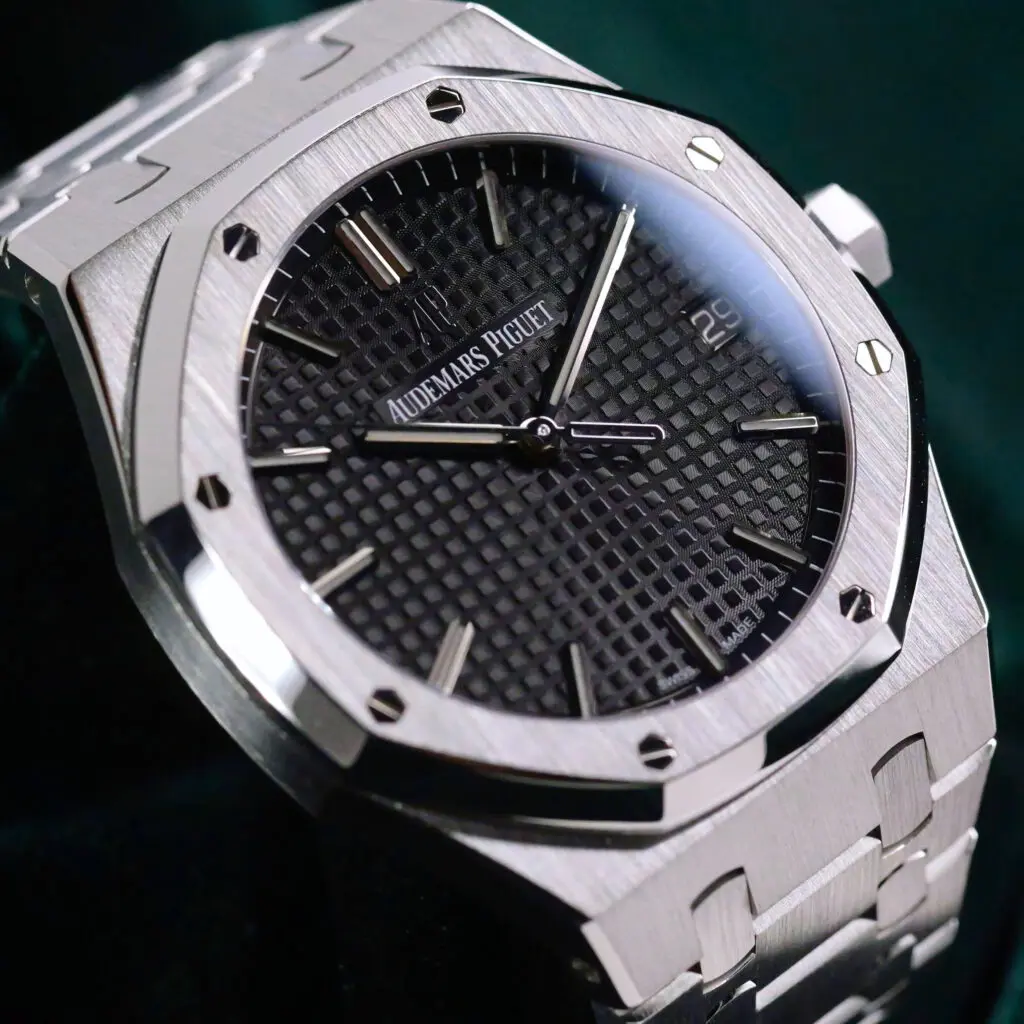
Audemars Piguet Royal Oak Black Dial Stainless Steel 41mm MINT CONDITION COMPLETE SET 15500ST.OO.1220ST.03
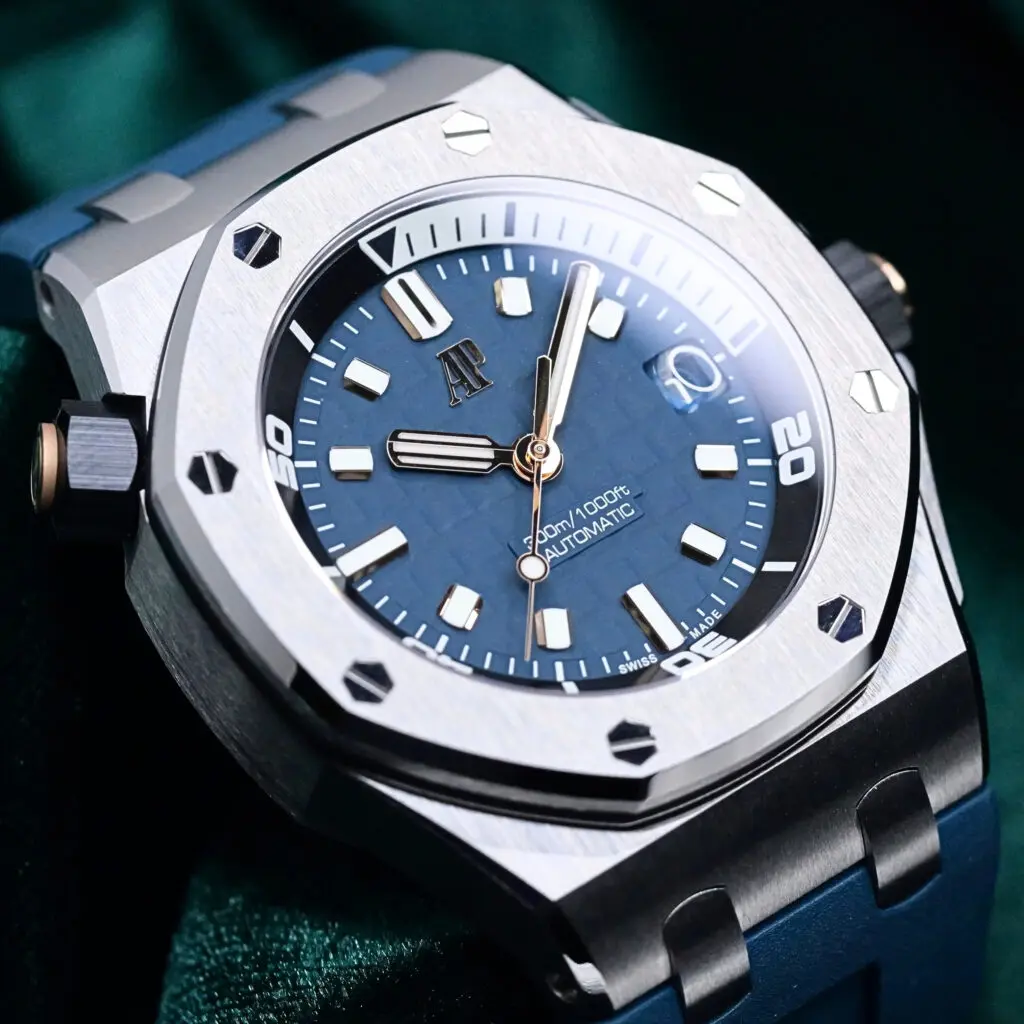
2026 NEW UNWORN Audemars Piguet Royal Oak Offshore Diver Abyssal Blue Dial Rose Gold Accents Blue Rubber Strap Stainless Steel 42mm COMPLETE SET 15720ST.OO.A403CA.01

Audemars Piguet Royal Oak Offshore Chronograph "Elephant" Gray Dial Stainless Steel Rubber Strap 42mm 26470ST.OO.A104CR.01

Audemars Piguet Royal Oak Offshore Chronograph "Panda" White Dial Black Subdials Steel Bezel Stainless Steel 42mm MINT CONDITION COMPLETE SET 26170ST.OO.1000ST.01
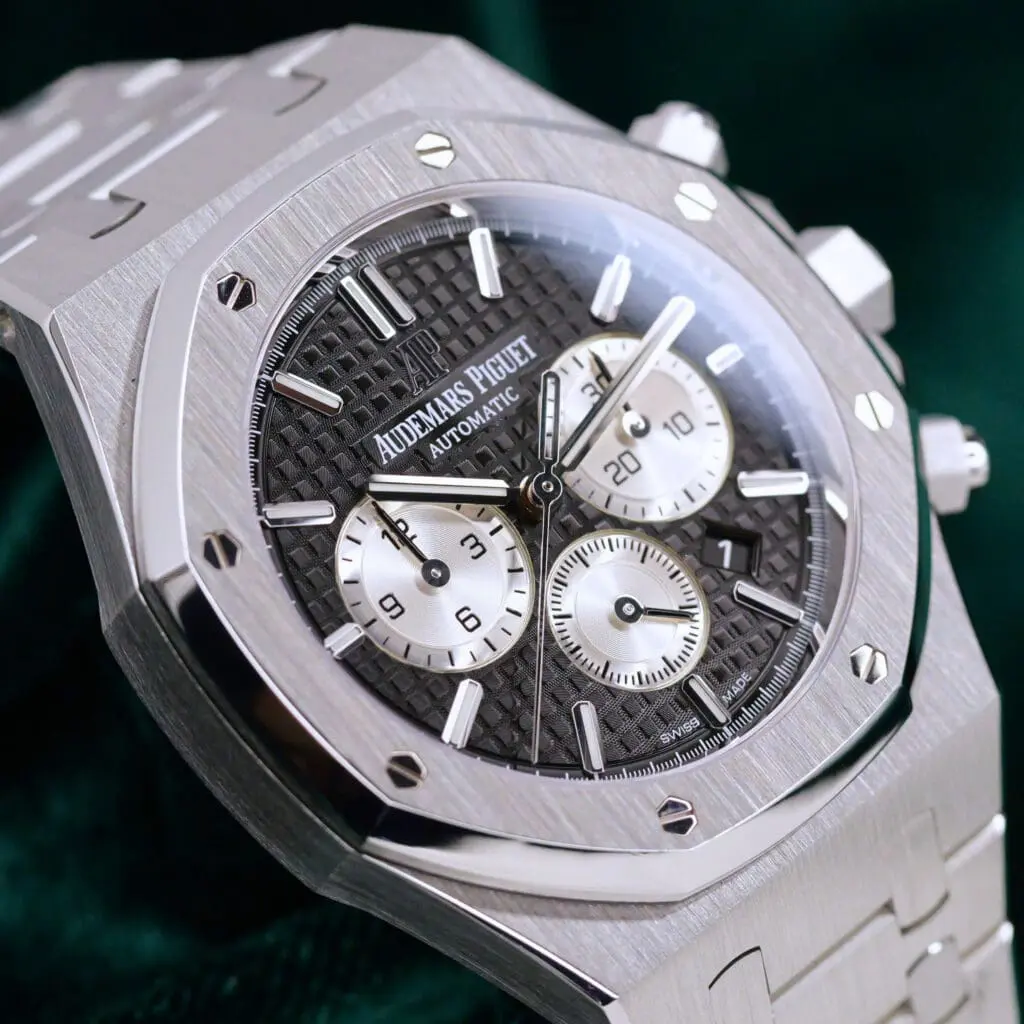
Audemars Piguet Royal Oak Chronograph "Reverse Panda" Black Dial Silver Subdials Stainless Steel 41mm MINT CONDITION COMPLETE SET 26331ST
What Changed for Both Models in 2026
Two things happened this year that affect anyone shopping right now.
Audemars Piguet returned to Watches and Wonders Geneva in 2026 with new in-house movements and new Royal Oak models, its first appearance at the show after a six-year hiatus. The 38mm Royal Oak Chronograph also picked up its own in-house movement, the Caliber 6401.
On the other side, Vacheron Constantin marked 30 years of the Overseas with a new Dual Time model built around the travel theme. The Overseas Dual Time Cardinal Points arrived in full titanium at 41mm with a matte anthracite bezel, running the Caliber 5110 DT/3.
The bigger technical news was the Overseas Self-Winding Ultra-Thin and its brand-new Caliber 2550, which measures 2.4mm thick and holds an 80-hour power reserve. The first all-platinum Overseas came with it, 39.5mm across and 7.35mm thick with a salmon lacquered dial.
Vacheron closed the year in July with two 34.5mm Overseas Self-Winding models, a burgundy-dial steel at $26,600 retail and a pink gold version at $59,500. That matters if you have a smaller wrist and had written the line off.
What this means for buyers: the Overseas caught up on movement architecture in 2026, which was the one place it trailed the Royal Oak. The old “great watch, older movement” objection no longer holds.
Price and Market Demand
Pricing tells you more about these two watches than any spec sheet. The gap between retail and market price is where the real story sits, and the two models sit on opposite sides of it.
Start with the entry point. Steel 4500V examples with box and papers list on Chrono24 from roughly $22,000 for silver dials, with blue-dial complete sets running closer to $28,000 to $34,000. That is the cheapest honest way into either family.
The Royal Oak has no equivalent. Retail on the steel 15510ST sits around $31,900, but WatchCharts puts its market value at $46,408. You are paying roughly $14,000 over list for the privilege of not waiting.
Now flip it. The current steel 4520V retails at $35,600, and WatchCharts estimates the market value of the popular blue 4520V/210A-B128 at $32,516. It trades slightly under retail.
Put those two numbers side by side and each watch shows its market personality. The Royal Oak behaves like a scarce asset. The Overseas behaves like a watch you can simply buy.
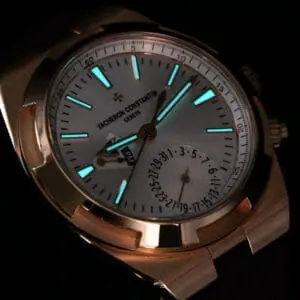
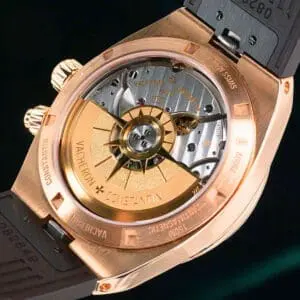
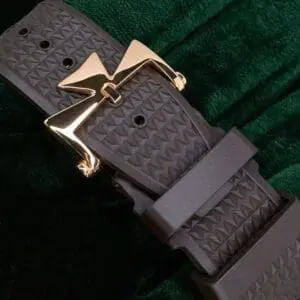
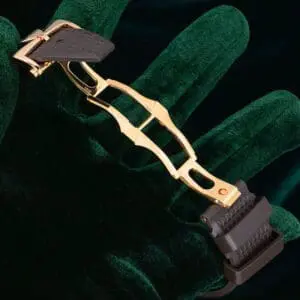
The premium buys liquidity, which means an easier exit if you ever sell. The discount buys patience, which means you can wait for the right dial and the right set instead of taking what is available.
The pattern holds at the top of both lines. A steel 26240ST chronograph trades between $50,000 and $70,000 against a retail price near $44,400, while the titanium Overseas Tourbillon launched at around $159,000 in the US.
Collection-wide, the split is just as clear. Royal Oak models average around $50,000 across the range, while Overseas models average around $28,000. You are not comparing equals on price. It is worth seeing what else sits under $50,000 before you commit to either.
Long-term behavior is steadier than the headlines suggest. The 4500V/110A-B146 was down 10.2% over one year but up 48.9% across five years, which is a normal shape for a watch with real demand and no hype cycle.
What moves the price on either model: dial color first. Blue commands the clearest premium across the Royal Oak line, and it is the most requested Overseas dial too. Then metal, then condition, then completeness — and how condition gets graded is worth understanding before you compare two listings.
For the Overseas specifically, completeness means all three straps and the changing tool. A set missing the rubber and leather straps costs real money to rebuild through a boutique, and buyers price that in.
The buyer signal: if resale liquidity matters to you, the Royal Oak is the safer exit. If getting the most watch for the money matters more, the Overseas gives you haute horlogerie finishing for Datejust-plus money.
Notable Royal Oak References

Royal Oak references show how Audemars Piguet updates the model while keeping the core design intact. The look stays familiar, but size, movement, and function change across the line.
These three sit inside the wider Audemars Piguet catalog, which runs well past the Royal Oak. If the Extra-Thin is also on your shortlist, our Royal Oak vs Jumbo comparison covers where the two split.
Royal Oak Ref. 15510ST
Ref. 15510ST is the modern Royal Oak in its most direct form. The 41mm case, time-and-date layout, and Grande Tapisserie dial keep it clean and instantly readable as a Royal Oak.
On the wrist, the flat bezel and sharp bracelet taper give it the structured feel most buyers expect. This is the reference the Royal Oak market is built around, and the one you will be quoted on at retail today.
- Movement: Audemars Piguet Caliber 4302, automatic
- Case Diameter: 41 mm
- Case Thickness: 10.5 mm
- Crystal: Glareproofed sapphire crystal and caseback
- Water Resistance: 50 meters
- Power Reserve: Approximately 70 hours
- Frequency: 28,800 vibrations per hour, 4 Hz
- Bracelet: Stainless steel with AP folding clasp
- Dial: Grande Tapisserie
- Market Range: About $40,000 to $50,000 depending on dial
Royal Oak Ref. 26240ST
The chronograph layout and Caliber 4401 are what set this one apart. The 41mm case stays familiar, but the thicker profile, pushers, and subdials give it more visual weight and more presence.
Flyback function, which lets you restart the chronograph without stopping it first, arrived with the in-house 4401 in 2022 along with a sapphire caseback, which replaced the older outsourced movement. That change is the reason this generation trades at such a wide premium over the previous one.
- Movement: Audemars Piguet Caliber 4401, automatic chronograph
- Case Diameter: 41 mm
- Case Thickness: 12.4 mm
- Crystal: Glareproofed sapphire crystal and caseback
- Water Resistance: 50 meters
- Power Reserve: Approximately 70 hours
- Frequency: 28,800 vibrations per hour, 4 Hz
- Bracelet: Stainless steel with AP folding clasp
- Dial: Grande Tapisserie with matching counters
- Market Range: About $50,000 to $70,000 depending on dial and condition
Royal Oak Ref. 15550ST
Ref. 15550ST puts the Royal Oak in a 37mm format. Same octagonal bezel, same integrated bracelet, same Grande Tapisserie dial, so nothing about the identity gets diluted.
The watch sits lower and feels lighter, with less spread across the wrist. It is the easier daily option for anyone under a 6.75-inch wrist who still wants the full Royal Oak look.
- Movement: Audemars Piguet Caliber 5900, automatic
- Case Diameter: 37 mm
- Case Thickness: 9.1 mm
- Crystal: Glareproofed sapphire crystal and caseback
- Water Resistance: 50 meters
- Power Reserve: Approximately 60 hours
- Frequency: 28,800 vibrations per hour, 4 Hz
- Bracelet: Stainless steel with AP folding clasp
- Dial: Grande Tapisserie
- Market Range: Roughly $44,000 to $51,000, blue dials at the top
Notable Vacheron Constantin Overseas References

Overseas references show how Vacheron Constantin has updated the model while keeping the main design. Four generations now sit on the secondary market, and the price spread between them is wide.
Overseas Ref. 42042
The first-generation Overseas, and the closest thing the line has to a vintage buy. Its 37mm case is the headline, though the broad case shape and integrated bracelet still give it presence beyond the number.
The simpler dial layout and earlier bezel design read cleaner and more classic than anything that followed. Collectors who find the modern Overseas too polished tend to end up here.
- Movement: Vacheron Constantin Caliber 1311, automatic
- Case Diameter: 37 mm
- Case Thickness: Approximately 8.5 mm
- Crystal: Sapphire
- Water Resistance: 150 meters
- Power Reserve: Approximately 45 to 47 hours
- Frequency: 28,800 vibrations per hour, 4 Hz
- Bracelet: Stainless steel integrated
- Dial: Time and date in black, blue, silver, or white
- Market Range: $14,500 to $23,000
Overseas Ref. 49150
Ref. 49150 defined the second generation and pushed the model in a more technical direction. The chronograph display gives the dial more to look at and the case more physical weight.
Caliber 1137 is the other half of the appeal. It gave the reference movement credibility that collectors still bring up, and the 42.5mm case wears larger than the modern chronograph.
- Movement: Vacheron Constantin Caliber 1137, automatic chronograph
- Case Diameter: 42.5 mm
- Case Thickness: 13.7 mm
- Crystal: Sapphire, with sapphire caseback
- Water Resistance: 150 meters
- Power Reserve: Approximately 40 hours
- Frequency: 21,600 vibrations per hour, 3 Hz
- Bracelet: Stainless steel integrated
- Dial: Three-register chronograph with date
- Market Range: $14,000 to $28,000
Related Models from Majestix

Vacheron Constantin Overseas Chronograph Blue Dial Blue Leather Strap Stainless Steel 42.5mm MINT CONDITION COMPLETE SET 5500V/110A-B148

Vacheron Constantin Overseas Chronograph Blue Dial Stainless Steel 42.5mm MINT CONDITION COMPLETE SET 5500V/110A-B148
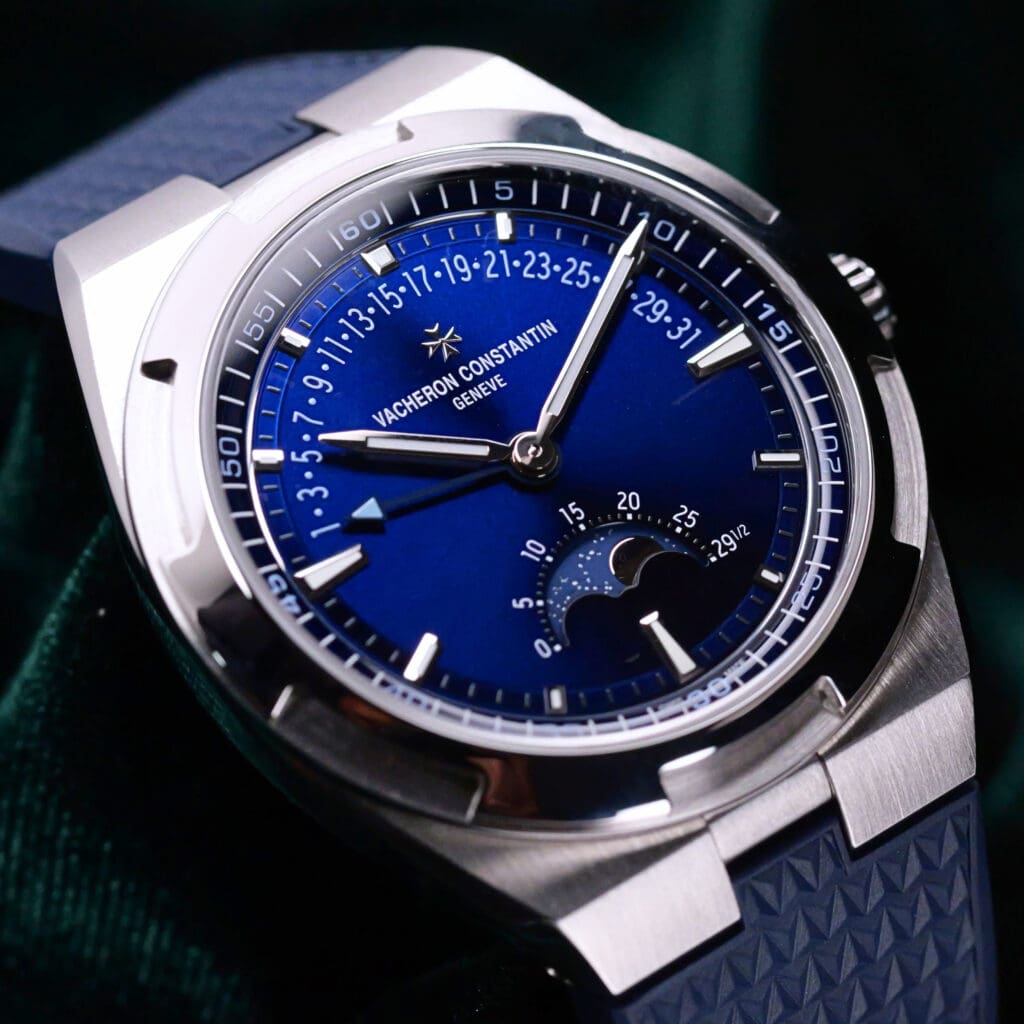
2025 Vacheron Constantin Overseas Moonphase Retrograde Date Blue Dial Blue Rubber Strap Stainless Steel 41mm MINT CONDITION COMPLETE SET 4000V/210A-B911
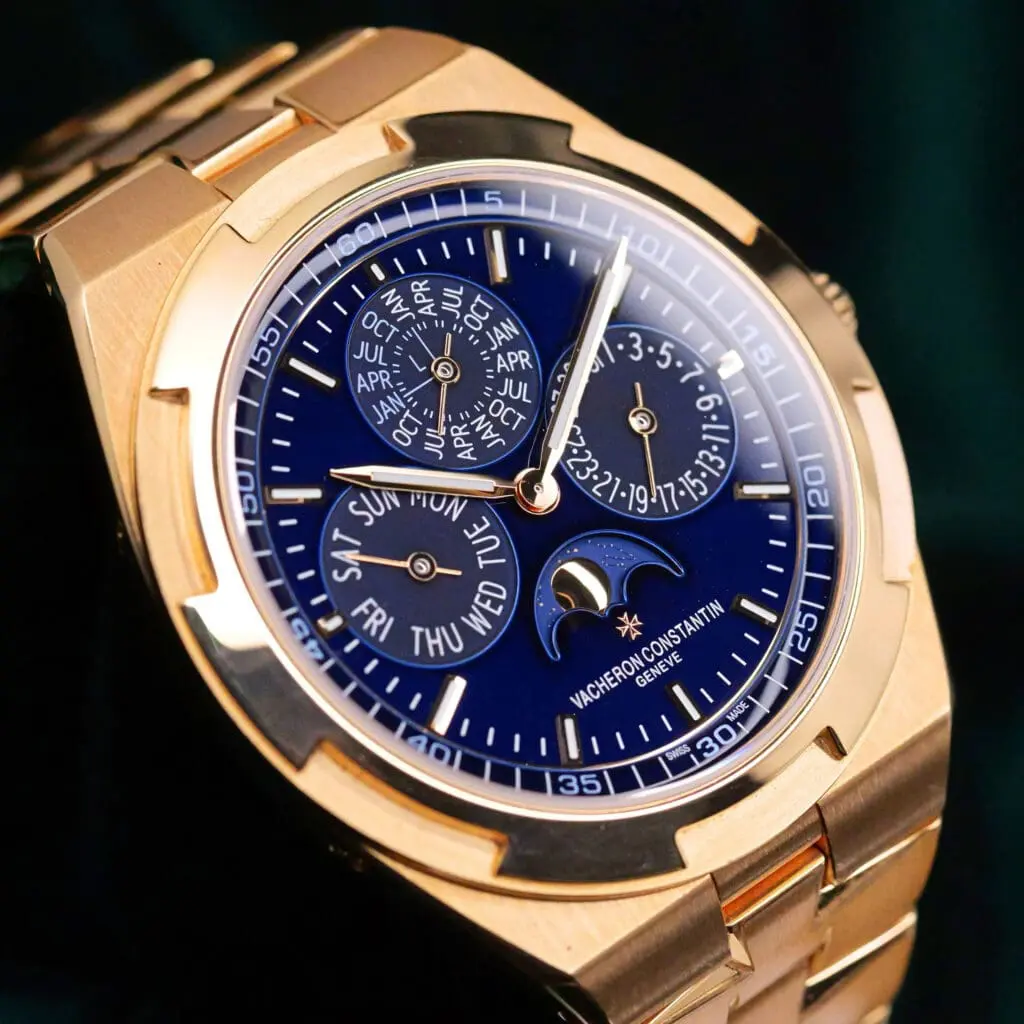
Vacheron Constantin Overseas Perpetual Calendar Ultra-Thin Blue Dial 18K Rose Gold Bracelet 41.5mm MINT CONDITION COMPLETE SET 4300V/120R-B509
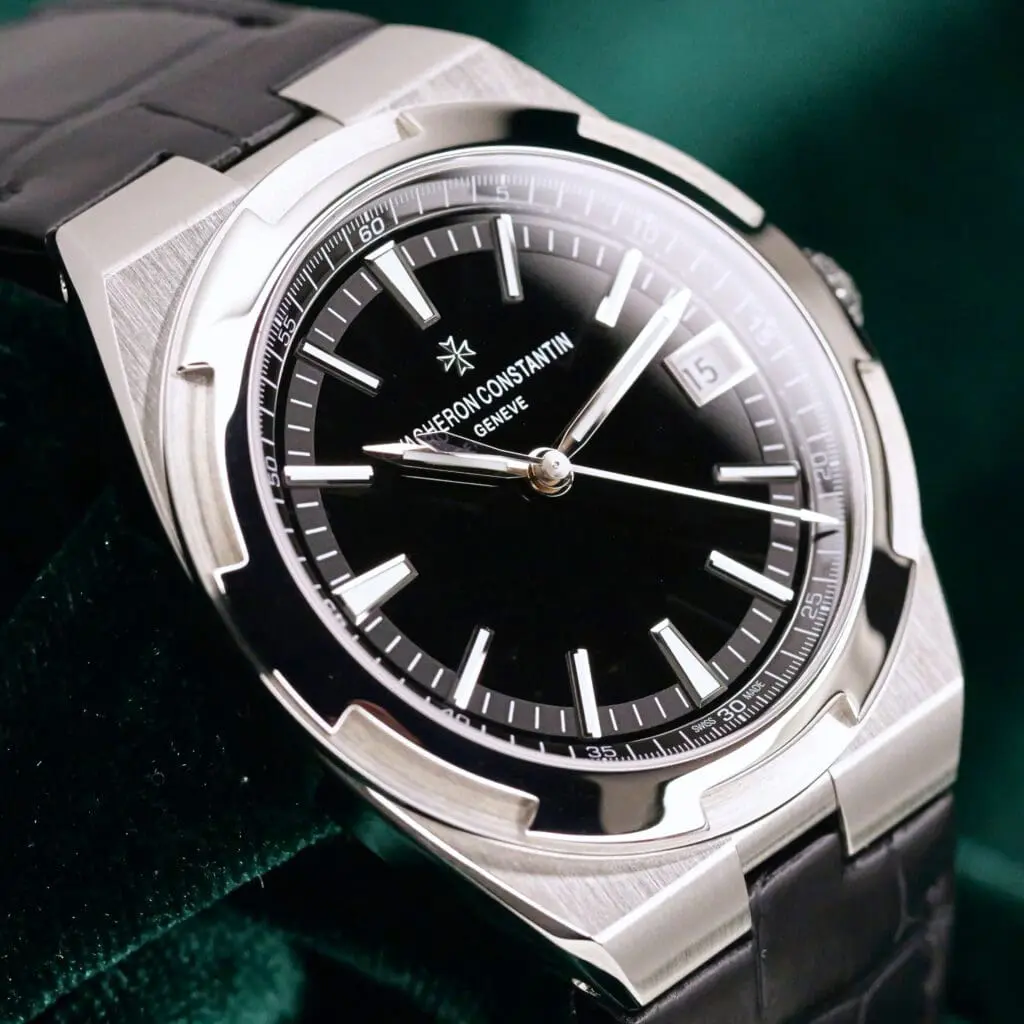
Vacheron Constantin Overseas Black Dial Black Leather Strap Stainless Steel 41mm MINT CONDITION COMPLETE SET 4500V/110A-B483
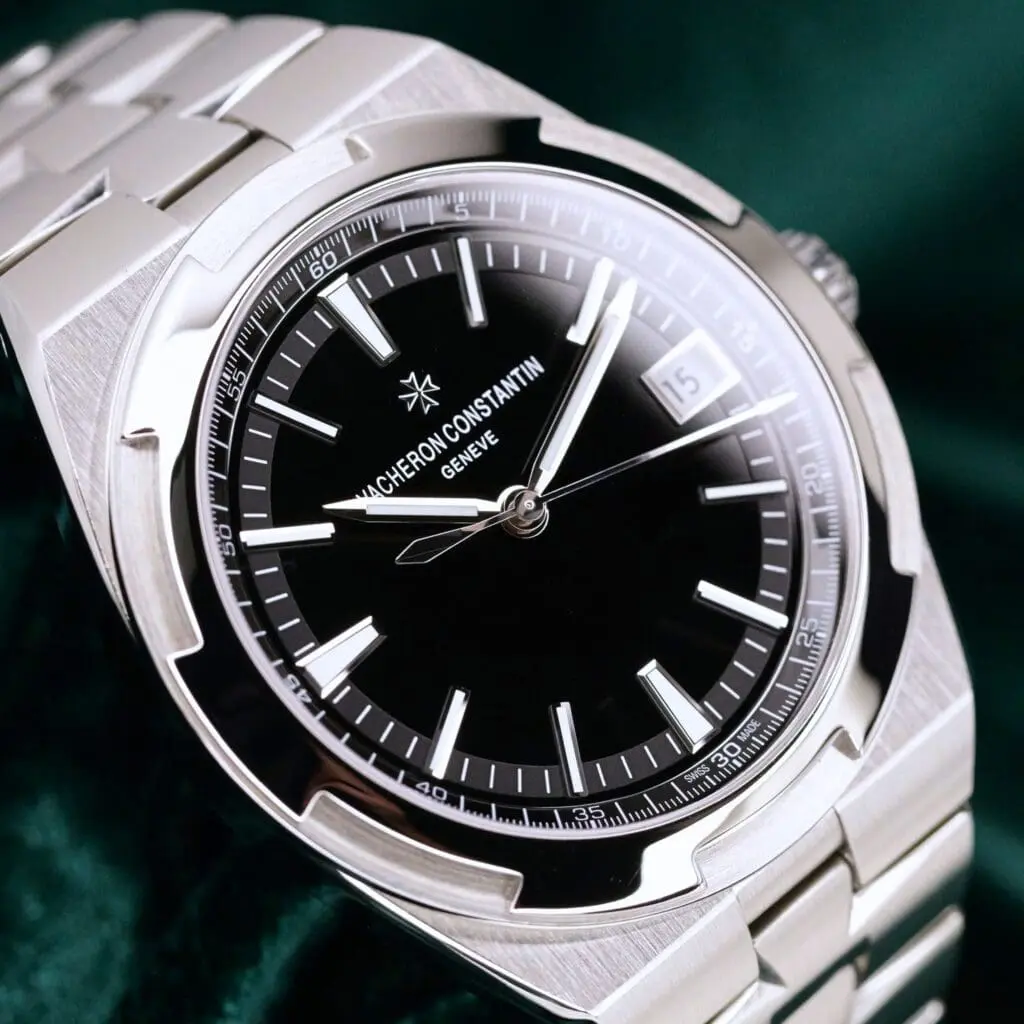
Vacheron Constantin Overseas Black Dial Stainless Steel 41mm MINT CONDITION COMPLETE SET 4500V/110A-B483
Overseas Ref. 4500V
Ref. 4500V is the reference that gave the modern Overseas its everyday identity. The tool-free strap system arrived here, and so did Caliber 5100 with 150-meter resistance and antimagnetic protection.
It is no longer the current reference, and that is exactly why it is interesting. The 4520V that replaced it costs meaningfully more, while the 4500V does 95% of the same job.
- Movement: Vacheron Constantin Caliber 5100, automatic
- Case Diameter: 41 mm
- Case Thickness: 10.69 mm
- Crystal: Sapphire, with transparent sapphire caseback
- Water Resistance: 150 meters
- Power Reserve: Approximately 60 hours
- Frequency: 28,800 vibrations per hour, 4 Hz
- Bracelet: Steel bracelet with interchangeable leather and rubber
- Dial: Sunburst satin-finished lacquer with date
- Market Range: $22,000 to $34,000 depending on dial and set
Overseas Ref. 4520V
Ref. 4520V is the current 41mm Overseas and the one a boutique will show you today. The changes over the 4500V are small on paper and obvious on the wrist.
The bracelet and straps now taper to 18mm instead of 20mm, the case lost about a third of a millimeter, and the date window shrank. Anyone who found the 4500V slightly wide across the back will notice the difference immediately.
- Movement: Vacheron Constantin Caliber 5100, automatic, Geneva Seal
- Case Diameter: 41 mm
- Case Thickness: Slightly under the 4500V’s 10.69 mm
- Crystal: Sapphire, with transparent sapphire caseback
- Water Resistance: 150 meters
- Power Reserve: Approximately 60 hours
- Taper: 18 mm bracelet and strap taper
- Bracelet: Steel bracelet plus calfskin and rubber straps, tool-free
- Dial: Sunburst lacquer with reduced date aperture
- Market Range: Around $30,000 to $36,000 depending on dial
Is the Overseas a Downgrade From the Royal Oak?
No, and the Geneva Seal is the reason: it is an independent Swiss standard for movement finishing and accuracy that the Overseas meets and the Royal Oak does not claim. The lower price reflects demand, not build quality.
Vacheron Constantin has been operating continuously since 1755, longer than any other watch manufacturer. Where each house sits in the brand hierarchy is its own conversation. The Overseas simply never got caught in a hype cycle the way the Royal Oak did after 2018.
What you give up is recognition. Fewer people across a restaurant will know what is on your wrist, and that is either a cost or a benefit depending entirely on who you are.
Which Wears Better on a Smaller Wrist?
The Overseas, because the 34.5mm models released in July 2026 opened the line to wrists the 41mm case never suited. The 4520V’s narrower taper helps on the bigger case too.
On the Royal Oak side, the 37mm 15550ST at 9.1mm thick is the answer, and it is a good one. The flat case and short lug geometry mean it sits closer to the wrist than the numbers suggest.
If neither fits, there are other luxury watches that suit a small wrist worth putting on the shortlist.
Anything under 6.5 inches will be happier with the 37mm Royal Oak or the 34.5mm Overseas. The 41mm versions of both watches spread more than their diameter implies because the bracelet is part of the case. If you have never measured properly, working out your ideal case size takes five minutes.
Royal Oak vs Overseas: Which Watch Should You Choose?
Both are well made, both come from top-tier houses, and both can stay in a collection for decades. The decision comes down to how you live with a watch day to day.
If the third pillar of the category is also in play, our Royal Oak vs Nautilus breakdown covers that pairing separately.
Choose the Royal Oak if:
- You want the watch recognized across a table by people who don’t collect
- You buy once and keep it, so paying above retail does not bother you
- You put a watch on a bracelet and never think about changing it
- You want the easier exit if you ever decide to sell
- You are willing to wait, or to shop the secondary market instead
- Sharp, angular design is the reason you got into watches
Choose the Overseas if:
- One watch has to cover work, travel, and the pool
- Swapping straps in under a minute genuinely appeals to you
- You would rather the watch stay quiet until someone looks closely
- Buying near retail matters more than buying an asset
- You want haute horlogerie finishing without the queue
- The Geneva Seal means more to you than crowd recognition
The tie-breaker: if the watch has to work as hard as you do, take the Overseas. If you want the watch to be the statement, take the Royal Oak and budget for the premium.
Where to Buy Authentic Watches Online
There are a few legitimate channels for buying either of these. Chrono24 is the largest global marketplace, with a buyer protection program and the deepest inventory on both models, though what to watch for on Chrono24 is worth reading first.
eBay runs an Authenticity Guarantee on watches above a set price, which handles verification before the watch reaches you. Grailzee works as an auction platform, which suits patient buyers more than urgent ones.
Watch forums like WatchUSeek and Rolex Forums also carry private sales, usually at better prices and with more risk attached. Where you source a pre-owned luxury watch shapes the whole experience.
We also sell, buy, and trade luxury watches. The reason clients come to us instead of a marketplace listing is the conversation that happens first. Before you commit, we send tour videos of the actual watch, not stock photos. We tell you what the bracelet stretch looks like, whether the straps are all there, and what the case has been through.
That is reflected in our 4.9-star Google rating, which comes from clients who wanted to know what they were buying before the money moved.
If you are weighing a 15510ST against a 4520V and want to see real examples of both before deciding, reach out and we will send you videos and condition notes, or see what is currently available.
999+ Timepieces Available
Explore Our Timepieces
Authenticated, unworn, and ready to ship worldwide.
Rolex · Audemars Piguet · Patek Philippe · Omega · Cartier · Richard Mille · Hublot · Tudor
Newly Listed
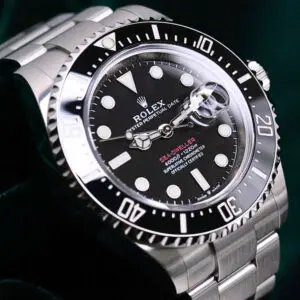
Rolex Sea-Dweller "Red Letter" Black Dial Black Cerachrom Bezel Oyster Bracelet Stainless Steel 43mm MINT CONDITION COMPLETE SET 126600
$13,120.00
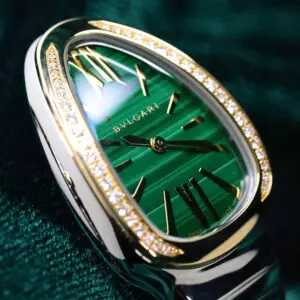
2026 NEW UNWORN Bvlgari Serpenti Tubogas Studs Capsule Limited Edition Green Dial Diamond Bezel Steel & 18k Yellow Gold 35mm COMPLETE SET 104360
$24,255.00
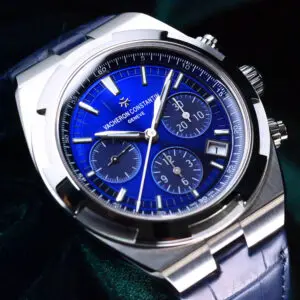
Vacheron Constantin Overseas Chronograph Blue Dial Blue Leather Strap Stainless Steel 42.5mm MINT CONDITION COMPLETE SET 5500V/110A-B148
$37,793.00

Tag Heuer Monaco Chronograph “Dark Lord” Special Edition Black Dial Black Leather Strap DLC Titanium 39mm MINT CONDITION COMPLETE SET CBL2180.FC6497
$8,135.00
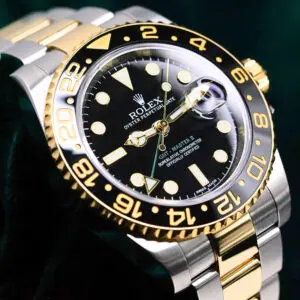
Rolex GMT-Master II “Green Arrow” Black Dial Black Ceramic Bezel Oyster Bracelet Two-Tone 18K Yellow Gold Stainless Steel 40mm MINT CONDITION COMPLETE SET 116713LN
$15,740.00
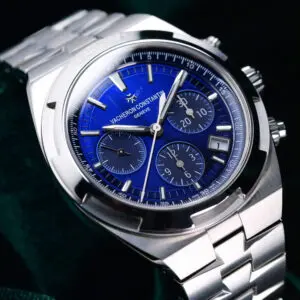
Vacheron Constantin Overseas Chronograph Blue Dial Stainless Steel 42.5mm MINT CONDITION COMPLETE SET 5500V/110A-B148
$37,793.00
Rolex Day-Date Meteorite Baguette Diamond Dial Fluted Bezel President 18K White Gold 40mm MINT CONDITION COMPLETE SET 228239
$78,629.00
2026 Rolex Cosmograph Daytona Black Dial Black Ceramic Bezel Oyster Bracelet Stainless Steel 40mm MINT CONDITION COMPLETE SET 126500LN
$33,594.00
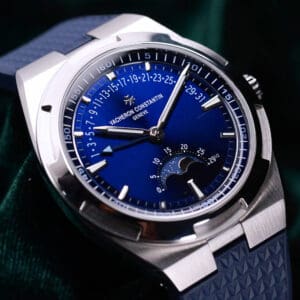
2025 Vacheron Constantin Overseas Moonphase Retrograde Date Blue Dial Blue Rubber Strap Stainless Steel 41mm MINT CONDITION COMPLETE SET 4000V/210A-B911
$52,800.00
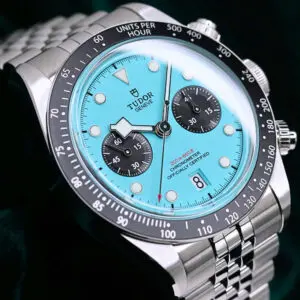
2025 Tudor Black Bay Chrono "Flamingo Blue" Turquoise Dial Black Bezel Stainless Steel 41mm MINT CONDITION COMPLETE SET 79360N-0024
$10,494.00

Audemars Piguet Royal Oak Offshore Chronograph "Batman" Black Dial Blue Accents Black Rubber Strap Stainless Steel 42mm MINT CONDITION COMPLETE SET 26470ST.OO.A028CR.01
$25,715.00
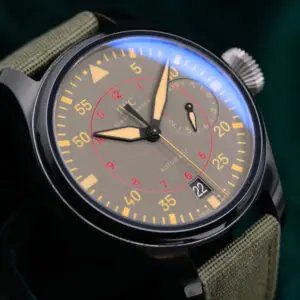
IWC Big Pilot's Watch Top Gun Miramar Grey Dial Green Textile Strap Black Ceramic 48mm MINT CONDITION COMPLETE SET IW501902
$7,240.00
Final Thoughts on Royal Oak vs Overseas
Royal Oak vs Overseas makes more sense once you stop thinking about prestige and start thinking about use. The right choice is the one that still feels convincing after the first impression fades.
Two things to check before you buy. If you are shopping a 4520V and plan to add straps later, note that the taper dropped to 18mm, so 4500V straps and most aftermarket options cut for the older reference will not fit. On an older Royal Oak, bracelet stretch is the first wear sign to look for, and it is the most expensive one to put right. Our pre-owned inspection checklist covers the rest.
A good watch should fit your wrist, your routine, and the way you want to wear it years from now. Buy the one you will reach for without thinking, not the one that only feels right in theory.