This Audemars Piguet buying guide covers what actually matters when you’re spending serious money: which collections exist, which references are worth it, where to buy, how to spot a fake, and what ownership costs over time.
Audemars Piguet is not a simple brand to buy. The retail system is opaque. Prices vary wildly between channels. And two watches with the same model name can trade at completely different values depending on the reference, condition, and paperwork.
The more you know going in, the better your outcome.
Why Audemars Piguet Is in a Different Tier

Audemars Piguet sits alongside Patek Philippe and Vacheron Constantin in what collectors call the Holy Trinity of Swiss watchmaking. That phrase gets thrown around a lot. These three brands sit at the top of independent Swiss manufacture. Movements are built in-house. Complications are genuinely difficult to produce. And production volumes stay low by design.
AP produces roughly 50,000 watches per year across all collections. Rolex produces around 1 million. That’s not a limitation. It’s the business model. Lower output means real scarcity, and real scarcity is a big part of why AP watches behave differently on the secondary market.
The brand has been family-owned since Jules Louis Audemars and Edward Auguste Piguet founded it in Le Brassus, Switzerland in 1875. AP created the first minute-repeating wristwatch movement in 1892 and the first skeleton watch in 1934. That history matters to collectors because it shows AP’s technical credibility isn’t borrowed from a marketing team.
If you’re asking whether AP is worth the money: yes, but only if you buy the right watch at the right price through the right channel. That’s what this guide is for.
What Are the Audemars Piguet Collections?

AP’s catalog can feel overwhelming at first. But there are really three collections worth understanding before you buy anything.
Royal Oak: The Watch That Defines the Brand

In 1972, designer Gérald Genta created the Royal Oak for AP. It was the first luxury sports watch in stainless steel, at a time when steel was considered an industrial material. AP priced it higher than gold watches anyway. Most people in the industry thought it would fail.
The design is instantly recognizable. An octagonal bezel with eight exposed screws. A Grande Tapisserie dial with an embossed checkerboard pattern. And an integrated bracelet that flows into the case without a seam. The alternating brushed and polished surfaces on the Royal Oak case are a core part of its identity and the first thing you should inspect on any pre-owned example.
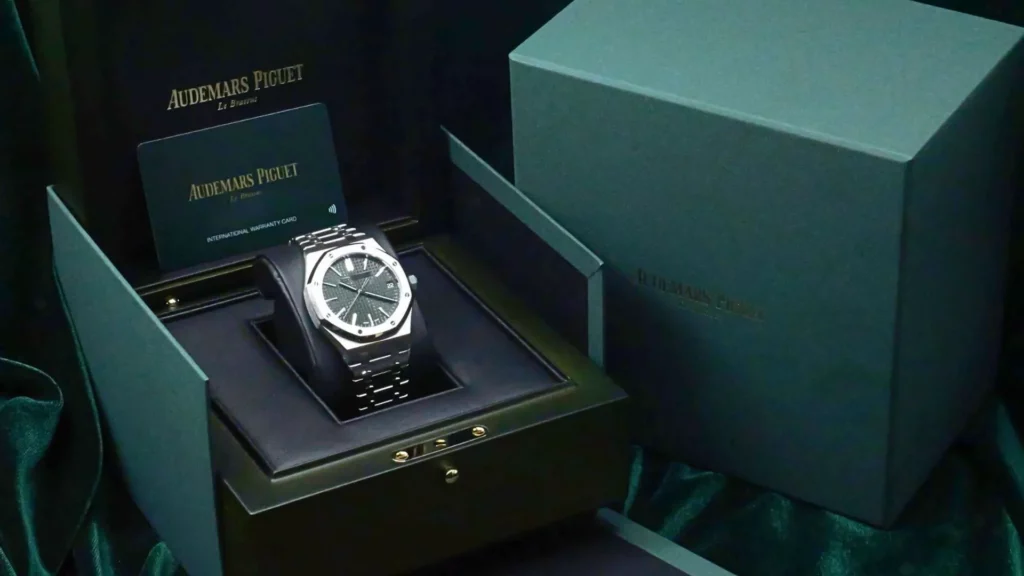
The 15510ST is available in several dial colors, including blue, grey, and green. The green dial variant has been particularly well-received since its release and holds strong demand on the secondary market.
Today, the core Royal Oak is sold in sizes from 33mm to 41mm. The two main references for men are the 15500ST (introduced in 2020, powered by the Calibre 4302) and the 15510ST (updated in 2022, Calibre 7121). These differences matter more than most buyers realize. We cover them in detail below.
Royal Oak Offshore: Bigger and More Divisive

The Offshore launched in 1993 as a larger, sportier take on the Royal Oak. It kept the octagonal design language but added bezel tabs, a bigger case (typically 42-44mm), and more bulk overall. Most Offshore models are chronographs. The 26470ST is a 42mm stainless steel selfwinding chronograph and one of the most recognized current Offshore references. It’s a good benchmark for understanding what the collection looks like today.
The Offshore has a complicated reputation. Some early references are genuinely collectible. But it doesn’t carry the same collector depth as the Royal Oak, and the secondary market reflects that. It’s a good watch. Just don’t buy one because you can’t get a Royal Oak. Buy it because you want it.
Code 11.59: The One Nobody Talks About Fairly
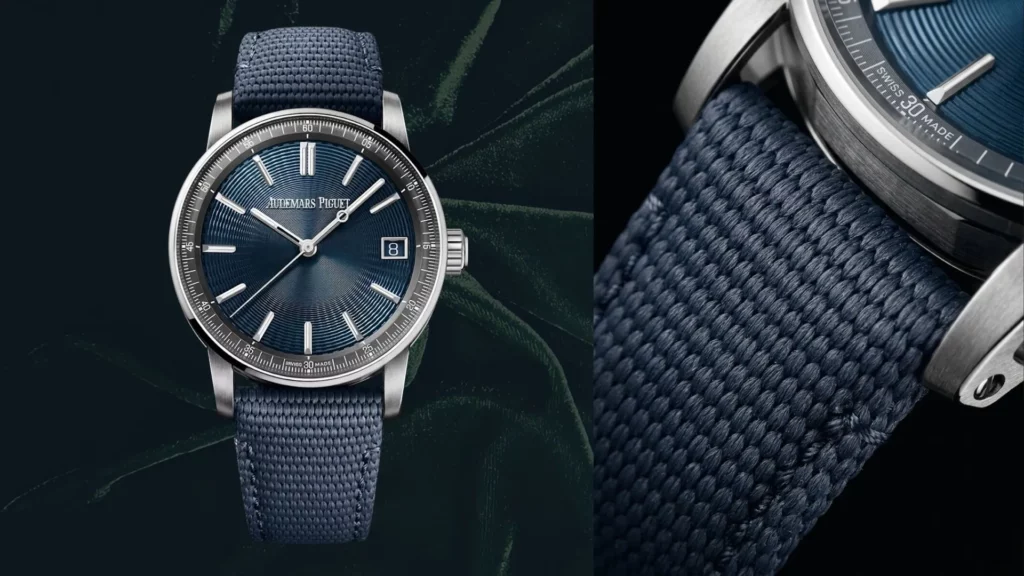
AP launched the Code 11.59 in 2019 as a second major collection alongside the Royal Oak. Round case, double-curved sapphire crystal, and some of AP’s most complex movements. The initial reaction from collectors was lukewarm.
The Code 11.59 currently trades 10-20% below its retail price on the grey market. That’s unusual for an AP watch. It happens because the Royal Oak’s demand is so overwhelming that everything else gets priced against it. For buyers who want genuine AP movement quality without the Royal Oak premium, the Code 11.59 is a real option most people overlook.
Which Audemars Piguet Should You Buy?

This is the section every guide avoids answering directly. We’ll give you a straight answer.
1. The 15500ST or 15510ST Is the Right First AP for Most Buyers
The 15500ST or 15510ST Royal Oak in stainless steel is the most logical first AP for most buyers. It’s the most recognized reference in the line, the most liquid on resale, and it wears better than its 41mm dimensions suggest. The case is relatively thin at around 9.8mm (15500ST) or 8.1mm (15510ST), so it slips under a shirt cuff more easily than you’d expect.
The 15500ST uses the Calibre 4302 with a 70-hour power reserve and AP’s double balance wheel escapement for improved accuracy. The 15510ST moved to the Calibre 7121 and a slightly slimmer case. Both are excellent. The 15500ST has more established secondary market recognition, which matters if you ever plan to resell.
At retail, a steel Royal Oak runs $23,000-$24,000 new. On the grey market in 2025-2026, expect $28,000-$38,000 for a complete set depending on reference and condition. That premium exists because you can’t simply walk into a boutique and buy one. The retail path is far more complicated than most buyers expect (source).
A question we hear a lot is that one should start with a cheaper AP to build towards a Royal Oak. In most cases, no. Starting with a model you don’t really want means tying up money in a watch you’ll sell at a loss. Going directly for the reference you want on the secondary market is usually cheaper overall.
2. The 15510ST Is Slimmer, the 15500ST Has Stronger Resale Recognition
| Feature | 15500ST | 15510ST |
|---|---|---|
| Movement | Calibre 4302 | Calibre 7121 |
| Power Reserve | 70 hours | 60 hours |
| Case Thickness | ~9.8mm | ~8.1mm |
| Introduced | 2020 | 2022 |
| Best For | Recognized collectibility, strong resale | Dressier wear, slimmer profile |
The 15510ST is thinner and works better in more formal settings. The 15500ST has more secondary market history. For most first-time buyers, the choice comes down to how you plan to wear the watch. If it’s mostly casual and weekend use, either works fine. If you want something that works in a suit, the 15510ST makes more sense.
Above both of these sits the Royal Oak Jumbo (15202ST). It’s an ultra-thin automatic in a 39mm case and the closest thing to the original 1972 design. Expect $50,000-$70,000+ on the grey market for a complete set. It’s the reference serious collectors move toward over time. Not a starter watch, but worth knowing about.
3. The Offshore Is Worth Buying Only If You Want One
The Offshore makes sense if you genuinely want a larger watch with chronograph functionality. It doesn’t make sense as a substitute for a Royal Oak you can’t get.
The Royal Oak Offshore Diver 15720ST is one of the cleaner references. 42mm case, 300m water resistance, Calibre 4308. It works as a daily watch in a way many Offshore models don’t. For collector depth, early “Generation 1” Offshore references from the 1990s have a dedicated following. But those are specialist buys for people who already know what they’re looking for.
For most buyers, a clean, complete modern Offshore reference in good condition is the practical choice. Just be honest with yourself about why you’re buying it.
4. The Code 11.59 Is Undervalued and Most Buyers Walk Past It
More buyers should consider it than currently do. The Code 11.59 Selfwinding 15210ST is a strong everyday watch that trades below retail right now. The movement quality is genuinely impressive. The dial execution on some references is better than anything in the Royal Oak line. The price on the secondary market reflects the fact that it’s not the Royal Oak. Not that it’s an inferior watch.
The Code 11.59 Chronograph 26393ST is worth a look if you want a more complex piece. Avoid the Code 11.59 if resale value is your primary concern. On that metric, the Royal Oak wins easily.
5. These Five Factors Determine What an AP Is Worth
The model name is just the starting point. These factors move the price significantly:
| Factor | Impact on Value |
|---|---|
| Complete set (box, papers, card) | Adds $2,000-$8,000 depending on reference |
| Original unpolished case | Significant premium — sharp geometry matters |
| Unrefined original dial | Refinished dials reduce collector value sharply |
| Full bracelet (all links present) | Missing links reduce value noticeably |
| Documented service history | Adds confidence, affects pricing at dealer level |
Case sharpness is especially important on the Royal Oak. The contrast between brushed and polished surfaces only looks right when the edges are crisp. An overpolished Royal Oak loses that contrast, softens the bezel geometry, and is worth less to serious buyers. Always ask about polishing history before buying any pre-owned AP.
Where to Buy an AP and What Each Path Means
Knowing which AP to buy is only half the decision. The other half is knowing where to buy it. The path you choose affects how long you wait, how much you pay, and how much protection you have if something goes wrong.
There are three real options: retail through an AP boutique, the grey market, or the pre-owned secondary market. Each one comes with trade-offs worth understanding before you commit.
Buying an AP Royal Oak at Retail in 2025
AP moved to a boutique-only distribution model and ended relationships with multi-brand authorized dealers. The only way to buy new is through an official AP boutique or AP House.
AP’s retail allocation is based entirely on purchase history, not a waiting list. A new client with no AP purchase history asking for a steel Royal Oak will likely wait 12-24 months minimum, if they’re offered one at all.
Clients who have already bought a Code 11.59 or Offshore might see a 6-12 month timeline. Established collectors with multiple purchases get moved faster.
To get a steel Royal Oak at retail, many buyers end up purchasing other models first. That means spending money on watches they didn’t want, then reselling at a loss, before finally getting the original target. When you add up those losses, paying the grey market premium upfront is often cheaper.
Grey Market and Pre-Owned: What to Know Before You Buy
For most buyers, the secondary market is the more direct route. Run through this checklist on any pre-owned AP before buying:
Pre-owned AP condition checklist:
- Case lines: Are the edges sharp or softened from polishing?
- Bezel: Any wear or damage to the screw heads?
- Bracelet: Does it feel stretched? Are all links present?
- Dial: Any discoloration, moisture marks, or signs of refinishing?
- Crystal: Surface scratches are normal. Cracks are not.
- Papers: Do the serial numbers on the caseback match the documents exactly?
A trustworthy dealer should answer all of these questions without hesitation and provide full documentation. At Majestix Collection, every watch goes through this checklist before it’s listed. Condition transparency is non-negotiable at this price point.
How Do You Verify an Audemars Piguet Is Authentic?
AP counterfeits exist and some are convincing. Box and papers alone do not authenticate a watch. They can be faked too. The watch itself must be inspected.
AP authentication checklist:
- Serial number: Engraved on the caseback of modern Royal Oaks. The engraving depth and font should be clean and consistent.
- Rehaut engraving: Genuine Royal Oaks have crisp text on the inner bezel ring. Fakes often get the font weight and spacing slightly wrong.
- Crown feel: The AP crown has specific resistance and finishing. A loose or rough crown is a red flag.
- Bracelet lug fit: On a real Royal Oak, the bracelet integrates into the case seamlessly. Poor fit at the lugs is one of the most common tells on a fake.
- Surface transitions: The shifts between brushed and polished areas should be sharp and precise. Fakes blur these.
- Movement verification: For pre-owned purchases, ask the dealer to confirm movement inspection and serial number verification. A legitimate seller won’t hesitate.
What Does Owning an Audemars Piguet Cost Over Time?
The purchase price is only part of the number.*
| Cost Item | Realistic Range |
|---|---|
| Full movement service (Royal Oak) | $1,500-$3,500 depending on caliber |
| Case and bracelet service (optional) | $500-$1,500 |
| Water resistance testing | Usually included in service |
| Service interval | Every 5-8 years for normal wear |
| Specialist watch insurance | ~1-2% of insured value per year |
| Resale costs (dealer spread or platform fees) | 10-20% of watch value |
*Prices vary by caliber, condition, and service center. These are estimates based on current market rates.
One important note on case polishing: AP and most dealers offer to polish the case as part of a service. For a Royal Oak, decline this unless the case is genuinely damaged. Polishing removes the sharp geometry that collectors pay a premium for. A well-worn Royal Oak with original finishing is often worth more than a freshly polished one that looks brand new.
The Royal Oak holds secondary market value better than almost anything in its price range. The Offshore fluctuates more. The Code 11.59 has generally depreciated from retail across most references. Factor that in if resale matters to you.
Final Thoughts on Audemars Piguet Buying Guide
Know your reference before you talk to any seller. “Royal Oak” is not specific enough. Know the reference number, case size, and dial color you want. The grey market is not a fallback option. For most buyers, it’s the fastest and often most cost-effective path to the watch they really want.
And condition details matter more with AP than almost anywhere else. Case sharpness, dial originality, and bracelet completeness all move the price in ways that aren’t obvious until you’ve seen a few examples side by side.
The next step is simple. Get specific about your reference, understand what fair looks like for that reference right now, and only then approach a seller.