
Most buyers comparing the Royal Oak vs Royal Oak Jumbo walk into an AP boutique convinced they want the Jumbo. Then they put the 15510ST on their wrist and realize how different the two watches feel.
Both share the octagonal bezel and integrated bracelet that made the Royal Oak the Royal Oak. But they are not the same watch, and the gap between them is bigger than the 2mm diameter difference suggests.
The standard Royal Oak (ref. 15510ST) and the Jumbo (ref. 16202ST) take two different approaches under the same design language. One is a modern daily-wear watch with a full-size movement. The other continues Gérald Genta’s 1972 original through an ultra-thin caliber that no other current Royal Oak can match.
The case thickness alone changes where you can comfortably wear each one. Here is how to think through the decision before you commit.
Royal Oak 15510ST Overview

The 41mm Royal Oak Selfwinding is the daily-driver of the current Royal Oak lineup. The 15510ST arrived in 2022 as the Royal Oak’s 50th anniversary reference and continued in standard production from 2023. It updated the 15500ST with a thinner bracelet, revised dial proportions, and a Grande Tapisserie pattern that fills the full dial width.
It runs the in-house Caliber 4302 with a 70-hour power reserve, hacking seconds, and a quick-set date. AP built this watch for collectors who want to wear a Royal Oak every morning without thinking twice about it.
The line traces back through the 15400ST (2012) and 15500ST (2019). Each generation added movement and ergonomic refinements without changing the fundamental 41mm identity. The 15510ST is the practical workhorse of the family. Our full Royal Oak buying guide maps where each generation sits.
It does not carry the heritage weight of the Jumbo, but it outperforms it on raw movement specs and ships in multiple dial colors. Blue, grey, black, silver, and green are all available in steel, which gives buyers more flexibility than the Jumbo line offers.
Caliber 4302 is built for real-world use. Pull the crown and the seconds hand stops, so you can set the time to the exact second. The 70-hour reserve also means a weekend off the wrist is not a problem.
Key Specifications:
- Reference: 15510ST.OO.1320ST.XX
- Production: 2022 to present
- Case Size: 41mm diameter, ~10.4mm thickness
- Case Material: Stainless steel
- Bezel: Octagonal, stainless steel with hexagonal white gold screws
- Dial: Grande Tapisserie, multiple colorways
- Bracelet: Integrated stainless steel, AP folding clasp
- Movement: Caliber 4302 (in-house), 4.8mm thick, 32mm diameter
- Power Reserve: ~70 hours
- Water Resistance: 50m
Notable References
- 15400ST (2012–2019)
- 15500ST (2019–2022)
- 15510ST (2022–present)



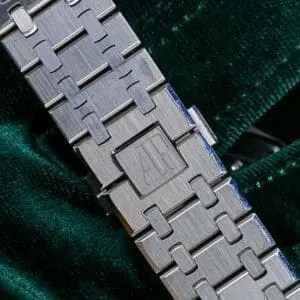
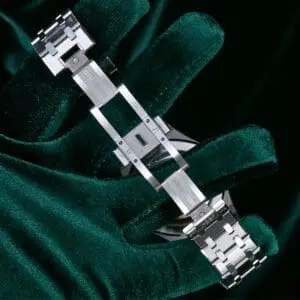
Royal Oak Jumbo 16202ST Overview

The Jumbo is the original Royal Oak. Gérald Genta’s 1972 design, reference 5402, came in at 39mm wide and just 7mm thin, with a stainless steel case priced above most gold watches of the era.
The “Jumbo” nickname came from collectors. The 39mm was considered large for an automatic at the time, and AP eventually adopted the name officially.
The reference 15202ST carried the Jumbo lineage for nearly three decades. It was powered by Caliber 2121, a 3.05mm-thick movement based on the Jaeger-LeCoultre Caliber 920. One frustration with the 15202 was the absence of a quick-set date. To change the date, you had to manually cycle the hands past midnight.
The 16202ST, launched in 2022 for the Royal Oak’s 50th anniversary, fixed this with an entirely new movement. AP confirmed at the launch that Caliber 7121 was developed over five years, specifically to maintain the 8.1mm case height while adding modern functionality.
The 16202ST is the current Jumbo and the reference most buyers are weighing today. The 39mm case, the 8.1mm thickness, and the Petite Tapisserie dial are all unchanged from the original concept.
The bracelet geometry was revised to drape better on smaller wrists. It suits buyers who want the most historically accurate version of the Royal Oak design in current production, and who are prepared to accept the sourcing constraints that come with it. Our Audemars Piguet buying guide covers how the Royal Oak sits in the brand’s wider range.
Key Specifications:
- Reference: 16202ST.OO.1240ST.02
- Production: 2022 to present
- Case Size: 39mm diameter, 8.1mm thickness
- Case Material: Stainless steel
- Bezel: Octagonal, stainless steel with hexagonal white gold screws
- Dial: Petite Tapisserie, “Bleu Nuit, Nuage 50” blue (steel variant only)
- Bracelet: Integrated stainless steel, AP folding clasp
- Movement: Caliber 7121 (in-house), 3.2mm thick, 29.6mm diameter
- Power Reserve: ~55 hours
- Water Resistance: 50m
Notable References
- 5402ST (1972, the original)
- 15202ST (1992–2022, predecessor)
- 16202ST (steel, current)
- 16202OR (rose gold)
- 16202BA (yellow gold)
- 16202PT (platinum)
Royal Oak 15510ST vs Jumbo 16202ST: Most Notable Differences
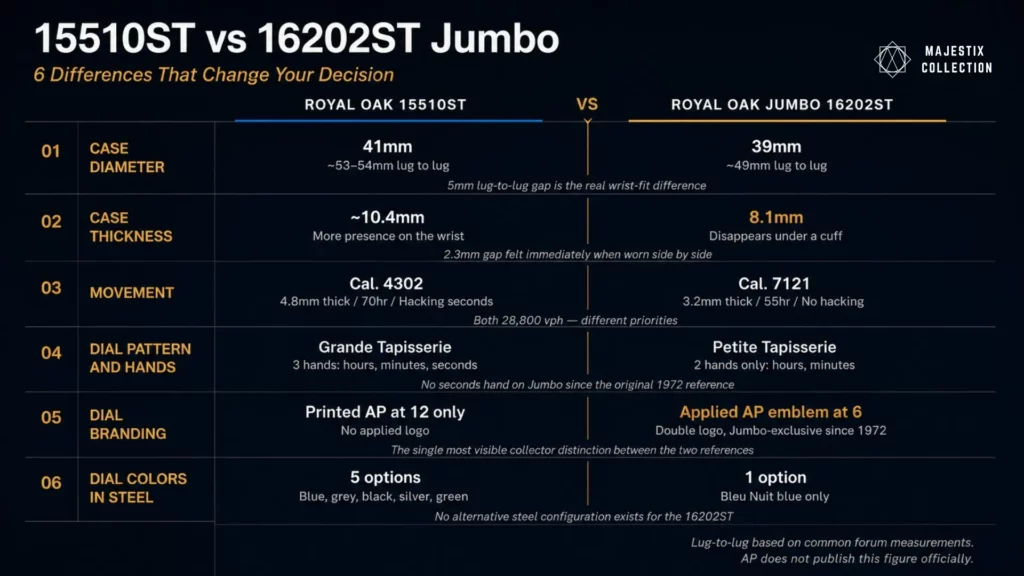
These two watches share a visual identity but differ in almost every technical dimension that affects how a watch feels and functions on your wrist.
The differences below are the ones that matter most to a real purchase decision.
1. Case Diameter
The 15510ST measures 41mm in diameter. The 16202ST measures 39mm. The diameter difference is 2mm, but on the wrist it reads larger because the integrated bracelet adds visual width on both sides of the case.
The lug-to-lug gap tells you more than the diameter does. The 16202ST sits at roughly 49mm lug to lug. The 15510ST extends to about 53–54mm based on common forum measurements (AP does not publish this figure officially). On wrists under 6.5 inches, that 5mm difference is the gap between a flush fit and noticeable lug overhang.
The 15510ST suits wrists 6.5 inches and above. The 16202ST fits well from roughly 6 to 7 inches, and the revised bracelet geometry on the 16202 generation drapes better on smaller wrists than the older 15202 did.
If small-wrist sizing is a broader concern, our roundup of luxury picks for smaller wrists covers more options across brands.
2. Case Thickness
The 16202ST at 8.1mm sits flat against the wrist and slides under a shirt cuff without resistance. The 15510ST at ~10.4mm stacks higher on the wrist, which gives it a sportier presence but limits how easily it transitions into formal settings.
That 2.3mm gap is felt the moment you put the Jumbo on after handling the 15510ST. The Jumbo feels almost like it has no profile at all, which is the point of the design. The 15510ST makes its presence known on the wrist, and many daily-wear buyers prefer that in a sports watch.
3. Movement
The 15510ST runs Caliber 4302 at 4.8mm thick, with a 70-hour power reserve, hacking seconds, and a quick-set date. The 16202ST runs Caliber 7121 at just 3.2mm thick, with a 55-hour power reserve and a quick-set date.
Both calibers beat at 28,800 vph, but their design priorities are different. Caliber 4302 is a full-size modern movement built for wearability and everyday convenience. Caliber 7121 is an ultra-thin movement built to fit inside an 8.1mm case without altering its proportions.
The 15510ST is simpler to set precisely. Pulling the crown stops the seconds hand, so you can sync to the exact second. The Jumbo’s 7121 has no seconds hand at all, since the dial shows hours, minutes, and date only.
Most owners adjust to this within a week. But if you set your watch against a time signal, you can only land within the minute on the Jumbo, not the second.
Related Models from Majestix

Audemars Piguet Royal Oak Offshore Chronograph "Batman" Black Dial Blue Accents Black Rubber Strap Stainless Steel 42mm MINT CONDITION COMPLETE SET 26470ST.OO.A028CR.01

Audemars Piguet Royal Oak Black Dial Stainless Steel 41mm MINT CONDITION COMPLETE SET 15500ST.OO.1220ST.03

2026 NEW UNWORN Audemars Piguet Royal Oak Offshore Diver Abyssal Blue Dial Rose Gold Accents Blue Rubber Strap Stainless Steel 42mm COMPLETE SET 15720ST.OO.A403CA.01

Audemars Piguet Royal Oak Offshore Chronograph "Elephant" Gray Dial Stainless Steel Rubber Strap 42mm 26470ST.OO.A104CR.01

Audemars Piguet Royal Oak Offshore Chronograph "Panda" White Dial Black Subdials Steel Bezel Stainless Steel 42mm MINT CONDITION COMPLETE SET 26170ST.OO.1000ST.01

Audemars Piguet Royal Oak Chronograph "Reverse Panda" Black Dial Silver Subdials Stainless Steel 41mm MINT CONDITION COMPLETE SET 26331ST
4. Dial Pattern
The 16202ST uses Petite Tapisserie, a finer raised-square guilloche machined on traditional lathes. The squares are smaller and denser, and the texture reads subtle in most lighting. The 15510ST uses Grande Tapisserie, a bolder, larger hobnail pattern that catches and reflects light more aggressively across the dial surface.
The 16202ST has no center seconds hand, which has been true of every Jumbo since 1972. The 15510ST has a full center seconds hand. The Jumbo’s two-hand dial reads calmer and less cluttered. The 15510ST’s three-hand layout is more conventional and gives continuous visual confirmation that the movement is running.
5. Dial Branding
The 16202ST has an applied AP emblem at 6 o’clock, placed alongside the “AUDEMARS PIGUET” text at 12. This double-logo configuration is Jumbo-exclusive and has appeared on every generation since 1972. The 15510ST has only the printed brand name at 12, with no applied logo below the dial center. It is a small detail, but a defining one.
6. Dial Color Options
In steel, the 16202ST comes in only one dial color, the Bleu Nuit, Nuage 50. There is no alternative steel configuration in the current production. The 15510ST offers blue, grey, black, silver, and green dials in steel. If color choice matters to how and where you wear a watch, the 15510ST gives you real options. If the Bleu Nuit is what you want, the Jumbo delivers it.
Pricing and Market Demand
The pricing gap between these two references reflects how differently the market values heritage, production volume, and access. Understanding where the premiums come from helps you buy with more confidence and less guesswork.
Retail Prices in 2026
The 15510ST retails at approximately $31,900 USD in steel as of 2026. The 16202ST retails at $40,100 USD in steel, after AP raised U.S. prices roughly 7.5% in January 2026. At retail, the Jumbo carries about an $8,200 premium. On the secondary market, that gap widens considerably.
Secondary Market Ranges
Clean, full-set 15510ST examples typically trade between $45,000 and $65,000 USD as of 2026, with the median sitting near $47,000 (WatchCharts). That puts the model roughly 47% above retail. It also moves faster in secondary transactions because its buyer pool is broader.
First-time AP buyers, daily-wear collectors, and those newer to the brand are all potential buyers, which keeps liquidity steady.
Full-set 16202ST examples trade between $70,000 and $85,000 USD as of 2026, a premium of more than 80% over retail (WatchCharts). The 2022 launch pieces with the 50th Anniversary rotor usually sit at the higher end of that range.
Over the past year the 16202ST has outperformed the broader Royal Oak index, which itself recovered through early 2026 with nearly every in-production reference trading above retail (WatchCharts). One caution on the data: the 16202ST has only traded on the open market since 2022, so its long-term pattern is less established than older Royal Oak references.
What Moves Prices on Both References
Full box and papers are the most important pricing factor. Missing papers can subtract several thousand dollars from any secondary transaction. Dial condition matters a lot on both watches, since tapisserie dials are expensive to service or replace. Bracelet stretch from daily wear is common on both references and reduces resale value.
For the Jumbo, dial color has a large effect on price. The blue 16202ST carries the strongest demand, and white-dial 15202ST examples trade at a clear discount. For the 15510ST, blue and black dials attract broader buyer interest than grey or silver.
If you are unsure how sellers describe wear, our watch condition grading guide explains the terms.
Side-by-Side Comparison: 15510ST vs 16202ST
After working through the differences in detail, the table below gives you a quick reference for any spec you want to cross-check. Use it alongside the sections above rather than as a standalone guide.
| Specification | Royal Oak 15510ST | Royal Oak Jumbo 16202ST |
| Reference | 15510ST.OO.1320ST.XX | 16202ST.OO.1240ST.02 |
| Case Diameter | 41mm | 39mm |
| Case Thickness | ~10.4mm | 8.1mm |
| Lug-to-Lug | ~53–54mm | ~49mm |
| Case Material | Stainless steel | Stainless steel |
| Bezel | Octagonal, hexagonal screws | Octagonal, hexagonal screws |
| Dial Pattern | Grande Tapisserie | Petite Tapisserie |
| Dial Colors (Steel) | Blue, grey, black, silver, green | Bleu Nuit blue only |
| Hands | Hours, minutes, seconds, date | Hours, minutes, date |
| Seconds Hand | Yes (center) | None |
| Applied AP Logo at 6 | No | Yes (Jumbo-exclusive) |
| Movement | Caliber 4302 | Caliber 7121 |
| Movement Thickness | 4.8mm | 3.2mm |
| Power Reserve | ~70 hours | ~55 hours |
| Hacking Seconds | Yes | N/A (no seconds hand) |
| Quick-Set Date | Yes | Yes |
| Water Resistance | 50m | 50m |
| Retail Price (Steel, 2026) | $31,900 USD | $40,100 USD |
| Secondary Market Median | ~$45,000–$65,000 USD | ~$70,000–$85,000 USD |
| Production Status | Current | Current |
Which Royal Oak Should You Choose
Neither watch is the wrong answer. The 15510ST and the 16202ST serve different needs, and the right one depends on your wrist size and how you plan to wear the watch day-to-day. Here is how to think it through.
1. Choose the 15510ST for Daily Wear
If you want an AP you can wear every morning without a second thought, the 15510ST is the easier Royal Oak to own. It works best for buyers who:
- Have wrists 6.5 inches or larger and want a proportional lug fit
- Set their watch against a time signal and want hacking seconds at the crown
- Want dial color variety (blue, grey, black, silver, or green)
- Prefer a three-hand layout with a visible running seconds hand
- Want a Royal Oak that is more accessible on the secondary market at a lower premium
- Are newer to AP and want a capable, lower-friction ownership experience
- Like a bolder, more modern dial presence on the wrist



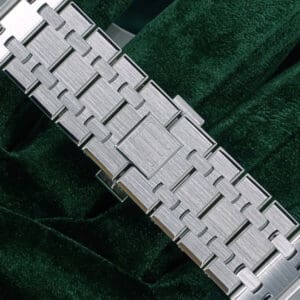
2. Choose the Jumbo 16202ST for Heritage
If you want the 1972 original reborn, the Jumbo asks more of you at purchase but gives you something the 15510ST cannot. It works best for buyers who:
- Want the closest available modern version of Genta’s 1972 original
- Have wrists under 7 inches and want a flat, cuff-friendly profile
- Care about the two-hand dial and the applied AP logo at 6 o’clock
- Prefer the finer Petite Tapisserie pattern over Grande Tapisserie
- Are happy with the single Bleu Nuit blue steel option
- Are comfortable with the secondary market premium and limited retail access
- Want the collector standing the Jumbo carries within the Royal Oak family
3. Try Both On Before Committing
The 2.3mm thickness difference is felt immediately, and the lug-to-lug gap tells you which one was built for your size. Whichever one you reach for without thinking is the one worth buying.
And if a chunkier, sportier build pulls at you instead, our Royal Oak vs Royal Oak Offshore comparison covers that direction.
Where to Buy Authentic Watches Online
A few online channels are worth knowing before you commit to either reference. Chrono24 carries the widest selection of both watches from dealers worldwide, with an escrow option that holds your payment until the watch arrives. If it is your first time on the platform, here is how buying on Chrono24 works.
eBay covers steel Royal Oaks under its Authenticity Guarantee, which routes higher-value watches through an inspection before they reach you. Grailzee runs auction-style listings if you would rather bid than pay a fixed ask. Independent grey-market dealers and watch forums fill in the rest, though they ask more homework from you on condition and papers.
If you are still weighing where to look, we compare authorized dealers and the grey market in a separate guide.
We also buy, sell, and trade luxury watches, and the reason clients come to us instead of a big marketplace is what happens before the sale. You get a real conversation, a tour video of the exact watch on hand, and honest condition notes on bracelet stretch, dial wear, and box and papers. You are not buying blind off a listing.
That shows up in our 4.9-star Google rating, which comes from clients who wanted to know exactly what they were getting before they paid.
If you want that kind of walkthrough on a specific 15510ST or 16202ST, we can help you source one. Reach out with the configuration you are after and we will line up options that match.
Final Thoughts on Royal Oak vs Royal Oak Jumbo
The Royal Oak vs Royal Oak Jumbo decision comes down to how you live with a watch over years, not which one looks better in photos. The 15510ST is more available and more versatile across settings. The 16202ST gives you the closest modern translation of Genta’s 1972 original, and its 8.1mm profile is why it disappears under a cuff.
Two tips most buyers miss. Ask any dealer about bracelet stretch before you negotiate, since it is the most negotiable wear point on either reference. And budget for a service every 4–5 years, because AP work on either caliber runs into four figures. Here is what a watch service actually costs.
The spec sheet brings you close. The wrist closes the gap.
999+ Timepieces Available
Explore Our Timepieces
Authenticated, unworn, and ready to ship worldwide.
Rolex · Audemars Piguet · Patek Philippe · Omega · Cartier · Richard Mille · Hublot · Tudor
Newly Listed
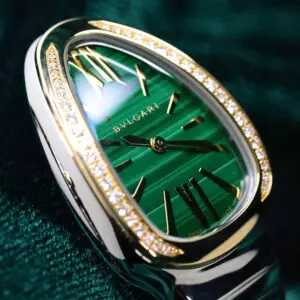
2026 NEW UNWORN Bvlgari Serpenti Tubogas Studs Capsule Limited Edition Green Dial Diamond Bezel Steel & 18k Yellow Gold 35mm COMPLETE SET 104360
$24,255.00

Vacheron Constantin Overseas Chronograph Blue Dial Blue Leather Strap Stainless Steel 42.5mm MINT CONDITION COMPLETE SET 5500V/110A-B148
$37,793.00

Tag Heuer Monaco Chronograph “Dark Lord” Special Edition Black Dial Black Leather Strap DLC Titanium 39mm MINT CONDITION COMPLETE SET CBL2180.FC6497
$8,135.00
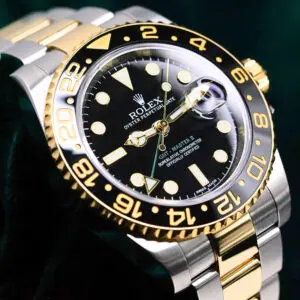
Rolex GMT-Master II “Green Arrow” Black Dial Black Ceramic Bezel Oyster Bracelet Two-Tone 18K Yellow Gold Stainless Steel 40mm MINT CONDITION COMPLETE SET 116713LN
$15,740.00

Vacheron Constantin Overseas Chronograph Blue Dial Stainless Steel 42.5mm MINT CONDITION COMPLETE SET 5500V/110A-B148
$37,793.00

Rolex Day-Date Meteorite Baguette Diamond Dial Fluted Bezel President 18K White Gold 40mm MINT CONDITION COMPLETE SET 228239
$78,629.00

2026 Rolex Cosmograph Daytona Black Dial Black Ceramic Bezel Oyster Bracelet Stainless Steel 40mm MINT CONDITION COMPLETE SET 126500LN
$33,594.00

2025 Vacheron Constantin Overseas Moonphase Retrograde Date Blue Dial Blue Rubber Strap Stainless Steel 41mm MINT CONDITION COMPLETE SET 4000V/210A-B911
$52,800.00

2025 Tudor Black Bay Chrono "Flamingo Blue" Turquoise Dial Black Bezel Stainless Steel 41mm MINT CONDITION COMPLETE SET 79360N-0024
$10,494.00

Audemars Piguet Royal Oak Offshore Chronograph "Batman" Black Dial Blue Accents Black Rubber Strap Stainless Steel 42mm MINT CONDITION COMPLETE SET 26470ST.OO.A028CR.01
$25,715.00

IWC Big Pilot's Watch Top Gun Miramar Grey Dial Green Textile Strap Black Ceramic 48mm MINT CONDITION COMPLETE SET IW501902
$7,240.00

Audemars Piguet Royal Oak Offshore Chronograph "Elephant" Gray Dial Stainless Steel Rubber Strap 42mm 26470ST.OO.A104CR.01
$23,974.50