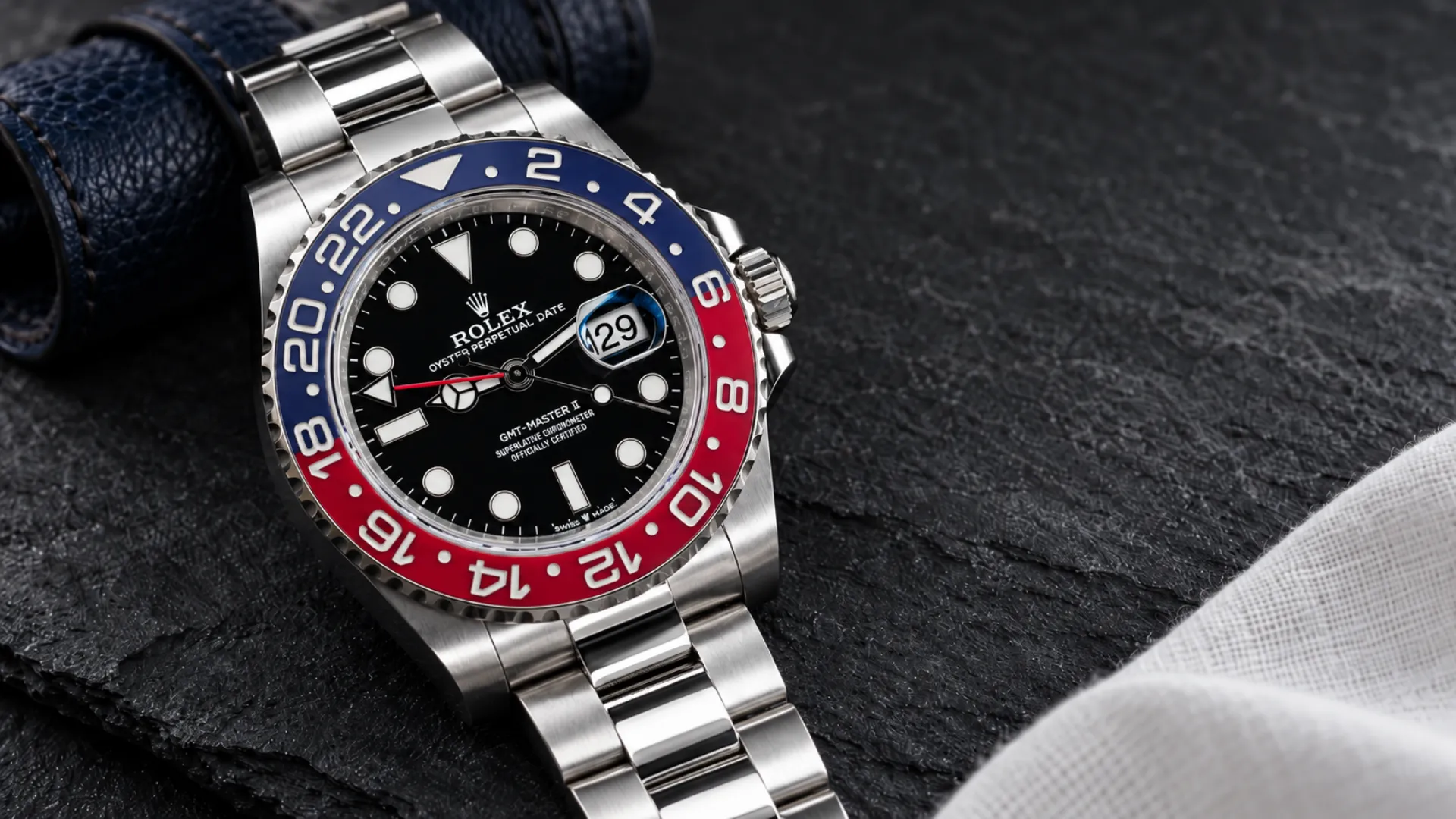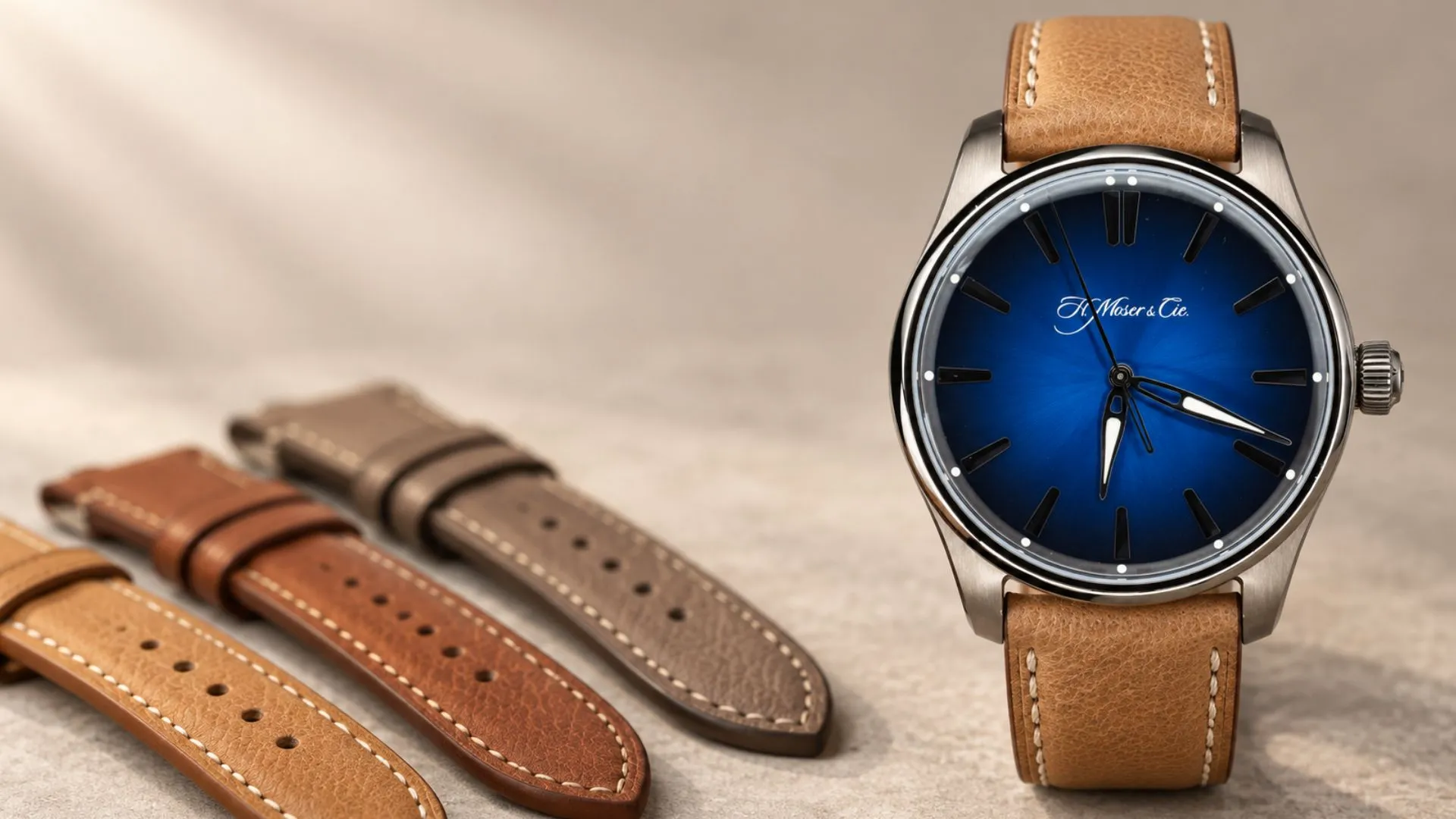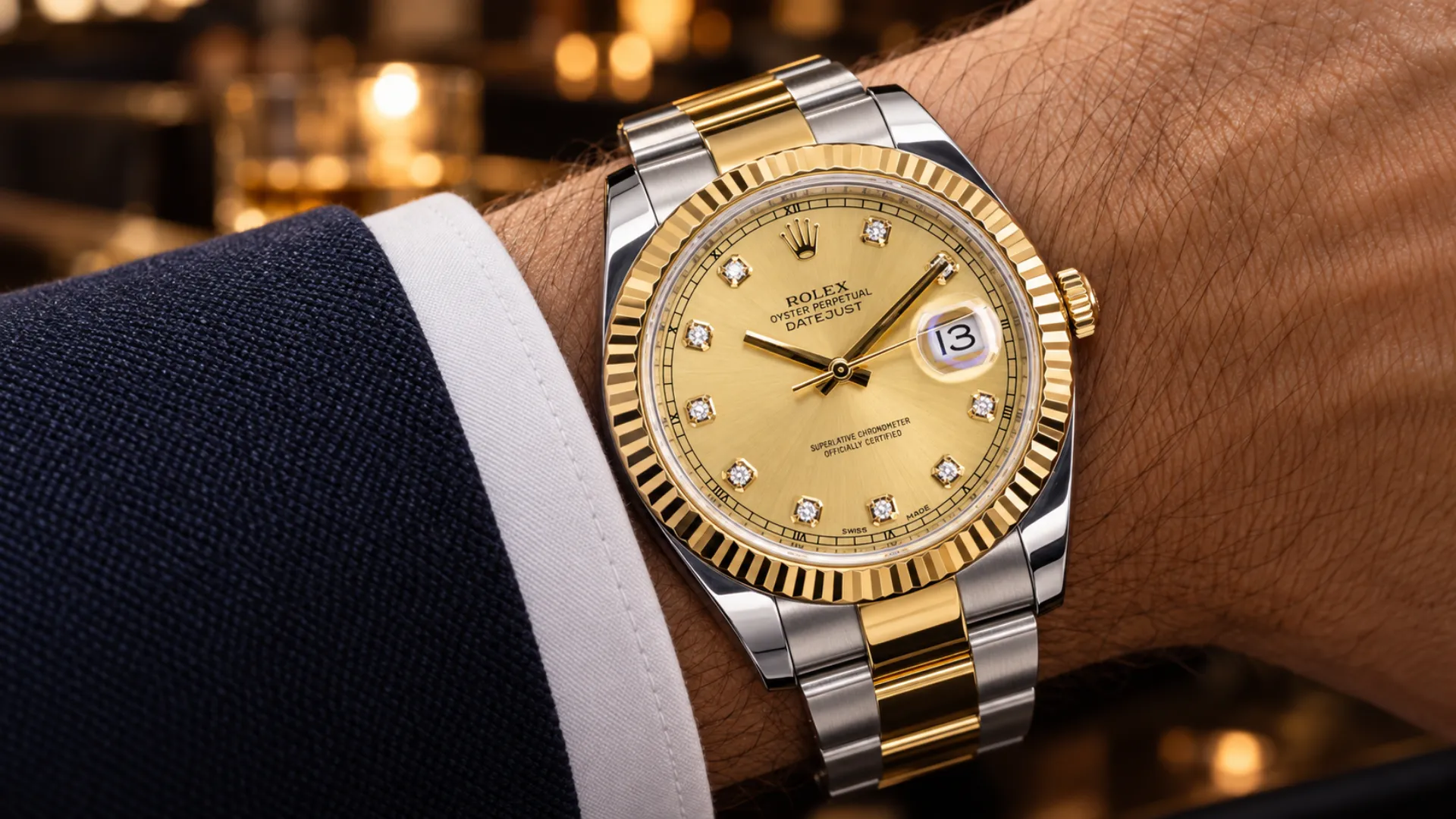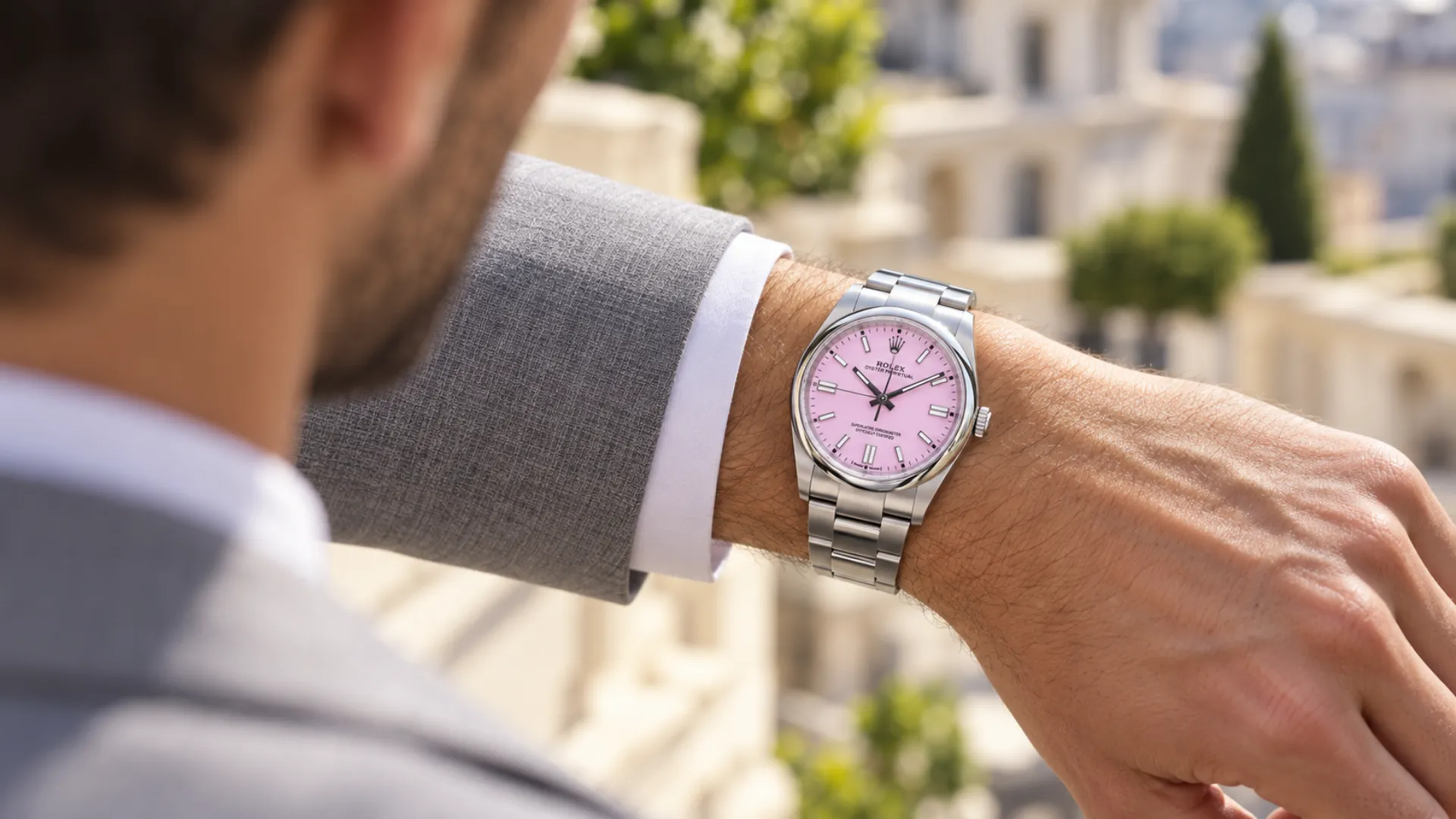
Watch service cost is shaped by several factors, including the complexity of the movement, the watch’s age, how consistently it has been maintained, and whether the work is done by an independent specialist or the brand’s own service center.
This guide breaks down the key factors that affect service pricing. It also presents commonly reported cost ranges across watch types and major brands, and explains what’s actually included when you pay for a full professional overhaul.
What Determines the Cost of a Watch Service?
The watch service cost depends on how much time and skill are required to take the movement apart, clean it, lubricate it and adjust it back to proper performance. Simple three-hand calibers usually cost less to service, while more complex movements require additional labor and expertise.
Parts availability also plays a role, since some brands limit access to components and vintage watches may need harder-to-find replacements. Waterproofing checks and gasket changes can add to the overall price.
Testing and regulation contribute to the final cost as well. Every full service includes accuracy checks, performance measurements and verification that the watch runs within its intended range. Brand policies may also influence the final bill, especially for luxury models with strict service standards.
Average Watch Service Costs by Watch Type
Actual service pricing varies by brand, movement complexity, region, and condition. Here are commonly reported service ranges based on public watchmaker estimates, owner data, and servicing guides.
- Standard three-hand mechanical watches – Frequently reported between US$195–$300, depending on the watchmaker and the simplicity of the movement.
- Automatic watches with date or day-date – Many servicing discussions and watchmaker guides place these around US$250–$400, reflecting the added complexity over a basic mechanical caliber.
- Chronograph watches (modular vs. integrated) – Chronographs are widely known to cost more, with many independent shops listing US$400–$700+, particularly for integrated or vintage movements that require more labor and regulation.
- GMT and dual-time watches – Often priced similarly to mid-complexity automatics or simple chronographs, generally US$400–$700, depending on how the GMT mechanism is constructed.
- High-beat and micro-rotor movements – These specialized movements typically fall on the higher end of servicing scales, with quotes often ranging from US$400 up to US$1,000+ when parts or fine adjustment are needed.
- Quartz watches – full overhaul vs. battery service
- Battery replacement/basic maintenance: Commonly US$20–$50, depending on brand and water-resistance testing.
- Full quartz-movement overhaul: Typically US$120–$200, particularly when the service includes gasket checks, cleaning, and pressure testing.
Watch Service Cost by Brand
Below are commonly cited service ranges gathered from publicly available watchmaker data, owner experiences, and official brand pricing where published. Costs vary significantly by model, region, parts availability, and added repairs.
Rolex
- Many owners and service guides report a typical Rolex service falling between US$800 and US$1,200 for standard models.
- Complex or older models may exceed this range, with some reports of totals rising above US$2,000 when parts need replacement.
- Regional pricing varies; for example, some Southeast Asian estimates list ranges of S$795 to S$1,591, depending on condition and required components.
Omega
- Publicly shared service estimates often place Omega’s full service around US$700, particularly for Co-Axial movements, which require specialised lubrication and handling.
- Final pricing may be higher or lower depending on model age, complications, and parts replacement.
Grand Seiko Mechanical and Spring Drive
- Older retailer and owner-shared service guides list mechanical Grand Seiko services in the US$260–$535 range for simpler calibers.
- More advanced movements (especially Spring Drive) — generally cost more due to hybrid mechanical-quartz architecture and brand-specific servicing requirements.
- Quartz models typically have lower maintenance costs unless a full overhaul is required.
Patek Philippe
- Servicing high-end Patek Philippe watches, especially chronographs or perpetual calendars, is frequently reported at US$2,300 or higher, reflecting movement complexity and delicate finishing.
- Because Patek service is highly specialized and parts availability is tightly controlled, many boutiques provide personalized quotes rather than fixed prices.
Audemars Piguet Royal Oak Service Costs
(These are among the few publicly published official service prices.)
- Self-winding Royal Oak: 950 CHF
- Chronograph models: 1,700 CHF
- Extra-thin models: 1,300 CHF
- Complicated pieces (e.g., perpetual calendars): 2,200 CHF
These official figures apply to models up to 25 years old.
Vintage Watch Service Costs Across Brands
- Vintage servicing varies widely due to condition, part scarcity, and the need for donor components. Ranges often exceed modern servicing prices when crowns, crystals, gaskets, or mainsprings must be replaced.
- Some service centers quote significantly higher prices or decline service altogether if original parts are no longer available.
- Industry recommendations consistently emphasise obtaining a detailed pre-service estimate for vintage pieces.
What’s Included in a Professional Watch Service
A full watch service is a multi-step process designed to restore accuracy, reliability, and proper water resistance. While each brand has its own protocols, most high-quality services follow a similar structure that addresses both the movement and the exterior of the watch.
Complete Disassembly and Cleaning
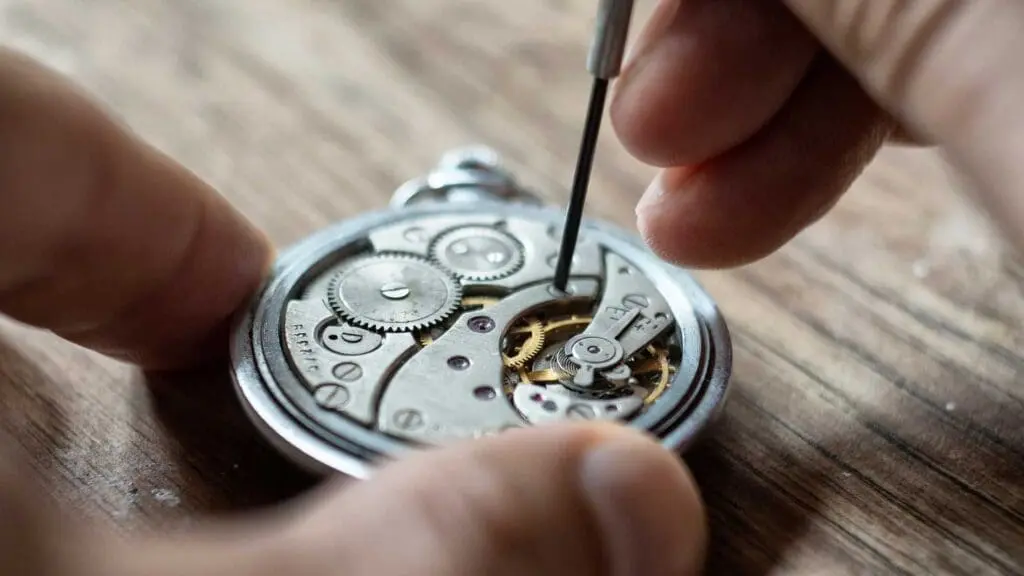
A professional service begins with removing the movement from the case and fully disassembling every component. The watchmaker separates each gear, spring, jewel, and bridge, then places the parts in an ultrasonic cleaning machine to remove old lubricants and debris. This ensures every surface is clean before lubrication and reassembly.
Replacement of Worn or Damaged Components
Any worn, corroded, or damaged parts are identified during the disassembly stage. These may include wheels, pivots, mainsprings, gaskets, or jewels. Depending on the brand, replacements may require genuine manufacturer parts or specialized sourcing for vintage watches. Replacing worn components prevents long-term damage and helps the movement run efficiently.
Movement Lubrication and Reassembly
Once cleaned, the movement is rebuilt using the correct lubricants at precise points of friction. Modern oils differ based on the watch’s design, beat rate, and complications. Proper lubrication reduces wear, stabilizes performance, and extends the movement’s service interval. The movement is then reassembled, inspected, and prepared for regulation.
Timing, Regulation, and Water-Resistance Testing
The watchmaker regulates the movement across multiple positions using timing machines that measure accuracy, amplitude, and beat error. Watches designed for water resistance undergo gasket replacement, vacuum tests, pressure tests, or both to confirm the case seals perform as intended. These tests help ensure accuracy and durability in everyday conditions.
Case and Bracelet Refinishing (Optional at Additional Cost)
Most professional service centers offer refinishing as an optional add-on. This includes polishing steel or gold surfaces, brushing bracelet links, and removing light scratches while preserving original case geometry. Some brands require refinishing as part of a complete service, while others allow the owner to decline it to maintain sharp edges or vintage character.
Extra Costs You Might Encounter
Beyond the standard service fee, additional repairs or parts may increase the total watch service cost. These extras depend on the watch’s age, condition, and brand-specific requirements.
- Replacing worn crown, tube, or pushers – Worn sealing components reduce water resistance and often require replacement during service, especially on dive watches and chronographs.
- Crystal replacement (sapphire, acrylic, or mineral) – Deep scratches or cracks may require a new crystal. Sapphire crystals are the most expensive, while acrylic is typically the most affordable.
- New mainspring or barrel assembly – A failing mainspring weakens power delivery and timing stability. Many brands automatically replace the mainspring during servicing.
- Expedited service or manufacturer-only part requirements – Some brands limit parts access to authorized centers, raising costs. Rush services or priority handling also increase the final bill.
How Often Service Affects Total Ownership Cost
How frequently you service a watch has a direct impact on long-term ownership cost. Watches that receive routine maintenance often need fewer replacement parts because oils stay fresh, friction stays low, and components remain protected.
Long-interval servicing allows lubricants to dry and metal parts to grind against each other, which leads to wear on pivots, gears, and jewels. These issues raise the watch service cost dramatically, because multiple components may need replacement instead of simple cleaning and lubrication.
Frequent maintenance also helps preserve water resistance, preventing moisture intrusion that can cause corrosion or dial damage. Timely servicing keeps a watch healthier and significantly reduces cumulative costs over its lifetime.
How Often to Service a Watch?
Most mechanical watches need servicing every 5 to 10 years, but the ideal interval depends on the movement type, how the watch is worn, and its water-resistance requirements. Modern calibers with improved lubricants and efficient escapements can safely run longer between services, while vintage pieces or high-beat movements may require more frequent attention.
Watches exposed to water, shocks, or daily wear should be pressure-tested annually to ensure the seals are still intact. If you notice accuracy issues, reduced power reserve, moisture under the crystal, or unusual sounds when winding, those are clear signs the watch needs immediate attention.
Following consistent service intervals protects accuracy and reliability and helps keep lifetime watch service cost lower by preventing unnecessary component wear.
Final Thoughts on Watch Service Costs
Understanding watch service cost helps you plan for long-term ownership and protect the value of your timepiece. Prices vary widely depending on movement complexity, brand policies, parts availability, and how well the watch has been maintained over the years.
Staying on top of regular servicing keeps accuracy stable, prevents premature wear, and reduces the risk of costly repairs later. Consistent care keeps any watch performing as intended, from basic three-hand designs to the most advanced chronographs, and supports its reliability for many years.
FAQs About Watch Service Cost
Why do luxury watch services cost more than standard watches?
Luxury brands use more complex movements, higher grade materials, and brand-specific tools that increase labor time and service requirements. Parts are often proprietary, and authorized centers must follow strict procedures that raise overall cost.
Is it cheaper to service a watch at an independent or at the manufacturer?
Independent watchmakers are usually cheaper, but they may not have access to brand-restricted parts. Manufacturer service centers cost more but offer official components, higher water-resistance guarantees, and factory-backed warranties.
What can increase service costs unexpectedly?
Hidden wear, corrosion, broken jewels, damaged mainsprings, or moisture intrusion can raise the price quickly. Vintage watches may require rare donor parts, while dive watches and chronographs often need additional gaskets, crowns, or pushers.
Are chronographs always more expensive to service?
Chronographs have significantly more components than three-hand movements, and integrated chronographs are especially complex. This increases labor hours, testing time, and the likelihood of parts needing replacement.