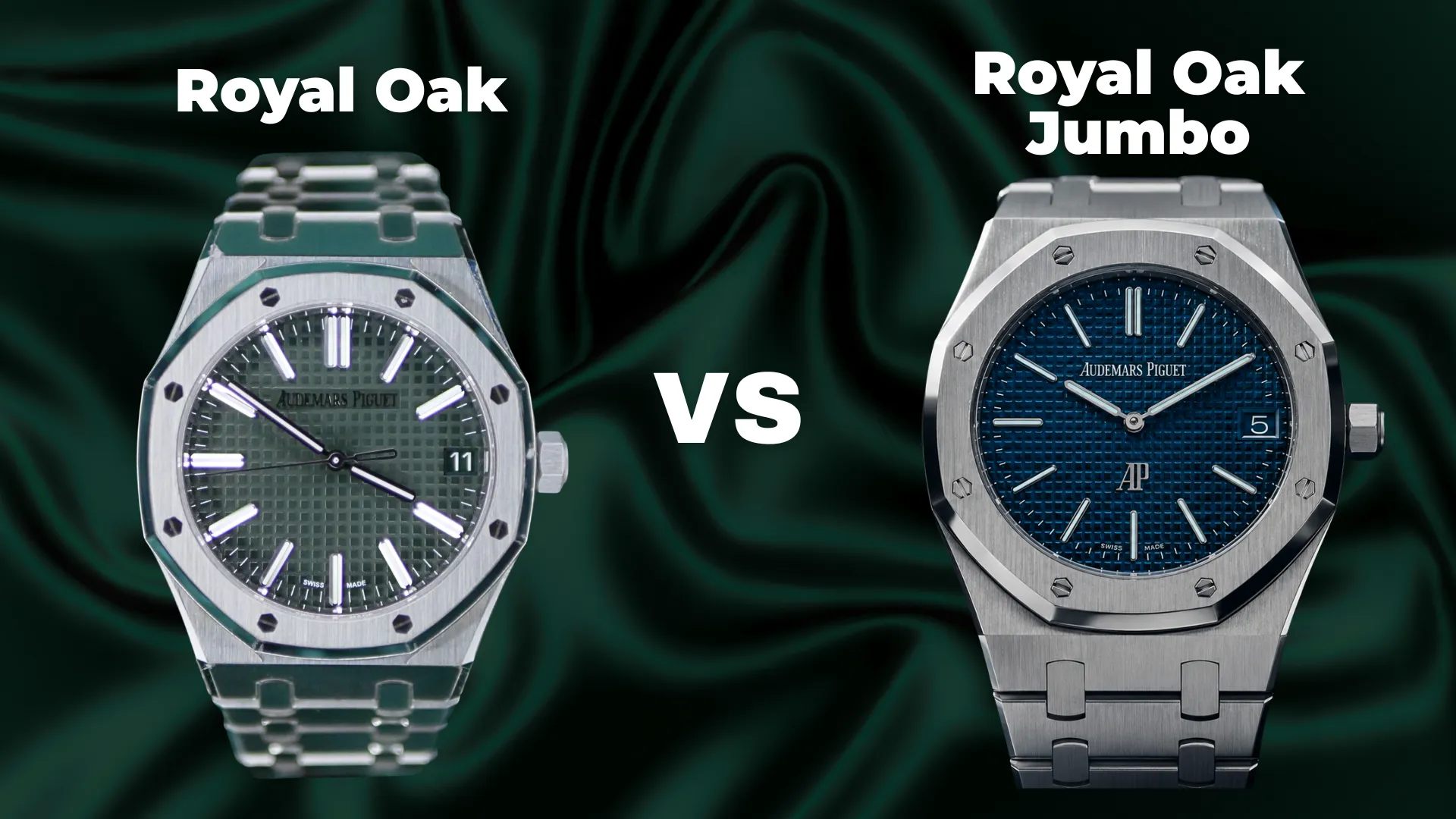

As of 2026 you cannot buy a new steel Nautilus at any price. That one fact changes the oldest debate in the watch world, because the Royal Oak still sells steel through a dealer and the Nautilus no longer does.
Both watches came out of the 1970s, drawn by the same designer, priced in ways that shocked the industry. They remain genuinely different in how they sit on the wrist and in what they ask of the buyer.
If you are researching this comparison, you are probably close to a decision. Here is what separates them in daily ownership, what each collection costs right now, and how the supply change should shape your next move.
How the Royal Oak Started the Steel Sports Watch

Audemars Piguet introduced the Royal Oak in 1972, when the Swiss watch industry was under heavy pressure from quartz technology. Rather than go cheaper or simpler, AP went the other direction.
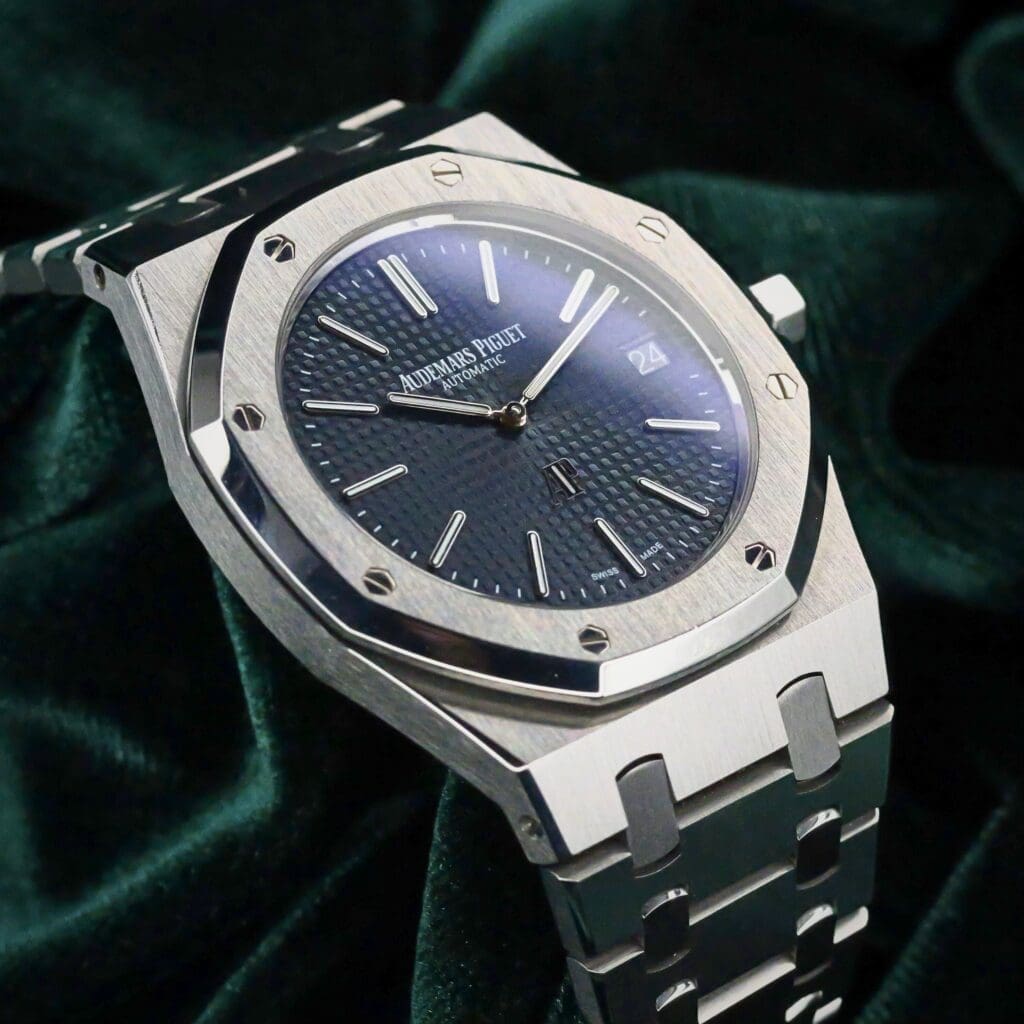
They asked designer Gérald Genta to create a steel sports watch priced above gold watches of the era. The result was unlike anything on the market. It arrived with an eight-sided bezel held by eight exposed hex screws, an integrated steel bracelet, and a textured tapisserie dial.
That watch created the luxury steel sports category. Every integrated-bracelet design that followed is still measured against it. Our Audemars Piguet catalog overview covers where it sits among the brand’s other lines.
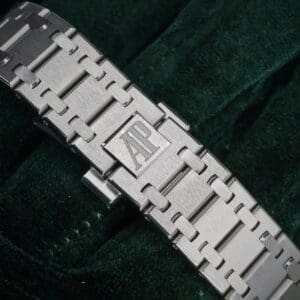
For collectors, the Jumbo Extra-Thin is the core reference of the line. It sits thinner and closer to the original vision than the larger selfwinding models. The tapisserie dial and the hand-finished bracelet remain the two most studied parts of the collection.


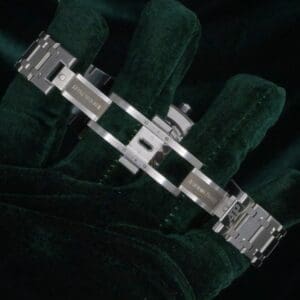
Here are the references buyers come across most often when researching the family:
- Ref. 16202ST
- Ref. 15202ST
- Ref. 15510ST
- Ref. 15550ST
- Ref. 26240ST (Chronograph)
Why Patek Built the Nautilus in 1976
Patek Philippe introduced the Nautilus in 1976 as a direct response to the growing market for steel sports watches with integrated bracelets. Genta was hired again, and he reportedly sketched the design in minutes, pulling from the shape of a transatlantic ocean liner porthole.
The result had a rounded octagonal bezel, sculpted lateral case ears, and a horizontally embossed dial. Patek had spent decades focused on complications and dress watches in precious metals, so this was a clear departure. Our Patek Philippe catalog overview maps the rest of the range.
It worked a little too well. Most people who can name one Patek name this one.
The hallmarks of the collection are bracelet comfort, movement finishing, and the horizontal dial texture that reads differently in every light. For collectors, the discontinued steel time-and-date ref. 5711 is still the reference the whole family gets measured against.


These are the references that come up most in buyer research today:
- Ref. 5711/1A-010
- Ref. 5711/1A-014
- Ref. 5811/1G
- Ref. 5712/1A
- Ref. 5990/1A
Royal Oak vs Nautilus: Most Notable Differences
Two collections share a common origin and a similar category, but the technical differences are real and affect how you live with the watch. These are the factors that should drive your decision.
1. Exposed Screws vs a Smooth Bezel
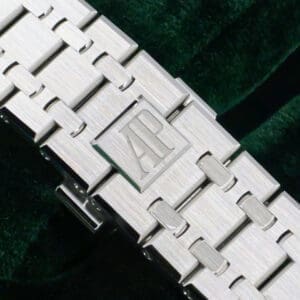
The Royal Oak bezel is octagonal with eight exposed hexagonal screws, one at each corner. The screws are functional, part of the actual case construction. Edges are sharp, with alternating brushed and polished surfaces. The whole face reads geometric and industrial.
The Nautilus bezel has no exposed hardware. The octagonal shape is softer, with rounded corners and a more polished finish. There are no visible fasteners, which gives the watch a cleaner, more jewelry-like front.
At a glance across a table, the Royal Oak gets recognized and the Nautilus often does not. That cuts both ways. One buyer wants the recognition, the other actively wants to avoid it.
2. The Jumbo Runs Thinner Than the Nautilus
The Royal Oak Jumbo ref. 16202ST measures 39mm in diameter and 8.1mm thick, with a lug-to-lug span (tip to tip) of roughly 44mm. It is the slimmest automatic in the family and sits flat against the wrist with very little stack height.
The 41mm Royal Oak Selfwinding ref. 15510ST runs closer to 10.4mm thick because of the larger Calibre 4302 inside. That extra height is noticeable under a shirt cuff, and it is the main reason buyers with smaller wrists move to the 37mm ref. 15550ST at 9.1mm.
We cover how the Jumbo compares to the standard Royal Oak in a separate piece.
The Nautilus time-and-date references measure 40mm in diameter and 8.3mm thick for the 5711 family. The current ref. 5811/1G is 41mm at 8.2mm.
The lateral case ears add roughly 3 to 4mm of effective wrist width beyond the stated diameter. So the Nautilus reads wider on the wrist than the number suggests, and those ears can extend past the wrist edge on smaller builds.
The Royal Oak Jumbo is the safer fit under 6.5 inches, and our roundup of watches for smaller wrists covers what else works there.
3. Tapisserie Depth vs Horizontal Gradient
The Royal Oak uses a tapisserie guilloché pattern, a grid of alternating squares and diamonds cut into the dial with a traditional pantograph machine. The grid creates real depth and catches light differently depending on the angle.
Jumbo models use Petite Tapisserie. Larger references use Grande Tapisserie with a coarser grid. Hands are the signature bathtub shape in white gold with luminescent coating, and the Jumbo runs without a seconds hand.
The Nautilus uses a horizontal embossed groove pattern that runs the full width of the dial. It creates a gradient effect, lighter toward the center and darker at the edges, most visible in indirect light.
The texture is subtler than the tapisserie at first glance but shifts more dramatically with angle. Hands are baton-style white gold with lume, and the modern time-and-date references carry a running seconds hand.
That missing seconds hand on the Royal Oak Jumbo is worth sitting with before you commit. Plenty of owners never think about it. Some find they miss the quick glance that tells them the watch is still running.
Related Models from Majestix

Audemars Piguet Royal Oak Offshore Diver Funky Colours 42mm Purple Stainless Steel COMPLETE SET MINT CONDITION 15710ST.OO.A077CA.01

Audemars Piguet Royal Oak Offshore Chronograph Blue Dial Titanium Bezel Blue Rubber Strap 43mm MINT CONDITION COMPLETE SET 26420TI.OO.A027CA.01
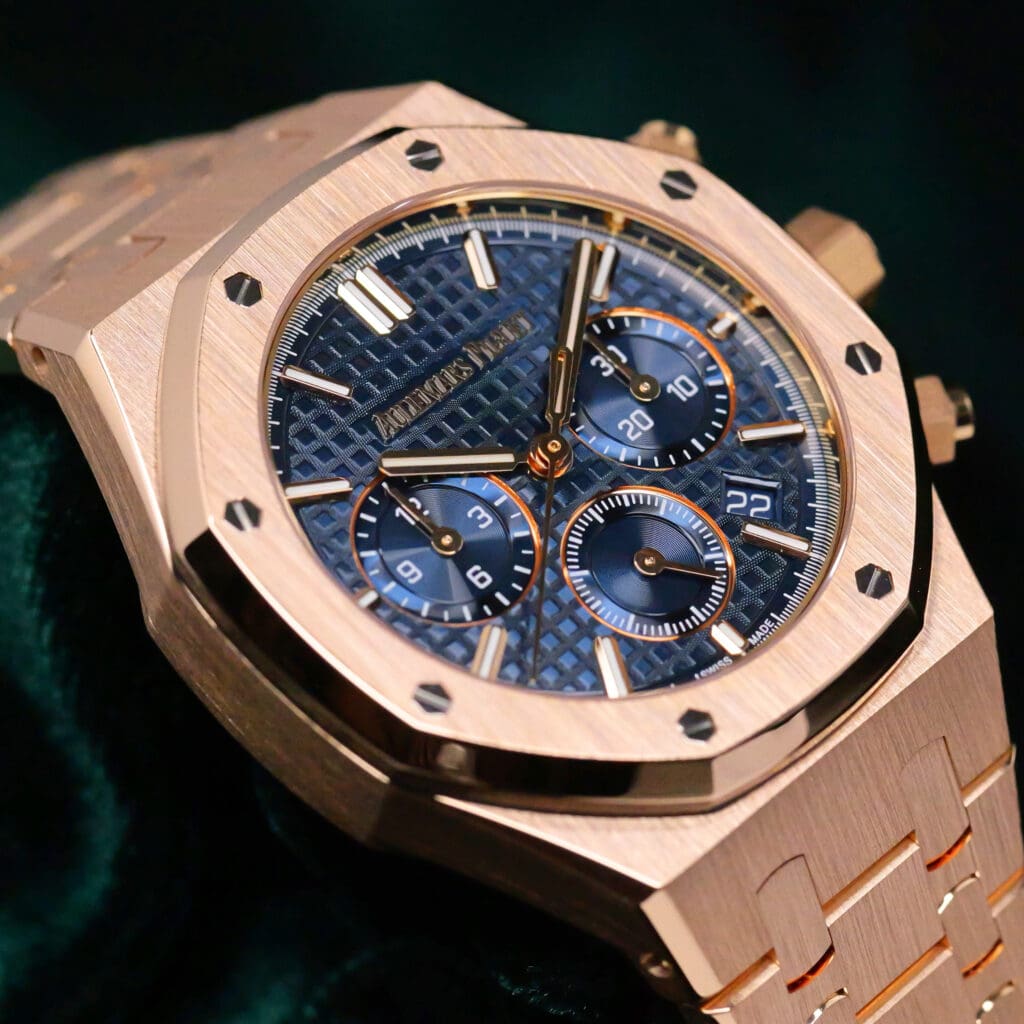
Audemars Piguet Royal Oak Selfwinding Chronograph Bleu Nuit Nuage 50 Blue Dial Bracelet 18k Rose Gold 38mm MINT CONDITION COMPLETE SET 26715OR.OO.1356OR.01
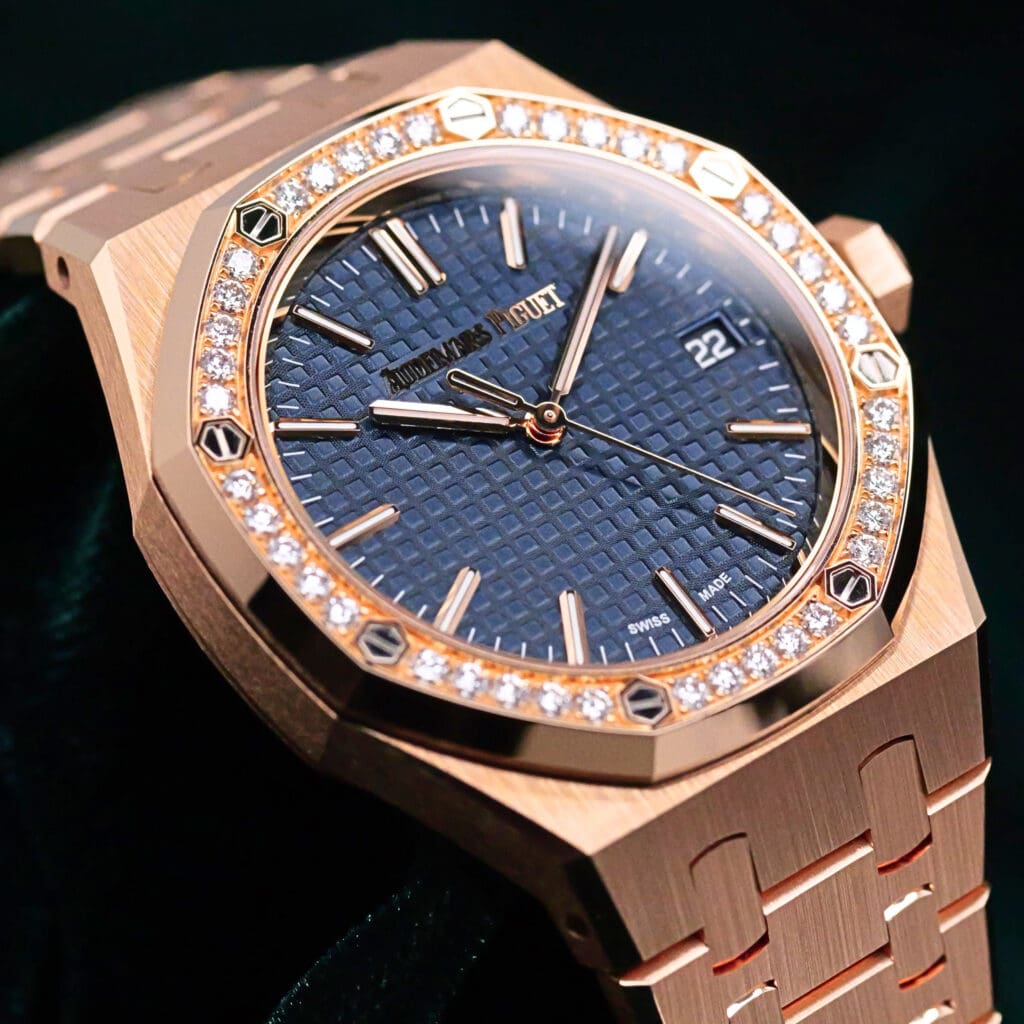
Audemars Piguet Royal Oak Selfwinding "50th Anniversary" Bleu Nuit Nuage 50 Blue Dial Diamond Bezel 18K Rose Gold 37mm MINT CONDITION COMPLETE SET 15551OR.ZZ.1356OR.02

Audemars Piguet Royal Oak Offshore Chronograph "Havana" Brown Dial Blue Subdials Brown Leather Strap Stainless Steel 42mm MINT CONDITION COMPLETE SET 26470ST.OO.A099CR.01
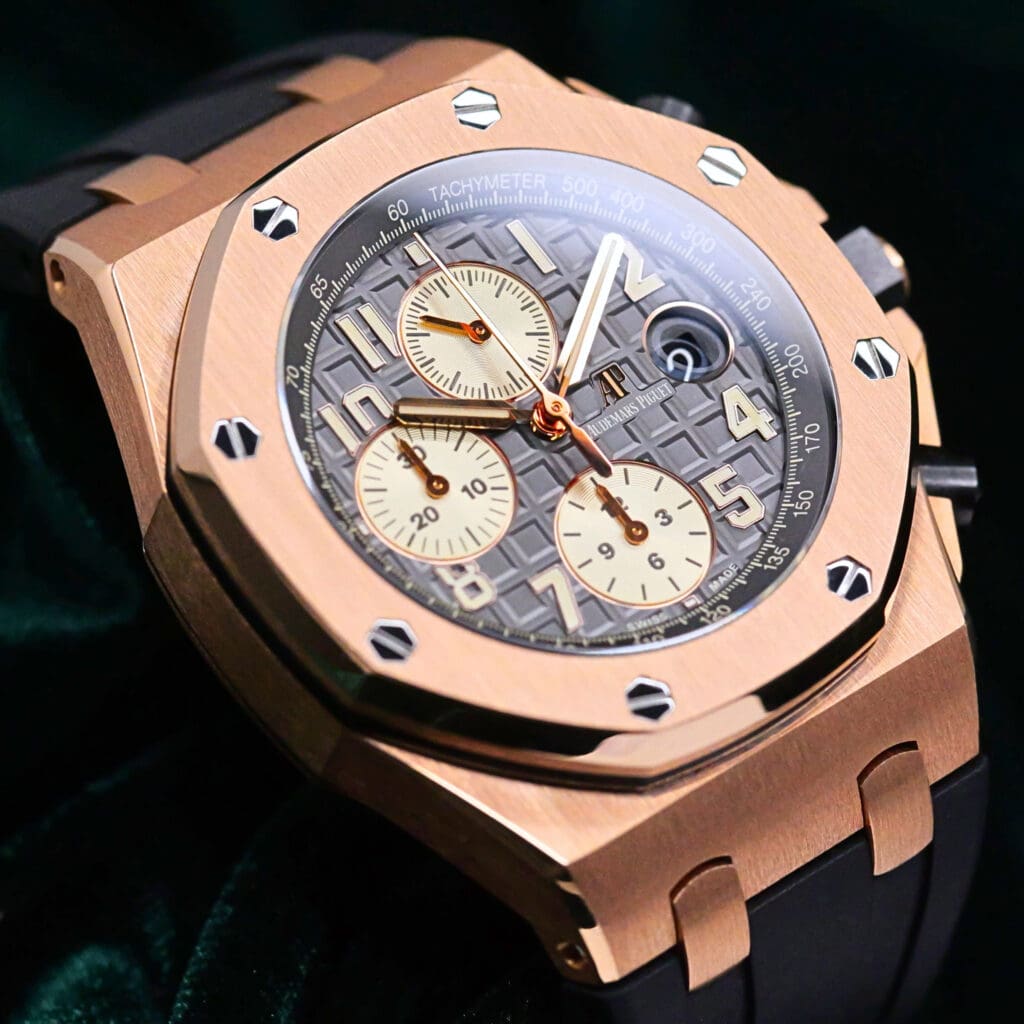
Audemars Piguet Royal Oak Offshore Chronograph “Half Brick” Ruthenium Grey Dial 18K Rose Gold Black Rubber Strap 42mm MINT CONDITION COMPLETE SET 26470OR.OO.A125CR.01
4. Firm Bracelet vs Flexible Bracelet
The Royal Oak bracelet uses alternating brushed and polished links with chamfered edges. Links are articulated but firm enough that the bracelet holds a near-circular shape when you set it down.
The 16202ST received revised link geometry that improves drape across a wider range of wrist sizes compared with the 15202ST. The clasp is a double-folding design, and the current Jumbo generation has no micro-adjustment.
The Nautilus bracelet tapers from the case toward the clasp, with polished center links and brushed outer links. Construction is more flexible than the Royal Oak’s, so it conforms to the wrist instead of resting on top of it.
Patek added a micro-adjustable folding clasp on the 5811, which the older 5711 lacked. That original 5711 clasp drew consistent criticism for being stiff and awkward to open, and it is one of the first things owners mention after a few months of daily wear.
Both are among the best-finished integrated bracelets in production. Comfort tends to favor the Nautilus, structure and finishing crispness tends to favor the Royal Oak, and most people know which they prefer within about ten minutes of wearing each.
5. Longer Reserve vs Magnetic Resistance
Both calibers run at 4Hz and both are made in-house. The Jumbo takes the power reserve advantage at 55 hours against a maximum 45 hours for the Nautilus. The Nautilus takes magnetic resistance through its Spiromax silicon hairspring, which the Calibre 7121 does not use.
The Patek Philippe Seal is also a factor. It is a documented finishing and functional standard applied to every caliber that carries it, and the Royal Oak 7121 has no equivalent internal or third-party certification.
Royal Oak Jumbo 16202ST, Calibre 7121
- Diameter 29.6mm, thickness 3.2mm
- Power reserve 55 hours
- Frequency 28,800 vph (4Hz)
- Quick-set date at 3 o’clock, no seconds hand
- 268 components, 33 jewels
- Pink-gold bridges, Gyromax balance wheel
Nautilus 5711 and 5811, Calibre 26-330 S C
- Diameter 27mm, thickness 3.3mm
- Power reserve 35 to 45 hours
- Frequency 28,800 vph (4Hz)
- Hacking seconds and a running seconds hand
- 212 components, 29 to 30 jewels
- Gyromax balance with gold timing weights, Spiromax silicon hairspring
- 21K gold rotor, Côtes de Genève decoration, Patek Philippe Seal certified
Think about how you rotate watches here. Two days off the wrist kills the Nautilus and the Jumbo keeps running. If you work around monitors, MRI-adjacent environments, or magnetic tools, the silicon hairspring earns its keep instead.
6. 50m vs 120m Water Resistance
The Royal Oak carries 50m water resistance across its current references, with a push/pull crown and no guards. That covers rain and hand-washing. It does not cover swimming.
The Nautilus carries 120m across its modern time-and-date references, with sculpted crown guards and a more aggressively sealed case. At 120m you can swim in it without thinking about it.
This is the single biggest functional gap between the two. If your watch goes in the ocean with you, the Royal Oak’s 50m rating is the limitation owners complain about most.
What Changed for Royal Oak and Nautilus Buyers
The Nautilus catalogue is now entirely precious metal, and the 50th anniversary did nothing to change that. The Royal Oak went the other way and kept expanding in steel. That single difference reshapes how you buy either watch this year.
The Nautilus 50th Anniversary Skipped Steel Entirely
Patek marked 50 years of the Nautilus at Watches & Wonders 2026 with four limited editions. Two 41mm white gold Jumbos, references 5810/1G-001 and 5810G-001, a 38mm platinum 5610/1P-001, and a Nautilus desk clock, ref. 958G-001.
Three of the wristwatches run the ultra-thin self-winding Calibre 240 and sit between 6.85mm and 6.9mm tall, with a commemorative “50 1976-2026” engraving on the micro-rotor. All are two-hand watches. No date, no seconds.
Combined production across the four references is capped at 5,100 pieces, and there is no steel version and no rose gold version. Anyone who was waiting for an anniversary steel Nautilus got a clear answer.
Check Patek’s own current Nautilus lineup and the picture gets clearer still. The catalogue lists the white gold 5811/1G, the rose gold 5712/1R moon phase, the white gold 5740/1G perpetual calendar, and the rose gold 7118/1200R. The steel 5712/1A and the steel 5990/1A are gone from it.
So every steel Nautilus is now a pre-owned purchase. Not just the time-and-date models, but the complications too.



The Royal Oak Kept Building in Steel
Audemars Piguet went the opposite way. The brand opened 2026 with 11 new references in the core Royal Oak collection alone, headlined by a new in-house openworked perpetual calendar movement, the Calibre 7139, which uses a single crown to set the entire calendar display.
The steel line stayed intact through all of it. The 16202ST, 15510ST, 15550ST, and 26240ST are all still current references you can put your name down for at an authorized dealer.
That does not make them easy to get. Waitlists remain long and allocation still runs through relationships, so it is worth knowing how an AD purchase differs from the grey market before you pick a route.
But there is a path to a new steel Royal Oak, and there is no path to a new steel Nautilus at all.
Price and Market Demand

Prices in this category do not follow retail logic. Both collections trade above list on the secondary market, but the reasons differ, and so does the size of the gap.
The wider market backdrop helps explain the numbers. The secondary watch market gained 1.9% in Q1 2026, its fifth straight quarter of growth. Within that, the Royal Oak index rose 2.7% for the quarter, with nearly all in-production references trading above retail.
The Nautilus ran hotter. WatchCharts has the collection up 2.8% in Q1 2026 and 17.2% year over year, driven by steel date-only references like the 5711/1A. Supply, not marketing, is doing most of that work.
Royal Oak: In-Production Premium
Start with the realistic entry point. The 37mm ref. 15550ST sits around $45,100 and the 41mm ref. 15510ST around $46,300 on WatchCharts. The outgoing 15500ST trades a little lower at roughly $41,400.
Those are the references that trade closest to retail, and they are the ones you can buy on a normal timeline. Liquidity is good in both directions, which matters if you think you might trade out in a few years. Our roundup of options under $50,000 shows what else competes at that number.
The Jumbo behaves differently. The current 16202ST carries a WatchCharts average market value near $79,200, against a list price of roughly $40,000. That gap of roughly double list is what it costs to skip the waitlist.
Here is the part that surprises people. The discontinued 15202ST now averages around $63,600, well below the current 16202ST. Both figures blend dial colours and set completeness, so a blue-dial full set asks more. That reverses the old assumption that discontinuation always wins.
The 15202 is not weak. WatchCharts shows it up 12.2% over the past year, ahead of both the brand and collection averages. The 16202 is simply pulling harder, because current-production scarcity plus a modern movement beats nostalgia for the Calibre 2121 in most buyers’ math right now.
The 26240ST chronograph spans roughly $58,000 to $80,000 on Chrono24, with dial color and year driving most of that spread. Full sets with box and papers cluster near the top of the range.
What moves Royal Oak prices is consistent: full set, dial color, reference generation, and metal. Blue remains the baseline, and early 16202 examples with the 50-year rotor carry a small extra pull.
Nautilus: Fixed Steel Supply, Higher Floor
The Nautilus market runs on a simple fact. Nothing new is coming in steel, so every transaction pulls from a pool that only shrinks.
The 5711/1A trades around $112,500 and has gained roughly 29.8% year over year. WatchCharts marketplace data puts the working range near $108,800 to $129,000, with volatility around 8.5%. For a six-figure watch, that is a tight band, and tight bands mean liquidity.
The white gold 5811/1G shows the other side of the gap. It trades near $170,000 against a retail price around $89,800. That is close to a 1.9x premium on a watch you can technically still order.
More Nautilus Models

2026 NEW UNWORN Patek Philippe Nautilus Cufflinks Blue Sunburst Center Black Gradient Rim 18K White Gold 205.9057G-014
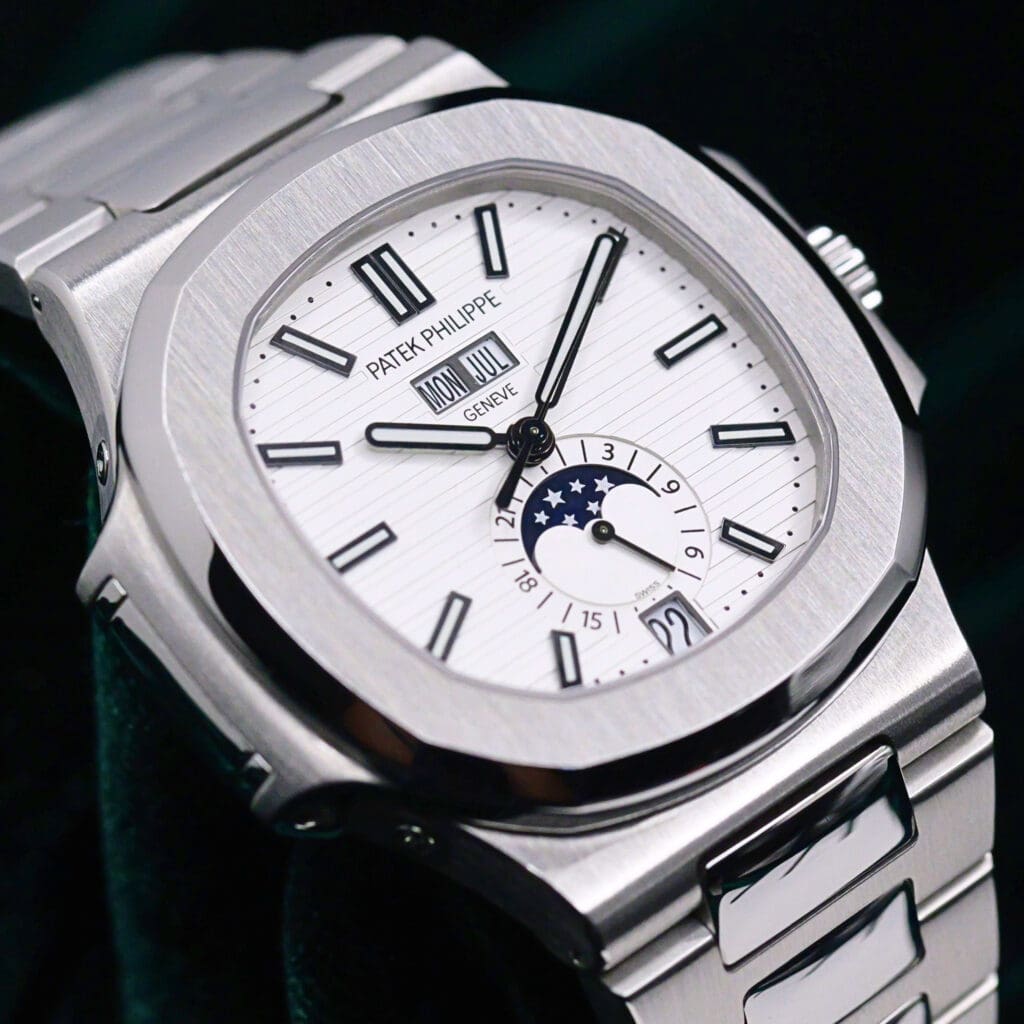
Patek Philippe Nautilus Annual Calendar Moon Phase White Dial Stainless Steel 40.5mm MINT CONDITION COMPLETE SET 5726/1A-010
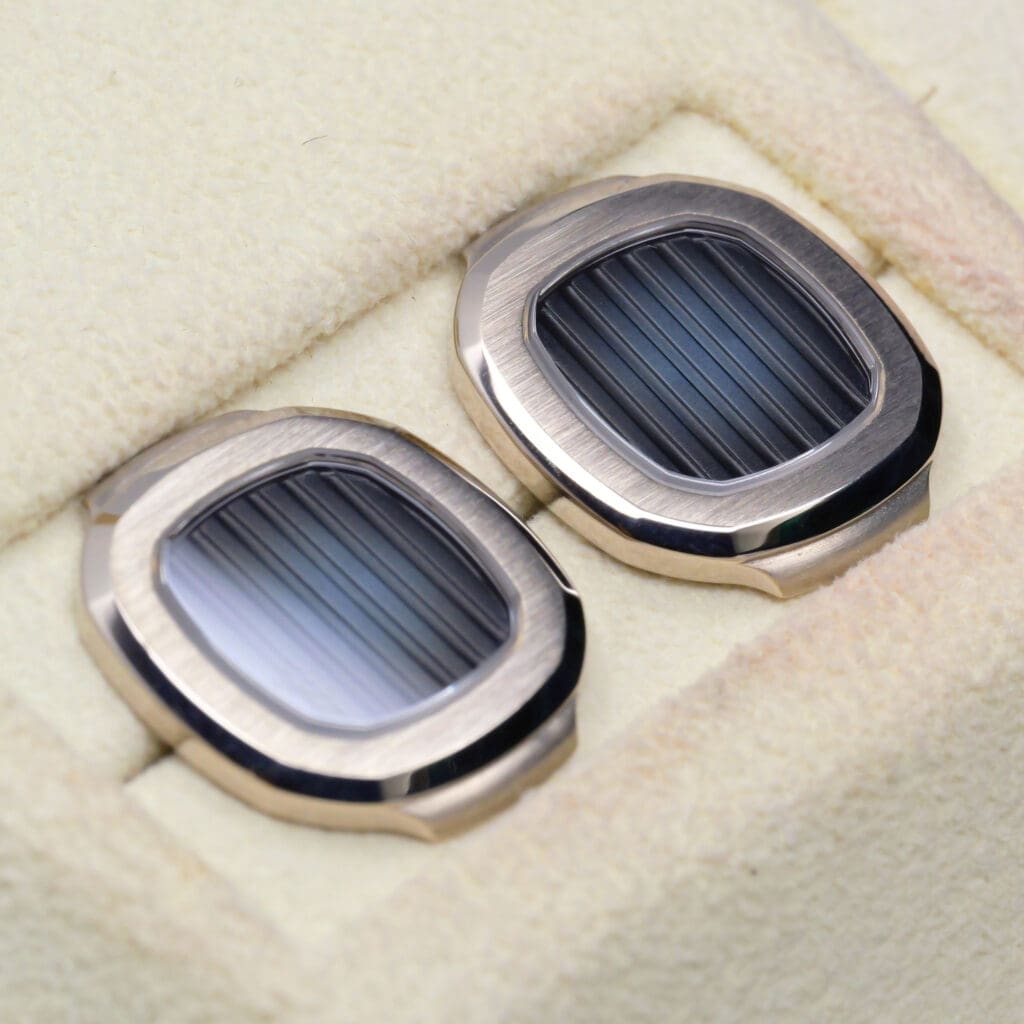
Patek Philippe Nautilus Cuff Links Opaline Blue Gray Horizontally Embossed 19mm MINT CONDITION 205.9057G-015
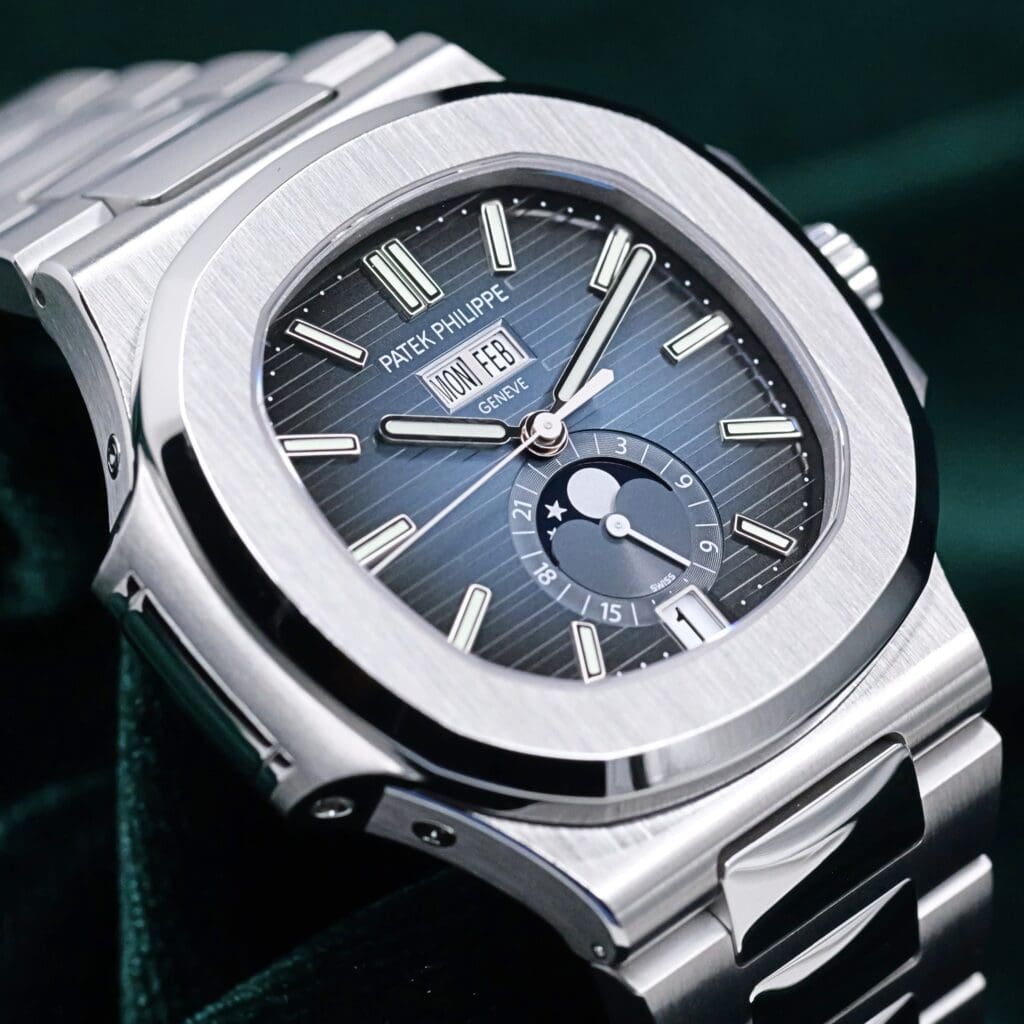
Patek Philippe Nautilus Moonphase Blue Dial Stainless Steel 40.5mm MINT CONDITION COMPLETE SET 5726/1A-014
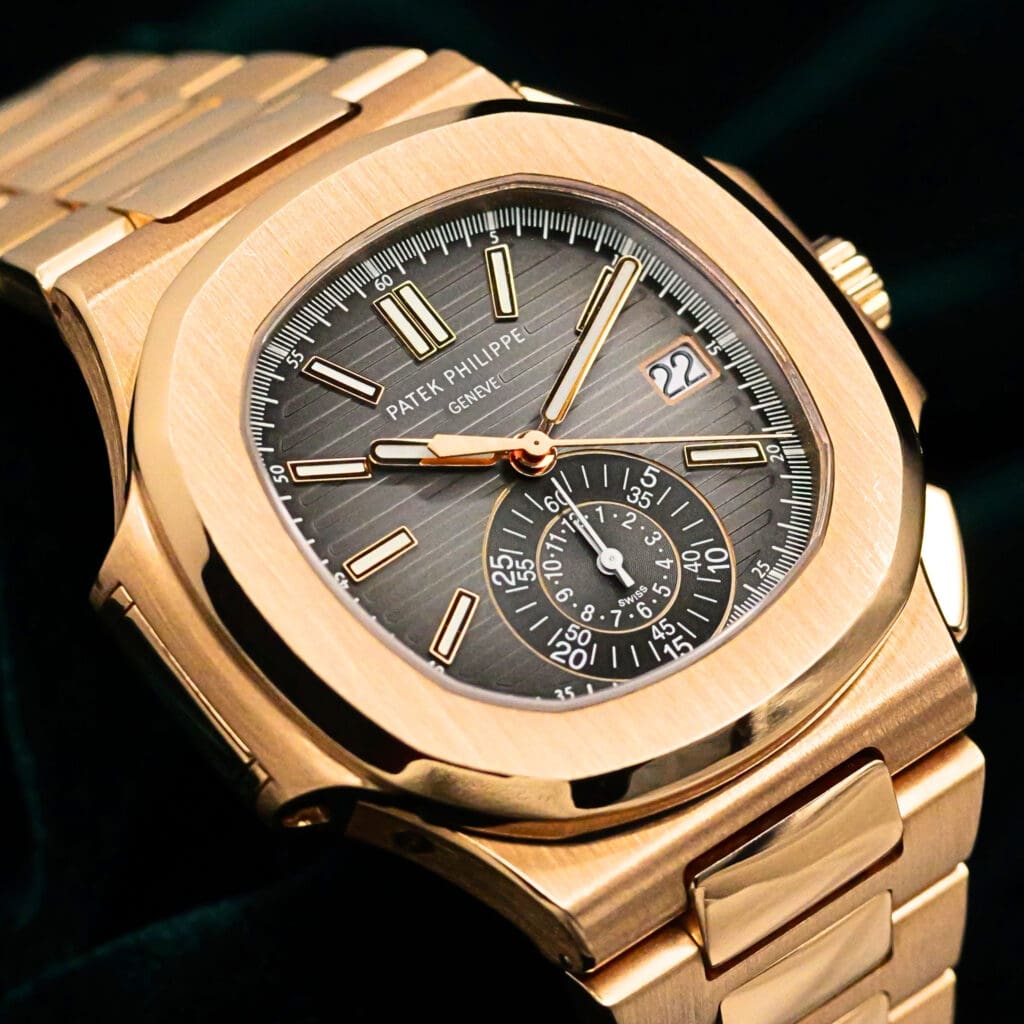
Patek Philippe Nautilus Black Dial 18K Rose Gold 40.5mm MINT CONDITION COMPLETE SET 5980/1R
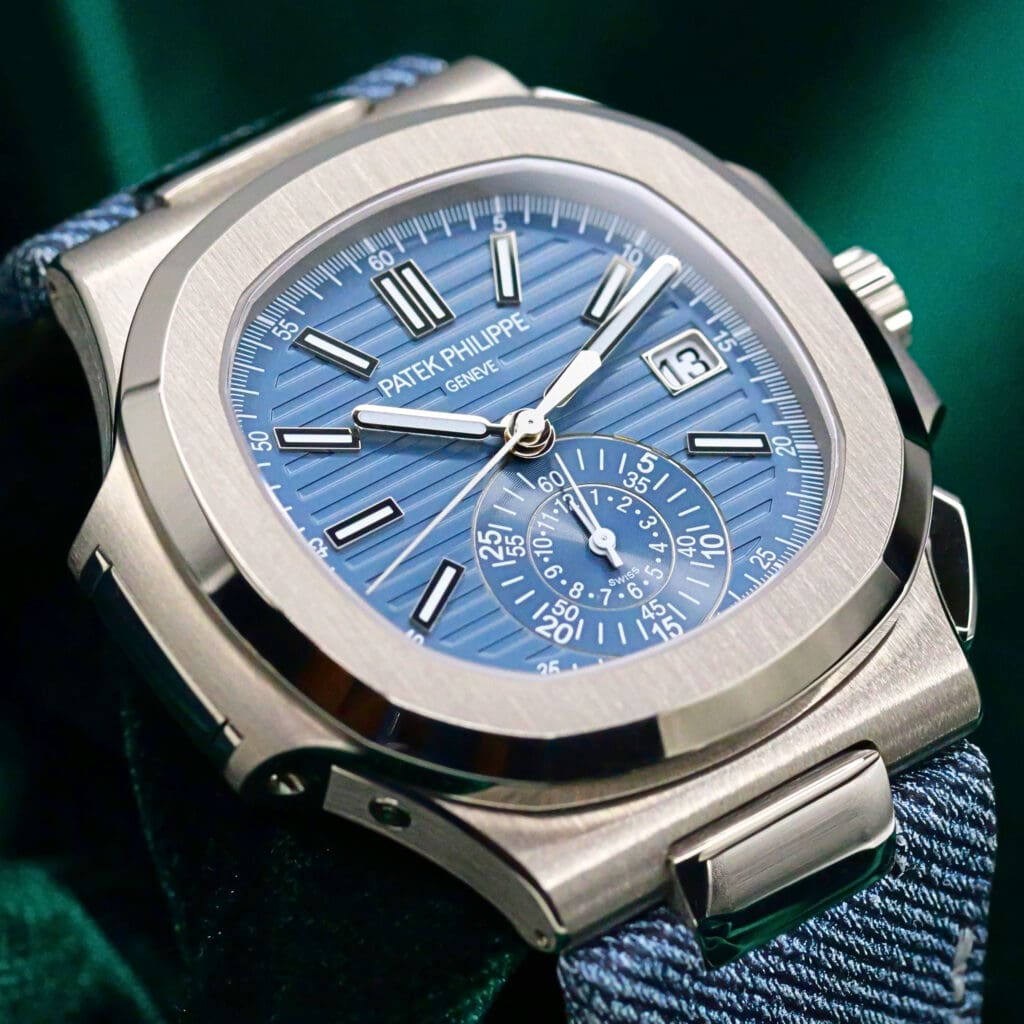
2025 Patek Philippe Nautilus Flyback Chronograph Blue Dial 18K White Gold Blue Calfskin Denim Strap 40.5mm MINT CONDITION COMPLETE SET 5980/60G-001
The steel 5712/1A moon phase now sits near $113,700 after leaving the catalogue, and the steel 5990/1A travel time chronograph shows a wide spread on Chrono24, roughly $56,000 to $160,000 depending on year, dial, and completeness, with listings averaging near $88,000.
Condition matters more here than on the Royal Oak side. Bracelet stretch in the center links is the first thing an experienced buyer checks, and a stretched bracelet takes a real bite out of value.
How condition grades are defined explains what a listing’s wording is actually promising. Post-2019 examples with the Calibre 26-330 S C also command a premium over earlier movement versions.
What the gaps tell you as a buyer. A small premium over retail, like the 15510ST, points to a watch you can buy calmly and exit without pain. A doubled price with a tight trading range, like the 5711/1A, points to fixed supply, where patience will not lower the number.
A wide spread, like the 5990/1A, means condition and paperwork decide your price. That is the one place in this comparison where a careful buyer still has room to negotiate.
Best Royal Oak References to Buy

The Royal Oak family spans a wide range of sizes, calibers, and complications. These five come up most often for buyers researching the collection today, and our full Royal Oak buying guide walks through the rest of the lineup.
1. Royal Oak Jumbo Extra-Thin ref. 16202ST
The 16202ST is the current Jumbo and the closest thing to the 1972 original in the modern catalogue. Its main upgrade over the 15202ST it replaced is the in-house Calibre 7121, which finally adds a quick-set date and pushes the power reserve to 55 hours.
The bracelet also picked up revised link geometry for better drape. At 39mm and 8.1mm, this is the slimmest automatic Royal Oak you can buy, and it disappears under a cuff in a way the 41mm never quite manages. That thinness is the whole point of the reference.
- Case size: 39mm diameter, 8.1mm thick
- Material: Stainless steel, also rose gold, yellow gold, and platinum
- Movement: Calibre 7121, 55-hour power reserve, 28,800 vph
- Notable detail: No seconds hand, quick-set date
- Secondary market: around $79,200 (WatchCharts)
2. Royal Oak Jumbo Extra-Thin ref. 15202ST
The 15202ST is the last Royal Oak to carry the Calibre 2121, a movement with lineage running back to the original 1972 ref. 5402. Collectors buy it for that connection and for the view through the caseback, which many still consider the prettiest in the family.
It lacks a quick-set date, and setting it after a few weeks in the box is genuinely tedious. That is the trade you accept for the movement. Given that it now trades below the current 16202ST, it has quietly become the value entry into the Jumbo silhouette.
- Case size: 39mm diameter, 8.1mm thick
- Material: Stainless steel, also precious metals
- Movement: Calibre 2121, 40-hour power reserve, 19,800 vph
- Notable detail: No seconds hand, no quick-set date
- Secondary market: around $63,600 (WatchCharts)
3. Royal Oak Selfwinding 41mm ref. 15510ST
The 15510ST is the current 41mm Selfwinding and the Royal Oak most buyers meet first. It runs the Calibre 4302 with a 70-hour reserve, which is the longest in the steel line, and it carries a full seconds hand and date.
The 2022 redesign cleaned up the dial and slimmed the bracelet, so it wears closer to the Jumbo than the outgoing 15500ST did. At 10.4mm it is still the thickest of the three-hand steel models, and that is the one thing to check on your own wrist before committing.
- Case size: 41mm diameter, 10.4mm thick
- Material: Stainless steel, also precious metals and two-tone
- Movement: Calibre 4302, 70-hour power reserve, 28,800 vph
- Notable detail: Grande Tapisserie dial, full seconds and date
- Secondary market: around $46,300 (WatchCharts)
4. Royal Oak Selfwinding 37mm ref. 15550ST
The 15550ST is the 37mm Royal Oak and the most wrist-friendly automatic in the line. It uses the Calibre 5900, which runs at 4Hz with a 60-hour reserve in a thinner package, and that lets the whole watch come down to 9.1mm.
Buyers who find 41mm too much and the Jumbo too expensive land here, and it is the reference we see the most first-time AP buyers keep. The bracelet also gained trapezoidal first links for a stronger taper, which is the detail that makes the smaller case look intentional rather than shrunken.
- Case size: 37mm diameter, 9.1mm thick
- Material: Stainless steel, also precious metals, two-tone, and diamond-set
- Movement: Calibre 5900, 60-hour power reserve, 28,800 vph
- Notable detail: Full seconds and date, applied solid gold signature
- Secondary market: around $45,100 (WatchCharts)
5. Royal Oak Selfwinding Chronograph ref. 26240ST
The 26240ST is the current 41mm Royal Oak chronograph, running the Calibre 4401 with flyback function and column-wheel control. One press of the pusher resets and restarts the timing, which is the practical difference between a flyback and a standard chronograph.
The pushers sit into the case profile cleanly enough that it still reads as a Royal Oak first. It is the most useful complication in the steel line for daily wear, and it trades at a clear premium over the three-hand models because of it.
- Case size: 41mm diameter, 10.8mm thick
- Material: Stainless steel, also precious metals
- Movement: Calibre 4401, flyback chronograph, 70-hour power reserve
- Notable detail: Integrated pushers, column-wheel mechanism
- Secondary market: roughly $58,000 to $80,000 (Chrono24)
Best Nautilus References to Buy

The Nautilus family is deliberately narrow, so every reference in it carries weight. These five cover the realistic options for a buyer today, and four of them are now pre-owned only. The full Nautilus buying guide covers the complications we skip here.
1. Nautilus ref. 5711/1A-010
The 5711/1A-010 is the most traded steel Nautilus on the secondary market and the reference that defines what a modern Nautilus looks like. Examples from 2019 onward carry the Calibre 26-330 S C with a 21K gold rotor and hacking seconds.
Its blue-black dial uses a dégradé finish, meaning the colour fades from pale blue at the center to near-black at the edge. It does most of that work in indirect light rather than direct sun.
The blue is also the most liquid dial in the collection, which matters a great deal at this price. Buyers line up for it, sellers rarely wait long, and the market has stopped arguing about what it is worth.
- Case size: 40mm diameter, 8.3mm thick
- Material: Stainless steel
- Movement: Calibre 26-330 S C, 45-hour power reserve, hacking seconds
- Water resistance: 120m
- Secondary market: around $112,500, working range roughly $108,800 to $129,000 (WatchCharts)
2. Nautilus ref. 5711/1A-014
The 5711/1A-014 in olive green was one of the last steel 5711 releases before the reference was discontinued, and that timing made it collectible on day one. The dial reads warmer and more complex than the blue-black, shifting toward brown-green depending on light.
The case, bracelet, and movement all match the 5711/1A-010. The dial is the entire story. It trades above the blue, but the buyer pool is smaller and the price spread between listings is much wider, so expect a slower sale if you ever move it on.
- Case size: 40mm diameter, 8.3mm thick
- Material: Stainless steel
- Movement: Calibre 26-330 S C, 45-hour power reserve, hacking seconds
- Water resistance: 120m
- Secondary market: above the blue-dial range, with wider variation between examples
3. Nautilus ref. 5811/1G
The 5811/1G is the flagship Nautilus at 41mm in white gold, and it differs from its steel predecessor in more than metal. The case returns to the two-piece monobloc construction of the original 1976 Nautilus, where the mid-case and caseback are a single piece.
That choice forces dial-side servicing and required a new crown mechanism, so it is a harder watch to build than the 5711 was. The dial adds a framed date window, and the clasp fixes the complaint covered earlier. It is the only Jumbo-class Nautilus available new, and it is not a steel watch, which changes its character as much as its price.
If steel is the priority, our Aquanaut vs Nautilus breakdown covers the closest thing Patek still builds in it.
- Case size: 41mm diameter, 8.2mm thick
- Material: 18K white gold
- Movement: Calibre 26-330 S C, 45-hour power reserve, hacking seconds
- Water resistance: 120m
- Retail and market: around $89,800 retail against roughly $170,000 on the secondary market (WatchCharts)
4. Nautilus ref. 5712/1A
The 5712/1A adds a moon phase and power reserve display to the steel Nautilus without crowding the dial, which is harder to pull off than it looks. Both indications sit at 6 o’clock and follow the horizontal groove layout rather than fighting it.
It runs the Calibre 240 PS IRM C LU, a different movement from the time-only references. Patek has since moved the moon phase to rose gold with the 5712/1R, so the steel version is now a closed market. Collectors have long treated it as the natural second Nautilus after a 5711.
- Case size: 40mm diameter
- Material: Stainless steel
- Movement: Calibre 240 PS IRM C LU, moon phase and power reserve
- Water resistance: 120m
- Secondary market: around $113,700 (WatchCharts)
5. Nautilus ref. 5990/1A
The 5990/1A packs a flyback chronograph and a travel time function into the Nautilus case, making it the most mechanically dense steel reference the family produced. The case grows to 40.5mm, and the dial carries chronograph counters plus a second time zone.
Patek kept the horizontal groove texture across all of it, which is the reason the watch still reads as a Nautilus rather than a busy sports chronograph. Water resistance drops to 60m because of the crown and pusher design. Listings vary widely, so this is the reference where doing the homework on condition and paperwork pays the most.
- Case size: 40.5mm diameter
- Material: Stainless steel
- Movement: Calibre CH 28-520 C FUS, flyback chronograph and travel time
- Water resistance: 60m
- Secondary market: roughly $56,000 to $160,000, averaging near $88,000 across listings (Chrono24)
Which Royal Oak or Nautilus Should You Choose?
Take the Royal Oak if you want presence and a watch you can still buy new in steel. Take the Nautilus if you want comfort, water resistance, and a quieter wrist. Here is the longer version.
Choose the Royal Oak if:
- You want a watch that announces itself with a geometric, angular face
- The tapisserie dial and exposed screws are details you actively want
- You prefer a firmer, more structured bracelet with sharp finishing
- You are fine with 50m water resistance
- You want more entry points across different sizes and price levels
- A 55-hour reserve on the Jumbo fits how you rotate your watches
- You want the option of buying new through an authorized dealer, even with a wait
Choose the Nautilus if:
- You want a softer profile that reads quietly to most people
- All-day bracelet comfort is your priority
- You need 120m water resistance for an active lifestyle
- You want a running seconds hand for practical time-reading
- The Spiromax hairspring and Patek Philippe Seal matter to you
- You are comfortable buying pre-owned, since no steel Nautilus is in production
- You want one of the tightest, most liquid trading ranges at this price level
The tie-breaker: if you want a new watch with a warranty and a dealer relationship behind it, the Royal Oak is the only one of the two that still offers that in steel. If you want the watch itself and the sourcing route does not bother you, buy the one that fits your wrist better.
If neither quite lands, our Royal Oak vs Overseas breakdown covers the third big integrated-bracelet option.
Where to Buy Authentic Watches Online
There are a handful of legitimate online channels for a watch at this level. Chrono24 carries the deepest global inventory for both collections and holds funds in escrow through its buyer protection program, though it pays to know what to watch for on Chrono24 before you commit.
eBay covers watches above a set value under its Authenticity Guarantee, with third-party inspection before the watch reaches you. Grailzee runs an auction format, which suits patient buyers who know exactly which reference and condition they want.
Watch forums like Watchuseek and Rolex Forums also host private sales. Prices can be better there, but you carry the authentication risk yourself, and at $100,000 that risk is not small. Where you source a pre-owned watch shapes the whole experience.
We buy, sell, and trade luxury watches too, and the reason clients come to us instead of a marketplace listing is the conversation before the money moves. You get tour videos of the actual watch, not stock photos. You get honest condition notes, including bracelet stretch and any polishing history. And you get to talk to someone who has physically handled the piece.
That approach is reflected in our 4.9-star Google rating, which comes from buyers who wanted to understand what they were getting before they committed.
If you are weighing a Jumbo against a 5711 and want to see both in hand before you decide, reach out and we will send tour videos and condition notes, or see what’s currently available.
999+ Timepieces Available
Explore Our Timepieces
Authenticated, unworn, and ready to ship worldwide.
Rolex · Audemars Piguet · Patek Philippe · Omega · Cartier · Richard Mille · Hublot · Tudor
Newly Listed

Rolex Sky-Dweller Black Dial 18K White Gold Fluted Bezel Oyster Bracelet Stainless Steel 42mm MINT CONDITION COMPLETE SET 336934-0007
$21,945.00

2026 Rolex Datejust Green Ombre Dial Smooth Bezel Jubilee Bracelet Stainless Steel 41mm MINT CONDITION COMPLETE SET 126300
$16,480.00

2026 NEW UNWORN Cartier Santos-Dumont Silver Dial Platinum Mesh Bracelet Platinum 31mm COMPLETE SET WGSA0124
$64,790.00

2026 Tudor Black Bay 58 Black Dial Jubilee Bracelet Stainless Steel 39mm MINT CONDITION COMPLETE SET 7939A1A0NU
$5,717.00

NEW UNWORN Rolex Submariner Date “Sub Date” Black Dial Black Ceramic Bezel Oyster Bracelet Stainless Steel 41mm COMPLETE SET 126610LN
$15,595.00

Rolex Cosmograph Daytona "Reverse Panda" Black Dial Black Ceramic Bezel Oyster Bracelet Stainless Steel 40mm MINT CONDITION COMPLETE SET 126500LN
$32,009.00
2026 NEW UNWORN Rolex Submariner No Date Black Dial Black Ceramic Bezel Oyster Bracelet Stainless Steel 41mm COMPLETE SET 124060
$15,219.00

Audemars Piguet Royal Oak Selfwinding Chronograph Bleu Nuit Nuage 50 Blue Dial Bracelet 18k Rose Gold 38mm MINT CONDITION COMPLETE SET 26715OR.OO.1356OR.01
$104,942.00
Rolex Datejust “Tuxedo” Black and Silver Dial 18K White Gold Fluted Bezel Stainless Steel Oyster 36mm MINT CONDITION COMPLETE SET 116234
$10,671.00
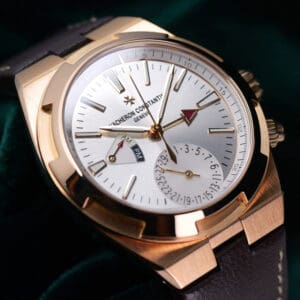
Vacheron Constantin Overseas Dual Time Silver Dial Brown Leather Strap 18K Rose Gold 41mm MINT CONDITION COMPLETE SET 7900V/000R-B336
$41,894.00
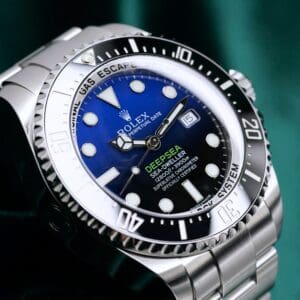
Rolex Sea-Dweller Deepsea James Cameron D-Blue Dial Black Ceramic Bezel Oyster Bracelet Stainless Steel 44mm MINT CONDITION 116660-0003
$14,272.00
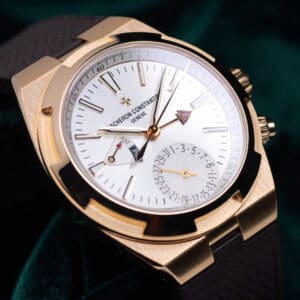
Vacheron Constantin Overseas Dual Time Silver Dial 18K Rose Gold Brown Rubber Strap 41mm MINT CONDITION COMPLETE SET 7900V/000R-B336
$41,894.00
Final Thoughts on Royal Oak vs Nautilus
The real split is not spec sheets. It is how much attention you want your watch to attract, and how you feel about buying pre-owned. The Royal Oak gives you a steel watch you can order new and wear hard. The Nautilus gives you a quieter watch and a fixed supply that sets the price for you.
Two things before you buy. Hold any Nautilus bracelet vertically by the clasp and look for gaps between the center links, because stretch is the most common value killer. And ask for the warranty card date and service history in writing. The full checklist of what to check covers the rest.
Buy the one you keep reaching for.