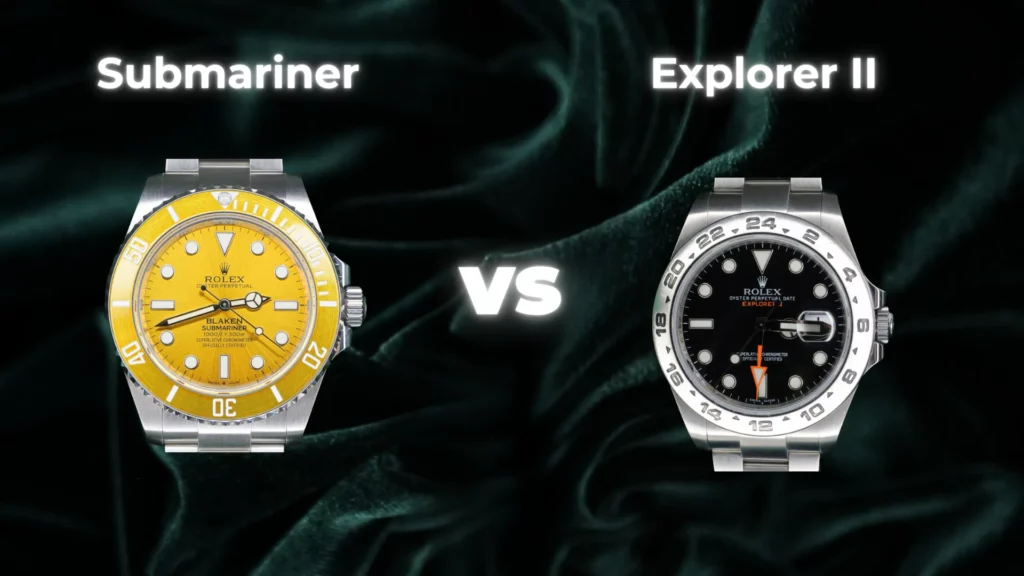
Rolex raised retail on every steel sport watch in January 2026, and the Submariner vs Explorer II comparison shifted with it. The Explorer II now trades closer to its retail price than almost any other modern Rolex sport reference, while Submariner premiums stayed wider. That changes the math for a buyer cross-shopping the two.
Both watches still share the same buyer profile, similar price territory, and that unmistakable Oyster case footprint. The split shows up in how each one is built to be used: one is engineered for elapsed-time tracking, the other for continuous day-night orientation and a second time zone.
This guide walks through how each watch behaves day to day, what the current 2026 market is doing after Rolex’s January retail increase, and which references make sense for which kind of buyer. By the end you should know whether the bezel-and-300m-resistance side of the table fits you better, or the GMT-and-orientation side does.
Rolex Submariner Overview

Rolex introduced the Submariner in 1953 as a professional dive watch. The rotating bezel, high-contrast dial, and Chromalight lume let you track elapsed time at a glance, and current production references are rated to 300 meters of water resistance with the Triplock crown system.
Most owners never dive with it. The bezel earns its keep on workouts, parking meters, cooking, flights, and anything else that runs on intervals. Line the triangle up with the minute hand and you have an analog timer that works without touching the crown.
The current generation runs the Caliber 3230 (no-date 124060) or Caliber 3235 (date 126610LN and 126610LV), both with a 70-hour power reserve, Chronergy escapement, and Superlative Chronometer certification. The case is 41 mm in Oystersteel, and the Oyster bracelet runs the Glidelock clasp with 2 mm incremental adjustment plus the Fliplock diver’s extension.
Of all the Submariner’s traits, the one that matters most to a cross-shopper is liquidity. The Sub has the deepest buyer pool of any modern Rolex sport watch, which means short days-on-market on resale and tight bid-ask spreads. Useful if you ever want out.
For a fuller breakdown of the line, see our Rolex Submariner buying guide.
Notable Submariner references:
- Ref. 5512 (Crown-Guard Classic, 1959–late 1970s)
- Ref. 14060 / 14060M (Two-Line and Four-Line No-Date, 1988–2012)
- Ref. 16800 (Transitional Sub, late 1970s–late 1980s)
- Ref. 116610LV (Hulk, 2010–2020, discontinued)
- Ref. 126610LV (Starbucks, 2020–present, currently in MK2 dial)
Rolex Explorer II Overview

Rolex launched the Explorer II in 1971 for environments where telling day from night by the sky isn’t possible, originally spelunkers and polar researchers. The watch uses a fixed 24-hour bezel plus an additional 24-hour hand to maintain orientation. The system runs continuously and never needs to be set unless you change time zones.
Later generations (starting with the 16550 in 1985) added an independently adjustable local hour hand, which turned the watch into a true traveler’s GMT. The current ref. 226570 is the most refined version of that idea: 42 mm Oystersteel case, brushed fixed bezel with engraved 24-hour graduations, white “Polar” or black dial, orange 24-hour hand, and 100 m water resistance.
Inside is the Caliber 3285, the same movement that powers the current GMT-Master II, with a 70-hour power reserve and a real traveler GMT setup. The local hour jumps in one-hour increments while the 24-hour hand and minute hand stay put, so changing time zones takes seconds.
What you give up versus the Submariner is dive-grade water resistance and the broadest buyer pool. What you get is an actual second time zone and a watch that feels less expected on the wrist than another black-dial diver.
For a fuller look at the line and its references, see our Rolex Explorer 2 buying guide.
Notable Explorer II references:
- Ref. 1655 (Freccione, 1971–mid-1980s)
- Ref. 16550 (Cream Dial, mid-1980s)
- Ref. 16570 (Polar / Black Dial, 1989–2011)
- Ref. 216570 (42mm Orange Hand, 2011–2021)
- Ref. 226570 (Current Generation, 2021–present)
The Core Differences

The Submariner and Explorer II are both Rolex tool watches, but they serve different jobs. The Submariner is built around elapsed-time tracking and 300 m water resistance. The Explorer II is built around continuous day-night orientation and a real second time zone. Case size and looks are secondary. Once you know which job fits your wrist time, the decision gets easier.
Purpose and Real-World Use
The Submariner is a timing-first diver. You get a 60-minute unidirectional bezel, 300 m water resistance, and the Triplock screw-down crown designed to keep the case sealed under pressure. The actual use case for most owners isn’t diving. It’s a fast analog timer that doesn’t burn battery and doesn’t need a phone.
The Explorer II is an orientation-first GMT. The fixed 24-hour bezel pairs with the 24-hour hand to give you an always-on day-night reference, and the local hour can be jumped in one-hour steps for travel.
Water resistance is 100 m, which covers swimming and showering but not serious diving. If you fly across time zones more than you swim with a bezel-timed tank, the Explorer II earns its place.
Bezel Function and Daily Use
The Submariner bezel is an analog timer you’ll use. Line the triangle up with the minute hand and you can track anything that runs on intervals. Owners overwhelmingly describe this as “bezel life” rather than diving: workouts, espresso shots, oven timers, layovers.
The Explorer II bezel is a fixed reference scale, not a timer. Because it doesn’t rotate, it stays calibrated against the 24-hour hand so you get a clean second-time read without touching anything. Two different buyers want two different things from a bezel, and this is the cleanest line between them.
Wearing Feel and Wrist Presence
The current Submariner 124060 is 41 mm and runs Cal. 3230 with a 70-hour reserve. It sits lower on the wrist than older Maxi-case Subs because Rolex slimmed the lugs in the 2020 redesign, and the no-date layout keeps the dial symmetric.
The Explorer II 226570 is 42 mm with a 12.5 mm thickness and a brushed fixed bezel that catches less light than a polished Cerachrom. The numerals on the bezel are part of the watch’s identity. They read more like an instrument than a minimalist diver. Runs Cal. 3285 with the traveler GMT setup, which is the same engine inside the current Pepsi and Batman.
On a 6.5-inch wrist, the Submariner sits more discreetly. On a 7.5-inch wrist, the Explorer II’s extra millimeter of diameter and the bezel graphics balance better. Neither is a clear win. It’s about which proportions match your wrist and your sleeve.


Market Behavior in 2026
Rolex raised retail prices across the board in January 2026. The Submariner 124060 now sits at roughly $10,050, the date Submariner 126610LN at $11,350, the Starbucks 126610LV at around $10,950, and the Explorer II 226570 at $10,600.
Those are the new MSRPs, what authorized dealers list. Whether you can buy at retail is another question, since allocation for the Sub line is still tight and most Explorer II buyers will get a call faster than most Sub buyers.
The secondary market tells a different story than it did three years ago. After the 2022 peak, premiums on steel Rolex sport watches compressed substantially, and the gap between retail and secondary has narrowed on most current-production references:
- Submariner 124060 trades roughly $11,500–$14,500 on Chrono24, with unworn 2026 examples at the top of that range. Premium over retail is modest by Rolex sport standards.
- Submariner 126610LV “Starbucks” trades $13,000–$17,000+, with MK2 dial examples (2023+) at the higher end. WatchCharts has the Starbucks down roughly 23% over the past five years.
- Explorer II 226570 trades around $11,000–$14,000 depending on dial color and year, with the Polar dial commanding a small premium. WatchCharts pegs market value at about $11,044, or roughly 4% above retail, one of the smallest premiums on any current Rolex sport reference.
- Submariner Hulk 116610LV (discontinued 2020) trades $18,000–$25,000+, off its 2022 peak above $30,000 but still well above the $9,050 original retail.
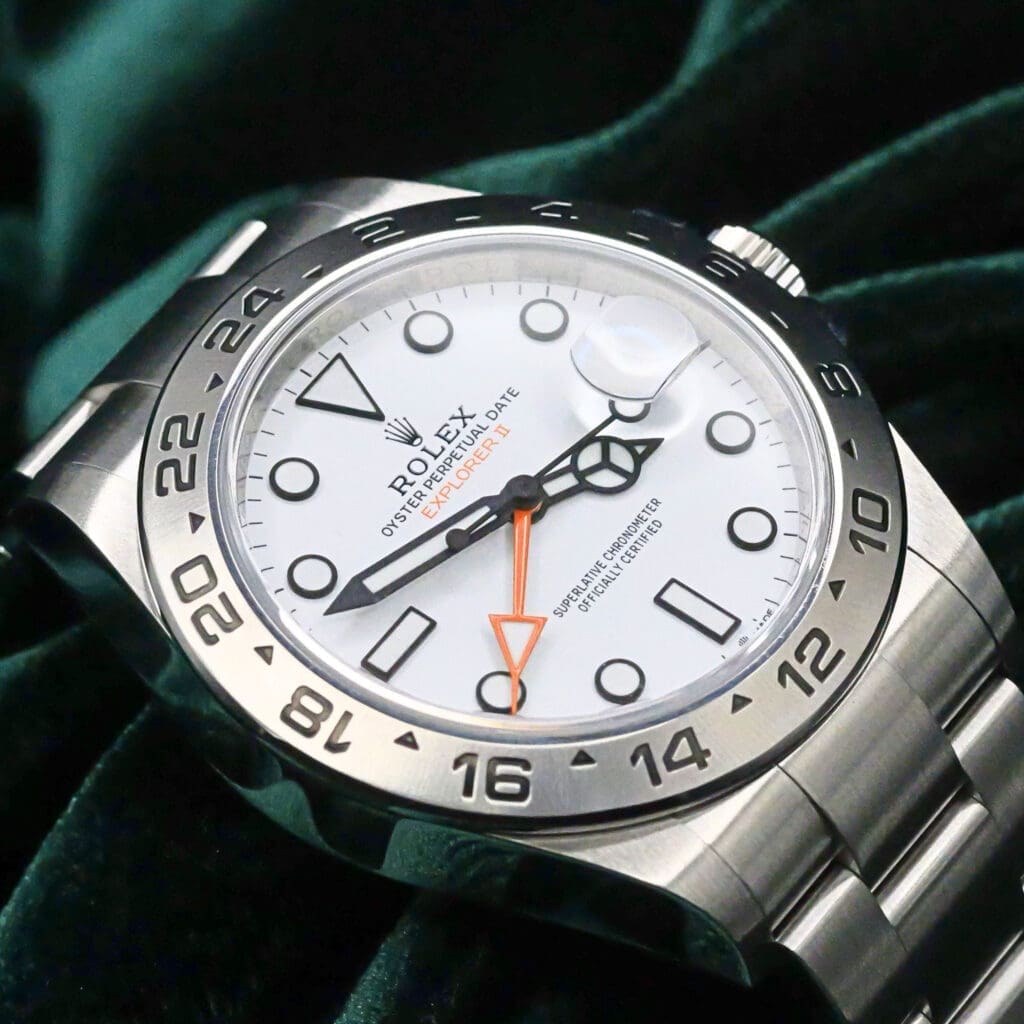
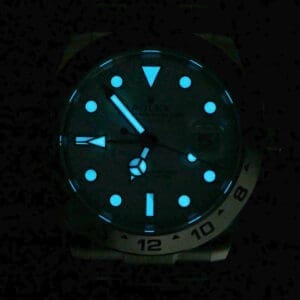
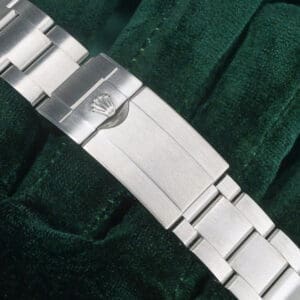
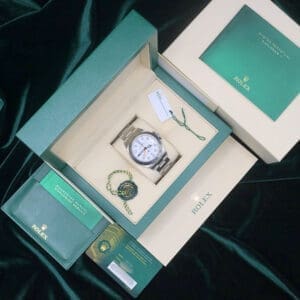
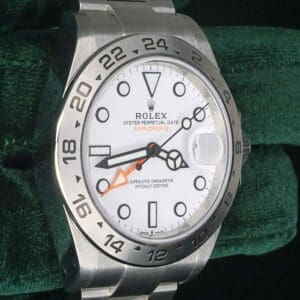
The takeaway: the Sub line still trades with deeper buyer support and faster turnover, but the Explorer II 226570 currently trades closest to its retail price of any modern Rolex sport watch.
That gap matters if you’re cross-shopping new versus pre-owned, because the case for buying a 226570 pre-owned at near-retail is stronger than the case for buying a 124060 at a $2,000+ premium.
Best Rolex Submariner References to Know

Each reference below represents a real technical shift in the Submariner line, not a cosmetic tweak. Choosing one is really choosing an era: early crown-guard design, vintage no-date purity, the sapphire transition, the discontinued green icon, or current production.
Ref. 5512 — Crown-Guard Classic
The 5512 is where the Submariner locks in its modern silhouette, introducing crown guards and the case shape every modern Sub still uses. Collectors value it as a historical anchor, and originality, dial configuration, and case sharpness drive price more than anything else.
Key specs:
- Production era: 1959 to the late 1970s
- Case size: 40 mm
- Water resistance: 200 m
- Bezel type: Rotating dive timing bezel, aluminum insert
- Movement: Cal. 1560 or Cal. 1570
- Typical market range: ~$13,000 to $20,000 (condition-dependent, 2026)
Ref. 14060 / 14060M — Two-Line and Four-Line No-Date
The 14060 (1988–1999) and 14060M (1999–2012) are the most accessible vintage Submariners. Clean symmetry, slimmer proportions than later Maxi-case references, aluminum bezel, and 40 mm case.
The 14060M was the last no-date Sub before the line jumped to 41 mm with the 124060. Collectors split them into 2-liner (pre-2007) and 4-liner (with Superlative Chronometer text on the dial after 2007).
Key specs:
- Production era: 1988 to 2012
- Case size: 40 mm
- Water resistance: 300 m
- Bezel type: Rotating dive timing bezel, aluminum insert
- Movement: Cal. 3000 (14060) or Cal. 3130 (14060M)
- Typical market range: ~$9,000 to $13,000 (2026)
Ref. 16800 — Transitional Sub
The 16800 bridges vintage and modern Submariners. Classic 40 mm proportions paired with key upgrades: sapphire crystal, quickset date, 300 m rating. Collectors focus on the dial era and originality, since this reference spans multiple production changes including matte-to-gloss dial transitions and tritium-to-Super-LumiNova lume.
Key specs:
- Production era: Late 1970s to late 1980s
- Case size: 40 mm
- Water resistance: 300 m
- Bezel type: Rotating dive timing bezel, aluminum insert
- Crystal: Sapphire
- Movement: Cal. 3035
- Typical market range: ~$9,000 to $13,000 (2026)
Ref. 116610LV — Hulk
The Hulk is the only Submariner ever made with both a green sunburst dial and a matching green Cerachrom bezel. Rolex discontinued it in 2020 when the entire Submariner line moved from 40 mm to 41 mm, and never directly replaced it (the Starbucks switched to a black dial). Maxi-case construction gives it a heftier wrist presence than the 124060.
For a full Hulk vs Starbucks breakdown, we cover the two green Subs side by side.
Key specs:
- Production era: 2010 to 2020 (discontinued)
- Case size: 40 mm (Maxi-case)
- Water resistance: 300 m
- Bezel type: Unidirectional Cerachrom
- Dial: Green sunburst
- Movement: Cal. 3135
- Typical market range: ~$18,000 to $25,000 (2026)
Ref. 126610LV — Starbucks
The Starbucks is the current green-bezel Submariner, pairing a green Cerachrom bezel with a black dial for daily versatility. Two dial variants exist: the original MK1 (2020–2022) and the MK2 (2023–present), which corrected slight bezel proportions and is now the dominant current-production version.
We go deeper on the MK1 vs MK2 differences in a separate guide.
Authorized dealer allocation is tight, which pushes most buyers to the pre-owned market.
Key specs:
- Production era: 2020 to present
- Case size: 41 mm
- Water resistance: 300 m
- Bezel type: Unidirectional Cerachrom (green)
- Dial: Black (MK1 or MK2)
- Movement: Cal. 3235
- Typical market range: ~$13,000 to $17,000 (2026)
Best Rolex Explorer II References to Know

The Explorer II line evolves around legibility, orientation, and real GMT use, not fashion cycles. Each reference reflects a specific shift in how Rolex balanced size, readability, and movement capability, which is why the market treats them very differently.
Ref. 1655 — Freccione
The original Explorer II, built for spelunkers and polar researchers. The oversized orange 24-hour hand is functional, not decorative, and originality is the entire ball game on value. Small details like hand variant, bezel font, and dial era matter more than overall wear here.
Key specs:
- Production era: 1971 to mid-1980s
- Case size: 40 mm
- Water resistance: 100 m
- Bezel type: Fixed 24-hour bezel, engraved steel
- 24-hour hand: Large orange (Freccione)
- Typical market range: ~$25,000 to $40,000+ (2026, originality-dependent)
Ref. 16550 — Cream Dial
Rolex produced the 16550 for a short window in the mid-1980s, and the watch is now best known for its white dials that aged to cream tones. Pricing depends heavily on dial condition and how evenly the cream developed, which makes this one of the most detail-sensitive Explorer II references on the market.
Key specs:
- Production era: 1985 to 1988
- Case size: 40 mm
- Water resistance: 100 m
- Bezel type: Fixed 24-hour bezel, engraved steel
- Dial: White, often aging to cream
- Typical market range: ~$14,000 to $20,000 (2026, dial-dependent)
Ref. 16570 — Polar / Black Dial
The 16570 is the most wearable Explorer II for daily use: 40 mm case, practical GMT layout, long production run that spans multiple lume eras (tritium to Luminova to Super-LumiNova). The Polar (white) and black dial variants trade at similar prices, with later examples (Super-LumiNova-era) typically clean and ready to wear.
Key specs:
- Production era: 1989 to 2011
- Case size: 40 mm
- Water resistance: 100 m
- Bezel type: Fixed 24-hour bezel, engraved steel
- Dial: Polar (white) or black
- Typical market range: ~$8,500 to $11,000 (2026)


Ref. 216570 — 42mm Orange Hand
This is where Rolex upsized the Explorer II to 42 mm and brought back the orange 24-hour hand from the 1655. It appeals to buyers who want modern proportions and the more legible orange hand, but who don’t want the latest Cal. 3285 movement.
Key specs:
- Production era: 2011 to 2021
- Case size: 42 mm
- Water resistance: 100 m
- Bezel type: Fixed 24-hour bezel, engraved steel
- 24-hour hand: Orange
- Movement: Cal. 3187
- Typical market range: ~$9,500 to $12,500 (2026)
Ref. 226570 — Current Generation
The current Explorer II keeps the 42 mm format but upgrades to the Cal. 3285 with a 70-hour reserve. Visually nearly identical to the 216570, with Rolex’s refinements staying subtle here. Trading just above retail in 2026, this is one of the few modern Rolex sport watches where the new-vs-pre-owned calculation favors thinking carefully before paying a grey-market premium.
Key specs:
- Production era: 2021 to present
- Case size: 42 mm
- Water resistance: 100 m
- Bezel type: Fixed 24-hour bezel, engraved steel
- Dial: Polar (white) or black
- Movement: Cal. 3285
- Typical market range: ~$11,000 to $14,000 (2026)
Which Rolex Fits Your Ownership Style?
The 2026 decision between these two watches comes down to how you wear a watch day to day, not how it looks in product photography. Here’s how the choice usually breaks down.
Choose the Rolex Submariner If
- You want a unidirectional bezel you’ll use for daily timing
- You want 300 m water resistance and a Triplock screw-down crown
- You prefer a cleaner everyday dial, especially the no-date 124060 with Cal. 3230
- You care about resale liquidity, since the Sub line has the deepest buyer pool of any modern Rolex sport watch
- You want a one-watch profile that reads classic in casual, business, and dressier settings
- You’d rather pay a small grey-market premium than wait years at an authorized dealer
Choose the Rolex Explorer II If
- You use a GMT: international travel, remote family, multiple time zones
- You want constant day-night clarity via the fixed 24-hour bezel and 24-hour hand
- You prefer a “tool-watch” aesthetic where the bezel numerals are part of the identity
- You want a Rolex that feels less expected on the wrist than another black-dial diver
- You want strong value-per-function: the 226570 currently trades closer to retail than almost any other modern Rolex sport reference
- The traveler GMT (jumping local hour) matches your daily life
Frequently Asked Questions
Does the Submariner or Explorer II hold its value better?
The Submariner has historically held value better and traded with deeper buyer support, but the gap has narrowed in 2026. Sub demand stays broad across collectors, first-time luxury buyers, and resellers, which means tighter days-on-market and tighter bid-ask spreads on resale.
The Explorer II 226570 currently trades just 4% above retail, meaning new and pre-owned prices have nearly converged. If “easy exit” matters more than “smaller premium going in,” the Sub still wins. If you plan to keep the watch long-term, both retain value well.
Is the Explorer II’s GMT function the same as a GMT-Master II?
Not quite. The Explorer II 226570 runs the same Cal. 3285 movement as the current GMT-Master II, and it offers the same traveler GMT functionality: the local hour can be jumped in one-hour steps for travel.
The differences are aesthetic and functional in two ways: the Explorer II’s 24-hour bezel is fixed (so you can read a second time zone but can’t track a third), and the orange 24-hour hand pops more than the standard GMT-Master II’s red or green hand.
For pure GMT utility across multiple time zones, the GMT-Master II is more flexible — our Rolex GMT-Master II buying guide walks through the line if it’s on your radar. For day-night orientation plus one second time zone, the Explorer II is cleaner.
Which is better for smaller wrists, the Submariner or Explorer II?
The Submariner 124060 at 41 mm sits better on smaller wrists than the Explorer II 226570 at 42 mm. The Sub’s slimmer post-2020 lugs reduce the lug-to-lug footprint, which matters more than the 1 mm difference in diameter.
If you’re under a 6.75-inch wrist, the Sub is the safer fit. The older 40 mm Explorer II 16570 also fits smaller wrists well and is the only Explorer II that still meets that case-size criterion.
Can you wear the Explorer II diving?
Technically yes for swimming and recreational snorkeling. The 226570 is rated to 100 m. But it’s not built for serious diving the way the Submariner is.
The Explorer II lacks a unidirectional dive bezel for tracking elapsed bottom time, the crystal isn’t as overbuilt for pressure, and the water-resistance rating is one-third of the Submariner’s 300 m. If you dive for sport, the Sub is the right tool. If you swim and shower in your watch, the Explorer II handles that fine.
Is the Submariner or Explorer II better as a one-watch collection?
The Submariner is the safer one-watch choice. It covers casual, business, and most dressier settings without feeling out of place. The Explorer II works as a one-watch but skews more tool-watch and feels slightly more deliberate under a sleeve.
If you only own one watch and want the broadest range of use cases, the Sub. If you only own one watch and you want it to feel less common than every other Rolex on the wrist, the Explorer II.
Is the Rolex Explorer II at risk of being discontinued?
The Explorer II 226570 is current production as of 2026 with no announced changes from Rolex. The current reference launched in 2021 for the line’s 50th anniversary, and Rolex typically runs sport references for 10+ years before a major update.
That said, Rolex discontinued the steel Pepsi (126710BLRO) at Watches & Wonders Geneva in April 2026, which surprised the market — we cover the full story in our Rolex Pepsi buying guide.
The pattern collectors now watch for is any reference that goes quiet at an authorized dealer or stops shipping new production. The 226570 shows none of those signals right now.
If you’re buying for use rather than speculation, discontinuation risk isn’t a near-term concern. If you’re buying with resale in mind, a future discontinuation could push values higher, but it isn’t something to plan around.
Where to Buy Authentic Watches Online
There are a handful of legitimate online channels for buying a Submariner or Explorer II. Chrono24 is the largest luxury watch marketplace, with global listings and an escrow buyer-protection program — our guide to buying a watch on Chrono24 walks through what to watch for.
eBay runs an Authenticity Guarantee on luxury watches above a price threshold, which adds third-party inspection to any purchase. Grailzee is a curated auction-style platform with vetted sellers.
Beyond marketplaces, watch forums (WatchUSeek, Rolex Forums) and the major auction houses (Sotheby’s, Christie’s, Phillips) are reasonable options for vintage references like the 1655 or 5512 where provenance and originality matter most.
We also sell, buy, and trade luxury watches, and the reason clients come to us rather than a big marketplace is the way we walk you through the watch before you commit. You can browse our current collection for what’s available right now.
We send tour videos of the actual watch you’d be buying, not stock photos, along with detailed condition notes and direct conversation with someone who has inspected the piece in person. You’re not buying blind off a listing description.
That approach is reflected in our 4.9-star Google rating, which comes from clients who valued the back-and-forth as much as the watch.
If you want that kind of walkthrough on a specific Submariner or Explorer II reference, or you’d like us to line up a few options that match your wrist size, budget, and use case, reach out and we’ll get you a shortlist.
Final Takeaways on Submariner vs Explorer II
The Submariner vs Explorer II decision gets clearer once you stop comparing them as look-alike steel sport Rolexes and start comparing them as tools for two different jobs.
The Submariner is built around a bezel you’ll use daily, 300 m of water resistance, and the deepest secondary-market liquidity of any modern Rolex sport watch. That makes it the safer one-watch profile and the easier resale later.
The Explorer II is built around continuous day-night orientation and a real traveler GMT, and in 2026 it trades closest to retail of any current Rolex sport reference.
Two bonus tips: if you wear sleeves more than t-shirts, the Sub’s slimmer lugs slide under a cuff more comfortably. And if you can try both on, do. Wrist proportions decide this faster than any spec sheet.
999+ Timepieces Available
Explore Our Timepieces
Authenticated, unworn, and ready to ship worldwide.
Rolex · Audemars Piguet · Patek Philippe · Omega · Cartier · Richard Mille · Hublot · Tudor
Newly Listed
2026 NEW UNWORN Rolex Deepsea "James Cameron" D-Blue Black and Blue Dial Black Ceramic Bezel Stainless Steel 44mm COMPLETE SET 136660-0005
$20,208.00
Panerai Luminor Marina 1950 3 Days Limited Edition Black Sandwich Dial Stainless Steel Black Rubber Strap 47mm MINT COMPLETE SET PAM00422
$7,503.00
Panerai Luminor Marina 1950 3 Days Black Dial Stainless Steel Brown Leather Strap 47mm LIMITED EDITION MINT CONDITION COMPLETE SET PAM00422
$7,503.00
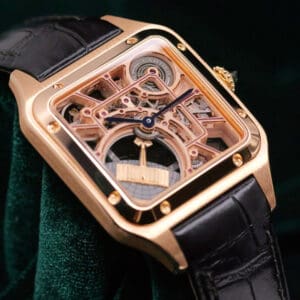
Cartier Santos-Dumont Micro-Rotor Skeleton Dial Black Alligator Strap 18k Rose Gold 43.5 x 31mm MINT CONDITION COMPLETE SET WHSA0030
$40,425.00
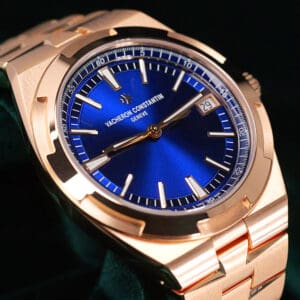
2026 Vacheron Constantin Overseas Blue Dial 18k Rose Gold 41mm MINT CONDITION COMPLETE SET 4520V/210R-B705
$72,764.00
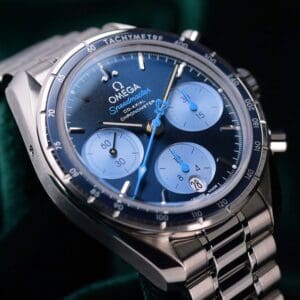
Omega Speedmaster 38 Orbis Edition Blue Dial Stainless Steel 38mm MINT CONDITION COMPLETE SET 324.30.38.50.03.002
$6,599.00
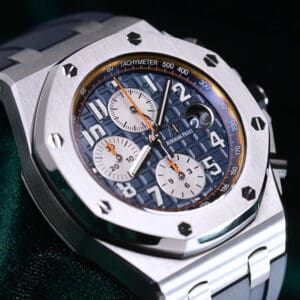
Audemars Piguet Royal Oak Offshore Chronograph “Navy” Blue Dial Orange Accents Blue Rubber Strap Stainless Steel 42mm MINT CONDITION COMPLETE SET 26470ST.OO.A027CA.01
$22,245.00
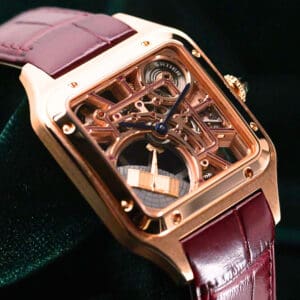
Cartier Santos-Dumont Micro-Rotor Skeleton Dial 18K Rose Gold Burgundy Alligator Strap 31mm MINT CONDITION COMPLETE SET WHSA0030
$40,425.00
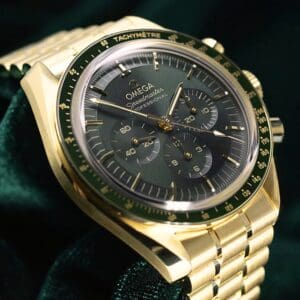
Omega Speedmaster Professional Moonwatch "Moonshine" Green Dial 18K Yellow Gold 42mm MINT CONDITION COMPLETE SET 310.60.42.50.10.001
$35,695.00
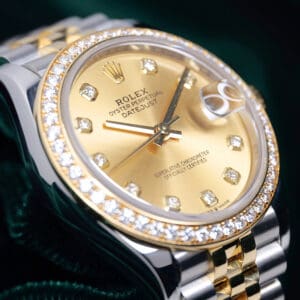
Rolex Datejust 31 Champagne Diamond Dial Diamond Bezel Jubilee Yellow Gold & Stainless Steel 31mm MINT CONDITION COMPLETE SET 278383RBR
$31,990.00
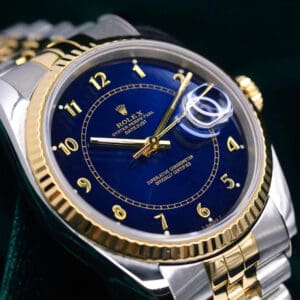
Rolex Datejust Blue Arabic Numeral Refinished Dial Fluted Bezel Jubilee Bracelet 18k Yellow Gold Stainless Steel 36mm MINT CONDITION 16233
$7,975.00
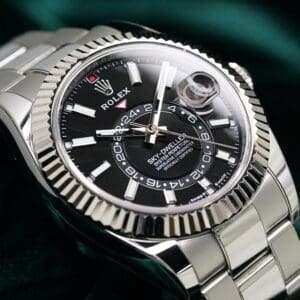
2025 Rolex Sky-Dweller Bright Black Dial 18k White Gold Fluted Bezel Stainless Steel Oyster Bracelet 42mm MINT CONDITION COMPLETE SET 336934
$22,895.00