
Yes, but it’s not the whole story. The real question is which Rolex watches hold their value, by how much, and what can quietly destroy that value before you even get to the resale conversation.
Not every Rolex performs the same on the secondary market. The model you pick, the configuration you choose, the condition you keep it in, and what you originally paid for it – all of these change the outcome significantly. Most articles stop at “yes, Rolex holds value” and leave you there. That’s not useful when you’re about to spend $10,000 or more.
This guide breaks it all down using real secondary market data and our own observations at Majestix Collection. The goal is for you to have a clear framework you can apply to any specific Rolex.
Why Does Rolex Hold Its Value Better Than Other Luxury Watches?

Rolex holds its value better than almost every other luxury watch brand because of three structural advantages: controlled supply, global liquidity, and the broadest secondary market buyer pool of any watch brand in the world.
Here is how each one works:
Controlled Supply
Rolex produces fewer watches than the market demands. The result is that demand consistently outpaces what’s available at authorized dealers, which keeps prices firm on the secondary market even during slow economic periods.
Global Liquidity
A steel Submariner can be sold in almost any major city within hours. That’s not true for most luxury watches. Patek Philippe and Audemars Piguet require more specialized buyers. Rolex’s buyer pool is deeper, wider, and more active than any other watch brand in the world, and that depth directly supports resale prices.
The Authorized Dealer Access Test
Watches with waitlists hold value. Watches sitting on shelves usually don’t; at least not above retail. This is one of the clearest signals in the entire secondary market, and most buyers never think about it.
A 30-year-old Submariner isn’t treated like a used watch. It’s treated like a vintage tool with a proven track record. You can’t say that about a 30-year-old Cartier Tank or a decade-old TAG Heuer. Rolex built a reputation for durability that other brands simply haven’t matched, and that reputation shows up directly in what buyers are willing to pay for older pieces.
Which Rolex Watches Hold Their Value (and Which Don’t)
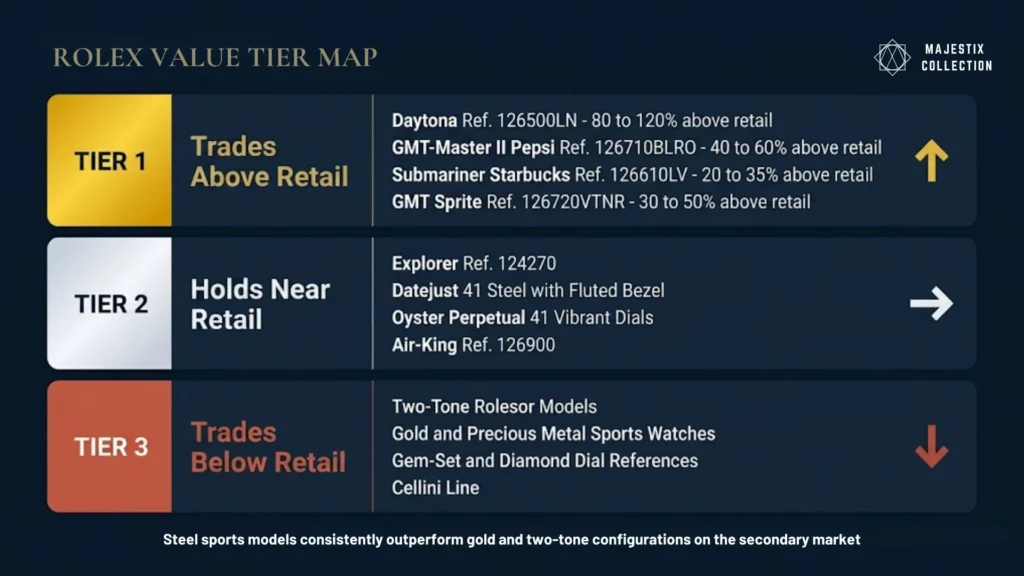
The Rolex catalog splits into three honest tiers based on secondary market performance. Knowing which tier a watch sits in before you buy is the single most important thing you can do.
Tier 1: Models That Trade Above Retail
These are the watches that consistently sell for more than their retail price on the secondary market. They have waitlists at authorized dealers, active collector communities, and nicknames, which matters more than it sounds. A watch with a nickname has a fanbase, and fanbases drive demand.
| Model | Reference | Approx. Secondary Market Premium |
|---|---|---|
| Daytona (steel, black ceramic bezel) | 126500LN | 80–120% above retail |
| GMT-Master II “Pepsi” | 126710BLRO | 40–60% above retail |
| GMT-Master II “Sprite” (left-crown) | 126720VTNR | 30–50% above retail |
| GMT-Master II “Batman” (discontinued) | 116710BLNR | 20–40% above retail |
| Submariner “Starbucks” | 126610LV | 20–35% above retail |
| Submariner no-date | 126610LN | 15–30% above retail |
| Submariner “Hulk” (discontinued) | 116610LV | 25–40% above retail |
The common thread across every Tier 1 watch: all steel, all waitlisted or discontinued, all with active collector communities. Steel sports models have the broadest buyer pool, which means more competition for available pieces and stronger resale prices across the board.
One pattern worth understanding: when Rolex discontinues a reference, values typically climb within 6–18 months. The “Hulk” Submariner is a clear example. It traded at modest premiums when in production, then settled into a stronger position after Rolex replaced it with the “Starbucks.” See our Hulk vs Starbucks comparison for a full breakdown of how both references compare today. Discontinued doesn’t mean forgotten; it often means more collectible.


Tier 2: Models That Hold Near Retail
These watches don’t trade above retail, but they don’t bleed value either. For someone who wants to own a Rolex, wear it regularly, and exit without a significant loss, Tier 2 is a solid place to be.
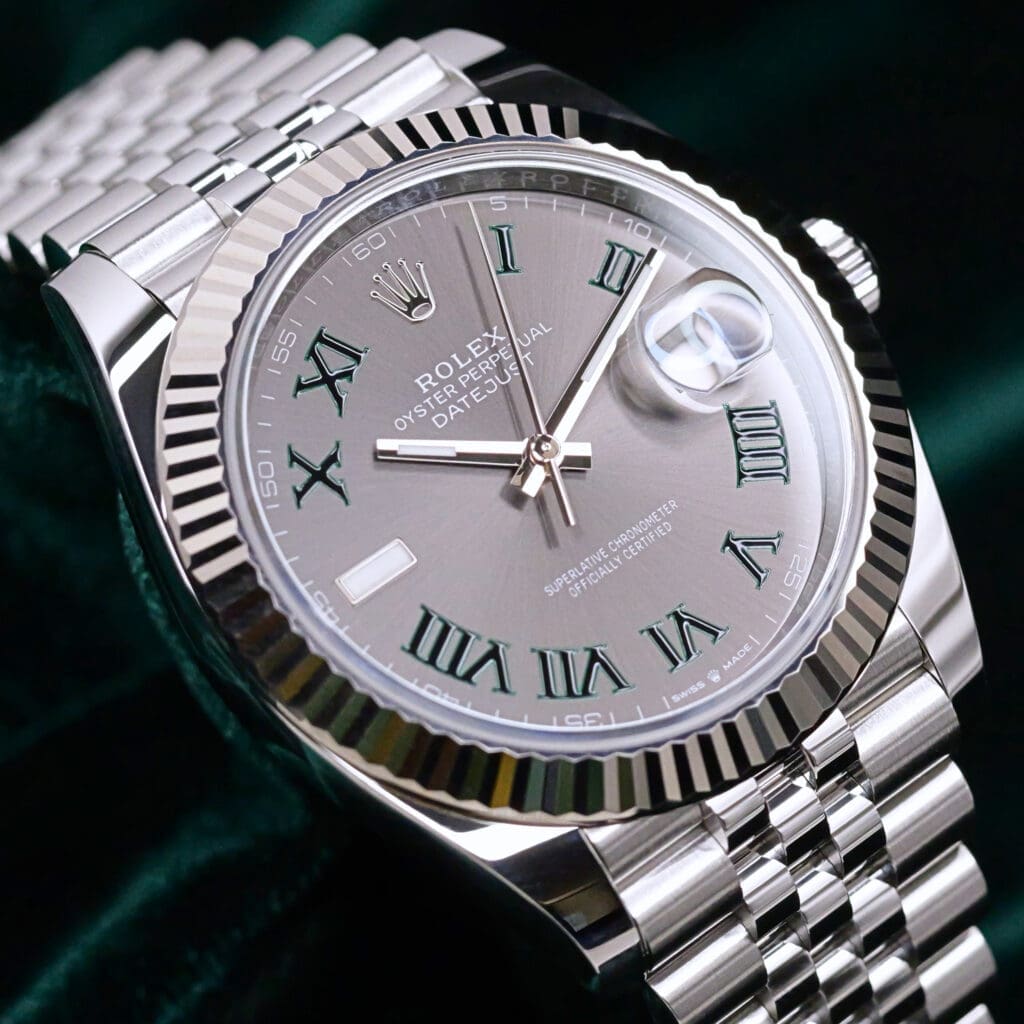
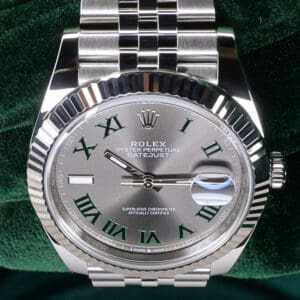
- Datejust 41 ref. 126334 in Oystersteel with a stainless steel fluted bezel holds close to retail. Some dial configurations dip slightly below, but not dramatically.
- Explorer ref. 124270 is one of the most underrated value plays in the entire Rolex lineup. The 36mm case, clean 3-6-9 dial, and restrained design have made it a quiet classic. Stable, consistent, and easy to sell.
- Oyster Perpetual 41 in the bold dial colors released from 2020 onward. Teal and yellow carry small premiums. Other colors sit at or near retail.
- Air-King ref. 126900 holds a solid floor but doesn’t appreciate. It’s a stable position.
Tier 2 is where smart first-time buyers often land. You get a genuine Rolex sports or dress watch, real value retention, and you don’t have to fight a waitlist or pay a grey market premium to own it.
Tier 3: Models That Trade Below Retail
This is the section most watch articles skip. They shouldn’t, because buying the wrong configuration is a real and avoidable mistake.
Several Rolex references lose value as soon as they leave the authorized dealer. Here’s what trades below retail and why:
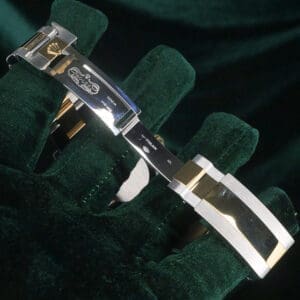
- Two-tone (Rolesor) sports models – the Submariner ref. 126613LB or GMT-Master II ref. 126713GRNR – trade noticeably below their full steel equivalents. The buyer pool is narrower, the liquidity is slower. Steel simply has broader appeal.
- Precious metal sports models – yellow gold Submariner, white gold Daytona – depreciate faster than their steel counterparts. The gold Yacht-Master on Oysterflex is probably the clearest example: a capable, well-finished watch that consistently trades below retail because the audience for it is small.
- Gem-set and diamond-dial references trade below retail almost universally. They appeal to a very specific buyer, and that buyer rarely pays full price on the secondary market.
- Cellini line – Rolex’s dress watch collection has never built a meaningful collector community. These trade below retail with limited secondary market activity.
- Sea-Dweller 43mm ref. 126600 – worth noting separately. It’s technically more capable than the Submariner (deeper water resistance, helium escape valve, 43mm case), yet it consistently trades below retail. The reason is more cultural than technical. It lacks the Submariner’s history, recognition, and collector following. Our Rolex Sea-Dweller buying guide covers this reference in full if you’re considering it.



The reason Tier 3 watches underperform isn’t about quality. The real reason is addressable audience size. A narrower buyer pool means slower sales, lower offers, and less pricing power for the seller.
What Conditions Protect or Destroy a Rolex’s Resale Value?

The model gets you into the right tier. Condition and documentation determine where you land within it.
| Condition Factor | Impact | Detail |
|---|---|---|
| Box and Papers | +10–20% to resale value | A complete set commands a clear premium over the same watch without documentation, often around $1,000–$4,000 on a $10,000–$20,000 piece. For vintage models, original papers can make the difference between selling and not. Our guide on Rolex without papers value breaks down exactly how much you stand to lose and whether it’s worth buying uncarded. |
| Case Condition | Polished = lower offers | Polishing can reduce value with serious collectors. The secondary market favors original brushed and satin finishes, and a lightly worn, unpolished case often sells better since polishing removes factory finishing for good. For a deep look at why this matters, read our article on Rolex polished vs unpolished. |
| Original Parts | Non-original = significantly lower offers | Replaced dials, aftermarket bezels, or non-Rolex bracelets tend to lower what buyers will pay. The secondary market strongly favors originality, and even high-quality replacement parts can raise concerns. |
| Service History | Unauthorized service = red flag | Rolex-authorized servicing typically costs around $800–$1,200. Service records from an official center build buyer confidence, while non-authorized work can raise concerns and lower offers. See our full breakdown of how much it costs to service a Rolex by model. |
| What You Paid | Grey market premium = harder math | A watch bought on the grey market during 2021–2022 sits in a different value position than one bought at retail. Paying a 40% premium to skip the waitlist makes value retention harder from the start. Our guide on buying from an authorized dealer vs the grey market explains the full trade-off. |
Originality helps protect value. Changes like replaced parts or heavy polishing tend to work against you at resale. And even with a clean example, paying too much upfront makes it harder to come out ahead later.
Rolex Prices After 2022 and Where the Market Stands

Yes, Rolex secondary market prices dropped significantly after the 2022 peak. As of 2025-2026, Tier 1 steel sports models still trade above retail, and the market has stabilized around real collector demand rather than speculation. The full picture is worth understanding.
The 2021–2022 peak wasn’t a sign of permanent appreciation. It was a perfect storm: pandemic-era liquidity flooded the market, supply chains tightened, and grey market speculators drove prices to levels that had no real foundation in collector demand.
A steel Daytona ref. 126500LN was trading above $50,000 at the height of the frenzy, more than double its retail price. That was never sustainable.
The correction that followed was sharp. Steel sports models that inflated the most fell the hardest. TThe GMT-Master II Pepsi, the Submariner, and the Daytona all came down significantly from their 2022 highs.
The correction was healthy, not catastrophic. The speculators exited. The collectors stayed. Prices reset to levels that reflect genuine demand rather than fear-of-missing-out buying. A buyer in 2025 or 2026 is in a better position than a buyer in 2021 or 2022; current prices are grounded in reality.
Tier 1 models still trade above retail. The premiums are smaller than they were at the peak, but they’re real and stable. The GMT-Master II Pepsi still commands a meaningful premium over its authorized dealer list price in today’s market.
Vintage Rolex from the 1950s–1970s was largely insulated from the correction. References like the Explorer ref. 1016 and the Explorer II ref. 1655 held steady through the volatility because their value is built on rarity and historical significance.
Prices for strong examples of the Explorer ref. 1016 range from roughly €10,000 to €35,000 depending on condition and originality. And those numbers barely moved during the broader correction.
Is Buying a Rolex a Good Investment?

Rolex is one of the best stores of value in luxury goods. It is not a financial investment in the traditional sense, and that distinction matters.
A store of value means you can buy it, use it, and sell it later without losing much, or anything. A financial investment means you expect to grow your money. Rolex does the first reliably. It does the second only under specific conditions.
Here’s the part many buyers overlook. A watch bought at $10,000 and sold for $9,800 five years later may seem like it held value. But add a $1,000 service during that time, and you’re effectively down overall.
That doesn’t make Rolex a bad buy. It just helps to treat it as a long-term purchase with costs, not a guaranteed investment.
The case for Rolex as a store of value is strongest when:
- You buy a Tier 1 steel sports model at authorized dealer retail, not at a grey market premium
- You keep it in original condition with box and papers
- You hold it for 5–10 years or more
- You would have spent the money on another luxury item anyway. A Rolex gives you the object and the value floor
The case weakens when:
- You pay a grey market premium to skip the waitlist
- You buy a Tier 3 reference expecting it to appreciate
- You treat it as a primary investment vehicle with expected returns
One advantage Rolex has over almost every comparable physical asset: liquidity. A steel Submariner can be sold quickly, in virtually any major market, to a large pool of motivated buyers. That’s genuinely rare for something you can wear on your wrist.
Compare that to a Patek Philippe Calatrava or an Audemars Piguet dress watch. Both fine pieces, but finding the right buyer takes longer and requires a more specialized market. Rolex’s resale ecosystem is simply bigger and more active than any other luxury watch brand’s, and that matters when you actually need to convert it to cash.
If you’re buying for value retention, think of it this way: a Tier 1 Rolex bought at AD retail is less like a financial investment and more like a luxury item that refuses to depreciate. Not many physical assets at this price point offer that.
Final Thoughts on Rolex Value Retention
Rolex holds its value better than almost anything else in luxury goods, but not every Rolex, and not under every condition.
The model and configuration matter most. Steel sports models in Tier 1 or Tier 2 give you the strongest resale position, and that starts with buying at authorized dealer retail rather than paying a grey market premium. From there, condition and documentation do the rest. Original parts, an unpolished case, and a complete box and papers set protect your number when it comes time to sell.
The secondary market has normalized since the 2022 correction. Current prices reflect real collector demand. A Tier 1 steel Rolex bought at retail, kept in original condition, and held for several years is about as close to a safe bet as the luxury goods world offers.
One thing worth adding if you’re buying on the secondary market: always ask for service records, check that the serial number matches the papers, and buy from a dealer with a clear return or authenticity policy. The secondary market has plenty of good actors. Knowing how to identify them matters as much as knowing which reference to buy.
If you’re ready to move on a piece or want to know what your current watch is worth, you can sell or trade your watch with us and we’ll walk through the numbers. For a broader look before you buy, our Rolex buying guide covers everything from model selection to finding a trustworthy seller.
999+ Timepieces Available
Explore Our Timepieces
Authenticated, unworn, and ready to ship worldwide.
Rolex · Audemars Piguet · Patek Philippe · Omega · Cartier · Richard Mille · Hublot · Tudor
Newly Listed
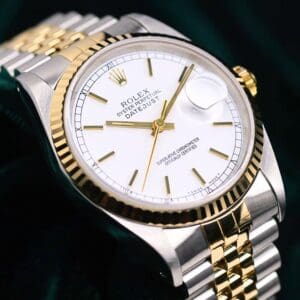
Rolex Datejust White Dial Fluted Bezel Jubilee Bracelet Two-Tone 18K Yellow Gold Stainless Steel 36mm MINT CONDITION 16233
$8,663.00
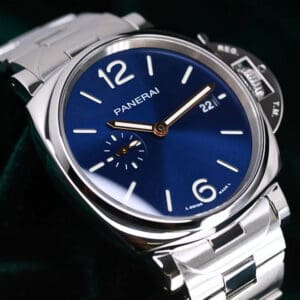
Panerai Luminor Due Blue Dial Stainless Steel 42mm MINT CONDITION COMPLETE SET PAM01124
$7,681.00
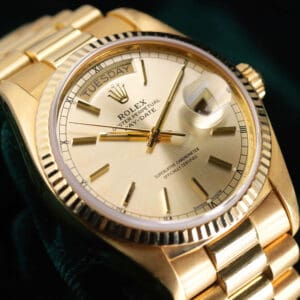
Rolex Day-Date Champagne Dial Fluted Bezel President Bracelet 18k Yellow Gold 36mm MINT CONDITION 18038
$25,849.00
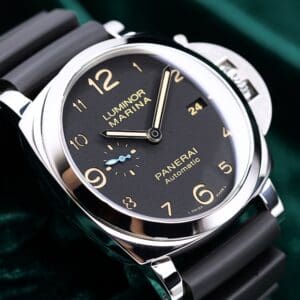
Panerai Luminor Marina 1950 3 Days Black Dial Black Rubber Strap Stainless Steel 44mm MINT CONDITION COMPLETE SET PAM01359
$6,353.00
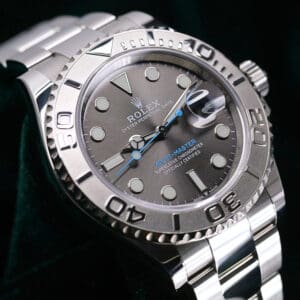
Rolex Yacht-Master Rhodium Slate Dial Platinum Bezel Oyster Bracelet Stainless Steel 40mm MINT CONDITION COMPLETE SET 126622
$15,740.00
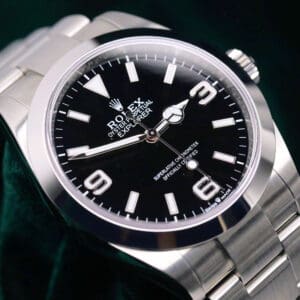
2025 Rolex Explorer Black Dial Oyster Bracelet Stainless Steel 40mm MINT CONDITION COMPLETE SET 224270
$10,495.00
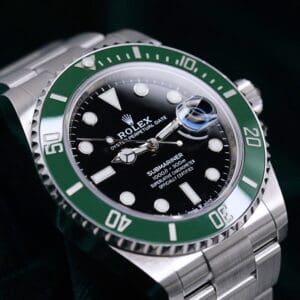
Rolex Submariner Date "Starbucks" Black Dial Green Ceramic Bezel Oyster Bracelet Stainless Steel 41mm MINT CONDITION COMPLETE SET 126610LV-0002
$14,992.00
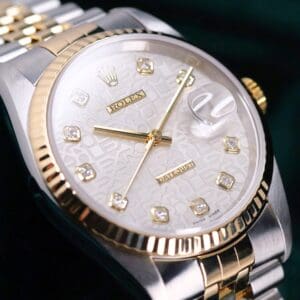
Rolex Datejust 36 Silver Anniversary Jubilee Diamond Dial Two-Tone 18K Yellow Gold Stainless Steel 36mm MINT CONDITION COMPLETE SET 16233
$10,739.00
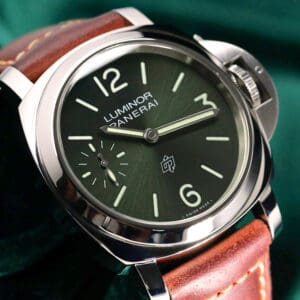
2025 Panerai Luminor Logo Green Dial Stainless Steel Brown Leather Strap 44mm MINT CONDITION COMPLETE SET PAM01624
$6,529.00
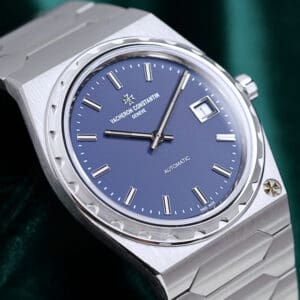
2026 NEW UNWORN Vacheron Constantin Historiques 222 "Jumbo" Blue Dial Stainless Steel 37mm COMPLETE SET 4200H/222A-B934
$60,895.00
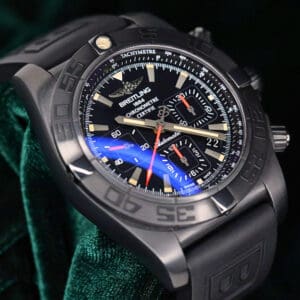
Breitling Chronomat 44 Blacksteel Black Dial Red Accents Black Rubber Strap Black DLC Stainless Steel 44mm MINT CONDITION COMPLETE SET MB0111C3/BE35
$6,526.00
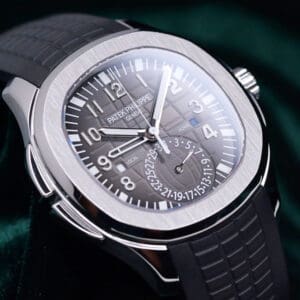
Patek Philippe Aquanaut Travel Time Black Dial Stainless Steel Black Rubber Strap 40.8mm Caliber 324 MINT CONDITION COMPLETE SET 5164A-001
$99,745.00