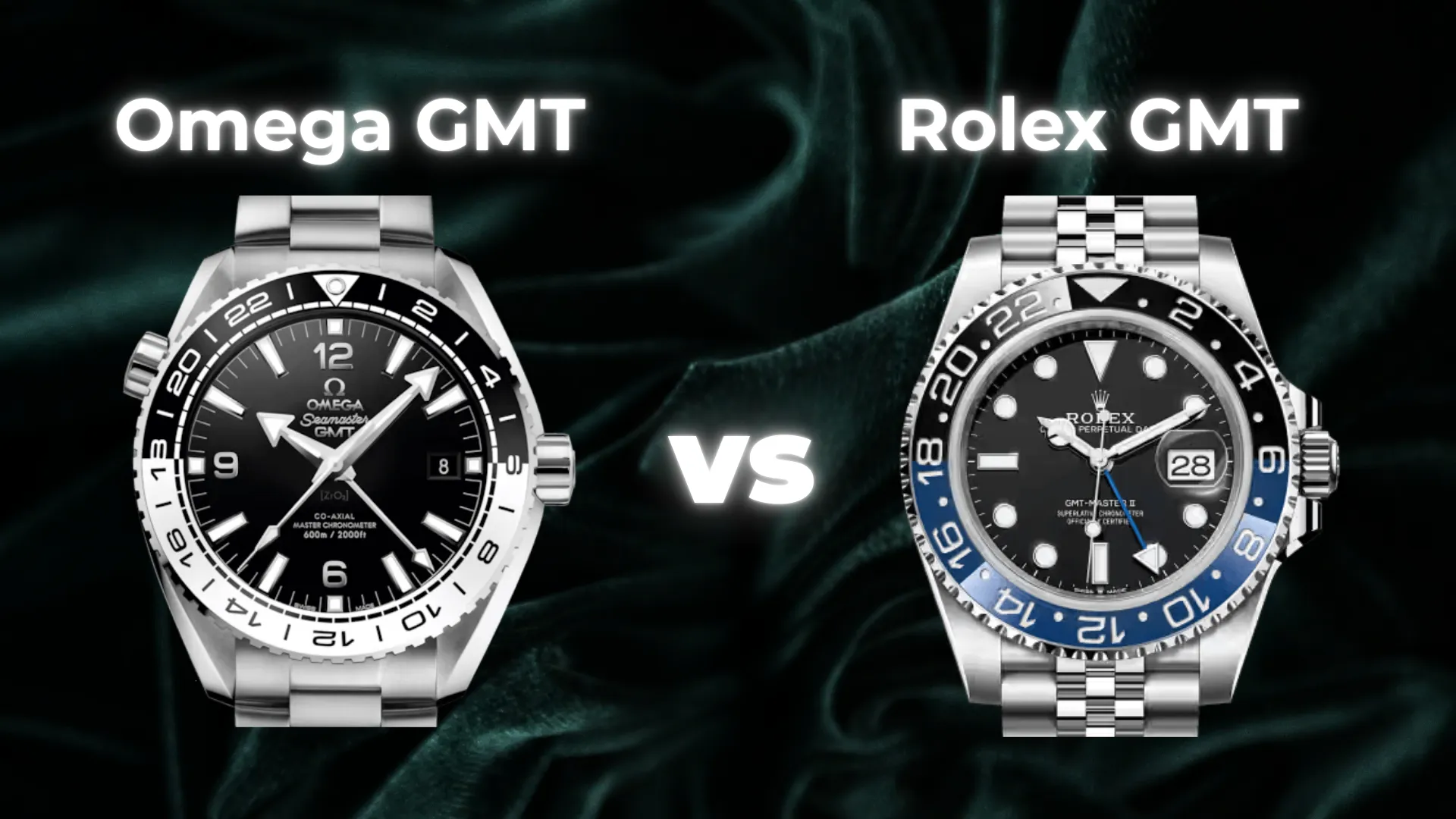

The Rolex GMT-Master II vs Submariner comparison comes up so often because both watches look equally capable at a glance. They share similar cases, sturdy construction, and unmistakable Rolex design, which makes them easy to confuse for buyers seeing them side by side.
Beneath that familiar exterior, they were built to solve different problems. One is designed around time-zone tracking, the other around underwater timing. Those purposes shape everything from the bezel to how the watch is used day to day.
The 2026 picture also looks different from a year or two ago. Rolex discontinued the Pepsi GMT at Watches and Wonders 2026 with no Coke replacement, retail prices for both lines climbed roughly 6% in January, and the steel Submariner crossed the $10,000 mark for the first time. All of that changes the buying calculus, so any honest comparison has to factor it in.
Rolex GMT-Master II Overview
The Rolex GMT-Master II was introduced in the early 1980s as an evolution of the original GMT-Master, expanding its functionality for long-haul pilots and international travelers. While the original GMT tracked two time zones, the GMT-Master II added an independently adjustable hour hand, allowing seamless local-time changes without stopping the movement.
It was created for aviators, global professionals, and frequent travelers who needed to track multiple time zones mechanically. Unlike the Submariner’s focus on elapsed time, the GMT-Master II centers entirely on time-zone awareness.
One of its strongest features is the integration of the 24-hour hand with a rotating 24-hour bezel, allowing the wearer to track two or even three time zones at once. It remains one of the genuinely practical Rolex complications for real-world use.
Collectors closely study bezel materials, color combinations, and movement generations. Aluminum bezel inserts mark vintage and transitional eras, while Cerachrom bezels define modern GMT-Master II production. Certain colorways like Pepsi, Batman, Bruce Wayne, and Sprite have become cultural identifiers beyond the watch world.
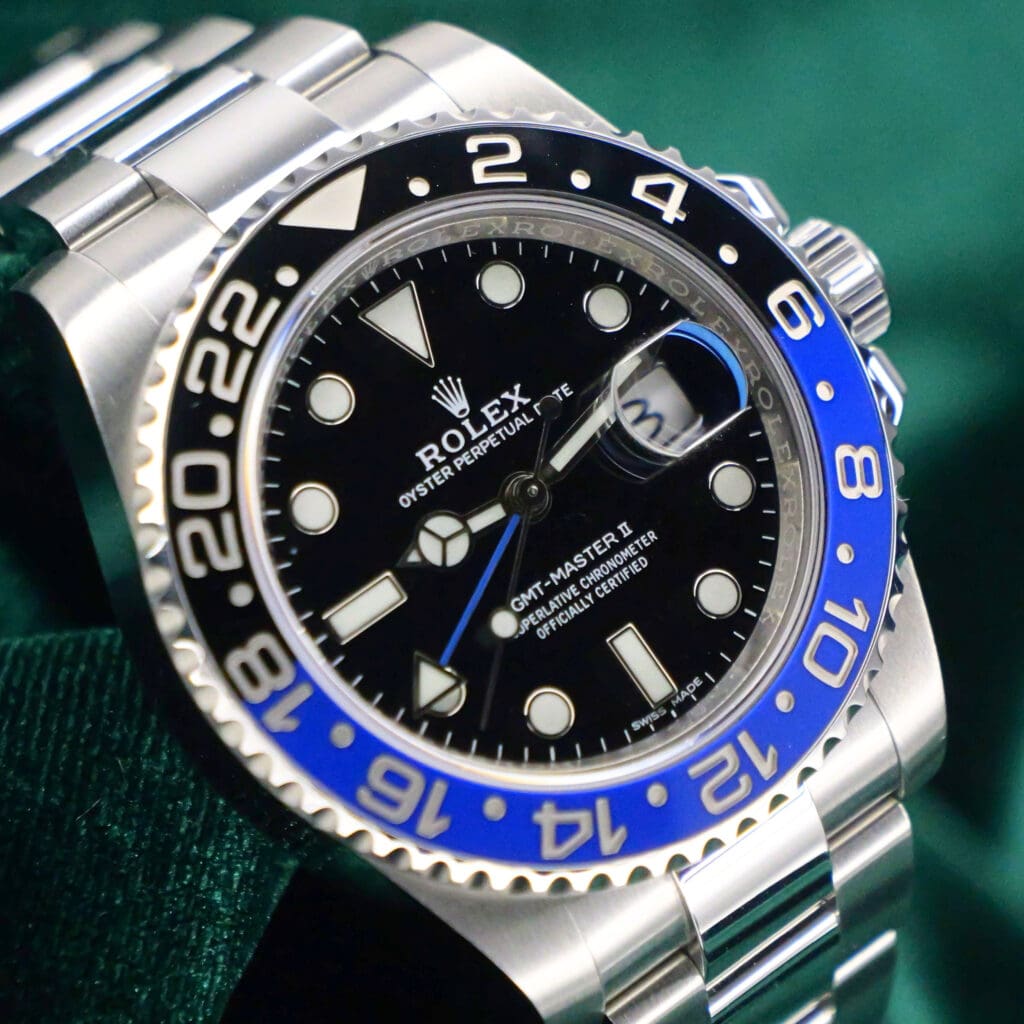
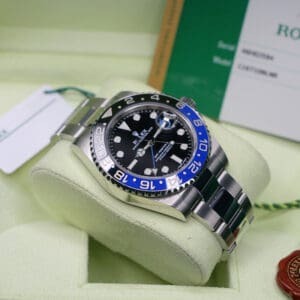
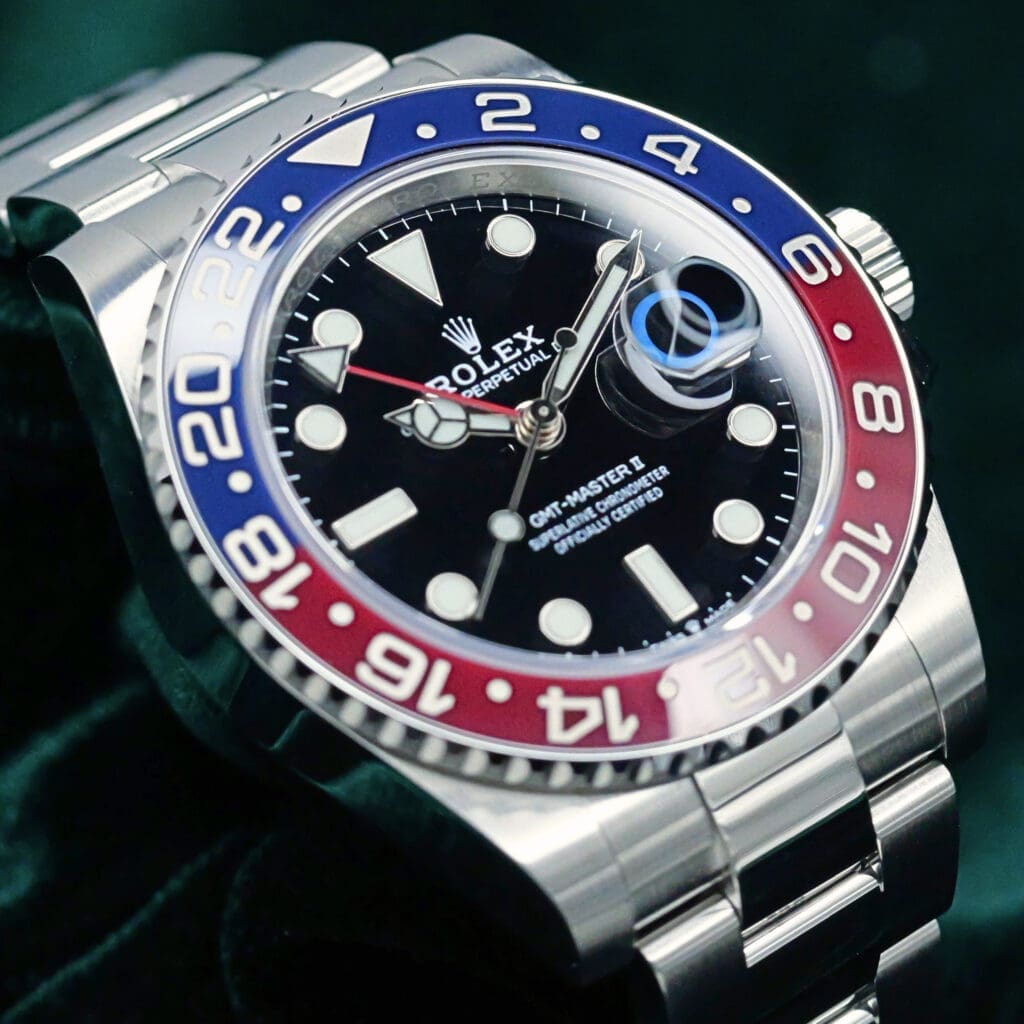
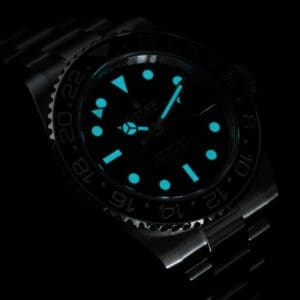
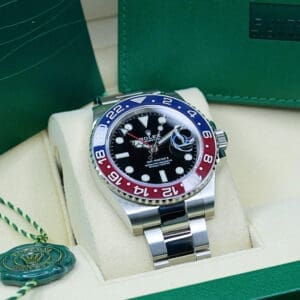
Distinctive design elements include the fourth GMT hand, bi-color bezels for instant day-night distinction, and a dial layout that adds information without sacrificing legibility.
The most active references on the secondary market today are the Batman, Batgirl, Bruce Wayne, Sprite, and the newly discontinued Pepsi. Each gets a full breakdown in the Notable References section below, and our complete Rolex GMT-Master II buying guide covers the full lineup in more depth.
Most Popular Rolex GMT-Master II References:
- Rolex GMT-Master II Ref. 116710BLNR — “Batman” (Oyster bracelet)
- Rolex GMT-Master II Ref. 126710BLNR — “Batgirl” (Jubilee bracelet)
- Rolex GMT-Master II Ref. 126710GRNR — “Bruce Wayne”
- Rolex GMT-Master II Ref. 126720VTNR — “Sprite” (left-handed configuration)
- Rolex GMT-Master II Ref. 126710BLRO — “Pepsi” (recently discontinued)

Rolex Submariner Overview
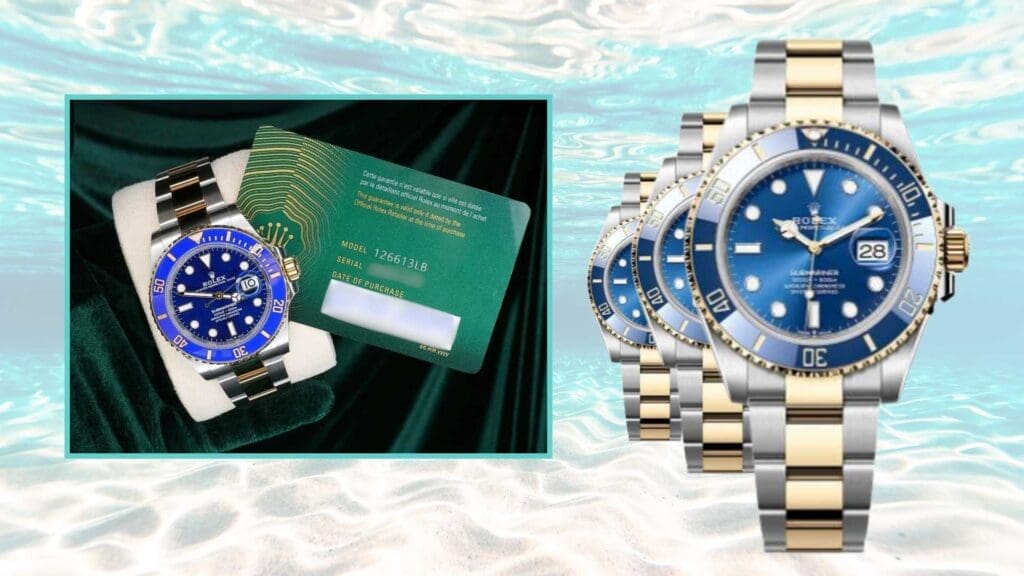
The Rolex Submariner debuted in 1953 as a purpose-built professional dive watch, designed to handle underwater work while staying legible and reliable in extreme conditions. Over the decades, it became the template for the modern dive watch.
It was built primarily for professional divers, military units, and maritime users, but its clean design and durability eventually made it a universal sports watch worn far beyond the water.
The Submariner hit several milestones that shaped the wider watch industry. It defined the unidirectional timing bezel, set early water-resistance benchmarks, and proved that a tool watch could be mechanically simple and still exceptionally tough.
Collectors value the Submariner for its reference-specific evolution. Small changes in dial text, lume material, bezel inserts, and case construction mark clear eras, making certain versions historically important and highly desirable.
Its most recognizable traits are symmetrical dials (especially on no-date models), Mercedes hands (the three-pronged hour hand that became a Rolex signature), and a restrained aesthetic that has stayed functionally consistent for decades.
The most active references today are the current production 124060 (no-date) and 126610LN (date), with several discontinued models like the Hulk and Kermit still trading well above retail. Our complete Rolex Submariner buying guide walks through every reference in detail.
Most Popular Rolex Submariner References:
- Rolex Submariner Ref. 124060 — No-date, current production
- Rolex Submariner Date Ref. 126610LN — Date version, current production
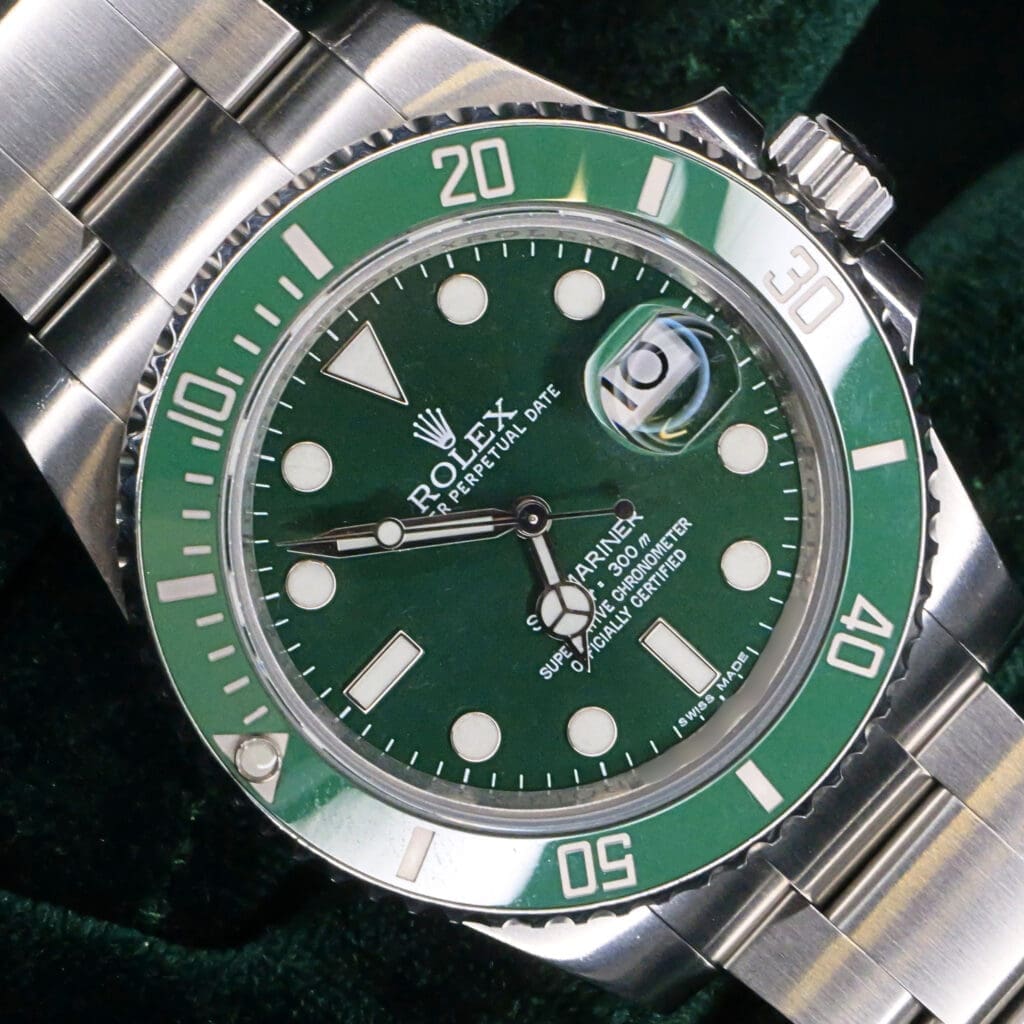
- Rolex Submariner Ref. 116610LV — “Hulk” (discontinued, trading above retail)
- Rolex Submariner Ref. 126610LV — “Kermit” (current green bezel variant, strong demand)
Rolex Submariner vs GMT-Master II: Most Notable Differences
The Rolex Submariner and GMT-Master II share a similar case shape and overall build quality, but their differences become clear once you look at how each watch is meant to be used. The Submariner is engineered for underwater timing and maximum legibility, whereas the GMT-Master II is built to track multiple time zones.
1. Core Function
The Submariner is a single-time dive watch built specifically to measure elapsed time underwater, where clarity and safety are critical. The GMT-Master II is designed as a travel watch that tracks multiple time zones, making it more useful for international movement than underwater timing.
2. Bezel Design and Use
The Submariner uses a unidirectional 60-minute bezel designed to prevent accidental movement that could mislead a diver about remaining time underwater. The GMT-Master II uses a bidirectional 24-hour bezel, which allows the wearer to adjust and read time zones rather than track elapsed minutes.
3. Dial Complexity
The Submariner keeps the dial intentionally simple, prioritizing large markers and clear contrast for fast reading in low-light or underwater conditions. The GMT-Master II adds a fourth hand and a 24-hour scale, which adds visual information but gives flexibility for travel.
4. Price and Market Demand (2026)
Pricing varies by reference, condition, and material. As of 2026, here is what the steel models actually cost:
- Cheapest Rolex Submariner (modern steel): Retail for the no-date 124060 sits at $10,050; pre-owned trades around $11,500 to $13,000 with full kit.
- Most Expensive Rolex Submariner: Vintage references like the Red Sub or early military-issued pieces can exceed $150,000.
- Cheapest Rolex GMT-Master II: Older aluminum-bezel references like the 16710 start around $11,000 to $14,000.
- Most Expensive Rolex GMT-Master II: Rare vintage or gem-set versions can reach $200,000 or more. The newly discontinued Pepsi (126710BLRO) has surged past $25,000 in 2026 and is climbing.
What the Pepsi Discontinuation Means for Buyers
This is the elephant in the room for anyone shopping the GMT line right now. At Watches and Wonders 2026, Rolex confirmed the Pepsi (126710BLRO) and its white-gold sibling (126719BLRO) had been pulled from the catalog. There is no Coke replacement waiting in the wings, and the steel GMT lineup now consists of the Batman, Batgirl, Bruce Wayne, and Sprite.
Secondary market response was immediate. Pepsi values climbed from a roughly $18,000 to $22,000 range in 2025 to a median around $25,000 by April 2026, with unworn examples pushing past $40,000. Chrono24 reported a 500% surge in Pepsi purchase requests in March alone, and active listings dropped about 25% as owners pulled inventory off the market. For the full Pepsi backstory and reference-level detail, see our Rolex Pepsi buying guide.
For buyers, the shift creates a few practical questions. If you wanted a Pepsi specifically, the only path now is the secondary market at a real premium.
If you were comparing GMT to Submariner partly because of the Pepsi’s iconic status, the calculus changes. The equivalent steel GMT today is the Batman or Bruce Wayne, both of which are still in production and easier to source. If you are weighing those two against the Pepsi specifically, the Pepsi vs Bruce Wayne breakdown lays out the full side-by-side.
The Submariner, by contrast, has not had a comparable discontinuation event. The current 124060 and 126610LN are reasonably available on the pre-owned market.
Notable Rolex GMT-Master II References
Certain Rolex GMT-Master II references stand out for their technical updates, bezel designs, and lasting demand. These models represent key stages in the GMT-Master II’s evolution and are among the most recognized and actively traded today.
1. Rolex GMT-Master II Ref. 16710
The 16710 represents the final generation of aluminum-bezel GMT-Master II models and offers full independent hour-hand functionality. Its long production run and interchangeable bezel inserts make it one of the most versatile and approachable GMT references for collectors.
Key Specs:
- Production era: 1989 to 2007
- Case size: 40 mm
- Bezel: Aluminum (Pepsi red/blue, Coke red/black, or black)
- Movement: Caliber 3185 or 3186
- Bracelet: Oyster
- 2026 market range: ~$11,000 to $15,000
2. Rolex GMT-Master II Ref. 116710LN
The 116710LN was the first GMT-Master II to feature Rolex’s Cerachrom ceramic bezel. It marked a clear shift toward modern materials and construction while keeping a clean, monochrome look that appeals to buyers who want a more understated GMT.
Key Specs:
- Production era: 2007 to 2019
- Case size: 40 mm
- Bezel: Black Cerachrom
- Movement: Caliber 3186
- Bracelet: Oyster
- 2026 market range: ~$13,000 to $16,000
3. Rolex GMT-Master II Ref. 126710BLRO (Pepsi, Discontinued)
The modern Pepsi revived Rolex’s most recognizable GMT color combination by pairing the red-and-blue bezel with modern ceramic construction. After eight years of production, Rolex discontinued the reference at Watches and Wonders 2026 with no direct replacement, immediately moving it from a high-demand catalog model into a closed-market collector piece.
Key Specs:
- Production era: 2018 to 2026 (discontinued)
- Case size: 40 mm
- Bezel: Red and blue Cerachrom
- Movement: Caliber 3285
- Bracelet: Jubilee or Oyster
- 2026 market range: ~$25,000+, with unworn examples pushing $40,000+
4. Rolex GMT-Master II Ref. 126710BLNR (Batman / Batgirl)
The Batman is known for its blue-and-black ceramic bezel, offering a more subtle alternative to the Pepsi while keeping full GMT functionality. On the Jubilee bracelet, the same reference picks up the Batgirl nickname. With the Pepsi gone, this reference is now the most familiar steel GMT in the active lineup. If you are choosing between the two bracelet configurations, the full Batman vs Batgirl comparison covers the differences in detail.
Key Specs:
- Production era: 2013 to present
- Case size: 40 mm
- Bezel: Blue and black Cerachrom
- Movement: Caliber 3186 (early) or 3285 (later)
- Bracelet: Oyster (Batman) or Jubilee (Batgirl)
- 2026 retail: $11,800
- 2026 market range: $17,500 to $21,000
5. Rolex GMT-Master II Ref. 126710GRNR (Bruce Wayne)
Released in 2024 as a quiet steel surprise, the Bruce Wayne uses a black-and-grey Cerachrom bezel with a green GMT hand and green dial text. It is the muted, daily-driver option in the lineup, closer in feel to the discontinued all-black 116710LN than to the Pepsi or Batman, and it has become the option for buyers who want the GMT function without the loud bezel.
For a head-to-head with the Batman, the Batman vs Bruce Wayne breakdown walks through the visual and ownership differences.
Key Specs:
- Production era: 2024 to present
- Case size: 40 mm
- Bezel: Black and grey Cerachrom
- Movement: Caliber 3285
- Bracelet: Oyster or Jubilee
- 2026 market range: ~$21,000 to $24,500
6. Rolex GMT-Master II Ref. 126720VTNR (Sprite)
The Sprite is the left-handed (destro) GMT-Master II, with the crown at 9 o’clock and a green-and-black ceramic bezel. It launched in 2022 and remains polarizing among collectors. The unconventional layout is either a yes or a hard pass.
Key Specs:
- Production era: 2022 to present
- Case size: 40 mm
- Crown position: Left-hand (9 o’clock)
- Bezel: Green and black Cerachrom
- Movement: Caliber 3285
- Bracelet: Oyster
- 2026 market range: ~$19,000 to $24,000

Notable Rolex Submariner References
These notable references show how the collection evolved across case design, dial layout, materials, movement upgrades, and collector demand.
1. Rolex Submariner Ref. 1680 (Red Sub)
The Red Sub is prized as the first Submariner with a date window, marking an important shift in the model line’s functionality. Its short production period featuring distinctive red “Submariner” text on the dial, along with transitional design details, has made it one of the most studied vintage Submariner references.
Key Specs:
- Production era: Late 1960s to 1970s
- Water resistance: 200 m
- Movement: Automatic
- Bezel: Aluminum insert
- 2026 market range: ~$20,000 to $45,000+
2. Rolex Submariner Ref. 5513 (Crown Guard Era)
Known for its clean no-date dial and exceptionally long production run, the 5513 is often regarded as the purest expression of the Submariner’s tool-watch roots. The uncluttered layout, balanced proportions, and focus on core diving functionality have made it a benchmark for collectors who value simplicity.
Key Specs:
- Production era: 1962 to 1989
- Water resistance: 200 m
- No date complication
- 2026 market range: ~$13,000 to $32,000+
3. Rolex Submariner Ref. 16610LV (Kermit)
Released to mark the Submariner’s 50th anniversary, the 16610LV (the Kermit) paired a green bezel with a traditional black dial, a first for the line. The anniversary status, relatively short production run, and distinctive color combination created strong collector interest that is still active today.
Key Specs:
- Production era: 2003 to 2010
- Aluminum green bezel
- 2026 market range: ~$14,000 to $22,000+
4. Rolex Submariner Ref. 116610LN (Super Case)
This reference introduced the broader Super Case and the Cerachrom bezel, marking the modern shift in Submariner proportions and materials. The wider lugs and crown guards gave the watch more wrist presence, while the Cerachrom bezel improved scratch resistance and long-term durability.
Key Specs:
- Production era: 2010 to 2020
- Cerachrom bezel
- 2026 market range: ~$11,500 to $14,000
5. Rolex Submariner Ref. 124060 (No-Date)
The 124060 is the current production no-date Submariner, released in 2020 as part of the lineup overhaul that pushed the case to 41 mm with slimmer lugs. It runs the Caliber 3230 with a 70-hour power reserve and is the entry point into the modern Submariner family for buyers who prefer a symmetrical dial without the date window.
Key Specs:
- Production era: 2020 to present
- Case size: 41 mm
- Movement: Caliber 3230 (70-hour reserve)
- No date complication
- 2026 retail: $10,050
- 2026 market range: ~$11,500 to $13,500
6. Rolex Submariner Ref. 126610LN (Date)
The 126610LN is the current production Submariner Date and the most liquid reference in the entire model line. Released in 2020 alongside the 124060, it runs the Caliber 3235 (also a 70-hour reserve), has the wider 21mm lug width on the bracelet, and is the default recommendation for a first-time Submariner buyer who wants the Cyclops and date window.
If you are stuck between the two configurations, the full date vs no-date Submariner breakdown walks through the trade-offs.
Key Specs:
- Production era: 2020 to present
- Case size: 41 mm
- Movement: Caliber 3235 (70-hour reserve)
- Date with Cyclops
- 2026 retail: $11,350
- 2026 market range: ~$13,000 to $16,000




Which Rolex Should You Choose?
Choosing between the Submariner and the GMT-Master II comes down to how you actually plan to use the watch. Both offer the same Rolex build quality and the same ownership experience, but the daily logic for each is different.
Choose the Submariner — Best for Daily Wear and Versatility
Pick the Submariner if you want maximum simplicity and legibility on the dial, prefer a watch rooted in professional dive history, value a clean balanced look that works with anything, and want easier access to current production at retail-adjacent pricing.
Choose the GMT-Master II — Best for Frequent International Travel
Pick the GMT-Master II if you travel across time zones frequently or work with international teams, want added functionality without resorting to a phone or digital tool, like bolder bezel designs and the variety in the lineup, and are comfortable with the higher entry point now that the Pepsi is off the table.
One practical 2026 note: since the Pepsi discontinuation, every other steel GMT reference is absorbing displaced demand. Batman and Bruce Wayne premiums have firmed up.
The Submariner has not had a comparable shake-up. So if you are price-sensitive and want a current production Rolex sports watch with documentation and a warranty path, the 126610LN or 124060 is the easier purchase right now.
Where to Buy Authentic Watches Online
There are a handful of legitimate online channels for buying either of these watches. Chrono24 is the largest dedicated marketplace for pre-owned watches, with seller verification, escrow on higher-value pieces, and global inventory. If you are considering that route, our guide on what to watch for on Chrono24 covers the listing red flags and seller-vetting process.
eBay runs an Authenticity Guarantee program on watches over $2,000, where the watch is shipped to an inspection center before reaching the buyer. Grailzee is an auction-format platform for pre-owned and vintage watches with shorter sale windows.
We also sell, buy, and trade luxury watches. The reason clients choose us over a big marketplace is the layered communication before the purchase decision.
Before you commit to a Submariner or a GMT, we send you a tour video of the actual watch (not stock photos), full condition notes, and a direct conversation with a real person who has handled the piece. You are not buying blind off a listing. You are talking to someone who can tell you about the bracelet stretch, the lume tone, and what the case lines look like in person.
That is reflected in our 4.9-star Google rating, which comes from clients who appreciate the walkthrough before they wire money on a five-figure watch.
If you want that kind of walkthrough on a specific Submariner or GMT-Master II reference, browse our current pre-owned Rolex inventory or reach out and we will line up options that match what you are actually looking for.
Final Thoughts on Rolex GMT-Master II vs Submariner
The Submariner is the benchmark for what a modern sports watch should be: durable and legible, with no fluff in the design. The GMT-Master II builds on the same platform and adds time-zone tracking that earns its place if you actually travel.
Neither is objectively “better.” The right choice depends on how you live and which function you will actually use.
One bonus tip for 2026 buyers: with the Pepsi discontinuation reshaping the GMT secondary market, premiums on the remaining steel GMT references will likely stay elevated through the year. If you are patient, watch for stable inventory windows on the Batman or Bruce Wayne rather than buying into peak displacement demand.
999+ Timepieces Available
Explore Our Timepieces
Authenticated, unworn, and ready to ship worldwide.
Rolex · Audemars Piguet · Patek Philippe · Omega · Cartier · Richard Mille · Hublot · Tudor
Newly Listed
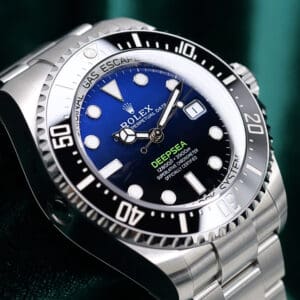
2026 NEW UNWORN Rolex Deepsea "James Cameron" D-Blue Black and Blue Dial Black Ceramic Bezel Stainless Steel 44mm COMPLETE SET 136660-0005
$20,208.00
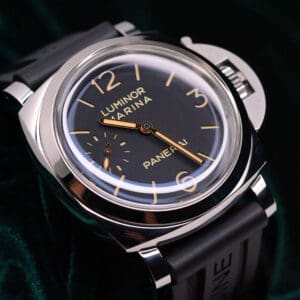
Panerai Luminor Marina 1950 3 Days Limited Edition Black Sandwich Dial Stainless Steel Black Rubber Strap 47mm MINT COMPLETE SET PAM00422
$7,503.00
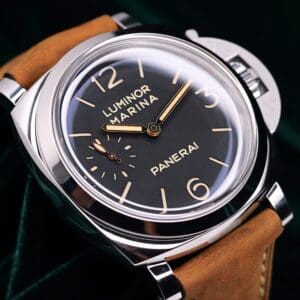
Panerai Luminor Marina 1950 3 Days Black Dial Stainless Steel Brown Leather Strap 47mm LIMITED EDITION MINT CONDITION COMPLETE SET PAM00422
$7,503.00
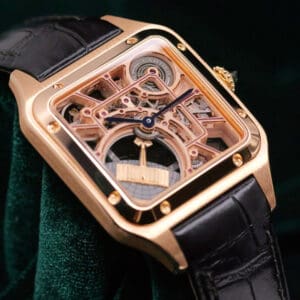
Cartier Santos-Dumont Micro-Rotor Skeleton Dial Black Alligator Strap 18k Rose Gold 43.5 x 31mm MINT CONDITION COMPLETE SET WHSA0030
$40,425.00
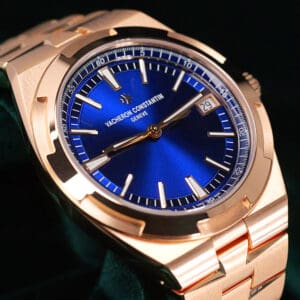
2026 Vacheron Constantin Overseas Blue Dial 18k Rose Gold 41mm MINT CONDITION COMPLETE SET 4520V/210R-B705
$72,764.00
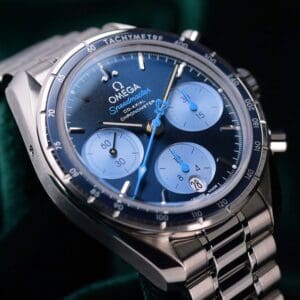
Omega Speedmaster 38 Orbis Edition Blue Dial Stainless Steel 38mm MINT CONDITION COMPLETE SET 324.30.38.50.03.002
$6,599.00
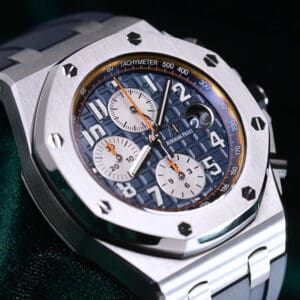
Audemars Piguet Royal Oak Offshore Chronograph “Navy” Blue Dial Orange Accents Blue Rubber Strap Stainless Steel 42mm MINT CONDITION COMPLETE SET 26470ST.OO.A027CA.01
$22,245.00
Cartier Santos-Dumont Micro-Rotor Skeleton Dial 18K Rose Gold Burgundy Alligator Strap 31mm MINT CONDITION COMPLETE SET WHSA0030
$40,425.00
Omega Speedmaster Professional Moonwatch "Moonshine" Green Dial 18K Yellow Gold 42mm MINT CONDITION COMPLETE SET 310.60.42.50.10.001
$35,695.00
Rolex Datejust 31 Champagne Diamond Dial Diamond Bezel Jubilee Yellow Gold & Stainless Steel 31mm MINT CONDITION COMPLETE SET 278383RBR
$31,990.00
Rolex Datejust Blue Arabic Numeral Refinished Dial Fluted Bezel Jubilee Bracelet 18k Yellow Gold Stainless Steel 36mm MINT CONDITION 16233
$7,975.00
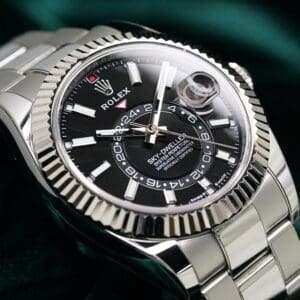
2025 Rolex Sky-Dweller Bright Black Dial 18k White Gold Fluted Bezel Stainless Steel Oyster Bracelet 42mm MINT CONDITION COMPLETE SET 336934
$22,895.00