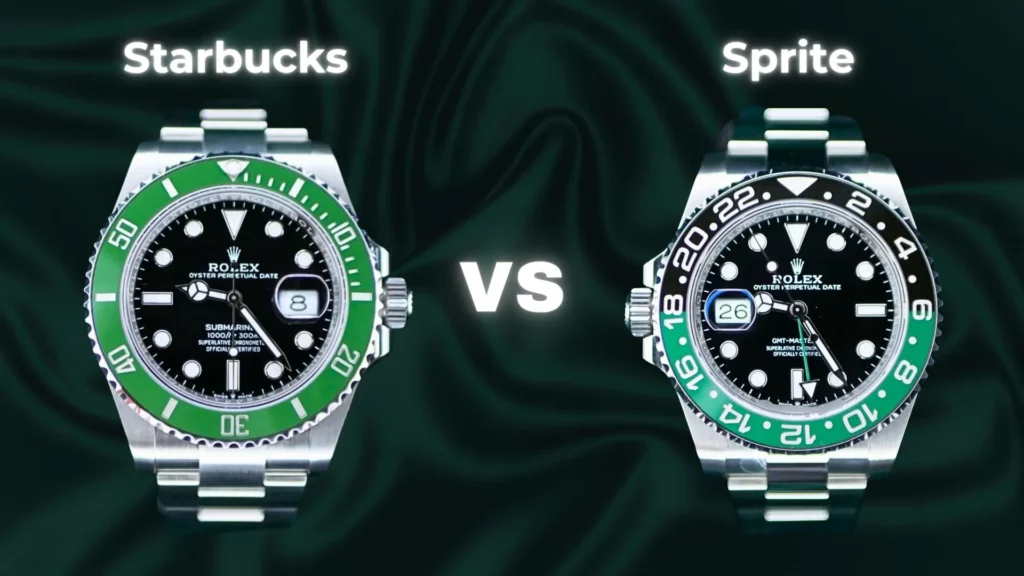
If you are comparing the Rolex Starbucks vs Sprite, you are likely drawn to the same thing: green. But once you look past the color, these watches solve completely different problems.
The Starbucks is a 300-metre dive watch and the Sprite is a dual time zone travel watch. Pick based on which one you would use, not which green you like more.
That decision got more interesting in 2026. Rolex pulled the Pepsi from the catalogue in April, and the Sprite’s position in the lineup changed overnight.
This guide breaks it all down. You will see how each watch works, where they differ, what they cost right now, and which one fits how you live day to day.
Rolex Submariner “Starbucks” Background

The Submariner arrived in 1953 as one of the first watches purpose-built for professional divers. Rolex built it around one job: survive underwater and stay readable under pressure.
The green chapter started in 2003 with the Kermit, continued with the all-green Hulk in 2010, and in 2020 landed on the current reference, the 126610LV. If you are curious how the Kermit stacks up against the Starbucks, that one has its own head-to-head.
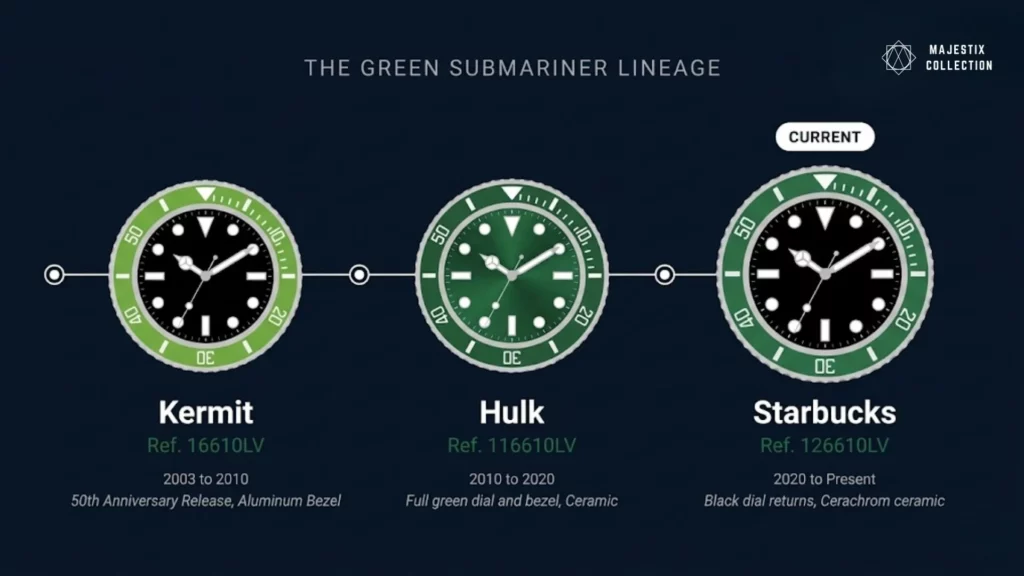
Rolex brought back the black dial and green bezel pairing, dropped the bulky Super Case profile of the Hulk, thinned the lugs, and updated the movement. The color combination reminded people of the Starbucks coffee logo, and the nickname stuck.
One thing worth knowing is that there are two bezel variants in production. The MK1 has a deeper, cooler forest green. The MK2, introduced quietly around 2023, shifted to a slightly warmer and brighter shade closer to the original Kermit.
Rolex made no announcement and kept the same reference number. Both trade at similar levels, though MK2 examples now sit a little higher, and our MK1 vs MK2 breakdown covers how to tell them apart.
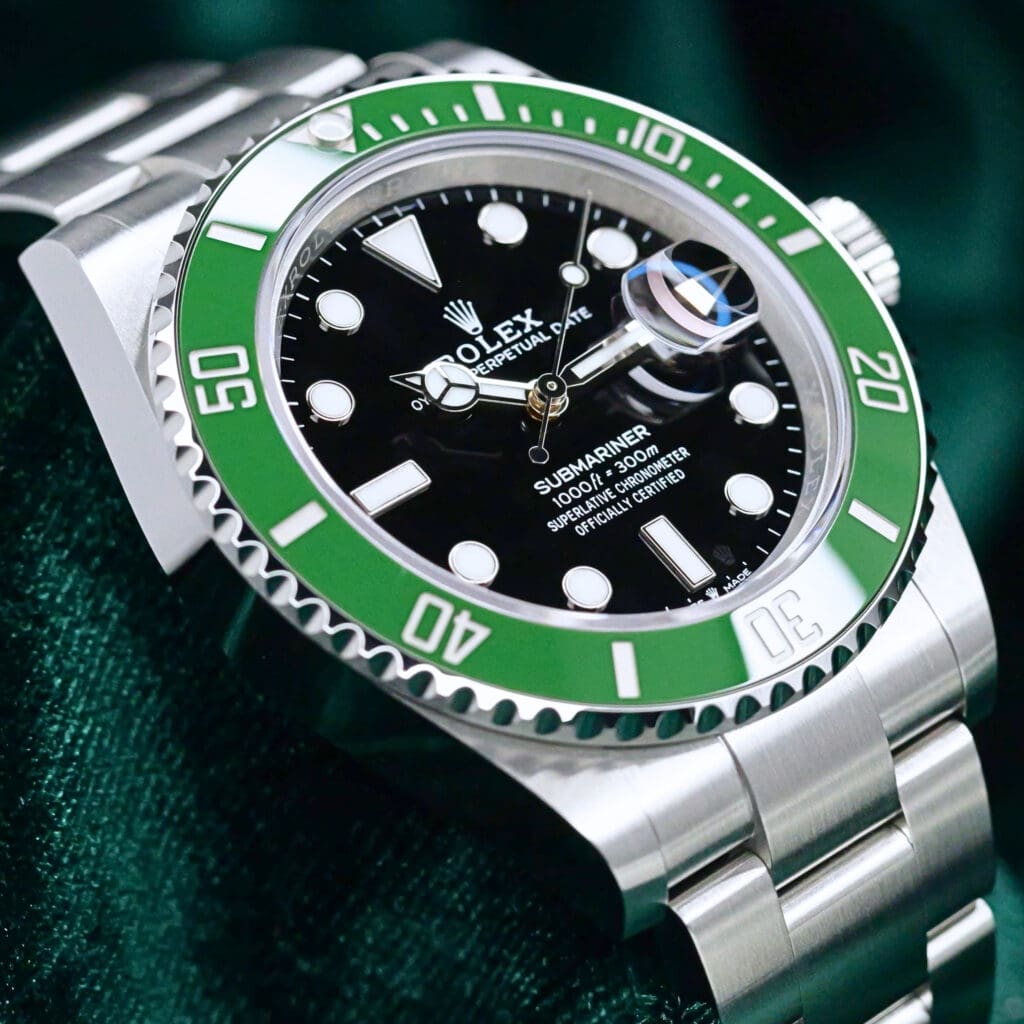


Rolex did not touch the Submariner at Watches and Wonders 2026, so the 126610LV goes into its seventh year unchanged. For where it sits against the rest of the family, our Rolex Submariner buying guide walks through the full lineup.
Key Specifications:
- Reference: 126610LV
- Case size: 41mm (measures closer to 40.5mm)
- Lug-to-lug: ~47.6mm
- Lug width: 21mm
- Case material: Oystersteel (904L stainless steel)
- Crystal: Sapphire, anti-reflective coating, Cyclops at 3 o’clock
- Bezel: Unidirectional, 120-click, solid green Cerachrom ceramic, platinum-filled engravings
- Dial: Black, Chromalight lume, Maxi dial layout, white gold indices and hands
- Movement: Caliber 3235, ~70-hour power reserve, -2/+2 sec/day
- Water resistance: 300m / 1,000ft
- Bracelet: Oyster, Glidelock clasp, tapers 21mm to 17mm
Rolex GMT-Master II “Sprite” Background
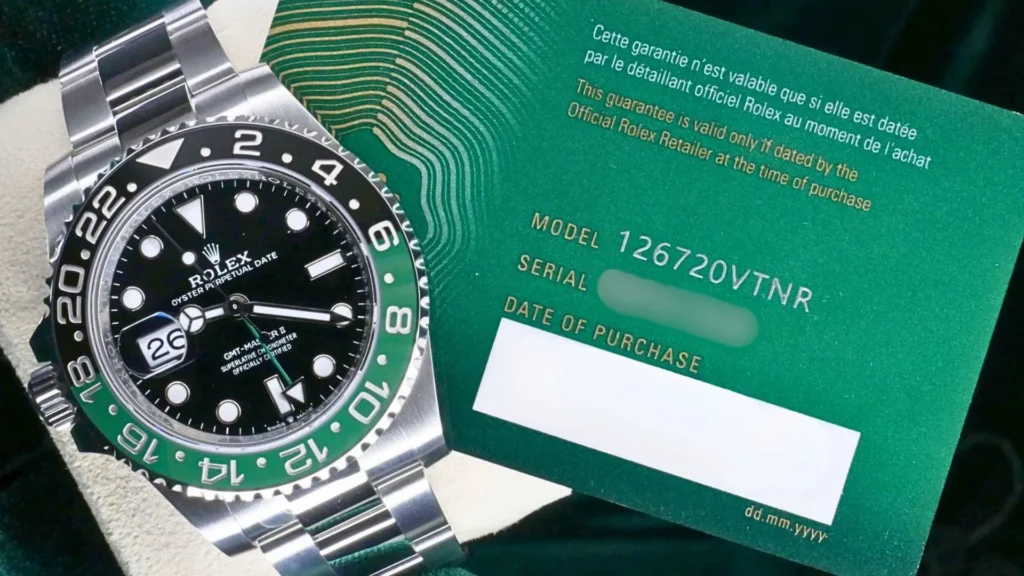
The GMT-Master line started in 1955, built for Pan American Airways pilots who needed home time and destination time on one watch during long transatlantic routes.
The GMT-Master II arrived in the early 1980s with an independently adjustable local hour hand, which made it a proper tool for international travelers.
The 126720VTNR, released in 2022, brought something the modern Rolex lineup had never seen: a left-handed, or destro, GMT. The crown, date window, and Cyclops all sit at 9 o’clock instead of the standard 3.
Rolex designed it so left-handed wearers could wear the watch on their right wrist and reach the crown without taking it off.
The black and green split Cerachrom bezel was also new to the family. Cerachrom is Rolex’s in-house ceramic, which resists fading and scratching far better than the aluminium inserts it replaced.

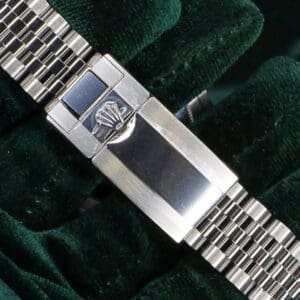

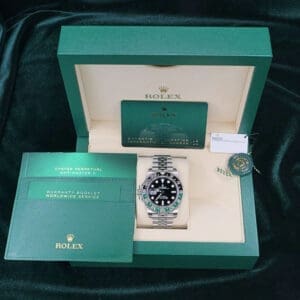
The green half covers the AM hours on the 24-hour scale, the black half covers PM. People called it the Sprite within days of the reveal, and the name held.
The Sprite comes on both the Oyster and Jubilee bracelets, a flexibility the Submariner does not offer, and it runs the Caliber 3285. Our Rolex GMT-Master II buying guide covers where it sits among the other references.
There is now a second Sprite. At Watches and Wonders 2025 Rolex launched the 126729VTNR in 18k white gold at $46,750, keeping the destro layout and adding the brand’s first ceramic dial in green Cerachrom. It is Oyster bracelet only, and it does not compete with the steel version on price.
Key Specifications:
- Reference: 126720VTNR
- Case size: 40mm
- Lug-to-lug: ~48mm
- Lug width: 20mm
- Case material: Oystersteel (904L stainless steel)
- Crystal: Sapphire, anti-reflective coating, Cyclops at 9 o’clock (mirrored)
- Bezel: Bidirectional, 24-click, black/green split Cerachrom ceramic, platinum-filled engravings
- Dial: Black, Chromalight lume, white gold indices and hands, fourth GMT arrow hand
- Movement: Caliber 3285, ~70-hour power reserve, -2/+2 sec/day
- Water resistance: 100m / 330ft
- Bracelet: Oyster or Jubilee, Oysterlock clasp with 5mm Easylink, 20mm lug width
What the Pepsi Discontinuation Changed for the Sprite
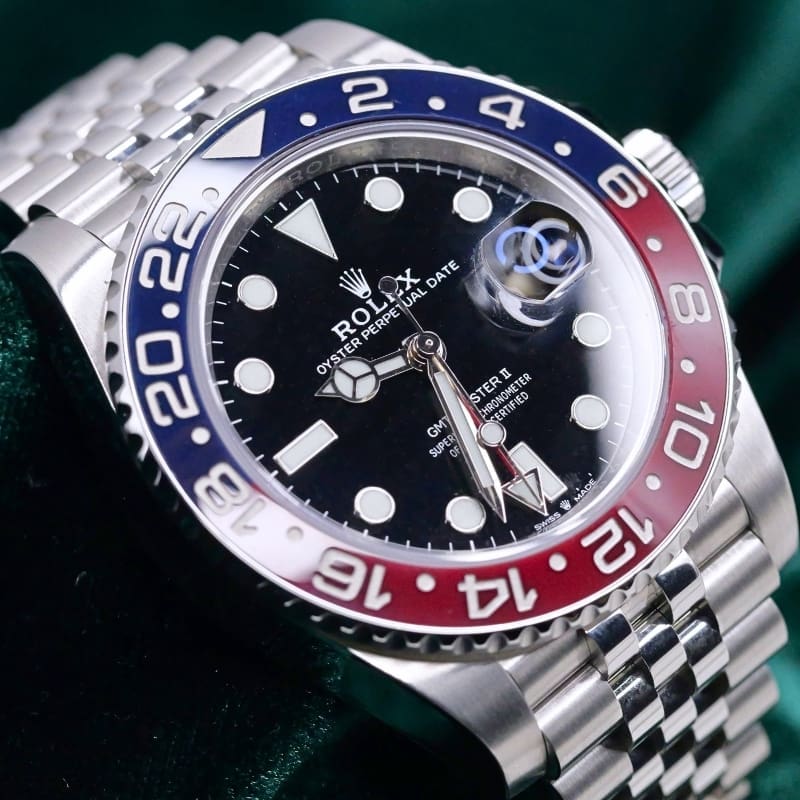
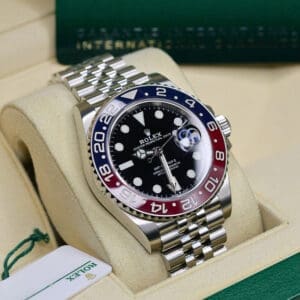
On April 14, 2026, at Watches and Wonders in Geneva, Rolex removed every version of the Pepsi GMT-Master II from its catalogue. The steel 126710BLRO and the white gold 126719BLRO both went, with no successor named and no press release.
The product page simply stopped loading. Dealers had been told weeks earlier that no more deliveries were coming.
That leaves four steel bezel configurations in the GMT-Master II: the Batman on Oyster, the Batgirl on Jubilee, the grey and black Bruce Wayne, and the Sprite. No red bezel exists in the steel catalogue for the first time in the ceramic era.
Two things follow for anyone reading this comparison.
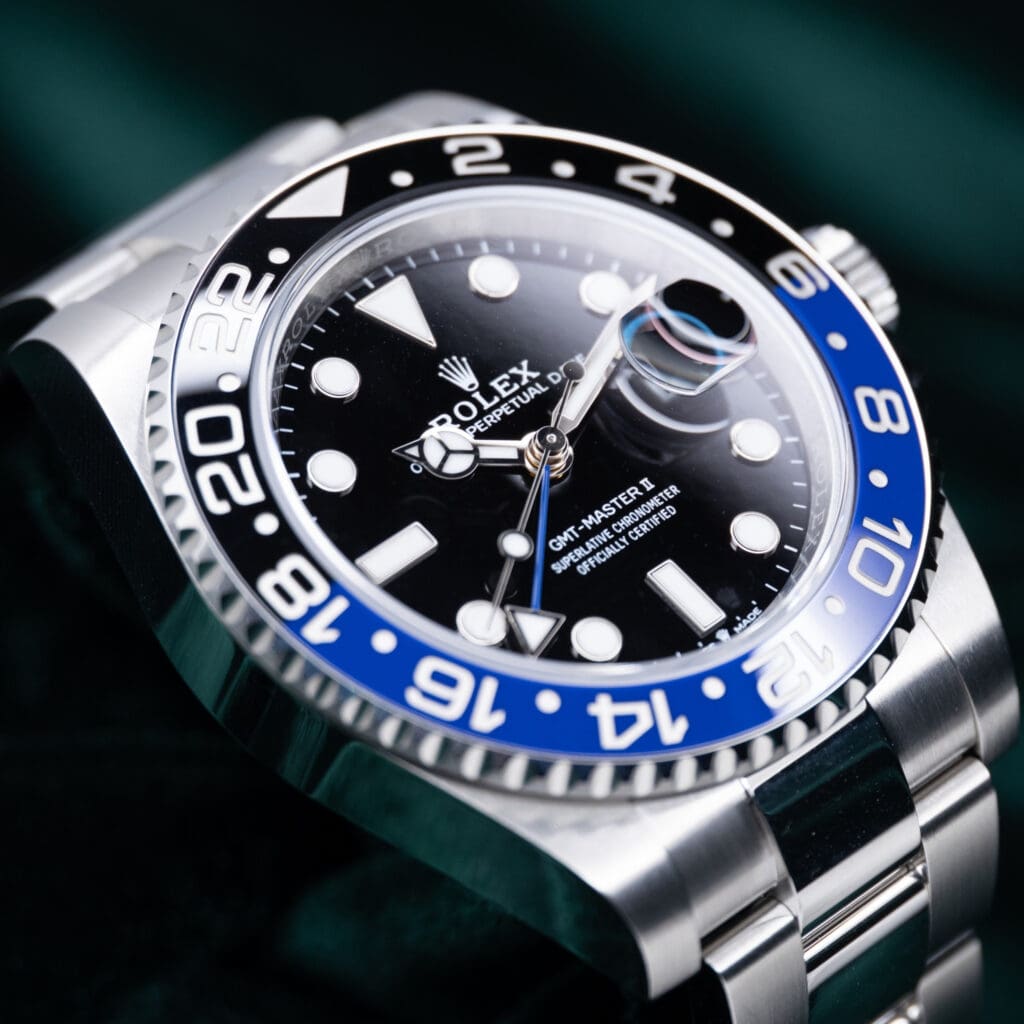


First, the cross-shop moved. Before April, plenty of buyers were weighing the Sprite against the Pepsi. Now the realistic alternatives use the conventional right-handed layout, and the closest one is covered in our Sprite vs Batman comparison.
Second, the Sprite is now the only green-bezel GMT-Master II in steel and the only left-handed sports watch Rolex makes. That is a narrower position than it held in 2022, when it was one novelty among several.
Whether that translates into long-term value is unclear. A discontinued reference and a current-production one behave differently, which is the whole story in our Hulk vs Starbucks comparison. The Sprite is still being made.
Rolex Starbucks vs Sprite: Most Notable Differences

1. Dive Watch vs Travel Watch
Starbucks is a Submariner. The Sprite is a GMT-Master II. Two separate collections built for two separate purposes, and this single fact should drive most of the decision.
The Submariner was designed for divers. Everything about the 126610LV, the case construction, the unidirectional bezel, the depth rating, points back to that purpose. It is a clean, time-and-date watch with a dive function built in.
The GMT-Master II was designed for travelers. The 126720VTNR adds a fourth hand and a 24-hour bezel to track a second time zone at a glance.
If crossing time zones is part of your life, that complication earns its place. If it is not, it adds a hand to read for no practical reason. The same trade-off across the wider families is covered in our GMT-Master II vs Submariner comparison.
2. Bezel

2. Solid Green Dive Bezel vs Split GMT Bezel
The Starbucks bezel is unidirectional, rotates in 120 clicks, and uses a single solid green Cerachrom insert with minute markings from 0 to 60.
The function is straightforward: line the pip up with the minute hand and read elapsed time as the minutes pass. If that is new to you, here is how a dive bezel works step by step.
The Sprite bezel is bidirectional, rotates in 24 clicks, and uses a split insert — bright lime green on the AM half, black on the PM half, with 24-hour numerals running the full circle.
The green on the Sprite is noticeably more vivid than either MK1 or MK2 Starbucks green, sitting closer to a lime tone. Side by side, the difference in shade is obvious.
The Sprite bezel works with the fourth GMT hand to show whether your second time zone is in the morning or the evening. Same ceramic material, same platinum-filled engravings, completely different job.
3. 300m vs 100m Water Resistance
The Starbucks is rated to 300 meters (1,000 feet), which covers recreational and professional diving. The case is built around that rating, with heavier construction, a Triplock crown, and a solid caseback all contributing to the depth.
Triplock is Rolex’s three-gasket screw-down crown seal, the same system used across its dive references.
The Sprite is rated to 100 meters (330 feet). That covers swimming, snorkeling, and everyday water exposure comfortably, but 100 meters is not a dive rating.
The Sprite uses the same Triplock crown, so the difference sits in the case construction, not the crown. If you dive, or you just want a proper dive-rated tool watch, the Starbucks is the only option here.


4. Standard Crown vs Left-Hand Destro Crown
The Starbucks crown sits at 3 o’clock, the standard position across every modern Rolex sports watch. For most wearers there is nothing to adapt to.
The Sprite crown sits at 9 o’clock, flipped to the left side of the case. For left-handed wearers putting the watch on their right wrist, this is ergonomically ideal. The crown stays accessible and never presses into the hand.
For right-handed buyers wearing it conventionally on the left wrist, the crown tucks under the wrist. During desk work, typing, or gripping, it can press into the back of the hand.
The owners we deal with usually settle into it within two or three weeks. A few never do. Put the watch on your wrist before you buy it.
5. Oyster Only vs Oyster or Jubilee
The Starbucks comes only on the Oyster bracelet. Three-link, tapered from 21mm at the lug to 17mm at the clasp, brushed and polished. The Glidelock clasp adjusts in 2mm increments up to 20mm of extension. No other configuration exists on the 126610LV.
The Sprite offers both the Oyster and the Jubilee, each with an Oysterlock clasp and 5mm Easylink extension.
The Jubilee is a five-link bracelet and it wears noticeably more flexible over a full day. It also shifts the Sprite into a dressier register, moving the watch from sports context to business casual without looking out of place.
That choice has a price attached, which the market section below covers. If you are torn between the two configurations, we go through the Sprite on Jubilee vs Oyster in detail separately.
6. Caliber 3235 vs Caliber 3285
The Starbucks runs the Caliber 3235. The Sprite runs the Caliber 3285. Both share the same core architecture, the same roughly 70-hour power reserve, and the same COSC certification at -2/+2 seconds per day.
Both also use the Parachrom hairspring, a blue alloy that shrugs off magnetic fields, and Paraflex shock absorbers, which protect the balance wheel if the watch takes a knock.
For long-term reliability and service intervals, there is no meaningful difference between them.
The only functional distinction is the complication. The 3285 adds the independently adjustable local hour hand and the fourth GMT hand. The 3235 handles time and date only, which keeps the dial clean and the operation simple.
More Submariners
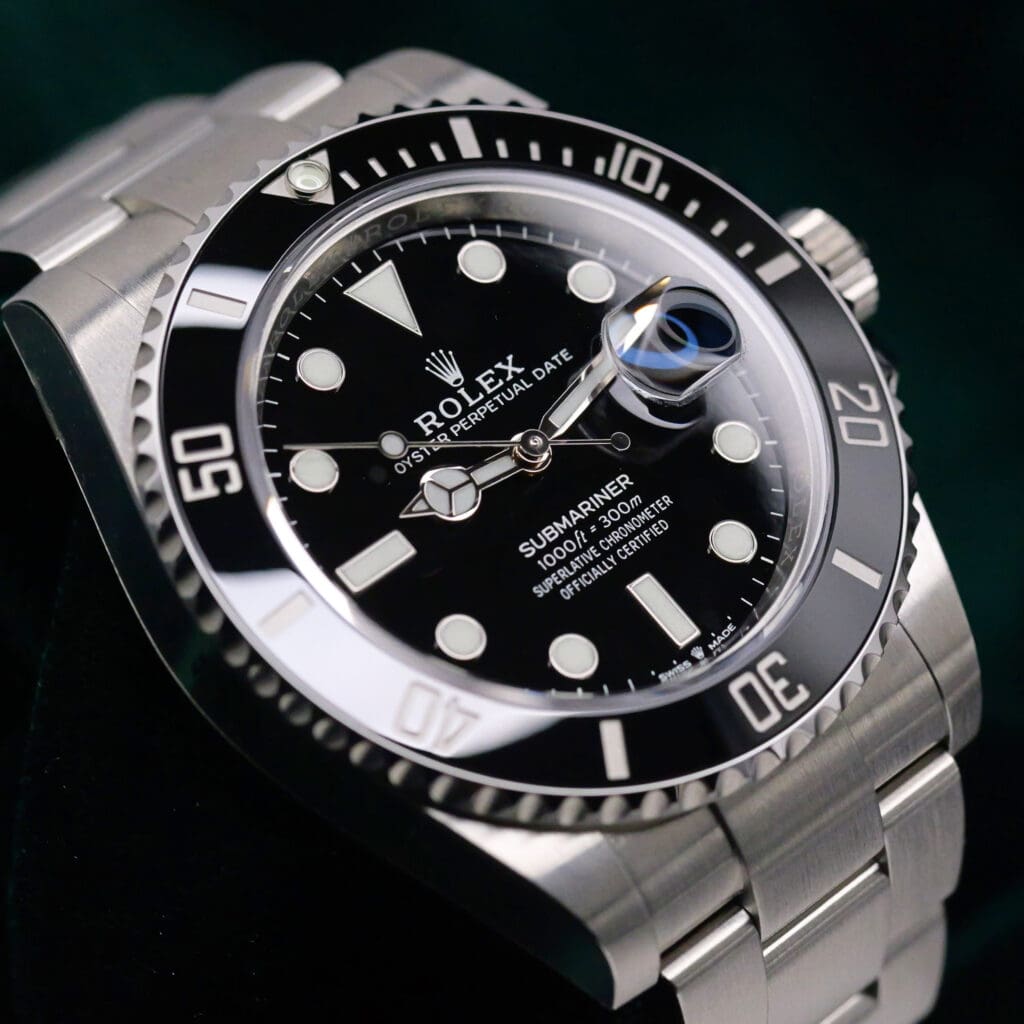
NEW UNWORN Rolex Submariner Date “Sub Date” Black Dial Black Ceramic Bezel Oyster Bracelet Stainless Steel 41mm COMPLETE SET 126610LN
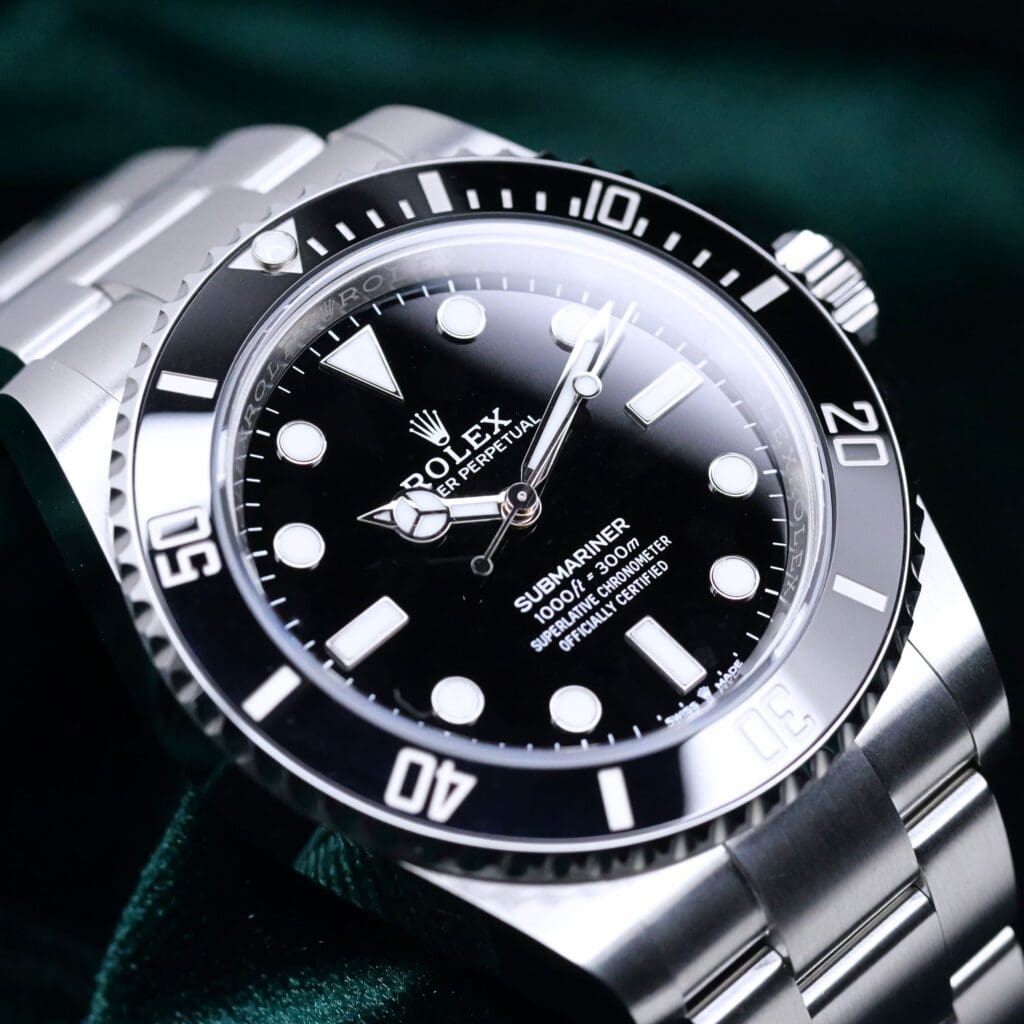
2026 NEW UNWORN Rolex Submariner No Date Black Dial Black Ceramic Bezel Oyster Bracelet Stainless Steel 41mm COMPLETE SET 124060
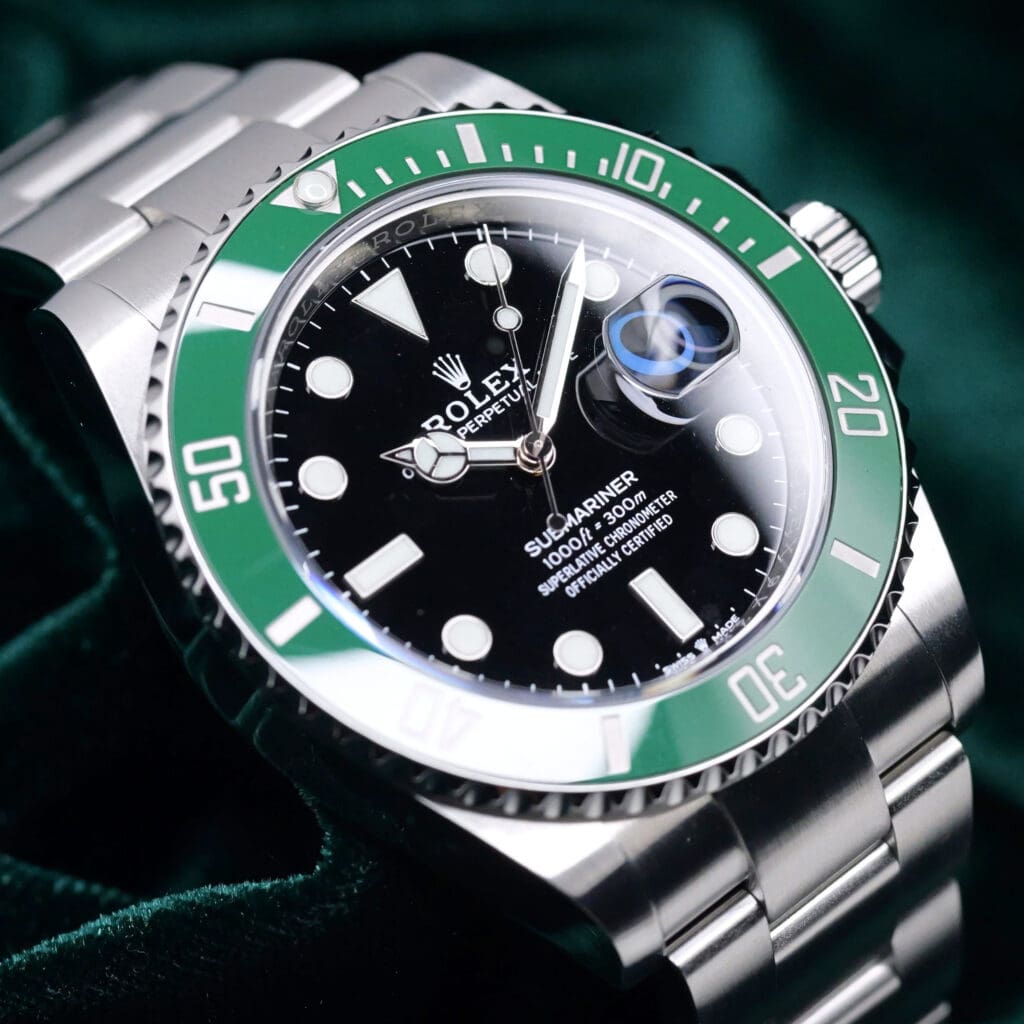
Rolex Submariner Date Starbucks Black Dial Green Ceramic Bezel Oyster Bracelet Stainless Steel 41mm MINT CONDITION COMPLETE SET 126610LV
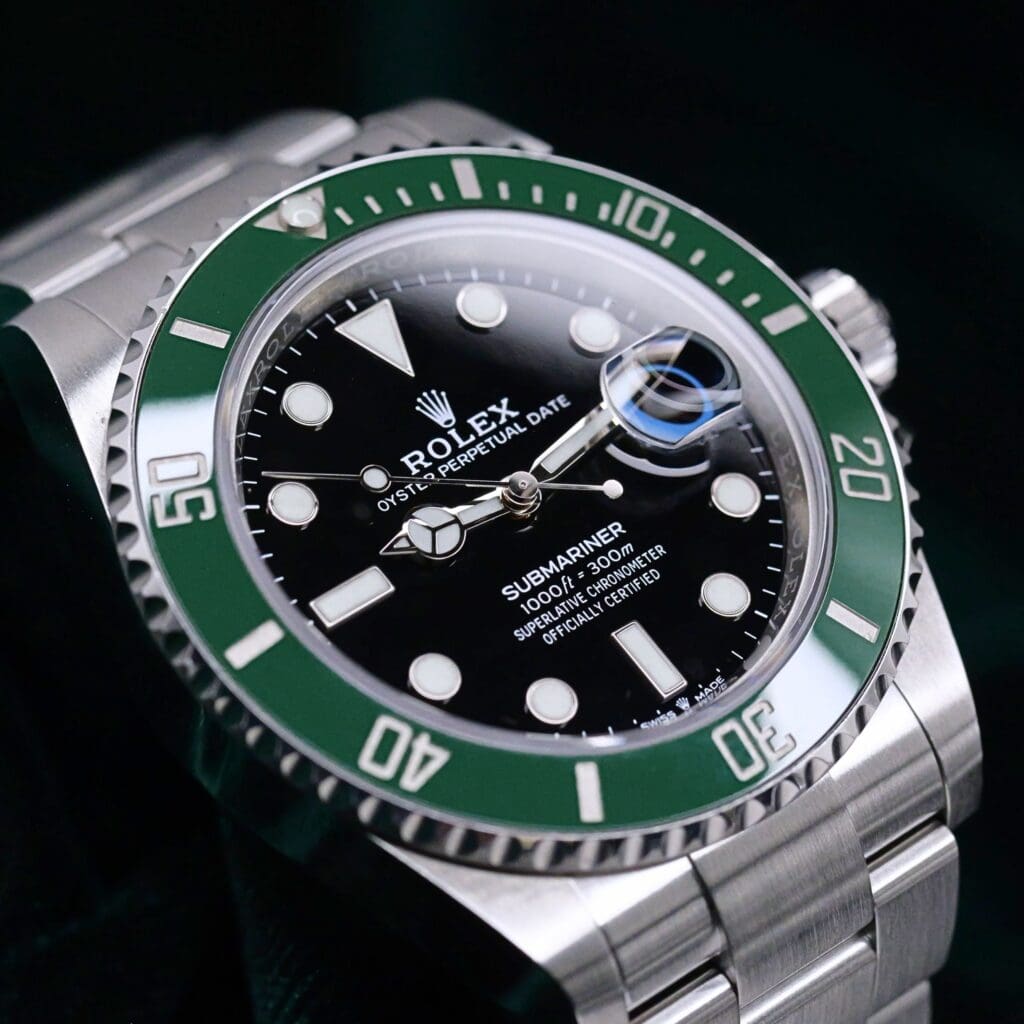
Rolex Submariner Date "Starbucks" Black Dial Green Ceramic Bezel Oyster Bracelet Stainless Steel 41mm MINT CONDITION COMPLETE SET 126610LV-0002
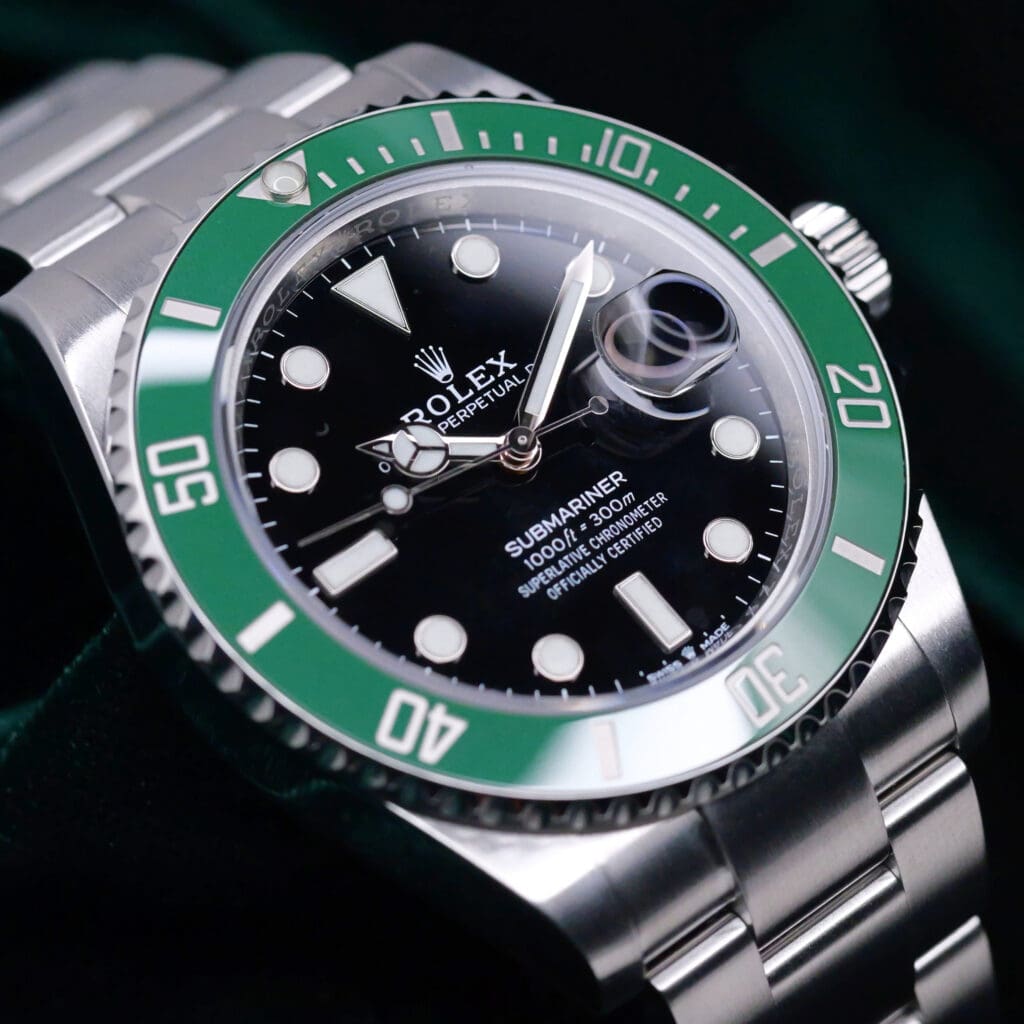
Rolex Submariner Date "Starbucks" Black Dial Green Ceramic Bezel Stainless Steel 41mm MINT CONDITION COMPLETE SET 126610LV-0002

Rolex Submariner No Date Black Dial Black Ceramic Bezel Stainless Steel Oyster Bracelet 41mm MINT CONDITION COMPLETE SET 124060
How the Starbucks and Sprite Wear on the Wrist
The spec sheets look close. On the wrist they are not.
The Starbucks is 41mm with a 47.6mm lug-to-lug and a 21mm lug width. The Sprite is 40mm with a 48mm lug-to-lug and 20mm lugs. So the Sprite is the smaller-diameter watch but the marginally longer one across the wrist.
What you feel first is the bracelet taper and the case thickness. The Submariner’s wider 21mm lug width and thicker case give it more presence on the wrist.
The clasps behave differently too. The Glidelock lets you creep the fit out in small steps without tools, which matters on a hot afternoon. The Easylink gives you 5mm in one move, so it is faster but blunter. We compare Easylink vs Glidelock in detail if that decides it for you.
The Sprite reads slimmer and slightly dressier, especially on the Jubilee, which collapses around the wrist rather than sitting flat across it.
Lume is a wash. Both use Chromalight, both glow blue, both are excellent.
The one real ergonomic variable is the crown, covered above. Try both. Wrist shape decides this more than any spec.
Rolex Starbucks vs Sprite Prices in 2026

Retail is only part of the story. The grey market tells you what buyers will pay, and the gap between the two numbers says a lot about demand and liquidity.
Rolex raised US prices on January 1, 2026, by roughly 7% on average across the catalogue. The no-date Submariner 124060 moved from $9,500 to $10,050, which gives you a sense of the scale.
The green-bezel Submariner Date sits well above that. Published figures vary, so confirm the current number with an authorized dealer before you use it as a benchmark. The Sprite retails at around $12,300 in the US, per WatchCharts data as of April 2026.
On the secondary market, clean full-set Starbucks examples trade in the $14,000 to $17,000 range on Chrono24 and eBay, with MK1 pieces generally at the lower end and MK2 pieces at the upper. Unworn 2026 full sets sit near the top.
That is well off the April 2022 peak, when the reference touched roughly $25,500 in mint condition on Chrono24. The correction since then has been substantial.
More GMT-II

Rolex GMT-Master II "Pepsi" Blue Dial Blue Red Ceramic Bezel Oyster Bracelet 18K White Gold 40mm MINT CONDITION COMPLETE SET 126719BLRO
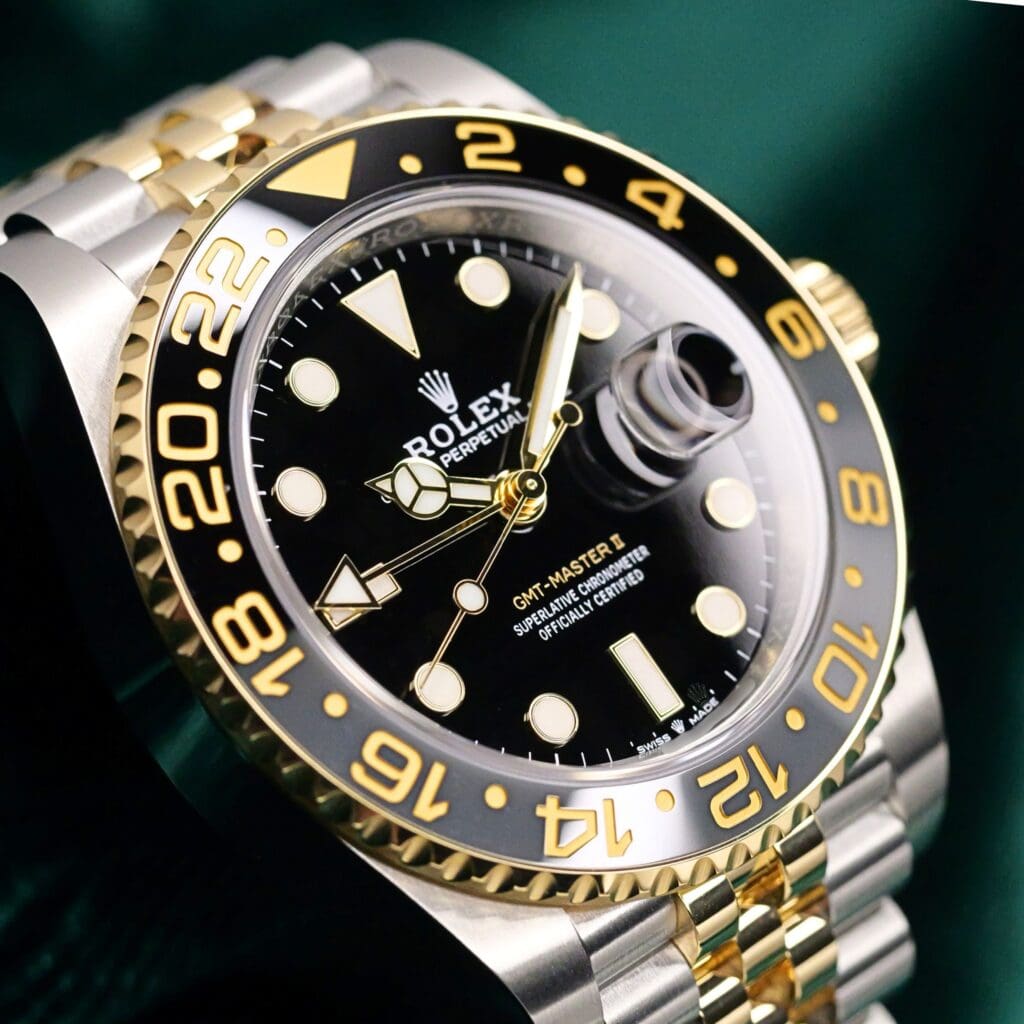
Rolex GMT-Master II Zombie Black Dial Black/Grey Ceramic Bezel Jubilee Bracelet Two-Tone 18K Yellow Gold Stainless Steel 40mm MINT CONDITION COMPLETE SET 126713GRNR
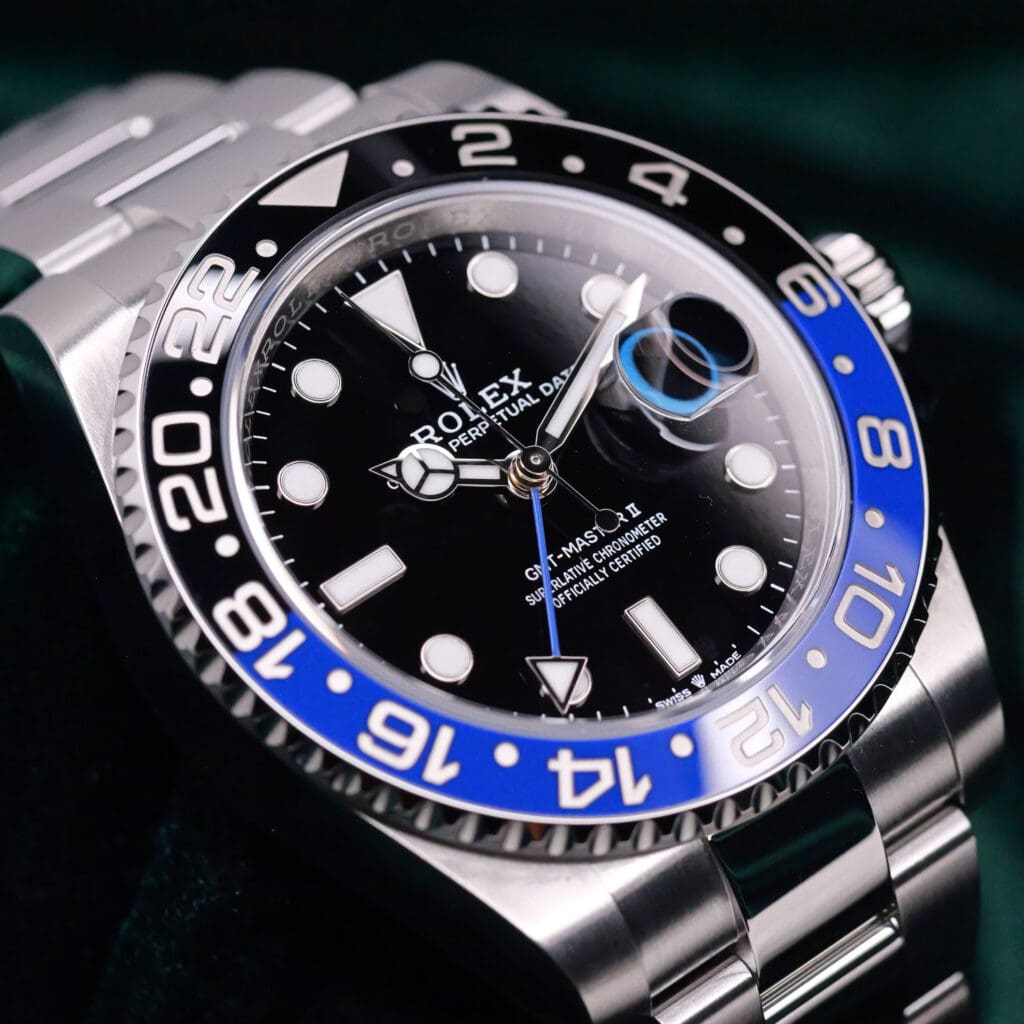
2026 Rolex GMT-Master II Batman Black Dial Black Blue Cerachrom Bezel Oyster Bracelet Oystersteel 40mm MINT CONDITION COMPLETE SET 126710BLNR
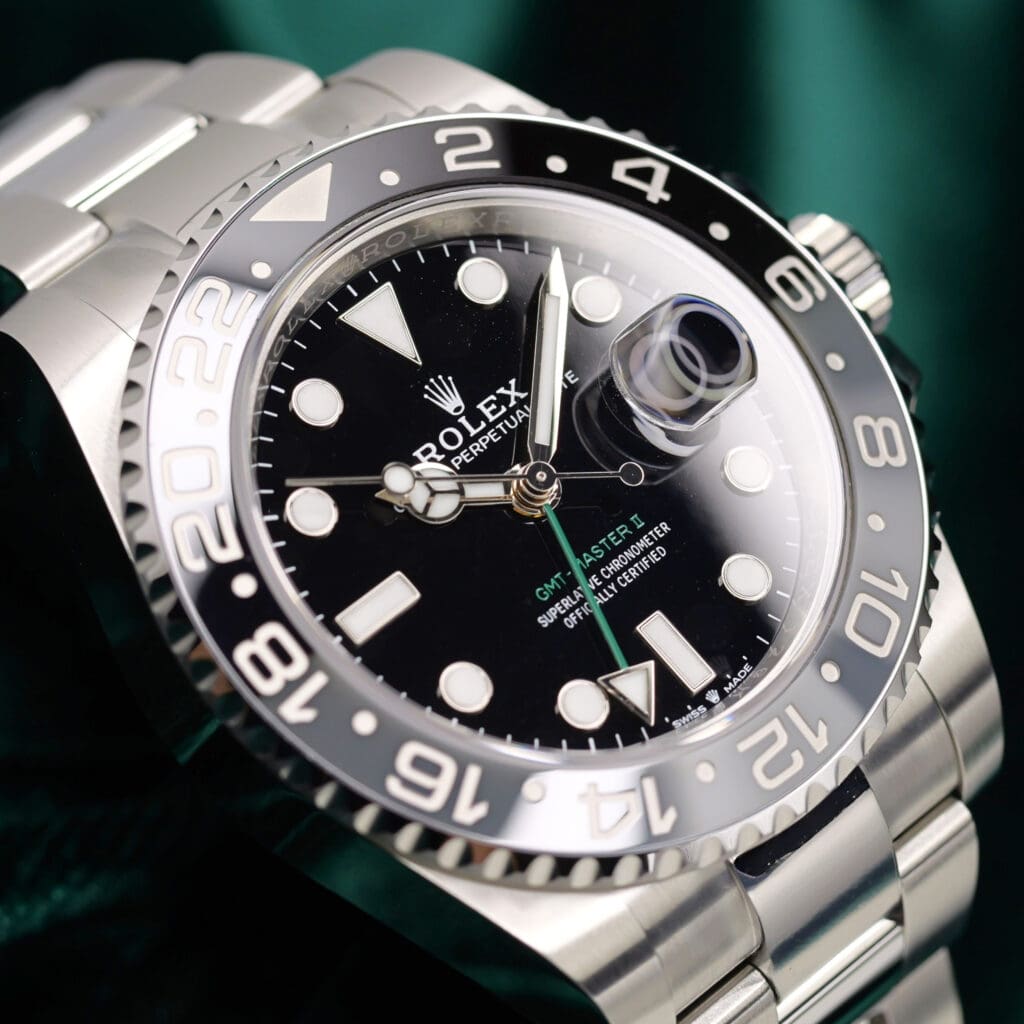
Rolex GMT-Master II Bruce Wayne Black Dial Grey and Black Ceramic Bezel Stainless Steel Oyster Bracelet 40mm MINT CONDITION COMPLETE SET 126710GRNR
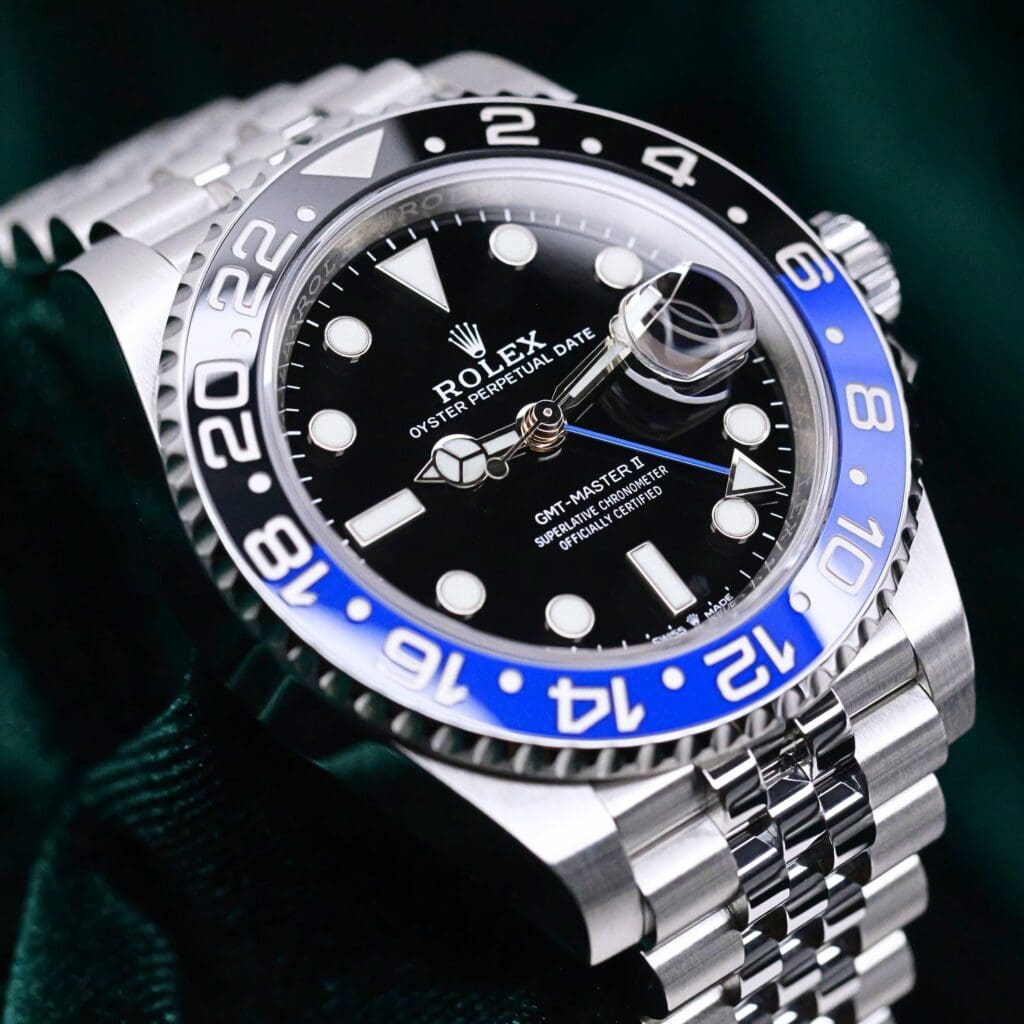
Rolex GMT-Master II "Batgirl" Black Dial Black Blue Ceramic Bezel Jubilee Bracelet Stainless Steel 40mm MINT CONDITION COMPLETE SET 126710BLNR
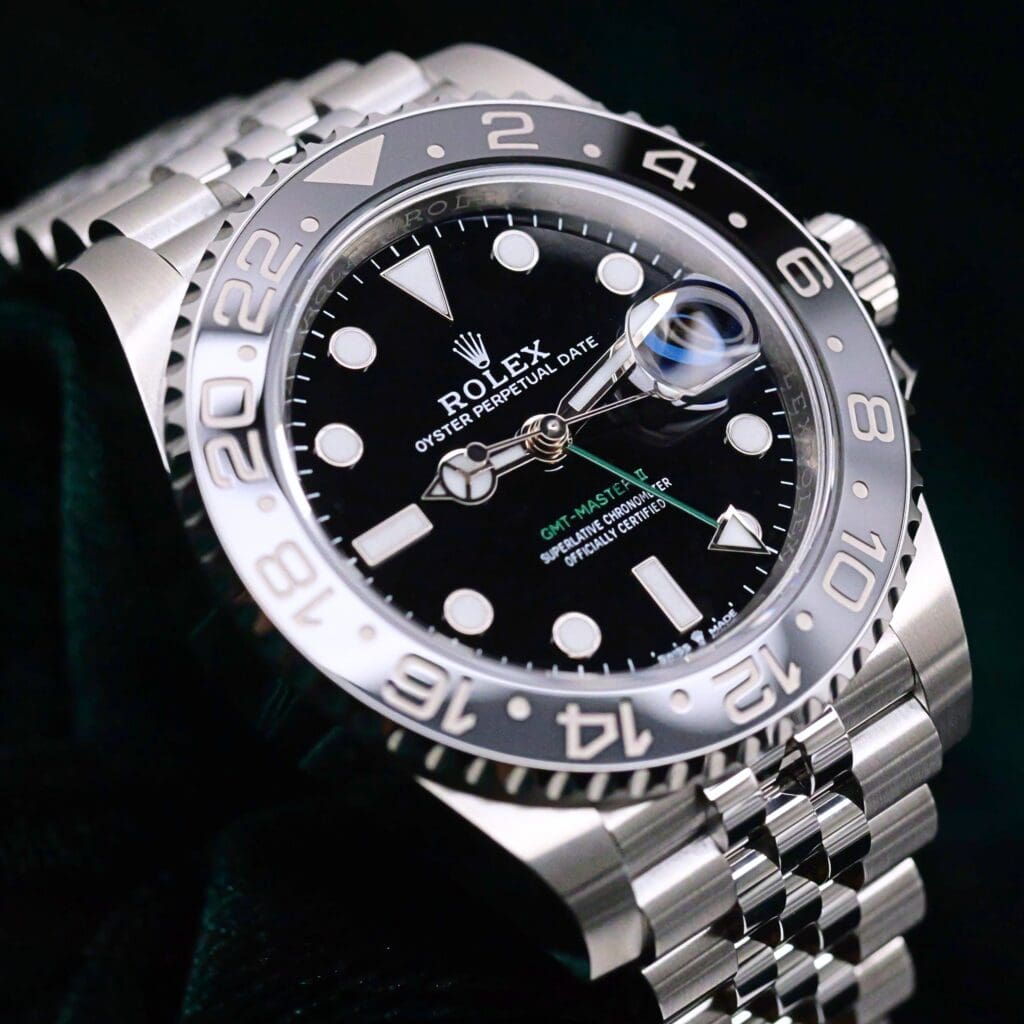
2026 NEW UNWORN Rolex GMT-Master II "Bruce Wayne" Black Dial Black Grey Ceramic Bezel Jubilee Bracelet Stainless Steel 40mm COMPLETE SET 126710GRNR-0003
The Sprite on Oyster carries a market price of about $15,900, with the Jubilee running $1,000 to $2,000 higher. WatchCharts puts the reference at roughly +30% value retention since it entered the market in May 2022.
Bracelet configuration remains the single biggest pricing variable on the Sprite, which makes it a financial decision as well as an aesthetic one.
One number worth watching on the Starbucks side: the premium it commands over the black-bezel 126610LN has narrowed from around $4,000 at peak to roughly $2,000 to $3,000 today. If you were paying up purely for the green, that gap is closing.
Liquidity favors both, but differently. The Sprite’s median time on market runs around 20 days. The Starbucks moves faster still. A watch that sells quickly has real demand behind it, not just optimistic asking prices.
Both references are in current production, so supply keeps growing and premiums are likely to compress further. For the wider picture on which references hold up, see our breakdown of the Rolex models that hold value best.
Rolex Starbucks vs Sprite Specs Compared
| Specification | Starbucks (126610LV) | Sprite (126720VTNR) |
| Watch Family | Submariner | GMT-Master II |
| Introduced | 2020 | 2022 |
| Case Size | 41mm (~40.5mm actual) | 40mm |
| Lug-to-Lug | ~47.6mm | ~48mm |
| Lug Width | 21mm | 20mm |
| Case Material | Oystersteel (904L) | Oystersteel (904L) |
| Crystal | Sapphire, Cyclops at 3 o’clock | Sapphire, Cyclops at 9 o’clock |
| Bezel Type | Unidirectional, 120-click | Bidirectional, 24-click |
| Bezel Color | Solid forest green | Split black and lime green |
| Bezel Function | Elapsed minutes (dive timer) | 24-hour GMT scale |
| Dial | Black, Maxi dial, date at 3 o’clock | Black, GMT hand, date at 9 o’clock |
| Crown Position | 3 o’clock (standard) | 9 o’clock (destro) |
| Movement | Caliber 3235 | Caliber 3285 |
| Power Reserve | ~70 hours | ~70 hours |
| Accuracy | -2/+2 sec/day (COSC) | -2/+2 sec/day (COSC) |
| Water Resistance | 300m / 1,000ft | 100m / 330ft |
| Bracelet Options | Oyster only | Oyster or Jubilee |
| Clasp | Glidelock | Oysterlock with Easylink |
| US Retail (2026) | Confirm with AD | ~$12,300 |
| Grey Market Range | $14,000 to $17,000 | $15,000 to $18,000 |
| Median Days on Market | Under 20 | ~20 |
| Production Status | Current, MK2 | Current |
Choosing Between the Starbucks and the Sprite
Ignore the color for a moment and focus on how you will use the watch.
Choose the Rolex Starbucks (Ref. 126610LV) if:
- You want a true dive watch with 300 meters of water resistance
- Clean, classic design matters more to you than visual complexity
- You prefer a standard crown position with no adjustment period
- Fast, deep liquidity and a more stable resale market matter to you
- You do not need a GMT function
Choose the Rolex Sprite (Ref. 126720VTNR) if:
- You travel often and will use a second time zone
- The left-hand crown suits your wrist, or you are left-handed
- You want the choice between Oyster and Jubilee
- The only green-bezel, only left-handed steel GMT appeals to you
- You are comfortable paying a higher premium above retail
Browse Our Rolex Collection
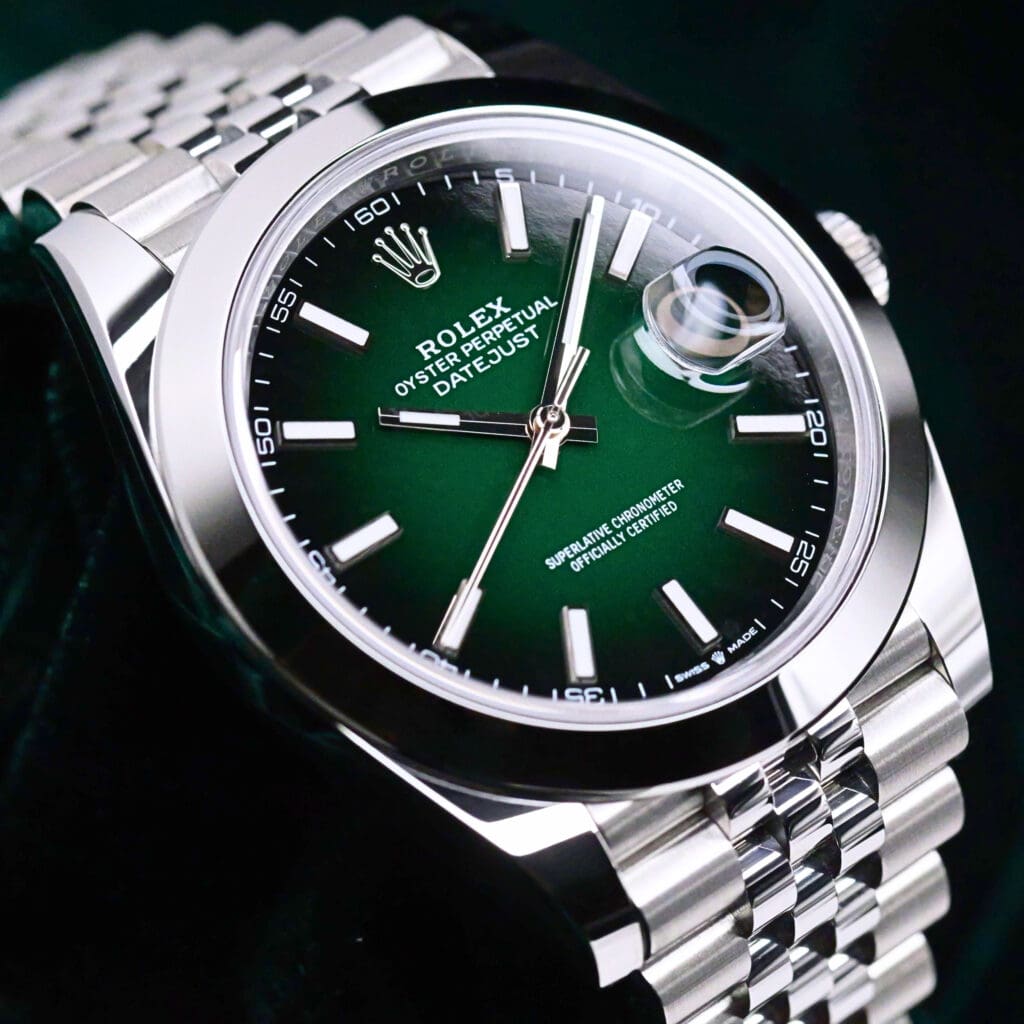
2026 Rolex Datejust Green Ombre Dial Smooth Bezel Jubilee Bracelet Stainless Steel 41mm MINT CONDITION COMPLETE SET 126300
Rolex GMT-Master II "Pepsi" Blue Dial Blue Red Ceramic Bezel Oyster Bracelet 18K White Gold 40mm MINT CONDITION COMPLETE SET 126719BLRO
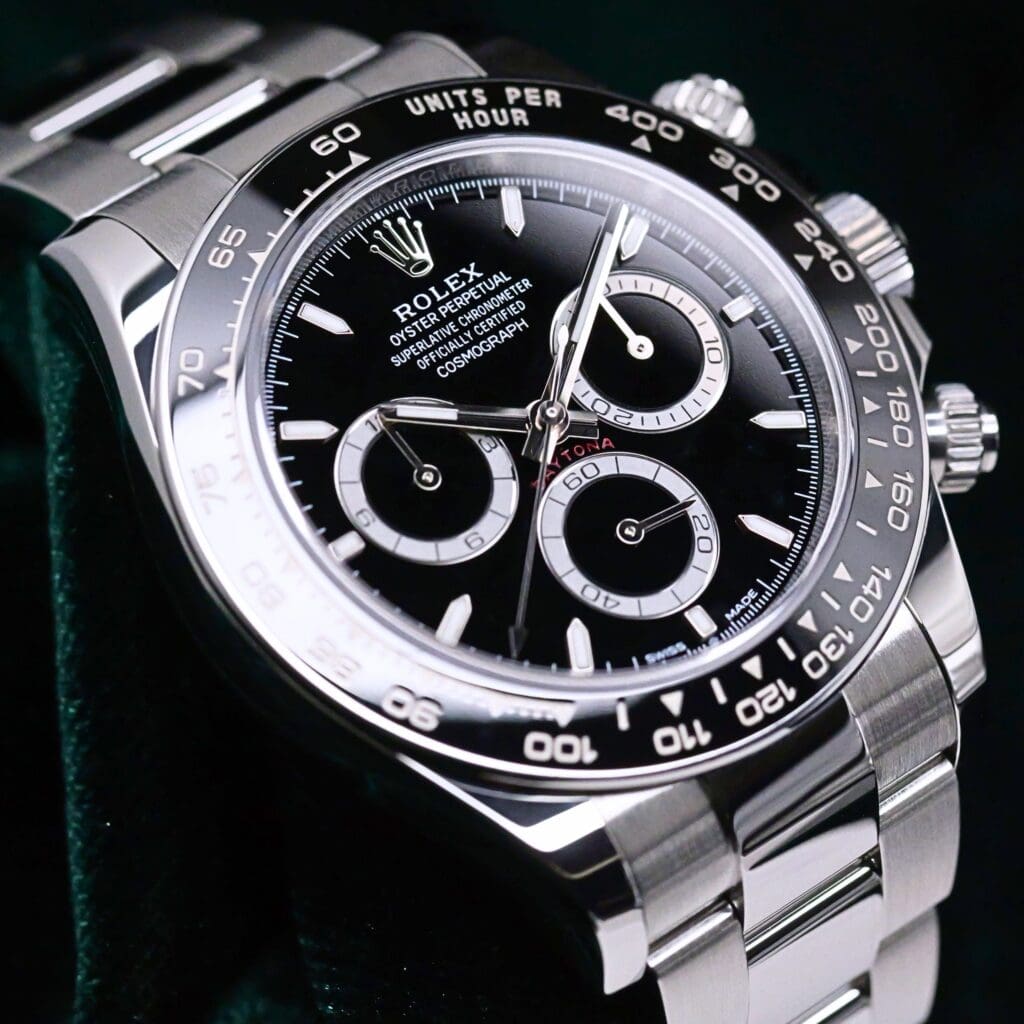
Rolex Cosmograph Daytona "Reverse Panda" Black Dial Black Ceramic Bezel Oyster Bracelet Stainless Steel 40mm MINT CONDITION COMPLETE SET 126500LN
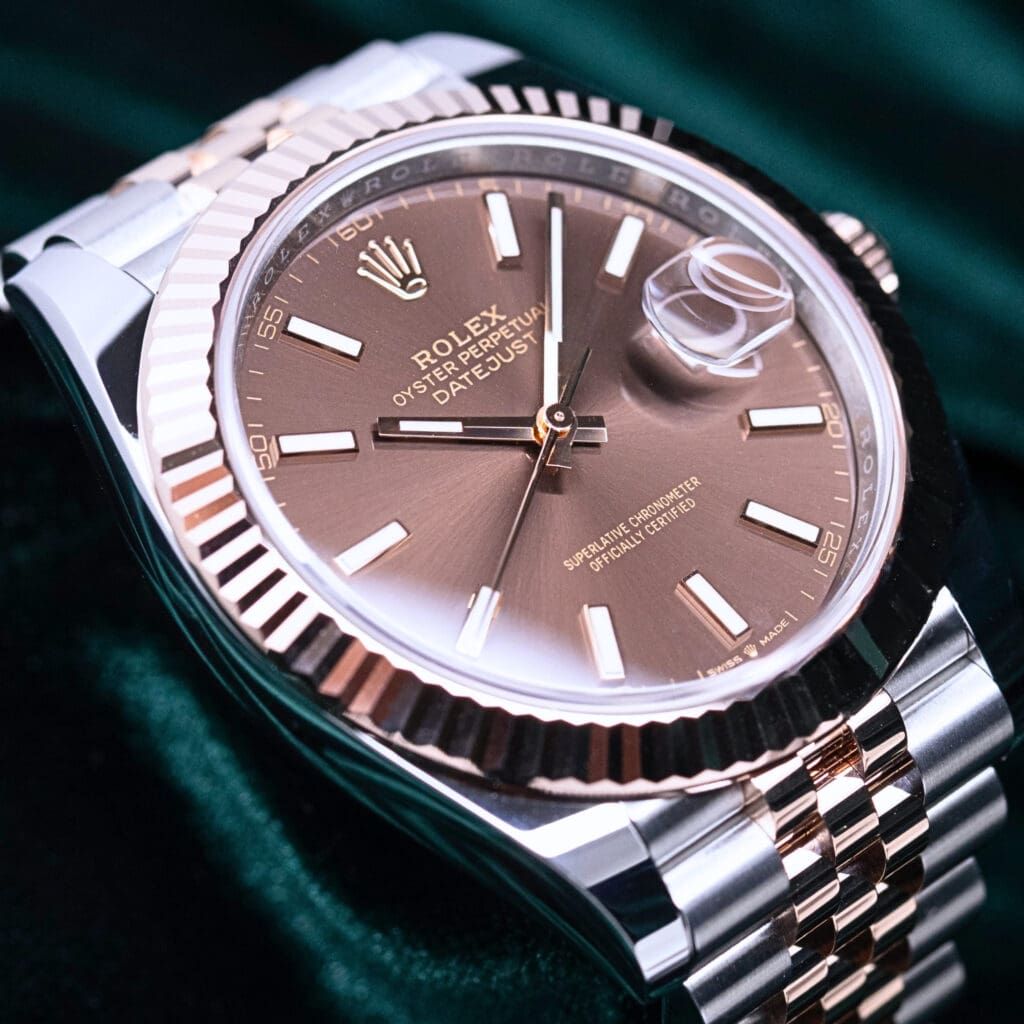
2026 NEW UNWORN Rolex Datejust 41 Chocolate Brown Jubilee Two-Tone 18K Everose Gold Steel 41mm COMPLETE SET 126331
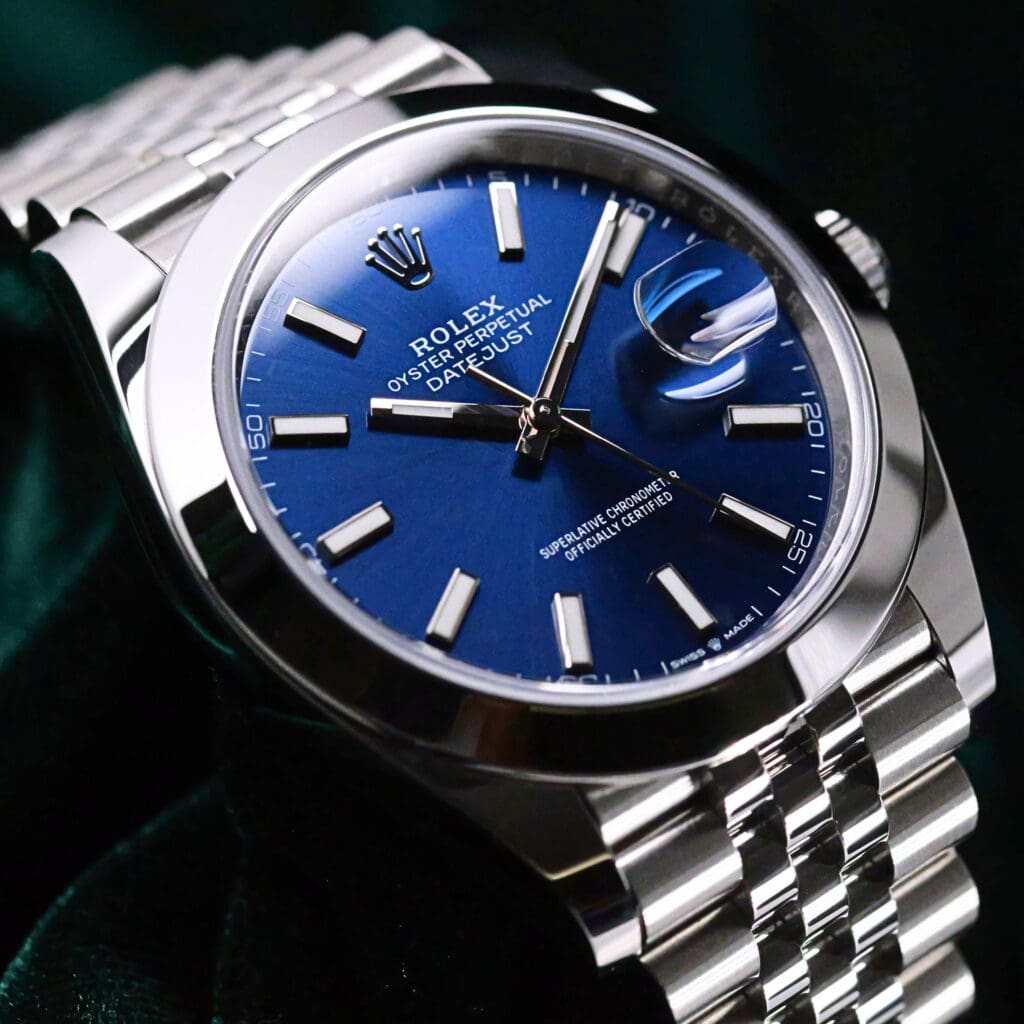
2026 Rolex Datejust Blue Dial Smooth Bezel Jubilee Bracelet Stainless Steel 41mm MINT CONDITION COMPLETE SET 126300
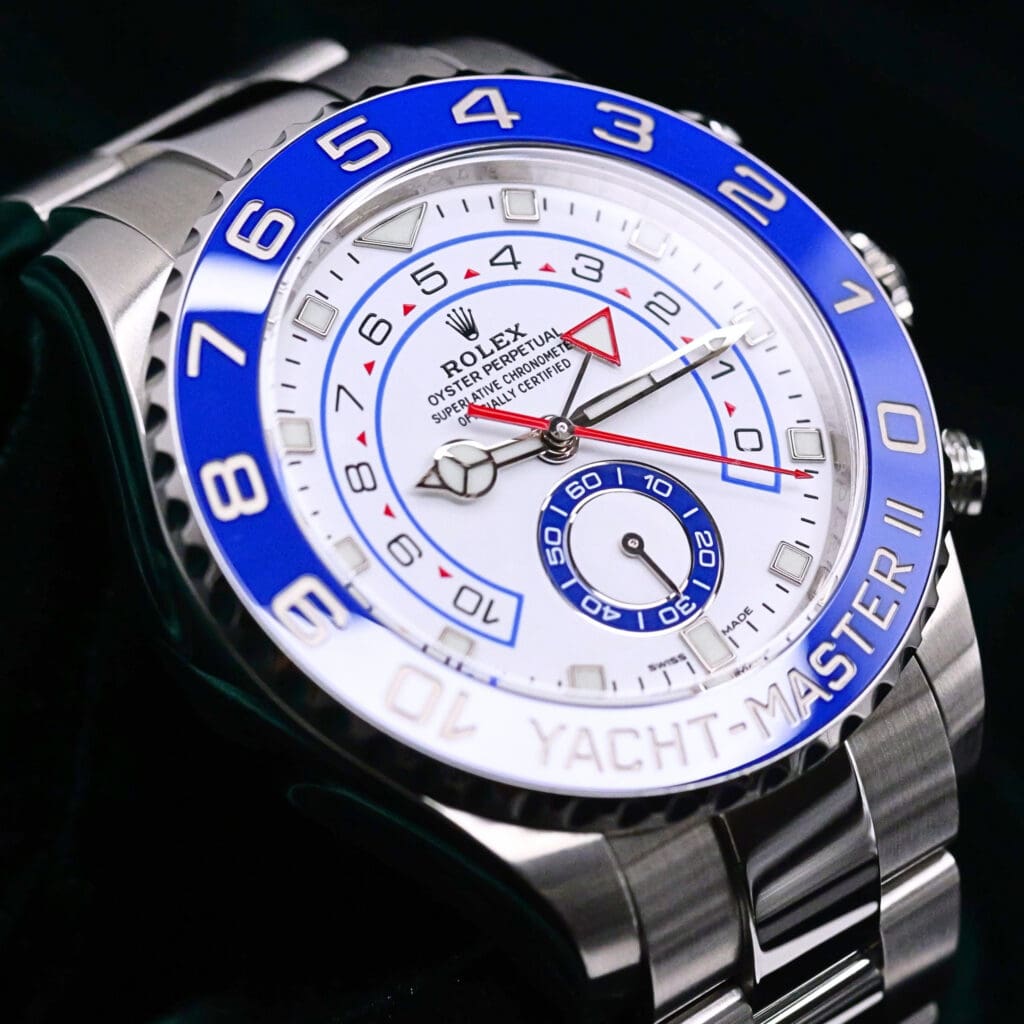
Rolex Yacht-Master II White Dial Blue Ceramic Bezel Oyster Bracelet Stainless Steel 44mm MINT CONDITION COMPLETE SET 116680
Rolex Starbucks vs Sprite FAQs
Is the Rolex Starbucks Discontinued?
No — the 126610LV remains in current production, now in its MK2 bezel form. Rolex left the Submariner untouched at Watches and Wonders 2026, so nothing about its catalogue status changed this year.
What has effectively ended is MK1 production. The original 2020 to mid-2023 bezel is no longer being made, which is why collectors treat MK1 examples as a distinct buying target even though the reference number never changed.
Authorized dealer allocation on the green bezel stays tight, so most buyers still end up on the secondary market rather than a waitlist.
Is the Rolex Sprite a Good Investment?
It has held its value well, but treat it as a watch first and an asset second. The 126720VTNR sits at roughly +30% above its market entry point, which is solid for a reference that is still being produced in volume.
The case for upside is that it is now the only left-handed and only green-bezel steel GMT in the catalogue. The case against is that ongoing production keeps adding supply, which compresses premiums over time.
Watches that appreciate sharply are usually the discontinued ones. The Sprite is not that, at least not yet.
Where to Buy Authentic Watches Online
There are a handful of legitimate online channels for a green-bezel Rolex. Chrono24 carries the deepest global inventory and holds funds in escrow until the watch arrives. It is worth knowing how buying on Chrono24 works before you commit.
eBay covers both references under its Authenticity Guarantee, where a third party inspects the watch before it reaches you. Grailzee runs an auction format that sometimes lands below dealer asking prices, though you bid without handling the piece.
Watch forums like Rolex Forums and WatchUSeek are also worth reading, since private sales there often price below retail channels, with the trade-off that you carry all the risk yourself. Where you source a pre-owned luxury watch shapes what protection you get, so it is worth weighing the channels first.
We also sell, buy, and trade luxury watches. What clients tell us makes the difference is the conversation before the purchase. You get tour videos of the actual watch on the wrist, not stock photos. You get honest condition notes, including the MK1 or MK2 bezel call on a Starbucks. And you talk to someone who has physically inspected the piece.
That is reflected in our 4.9-star Google rating.
If you are still torn between these two, message us or browse our current collection. We will walk you through both on video, cover the crown position question honestly, and help you land on the one you will wear.
Final Thoughts on Rolex Starbucks vs Sprite
Both watches wear green, but that is where the similarities end. The Starbucks is built for the water. The Sprite is built for the world. Decide on function first and the color sorts itself out.
Two things before you commit. On the Starbucks, ask which bezel mark you are buying. Sellers do not always disclose it, and it affects resale.
On the Sprite, wear one for a full workday before deciding. The 9 o’clock crown is the one spec no amount of research settles for you.
Pick the one that fits your life, and ten years from now it will still feel like the right call.
999+ Timepieces Available
Explore Our Timepieces
Authenticated, unworn, and ready to ship worldwide.
Rolex · Audemars Piguet · Patek Philippe · Omega · Cartier · Richard Mille · Hublot · Tudor
Newly Listed

Rolex Sky-Dweller Black Dial 18K White Gold Fluted Bezel Oyster Bracelet Stainless Steel 42mm MINT CONDITION COMPLETE SET 336934-0007
$21,945.00

2026 Rolex Datejust Green Ombre Dial Smooth Bezel Jubilee Bracelet Stainless Steel 41mm MINT CONDITION COMPLETE SET 126300
$16,480.00

2026 NEW UNWORN Cartier Santos-Dumont Silver Dial Platinum Mesh Bracelet Platinum 31mm COMPLETE SET WGSA0124
$64,790.00

2026 Tudor Black Bay 58 Black Dial Jubilee Bracelet Stainless Steel 39mm MINT CONDITION COMPLETE SET 7939A1A0NU
$5,717.00

NEW UNWORN Rolex Submariner Date “Sub Date” Black Dial Black Ceramic Bezel Oyster Bracelet Stainless Steel 41mm COMPLETE SET 126610LN
$15,595.00
Rolex Cosmograph Daytona "Reverse Panda" Black Dial Black Ceramic Bezel Oyster Bracelet Stainless Steel 40mm MINT CONDITION COMPLETE SET 126500LN
$32,009.00
2026 NEW UNWORN Rolex Submariner No Date Black Dial Black Ceramic Bezel Oyster Bracelet Stainless Steel 41mm COMPLETE SET 124060
$15,219.00
Audemars Piguet Royal Oak Selfwinding Chronograph Bleu Nuit Nuage 50 Blue Dial Bracelet 18k Rose Gold 38mm MINT CONDITION COMPLETE SET 26715OR.OO.1356OR.01
$104,942.00
Rolex Datejust “Tuxedo” Black and Silver Dial 18K White Gold Fluted Bezel Stainless Steel Oyster 36mm MINT CONDITION COMPLETE SET 116234
$10,671.00
Vacheron Constantin Overseas Dual Time Silver Dial Brown Leather Strap 18K Rose Gold 41mm MINT CONDITION COMPLETE SET 7900V/000R-B336
$41,894.00
Rolex Sea-Dweller Deepsea James Cameron D-Blue Dial Black Ceramic Bezel Oyster Bracelet Stainless Steel 44mm MINT CONDITION 116660-0003
$14,272.00
Vacheron Constantin Overseas Dual Time Silver Dial 18K Rose Gold Brown Rubber Strap 41mm MINT CONDITION COMPLETE SET 7900V/000R-B336
$41,894.00