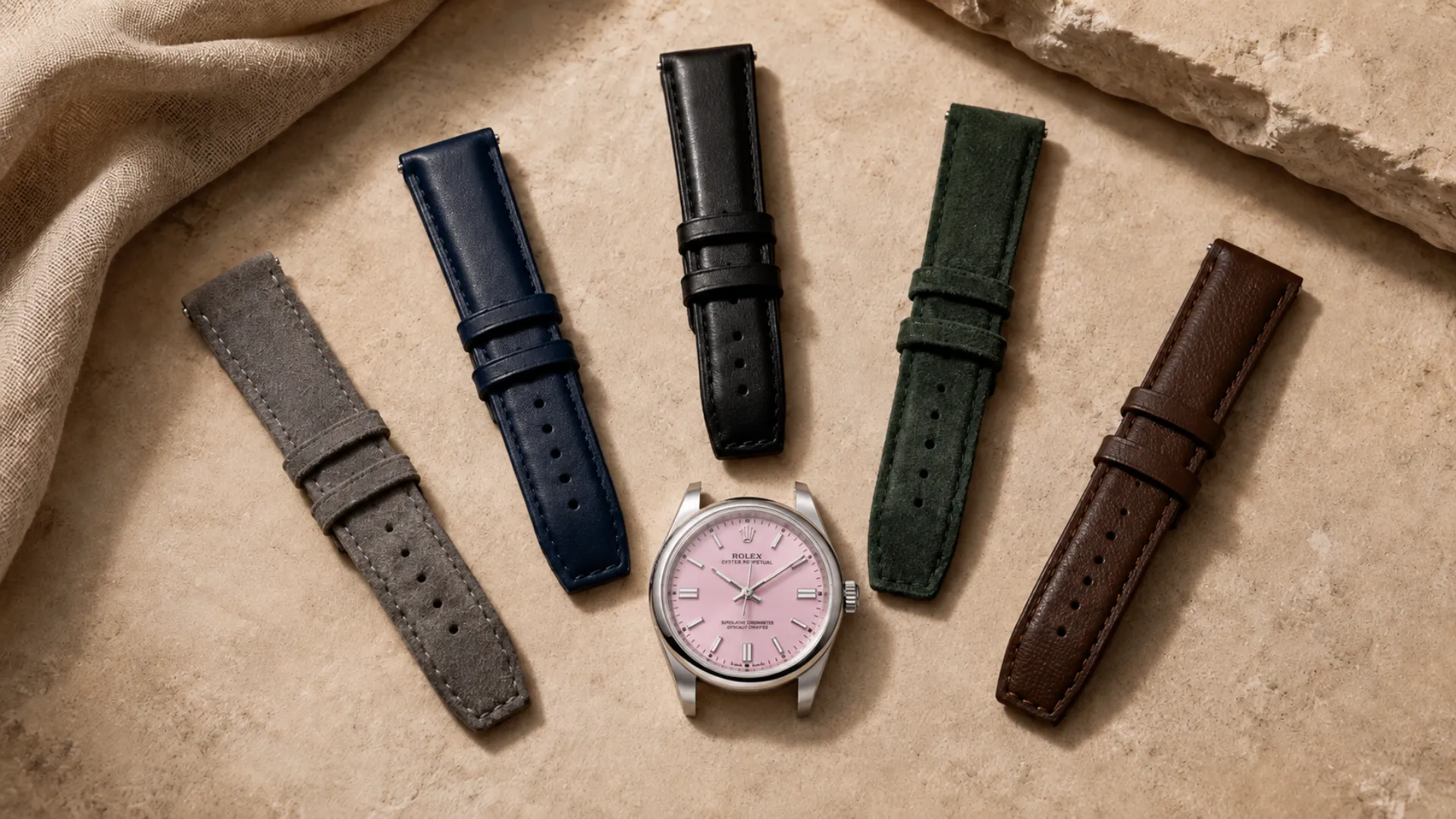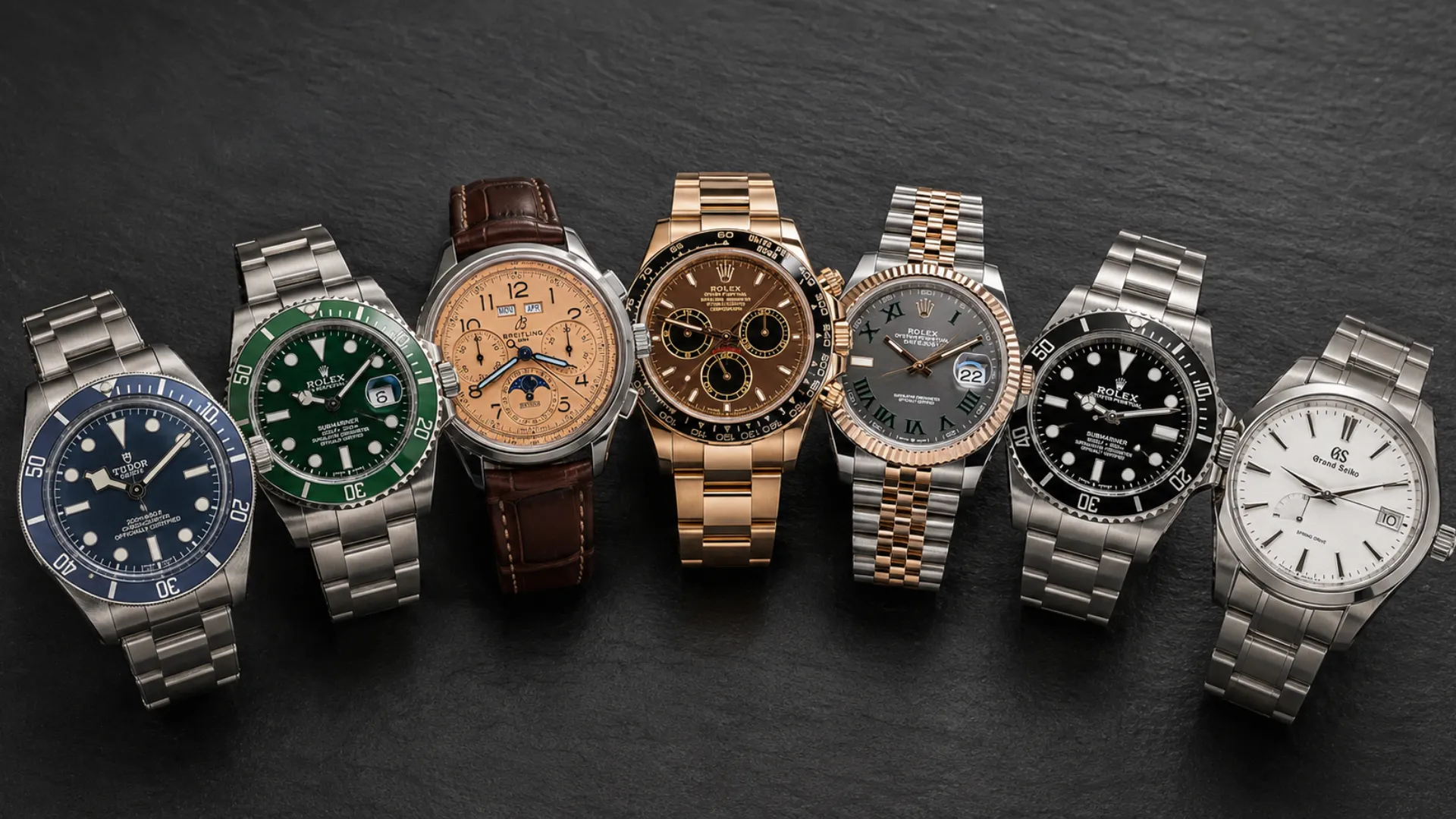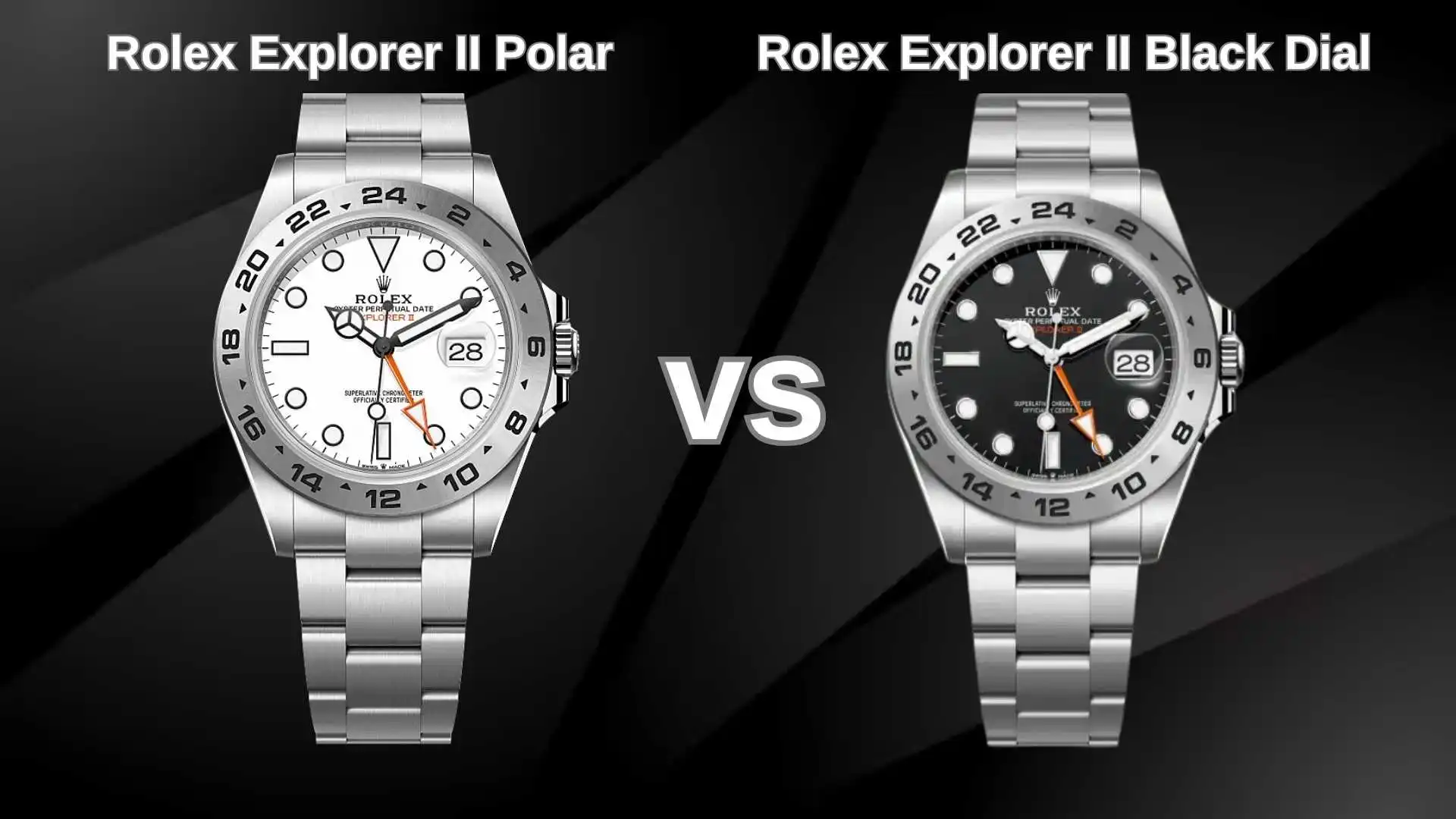

Most people assume the Rolex Oyster Perpetual is a beginner’s watch; something you buy before you can afford a Submariner. Serious collectors tend to disagree. When collectors who own Daytonas and GMT-Masters still reach for the Oyster Perpetual most mornings, that tells you something real about the watch.
This Rolex Oyster Perpetual buying guide covers the four decisions every buyer faces: which size fits your wrist and lifestyle, which dial makes sense for your budget, whether to buy new or pre-owned, and what the movement inside is doing. Start with the size section; this is where buyers should look into first when buying.
What Does “Oyster Perpetual” Mean?

The Oyster Perpetual gets its name from two separate Rolex inventions made five years apart. The “Oyster” part refers to the sealed, waterproof case Rolex introduced in 1926; the first wristwatch case in the world rated to resist both water and dust.
The hermetically sealed construction uses a screw-down crown and caseback to lock the movement inside, rated to 100 meters of water resistance on all current models.
The “Perpetual” part refers to the self-winding rotor movement Rolex patented in 1931. A weighted rotor spins freely in both directions as the wearer moves, continuously winding the mainspring. The watch never needs to be manually wound as long as it’s worn regularly.
Put those two inventions together and you have a watch that is self-sustaining and sealed from the outside world. That’s not marketing language; it’s a literal description of what these two technologies do.
Here’s where the naming gets confusing. Rolex uses “Oyster Perpetual” as a prefix on nearly every watch they make. The Submariner, the Datejust, the GMT-Master, all of them are technically “Oyster Perpetual” models with additional complications.
But the Oyster Perpetual is also its own standalone collection within the Rolex catalog. That collection keeps it simple. It only tells time. No date, no complications, no rotating bezel. Just classic Rolex.
Is the Rolex Oyster Perpetual the Right Rolex for You?
The Oyster Perpetual is for someone who wants a watch that works in every situation without drawing attention to itself and doesn’t want to pay for features they won’t use. Here’s how to know if that describes you.
Why the “Entry-Level” Label Misleads Most Buyers
The Oyster Perpetual is Rolex’s entry-level model. It starts around $5,300–$6,400 at retail, which is the lowest point of the current Rolex catalog. But entry-level implies lesser quality, and that’s where the label breaks down.
The caliber 3230 movement inside the 36mm and 41mm Oyster Perpetual is the same movement family Rolex puts in the Submariner Date. The case uses the same Oystersteel (Rolex’s proprietary 904L stainless steel) with the same brushed flanks and polished bevels found on references costing twice as much. The Oyster bracelet is built to the same spec.
The Superlative Chronometer certification (±2 seconds per day) is identical across the lineup. What you’re not paying for is a rotating bezel, a date complication, or the brand story built around professional diving or aviation. Those things are valuable to some buyers. But they’re not signs of superior construction.
Who the Oyster Perpetual Suits
The Oyster Perpetual isn’t for everyone, but for certain buyers.
It suits a specific type of buyer like:
- First-time Rolex buyers who want maximum daily wearability at the lowest retail price in the catalog
- Collectors who already own sport models and want something with less visual weight for everyday use
- Anyone who values a clean, symmetrical, dateless dial.The absence of a Cyclops magnifier and date window makes the OP one of the most balanced dials Rolex produces
- Buyers who want one watch that works from a boardroom to a weekend trip without making a statement either way
How Does the Rolex Oyster Perpetual Compare to the Datejust?

The key difference is the date function. The Datejust includes a date display with a Cyclops lens, while the Oyster Perpetual is time-only. Here’s a clear side-by-side comparison:
| Feature | Oyster Perpetual | Datejust |
|---|---|---|
| Date display | No | Yes |
| Cyclops magnifier | No | Yes (at 3 o’clock) |
| Bezel options | Smooth only | Smooth or fluted |
| Bracelet options | Oyster only | Oyster or Jubilee |
| Retail price (36mm) | ~$5,800 | ~$7,150 and up |
| Dial symmetry | Full | Broken at 3 o’clock |
| Movement (36mm) | Caliber 3230 | Caliber 3235 |
| Power reserve | 70 hours | 70 hours |
The caliber 3235 in the Datejust adds a date mechanism to the same basic architecture as the 3230. Both are excellent movements. The decision comes down to one question if you check the date on your watch. If so, the Datejust is worth the extra $1,000–$1,500.
If you rely on your phone for the date, the Datejust’s display becomes less useful. The Oyster Perpetual gives you a cleaner dial at a lower price.
What Size of Rolex Oyster Perpetual Should You Buy?

The current Oyster Perpetual lineup runs in four sizes: 28mm, 31mm, 36mm, and 41mm. A fifth size, the 39mm, was discontinued in 2020 and is only available through the pre-owned market.
This table will help you compare your choice of Rolex Oyster Perpetual reference before buying.
| Reference | Size | Caliber | Power Reserve | General Fit |
|---|---|---|---|---|
| 277247 | 28mm | 2232 | 55 hours | Wrists under 6.25 inches |
| 277200 | 31mm | 2232 | 55 hours | Wrists around 6–6.5 inches |
| 126000 | 36mm | 3230 | 70 hours | Wrists 6.25–7 inches |
| 134300 | 41mm | 3230 | 70 hours | Wrists 7–7.75 inches |
| 114300 / 124300 | 39mm (discontinued) | 3130 / 3132 | 48 hours | Wrists 6.5–7.5 inches |
1. The 36mm: Most Versatile in the Lineup
The 36mm Oyster Perpetual (ref. 126000) is the most versatile size in the current catalog. It carries Rolex’s classic case proportions, fits a wide range of wrist sizes comfortably, and uses the full-spec caliber 3230 movement.
The updated lugs on the current generation give it more visual weight than vintage 36mm Rolex watches did, which prevents it from looking small on modern wrists.
It works dressed up or down. It reads as classic without being nostalgic. This is the size that gets recommended most often by people who own multiple Rolex watches and know what they’re talking about.
2. The 41mm: Modern Proportions, Updated in 2025
The 41mm (ref. 134300) got a case redesign in 2025, with updated proportions and a slimmer Oysterclasp. Its lug-to-lug distance is approximately 47mm, which means it fits the wrist much more compactly than a 41mm model from most other brands. Buyers who try it on expecting a large watch often find it more comfortable.
The 2025 Pistachio matte dial is exclusive to this reference, which makes it the entry point for that colorway. The caliber 3230 movement is identical to the 36mm.
3. The 28mm and 31mm
The two smaller sizes both use caliber 2232 with a 55-hour power reserve instead of the 70-hour caliber 3230 found in the larger models. Both have traditionally been positioned as women’s watches, though they’re worn as unisex pieces with increasing frequency, particularly the 31mm.
The 28mm suits wrists under 6.25 inches. It’s the smallest current Oyster Perpetual and the entry point for the 2025 Lavender matte dial. For buyers drawn to the color, the size is part of the package. Rolex assigned that specific colorway exclusively to this reference.
The 31mm fits wrists roughly between 6 and 6.5 inches and is the more popular choice between the two for one practical reason: it wears with noticeably more wrist presence without crossing into the 36mm’s proportions.
Buyers who find the 28mm slightly too dainty but aren’t ready for the 36mm consistently land here. The case diameter difference is only 3mm on paper, but on the wrist it reads as a meaningful step up in visual weight.
Is the Discontinued 39mm Worth Buying Pre-Owned?
Yes, for buyers whose wrists fall between 6.5 and 7.5 inches. The 39mm sits at 11mm thick and wears with a flat, unobtrusive presence that the 41mm doesn’t quite match. Collectors who’ve owned both consistently describe the 39mm as the better proportioned watch for everyday wear.
Refs 114300 and 124300 are the ones to search for. Prices run $6,500–$9,000 depending on dial color and condition. The movements (caliber 3130 and 3132) are well-supported by Rolex service centers, so long-term ownership is not a concern. The limitation is straightforward: discontinued means pre-owned only, and price visibility varies across platforms (source).
Which Rolex Oyster Perpetual Dial Should You Buy?
Black, silver, and blue dials are the most stable options in the Oyster Perpetual lineup. They trade around 20 to 40 percent above retail and resell easily without the downside of hype-driven pricing.
They are also the most accessible at authorized dealers. Unlike color dials, these do not usually require purchase history or strong relationships.
The 2020 Color Dials: What Happened in the Market

In September 2020, Rolex introduced bright lacquered dials such as turquoise blue, coral red, yellow, pink, and green. The look was inspired by vintage Stella dials but executed in lacquer.
The watches sold out quickly and became difficult to get at retail. Secondary prices surged far beyond expectations for a time-only steel watch.
The turquoise 41mm peaked above $20,000, far above its $5,800 retail. It now trades closer to $10,000 to $14,000 after the market corrected. Other colors followed the same pattern, though less extreme.
These are still strong watches. The takeaway is simple: buying at peak prices is speculation, not long-term collecting.
The 2025 Matte Dials: Pistachio, Lavender, Beige

Rolex introduced three new matte lacquer dials in 2025: Pistachio on the 41mm (ref. 134300), Lavender on the 28mm, and Beige on the 36mm (ref. 126000). The matte finish is new to the current Rolex catalog; all previous Oyster Perpetual color dials used glossy lacquer.
These references launched at retail and are already trading significantly above retail on the secondary market. The Pistachio 41mm is currently listed at $13,000–$15,000 on Chrono24, roughly double the retail price on a watch that launched months ago.
This is the early stage of the same pattern the 2020 dials went through. The question for any buyer right now is whether the premium is justified by genuine long-term demand or by short-term scarcity. It’s too early to know with confidence.
The matte finish is new and attractive, and Pistachio in particular has received strong collector interest. But buying at a double-retail premium on a new reference carries real risk. Classic dial buyers don’t face that risk.
Dial Decision Summary
| Dial Type | Stability | AD Availability | Secondary Market |
|---|---|---|---|
| Black / Silver / Blue | High | Best | 20–40% over retail |
| 2020 Color (coral, yellow, green) | Medium | Rare | 40–80% over retail (post-correction) |
| 2020 Turquoise | Medium-Low | Virtually none | ~$10,000–$14,000 |
| 2025 Matte (Pistachio, Lavender, Beige) | Unknown | Early allocation | ~$13,000–$15,000 (Pistachio) |
How Much Does a Rolex Oyster Perpetual Cost?
The Oyster Perpetual is the most accessible entry point in the current Rolex catalog, but “accessible” is relative when you consider secondary market realities. Retail prices are straightforward: what you actually pay depends heavily on which dial you want and where you’re buying from.
Current Retail Pricing (2025–2026)
| Size | Reference | Retail Price (USD) |
|---|---|---|
| 28mm | 277247 | ~$5,300 |
| 31mm | 277200 | ~$5,500 |
| 36mm | 126000 | ~$5,800 |
| 41mm | 134300 | ~$6,400 |
Retail prices are largely theoretical for color dials. The standard dial models in 36mm and 41mm are more accessible now than they were in 2021–2022, but showing up at an authorized dealer and picking a specific colored dial the same day is still unlikely without an existing purchase relationship at most locations.
Secondary Market Pricing (2025)
The average Oyster Perpetual trades at approximately $8,000 on the secondary market, per WatchCharts data from 2025. That average covers a wide range:
| Reference | Dial | Secondary Market Range |
|---|---|---|
| 134300 (41mm) | Black / Silver / Blue | $9,000–$11,000 |
| 126000 (36mm) | Turquoise | $14,000–$22,500 |
| 134300 (41mm) | Pistachio Matte (2025) | $13,000–$15,000 |
| 126000 (36mm) | Standard | $7,500–$9,500 |
| 114300 / 124300 (39mm) | Any standard | $6,500–$9,000 |
Does the Oyster Perpetual Hold Its Value?
It holds value unusually well for a watch at this price point. Several references have shown 25–55% appreciation since their launch.. The discontinued 39mm references appreciated 40–60% above original retail prices and have maintained those gains (source).
The watch is easy to resell. The buyer base is large because the price point is accessible compared to most other Rolex models. Standard dials don’t typically require deep discounting to find a buyer. Color dials in good condition with full documentation sell quickly when priced at fair market value.
The past appreciation doesn’t guarantee future returns, and buying at a secondary market premium compresses any future upside significantly. Buying at retail or through the CPO program is the value-rational move for long-term ownership.
Where to Buy a Rolex Oyster Perpetual
It depends on whether you want a new watch, a certified pre-owned piece, or access to older and vintage references. Each of the following channels comes with different trade-offs on price, warranty, and availability.
Authorized Dealer
New Rolex watches from an authorized dealer come with the full 5-year international warranty, a clean service history starting at zero, and the current retail price. Standard dial models in the 36mm and 41mm are more accessible at authorized dealers now than at any point since 2020.
Color dials and the new 2025 matte references require purchase history or patience at most authorized locations.
The advantage of the authorized dealer relationship compounds over time. Customers with an established purchase history have better access to allocated references. If a specific color dial matters to you, starting with a standard dial purchase from an authorized dealer is the path most collectors recommend.
Rolex Certified Pre-Owned (CPO)
Rolex launched the CPO program in 2022 through select authorized dealers. A CPO watch comes with a 2-year Rolex warranty, full authentication carried out by Rolex, and a certificate of authenticity.
CPO pieces are typically priced 10–20% below equivalent grey market new pieces, which makes them the strongest value option for anyone buying a modern pre-owned Oyster Perpetual (2020–2024 references).
CPO availability varies by dealer and reference, so the exact watch you want may or may not be in the program at any given time.
Reputable Pre-Owned Dealers
Established pre-owned watch dealers offer their own authentication guarantees and return policies. Look for a dealer with a clearly disclosed authentication process, a documented return policy, and a track record that can be verified.
Pricing through reputable pre-owned dealers typically sits 10–20% below grey market new prices.
For vintage or older references, the dealer relationship matters more. A dealer who specializes in vintage Rolex will know the specific issues that affect older Oyster Perpetual references and will be able to speak to the condition in detail.
What to Watch Out For
Vintage Oyster Perpetuals carry risks that generic authentication advice doesn’t prepare you for. Three specific issues come up repeatedly.
Redials
The case and movement are original but the dial has been replaced with a cleaner looking one. Common on lower value references like the 1002 and 1500 series. A redial destroys collector value even if the watch runs perfectly.
Movement Swaps
The case is correct but the caliber inside has been replaced, often with a donor movement from a parts watch. This requires opening the caseback to detect. Always ask a seller to confirm the movement serial matches the case before committing.
Polished Cases
The original case edges have been buffed smooth. The watch looks cleaner but loses the sharp lines that indicate original, unrestored condition. Polished cases trade at meaningful discounts in the collector market.
Look for crisp, defined edges on the lugs and brushed flanks with clear contrast against the polished bevels. These details help you spot a case that has not been overpolished.
Documentation on Modern Pre-Owned Models
For modern pre-owned references from 2020 onwards, these risks are substantially lower. The main consideration is documentation.
A complete set (box, papers, and warranty card) supports resale value and provides proof of authenticity. Always check that the serial number on the warranty card matches the watch.
What Does a Rolex Service Cost?
Service costs are part of the total ownership picture. Rolex recommends service every 10 years for modern movements.
A full service at an authorized Rolex service center costs approximately $800–$1,200 in the US. An independent watchmaker qualified to work on Rolex movements typically charges $400–$800. Consider this into your budget, especially if service history is unclear.
What Movement Powers the Rolex Oyster Perpetual?

The current lineup uses two movements, caliber 3230 in the larger sizes and caliber 2232 in the smaller ones. Both are COSC-certified and tested to Rolex’s own tighter standard. Here’s what separates them:
| Caliber | Case Size | Power Reserve | Hairspring | Accuracy |
|---|---|---|---|---|
| 3230 | 36mm, 41mm | 70 hours | Parachrom (paramagnetic) | ±2 sec/day |
| 2232 | 28mm, 31mm | 55 hours | Syloxi (silicon) | ±2 sec/day |
Caliber 3230: What Makes It Good
Caliber 3230 does most of the heavy lifting in the current Oyster Perpetual lineup. The Chronergy escapement runs approximately 15% more efficiently than the previous lever escapement Rolex used. That efficiency gain is what allows the 70-hour power reserve, almost three full days of running time without being worn.
The Parachrom hairspring is made from a paramagnetic alloy that is 10 times more resistant to shock than a standard hairspring and unaffected by magnetic fields that can throw ordinary movements off rate.
The Paraflex shock absorbers protect the balance wheel assembly from impacts. Together, these components produce a movement that holds its rate under real-world conditions without frequent servicing.
Caliber 2232: The Smaller Case Movement
Caliber 2232 in the 28mm and 31mm models uses a Syloxi silicon hairspring instead of Parachrom. Silicon performs the same antimagnetic function but is manufactured using a microfabrication process suited to the smaller movement dimensions required by compact cases.
The 55-hour power reserve is shorter than the 3230 but still generous for a watch in this size category.
What Superlative Chronometer Means
The Swiss Official Chronometer Testing Institute (COSC) certifies movements to ±4 seconds per day. This is the standard benchmark most Swiss watch brands use when describing a watch as a chronometer.
Rolex takes the assembled watch movement already cased and tests it to a tighter internal standard of ±2 seconds per day. The watch has to pass while fully built, not just as a bare movement.
The Superlative Chronometer certification also covers power reserve, waterproofness, and self-winding performance on the finished watch, not just rate accuracy.
Final Thoughts on Rolex Oyster Perpetual Buying Guide
The Rolex Oyster Perpetual is not a compromise. It is a clean, accurate, daily watch that works in any setting without demanding attention.
One thing most buyers don’t consider until after purchase is that the Oyster Perpetual’s dateless dial means the watch reads identically whether you’ve wound it or not. There’s no date to reset after a weekend off the wrist. For buyers who rotate watches, that’s a small but real quality-of-life advantage over a Datejust.
At Majestix Collection, we see buyers make better decisions when they focus on what they will wear. Buy at retail or through a certified channel if possible. If you go pre-owned, stick to proven configurations and documented conditions. It holds value well. But more importantly, it is a watch you will want to wear every day.