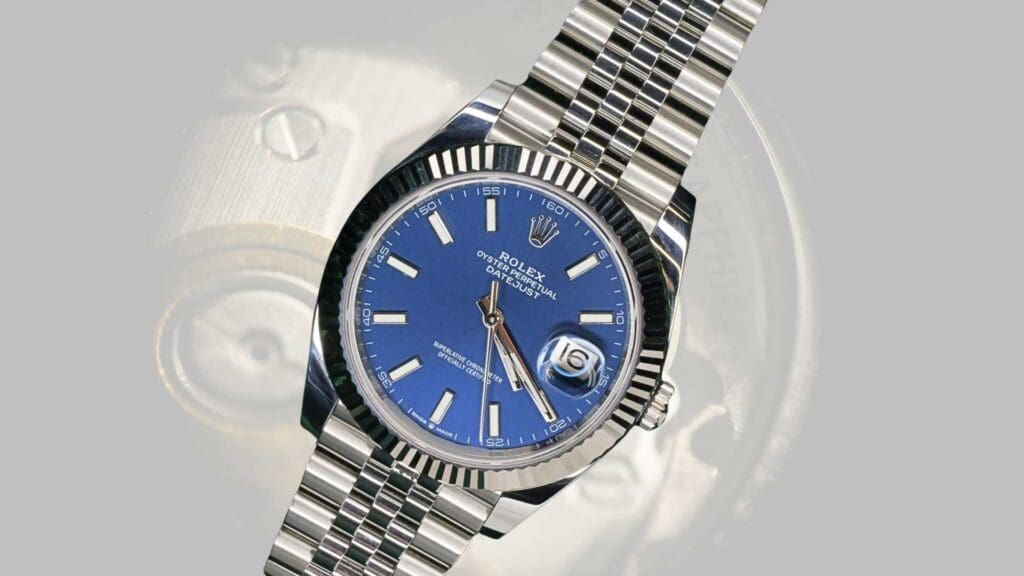
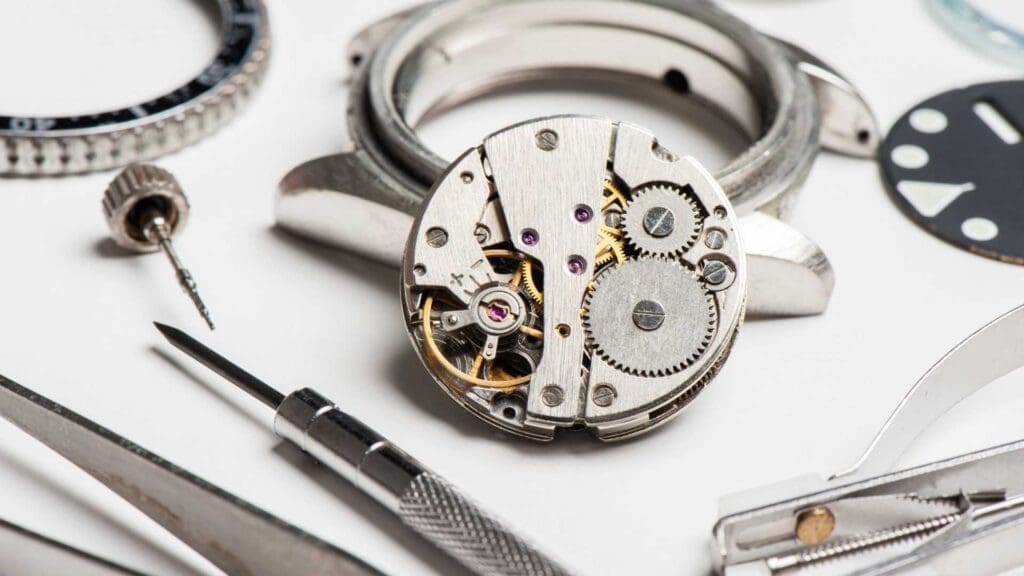
A watch movement is the mechanism inside the case that powers the watch and controls how time is displayed. It stores energy, releases it in a measured way, and drives the hands with consistent motion. Everything you experience from a watch begins there.
When Rolex movement is explained properly, the focus isn’t on complexity or technical labels. Rolex movements are known for reliability because they are built to perform steadily over long periods of real use, prioritizing stable accuracy, durability, and long-term serviceability.
The sections that follow break down how Rolex movements work and why they’re designed this way. This will help you understand the principles behind them without relying on jargon or memorizing caliber numbers.
What Is a Rolex Movement?
The movement is the working heart of a Rolex watch. It’s the system that stores energy, controls how that energy is released, and turns it into steady, predictable motion for the hands. Everything you experience as a wearer (accuracy, smoothness, and reliability) comes back to how well the movement does this job.
What “Movement” Means in a Mechanical Watch
In simple terms, the movement is the engine of a mechanical watch. It’s a collection of precisely made parts that work together to keep time without batteries or electronics.
Mechanical watches differ from quartz watches, which rely on a battery and an electronic oscillator to keep time. Quartz is very accurate, but mechanical movements are valued for their craftsmanship, longevity, and independence from electronics. Rolex builds mechanical movements because they can be maintained, regulated, and kept running for decades.
Are Rolex Movements Mechanical or Automatic?
Rolex movements are mechanical and automatic.
Automatic winding means the watch powers itself as you wear it. Inside the movement is a weighted rotor that turns with the natural motion of your wrist. As it rotates, it winds the mainspring and stores energy.
Rolex focuses exclusively on mechanical movements because they align with the brand’s priorities:
- Long service life
- Proven reliability
- Independence from batteries
- Consistent performance under real-world conditions
The Core Parts Inside a Rolex Movement
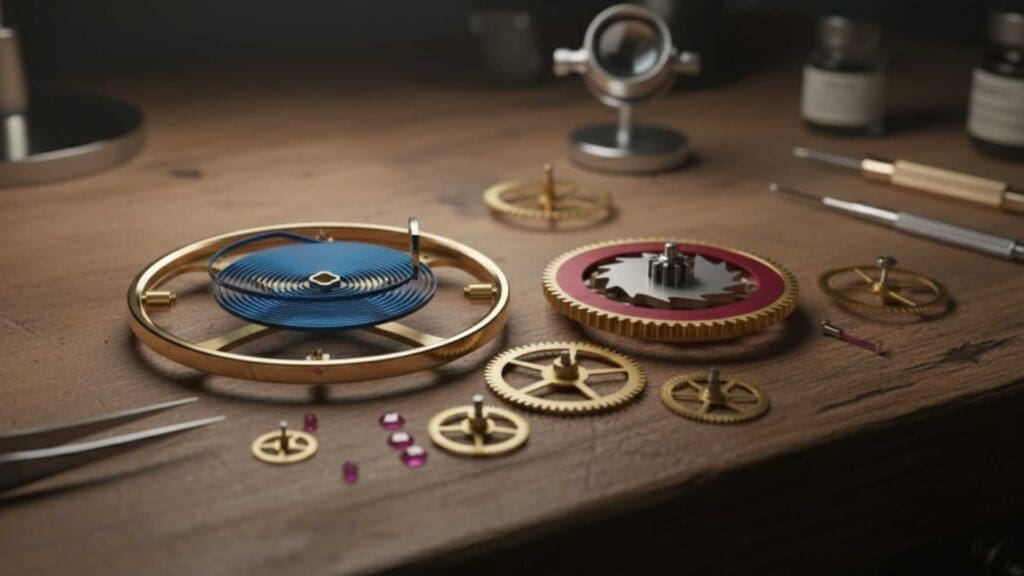
While Rolex movements are complex, their logic is straightforward. Each core component has a clear role.Together, these parts regulate energy so the hands move at a consistent, predictable speed.
- Mainspring and power reserve: The mainspring stores energy when wound. The amount of energy it can hold determines how long the watch runs when not worn.
- Gear train: A series of gears that transfer energy from the mainspring to the hands, reducing speed in controlled steps.
- Escapement: Releases energy in precise, timed intervals. This is what turns stored power into a regulated rhythm.
- Balance wheel and hairspring: The timekeeping heart of the movement. They oscillate back and forth at a steady rate, setting the pace for the entire system.
How a Rolex Movement Keeps Accurate Time
A Rolex movement keeps time by dividing energy into evenly spaced beats. The beat rate refers to how often the balance wheel oscillates each hour. Rather than chasing extreme speed, Rolex focuses on a rate that balances accuracy, durability, and long-term stability.
Regulation fine-tunes how fast or slow the movement runs. Rolex movements are adjusted to maintain consistency over time, not just achieve a strong result in ideal conditions.
This is where accuracy and reliability differ:
- Accuracy is how close the watch runs to the correct time today.
- Reliability is how well it maintains that accuracy over years of wear.
Why Rolex Movements Are Built for Durability
Rolex designs its movements to handle daily life. These design choices support longer service intervals and a longer overall lifespan.
- Shock resistance helps protect delicate components from sudden impacts.
- Temperature stability reduces performance changes caused by heat or cold.
- Anti-magnetic components help prevent timing issues caused by everyday magnetic exposure.
Rolex’s Philosophy Behind Its Movements
Rolex approaches movement design with a long-term mindset. Rather than chasing frequent technical breakthroughs or short-lived trends, the brand focuses on building movements that perform consistently year after year. This philosophy shapes every design decision, from how movements are engineered to how they are tested before leaving the factory.
Why Rolex Prioritizes Consistency Over Rapid Innovation
Rolex improves its movements through small, deliberate changes instead of frequent redesigns. When a component works well, it’s refined rather than replaced.
This approach reduces risk. Proven designs are already understood, tested, and predictable in real use. By improving materials, tolerances, and efficiency step by step, Rolex ensures that each update strengthens reliability without introducing unnecessary complexity. The result is progress you feel over time, not sudden changes that look impressive but may compromise durability.
Why Rolex Movements Are Designed to Last for Decades
Longevity is a core goal of every Rolex movement. These watches are not designed to perform only under perfect conditions or short ownership cycles.
Rolex movements are built to handle:
- Daily wear over many years
- Variations in temperature and environment
- Minor shocks and continuous motion
What “In-House” Really Means at Rolex
When Rolex says its movements are made in-house, it means the entire process is controlled internally. Design, manufacturing, assembly, and testing all take place under one organization.
This level of control allows Rolex to:
- Set its own performance standards
- Test movements beyond basic certification requirements
- Make gradual improvements without depending on external suppliers
Automatic Winding in Rolex Movements Explained
Automatic winding is one of the reasons Rolex watches are so easy to live with. The system is designed to keep the watch running with minimal effort from the wearer, while still allowing manual input when needed. Understanding how it works helps set realistic expectations for daily use and downtime.
How the Rolex Perpetual Rotor Works
Inside every automatic Rolex movement is a Perpetual rotor—a semi-circular weight that moves freely as your wrist moves. This motion winds the mainspring and stores energy for the watch to use.
Rolex rotors wind the mainspring in both directions. This bidirectional winding increases efficiency by capturing energy from natural movement, even during light or inconsistent wear.
Efficiency matters more than speed. The goal isn’t to wind the watch as fast as possible but to maintain a steady energy supply throughout the day. This helps reduce stress on components and supports long-term reliability, especially during daily wear.
What Happens When You Don’t Wear the Watch
When a Rolex isn’t worn, the stored energy slowly runs down. This period is known as the power reserve, and once it’s depleted, the watch will stop.
Restarting the watch is simple:
1. Gently manually wind the crown to build an initial power reserve
2. Set the time and date if needed
3. Wear the watch to let the rotor take over again
Manual winding is meant as a support, not a replacement for automatic winding. A few turns are enough to get the movement going. There’s no need to over-wind or force the crown. With regular wear, the automatic system keeps the watch running smoothly on its own.
Why Rolex Uses Different Movements for Different Watches
Rolex does not rely on a single movement design for its entire lineup. Each watch is built around how it’s meant to be used, and the movement is chosen (or developed) to support that purpose. This approach keeps performance consistent across very different models rather than forcing one solution to fit every watch.
Time-Only vs Date vs Complication Movements
Different functions place different demands on a movement.
- Time-only movements focus on simplicity and stability. With fewer components, they prioritize efficiency, durability, and ease of servicing.
- Date movements add a calendar mechanism that must change reliably every day without affecting timekeeping.
- Complication movements — such as those with GMT or chronograph functions — require additional gearing and control systems to manage extra information without disrupting accuracy.
Using the right movement architecture ensures that these features work smoothly without placing unnecessary strain on the rest of the system.
Purpose-Driven Design, Not One-Size-Fits-All
Rather than forcing a single movement across all models, Rolex designs movements around real use cases. A watch meant for travel, diving, or everyday wear doesn’t face the same demands, and the movement needs to reflect that.
This approach allows Rolex to:
- Optimize reliability for each function
- Maintain consistent performance across different models
- Avoid unnecessary complexity where it isn’t needed
Common Rolex Movement Features
When reading about Rolex movements, certain terms come up repeatedly. They’re often mentioned without explanation, but each one points to a practical benefit in everyday use. Understanding what these features actually do helps separate meaningful engineering from marketing language.
Chronometer Certification Explained
Most Rolex movements are certified as chronometers, meaning they meet strict accuracy standards set by the Swiss Official Chronometer Testing Institute (COSC). COSC testing measures how a movement performs under controlled conditions before it’s placed in a watch.
Rolex goes a step further. After casing the movement, Rolex tests the complete watch to its own internal standards, which are tighter than COSC requirements.
What this means for daily wear:
- Accuracy ratings reflect average daily performance
- Small variations are normal and expected
- The goal is consistent timekeeping over long periods
Parachrom Hairspring
The hairspring is one of the most sensitive parts of a mechanical movement. Rolex’s Parachrom hairspring is designed to reduce the effects of everyday disruptions.
It helps solve two common problems:
- Magnetism, which can cause timing errors
- Temperature changes, which can affect how the balance wheel oscillates
Free-Sprung Balance
A free-sprung balance regulates time without relying on a traditional index to adjust speed. Instead, regulation is done through small weights on the balance itself.
This design improves long-term stability because:
- There are fewer components that can shift over time
- The balance is better protected from shocks and wear
Power Reserve Improvements Over Time
Power reserve refers to how long a watch continues running when it’s not worn. Over time, Rolex has increased power reserves by improving energy efficiency rather than simply enlarging components.
A longer power reserve offers real benefits:
- The watch can sit for a day or two without stopping
- Weekend downtime becomes less of an issue
- Timekeeping remains stable as energy runs down
Rolex Movement vs Other Luxury Watch Movements
Luxury watch movements can take very different approaches to timekeeping. Some prioritize artistic complexity, others focus on technical innovation, and some aim for large-scale production. Rolex sits in a distinct position, emphasizing consistency and long-term reliability over extremes in any one direction.
Rolex vs Mass-Produced Swiss Movements
Many Swiss movements are produced in large quantities and supplied to multiple brands. These movements can perform well, but they are built to meet broad requirements rather than the specific standards of one manufacturer.
Rolex movements differ in a few key ways:
- Consistency: Each movement is designed, assembled, and regulated under a single set of standards.
- Testing: Rolex subjects its movements (and the fully assembled watches) to extensive testing beyond basic certification.
- Durability: Materials and construction are chosen with long-term wear in mind, not just initial accuracy.
Rolex vs High-Complication Movements
High-complication movements focus on adding functions such as perpetual calendars, minute repeaters, or multi-axis tourbillons. These watches showcase technical skill, but complexity comes with trade-offs.
Rolex takes a different approach:
- Functions are added only when they improve usability
- Additional parts are minimized to reduce wear and failure points
- Reliability and serviceability remain priorities
How Long a Rolex Movement Lasts
A Rolex movement is designed with longevity in mind. With proper care and regular servicing, it’s not unusual for a Rolex to run reliably for decades. The movement itself isn’t a short-lived component; it’s meant to be maintained, adjusted, and kept in working order over a very long period.
Expected Lifespan With Proper Servicing
When serviced at appropriate intervals, a Rolex movement is built to last for decades. Many vintage Rolex watches still run well today because their movements were designed to be durable and serviceable from the start.
Regular servicing allows worn parts to be addressed before they cause damage. This ongoing care is what turns a mechanical movement into a long-term companion rather than a disposable mechanism.
What Actually Wears Over Time
The metal components inside a Rolex movement are made to last, but some elements naturally degrade with use.
- Oils dry out or lose effectiveness, increasing friction
- Seals age and can compromise protection
- Friction points slowly wear as parts move against each other
These changes happen gradually and are expected. Servicing refreshes lubrication, replaces seals, and restores smooth operation.
Signs a Rolex Movement Needs Service
A movement usually gives warning signs before serious issues develop. Addressing these signs early helps preserve the movement and prevents more extensive repairs later on.
- Accuracy drift beyond normal daily variation
- Reduced power reserve, where the watch stops sooner than expected
- Irregular behavior, such as hesitation, stopping, or inconsistent running
Key Takeaways on Rolex Movement Explained
A Rolex movement is built around long-term reliability rather than short-term performance claims. Its mechanical, automatic design focuses on consistency, durability, and stable timekeeping under real-world conditions.
Accuracy is important, but Rolex places equal weight on reliability — how well that accuracy holds up over years of daily wear. Features like controlled regulation, efficient automatic winding, and durable components are all meant to support that goal.
With proper servicing, a Rolex movement is designed to last for decades. This emphasis on longevity, practicality, and thoughtful engineering is what defines how Rolex movements work and why they remain trusted over time.