
Choosing between the Omega Speedmaster and the Omega Seamaster Aqua Terra can feel confusing at first. Both watches sit near the heart of Omega’s catalog, and both get recommended to people shopping for their first serious luxury watch. Look a little closer, though, and they solve very different problems.
Speedmaster is one of the most famous chronographs ever made. Introduced in 1957 and later strapped to NASA astronauts on the Apollo missions, it earned the “Moonwatch” nickname and became a fixture of mechanical watch history. Collectors love it for the hand-wound movement, the chronograph, and that direct line to space exploration.
Aqua Terra plays a different role. Omega built it as a versatile everyday sports watch, with a clean three-hand layout, an automatic Master Chronometer movement, and stronger water resistance. That balance is why people wear it with a t-shirt on Saturday and a suit on Monday.
This Omega Speedmaster vs Aqua Terra comparison walks through history, design, movement, and daily usability so you can decide which one really fits your life.
What Is the Omega Speedmaster?
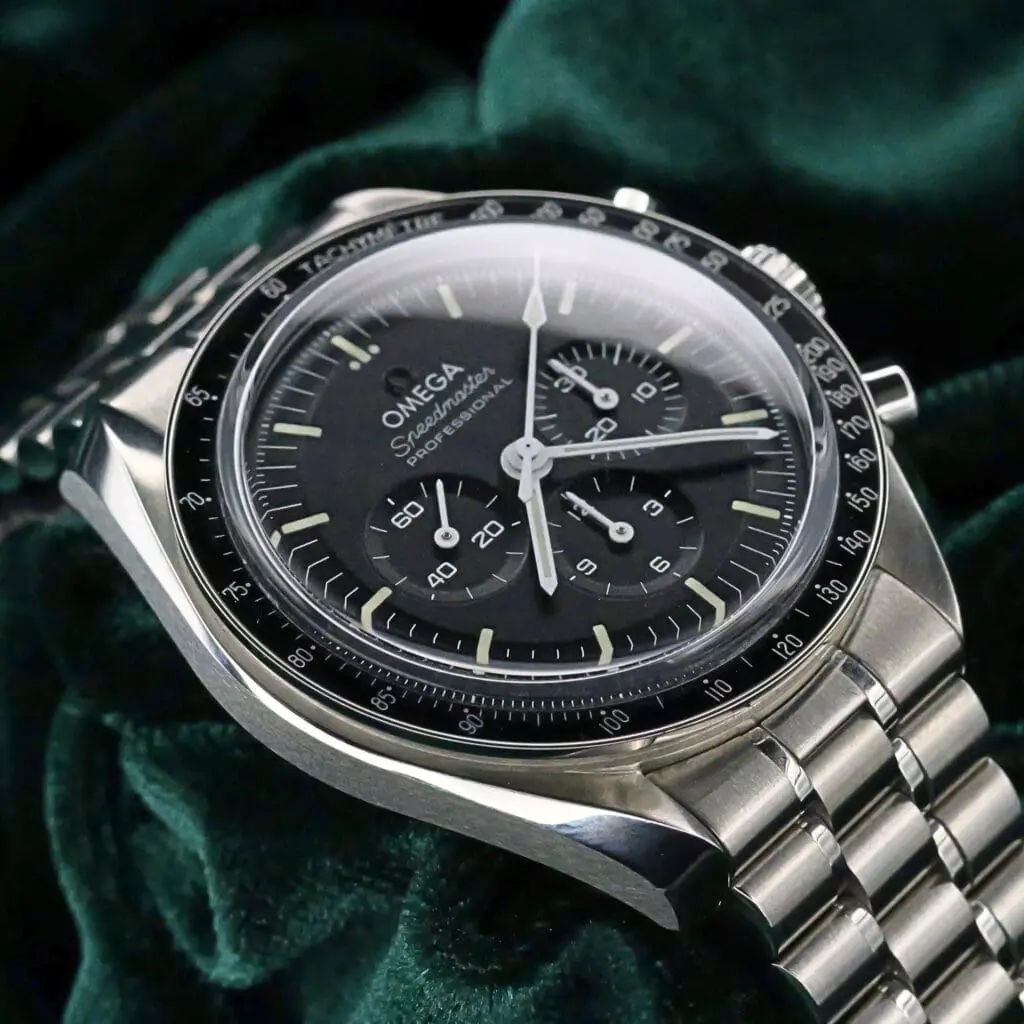

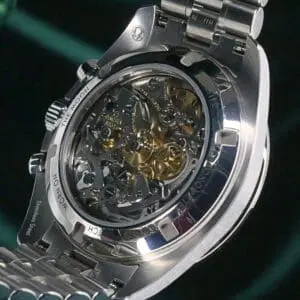
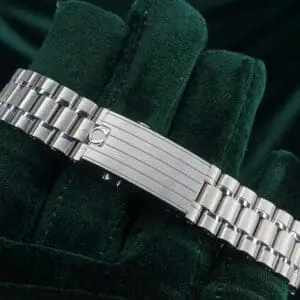

The Speedmaster is Omega’s heritage chronograph, a hand-wound tool watch that NASA qualified for spaceflight and that wore the “Moonwatch” name after the 1969 lunar landing. Omega launched it in 1957 as a racing chronograph, built around a tachymeter bezel and a precise mechanical movement for timing motorsport.
Durability earned it a second life. NASA put the watch through brutal qualification testing before certifying it as the official timepiece for crewed missions, and the Apollo program cemented its legend.
Manual winding is core to the Speedmaster’s identity. Daily attention to the hand-wound movement is part of the appeal for many owners, and it sets the watch apart from the set-and-forget automatics that dominate the rest of the market.
Space history plus mechanical character has built one of the deepest collector markets in watches. Vintage references, limited editions, and anniversary models all keep global demand high. Our Omega Speedmaster buying guide walks through the lineup reference by reference.
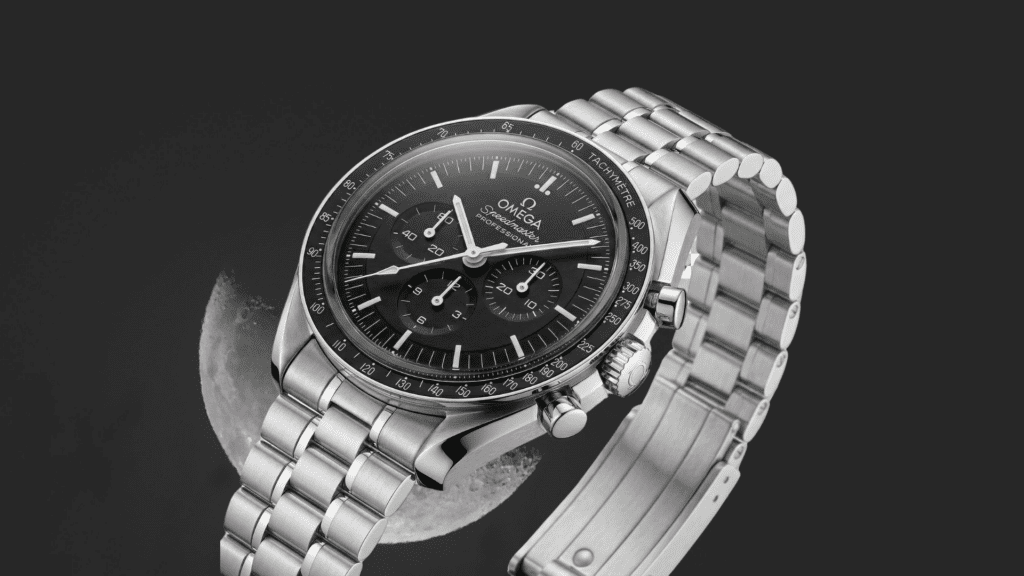
Most Popular Speedmaster References
- Speedmaster Professional Moonwatch 3861
- Speedmaster ’57
- Speedmaster Racing
- Speedmaster Dark Side of the Moon
- Speedmaster Reduced
What Is the Omega Seamaster Aqua Terra?
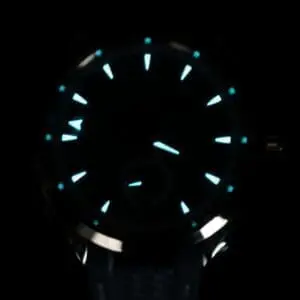
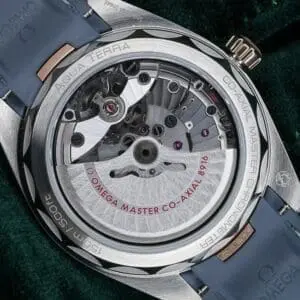

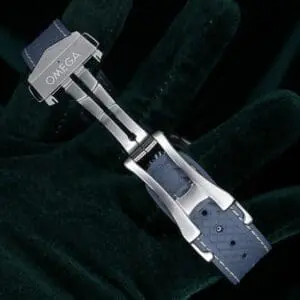
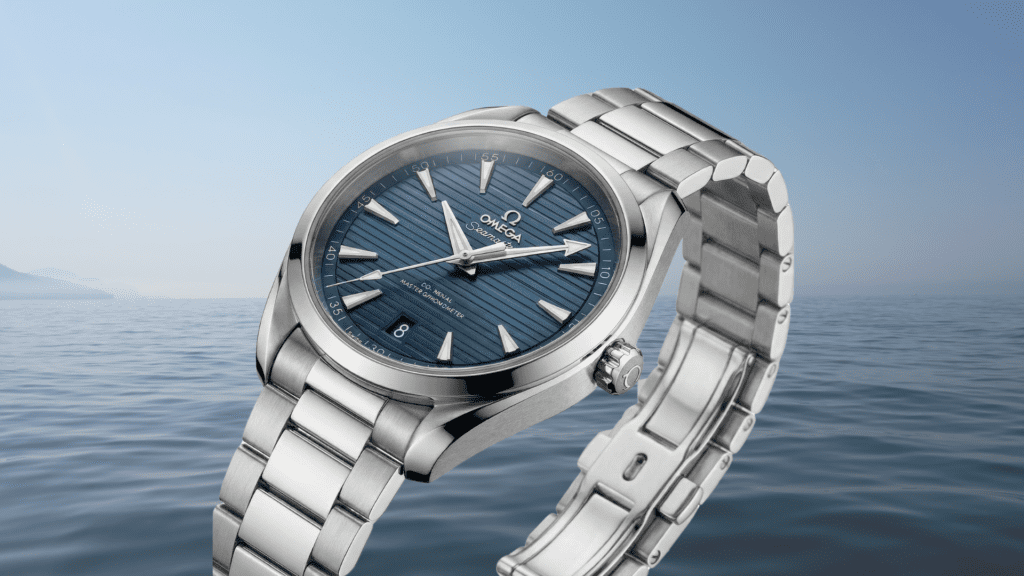
The Aqua Terra is Omega’s do-everything sports watch, a clean automatic with a teak-pattern dial that reads as dressy or casual and shrugs off magnetic fields over 15,000 gauss. Omega introduced it in the early 2000s as a refined branch of the Seamaster family, bridging the gap between dive-watch toughness and dress-watch polish.
Automatic movements run the whole collection. Many current references use Co-Axial Master Chronometer calibers certified by METAS, the Swiss Federal Institute of Metrology, which means strong accuracy and serious anti-magnetic performance.
That mix is the point. Aqua Terra works as a boardroom watch and a weekend watch without feeling like a compromise either way. If you want the full range, our Aqua Terra buying guide breaks down the references and sizes.
Most Popular Aqua Terra References
- Aqua Terra 38mm Cal. 8800
- Aqua Terra 41mm Cal. 8900
- Aqua Terra Worldtimer
- Aqua Terra Shades Collection
- Aqua Terra Small Seconds
Speedmaster vs Aqua Terra: Most Notable Differences
Both watches carry the same brand DNA but split on the things that matter day to day. Going through them one at a time makes it clear which line suits you.
1. Complication
Speedmaster is a chronograph-first tool watch, built around a stopwatch function for precise timing, first on racetracks and later in space. Aqua Terra is a time-and-date sports watch that puts clean readability ahead of mechanical complexity.
New to the complication? Here’s how a chronograph works in practice.
That difference drives the lifestyle fit. A Speedmaster suits someone who wants a historically loaded instrument with a live complication to use. An Aqua Terra suits someone who wants a low-maintenance companion that goes from the office to the weekend without a second thought. Manual winding asks for daily attention; the Aqua Terra’s rotor winds itself as you wear it.
2. Movement
Speedmaster runs on hand-wound heritage, most famously the Caliber 3861, which traces straight back to the Apollo-era movement. Aqua Terra uses automatic Co-Axial Master Chronometer calibers, either the 8800 or the 8900, both METAS-certified to resist magnetic fields beyond 15,000 gauss.
That anti-magnetic edge matters more than it sounds. Phones, laptops, tablets, and speakers all throw off magnetism that can disrupt a movement, so the Aqua Terra is the more technically current of the two in a normal modern day.
If you ever suspect yours has picked some up, here’s how to check for magnetization.
3. Case Size
Speedmaster sticks to a 42 mm case sized to hold a mechanical chronograph. All those extra chronograph components make the watch thicker, so it carries real wrist presence.
Aqua Terra gives you more room to choose, with 38 mm and 41 mm options. A simpler time-and-date movement lets the case sit slimmer and more balanced, especially in the 38 mm. If size is your main question, we break down the 38mm vs 41mm Aqua Terra in detail.
On the wrist, the gap is obvious. A Speedmaster wears like a classic tool watch with some heft, while the Aqua Terra feels lighter and dressier for all-day wear.
Related Models from Majestix
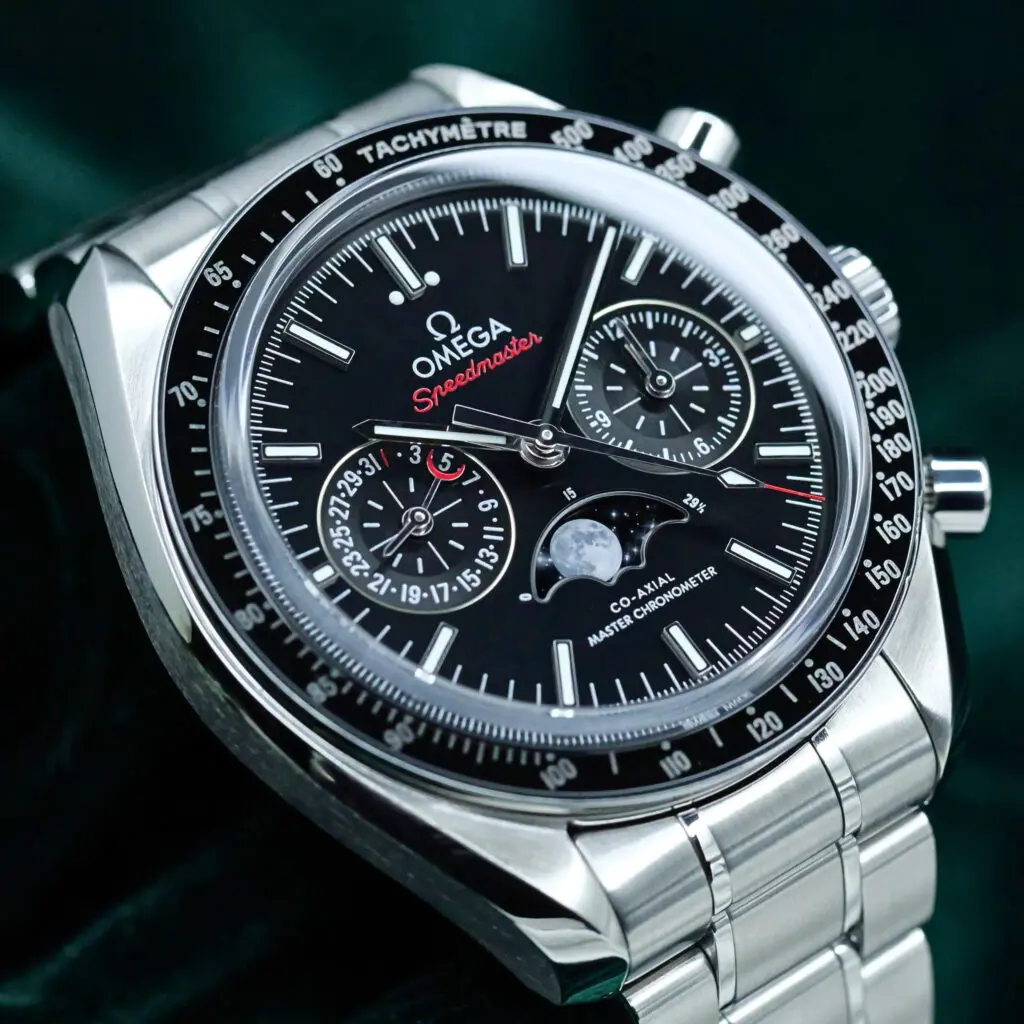
Omega Speedmaster Moonphase Black Dial Stainless Steel 44.25mm MINT CONDITION COMPLETE SET 304.30.44.52.01.001
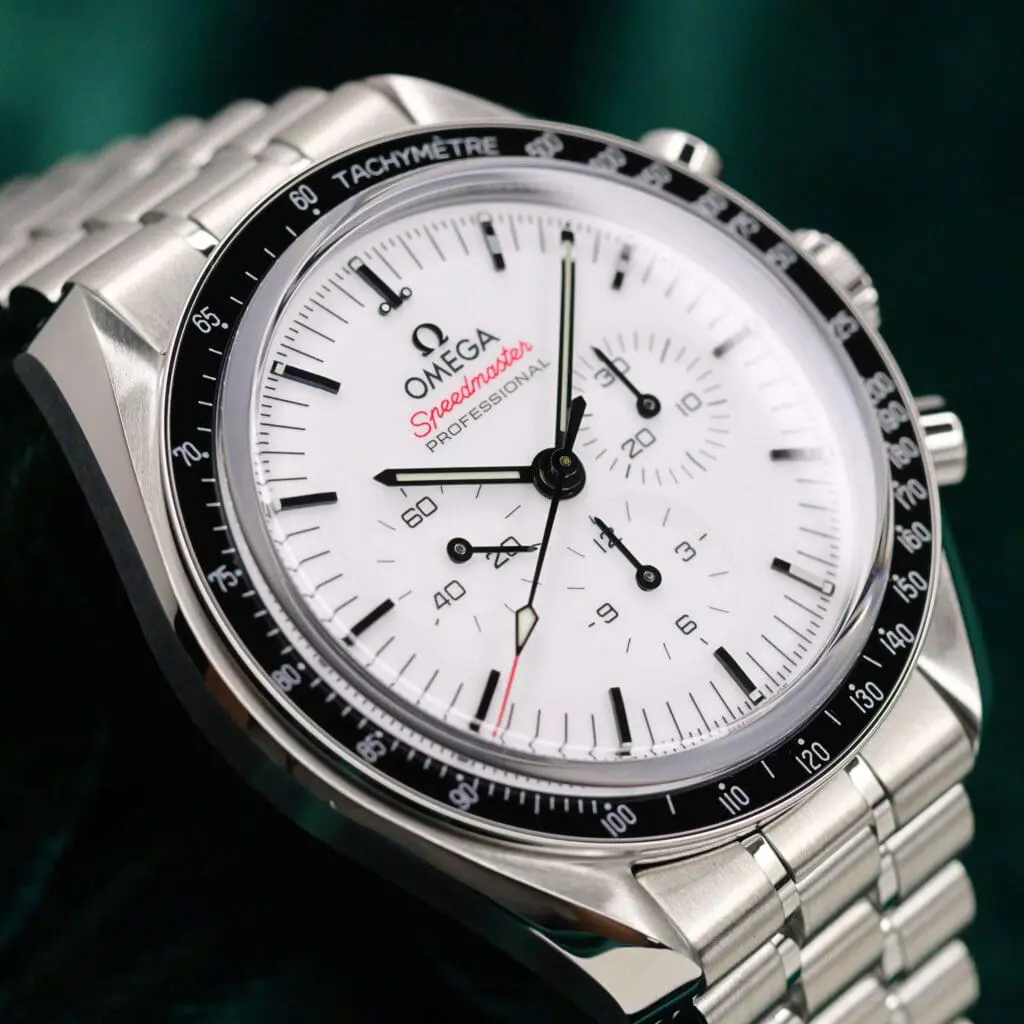
2026 NEW UNWORN Omega Speedmaster Moonwatch Professional White Dial Stainless Steel 42mm COMPLETE SET 310.30.42.50.04.001
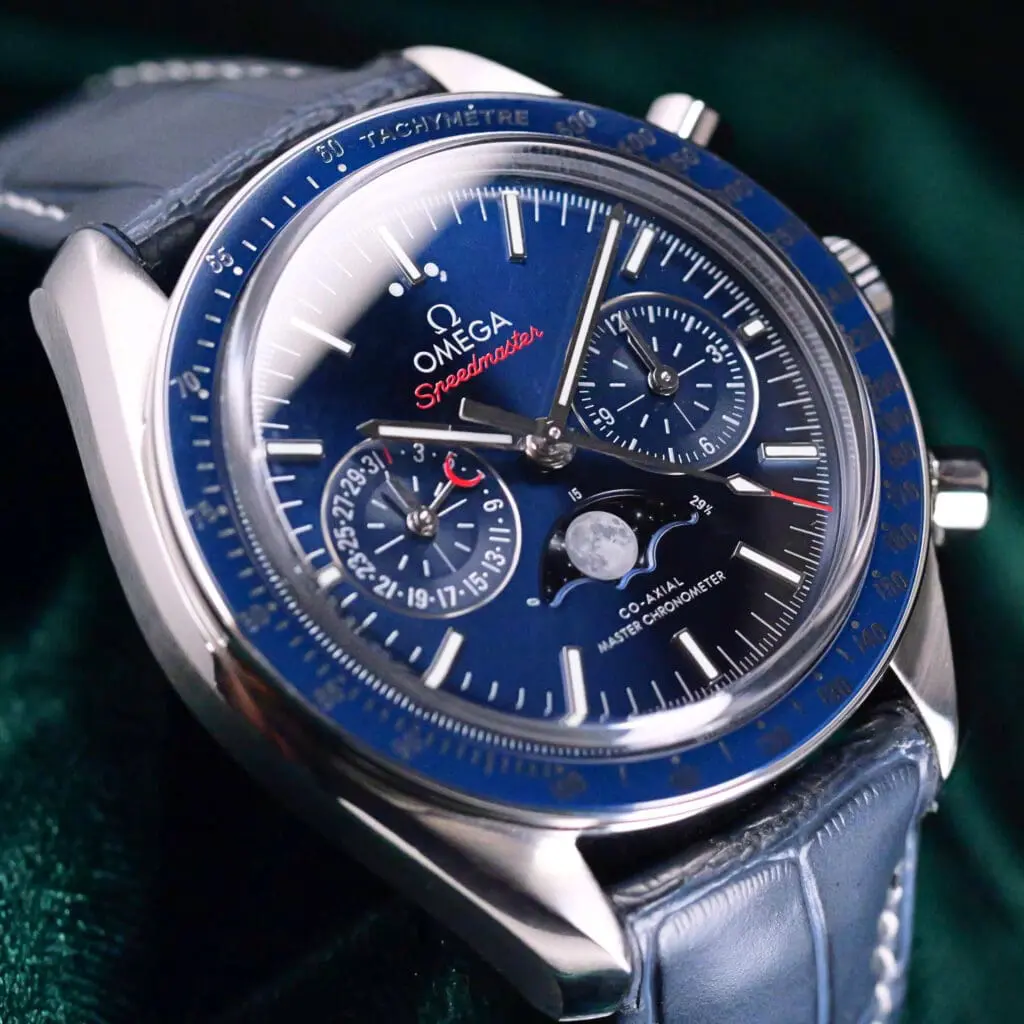
Omega Speedmaster Moonphase Blue Dial Blue Leather Strap Stainless Steel 44.25mm MINT CONDITION COMPLETE SET 304.33.44.52.03.001
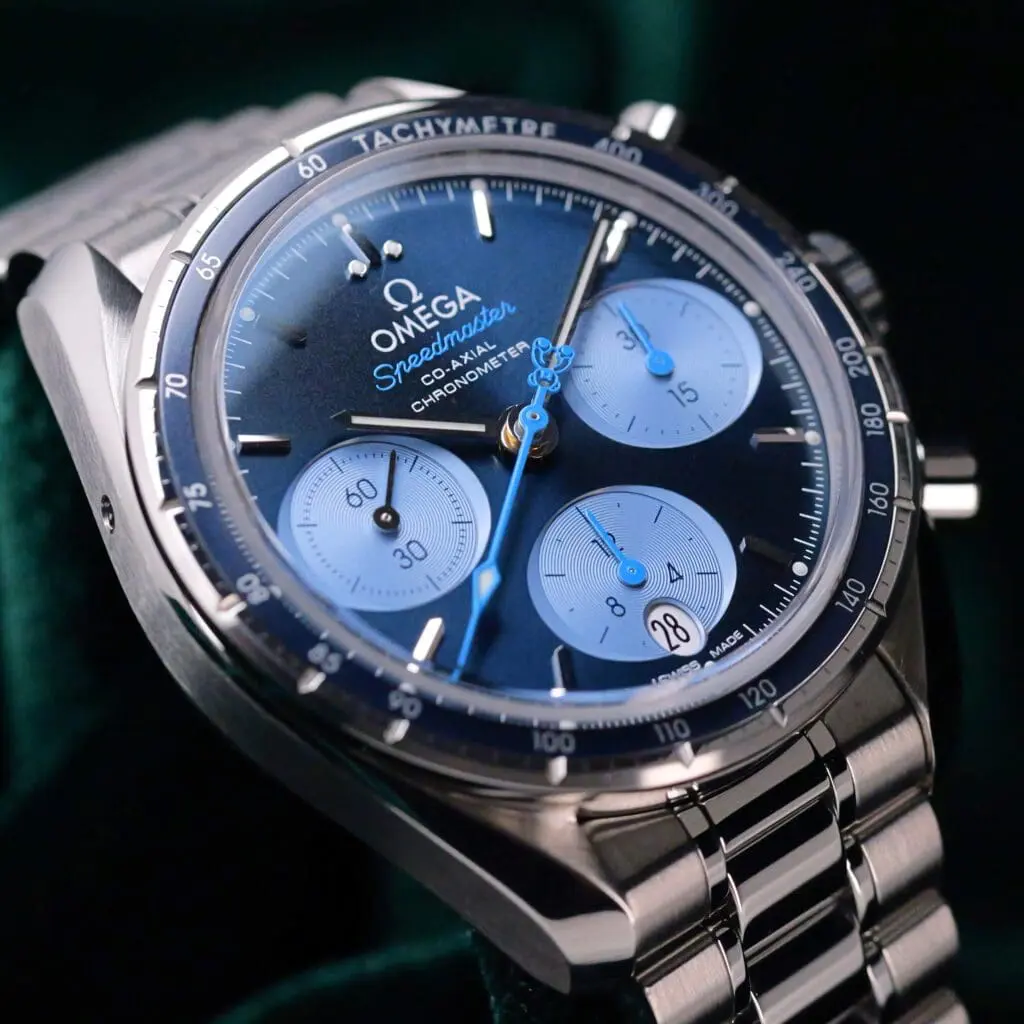
Omega Speedmaster "Orbis Edition" 38mm Blue Dial Blue Bezel Stainless Steel Bracelet MINT COMPLETE SET 324.30.38.50.03.002
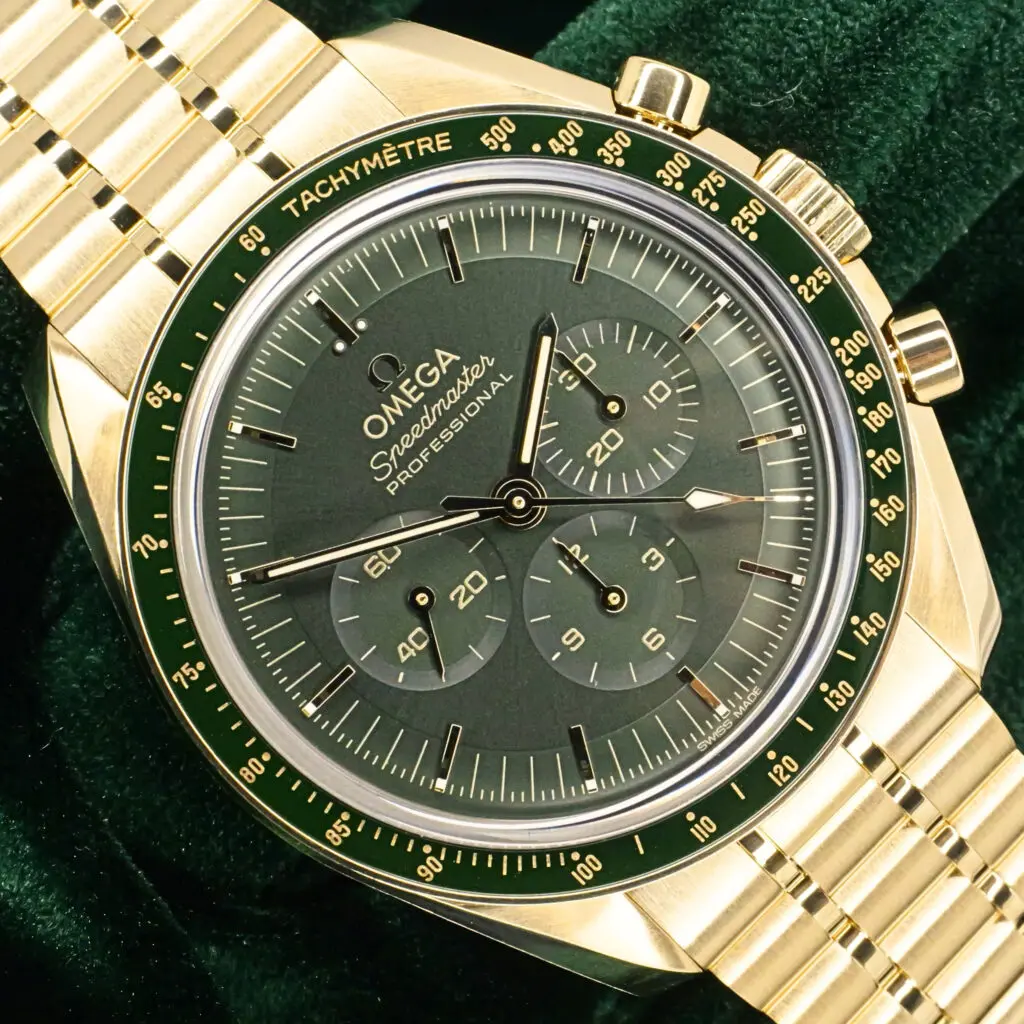
Omega Speedmaster Professional Moonwatch "Moonshine" Green Dial 18K Yellow Gold 42mm MINT CONDITION COMPLETE SET 310.60.42.50.10.001
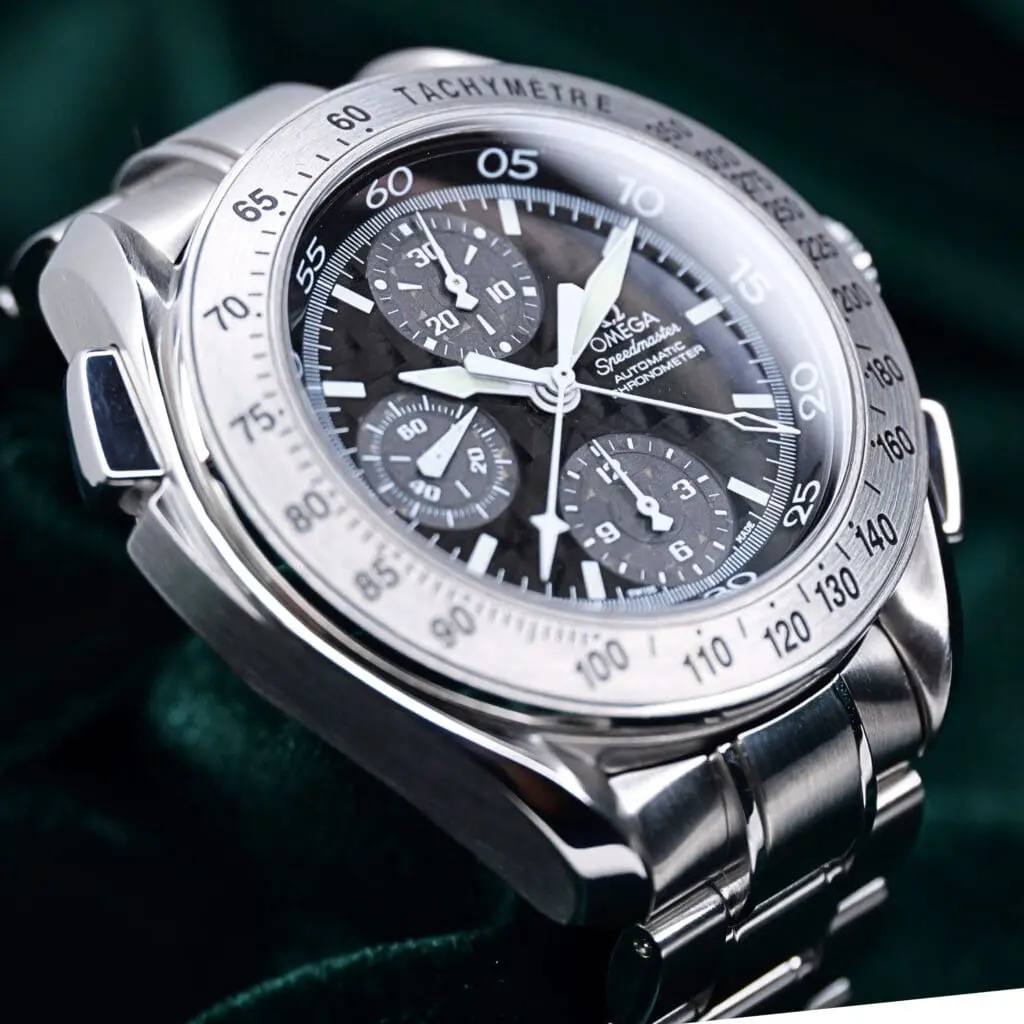
Omega Speedmaster Split-Seconds "Rattrapante" Black Carbon Fiber Dial Stainless Steel 42mm MINT CONDITION 3540.50
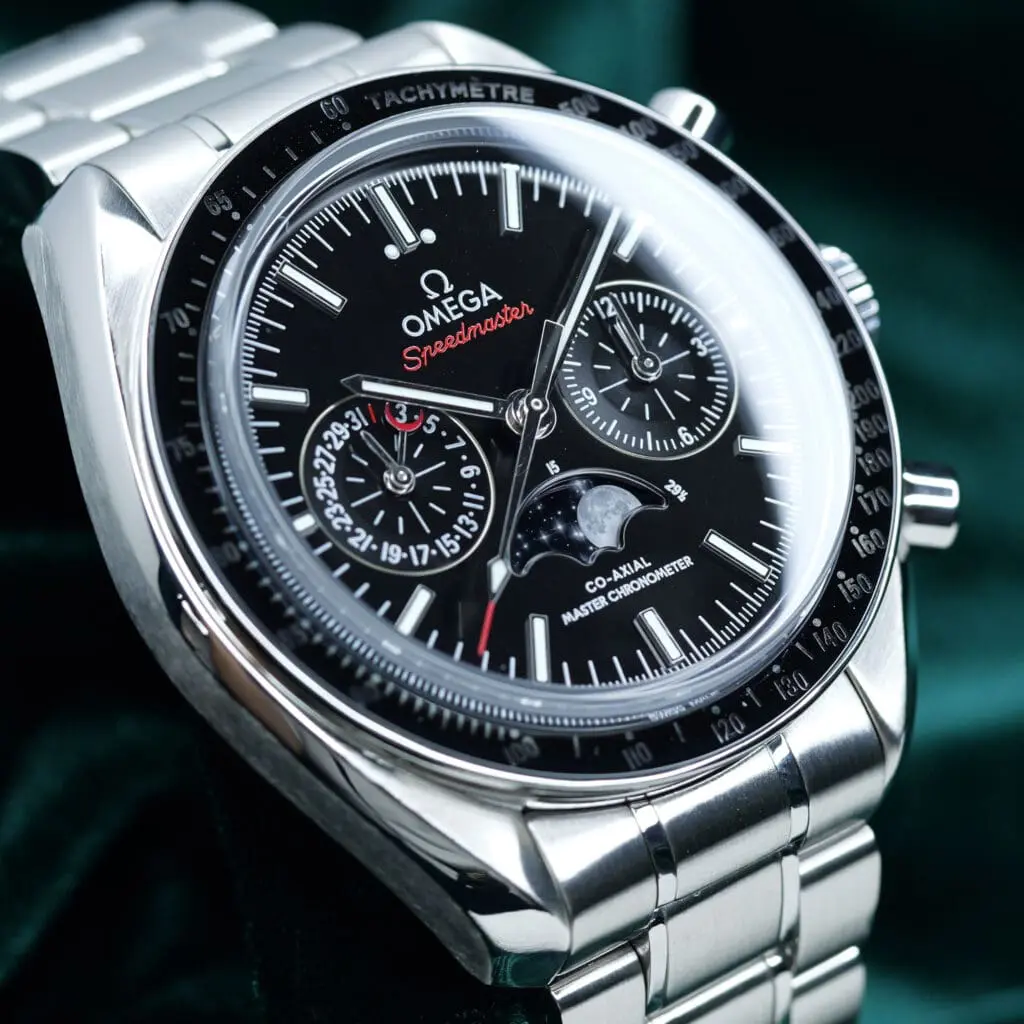
Omega Speedmaster Moonphase Co-Axial Master Chronometer Chronograph Black Dial Stainless Steel 44.25mm MINT CONDITION COMPLETE SET 304.30.44.52.01.001
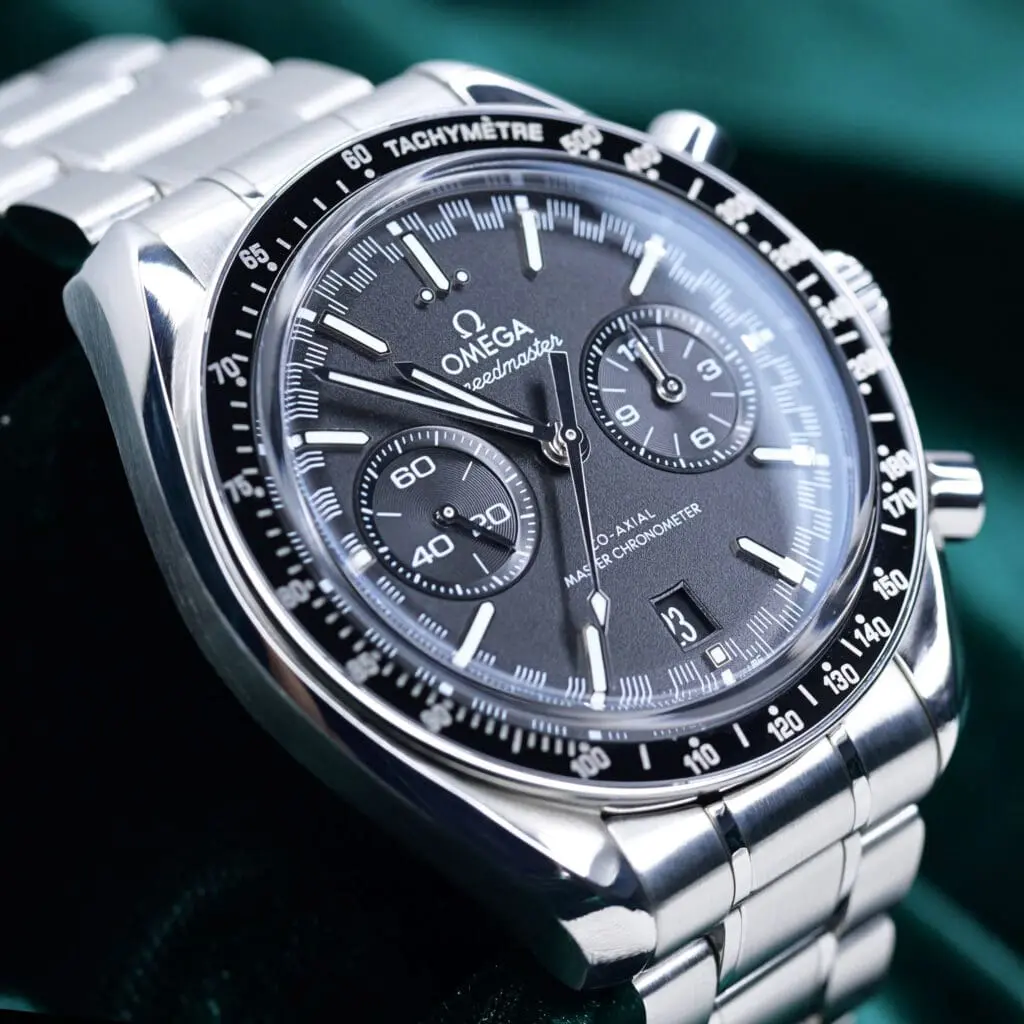
Omega Speedmaster Racing Co-Axial Master Chronometer Black Dial Stainless Steel 44.25mm MINT CONDITION COMPLETE SET 329.30.44.51.01.001
4. Water Resistance
Speedmaster is rated to 50m, which covers rain and a quick hand-wash but not swimming. Aqua Terra is rated to 150m, genuinely fine for recreational swimming and a day on the water. If you want a watch you never have to take off at the pool or on a boat, that is a clear win for the Aqua Terra.
5. Dial Design
Speedmaster uses a chronograph dial with three subdials and a tachymeter bezel scale, a layout that goes back to its racing and Apollo roots. Aqua Terra takes the cleaner route: a three-hand display with horizontal teak-pattern lines borrowed from yacht decks, usually with a date window at 6 o’clock.
Color is another fork in the road. Speedmaster stays close to tradition, with black ruling the Moonwatch family. Aqua Terra opens the palette wide, with blue, green, silver, terracotta, and gradient finishes all on the table.
6. Bracelet Design
Speedmaster Professional Moonwatch rides on Omega’s flat-link steel bracelet, brushed throughout and built for grip and durability over flash. NATO and leather calf straps stay popular alternatives and lean into the watch’s casual, functional side.
Aqua Terra wears a dressier bracelet, with polished center links flanked by brushed outer links. That mixed finishing lets it pass as a sport watch on the weekend and hold its own in a more formal room. Precious-metal models carry the same link design in 18k yellow gold or Sedna gold.
How Much Do the Speedmaster and Aqua Terra Cost?
Both lines span a wide range on the secondary market, from roughly $1,500 for an entry Speedmaster to over $40,000 for a precious-metal Aqua Terra, with the core steel models landing in the $5,500 to $8,000 zone. Because each collection covers so many references, materials, and complications, it helps to look at the tiers. Pricing below reflects 2026 secondary-market figures from Chrono24 and WatchCharts.
Speedmaster prices swing hard by reference. Entry models like the Speedmaster Reduced sit around $1,500 to $3,000, while the watch most buyers really want, the Moonwatch Professional 3861 in steel, trades roughly $6,500 to $7,800 depending on the hesalite or sapphire version.
Higher end builds like the Dark Side of the Moon or precious-metal editions climb from $10,000 to $30,000 and up.
Aqua Terra splits into clean tiers:
Flagship Steel Models, roughly $5,500 to $7,200
Most 38 mm and 41 mm steel Aqua Terras land here, running Omega’s Co-Axial Master Chronometer calibers. Among them, the black-dial 41mm 8900 is the volume seller and tends to sit around $6,000 to $6,800 with box and papers.
Complication Models, roughly $8,000 to $10,500
Step up to something like the Aqua Terra Worldtimer and the world-time complication and layered dial push the price into a higher bracket.
Precious Metal Models, $15,000 to $40,000+
Sedna gold, yellow gold, and two-tone configurations top out the range, with the final number driven by material, dial, and production volume.
For a buyer, that spread makes the Aqua Terra one of Omega’s most flexible lines, with an accessible steel entry and a real luxury ceiling.
Speedmaster vs Aqua Terra Resale Value
Both hold value well for luxury watches, but for different reasons. Speedmaster demand leans on the Apollo connection, and limited or anniversary editions tend to see the strongest secondary-market interest.
Aqua Terra demand comes from buyers who just want a great automatic daily watch, and the range of dial colors, sizes, and complications keeps the pool of interested buyers wide. Steady demand on both sides is why neither tends to crater the way some luxury watches do.
New Omega Releases to Know in 2026
Omega kept both lines moving into 2026, and a couple of releases are worth knowing if you are shopping now. Omega opened the year with a black-and-white “Panda” Speedmaster Moonwatch Professional duo, one in steel around $10,400 and one in Moonshine Gold near $49,300, both running the Master Chronometer Caliber 3861.
On the Aqua Terra side, Omega rolled out a turquoise-dial model paired with a black ceramic bezel, plus an Aqua Terra GMT Worldtimer in titanium for travelers who want a true second-time-zone readout. None of these change the core Speedmaster vs Aqua Terra decision, but they widen the menu if a fresh dial or a travel complication is on your wishlist.
Notable Speedmaster References

Omega’s Speedmaster catalog runs deep, with references spread across decades. A handful stand out for history, design, or collector pull. These are the ones buyers run into most often today.
1. Speedmaster Professional Moonwatch 3861
Moonwatch 3861 is the modern version of Omega’s most famous chronograph. It keeps the design language of the Apollo-era Moonwatch, including the three-subdial layout, tachymeter bezel, and manual winding, while upgrading the engine underneath.
Buyers go for this reference because it keeps the Moonwatch look but adds a Co-Axial escapement and Master Chronometer certification. Same spirit as the NASA-qualified original, better accuracy and magnetic resistance for daily life.
Tripped up by the naming? Our Speedmaster vs Moonwatch breakdown sorts out which is which.
Key Specifications
- Case Size: 42 mm
- Movement: Omega Caliber 3861 (manual-wind Co-Axial Master Chronometer chronograph)
- Water Resistance: 50 meters
- Approximate Market Range (2026): $6,500 to $7,800 depending on hesalite or sapphire
2. Speedmaster ’57
Speedmaster ’57 nods to the original 1957 design that kicked off the whole line. Omega rebuilt it as a vintage-inspired model with modern engineering, usually with broad-arrow hands and a slimmer case profile than the Moonwatch.
Buyers like the ’57 because it blends 1950s styling with a current hand-wound Master Chronometer chronograph. A note worth getting right: the current 40.5 mm Caliber 9906 version is manual-wind, not automatic, even though it is based on Omega’s automatic 9900 architecture.
Key Specifications
- Case Size: 40.5 mm
- Movement: Omega Caliber 9906 (manual-wind Co-Axial Master Chronometer chronograph)
- Water Resistance: 50 meters
- Approximate Market Range (2026): $7,500 to $9,500
3. Speedmaster Dark Side of the Moon


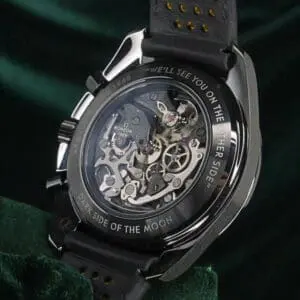
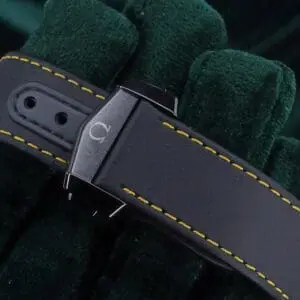
Dark Side of the Moon is Omega’s high-tech take on the Speedmaster. Launched in 2013, it uses a black ceramic case and dial for a striking single-color look.
Buyers are drawn to it because it keeps the Speedmaster chronograph layout but swaps steel for ceramic, which resists scratches and gives the watch a different presence on the wrist. Early models ran the automatic Caliber 9300; current production uses the Master Chronometer Caliber 9908/9909.
Key Specifications
- Case Size: 44.25 mm
- Movement: Omega Caliber 9300 (automatic) on early models; 9908/9909 Master Chronometer on current versions
- Water Resistance: 50 meters
- Approximate Market Range (2026): $10,000 to $14,000 depending on version
4. Speedmaster Reduced
Speedmaster Reduced was the smaller, cheaper way into the family. Made mostly through the 1990s and early 2000s, its compact case suits anyone who wants less watch on the wrist.
Buyers often treat the Reduced as the entry point to Speedmaster ownership. It works mechanically differently from the Moonwatch, but it keeps the recognizable chronograph look at a friendlier secondary-market price.
We lay out how the Reduced stacks up against the Professional if you’re choosing between them.
Key Specifications
- Case Size: 39 mm
- Movement: Automatic chronograph (Caliber 3220, based on ETA architecture)
- Water Resistance: 30 meters
- Approximate Market Range (2026): $1,500 to $3,000 depending on condition and completeness
Notable Aqua Terra References

Omega’s Aqua Terra catalog shows off the line’s range, from everyday three-handers to travel complications to bolder dials. These are the references buyers see most.
1. Aqua Terra 38mm Caliber 8800
Aqua Terra 38mm with the 8800 is the more balanced alternative to the 41mm. It is the size of choice for smaller wrists, keeping the full Aqua Terra look in a more compact case.
Smaller case, same brains. Inside sits the Caliber 8800, bringing the same accuracy and anti-magnetic performance as the larger models, so nothing about reliability gets traded away for the slimmer fit.
Key Specifications
- Case Size: 38 mm
- Movement: Omega Caliber 8800 (automatic Co-Axial Master Chronometer)
- Water Resistance: 150 meters
- Approximate Market Range (2026): $5,000 to $6,500
2. Aqua Terra 41mm Caliber 8900
Aqua Terra 41mm with the 8900 is the face of the line, the refined daily sports watch most people picture when they hear “Aqua Terra.” It carries the signature teak-pattern dial and a balanced look that works in any setting.
Caliber 8900 is where the technical story lives for this whole collection: a METAS-certified Co-Axial Master Chronometer good for 15,000-gauss magnetic resistance. Paired with 150m water resistance and a comfortable bracelet, it is the most popular Aqua Terra for a reason.
Key Specifications
- Case Size: 41 mm
- Movement: Omega Caliber 8900 (automatic Co-Axial Master Chronometer)
- Water Resistance: 150 meters
- Approximate Market Range (2026): $5,800 to $7,200 depending on configuration
Related Models from Majestix
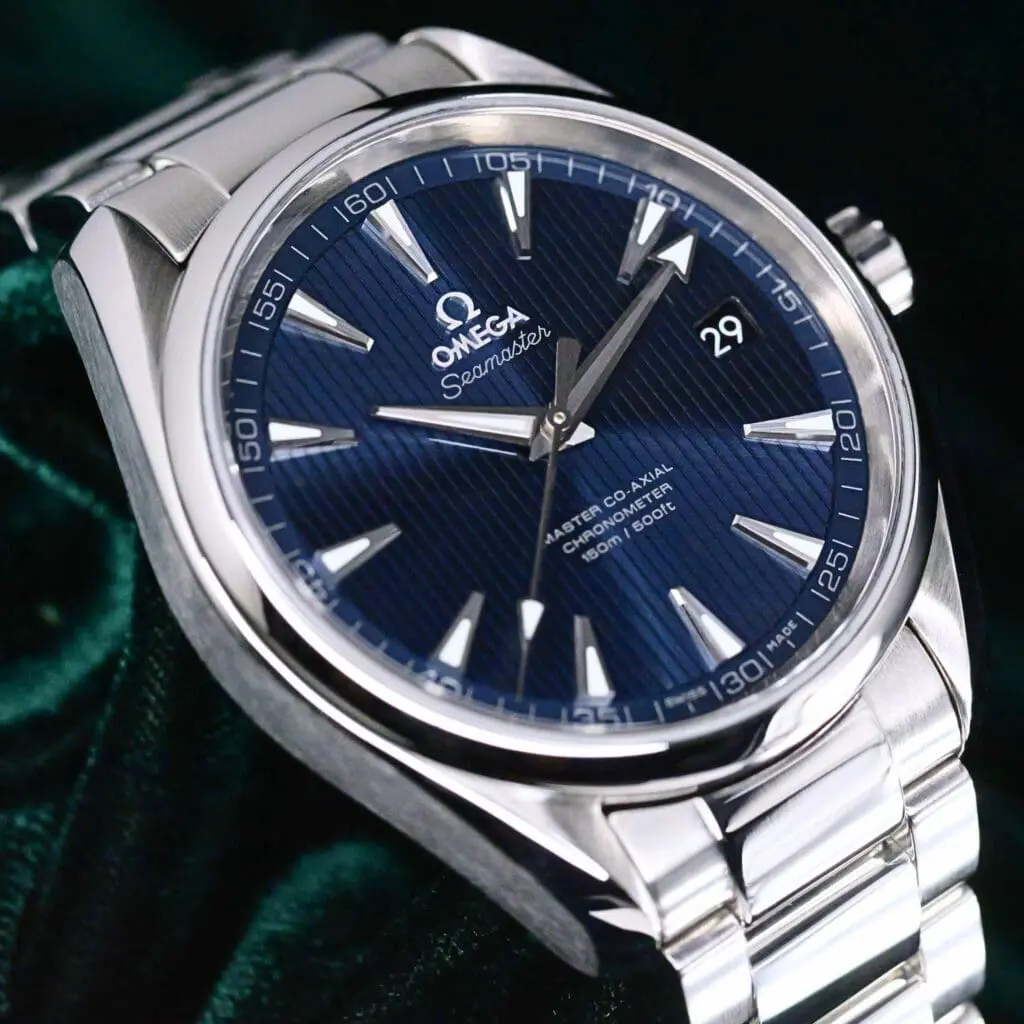
Omega Seamaster Aqua Terra 150M Master Co-Axial Chronometer Blue Teak Dial Stainless Steel 41.5mm MINT CONDITION COMPLETE SET 231.10.42.21.03.003
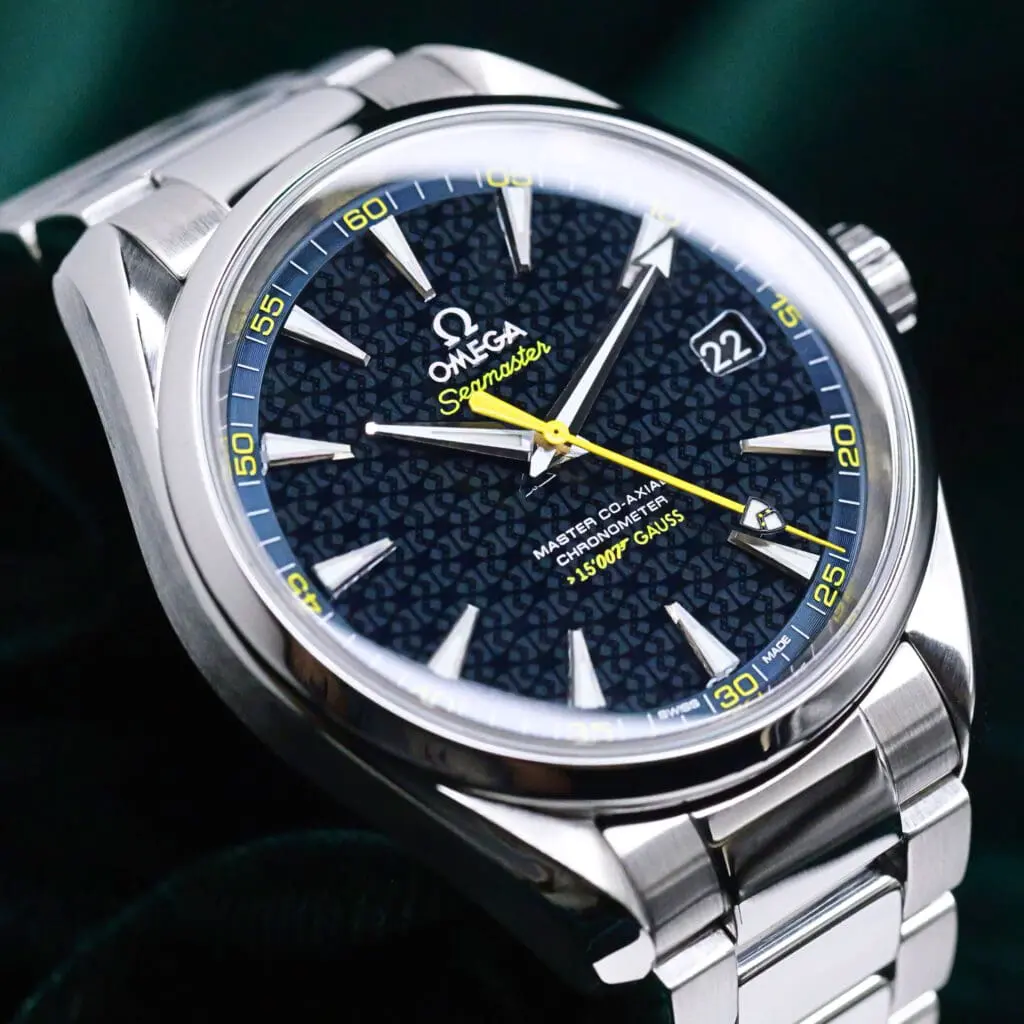
Omega Seamaster Aqua Terra 150M "James Bond Spectre" Blue Dial Yellow Accents Stainless Steel 41.5mm MINT CONDITION COMPLETE SET 231.10.42.21.03.004

2026 NEW UNWORN Omega Seamaster Aqua Terra Green Sunburst Dial Diamond Markers Stainless Steel 30mm COMPLETE SET 220.10.30.20.60.001
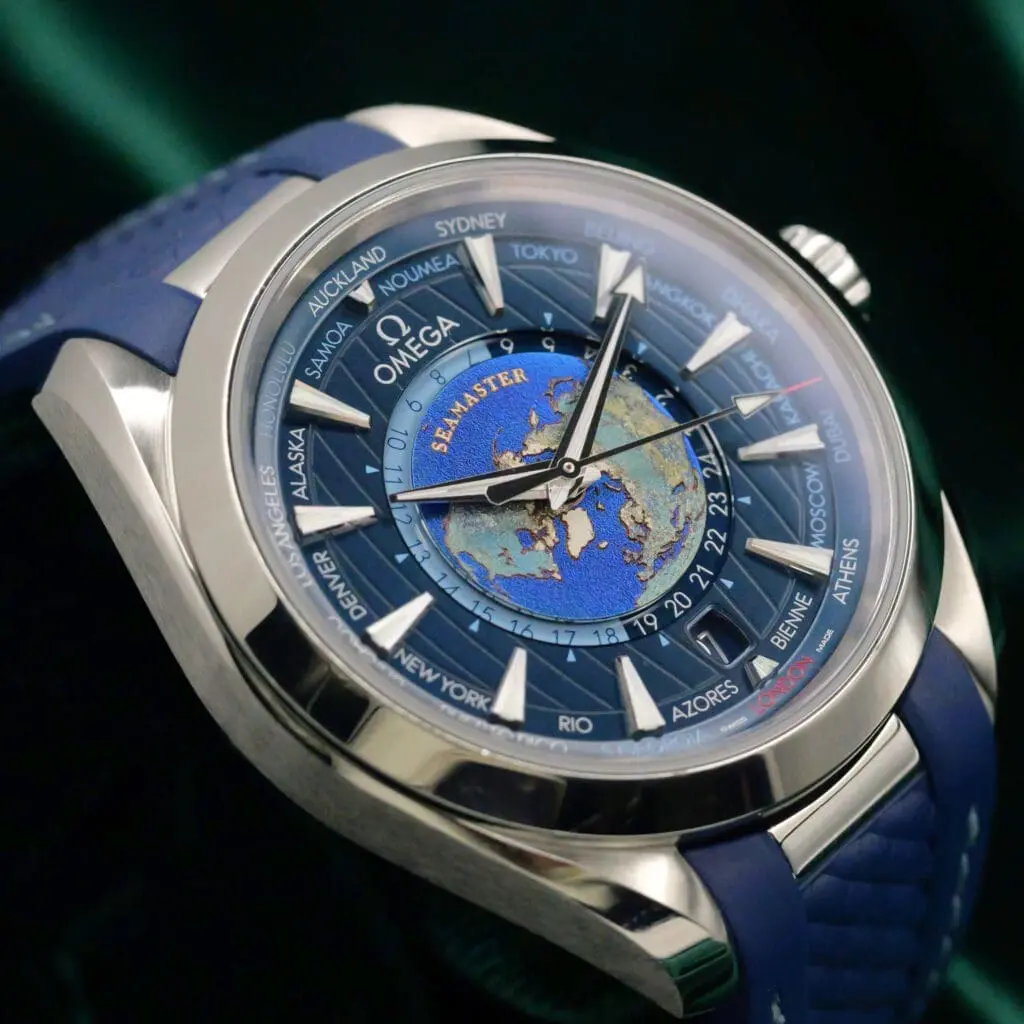
Omega Seamaster Aqua Terra Worldtimer Blue Dial Blue Rubber Strap Stainless Steel 43mm MINT CONDITION COMPLETE SET 220.12.43.22.03.001
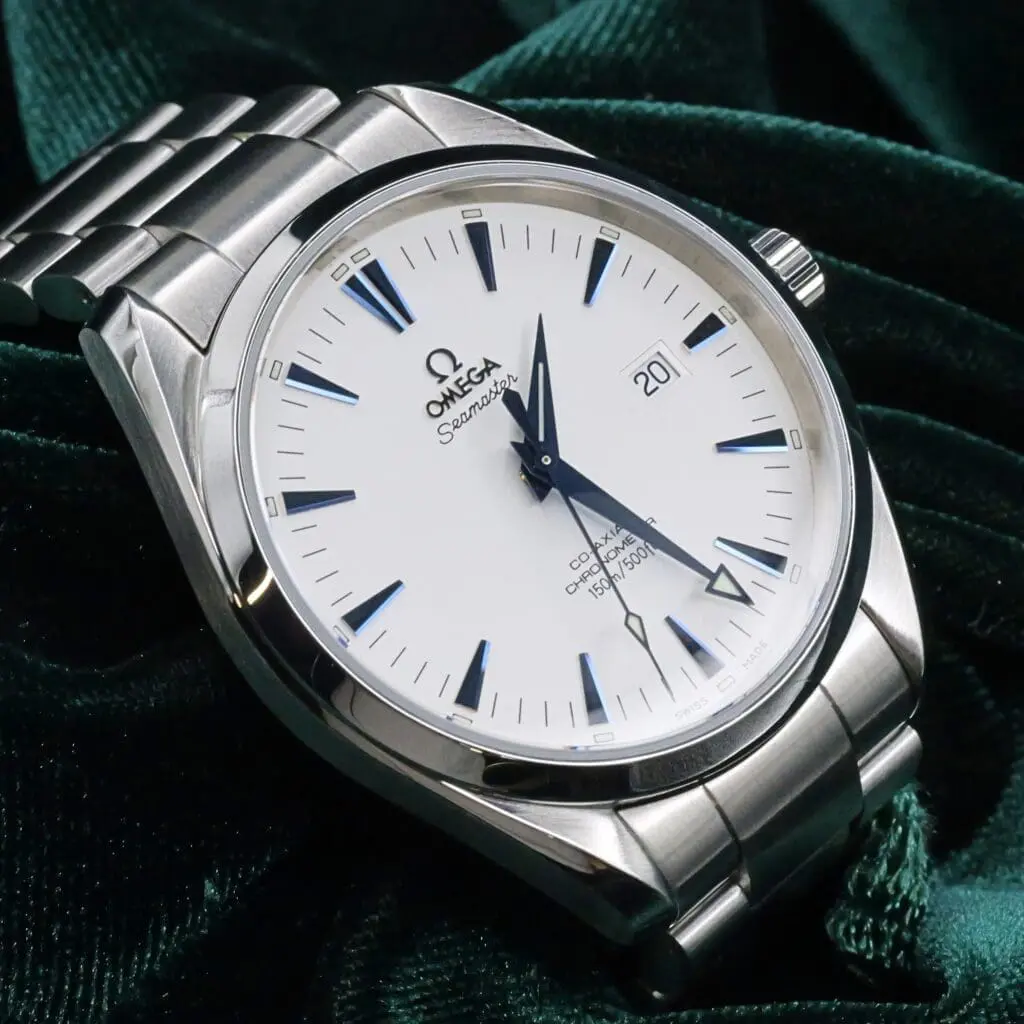
Omega Seamaster Aqua Terra Co-Axial White Dial Blue Accents Stainless Steel MINT CONDITION 2503.33.00
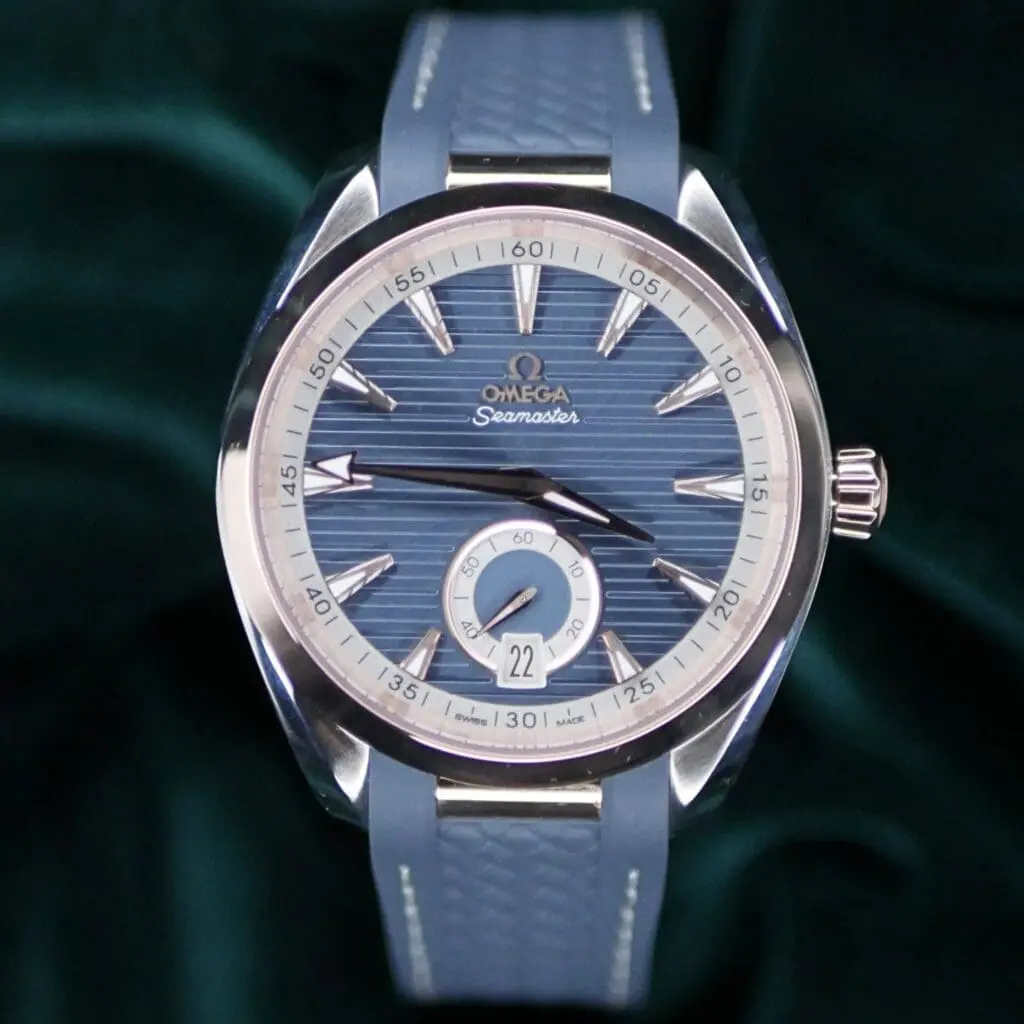
Omega Seamaster Aqua Terra 150M 41MM Blue Grey Dial Sedna Gold Rubber Strap COMPLETE SET EXCELLENT CONDITION 220.22.41.21.03.001
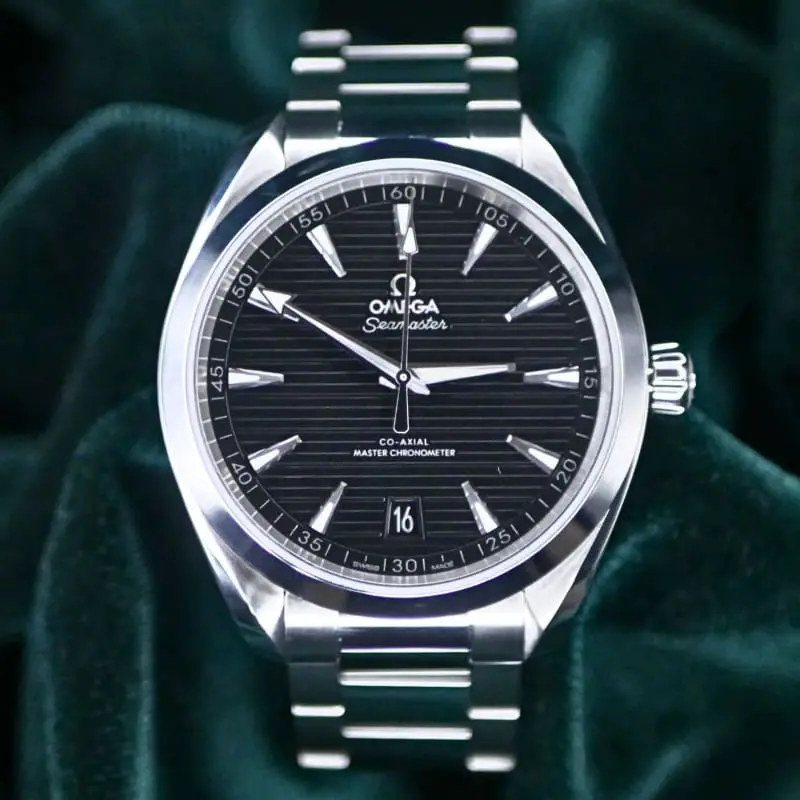
Omega Seamaster Aqua Terra 150m Black Dial 41mm Stainless Steel EXCELLENT CONDITION 220.10.41.21.01.001
3. Aqua Terra Worldtimer
Aqua Terra Worldtimer adds a travel complication to the line. A detailed world map sits at the center of the dial, ringed by a rotating 24-hour scale and a city ring, so you can read multiple time zones at a glance.
This is the most visually distinctive Aqua Terra. World-time layout, layered dial, and a Master Chronometer movement together make it both technically interesting and easy to spot across a room.
Key Specifications
- Case Size: 43 mm
- Movement: Omega Caliber 8938 (automatic Co-Axial Master Chronometer Worldtimer)
- Water Resistance: 150 meters
- Approximate Market Range (2026): $8,000 to $10,500
4. Aqua Terra Shades Collection
Aqua Terra Shades brought a burst of color to the line. These models use lacquered dials in tones like terracotta, saffron, and sandstone, all built on the same Aqua Terra platform.
Buyers like Shades because it leans into the Aqua Terra’s identity as a versatile sports watch with personality. Bolder dial, same Master Chronometer performance underneath.
Key Specifications
- Case Size: 38 mm
- Movement: Omega Caliber 8800 (automatic Co-Axial Master Chronometer)
- Water Resistance: 150 meters
- Approximate Market Range (2026): $5,000 to $6,500
Which Omega Should You Choose?
Your answer comes down to how you plan to wear the watch and which features you care about most. Both showcase Omega’s engineering, but they pull in different buyers.
Choose the Speedmaster if:
- You want a working chronograph
- You value the NASA history and Moonwatch heritage
- You enjoy the ritual of hand-winding
- You prefer a classic tool-watch look
Choose the Aqua Terra if:
- You want one versatile watch for daily wear
- You prefer an automatic with modern anti-magnetic tech
- You plan to swim or want stronger water resistance
- You like having a wide range of dial colors
Where to Buy Authentic Omega Watches Online
A few legitimate channels make it easy to buy a pre-owned Speedmaster or Aqua Terra without guessing. Chrono24 aggregates listings from dealers and sellers worldwide and runs an escrow-style buyer protection program. eBay covers many of the same watches and backs higher-value listings with its Authenticity Guarantee, where the watch ships through a third-party verifier first.
Grailzee runs enthusiast-focused watch auctions if you prefer a bidding format. Watch forums like WatchUSeek and the Omega Forums also have active sales sections worth a look. If Chrono24 is where you land, we cover what to check before buying there separately.
999+ Timepieces Available
Explore Our Timepieces
Authenticated, unworn, and ready to ship worldwide.
Rolex · Audemars Piguet · Patek Philippe · Omega · Cartier · Richard Mille · Hublot · Tudor
Newly Listed

Vacheron Constantin Overseas Perpetual Calendar Ultra-Thin Silver Dial 18K Rose Gold Bracelet 41.5mm MINT CONDITION COMPLETE SET 4300V/120R-B064
$115,385.00
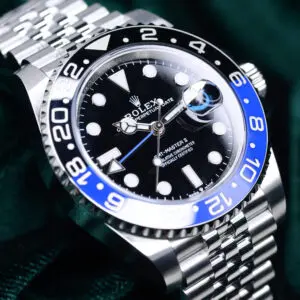
2026 Rolex GMT-Master II “Batgirl” Black Dial Blue Black Ceramic Bezel Jubilee Bracelet Stainless Steel 40mm MINT CONDITION COMPLETE SET 126710BLNR
$22,034.00
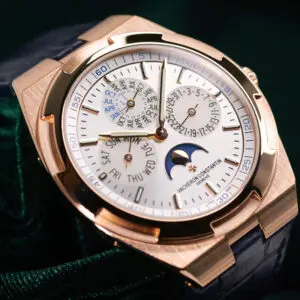
Vacheron Constantin Overseas Perpetual Calendar Ultra-Thin Silver Dial Blue Leather Strap 18K Rose Gold 41.5mm MINT CONDITION COMPLETE SET 4300V/120R-B064
$115,385.00
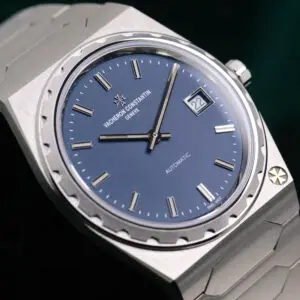
2026 NEW UNWORN Vacheron Constantin Historiques 222 Blue Dial Stainless Steel 37mm COMPLETE SET 4200H/222A-B934
$58,795.00
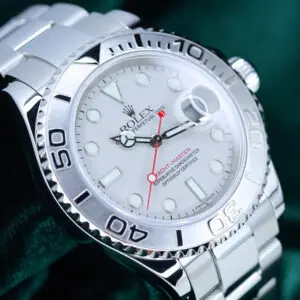
Rolex Yacht-Master Rolesium Platinum Dial Platinum Bezel Oyster Stainless Steel 40mm MINT CONDITION COMPLETE SET 16622
$14,690.00

Audemars Piguet Royal Oak Offshore Chronograph “Vampire” Black Dial Red Accents Black Ceramic Bezel Stainless Steel 42mm MINT CONDITION 26470SO.OO.A002CA.01
$34,649.00
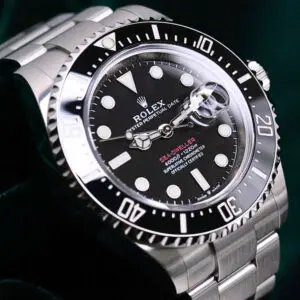
Rolex Sea-Dweller "Red Letter" Black Dial Black Cerachrom Bezel Oyster Bracelet Stainless Steel 43mm MINT CONDITION COMPLETE SET 126600
$13,120.00
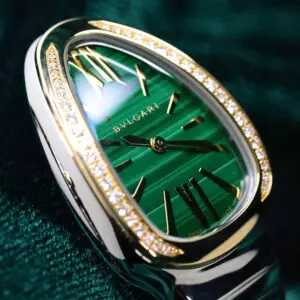
2026 NEW UNWORN Bvlgari Serpenti Tubogas Studs Capsule Limited Edition Green Dial Diamond Bezel Steel & 18k Yellow Gold 35mm COMPLETE SET 104360
$24,255.00
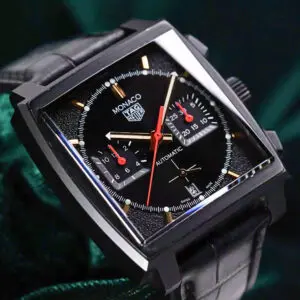
Tag Heuer Monaco Chronograph “Dark Lord” Special Edition Black Dial Black Leather Strap DLC Titanium 39mm MINT CONDITION COMPLETE SET CBL2180.FC6497
$8,135.00
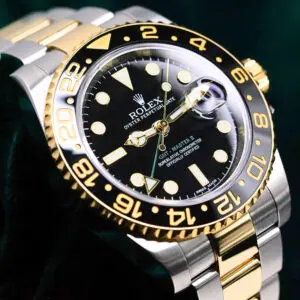
Rolex GMT-Master II “Green Arrow” Black Dial Black Ceramic Bezel Oyster Bracelet Two-Tone 18K Yellow Gold Stainless Steel 40mm MINT CONDITION COMPLETE SET 116713LN
$15,740.00
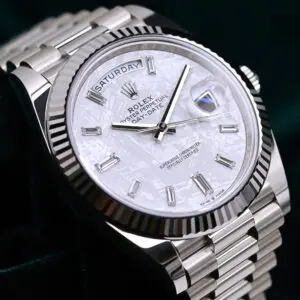
Rolex Day-Date Meteorite Baguette Diamond Dial Fluted Bezel President 18K White Gold 40mm MINT CONDITION COMPLETE SET 228239
$78,629.00
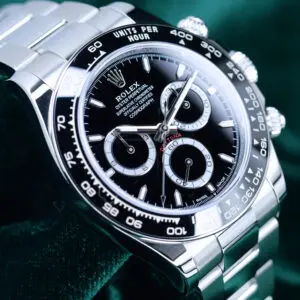
2026 Rolex Cosmograph Daytona Black Dial Black Ceramic Bezel Oyster Bracelet Stainless Steel 40mm MINT CONDITION COMPLETE SET 126500LN
$33,594.00
We also buy, sell, and trade luxury watches, and the reason clients pick us over a big marketplace is the conversation before the sale. You get layered communication with a real person who has the watch in hand, a tour video of the exact piece rather than stock photos, and honest condition notes before you commit.
That means real talk about a Speedmaster’s hesalite scratches or an Aqua Terra’s bracelet stretch. You are not buying blind off a listing, and you can browse what’s in stock now any time.
That approach is reflected in our 4.9-star Google rating, which comes from buyers who wanted the details before sending money.
If you want that kind of walkthrough on a specific Speedmaster or Aqua Terra, reach out and we’ll line up a few options that match what you’re after.
Final Thoughts on Speedmaster vs Aqua Terra
Speedmaster and Aqua Terra represent two philosophies inside Omega. Speedmaster is the historic tool chronograph, defined by its NASA story and its hand-wound character. Aqua Terra is the refined daily sports watch, with automatic Master Chronometer movements, real water resistance, and a dial for every taste.
Two quick tips before you decide. Try both on in person if you can, because the Speedmaster’s heft and the Aqua Terra’s slim profile feel nothing alike on the wrist. And if budget is tight, a clean used Speedmaster Reduced or a 38mm Aqua Terra gets you into Omega ownership well under the flagship prices.
Still weighing the brand more broadly? Our Omega buying guide maps the wider catalog.