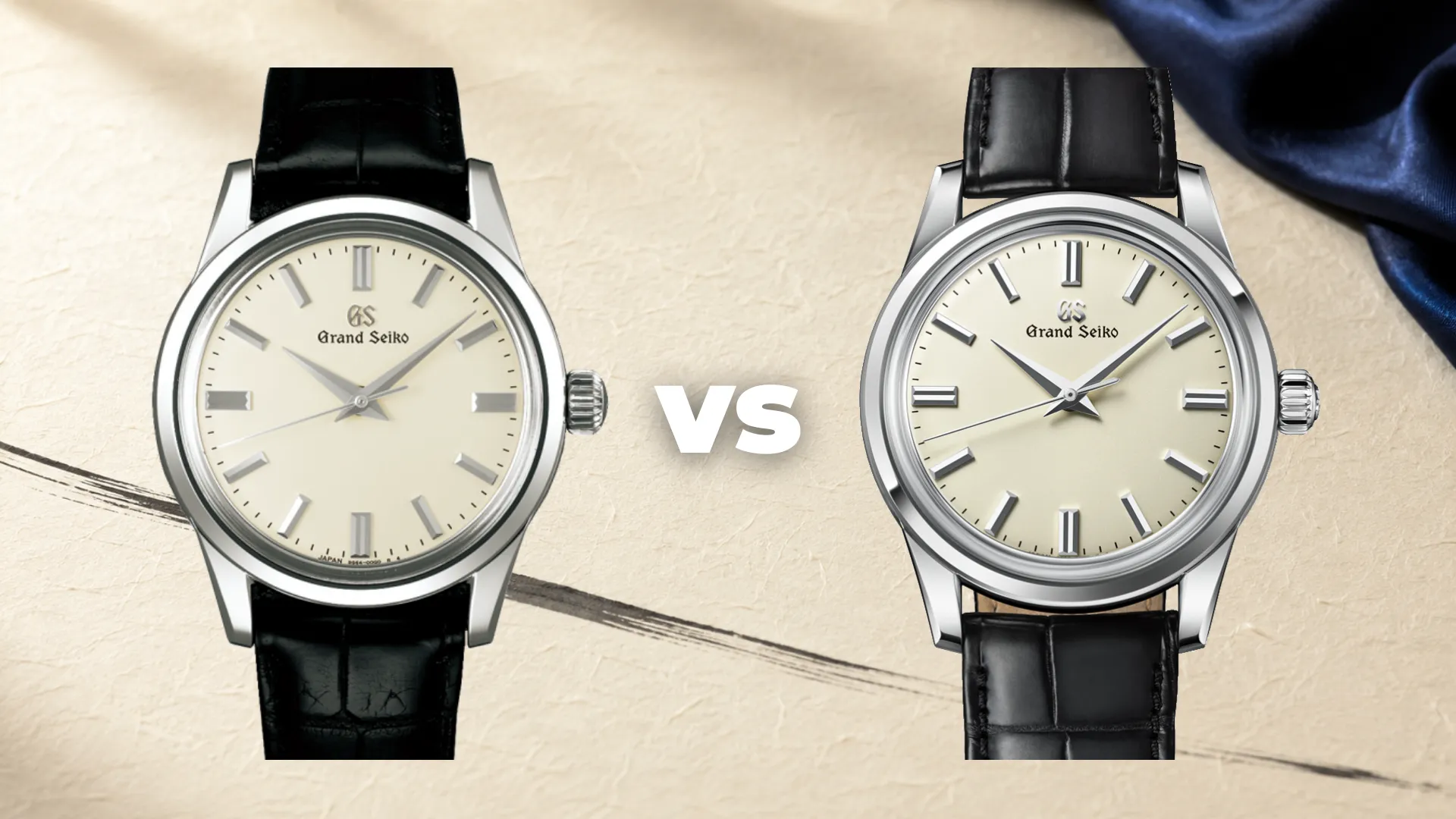

We sell Rolex Explorers every week, and the same six decisions come up every time. This guide walks through them in the order that matters most, so you spend your money on the right reference instead of the most-marketed one.
The Rolex Explorer looks simple at first, but buying the right one is not always simple. Size, reference, bracelet feel, condition, movement, and market demand all change how the watch wears and how smart the purchase feels long term.
This Rolex Explorer buying guide is written from the questions we hear from buyers every week. Some want the classic 36mm feel. Others want the newer 40mm presence. Many are deciding between modern references, discontinued models, or the best value on the pre-owned market.
We’ll walk through the six decisions that matter most before you buy, so you can choose the Explorer that fits your wrist, budget, and ownership plans instead of just picking the most talked-about reference.
Brief Rolex Explorer Brand Overview
The Explorer traces back to the early 1950s, when Rolex supplied watches to British mountaineering expeditions attempting Everest. Edmund Hillary and Tenzing Norgay reached the summit in May 1953, and Rolex launched the Explorer that same year under reference 6350.
Whether a Rolex was on Hillary’s wrist at the top is still debated, but the association shaped everything that followed. The name, the black dial, the 3-6-9 numerals, all of it came from that moment.
The reference 1016, introduced in 1963, defined what most people picture when they hear “Explorer.” It ran for 26 years without a major redesign, the longest production run of any Explorer reference, and it’s still the most argued-about watch in the vintage lineup.
The Explorer II arrived in 1971 as a separate tool for cave explorers and polar researchers who needed to distinguish AM from PM underground. Over the following decades it grew into its own collection, now sitting at 42mm with a fixed 24-hour bezel and GMT function.
What the Explorer I has never had is just as important as what it does have. No rotating bezel, no date, no complications beyond telling the time, Rolex kept it clean on purpose. That restraint is why it crosses from sports watch to dress watch without looking out of place, and it’s why the Explorer I tends to be the first Rolex that buyers hold onto the longest.
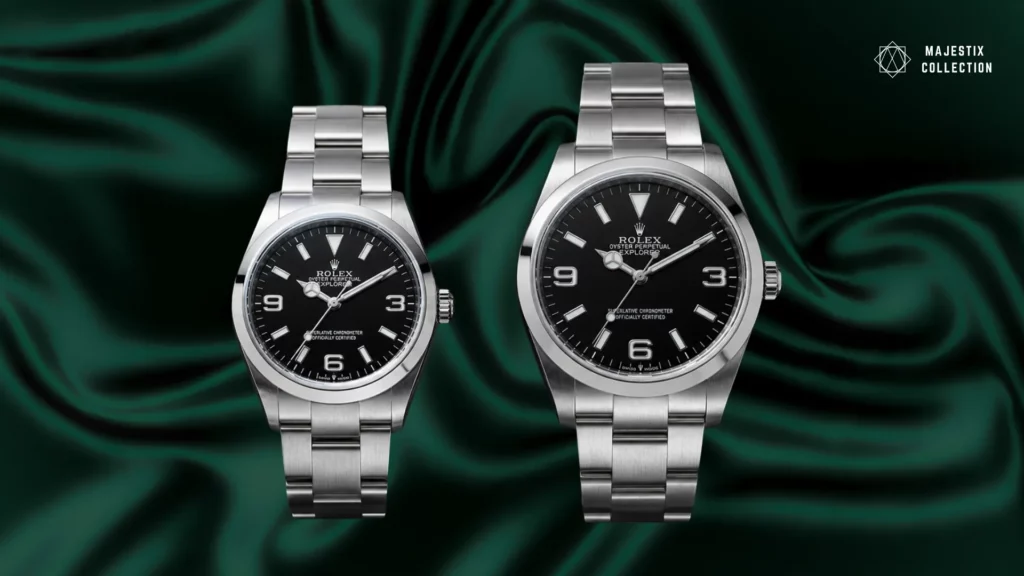
The current lineup runs three references: the 36mm 124270, the 40mm 224270, and the two-tone 124273.
How to Choose a Rolex Explorer
Most guides list every reference in order and let you figure out the rest. We do it differently. The decisions stack in a specific order, and getting one right makes the next one easier. The six choices below are how we walk a buyer through it on the floor.
You’ll start with Explorer I or Explorer II. Then new or pre-owned. Then which reference fits your budget, 36mm or 40mm, and steel or two-tone. Last, what to inspect before you pay. Each section below tackles one of these decisions.
Explorer I vs Explorer II
The two collections look related but solve different problems. Pick based on how you use a watch, not which one looks better in a photo.
Explorer I
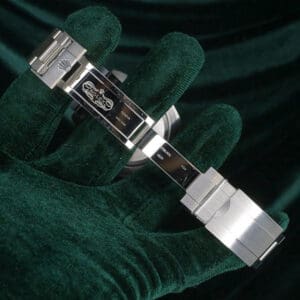
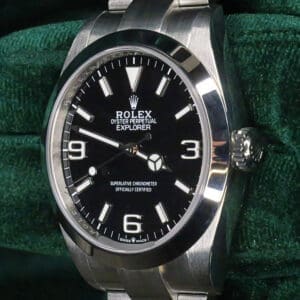
The Explorer I is a time-only watch in 36mm or 40mm with a smooth bezel and no date. If you stay in one time zone and want a clean, versatile Rolex sports watch, this is the pick. Most of our customers who buy a “first Rolex” land here, and most of them keep it.

Explorer II
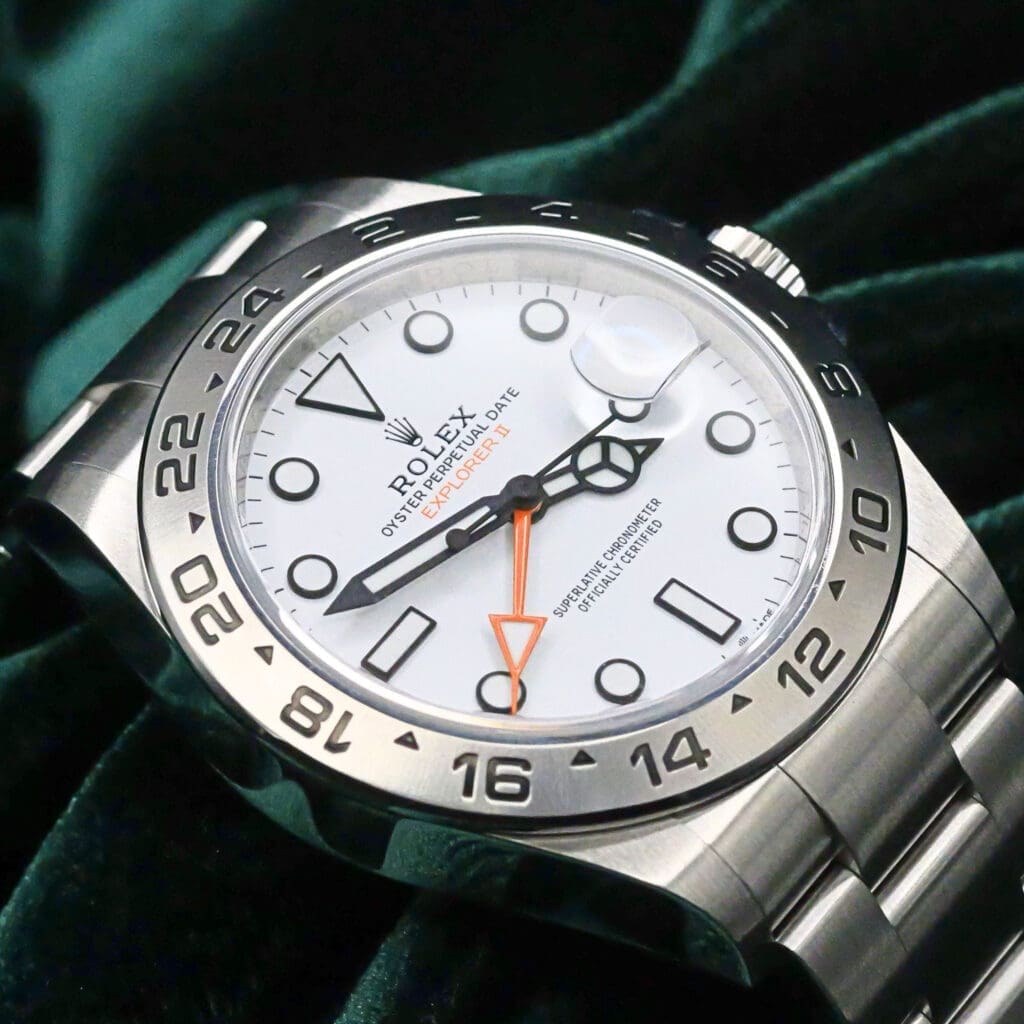
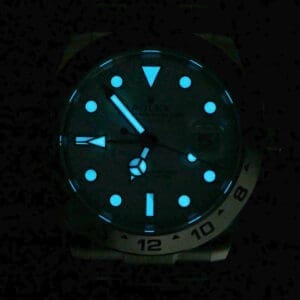
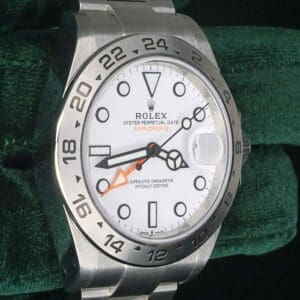
The Explorer II is a 42mm GMT watch with a fixed 24-hour bezel, crown guards, and a date. If you travel often or want a tool watch with more wrist presence, the Explorer II is the better pick, and we cover its full lineup in a dedicated guide. The Polar dial in white is the variant that gets the most attention from buyers who already own a Submariner or GMT-Master II.
New vs Pre-Owned Rolex Explorer
The default assumption is that new from an authorized dealer is always better. In 2026, on this collection specifically, that’s wrong for most buyers.
Pre-Owned Wins for Most Buyers in 2026
Buying new at an authorized dealer (AD) means you pay MSRP and join a waitlist. We walk through how AD purchases stack up against the grey market in detail separately. That waitlist runs from a few weeks to several months on the 124270 and 224270, depending on the city.
Buying pre-owned from a trusted dealer gets you same-day delivery, and in 2026, often a price below retail.
The Explorer I is one of the few Rolex sports watches where the pre-owned market rewards buyers. Both the 124270 and 224270 currently trade slightly below retail. The Explorer II 226570 works the opposite way. It sits at or slightly above retail on the secondary market, and the Polar dial commands a steady premium over the black. We go deeper on that Polar vs black breakdown in a separate piece.
Best Rolex Explorer References to Buy in 2026
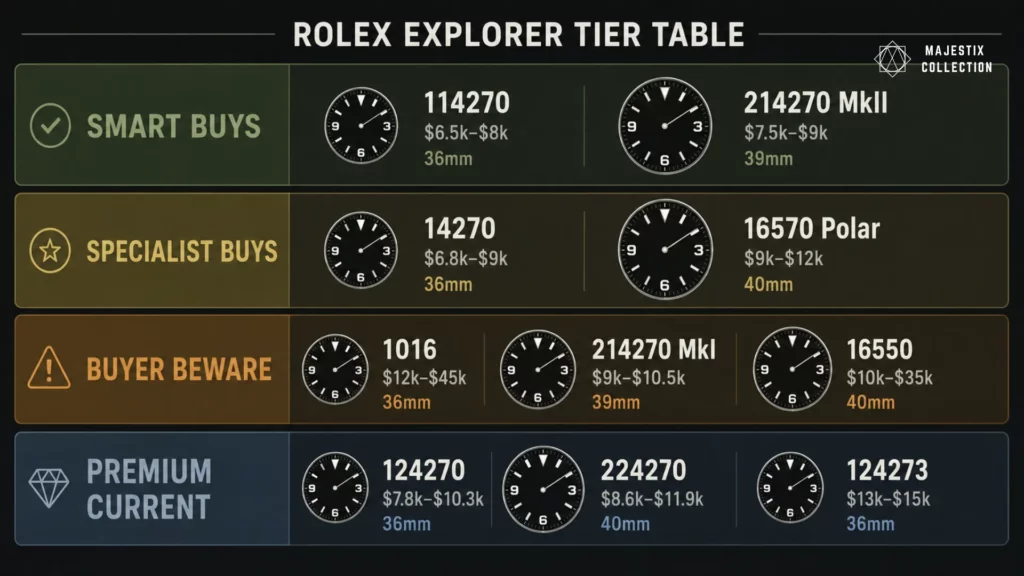
We sort the lineup into four tiers based on risk, value retention, and how forgiving each one is for first-time Explorer buyers. Each tier has a budget range built in, so you can skip to the one that fits your number.
Smart Buys: 114270 and 214270 Mark II
The 114270 is the most overlooked watch in the Explorer lineup. Rolex produced it from 2001 to 2010, and it shares the 36mm proportions of the current 124270. It trades for around $5,500 to $6,500 on the pre-owned market, roughly $1,000 to $1,500 below the 124270.
The Caliber 3130 inside is reliable and easy to service. A clean 114270 looks almost identical to a 124270 at a glance, and saves you real money in the process.
The 214270 Mark II is the other smart buy. Rolex made it from 2016 to 2021. The Mark II fixed the criticisms of the original 39mm 214270 with a longer handset and luminous 3-6-9 numerals. It runs the Caliber 3132 with Parachrom hairspring and Paraflex shock absorbers. If the in-house calibers are unfamiliar, we break down Rolex movements in a separate guide.
Pre-owned values sit around $7,000 to $7,500, comparable to the 124270 but in the 39mm case some buyers prefer. It’s also the only 39mm Explorer Rolex has ever made, which makes it harder to replace as the years go on.
Specialist Buys: 14270 and 16570 Polar
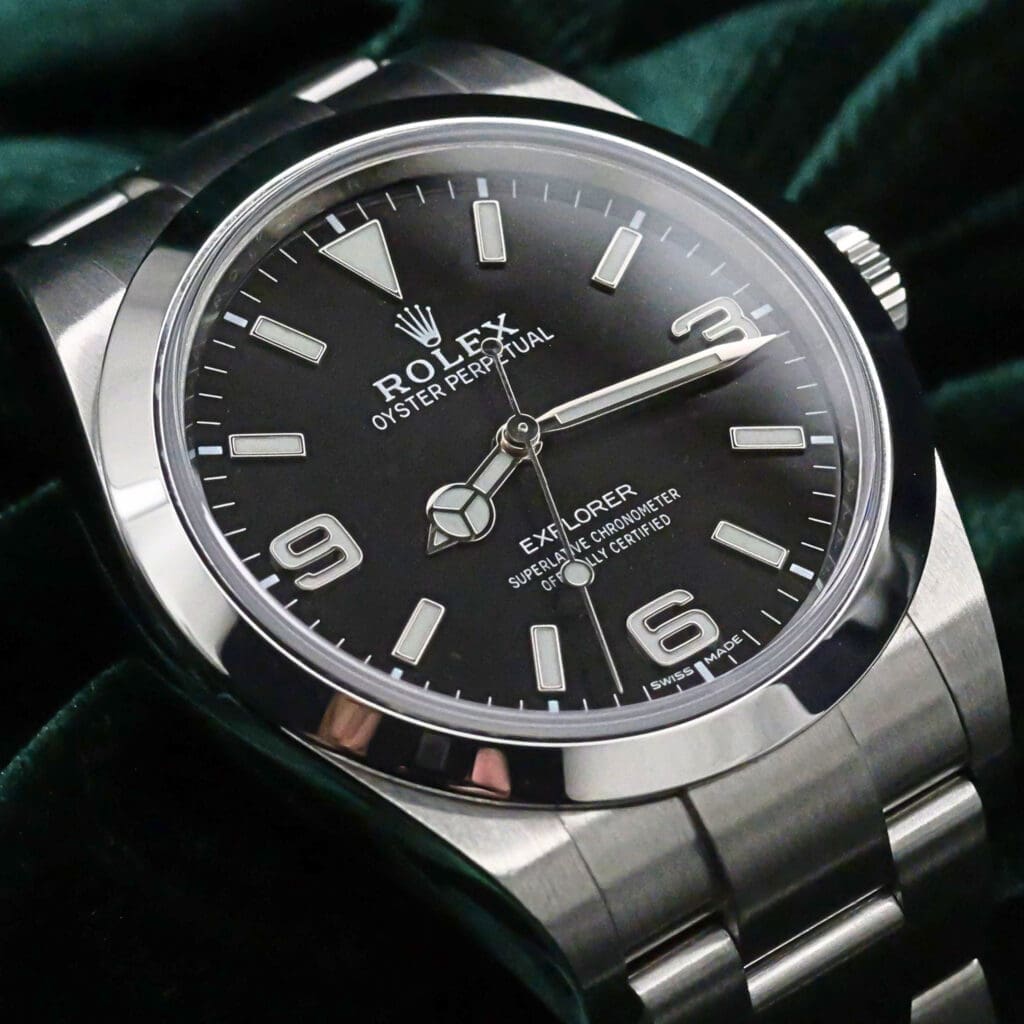
The 14270 (1989 to 2001) was the first sapphire-crystal Explorer and the first to use applied white-gold markers. It runs the Caliber 3000. Clean examples with original tritium dials trade around $5,000 to $6,500.
It wears more like a vintage watch than the 114270, with an older bracelet, hollow end links, and an earlier dial style. Buyers who want a neo-vintage Rolex find a good entry point here. The Blackout variant from 1989 to 1991 is the rare version worth chasing if you find a clean one.
The 16570 Polar is the white-dial Explorer II that Rolex made from 1989 to 2011. It’s one of our favorite picks for buyers who want 90s Rolex character with daily wearability. The white dial with black-outlined markers takes on character with age, and many examples look better at year ten than they did new.
Expect $7,000 to $9,000 depending on year, dial generation, and box and papers status. Target later examples with the Caliber 3186 movement (M-serial production, 2007 onward) for the more accurate GMT setting without the wobble.
Buyer Beware: 1016, 214270 Mark I, and 16550
The 1016 (1963 to 1989) is the well-known vintage Explorer, but it’s a minefield for first-time buyers. Service dials, refinished cases, replacement hands, and aged tritium plots all affect value in ways that take real expertise to read.
Honest examples run $12,000 to $25,000 and beyond, and a wrong call costs thousands. Buy a 1016 only from a vintage specialist, never a generalist.
The 214270 Mark I (2010 to 2016) had a handset many collectors felt was too short for the 39mm case, plus non-luminous Arabic numerals. It’s a fine watch at the right price. A Mark I commands roughly $1,000 to $2,000 less than a Mark II, and it sells slower. If a Mark I price reflects the dial issue, fine. If it’s priced like a Mark II, walk.
The 16550 (1985 to 1989) is a transitional Explorer II that came with cracked-dial issues on cream-dial examples. Some buyers love the patina that develops. Buyers expecting a clean dial walk away disappointed. Know which camp you’re in before you buy.
Premium Current: 124270, 224270, and 124273
These three make up the current production trio. All run the modern Caliber 3230. The 124270 retails around $7,900 and trades just under retail at roughly $7,500 on the secondary market. The 224270 retails around $8,350 and trades close to retail at $8,000 to $8,500.
The two-tone 124273 retails around $14,250 and trades meaningfully below retail at $10,000 to $13,500 on the pre-owned market. For all three, buying pre-owned from a trusted dealer makes more sense if you want one now. Waiting at an AD saves a few hundred dollars but costs months of patience and a purchase history requirement at most ADs.
Rolex Explorer Prices in 2026
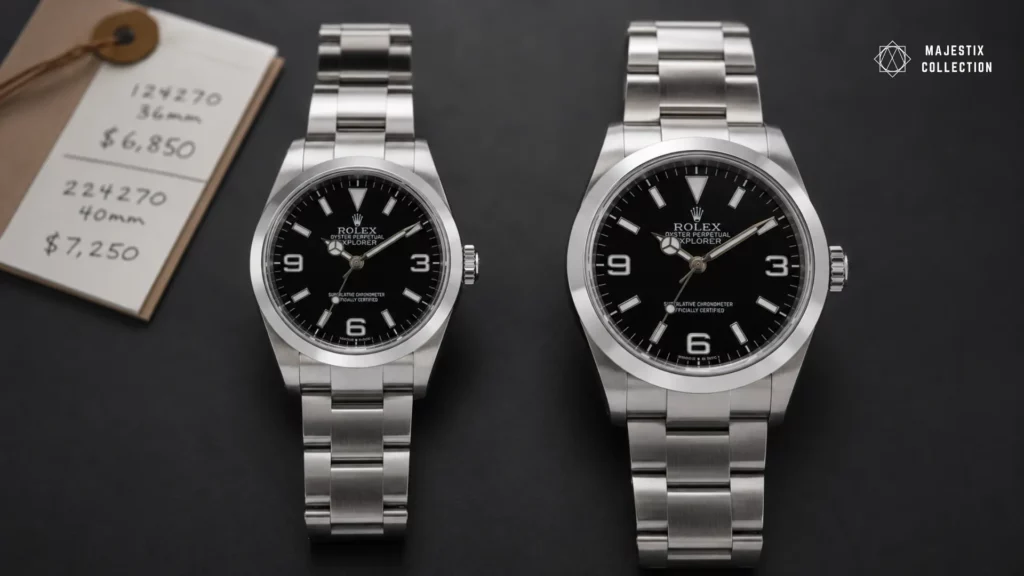
Most buying guides skip real numbers. We won’t. The ranges below reflect typical pre-owned prices as of early 2026, sourced from live grey market data on WatchCharts, Chrono24, and r/Watchexchange.
Prices shift week to week, so verify with a dealer before you buy. For a wider view of how Rolex pricing moves across the catalog, our full Rolex pricing breakdown tracks the broader market.
Modern Steel Explorer Prices
The 114270 ranges from roughly $5,000 to $7,000. M-serial and later examples (2008 onward) command stronger prices because they have the engraved rehaut. The 214270 Mark I ranges from $6,000 to $7,500. The 214270 Mark II ranges from $7,000 to $8,500.
The 124270 in 2026 ranges from $7,000 to $8,500, with full-set examples at the top of the band. The 224270 ranges from $7,800 to $9,500. The two-tone 124273 ranges from $10,000 to $13,500, well below its $14,250 retail price.
Vintage and Discontinued Explorer Prices
The 14270 ranges from $4,500 to $7,000 depending on whether it’s a Blackout, T-25 tritium, or later Swiss-Made Super-LumiNova example. The 1016 ranges from $12,000 to $25,000 and beyond, with gilt-dial examples at the top of the band and matte-dial examples in the lower half.
The Explorer II 16570 ranges from $6,500 to $9,000. Polar dials command a $500 to $1,000 premium over black. The 216570 (2011 to 2021) ranges from $8,000 to $10,000.
Box and Papers Premium
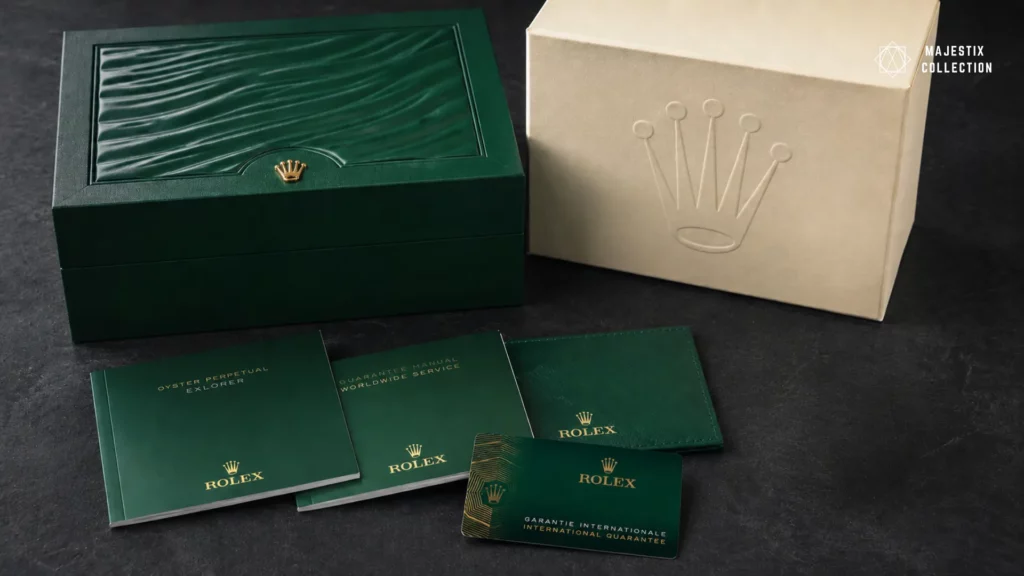
Box and papers add real money to the price. On a 114270, a full set adds roughly $500 to $1,000 over a watch-only example. On a 214270, expect $750 to $1,500. On a 1016, a full set with original receipt can double the price of a watch-only example, since vintage values work differently.
If you don’t plan to resell soon, watch-only is the value play. The discount usually outweighs the resale gap if you wear the watch for a few years. We walk through whether a Rolex without box and papers is worth buying in a separate piece.
Rolex Explorer 36 vs 40: Which Size to Buy
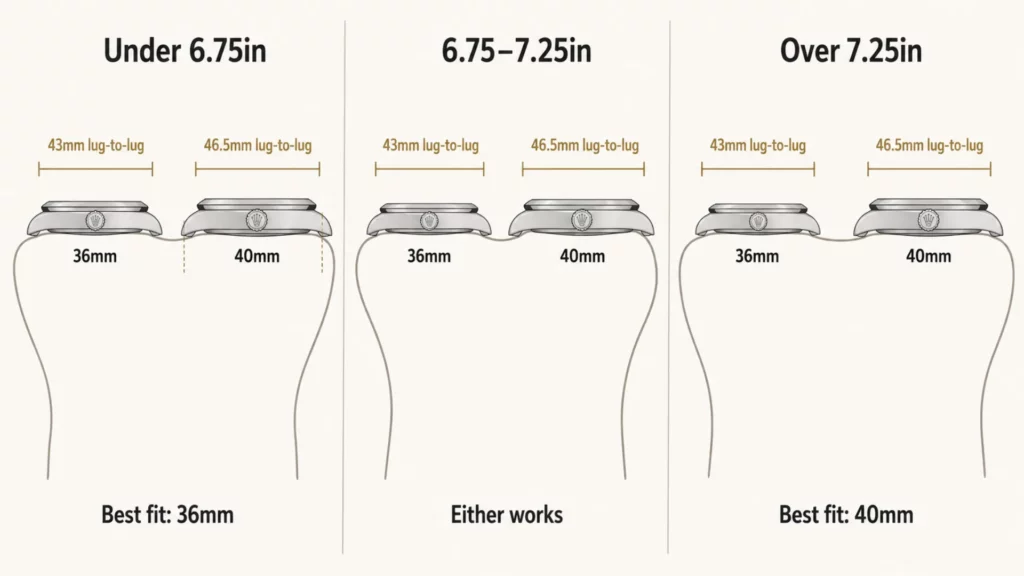
The 36 vs 40 debate dominates Watchuseek and r/Watches threads on this watch. The 36mm 124270 has a 43mm lug-to-lug. The 40mm 224270 sits at 46.5mm. That 3.5mm gap is what you feel on the wrist. After reading hundreds of those discussions and trying both on dozens of wrists, here’s the honest breakdown.
Wrists Under 6.75 Inches: 36mm Fits Best
The 124270 wears comfortably and looks proportional on smaller wrists. The 224270 at 46.5mm lug-to-lug overhangs visually on anything under 6.75 inches. Forum consensus from owners with 6.5-inch wrists agrees. The 36mm looks right, while the 40mm looks borrowed from someone bigger.
Wrists 6.75 to 7.25 Inches: Either Size Works
Both sizes work in this crossover zone. Try them on. The 124270 reads as a properly sized vintage-feel watch. The 224270 reads as a modern daily wear. We’ve seen 7-inch wrists go both ways. Pick based on whether you want the watch to disappear on the wrist (36mm) or have presence (40mm).
Wrists Over 7.25 Inches: 40mm Fits Best
The 224270 looks better on most larger wrists, though the 36mm still works for buyers who prefer dressy, understated proportions. If you already like the Submariner or GMT-Master II, you’ll probably gravitate to the 40mm.
If you prefer the 36mm Datejust or Oyster Perpetual, the 36mm Explorer will feel more at home. Our Explorer vs Oyster Perpetual comparison covers that decision in more detail.
How to Inspect a Pre-Owned Rolex Explorer
Most guides reduce this section to a bullet list. We walk through what a real inspection looks like instead. Pre-owned buyers get burned right here, so don’t skip these checks.
Check the Dial, Hands, and Lume
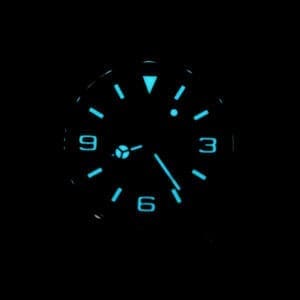
Look at the lume plots under bright light, then again in dim light. The plots should match in color, age, and density across the dial. Mismatched plots, brighter-than-expected lume on a 14270, or a single relumed plot all signal that someone touched the dial or hands.
On a 114270 or 214270, the printing on the dial should look sharp. Fuzzy text usually means a fake or a service-replaced dial.
Inspect the Case for Over-Polishing
Run your finger along the case edge from lug to lug. The bevel between the brushed top and polished side of the lugs should feel sharp. Soft or rounded bevels mean the watch went through one polish too many.
Watches that went through three or four service cycles often show this. Over-polished cases lose value and feel off on the wrist. We break down the polished versus unpolished question in a dedicated guide if you want to understand what to walk away from.
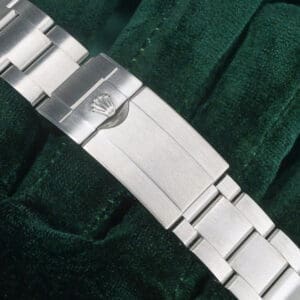
Feel the Bracelet for Stretch and Verify the Clasp
Hold the bracelet horizontally and let it hang. A stretched bracelet droops in a noticeable curve and shows visible gaps between the links when you extend it. New bracelets hang relatively straight.
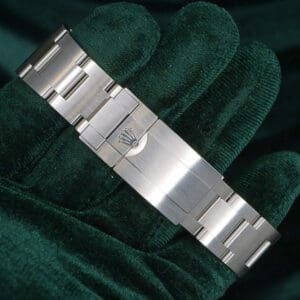
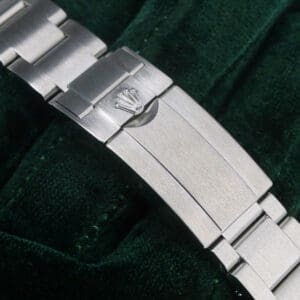
The 114270 came with hollow end links until late production switched to solid. The 214270 has solid end links throughout. Modern examples should have an Oysterlock clasp with the Easylink 5mm extension.
Verify the Rehaut Engraving and Reference Codes
The engraved rehaut is the inner ring around the dial with “ROLEX ROLEX ROLEX” repeated. Rolex started engraving rehauts on the 114270 around 2007 to 2008 (M-serial production onward), and every reference since has them, including the 214270, 124270, and 224270.
The engraving should look crisp and uniform. Confirm that the serial at six o’clock matches the production year of the reference.
Confirm Movement and Service History
The 114270 runs Caliber 3130. The 214270 runs Caliber 3132. The 124270, 224270, and 124273 all run the modern Caliber 3230.
Ask the seller for a recent service receipt. A watch serviced by an authorized Rolex Service Center within the last three years adds real value. Independent watchmaker service works just as well if the receipt is there and the watchmaker has a reputation.
Rolex Explorer Service Cost in 2026
Most buyers ask this question after they’ve already bought one. Better to know upfront. Service costs scale with movement complexity and watch age. A modern 124270 is straightforward. A 1016 is not. We’ve laid out Explorer service costs in detail in a separate piece. The Explorer II numbers live in their own breakdown.
Rolex Service Center: $800 to $1,000
A full service on a modern Explorer at a Rolex Service Center runs roughly $800 to $1,000 in 2026. The price covers movement service, gasket replacement, light case polishing, and a two-year service warranty.
Vintage references like the 1016 cost more, typically $1,200 to $1,800, because parts are harder to source and the work takes longer. Service turnaround usually runs six to twelve weeks.
Independent Watchmaker: $400 to $700
A reputable independent watchmaker charges $400 to $700 for a full Explorer service. You lose the Rolex paperwork but gain faster turnaround and the option to skip case polishing.
Buyers who want to preserve sharp lugs prefer this route. We recommend independent service for vintage references where original parts matter, since Rolex Service Centers tend to swap parts aggressively.
Rolex Explorer Market Trends and Collector Debates
Three live debates on Watchuseek, r/Watches, and Rolex Forums shape how the market values these references right now. Each one tells you something useful about where the value is.
The 39mm 214270 Is Becoming a Cult Reference
The 214270 sits between the well-loved 36mm 114270 and the current 124270. Some collectors call it the forgotten Explorer. Others see the 39mm case as a future cult reference because it’s the only Explorer Rolex has ever made in that size.
Mark II prices have held steady for two years now, neither rising sharply nor falling. We think the Mark II is a smart buy at current prices because it wears modern enough for daily use and discontinued enough to age well.
Rolex Returned to 36mm Because Owners Demanded It
The price action proves the point. When Rolex discontinued the 39mm 214270 in 2021 and replaced it with the 36mm 124270, secondary prices on the 214270 jumped from $8,000 to roughly $10,000 within weeks.
Many buyers preferred the 39mm. Rolex responded in 2023 by adding the 40mm 224270 to give those buyers a current option. The lineup now offers both sizes because the market demanded it.
The Two-Tone 124273 Splits the Collector Community
Forum purists call the 124273 a betrayal of the tool-watch DNA. Other collectors see it as a clever modernization that opens the Explorer to dressier rotations.
We think the 124273 works for buyers who already own a steel Explorer, or for buyers who want one watch that crosses from weekend to formal. As a first Explorer, the 124270 or 224270 in steel is the pick we’d point you to every time.
Final Thoughts on the Rolex Explorer Buying Guide
The Explorer rewards patient buyers. Decide between Explorer I and Explorer II first. Settle new versus pre-owned next. Pick the reference your budget supports. The 114270 and 214270 Mark II are the strongest value picks in 2026.
The current 124270 and 224270 trade at or below retail, and they reward buyers who want one now. If you’re still weighing the Explorer against other Rolex sports models, our broader Rolex buying guide maps out where each line fits.
Two bonus tips most guides skip. First, Rolex typically raises retail prices in January, so buying pre-owned in November or December locks in lower secondary pricing before the new MSRP recalibrates the market.
Second, ask your dealer for high-resolution macro photos of the rehaut, clasp codes, and dial printing before you wire funds, even from trusted sellers. It’s the cheapest insurance you’ll ever pay for.Want help narrowing down which Explorer fits your wrist, your budget, and the way you’ll use it day to day? Send us your shortlist and we’ll talk through what’s in our inventory now and what we expect to see in the next few weeks. Every watch we sell comes authenticated, serviced, and ready to wear.
999+ Timepieces Available
Explore Our Timepieces
Authenticated, unworn, and ready to ship worldwide.
Rolex · Audemars Piguet · Patek Philippe · Omega · Cartier · Richard Mille · Hublot · Tudor
Newly Listed
2025 NEW Hermes Kelly Sellier en Desordre 20 Vert Mangrove Epsom Leather Permabrass Hardware
$38,900.00
2026 NEW UNWORN Audemars Piguet Royal Oak Chronograph Black Dial Black Ceramic Bezel Black Ceramic Bracelet 41mm COMPLETE SET 26240CE.OO.1225CE.02
$129,800.00
Tudor Black Bay GMT Pepsi Black Dial Red and Blue Bezel Stainless Steel 41mm MINT CONDITION COMPLETE SET 79830RB
$4,294.00
Breitling Superocean Heritage II Green Dial Black Ceramic Bezel Black Rubber Strap Stainless Steel 42mm MINT CONDITION COMPLETE SET AB2010121L1S1
$5,236.00
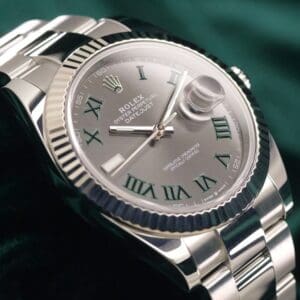
2025 Rolex Datejust Wimbledon Slate Gray Dial Fluted 18K White Gold Bezel Oyster Bracelet Stainless Steel 41mm MINT CONDITION COMPLETE SET 126334
$15,694.00
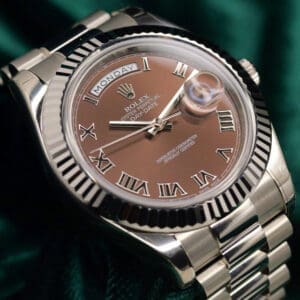
Rolex Day-Date II Brown Chocolate Dial Roman Numerals Fluted Bezel President Bracelet 18K White Gold 41mm MINT CONDITION COMPLETE SET 218239
$49,390.00
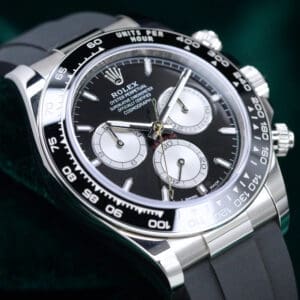
2026 NEW UNWORN Rolex Cosmograph Daytona "Baby Le Mans" Black Dial Silver Subdials Black Ceramic Bezel Black Oysterflex Strap 18K White Gold 40mm COMPLETE SET 126519LN-0002
$57,200.00
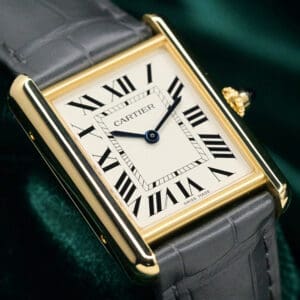
2025 Cartier Tank Louis Cartier Silver Dial Gray Alligator Strap 18K Yellow Gold 25.5mm MINT CONDITION COMPLETE SET WGTA0343
$13,189.00
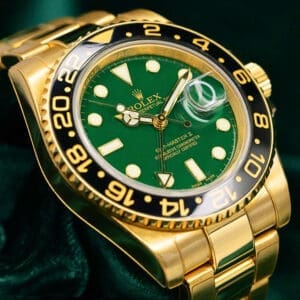
Rolex GMT-Master II Green Dial Black Ceramic Bezel Oyster Bracelet 18K Yellow Gold 40mm MINT CONDITION COMPLETE SET 116718LN
$46,745.00
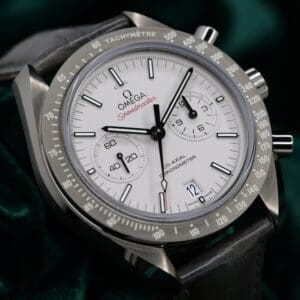
Omega Speedmaster Grey Side of the Moon Grey Dial Alligator Leather Strap Grey Ceramic 44.25mm MINT CONDITION 311.93.44.51.99.001
$8,690.00
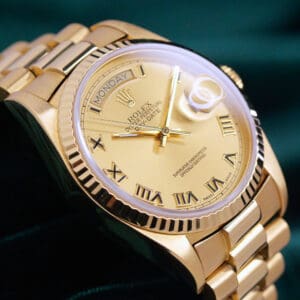
Rolex Day-Date 36 Champagne Gold Dial Roman Numeral Markers Fluted Bezel Presidential Bracelet 18K Yellow Gold NEAR MINT CONDITION 18038
$20,345.00
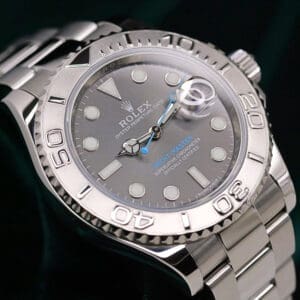
Rolex Yacht-Master Rhodium Grey Dial Platinum Bezel Oyster Bracelet Stainless Steel 40mm MINT CONDITION COMPLETE SET 116622
$14,300.00