
If you are weighing the Rolex Submariner against the Sea-Dweller, you are looking at two dive watches that share a family but solve different problems. Both can clear a daily wear test. Only one was designed for the inside of a saturation chamber.
The Submariner came first, in 1953, and slowly grew into the dive watch every other dive watch gets compared to. The Sea-Dweller arrived in 1967 to handle commercial saturation diving, with a helium escape valve, a deeper case, and a more deliberate feel on the wrist.
Two things shifted in 2026 that matter for this comparison. Rolex raised retail prices across the board in January, pushing the no-date Submariner past $10,000 retail for the first time and the Sea-Dweller 126600 to roughly $13,150. Neither line got refreshed at Watches and Wonders 2025 or 2026, so what is on shelves now is what you are choosing from.
By the end of this comparison, you will know which one fits your wrist, your daily routine, and the level of dive capability you really need.
Rolex Submariner Overview

The Submariner debuted in 1953 as a watch built for divers, with three things working together: a rotating bezel for elapsed time, hands and indices that stay legible underwater, and an Oyster case that could take sustained water exposure. That recipe became the template for the modern dive watch, full stop.
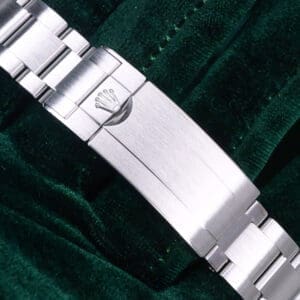
The current Submariner No-Date, ref. 124060, is the closest you get to the original Submariner concept today. It runs a 41 mm Oystersteel case, 300 m / 1,000 ft of water resistance, a black Cerachrom bezel, and an Oyster bracelet with the Glidelock micro-adjust. The dial is symmetrical because there is no date and no Cyclops.
For buyers who want one Rolex that handles the office, the weekend, and the occasional dive, this is the reference Rolex puts in front of them.

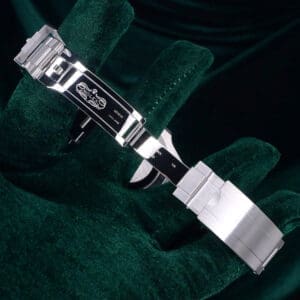

Inside is the caliber 3230, a three-hand movement with a roughly 70-hour power reserve and the Chronergy escapement Rolex rolled out across the modern lineup. It is reliable, accurate, and easy to live with. There is nothing exotic about it, and that is the point.
From a collector’s view, the Submariner works because the line never gets reinvented. Vintage references, transitional models, and the current 41 mm cases all share the same silhouette, so condition and originality drive value more than fashion cycles. That is rare in this category, and it is part of why resale stays steady.For the full breakdown of which Submariner fits which buyer, see our Submariner buying guide.
Rolex Sea-Dweller Overview

Rolex introduced the Sea-Dweller in 1967 because commercial saturation divers were losing crystals on their Submariners. During decompression, helium that had seeped past the case seals at depth was expanding faster than it could escape, blowing the crystals off.
The fix was a one-way valve in the case side, the helium escape valve, that vents helium during decompression while keeping water out at depth. That valve is the reason the Sea-Dweller exists.
The current reference, 126600, came out in 2017 for the line’s 50th anniversary and stuck around. It runs a 43 mm Oystersteel case, 1,220 m / 4,000 ft water resistance, a black Cerachrom bezel, and the same Glidelock-equipped Oyster bracelet you get on the Submariner.
Two design choices set it apart from the older Sea-Dwellers: red SEA-DWELLER text under the hands, and a Cyclops lens over the date, which the line had skipped from 1967 until this reference.
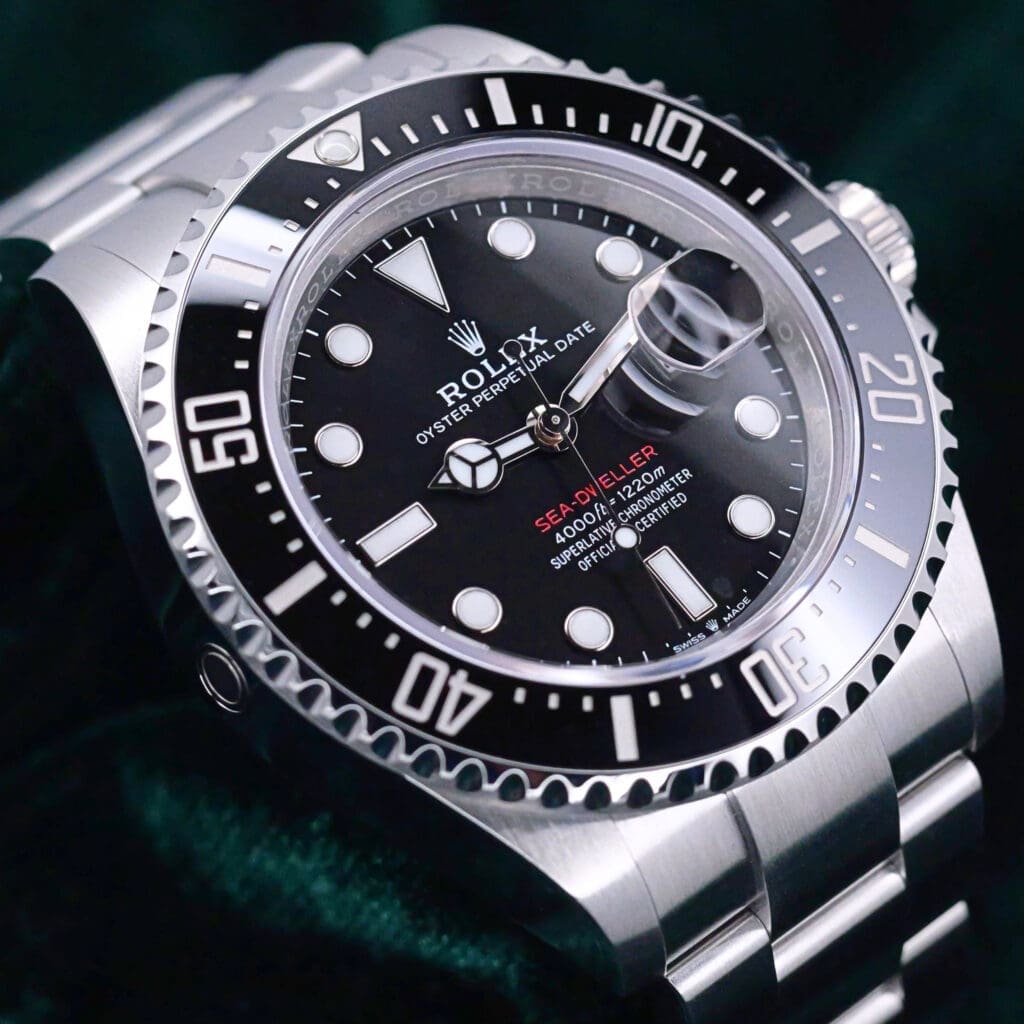

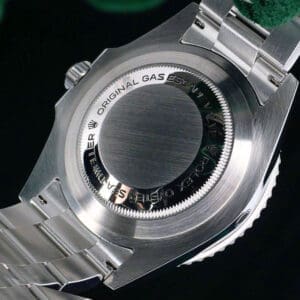
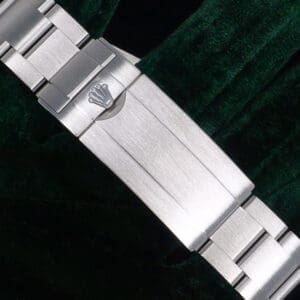

Inside is the caliber 3235, the date-equipped sibling of the 3230. Same 70-hour reserve, same Chronergy escapement, with a date complication added. Despite the depth rating, it does not feel like a novelty piece on the wrist. It feels like a serious sports watch with the volume turned up.
Collectors who buy the Sea-Dweller tend to be buyers who want the dive-watch DNA without the broader recognition of the Submariner. Vintage references reward originality, especially the ones with red text and tropical dials, while the modern 126600 sits at or near retail on the secondary market, a rarity in the steel sport Rolex world.
If the Sea-Dweller is the line you want to dig into further, our Sea-Dweller buying guide covers every reference in detail.
Submariner vs Sea-Dweller: Key Differences

Submariner vs Sea-Dweller: The Real Differences
The Submariner and Sea-Dweller share more than they don’t. Same case material, same bezel construction, same bracelet, same movement architecture. The differences are in size, depth, and what the watch was originally built to do. Here is where they split.
1. Purpose and Function
The Submariner is built to be the only sports watch you need. The unidirectional 60-minute bezel, Triplock crown, and 300 m water resistance handle anything short of professional saturation diving. For the vast majority of wearers, including people who dive recreationally, that is more than enough.
The Sea-Dweller exists for the situations the Submariner was not built for: commercial divers spending days in pressurized chambers breathing helium-rich gas, where the watch has to survive both the depth and the decompression. The depth rating jumped from 610 m at the 1967 launch to 1,220 m by 1978, and the helium escape valve sits at 9 o’clock.
If you don’t dive professionally, none of that does anything for you mechanically. It does change the watch’s identity, though.
If 1,220 m still isn’t deep enough for what you have in mind, our Sea-Dweller vs Deepsea breakdown covers Rolex’s bigger dive option.
2. Case Size and Wrist Fit
This is the difference most buyers feel first. The Submariner sits at 41 mm wide and roughly 12 mm thick on the modern 124060. The Sea-Dweller is 43 mm wide and noticeably thicker, since the case has to hold up to the higher pressure rating and house the helium escape valve.
On a 6.5 to 7-inch wrist, the Submariner reads as balanced. The Sea-Dweller on the same wrist reads as deliberate, sometimes top-heavy. The shirt-cuff test is the easiest way to think about it: the Submariner slides under most cuffs without a fight, the Sea-Dweller catches on tighter cuffs and needs extra room.
Daily wear amplifies that difference. The Submariner transitions from a t-shirt to a suit jacket without complaint. The Cerachrom bezel resists the kind of marks aluminum picks up. It is the dive watch you can wear and forget you are wearing.
The Sea-Dweller asks for slightly more from the wearer. The 43 mm case has more presence in casual settings and more weight under a dress shirt. For buyers who want to feel the watch on their wrist, that is the point. For buyers who want the watch to disappear, the Submariner is the easier choice.
3. Dial and Cyclops Lens
The Submariner gives you a choice. The 124060 keeps the dial symmetrical with no date window. The 126610LN adds the date and Cyclops at 3 o’clock for everyday utility. Same case, same bezel, same depth rating, so the call is purely about how you want the dial to look and whether you check the date often.
We walk through the Submariner Date vs No-Date breakdown in more depth in a separate guide.
The Sea-Dweller used to be the no-Cyclops alternative. The 16600 and 116600 both shipped with flat crystals and no magnification, and a lot of the line’s appeal among purists came from that cleaner look.
Rolex broke the pattern in 2017 with the 126600, adding a Cyclops for the first time in the line’s history. Earlier no-Cyclops references, especially the 116600 with its Cerachrom bezel, get more collector interest now precisely because of what the new reference gave up.



4. Movement and Power Reserve
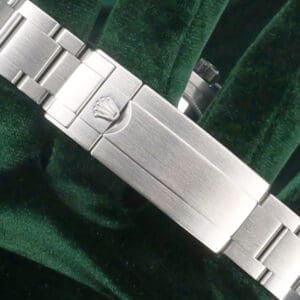
Both watches run modern Rolex calibers with about 70 hours of reserve and the Chronergy escapement. The 124060 uses the time-only caliber 3230. The 126600 runs the date-equipped caliber 3235.
Service implications are worth knowing. The current calibers are excellent on paper, but parts availability outside Rolex Service Centers is still limited compared to the older 31xx-series movements. Independent watchmaker service tends to cost more on these than it did on the 116610 and 116600 generation.
Rolex’s own recommended service interval is now 10 years for modern references in good running condition, longer than the older 5-year cadence. That changes the long-term ownership math.
For specific numbers, our breakdown of Rolex Submariner service costs covers what to budget at the factory and at independent watchmakers.
999+ Timepieces Available
Explore Our Timepieces
Authenticated, unworn, and ready to ship worldwide.
Rolex · Audemars Piguet · Patek Philippe · Omega · Cartier · Richard Mille · Hublot · Tudor
Newly Listed

2026 NEW UNWORN Cartier Santos-Dumont Silver Dial Platinum Mesh Bracelet Platinum 31mm COMPLETE SET WGSA0124
$64,790.00

2026 Tudor Black Bay 58 Black Dial Jubilee Bracelet Stainless Steel 39mm MINT CONDITION COMPLETE SET 7939A1A0NU
$5,717.00

NEW UNWORN Rolex Submariner Date “Sub Date” Black Dial Black Ceramic Bezel Oyster Bracelet Stainless Steel 41mm COMPLETE SET 126610LN
$15,595.00
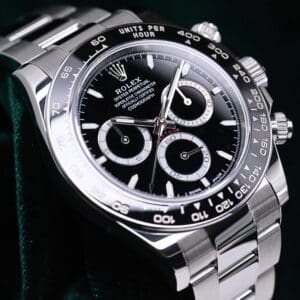
Rolex Cosmograph Daytona "Reverse Panda" Black Dial Black Ceramic Bezel Oyster Bracelet Stainless Steel 40mm MINT CONDITION COMPLETE SET 126500LN
$32,009.00
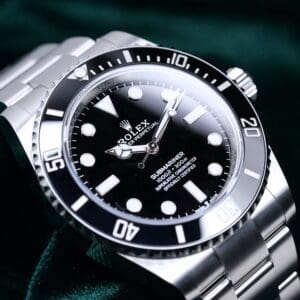
2026 NEW UNWORN Rolex Submariner No Date Black Dial Black Ceramic Bezel Oyster Bracelet Stainless Steel 41mm COMPLETE SET 124060
$15,219.00
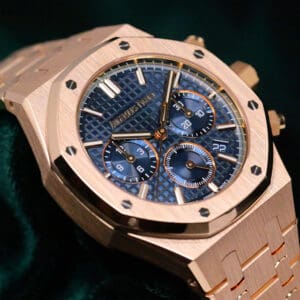
Audemars Piguet Royal Oak Selfwinding Chronograph Bleu Nuit Nuage 50 Blue Dial Bracelet 18k Rose Gold 38mm MINT CONDITION COMPLETE SET 26715OR.OO.1356OR.01
$104,942.00
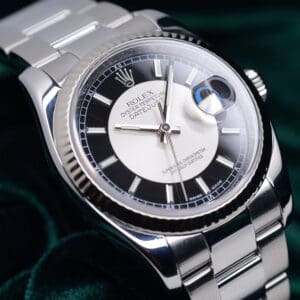
Rolex Datejust “Tuxedo” Black and Silver Dial 18K White Gold Fluted Bezel Stainless Steel Oyster 36mm MINT CONDITION COMPLETE SET 116234
$10,671.00
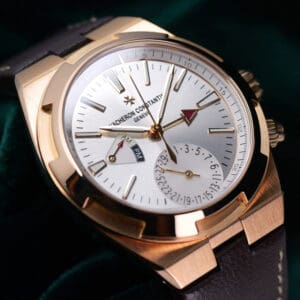
Vacheron Constantin Overseas Dual Time Silver Dial Brown Leather Strap 18K Rose Gold 41mm MINT CONDITION COMPLETE SET 7900V/000R-B336
$41,894.00
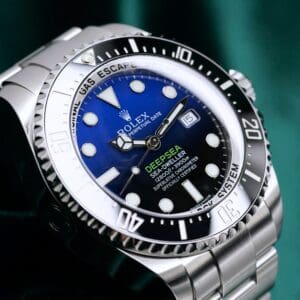
Rolex Sea-Dweller Deepsea James Cameron D-Blue Dial Black Ceramic Bezel Oyster Bracelet Stainless Steel 44mm MINT CONDITION 116660-0003
$14,272.00
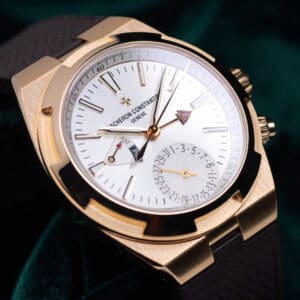
Vacheron Constantin Overseas Dual Time Silver Dial 18K Rose Gold Brown Rubber Strap 41mm MINT CONDITION COMPLETE SET 7900V/000R-B336
$41,894.00
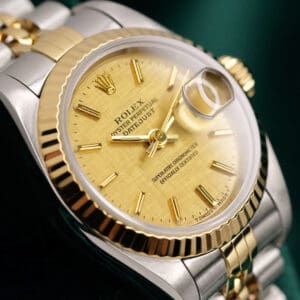
Rolex Lady-Datejust Champagne Linen Dial 18k Yellow Gold Fluted Bezel Jubilee Bracelet Two Tone Steel & Gold 26mm MINT CONDITION COMPLETE SET 69173
$9,345.00
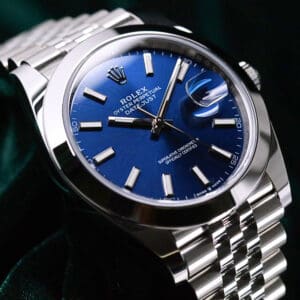
2026 Rolex Datejust Blue Dial Smooth Bezel Jubilee Bracelet Stainless Steel 41mm MINT CONDITION COMPLETE SET 126300
$13,796.00
5. Price and 2026 Market Position
January 2026 retail prices set the floor. The Submariner No-Date 124060 moved to $10,050. The Submariner Date 126610LN landed at $11,350. The Sea-Dweller 126600 increased to $13,150. Those are the numbers Rolex tells authorized dealers to charge before any premium gets layered on.
The secondary market tells a more interesting story. The 124060 trades roughly $12,500 to $14,500 on platforms like Chrono24, holding a moderate premium over retail with strong liquidity. WatchCharts data shows it sells in a median of around 15 days, faster than 95% of the market.
The 126600 trades roughly $11,000 to $14,000, which means it often clears at-or-near retail with no premium and sometimes at a discount. Median sale time is around 21 days, which is still fast but slower than the Submariner.
That gap is one of the more useful data points for a buyer choosing between these two. The Submariner has a deeper market with broader demand, so it costs slightly more than retail to enter and is easier to exit.
The Sea-Dweller, despite being the more technically capable watch, is one of the few steel sport Rolex references where you can buy without paying a grey-market premium. For the buyer who wants the broadest resale audience, the Submariner is the cleaner play.
Precious-metal and two-tone references in both lines follow different math entirely and don’t tell you anything useful about the steel-on-steel comparison.
For the broader picture across every Rolex collection, our Rolex pricing guide lays out current retail and grey-market figures side by side.
6. Which Holds Value Better Long Term
If section 5 was about entry pricing, this is about what happens after you own the watch. Five-year and one-year market data points in different directions for these two. The 124060 is down roughly 3% over five years, holding up better than the broader Rolex Submariner Index, and has gained back close to 9-10% over the past year.
The 126600 is down closer to 15% over five years, having corrected harder from the 2022 peak, but it has stabilized over the past 12 months.
The takeaway: if you bought either at peak in early 2022, you took a hit, but the Submariner took less of one. The Sea-Dweller correction is closer to the floor than the Sub correction was, which is why long-term holders see better odds entering today.
Both are stable enough that resale risk over a 3 to 5-year hold is low if you buy the right reference at the right price.
If value retention across the whole catalog matters to your decision, our take on whether Rolex watches hold their value puts the broader pattern in context.
Notable Rolex Submariner References

Four references cover the modern story. Each one is meaningful for a specific reason: design change, production-run length, or generational shift. Condition and originality drive value more than reference desirability alone. For a fuller tour across every era, see our Submariner models explained breakdown.
Ref. 5513 (1962 to 1989)
The 5513 is the long-run no-date Submariner that became the baseline vintage piece. It uses the cal. 1520 or 1530 (non-chronometer) and a 200 m / 660 ft depth rating, with details (gilt vs matte dials, Mark variations, bezel inserts) varying meaningfully across the production span.
Pre-owned examples typically start around $14,000 for honest, non-restored watches, with rare gilt-dial and tropical-dial pieces climbing well into five figures.
Ref. 1680 (1967 to 1980)
The 1680 introduced the date to the Submariner line and is the only Submariner Date that runs an acrylic crystal. Powered by the cal. 1575, it kept the 200 m rating. The early dials with red SUBMARINER text, the “Red Sub,” became their own collector category.
Pre-owned examples vary widely: clean Red Subs land around $30,000 and climb sharply with dial originality and matching service papers.
Ref. 16610LV “Kermit” (2003 to 2010)
The 16610LV celebrated the Submariner’s 50th anniversary by adding a green aluminum bezel insert to the standard 16610 platform. Cal. 3135, 300 m / 1,000 ft, with maxi-dial variations across the production run. Early “Mark 1” bezels with a fatter font are the collector targets. Pre-owned examples run roughly $25,500, with Mark 1 bezels and unpolished cases pushing higher.
Ref. 124060 (2020 to Present)
The current no-date Submariner. Rolex moved to a 41 mm case, slimmed down the lugs, and dropped in the cal. 3230 with its 70-hour reserve. 300 m / 1,000 ft, Cerachrom bezel, Glidelock bracelet. As of 2026 it retails at $10,050 and trades roughly $12,500 to $14,500 secondary depending on year, condition, and whether the box and papers are present.
Notable Rolex Sea-Dweller References

The Sea-Dweller line evolved through technical updates more than design changes. Each reference below marks a real engineering or material shift, and the differences become obvious once you look past the silhouette.
Ref. 1665 (1967 to Late 1970s)
The original Sea-Dweller, and the watch that introduced the helium escape valve – 40 mm Oyster case, cal. 1575, with a depth rating that jumped from 610 m at launch to 1,220 m later in the production run.
The red SEA-DWELLER text on early dials, the “Double Red” referencing both lines of red text, created the collector tier that defines the line today. Pre-owned examples vary widely; honest Double Reds start around $25,000 and climb sharply with dial condition and matching paperwork.
Ref. 16600 (1988 to 2008)
The longest-run Sea-Dweller and, for a lot of collectors, the most balanced – 40 mm case, cal. 3135, 1,220 m / 4,000 ft, with no Cyclops and an aluminum bezel insert.
It is the Sea-Dweller that wears closest to a Submariner while keeping the line’s tool-watch character. Pre-owned examples typically run $8,000 to $9,000 in honest condition, which makes it one of the better-value entries into the Sea-Dweller line.
Ref. 116600 (2014 to 2017)
The transitional Sea-Dweller, and a short production run that has aged into a sleeper-collector reference – 40 mm Oystersteel case, cal. 3135, Cerachrom bezel, Glidelock bracelet, no Cyclops.
The three-year run plus the no-Cyclops dial are why it gets disproportionate collector attention now that the 126600 abandoned both the smaller case and the flat crystal. Pre-owned examples typically run $11,000 to $13,000.
Ref. 126600 (2017 to Present)
The current Sea-Dweller – 43 mm Oystersteel case, cal. 3235, Cerachrom bezel, Glidelock bracelet, Cyclops, red SEA-DWELLER text. As of January 2026 it retails at roughly $13,150 and trades around $11,000 to $14,000 on the secondary market, frequently below retail, which is unusual for a steel sport Rolex.
The real answer depends on three things: wrist size, how the watch fits into your life, and what you want the watch to feel like. The dive specs are not the deciding factor for almost any real buyer, since both watches exceed what 99% of wearers will ever ask of them.
Choose the Submariner If
- You want one Rolex that works across daily wear, travel, and dressier moments
- You have a smaller wrist (under 6.75 inches) where 43 mm starts to feel large
- You prefer a slimmer profile that disappears under a cuff
- You want the no-date layout, since the 124060 is the closest you get to the original Submariner concept today
- Resale liquidity matters to you and you want the broadest possible buyer pool when it comes time to sell
Choose the Sea-Dweller If
- You want a watch with stronger tool-watch identity and more wrist presence
- You have a 7-inch or larger wrist and a 43 mm case sits comfortably
- You like that the helium escape valve is a real engineering feature, not styling
- You are buying to keep, not to flip, since entry pricing in 2026 is favorable and the watch trades near or below retail more often than the Sub
- You want a piece of Rolex’s commercial-diving heritage on your wrist every day
If you are still split, the easiest tie-breaker is wrist fit. Try both on. The 2 mm of width and the extra thickness sound minor on paper and feel real on the wrist.
Where to Buy Authentic Rolex Submariners and Sea-Dwellers Online
There are a handful of legitimate channels for buying either of these references. Chrono24 has the deepest inventory and the largest dealer base, with Buyer Protection on transactions over a certain value.
eBay runs an Authenticity Guarantee program on most luxury watches over $2,000, where the watch ships through an inspection facility before reaching the buyer. Grailzee runs auctions with vetted consignors and tends to have the more interesting vintage and neo-vintage examples.
Watch forums like WatchUSeek and Rolex Forums also have classified sections where private sellers move pieces, though those transactions carry more risk and require more due diligence on your end.
We sell, buy, and trade luxury watches, including current and vintage Submariners and Sea-Dwellers. The reason buyers pick us over a marketplace listing is what happens before you commit: tour videos of the actual watch, condition notes that go beyond stock photos, and a real conversation with someone who has handled the piece.
You are not committing to a watch off three pictures and a generic description.
That approach is reflected in our 4.9-star Google rating, which comes from buyers who valued knowing exactly what they were getting before the wire went out.
The 2026 market makes this decision more interesting than it used to be: the Sub trades above retail, the Sea-Dweller often trades below it. If you are weighing a specific Submariner reference against a specific Sea-Dweller reference and want side-by-side tour videos plus condition notes on what we have right now, reach out and we will line up options that match your shortlist.
You can also browse our current collection to see what’s in stock today.
Closing Thoughts on Submariner vs Sea-Dweller
The Submariner is the more versatile, more liquid, easier-to-wear option. The Sea-Dweller is the more deliberate, more technically rooted, more patient buy. Neither is the better watch in absolute terms. The 2026 market rewards both in different ways: the Sub holds its premium on resale, the Sea-Dweller gives you a steel sport Rolex at retail or below.
If you’re still mapping out the broader Rolex landscape before committing, our Rolex buying guide ties every collection together.
Two things worth knowing that did not make the body. First, the Sea-Dweller 126600 currently has shorter authorized-dealer wait times than most steel sport Submariners, which makes the at-retail option more reachable than people assume.
Second, if you are buying with an eye toward eventual resale, originality of box, papers, and matching service records will move the price more than which model you chose. Buy the right example. The reference is secondary to the condition. (Our take on whether to buy a Rolex without box and papers walks through how much that gap really costs you.)
999+ Timepieces Available
Explore Our Timepieces
Authenticated, unworn, and ready to ship worldwide.
Rolex · Audemars Piguet · Patek Philippe · Omega · Cartier · Richard Mille · Hublot · Tudor
Newly Listed
2026 NEW UNWORN Cartier Santos-Dumont Silver Dial Platinum Mesh Bracelet Platinum 31mm COMPLETE SET WGSA0124
$64,790.00
2026 Tudor Black Bay 58 Black Dial Jubilee Bracelet Stainless Steel 39mm MINT CONDITION COMPLETE SET 7939A1A0NU
$5,717.00
NEW UNWORN Rolex Submariner Date “Sub Date” Black Dial Black Ceramic Bezel Oyster Bracelet Stainless Steel 41mm COMPLETE SET 126610LN
$15,595.00
Rolex Cosmograph Daytona "Reverse Panda" Black Dial Black Ceramic Bezel Oyster Bracelet Stainless Steel 40mm MINT CONDITION COMPLETE SET 126500LN
$32,009.00
2026 NEW UNWORN Rolex Submariner No Date Black Dial Black Ceramic Bezel Oyster Bracelet Stainless Steel 41mm COMPLETE SET 124060
$15,219.00
Audemars Piguet Royal Oak Selfwinding Chronograph Bleu Nuit Nuage 50 Blue Dial Bracelet 18k Rose Gold 38mm MINT CONDITION COMPLETE SET 26715OR.OO.1356OR.01
$104,942.00
Rolex Datejust “Tuxedo” Black and Silver Dial 18K White Gold Fluted Bezel Stainless Steel Oyster 36mm MINT CONDITION COMPLETE SET 116234
$10,671.00
Vacheron Constantin Overseas Dual Time Silver Dial Brown Leather Strap 18K Rose Gold 41mm MINT CONDITION COMPLETE SET 7900V/000R-B336
$41,894.00
Rolex Sea-Dweller Deepsea James Cameron D-Blue Dial Black Ceramic Bezel Oyster Bracelet Stainless Steel 44mm MINT CONDITION 116660-0003
$14,272.00
Vacheron Constantin Overseas Dual Time Silver Dial 18K Rose Gold Brown Rubber Strap 41mm MINT CONDITION COMPLETE SET 7900V/000R-B336
$41,894.00
Rolex Lady-Datejust Champagne Linen Dial 18k Yellow Gold Fluted Bezel Jubilee Bracelet Two Tone Steel & Gold 26mm MINT CONDITION COMPLETE SET 69173
$9,345.00
2026 Rolex Datejust Blue Dial Smooth Bezel Jubilee Bracelet Stainless Steel 41mm MINT CONDITION COMPLETE SET 126300
$13,796.00