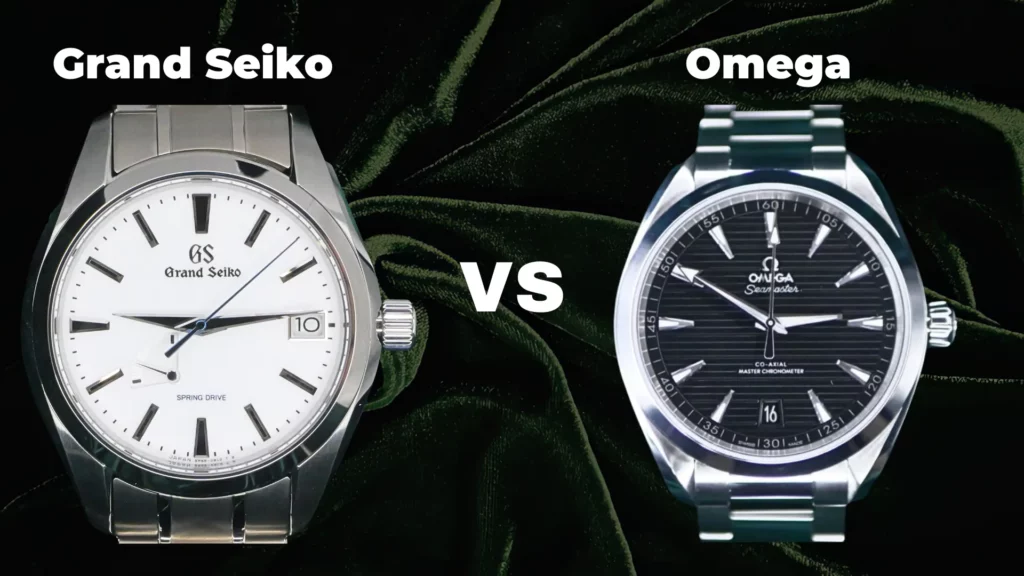
Two well-made watches, in a similar price range, both aimed at serious buyers. Grand Seiko vs. Omega looks like a simple matchup. But the more you look at the actual specs and ownership experience, the more obvious it becomes that these are two very different products built on very different priorities.
If you are in the $3,000 to $10,000 range for a daily wearer, this article will give you a straight answer on what separates them technically, how the secondary market behaves on each, and which references are worth your attention on both sides.
Grand Seiko Overview
Grand Seiko launched in 1960 as Seiko’s internal project to compete with the finest Swiss brands of the era. In the 1960s, Grand Seiko entries placed in the top tier at Swiss observatory precision competitions, which was not a small thing at the time. The brand operated under the Seiko umbrella until 2017, when it became its own standalone brand.
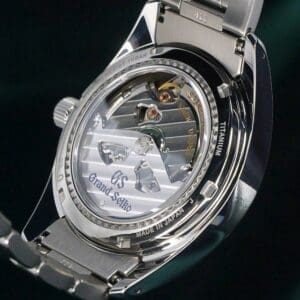
What collectors care about most with Grand Seiko is the case finishing. The Zaratsu polishing technique produces perfectly flat mirror surfaces with sharp ridges where brushed and polished sections meet. Few brands at this price point match this level of hand finishing.
The textured dials, inspired by Japanese landscapes and seasons, shift under different lighting in ways that make the watch look different at 9 AM than at 5 PM.
Grand Seiko is made for buyers who pay attention to craft. The dial reveals more the longer you look at it, and the movement type you choose, Spring Drive, Hi-Beat, or quartz, shapes both the ownership experience and the resale story.
Notable Grand Seiko References:
- SBGA211 (Snowflake)
- SLGH005 (White Birch)
- SBGH273 (Shunbun)
- SBGW289
- SBGJ259
- SBGA497
Omega Overview
Omega has been around since 1848 and holds one of the longest track records in Swiss watchmaking. The Seamaster line started in 1948 and expanded over decades, with the Aqua Terra added in 2002 as the dressier, everyday-wear member of the family.
Omega became the official Olympic Games timekeeper and put the Speedmaster on the Moon in 1969, building the kind of name recognition most watch brands spend decades chasing. For a full breakdown of the brand’s lineup, our Omega buying guide covers every current collection.
The Aqua Terra is where most grand seiko vs omega comparisons happen directly. It targets the same everyday buyer, runs a three-hand automatic movement in a stainless steel case, and sits at a near-identical price point to Grand Seiko’s Heritage Collection.
In 2017, Omega upgraded the entire current-production lineup to Master Chronometer certification, which added independent accuracy verification and a meaningful antimagnetic spec.
Omega is built for buyers who want a Swiss name that communicates its value clearly to people who are not watch collectors. That readability is part of the product, and for a lot of buyers, it is worth paying for.
Notable Omega References:
- Seamaster Aqua Terra 150M (38mm, 41mm)
- Seamaster Diver 300M
- Speedmaster Professional Moonwatch
- Seamaster Aqua Terra Worldtimer
- Seamaster Planet Ocean



Grand Seiko vs. Omega: Most Notable Differences
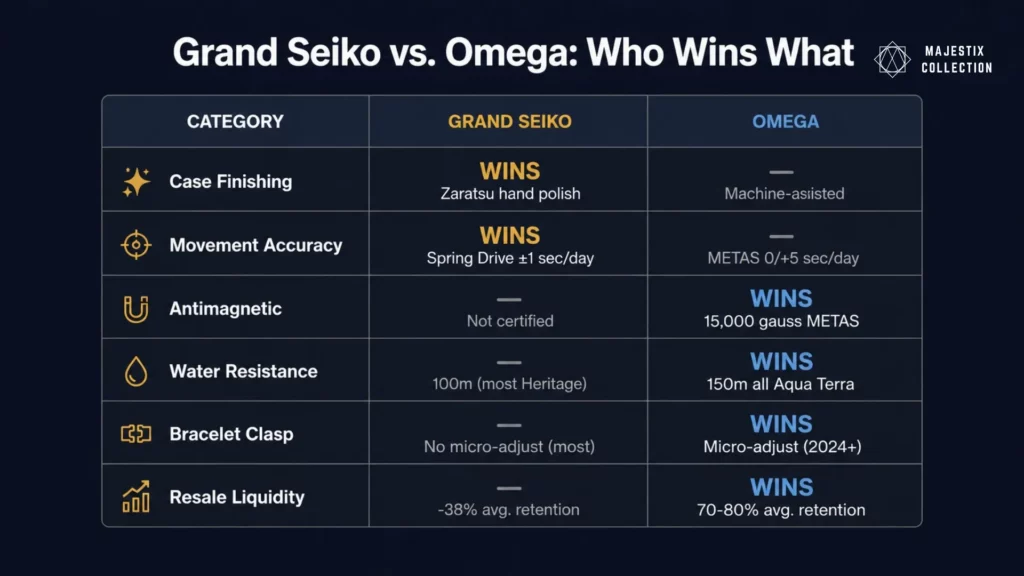
The six areas below are where these two brands genuinely diverge on objective, verifiable specs. This section is the core of the comparison, and it is worth reading carefully before making any decision.
1. Movement Accuracy
Grand Seiko offers three distinct movement types, and the choice between them matters. The Hi-Beat 9S-series mechanical runs at 36,000 vph and holds a rated accuracy of +8/-3 seconds per day, tighter than most Swiss mechanical standards.
The Spring Drive (9R-series) uses a mechanical mainspring regulated by an electronic glide wheel, which gets it to ±1 second per day on standard calibers. The 2025 UFA Spring Drive variant tightens this further to approximately ±20 seconds per year.
Grand Seiko also makes a hand-assembled 9F quartz rated to ±10 seconds per year, the most accurate of the three but the least collector-desirable.
Omega runs the Co-Axial Master Chronometer on all current Aqua Terra references (Caliber 8800 in 38mm models, Caliber 8900 in 41mm). METAS independently certifies these movements to 0/+5 seconds per day and verifies antimagnetic resistance to 15,000 gauss.
No Grand Seiko mechanical or Spring Drive reference carries an equivalent antimagnetic rating. If your environment includes strong magnetic fields (airports, MRI facilities, certain workplaces), that gap is a real, practical consideration. If you are unsure whether your watch has been affected, here is how to tell if a watch is magnetized.

2. Case Finishing
Grand Seiko cases go through Zaratsu polishing, where a craftsman presses each case surface by hand against a rotating disc, section by section. The result is a mirror-flat surface with no distortion, bordered by sharp ridges where brushed and polished planes intersect.
A single Grand Seiko case takes dozens of man-hours to complete, and under direct light, you can see the difference immediately.
Omega cases are well-made, with consistently clean polished and brushed surfaces on the Aqua Terra. But Omega relies on largely machine-assisted processes, and the results do not match the depth or sharpness of a fully hand-polished Grand Seiko case.
Grand Seiko wins this category clearly. Zaratsu polishing is harder to restore, scratches show more on perfectly flat mirror surfaces, and proper refinishing requires factory service in Japan at reported costs of around $700 or more.
If you want to understand what professional polishing a stainless steel watch involves before committing to either brand, that is worth reading first. Omega’s finish is simply more forgiving in daily wear.
3. Water Resistance
Omega rates all current Aqua Terra references to 150 meters, regardless of case size or dial configuration. The Seamaster Diver 300M goes to 300 meters, and lume on the hands and indices is standard across all current Seamaster references.
Grand Seiko varies significantly by collection. Most Heritage and Elegance references sit at 100 meters, and some dress models carry only a splash resistance rating. Sport collection models can reach 200 meters, but these are a smaller part of the overall lineup, and lume is absent or minimal on many Heritage and dress references.
For any buyer who wears a watch near water consistently, Omega covers more of the lineup at a higher rating without exception.
4. Bracelet and Clasp
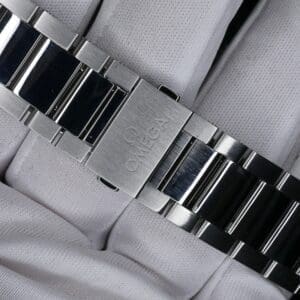
The current Aqua Terra runs a three-link steel bracelet with a deployant clasp. Omega added comfort-release micro-adjustment to newer references from 2024 onward. The bracelet tapers toward the clasp and sits comfortably through a full day without tools or fuss.
If you are deciding between the 38mm and 41mm Aqua Terra, the size comparison between the two is worth checking before you buy.
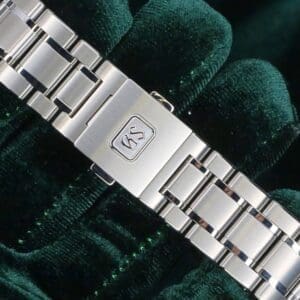
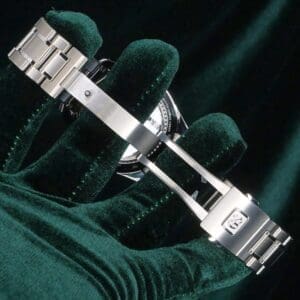
Grand Seiko’s Beads of Rice bracelet, used on most Heritage references, is visually distinctive and well-finished, but the standard clasp on most current references lacks micro-adjustment. Grand Seiko has started addressing this in 2025 on select new models, but most pre-owned Heritage references on the market today do not have this feature.
For buyers who want precise daily sizing comfort out of the box, the Aqua Terra bracelet is better engineered for that purpose right now.
5. Case Thickness and Wrist Fit
Grand Seiko Heritage references typically sit between 12.5mm and 14mm thick. The angular case architecture with sharp lugs and a flat dial plane makes the profile feel more architectural on the wrist. The lug-to-lug measurement on many GS models also runs long relative to the dial size, so a 37mm Grand Seiko can sit wider on the wrist than its dial number suggests.
Omega’s Aqua Terra 41mm measures roughly 13.5 to 14mm thick, also not a slim watch. The rounder case shape and lyre lugs distribute the bulk more conventionally, and the 38mm version sits more easily under a dress shirt cuff.
Neither brand has a clean win here, but the 38mm Aqua Terra generally disappears more easily under a cuff than a comparable Heritage Grand Seiko because Omega’s lug-to-lug proportions are more conventional.
Buyers with smaller wrists should try both on before deciding, and our guide on the best luxury watches for smaller wrists gives useful sizing context for this range.
6. Dial Design
Grand Seiko dials are built around Japanese nature themes. Textured surfaces, seasonal color gradients, and landscape-inspired finishes are core to the lineup. Nearly every Heritage reference has a dial that looks different under afternoon light than it does in the morning, and these are proprietary finishing techniques that few other brands reproduce at this price point.
Most Omega Aqua Terra references use the horizontal teak stripe pattern. The 2022 Shades series added colorful sunray finishes, and the 2024 black lacquer models went fully minimal.
The 2025 turquoise variants added a ceramic bezel for the first time. The color variety across the Aqua Terra lineup is wider than what Grand Seiko offers at the standard production level.
Grand Seiko dials are harder to find elsewhere and reward the kind of attention most people never give a watch. Omega’s palette is wider and reads clearly from across a table, a different kind of value.
Price and Market Demand
These two brands behave very differently on the secondary market, and the gap tells you something real about each one.

Grand Seiko: Undervalued Relative to Craft
Standard open-production Heritage references (steel automatics without iconic dials) trade at roughly $2,500 to $4,500 pre-owned, often well below retail. Cult references like the Snowflake (SBGA211) and White Birch (SLGH005) hold closer to retail at approximately $4,500 to $7,500, sometimes higher with full set and papers.
WatchCharts data puts average Grand Seiko value retention at approximately -38% below retail across all references.
The gap is real. A $6,000 retail Heritage reference may trade at $3,500 to $4,000 pre-owned. That makes pre-owned Grand Seiko a strong value entry, but it also means selling one later takes patience. Grand Seiko’s secondary market is thin because most buyers outside the watch community do not recognize the name.
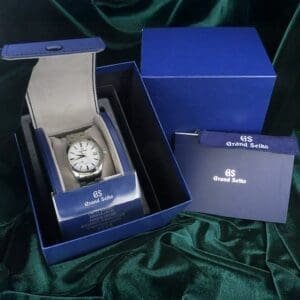
What moves Grand Seiko prices is the movement type (Spring Drive commands a premium over Hi-Beat, which commands a premium over quartz), dial identity (textured and iconic dials hold far better than plain references), full set (box, outer box, papers, warranty card), and case condition (Zaratsu scratches show and affect value) (source).
Omega: Stable and Liquid
Pre-2017 Aqua Terra references (non-Master Chronometer) trade at roughly $2,000 to $3,500 pre-owned. Post-2017 Master Chronometer references in desirable colors hold at $3,500 to $5,500, with popular colorways (blue, green, terracotta) pushing toward the higher end.
Full-set examples in strong condition reach $5,500 to $6,000+. Value retention on popular references runs approximately 70 to 80% of retail (source).
Omega sells faster because more buyers recognize the name. The brand’s cultural recognition creates a broader market that includes buyers who are not dedicated watch collectors.
What moves Omega prices, generation (Master Chronometer vs. pre-2017 matters), colorway (certain Shades references hold premium), bracelet condition (stretched links reduce value meaningfully), and full set. For a broader look at how Omega compares to other brands on the secondary market, the Omega vs Rolex resale value breakdown gives useful context. If you are buying pre-owned for the first time, our guide on where to buy pre-owned watches covers what to look for and which platforms to trust.
Notable Grand Seiko References
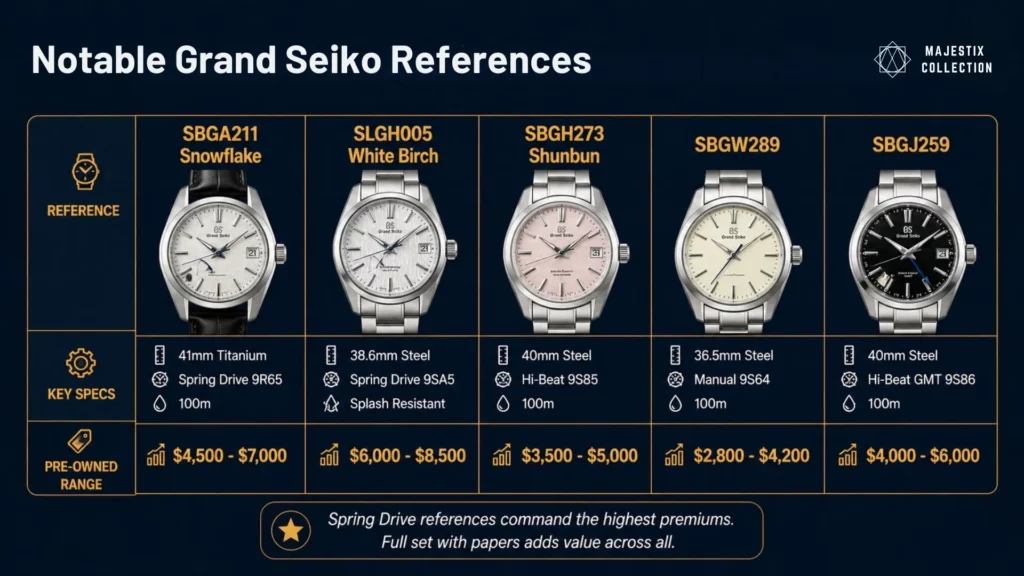
Grand Seiko’s lineup runs across Heritage, Evolution 9, Elegance, Sport, and Masterpiece collections. The five references below are the ones that come up most in the grand seiko vs omega conversation, chosen because they cover the main movement types, price bands, and wearing profiles a buyer in this space is likely to weigh.
1. SBGA211 (Snowflake)
The Snowflake made Grand Seiko visible to Western collectors. The textured white dial was designed to mimic the surface of freshly fallen snow, and it remains the most recognizable Grand Seiko reference globally. Spring Drive movement in a titanium case keeps the weight low despite its 41mm diameter.
- Case size: 41mm
- Material: Titanium
- Movement: Spring Drive 9R65
- Water resistance: 100m
- Typical pre-owned range: $4,500 to $7,000
2. SLGH005 (White Birch)
The White Birch won the Men’s Watch Prize at the Grand Prix d’Horlogerie de Geneve in 2021. The birch bark-textured dial sits in an Evolution 9 case that comes in under 11mm thick in steel, a direct answer to the thickness complaint common across the Heritage lineup. It suits buyers who want something award-recognized with a slimmer, more contemporary profile.
- Case size: 38.6mm
- Material: Stainless steel
- Movement: Spring Drive 9SA5 (Hi-Beat Dual Impulse)
- Water resistance: Splash resistant (not suited for water use)
- Typical pre-owned range: $6,000 to $8,500
3. SBGH273 (Shunbun)
The Shunbun is one of the most recommended starting points for new Grand Seiko buyers. A 40mm Hi-Beat reference with a deep blue textured dial, it gives you the core Grand Seiko experience without the Spring Drive premium. The 9S85 movement keeps a tight daily rate and beats at 36,000 vph.
- Case size: 40mm
- Material: Stainless steel
- Movement: Hi-Beat 9S85
- Water resistance: 100m
- Typical pre-owned range: $3,500 to $5,000
4. SBGW289
One of the few Grand Seikos that wears genuinely slim and dress-appropriate. The manual-wind 44GS Heritage case has sharp lugs, a flat dial, and the 9S64 movement. This is the collector’s pick for formal wear inside the Heritage Collection.
- Case size: 36.5mm
- Material: Stainless steel
- Movement: Manual 9S64
- Water resistance: 100m
- Typical pre-owned range: $2,800 to $4,200
5. SBGJ259
A Hi-Beat GMT in steel, the SBGJ259 adds a second time zone via the 9S86 caliber. At 40mm, it is practical for travel while staying inside the Grand Seiko Heritage design language. If you are new to the GMT complication, our guide on how to use a GMT watch walks through the function in detail.
- Case size: 40mm
- Material: Stainless steel
- Movement: Hi-Beat GMT 9S86
- Water resistance: 100m
- Typical pre-owned range: $4,000 to $6,000
More Grand Seiko Models
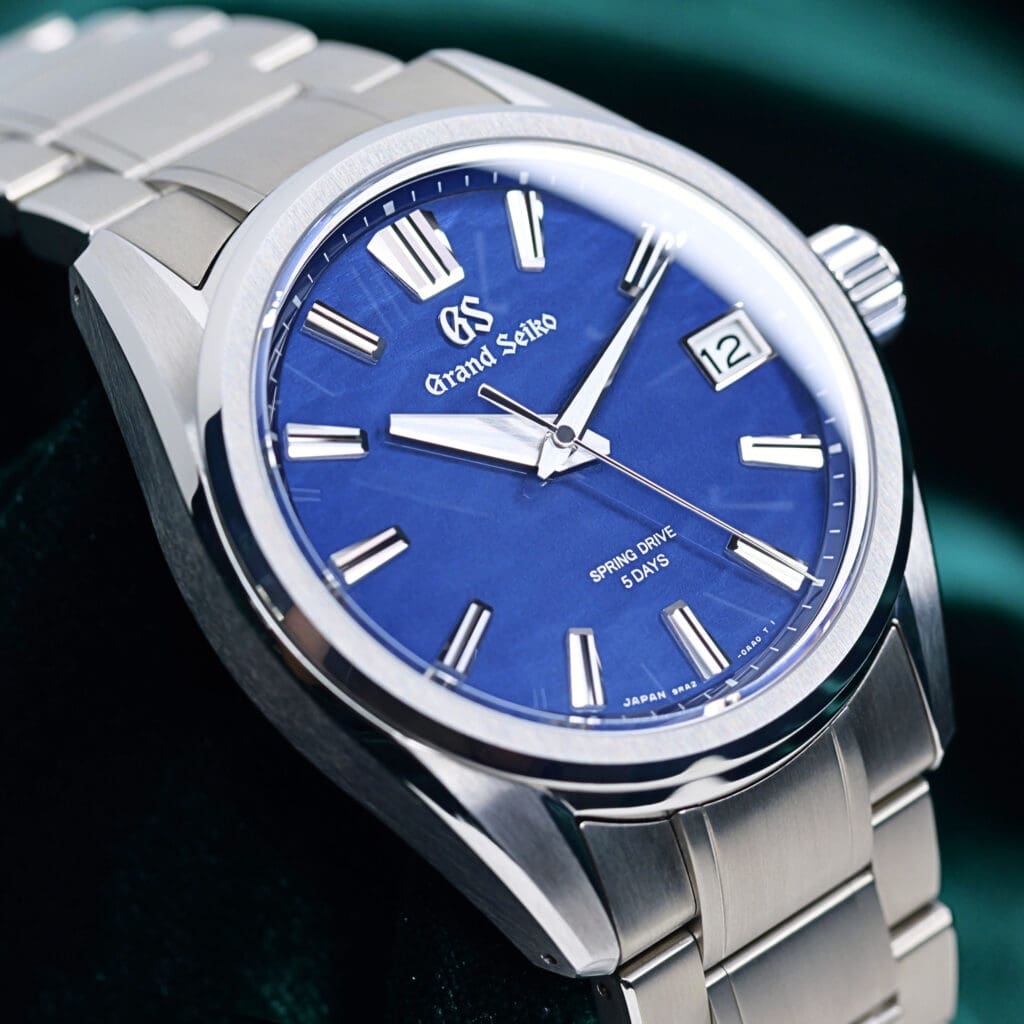
Grand Seiko Spring Drive 5 Days "Lake Suwa" Blue Dial Titanium 40mm MINT CONDITION COMPLETE SET SLGA019G

Grand Seiko Heritage Collection 20th Anniversary Limited Edition of 1,300 pcs. Brown Dial Stainless Steel 42mm MINT CONDITION SBGR311

2025 Grand Seiko Evolution 9 Collection Hi-Beat “Moonlit Birch” Navy Dial Navy Leather Strap Stainless Steel MINT CONDITION COMPLETE SET SLGW007
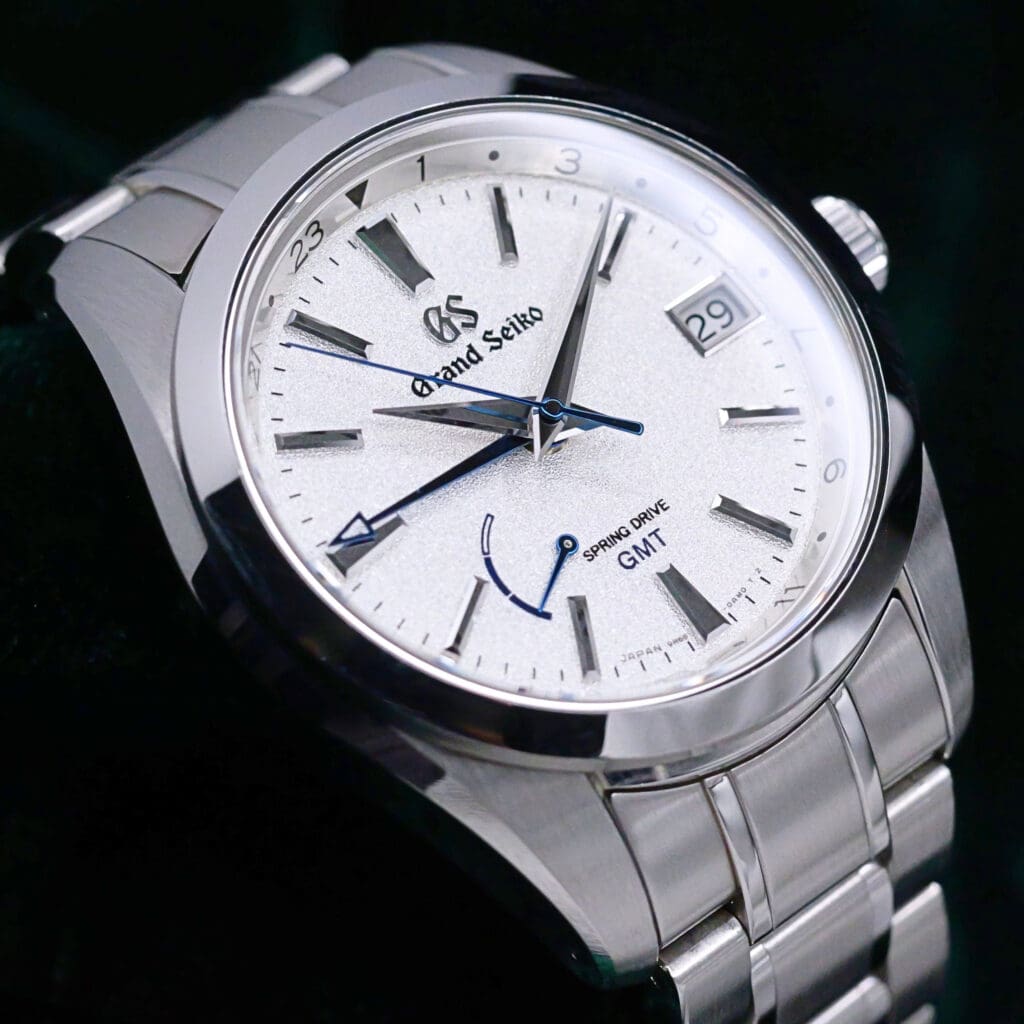
Grand Seiko Spring Drive GMT Limited Edition Blizzard Silver Dial Stainless Steel 41mm MINT CONDITION COMPLETE SET SBGE249
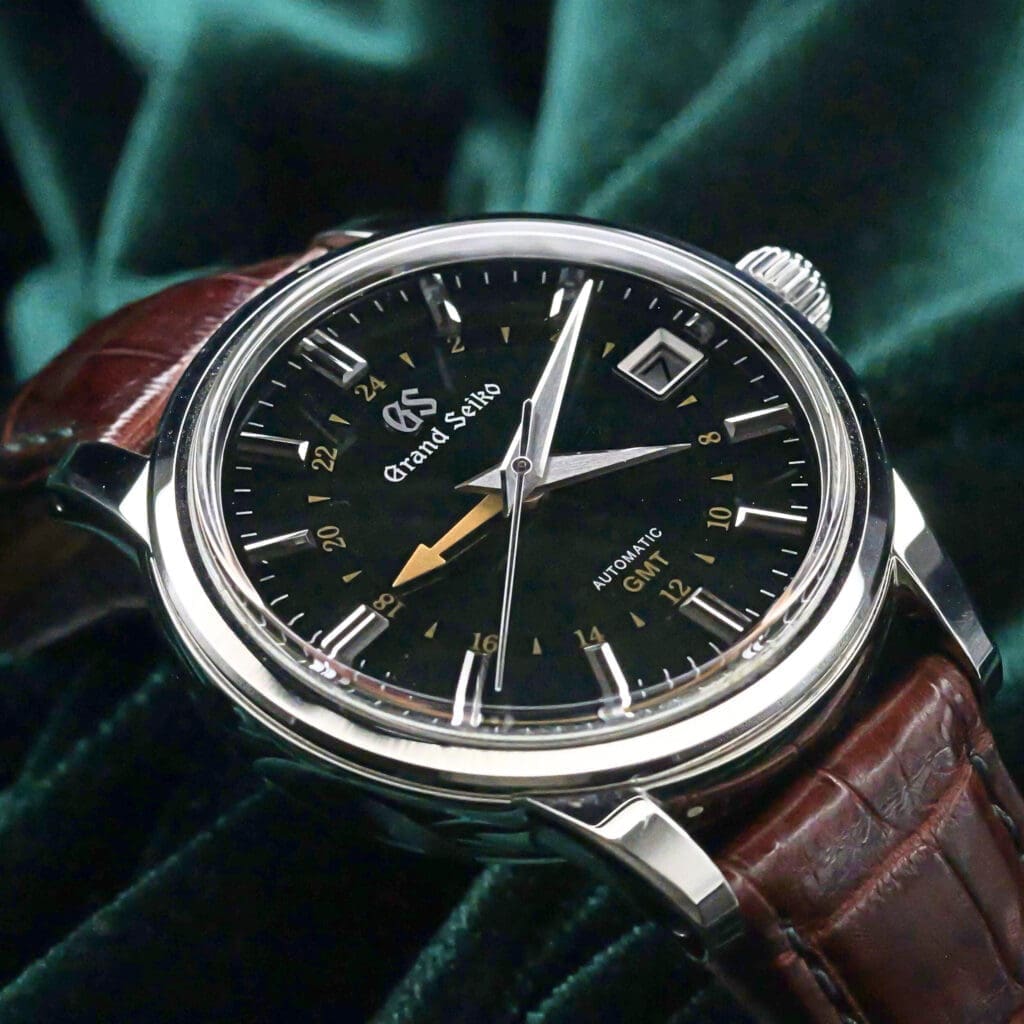
Grand Seiko GMT Elegance Collection Toge 39.5MM British Racing Green Dial Brown Leather Strap Stainless Steel MINT CONDITION COMPLETE SET SBGM241

2024 NEW UNWORN Grand Seiko Spring Drive "Snowflake" 41MM White Dial Titanium COMPLETE SET SBGA211
Notable Omega References
Omega’s Seamaster lineup covers more ground than any single collection. The references below are the ones that come up most directly when comparing against Grand Seiko. For the full Aqua Terra picture, the Omega Aqua Terra buying guide covers every current reference in depth.

1. Seamaster Aqua Terra 150M (41mm)
Co-Axial Master Chronometer Caliber 8900 inside the 41mm Aqua Terra is METAS-certified to 0/+5 seconds per day and resistant to magnetic fields up to 15,000 gauss. The horizontal teak dial pattern and arrow-tipped minute hand are the two visual signatures of the line. At roughly 13.5mm thick, it is not a slim watch, but the bracelet and clasp make it comfortable across a full day.
This is the flagship everyday reference for male buyers in the Aqua Terra line. Pre-owned availability is wide, so finding a good example at a fair price is realistic without much searching.
- Case size: 41mm
- Material: Stainless steel
- Movement: Co-Axial Master Chronometer Cal. 8900
- Water resistance: 150m
- Typical pre-owned range: $3,800 to $5,500
2. Seamaster Aqua Terra 150M (38mm)
Caliber 8800 inside the 38mm Aqua Terra shares the same Master Chronometer certification as its larger sibling. Those 3mm less diameter keep the lugs from overhanging on a wrist under 17cm, and the case sits more comfortably under a dress shirt cuff.
The Shades series colorways (terracotta, summer blue, green) are available in this size and hold well on the secondary market.
This is the size where direct comparison to Grand Seiko’s 37-40mm Heritage references is most valid. The bracelet engineering is current-generation, and full-set pre-owned examples represent solid value.
- Case size: 38mm
- Material: Stainless steel
- Movement: Co-Axial Master Chronometer Cal. 8800
- Water resistance: 150m
- Typical pre-owned range: $3,500 to $5,200
3. Seamaster Diver 300M
300 meters of water resistance and a ceramic unidirectional bezel put the Diver 300M in a different category from the Aqua Terra. The Co-Axial Master Chronometer movement is the same generation, but this reference is purpose-built as a tool watch with a dive extension bracelet and a helical hairspring for antimagnetic protection.
Our Omega Seamaster buying guide covers the full Diver 300M history and reference breakdown.
The Diver 300M is the most culturally recognized reference in the Seamaster lineup, partly from the James Bond association. The 42mm case reads larger than the Aqua Terra 41mm because the bezel adds visual mass. Buyers who want a real sports watch rather than a dress-sport hybrid will find this the more purposeful choice.
- Case size: 42mm
- Material: Stainless steel
- Movement: Co-Axial Master Chronometer Cal. 8800
- Water resistance: 300m
- Typical pre-owned range: $4,000 to $5,800
4. Seamaster Aqua Terra Worldtimer
All 24 time zones on one dial, displayed through a rotating city ring, a day/night indicator, and a world map disc laser-cut from grade 5 titanium. The Worldtimer is the most technically complex reference in the Aqua Terra lineup, and at 43mm, it is a large watch. Pre-owned availability is more limited than the standard three-hander references, which keeps prices firmer.
This reference suits buyers who travel regularly and want a world time complication inside a dress-sport case rather than a tool-watch body.
- Case size: 43mm
- Material: Stainless steel
- Movement: Co-Axial Master Chronometer with world time complication
- Water resistance: 150m
- Typical pre-owned range: $7,000 to $10,000
More Omega Models
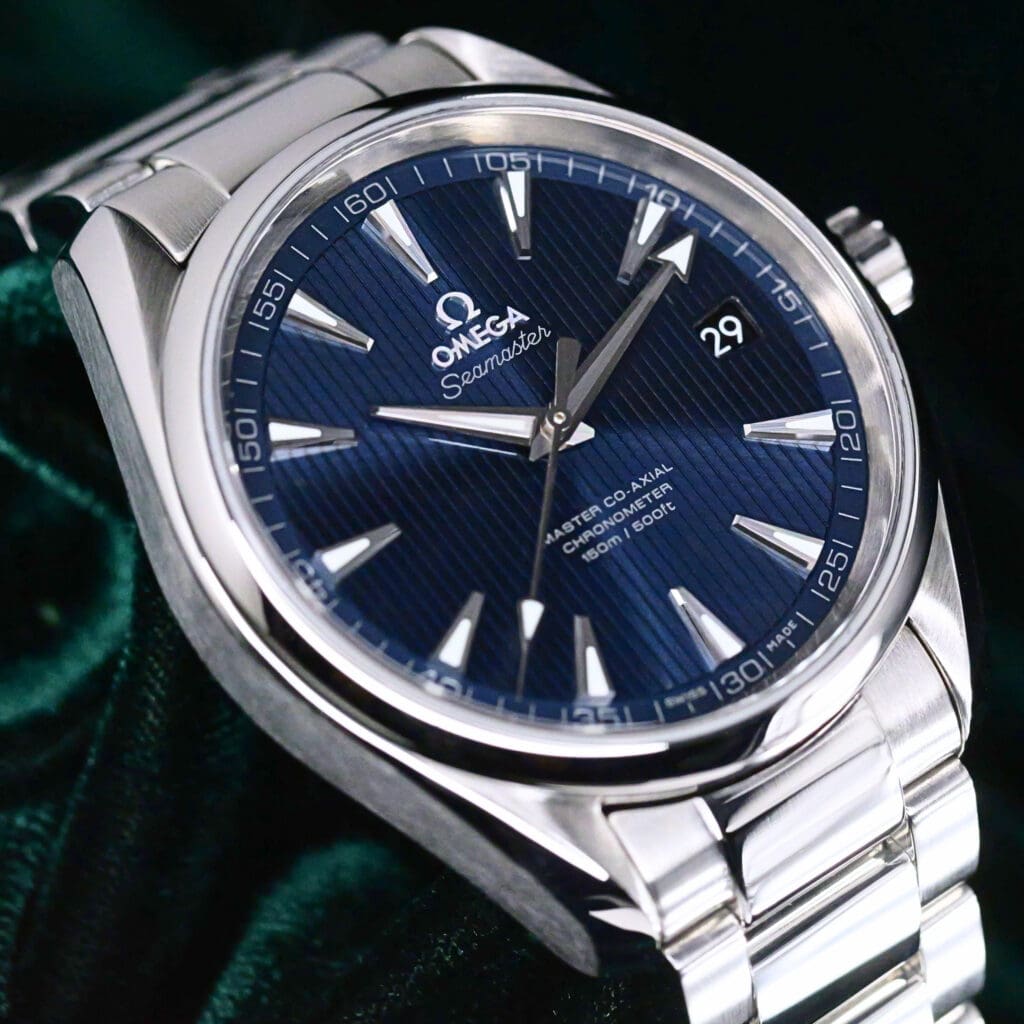
Omega Seamaster Aqua Terra 150M Master Co-Axial Chronometer Blue Teak Dial Stainless Steel 41.5mm MINT CONDITION COMPLETE SET 231.10.42.21.03.003
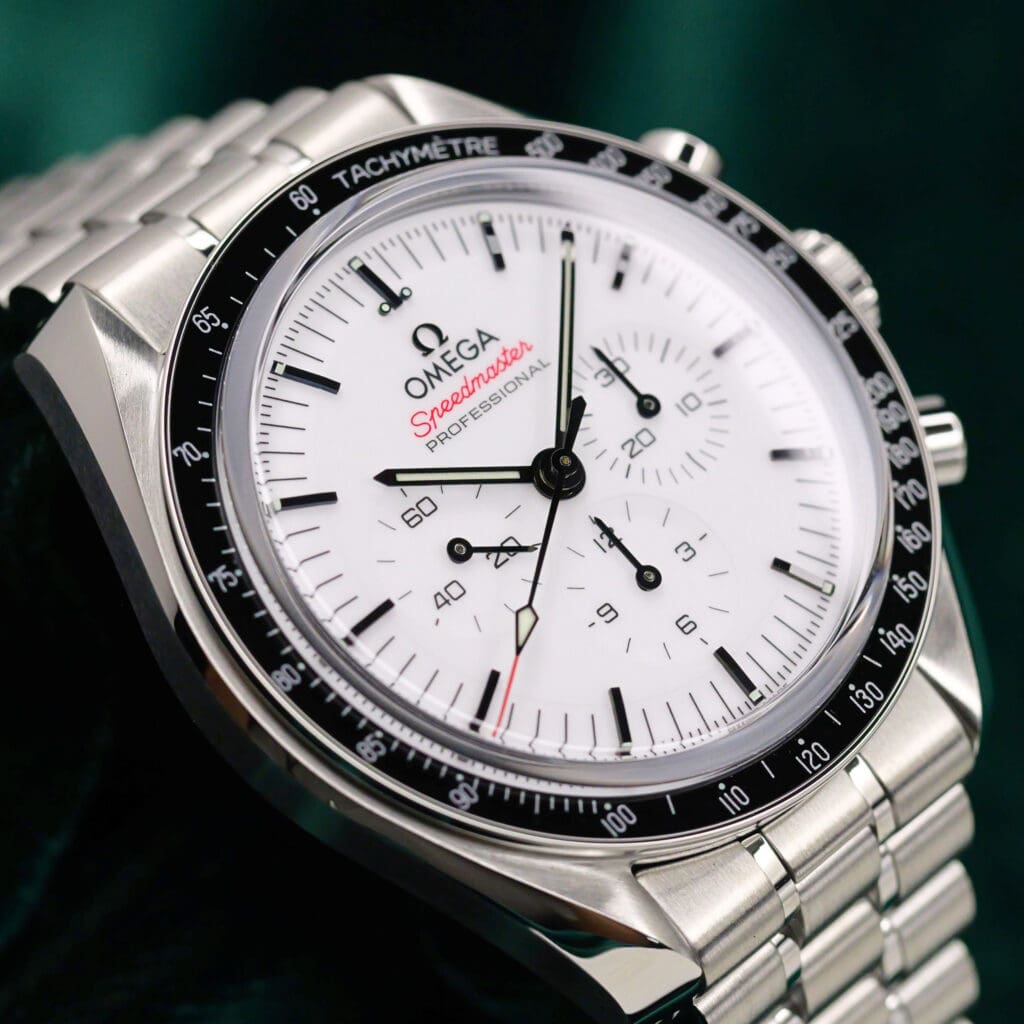
2026 NEW UNWORN Omega Speedmaster Moonwatch Professional White Dial Stainless Steel 42mm COMPLETE SET 310.30.42.50.04.001
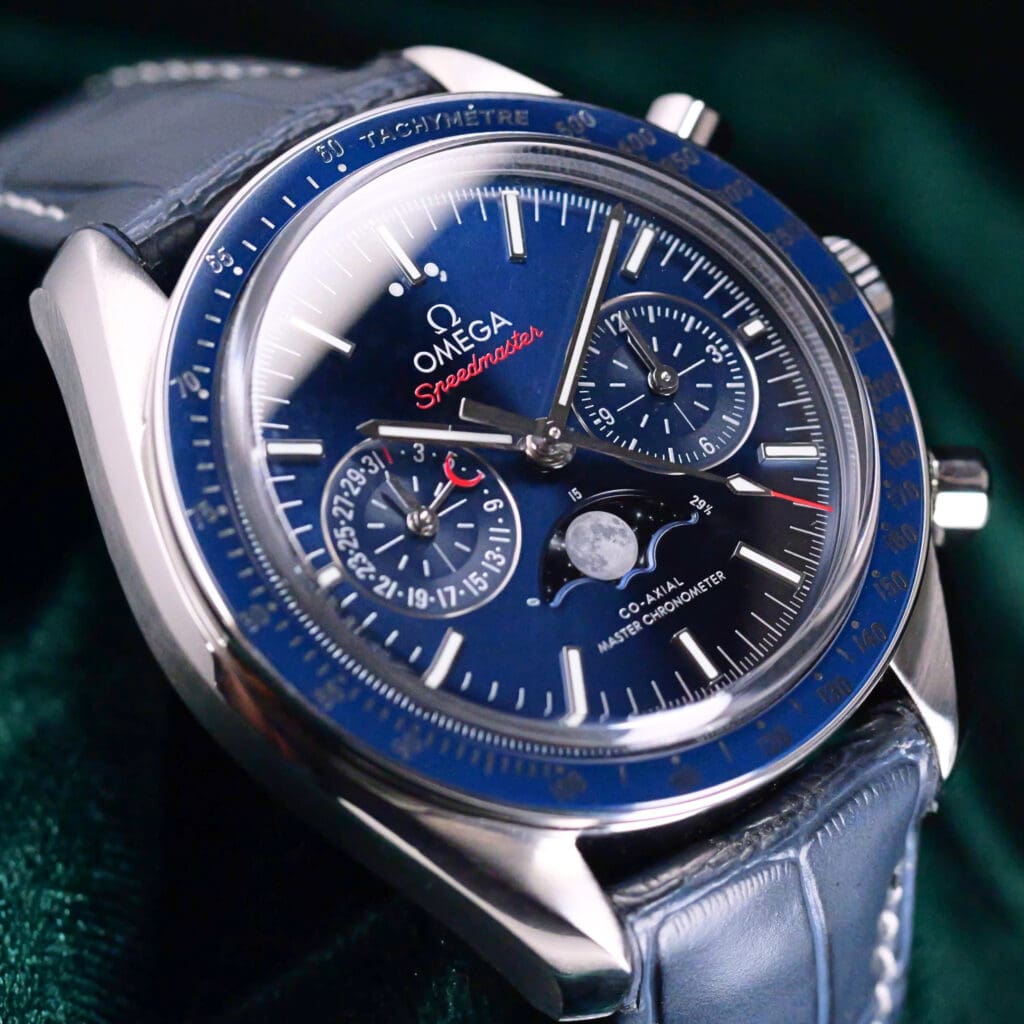
Omega Speedmaster Moonphase Blue Dial Blue Leather Strap Stainless Steel 44.25mm MINT CONDITION COMPLETE SET 304.33.44.52.03.001
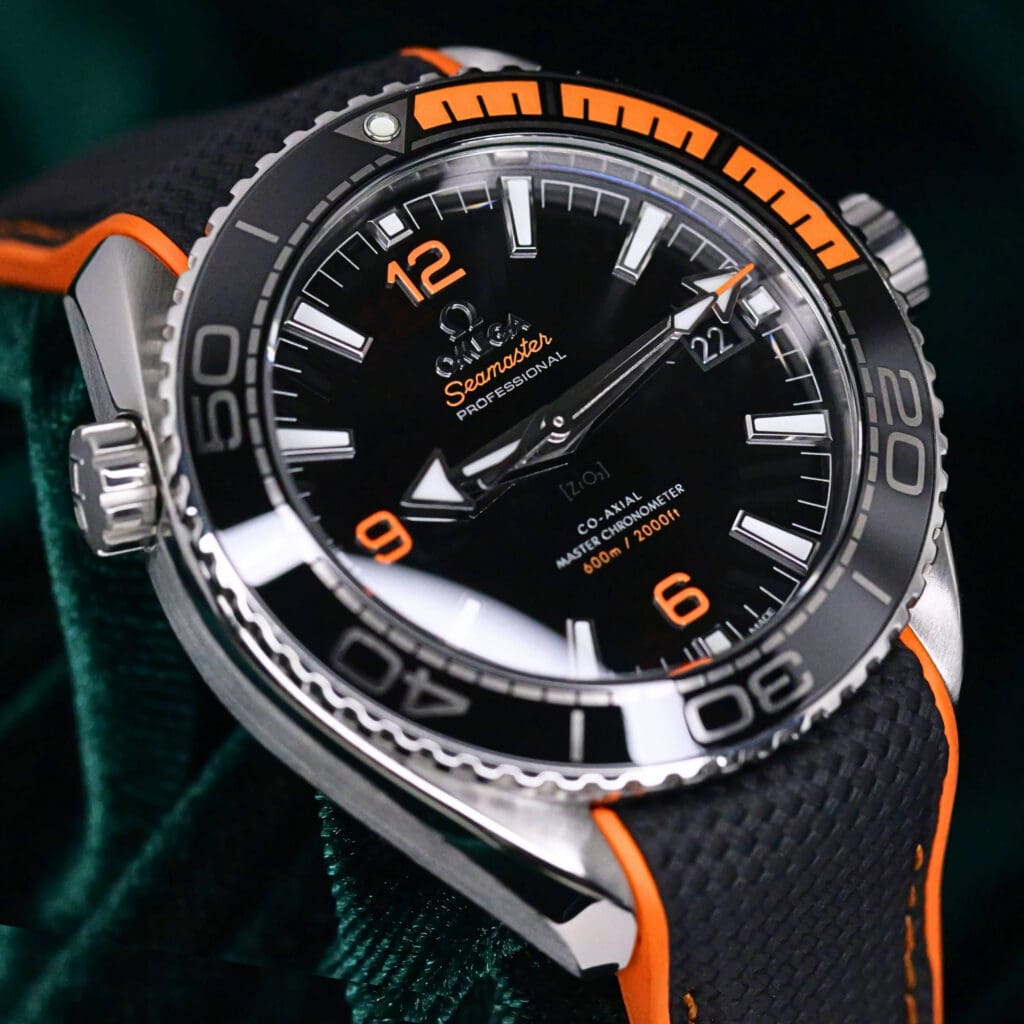
Omega Seamaster Planet Ocean 600M Black Dial Black Orange Ceramic Bezel Black Orange Rubber Strap Stainless Steel 43.5mm MINT CONDITION COMPLETE SET 215.32.44.21.01.001

Omega Speedmaster "Orbis Edition" 38mm Blue Dial Blue Bezel Stainless Steel Bracelet MINT COMPLETE SET 324.30.38.50.03.002
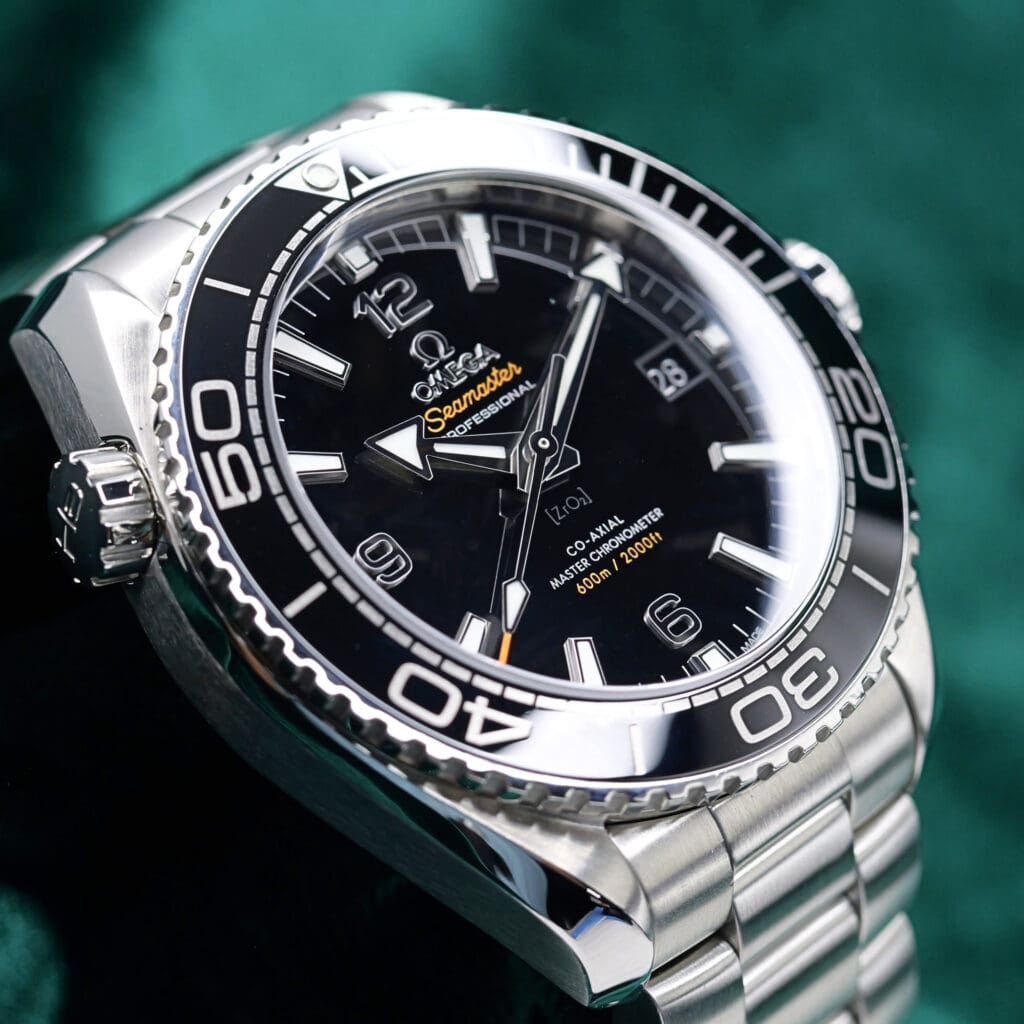
Omega Seamaster Planet Ocean 600M Black Dial Stainless Steel 43.5mm MINT CONDITION COMPLETE SET 215.30.44.21.01.001
Which Watch Should You Choose?
Choose Grand Seiko if:
- Case finishing and dial artistry matter more to you than any other spec
- You plan to keep the watch long-term and resale speed is not a priority
- You want Spring Drive’s near-quartz accuracy in a mechanical-feeling package
- You prefer something that most people around you cannot immediately identify or price
- You wear the watch in everyday contexts where 100m water resistance is sufficient
- You have owned watches before and want something that separates craft from recognition
Choose Omega if:
- You need confirmed antimagnetic protection at the 15,000 gauss METAS-certified level
- You plan to wear the watch near water regularly, given the 150m to 300m rating
- You want faster resale and a broader secondary market when the time comes
- You value bracelet micro-adjustment for comfortable daily sizing out of the box
- You want a watch that communicates its value clearly to people outside the watch community
This is your first serious luxury watch purchase — our guide to the best entry-level luxury watches is worth reading alongside this one
If you want your watch to be recognized as a significant purchase by people around you, Omega is the clearer choice. If you have been through that phase and care more about what is happening inside the case and on the dial surface, Grand Seiko makes more sense.
Final Thoughts on Grand Seiko vs. Omega
Grand Seiko tends to attract buyers who have owned a Swiss watch or two and want something that surprises them up close. Omega tends to attract buyers who want a grounded first serious piece with real global context.
The finishing edge goes to Grand Seiko. The performance and liquidity edge goes to Omega. Neither is the wrong answer for the right person.
The real question is what you want from wearing a watch every day. If you are still unsure, try both on in person. Most buyers already know before they put the second one down.
999+ Timepieces Available
Explore Our Timepieces
Authenticated, unworn, and ready to ship worldwide.
Rolex · Audemars Piguet · Patek Philippe · Omega · Cartier · Richard Mille · Hublot · Tudor
Newly Listed
Vacheron Constantin Overseas Dual Time Silver Dial Brown Leather Strap 18K Rose Gold 41mm MINT CONDITION COMPLETE SET 7900V/000R-B336
$41,894.00
Rolex Sea-Dweller Deepsea James Cameron D-Blue Dial Black Ceramic Bezel Oyster Bracelet Stainless Steel 44mm MINT CONDITION 116660-0003
$14,272.00
Vacheron Constantin Overseas Dual Time Silver Dial 18K Rose Gold Brown Rubber Strap 41mm MINT CONDITION COMPLETE SET 7900V/000R-B336
$41,894.00
Rolex Lady-Datejust Champagne Linen Dial 18k Yellow Gold Fluted Bezel Jubilee Bracelet Two Tone Steel & Gold 26mm MINT CONDITION COMPLETE SET 69173
$9,345.00
2026 Rolex Datejust Blue Dial Smooth Bezel Jubilee Bracelet Stainless Steel 41mm MINT CONDITION COMPLETE SET 126300
$13,796.00
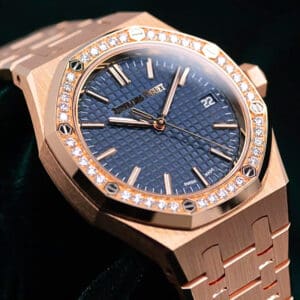
Audemars Piguet Royal Oak Selfwinding "50th Anniversary" Bleu Nuit Nuage 50 Blue Dial Diamond Bezel 18K Rose Gold 37mm MINT CONDITION COMPLETE SET 15551OR.ZZ.1356OR.02
$99,745.00
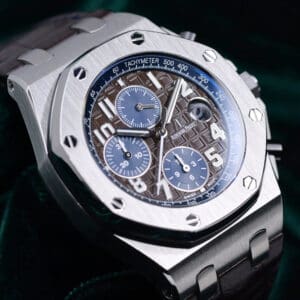
Audemars Piguet Royal Oak Offshore Chronograph "Havana" Brown Dial Blue Subdials Brown Leather Strap Stainless Steel 42mm MINT CONDITION COMPLETE SET 26470ST.OO.A099CR.01
$24,827.00
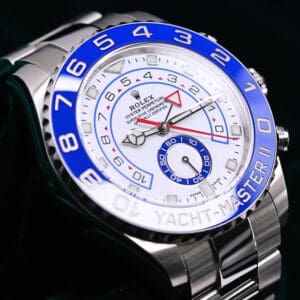
Rolex Yacht-Master II White Dial Blue Ceramic Bezel Oyster Bracelet Stainless Steel 44mm MINT CONDITION COMPLETE SET 116680
$19,409.00
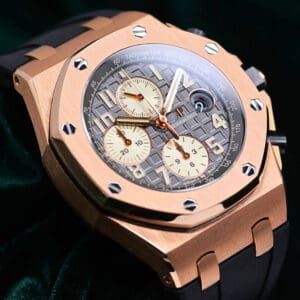
Audemars Piguet Royal Oak Offshore Chronograph “Half Brick” Ruthenium Grey Dial 18K Rose Gold Black Rubber Strap 42mm MINT CONDITION COMPLETE SET 26470OR.OO.A125CR.01
$40,892.00
Rolex Explorer Blaken Black Dial Oyster Bracelet DLC Black Stainless Steel 39mm MINT CONDITION COMPLETE SET 214270
$16,000.00
2025 Vacheron Constantin Overseas Moon Phase Retrograde Date Blue Dial Stainless Steel Bracelet 41mm MINT CONDITION COMPLETE SET 4000V/210A-B911
$52,800.00
2025 Vacheron Constantin Overseas Moonphase Retrograde Date Blue Dial Blue Leather Strap Stainless Steel 41mm MINT CONDITION COMPLETE SET 4000V/210A-B911
$52,800.00