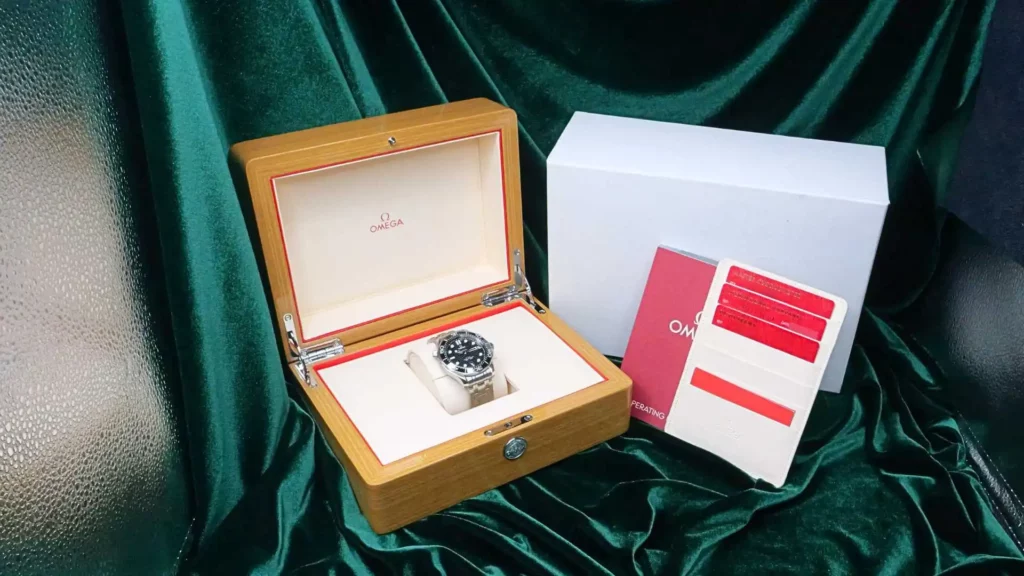
Thinking about buying an Omega Seamaster but unsure which one actually fits you best? With so many references that look similar at first glance, it gets confusing fast when prices and models start to overlap.
Omega has earned its reputation through precision, durability, and timeless design, and the Seamaster line carries that legacy into every model. Still, each version wears differently, and choosing the wrong one can leave you with a watch that does not suit your wrist, lifestyle, or budget.
In this Omega Seamaster buying guide, you will see how pricing works across new retail, grey market, and pre-owned options, along with insights from the Majestix Collection.
Let’s break it down so you can make a confident choice without second-guessing.
Understanding the Omega Seamaster
The Omega Seamaster is a professional dive watch collection from Omega SA, first introduced in 1948, originally inspired by waterproof timepieces developed for military use during World War II.
Omega designed it to offer strong water resistance, precision timing, and everyday durability, and modern references like the Seamaster Diver 300M and Planet Ocean continue that original purpose with upgraded materials and technology.
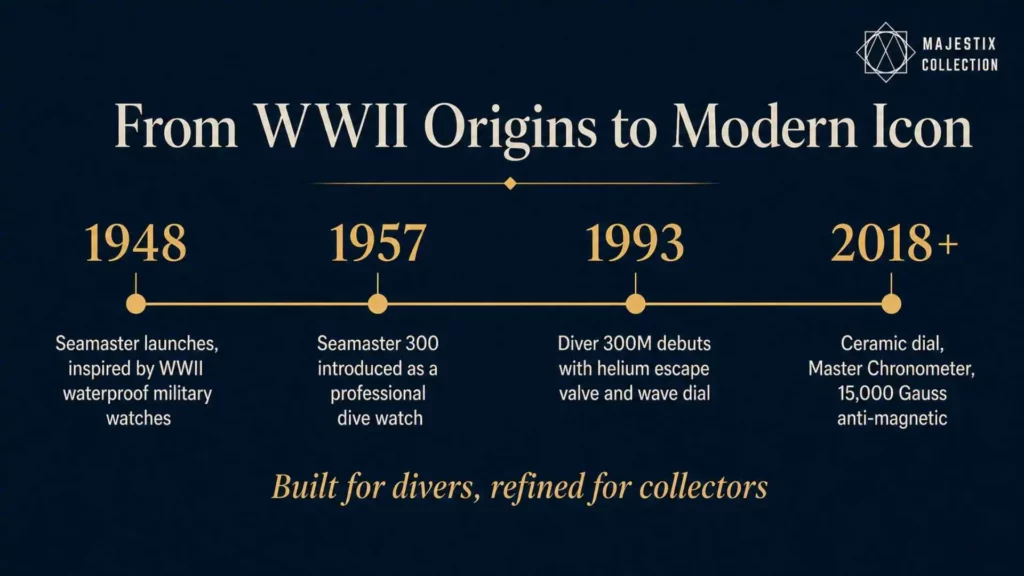
You recognize the Seamaster by its strong build, rotating bezel, and high water resistance, often rated up to 300 meters or more depending on the model. Omega equips many Seamaster references with the Co-Axial escapement, which improves long-term accuracy and reduces servicing frequency compared to traditional movements.
The Seamaster evolved from a simple waterproof watch into one of the most recognizable luxury dive watches in the world, worn by professional divers and featured in films like James Bond. Today, it sits alongside collections in Majestix Collection, which often highlights how different Seamaster references balance heritage, performance, and modern pricing across retail and secondary markets.
You also see variation in design depending on the reference. The Diver 300M focuses on sporty versatility with a wave dial and helium escape valve, while the Aqua Terra leans more toward a dress-sport hybrid with cleaner aesthetics; we go deeper on where the Aqua Terra and Seamaster diverge in a separate breakdown.
What Is the Omega Seamaster Lineup in 2026?
The Omega Seamaster lineup in 2026 from Omega SA includes six distinct sub-collections that cover everything from everyday wear to extreme deep-sea performance. It spans the versatile Aqua Terra up to the ultra-engineered Planet Ocean Ultra Deep, which pushes professional diving limits to 6,000 meters.
The current range includes the Seamaster Diver 300M, Aqua Terra, Planet Ocean, Seamaster 300 Heritage, Railmaster, and Heritage 1948. Each model focuses on a specific use case, from sport diving and travel wear to vintage styling and anti-magnetic protection, with different case builds and Co-Axial movements depending on function.
Pricing shifts heavily across the lineup, starting from entry-level vintage Seamasters around $1,500 and moving beyond $14,000 for modern titanium or ceramic configurations depending on condition and market channel. Majestix Collection often uses these ranges to show how secondary market demand reshapes real value.
Most buyers misjudge the lineup by defaulting to the Diver 300M because of its popularity. The better approach is matching each sub-collection to how you actually wear a watch daily.
How to Choose the Right Omega Seamaster for You
Choosing the right Omega Seamaster comes down to a few practical decisions, not guesswork. Focus on how the watch fits your wrist, your daily routine, your budget, and your long-term plans.
These 4 questions help you filter the lineup quickly and avoid buying a model that looks good online but does not work for you in real life.
1. Size of Your Wrist
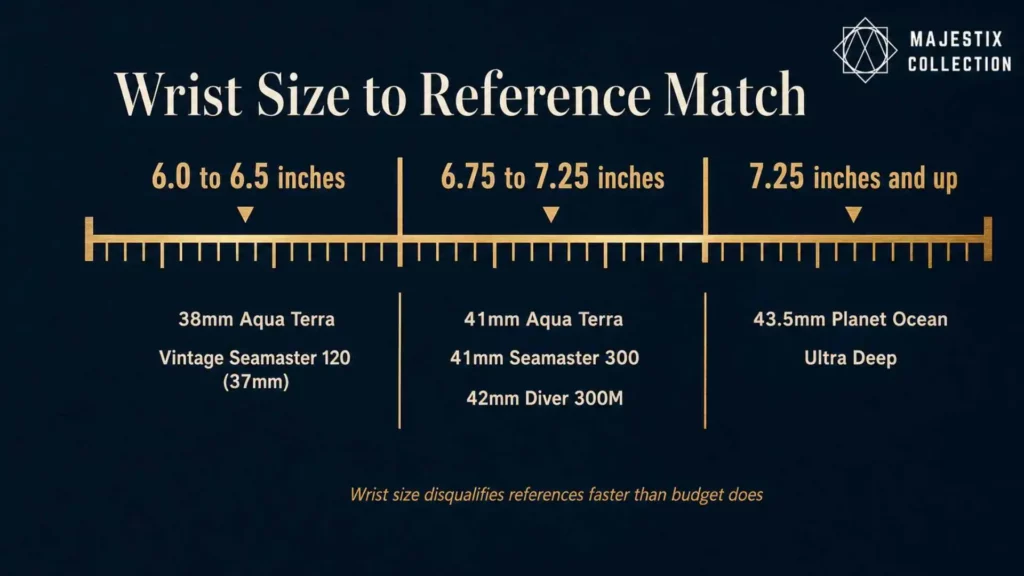
Wrist size shapes your entire experience with a Seamaster. A watch can look perfect in photos but feel oversized or unbalanced once you wear it. Larger models like the 43.5mm Planet Ocean tend to dominate smaller wrists, making them uncomfortable for daily use.
If your wrist is around 6.0 to 6.5 inches, smaller cases like the 38mm Aqua Terra or vintage Seamasters wear better and feel more proportioned. If you fall between 6.75 and 7.25 inches, you have more flexibility with options like the 41mm Aqua Terra, Seamaster 300, and 42mm Diver 300M. We compare the 38mm and 41mm Aqua Terra side by side if you’re stuck between those two sizes specifically.For wrists above 7.25 inches, larger models like the Planet Ocean and Ultra Deep sit more naturally without feeling oversized.
2. Where Will You Wear It Most
Daily routine plays a major role in narrowing down the right Seamaster. A watch that fits the environment gets worn more often, while the wrong one ends up sitting unused.
The Aqua Terra works well in office or formal settings because of its clean design and balanced proportions, while still offering enough durability for casual use. Different Seamaster models align with specific use cases.
The Diver 300M suits a one-watch setup that moves easily from casual wear to travel and light activity. The Planet Ocean fits buyers who want a more technical dive watch with a stronger tool-watch presence.
The Seamaster 300 Heritage appeals to those who prefer vintage styling with modern reliability, while the Railmaster targets environments with strong magnetic exposure where accuracy matters.
3. Your Budget and If Buying New or Pre-Owned
The budget sets the general range, but the buying channel determines what is actually available within that range. The same amount of money can lead to very different Seamaster options depending on whether the purchase is made through retail, grey market, or pre-owned sources.
If you’re weighing those channels for the first time, the differences between authorized dealers and the grey market are worth a separate read before committing. At around $5,000, a new Aqua Terra from an authorized dealer becomes available with full factory warranty.
That same budget can also secure a pre-owned Diver 300M ceramic with a complete set from a trusted seller. In the $3,000 to $5,000 range, most options shift toward pre-owned Aqua Terras and older Seamaster models.
Moving into the $5,000 to $8,000 range opens access to more modern Diver 300M and Seamaster 300 Heritage references. Above $8,000, the selection expands into Planet Ocean models and select limited editions.
4. If Buying for Keeps or Thinking About Resale
Long-term intent shapes the final decision more than most buyers expect. A watch meant to stay in the collection should reflect personal taste, while a watch chosen with resale in mind requires a more careful approach.
Watches selected for resale tend to perform better in conservative configurations. Black or blue dials on bracelets consistently attract stronger demand and move faster in the secondary market.
Some models, such as the Railmaster, have shown stronger price movement in recent years, while others vary depending on dial color and overall condition. Making this decision early reduces the risk of choosing a watch that does not hold value as expected.
If you’re cross-shopping the broader Swiss landscape, how Omega and Rolex compare on resale gives useful context for that decision.
Omega Seamaster Sub-Collections Broken Down

Each Omega Seamaster sub-collection targets a specific type of buyer, with clear differences in design, function, and market behavior. Looking at them side by side helps narrow down the right choice based on use case, wrist presence, and how each model performs in real buying conditions.
1. Seamaster Diver 300M
The Seamaster Diver 300M remains the most recognized model in the lineup, driven by its modern design and consistent demand. The post-2018 version stands out with its ceramic laser-engraved wave dial, which separates it from earlier models and plays a key role in resale performance.
Buyers entering the market often gravitate toward this version because it aligns with current design expectations. Pricing at authorized dealers typically sits between $5,400 and $6,600, while pre-owned examples with full set and clean condition trade closer to $4,800 to $5,800.
The ceramic dial models maintain stronger liquidity, while earlier lacquer dial versions tend to sit longer and require more aggressive pricing to sell.
2. Seamaster Aqua Terra
The Seamaster Aqua Terra positions itself as the most balanced option in the collection, with a design that avoids strong sport or dress extremes. Its teak-pattern dial gives it a distinct look without relying on dive watch elements, making it easier to wear across different settings without drawing too much attention.
For a deeper look at the line on its own, our dedicated Aqua Terra buying guide walks through every variant in detail.Retail pricing generally falls between $5,800 and $7,200, while pre-owned models range from $3,800 to $5,000 depending on age and condition (source).
Market movement shows that blue and black dials consistently sell faster, while less common colors tend to remain listed longer, creating more room for negotiation on the buying side.
3. Seamaster Planet Ocean
The Seamaster Planet Ocean focuses on buyers who prioritize scale, materials, and engineering over versatility. It stands apart through its use of ceramic bezels with Liquidmetal detailing and a noticeably thicker case profile, which creates a stronger wrist presence compared to other Seamaster models.
Authorized dealer pricing ranges from $6,800 to $11,500, with variation based on material choices such as steel, titanium, or ceramic. Pre-owned pricing depends heavily on configuration, but larger case size and weight limit its appeal to a narrower group of buyers, which affects how quickly certain references move in the secondary market.
4. Seamaster 300 Heritage Diver
The Seamaster 300 Heritage Diver appeals to buyers who want a vintage look without entering the vintage market. Its design closely follows early Seamaster dive watches, using elements like a sandwich dial and aged lume tone to recreate that older aesthetic while keeping modern build quality.
Retail pricing usually ranges from $7,400 to $8,900, placing it above more mainstream Seamaster options. Pre-owned availability exists but tends to be more selective, as buyers in this segment often hold onto these models longer due to their niche appeal and design consistency.
5. Seamaster Railmaster
The Seamaster Railmaster stands apart by focusing on magnetic resistance instead of dive features. Its clean, minimal dial design and lack of a rotating bezel make it one of the most understated models in the lineup, which attracts buyers who prefer a quieter aesthetic.
Authorized dealer pricing falls between $5,200 and $5,800, while pre-owned pricing remains relatively accessible compared to recent market trends. Market data shows strong year-over-year growth, which has increased attention on this sub-collection as both a practical tool watch and a value-driven option within the Seamaster range.
6. Seamaster Heritage 1948
The Seamaster Heritage 1948 caters to buyers who want a more refined and traditional design without the presence of a sports watch. Its smaller case size and classic layout create a completely different wearing experience compared to the rest of the Seamaster lineup.
Availability remains limited, which directly affects pricing in the secondary market. Discounts are less common due to lower supply, and most transactions stay closer to retail levels.
This model fits buyers who prioritize design heritage and exclusivity over versatility or technical features.
How to Authenticate a Pre-Owned Seamaster
Buying a pre-owned Omega Seamaster requires close inspection because small details reveal whether a watch is original or altered. A few focused checks can quickly expose inconsistencies before money changes hands.
These verification points rely on physical inspection and documented proof rather than seller claims.
1. Check the Serial Number Placement and Engraving
Modern Omega Seamaster references place the serial number between the lugs at the 6 o’clock position. The engraving should appear deep, sharp, and evenly cut, with consistent spacing across all digits.
Irregular engraving is a common red flag. Numbers that look lightly etched, misaligned, or uneven often indicate reworking or non-factory finishing. Clean execution is expected, and anything less should be treated with caution.
2. Inspect the Dial Printing and Lume Quality
Dial printing on an authentic Omega Seamaster remains precise and clearly defined, even under magnification. Text edges should look crisp, and spacing between letters must stay consistent across the dial.
Lume application should appear uniform across all hour markers. Uneven fill, rough edges, or inconsistent brightness often point to dial refinishing or replacement. These details are difficult to replicate accurately and often expose non-original parts.
3. Examine the Bracelet, End Links, and Clasp
Factory bracelets feel tight, structured, and well-aligned, with smooth movement between links. The clasp should close firmly with a defined click and display correct branding with clean finishing.
Aftermarket components often show subtle differences. These include lighter weight, slight looseness, or less precise closing action. Small inconsistencies in how the bracelet feels can indicate replacement parts.
4. Review the Caseback Engraving and Reference Match
The caseback should display a well-defined hippocampus logo with clean edges and proper depth. The engraving should not appear soft, shallow, or poorly outlined.
The reference number must match all included documentation exactly. Any mismatch between the watch and its papers suggests incorrect pairing or modification, which should be verified before proceeding.
5. Verify Service History and Documentation
A documented service record from Omega confirms that the watch has undergone inspection and testing under factory standards. This includes checks for movement condition and water resistance.
Listings that include recent service documentation provide stronger assurance of condition and reduce uncertainty around maintenance history.
Final Thoughts on the Omega Seamaster Buying Guide
The Omega Seamaster buying guide shows that the Seamaster is more than just a luxury dive watch. Choosing the right one comes down to finding a model that fits your wrist, matches your daily routine, and aligns with your budget and long-term goals. Following a structured Omega Seamaster buying guide helps you focus on real-world wearability, pricing differences across new, grey, and pre-owned markets, and how each sub-collection performs over time rather than just design appeal or specifications.
Take time to compare pricing, verify authenticity carefully, and decide early if a new or pre-owned Seamaster makes more sense for your situation. Trying the watch on whenever possible helps confirm fit and comfort before committing.
For a wider view of buying strategies across the secondary market, our broader Omega buying guide puts the Seamaster in context with the rest of the lineup. And if you’re ready to start looking, you can browse our current Seamaster selection to see what’s available right now.
999+ Timepieces Available
Explore Our Timepieces
Authenticated, unworn, and ready to ship worldwide.
Rolex · Audemars Piguet · Patek Philippe · Omega · Cartier · Richard Mille · Hublot · Tudor
Newly Listed
2026 NEW UNWORN Bvlgari Serpenti Tubogas Studs Capsule Limited Edition Green Dial Diamond Bezel Steel & 18k Yellow Gold 35mm COMPLETE SET 104360
$24,255.00
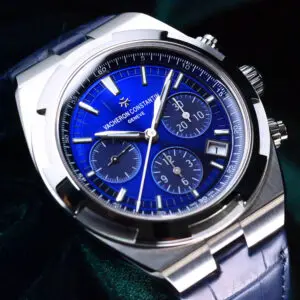
Vacheron Constantin Overseas Chronograph Blue Dial Blue Leather Strap Stainless Steel 42.5mm MINT CONDITION COMPLETE SET 5500V/110A-B148
$37,793.00
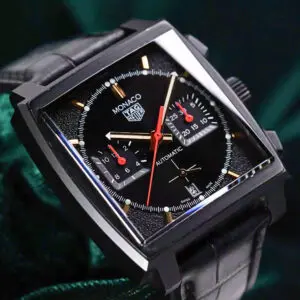
Tag Heuer Monaco Chronograph “Dark Lord” Special Edition Black Dial Black Leather Strap DLC Titanium 39mm MINT CONDITION COMPLETE SET CBL2180.FC6497
$8,135.00
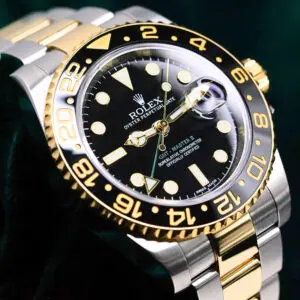
Rolex GMT-Master II “Green Arrow” Black Dial Black Ceramic Bezel Oyster Bracelet Two-Tone 18K Yellow Gold Stainless Steel 40mm MINT CONDITION COMPLETE SET 116713LN
$15,740.00
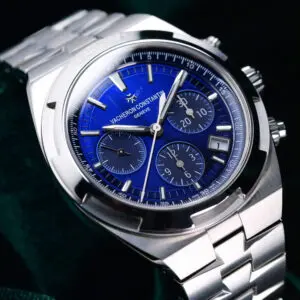
Vacheron Constantin Overseas Chronograph Blue Dial Stainless Steel 42.5mm MINT CONDITION COMPLETE SET 5500V/110A-B148
$37,793.00
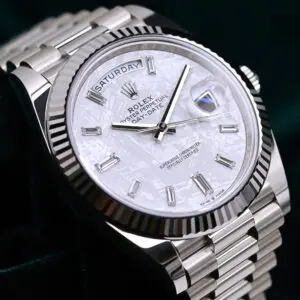
Rolex Day-Date Meteorite Baguette Diamond Dial Fluted Bezel President 18K White Gold 40mm MINT CONDITION COMPLETE SET 228239
$78,629.00
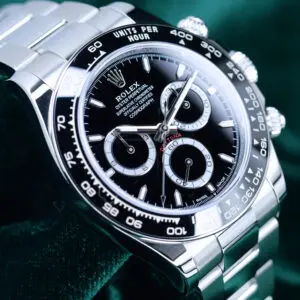
2026 Rolex Cosmograph Daytona Black Dial Black Ceramic Bezel Oyster Bracelet Stainless Steel 40mm MINT CONDITION COMPLETE SET 126500LN
$33,594.00
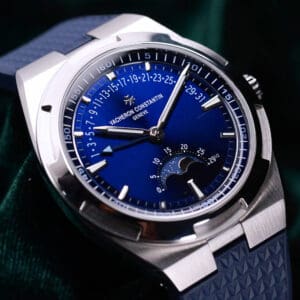
2025 Vacheron Constantin Overseas Moonphase Retrograde Date Blue Dial Blue Rubber Strap Stainless Steel 41mm MINT CONDITION COMPLETE SET 4000V/210A-B911
$52,800.00
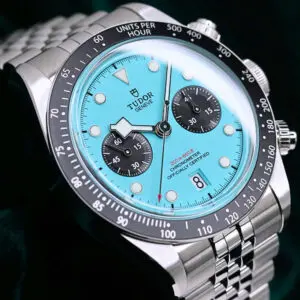
2025 Tudor Black Bay Chrono "Flamingo Blue" Turquoise Dial Black Bezel Stainless Steel 41mm MINT CONDITION COMPLETE SET 79360N-0024
$10,494.00
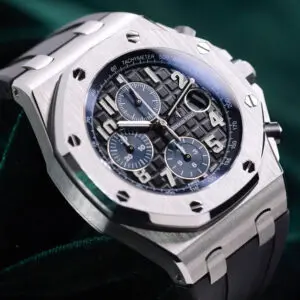
Audemars Piguet Royal Oak Offshore Chronograph "Batman" Black Dial Blue Accents Black Rubber Strap Stainless Steel 42mm MINT CONDITION COMPLETE SET 26470ST.OO.A028CR.01
$25,715.00
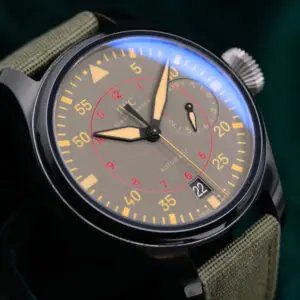
IWC Big Pilot's Watch Top Gun Miramar Grey Dial Green Textile Strap Black Ceramic 48mm MINT CONDITION COMPLETE SET IW501902
$7,240.00
Audemars Piguet Royal Oak Offshore Chronograph "Elephant" Gray Dial Stainless Steel Rubber Strap 42mm 26470ST.OO.A104CR.01
$23,974.50