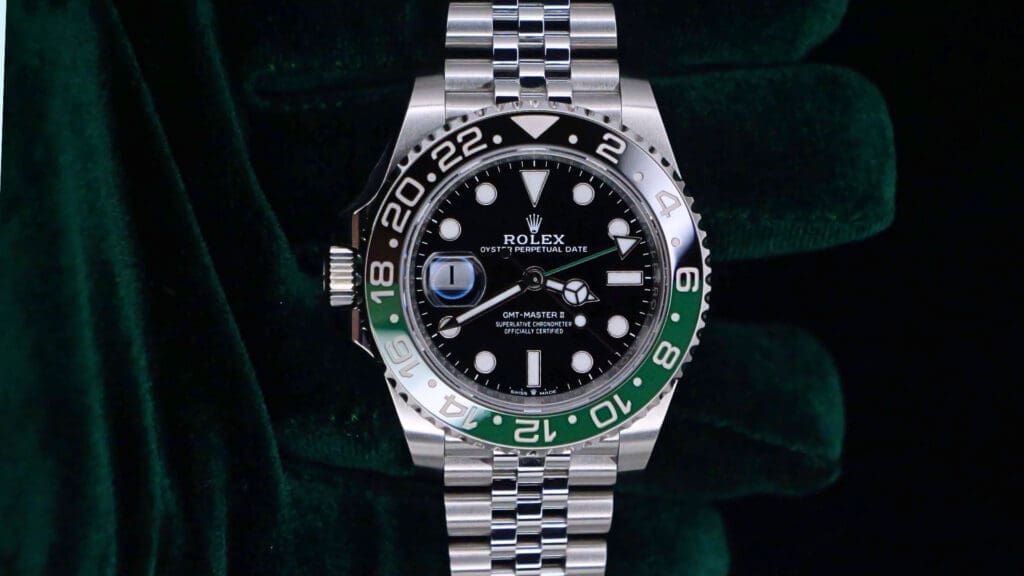
Have you ever bought a GMT watch but weren’t exactly sure how to use GMT watch features properly? Or maybe you travel often and want a simple guide without complicated watch jargon.
This article will teach you everything—what a GMT watch is, how the movements work, and how to use GMT watch functions the right way.
Keep reading to confidently master your GMT timepiece.
What is a GMT Watch?
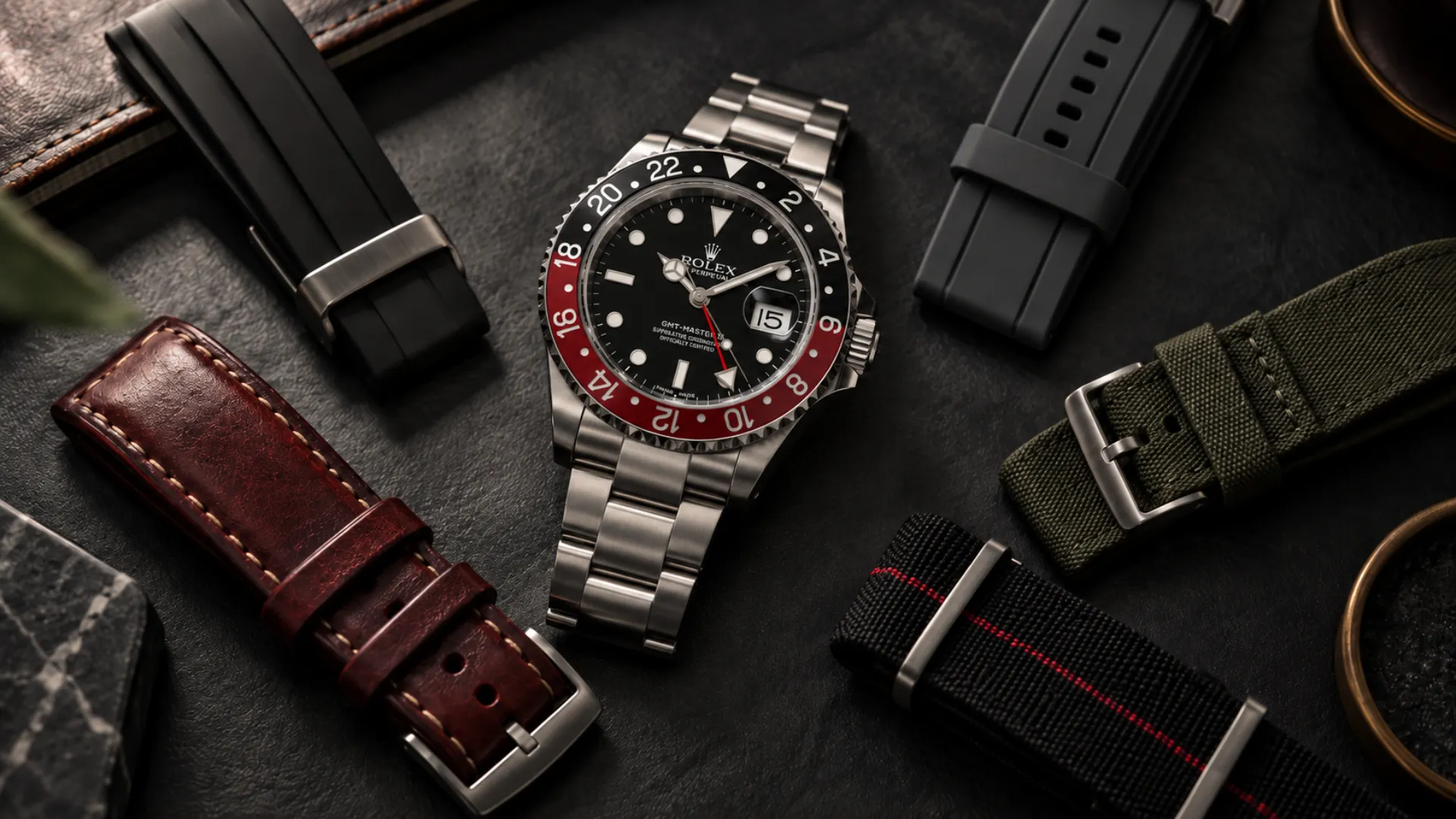
A GMT watch is a multi-time-zone timepiece that helps you track another country’s time using a 24-hour GMT hand, a 12-hour hand, and sometimes a rotating 24-hour bezel. Understanding how to use GMT watch functions begins with knowing how these hands interact.
GMT watches were created for pilots and global travelers who needed to read home time and local time instantly. The 24-hour hand completes one rotation per day, helping you check day and night times in another location.
Movement Types in GMT Watches
There are two main types of GMT movements: the Flyer GMT and the Caller GMT. Each offers different advantages depending on whether you travel or stay in one place.
Flyer GMT (Traveler GMT)
A Flyer GMT lets you adjust the local hour hand independently without stopping the movement. This is ideal when learning how to use a GMT watch while traveling because you can change local time without affecting the GMT hand or minutes.
This style is found in the Rolex GMT-Master II, Tudor Black Bay GMT, Omega Planet Ocean GMT, and Grand Seiko Spring Drive GMT.
Caller GMT (Office GMT)
A Caller GMT lets you move the GMT hand independently, not the local hour hand. This is designed for office users who want to know how to use a GMT watch to track another time zone while staying in one fixed location.
Common movements include ETA 2893-2, SW330, and Oris Worldtimer-based mechanisms.
How to Set a GMT Watch (Flyer GMT): Step-by-Step
(For Rolex GMT-Master II, Omega Planet Ocean GMT, Tudor Black Bay GMT, Grand Seiko Spring Drive GMT)
Step 1: Rotate the bezel to match the time-zone difference.
Step 2: Turn the bezel clockwise to subtract hours.
Step 3: Turn the bezel counterclockwise to add hours.
Step 4: Set the GMT hand to GMT to track three time zones.
Step 5: Set the hour hand back to your local time.
Step 6: Rotate the bezel to set the third time-zone offset.
Step 7: Adjust one hour for daylight-saving time.
Step 8: Set both hands to local time for compass mode.
Step 9: Lay the watch flat and point the hour hand at the sun.
Step 10: Use the GMT hand to find north.
How to Set a GMT Watch (Caller GMT): Step-by-Step
(For watches with ETA 2893-2, SW330, Oris Worldtimer variants, microbrands)
Step 1: Pull the crown out fully to stop the seconds hand.
Step 2: Rotate the hands to set your exact local time.
Step 3: Keep rotating past midnight until the correct date appears.
Step 4: Push the crown to the GMT-setting position.
Step 5: Turn the crown to move the GMT hand in one-hour increments.
Step 6: Set the GMT hand to the exact hour of your second time zone.
Step 7: Check the 24-hour scale to confirm AM or PM.
Step 8: Push the crown all the way in to restart the watch.
Step 9: Read the second time zone using the GMT hand.
Step 10: Pull the crown out when traveling to reset your local time.
Step 11: Re-set the GMT hand if the time-zone offset changes.
Step 12: Use the 24-hour scale to verify day or night in the second zone.
Step 13: Add or subtract one hour when daylight saving time changes.

Differences Between GMT vs World Timer vs Dual-Time
If you want to learn how to use GMT watch correctly, it helps to know the difference between other multi-time-zone complications.
A GMT watch uses a 24-hour hand and sometimes a rotating bezel to track two or three zones. A World Timer uses a rotating city ring to show 24 global time zones at once. A Dual-Time watch displays two 12-hour times with an AM/PM indicator.
Common Mistakes When Using a GMT Watch
Setting the GMT and the hour hand to the same time.
This removes the purpose of the GMT hand because both hands end up showing the same zone. You lose the ability to track a second time zone, making the GMT function useless.
Ignoring the 24-hour scale causes incorrect reading.
The 24-hour scale is what tells you whether the GMT hand is pointing to AM or PM. If you ignore it, you may misread night as day or vice versa in your reference zone.
Forgetting how to use the GMT watch bezel logic for the third time zone.
The rotating bezel is required for tracking a third time zone, and without it, the GMT hand only gives you two. Misunderstanding bezel math will lead to incorrect time-zone offsets.
Not adjusting for daylight-saving shifts.
DST changes can move your reference zone forward or backward by one hour. If you don’t adjust the GMT hand, your reference time will be off until the next correction.
Confusing the GMT hand with the local hour hand.
The local hour hand follows normal 12-hour time, while the GMT hand follows a 24-hour scale. Mixing them up makes it hard to interpret which hand shows which time zone.
Forgetting to lock down the crown after setting.
Leaving the crown unlocked reduces water resistance and may let moisture enter the case. It can also cause accidental changes to your time settings during daily wear.
Misreading a bidirectional bezel.
Some GMT bezels rotate both ways, which can confuse users who expect a unidirectional dive bezel. Turning it the wrong way will give you the opposite time-zone offset.
Thinking all GMT watches operate like a Rolex.
Different brands use different types of GMT systems. If you assume they all work the same, you’ll set the watch incorrectly.
Turning the bezel without checking the time difference.
Each country has its own hour offset. If you don’t confirm the difference first, your third time zone will be wrong.
Getting day and night mixed up
If the GMT hand isn’t set correctly on the 24-hour scale, you may think it’s day when it’s actually night in the other time zone. This happens when AM/PM isn’t checked during setup.
Recommended GMT Watches
Here are excellent models for anyone wanting to learn how to use GMT watch features at different price levels.
Rolex GMT-Master II 126710BLRO (Pepsi)
The Rolex GMT-Master II 126710BLRO (Pepsi) is one of the most iconic GMT watches ever made, retailing for USD $11,300. With its blue-red Cerachrom bezel, Jubilee bracelet, and Flyer GMT movement, it’s an excellent choice for travelers learning how to use GMT watch functions with accuracy and ease.
Rolex GMT-Master II 126710BLNR “Batgirl”
The Rolex GMT-Master II 126710BLNR “Batgirl” features a refined blue-black bezel, Jubilee bracelet, and Rolex’s advanced Caliber 3285 movement. Its retail price of USD $11,100 makes it slightly more accessible than the Pepsi version, while offering the same world-class reliability for anyone mastering how to use GMT watch settings.
Rolex Explorer II 226570
The Rolex Explorer II 226570 is built for rugged conditions, featuring a fixed 24-hour bezel and a standout orange GMT hand. With a retail price of USD $10,050, it remains one of the more affordable Rolex professional models and a strong option for users who want to understand how to use GMT watch mechanics in practical, adventure-ready situations.
Tudor Black Bay GMT 79830RB
The Tudor Black Bay GMT 79830RB delivers vintage aesthetics, a COSC-certified movement, and a classic Pepsi-style bezel. Retailing for USD $4,900, it is a great entry-level choice for enthusiasts who want to learn how to use GMT watch features without stepping into higher luxury pricing.
Breitling Chronomat GMT 40
The Breitling Chronomat GMT 40 combines a sleek, modern look with a Caller-style GMT movement suited for office and travel use. With a retail price of USD $6,700, it provides strong functionality and stylish versatility for users exploring how to use GMT watch functions in everyday life.
Conclusion
Now that you understand how to use GMT watch settings correctly, your watch becomes more than a stylish accessory; it is now a reliable travel companion. Whether hopping between countries or coordinating with different regions, the GMT function keeps you grounded. With the steps and tips in this guide, you can now switch time zones smoothly and read global times at a glance.
FAQs about Using a GMT Watch
What’s the difference between a GMT watch and a dual-time watch?
A GMT watch uses a 24-hour hand to track another time zone, while a dual-time watch uses two 12-hour displays. If you’re learning how to use GMT watch functionality, you’ll notice GMT watches offer better clarity for AM/PM and can track a third zone using the bezel.
How do I read a second time zone on a GMT watch?
To read the second time zone, look at where the GMT hand points on the 24-hour scale—either on the bezel or the dial. This tells you the exact hour in your reference time zone and also shows whether it’s day or night there. It’s a simple way to stay aware of another region’s time, especially when coordinating calls or travel.
How do I track three time zones with a GMT watch?
To track three time zones, keep your local time on the main hour hand, set the GMT hand to your home or reference time, and then rotate the bezel to match the third time zone’s hour offset. This technique lets you monitor all three locations at a glance, which is especially helpful for frequent travelers or anyone coordinating across multiple regions.
How does the rotating bezel affect GMT time reading?
The rotating bezel lets you add or subtract hours from the GMT hand, allowing you to track an additional time zone beyond your home and local times. By turning the bezel to match the hour difference, you can quickly read a third time zone without changing any of the watch’s hands.
Can I use a GMT watch as a compass?
Yes. By pointing the hour hand at the sun and using the GMT hand to find north, you can use the watch for navigation. This is an unconventional but interesting way to understand how to use the GMT watch abilities outdoors.
Are GMT bezels supposed to rotate freely or in clicks?
Most GMT bezels rotate in 24 clicks, but some move smoothly depending on the model. The Rolex GMT-Master 6542, the early Rolex GMT-Master 1675, and the Seiko 4R34 GMT are some great examples of timepieces that use a smooth, friction-style, rotating bezel instead of clicks.