
Have you ever wondered how two Rolex models that look similar at first glance can offer completely different experiences on the wrist?
The Air-King and the Explorer each carry their own history, dial language, and technical decisions that pull them in different directions. In this guide, we’ll break down the key differences between these two icons, from case size and dial design to movement performance and current market price.
Stick around to see which Rolex fits your lifestyle and why collectors pay close attention to details most buyers walk right past.
Rolex Air-King Background



The Rolex Air-King has roots reaching back to the 1940s, created as a tribute to Royal Air Force pilots who privately bought Rolex Oysters during World War II. The original was a reliable, easy-to-read watch built for the demands of aviation.
Over the decades, the Air-King moved from a simple 34mm pilot’s watch into the bold 40mm sports watch we know today.
In 2016, Rolex introduced the Air-King ref. 116900, a complete reset of the model. Black dial, prominent minute scale, green and yellow accents, and a polarizing look that split watch enthusiasts.
The dial wasn’t actually pulled from aviation history. It was inspired by the dashboard instruments Rolex designed for the Bloodhound SSC (later LSR), a British supersonic land-speed-record car project. That dashboard heritage is why the Air-King looks like nothing else in the Rolex catalog.
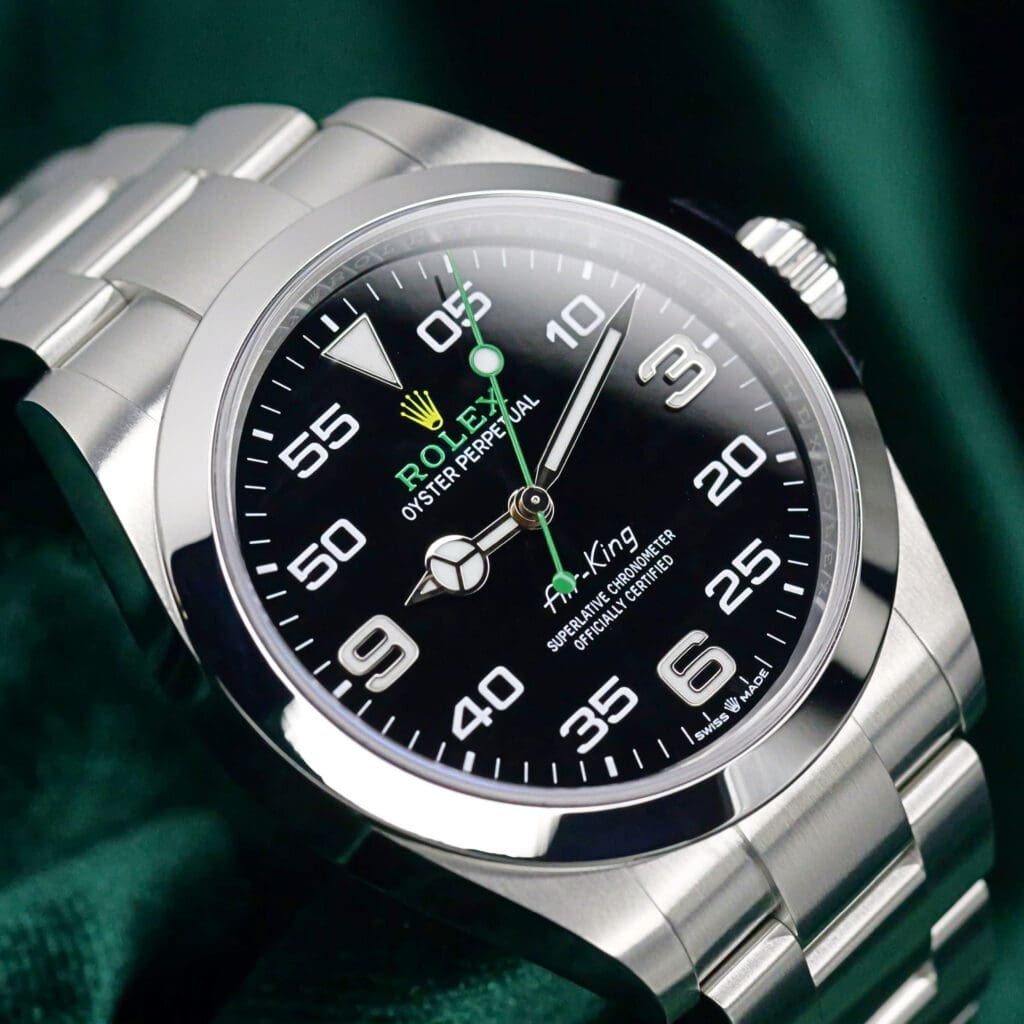
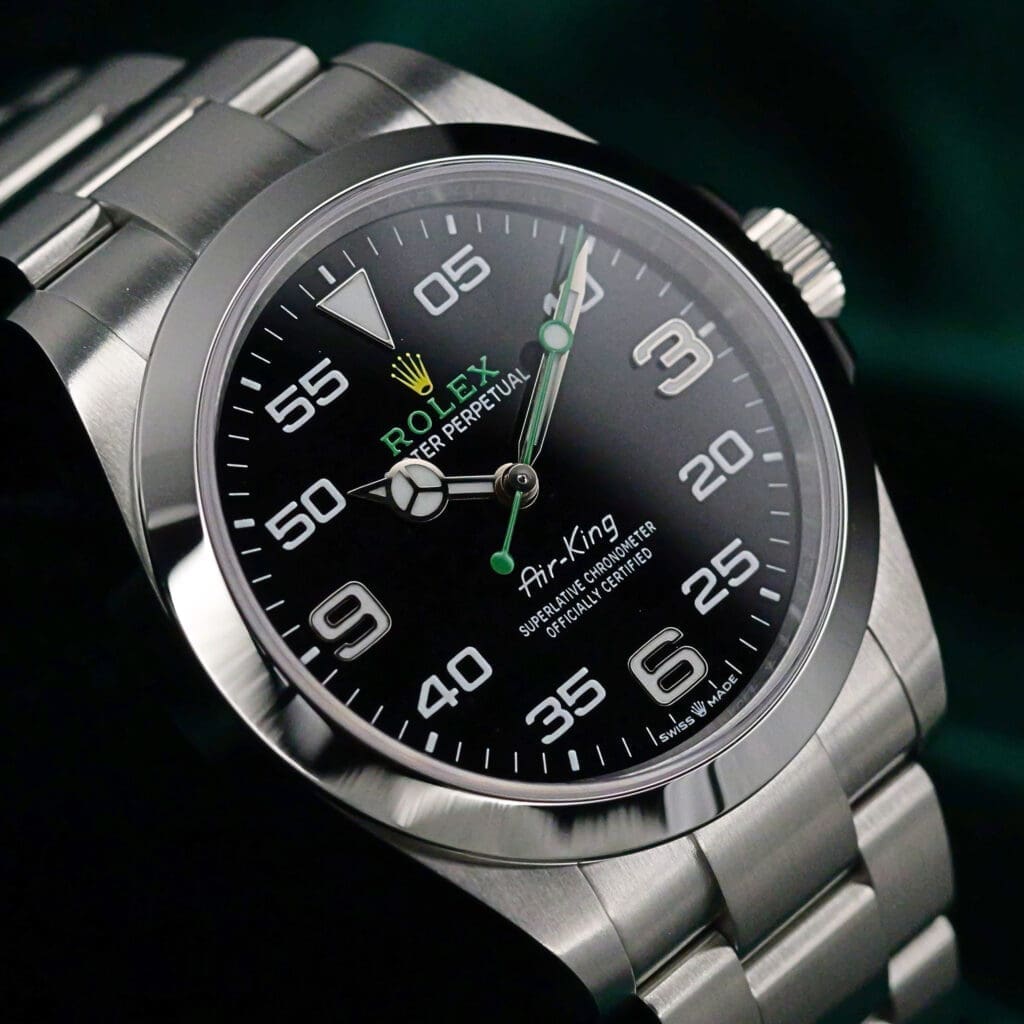
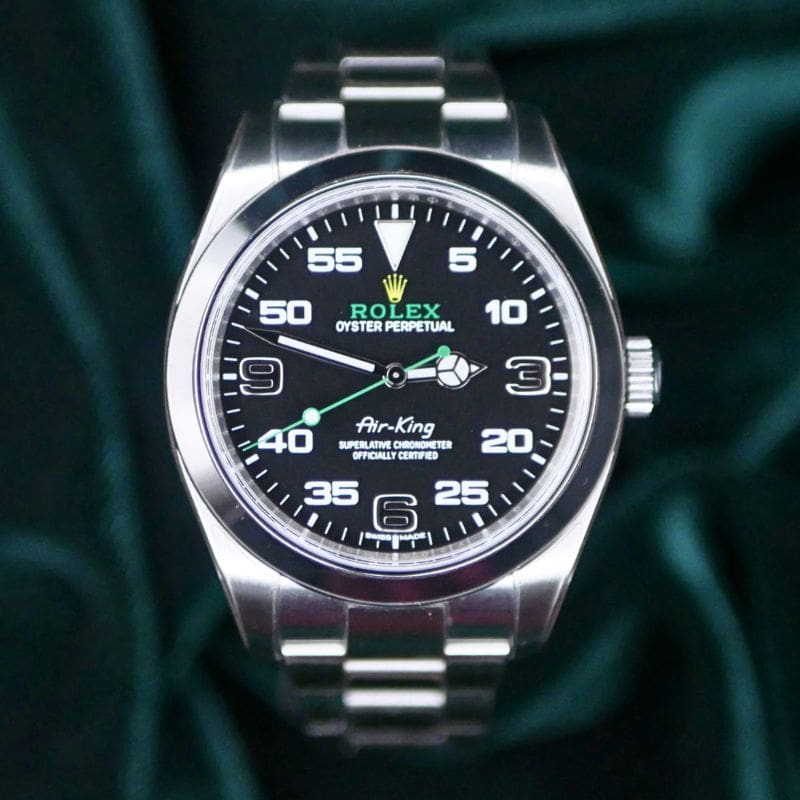
The current Air-King, ref. 126900, launched in 2022. It refines the 116900 with crown guards, Chromalight-filled 3, 6, and 9 numerals, a wider bracelet, and an upgraded Oysterlock clasp.
Inside is the Caliber 3230, giving you a 70-hour power reserve and stronger anti-magnetic resistance thanks to the Parachrom hairspring and Chronergy escapement. The 126900 is currently in production with a US retail price of $8,150. For the full reference history, dial nicknames, and what to look for when shopping pre-owned, our complete Air-King buying guide covers it in more depth.
Rolex Explorer Background
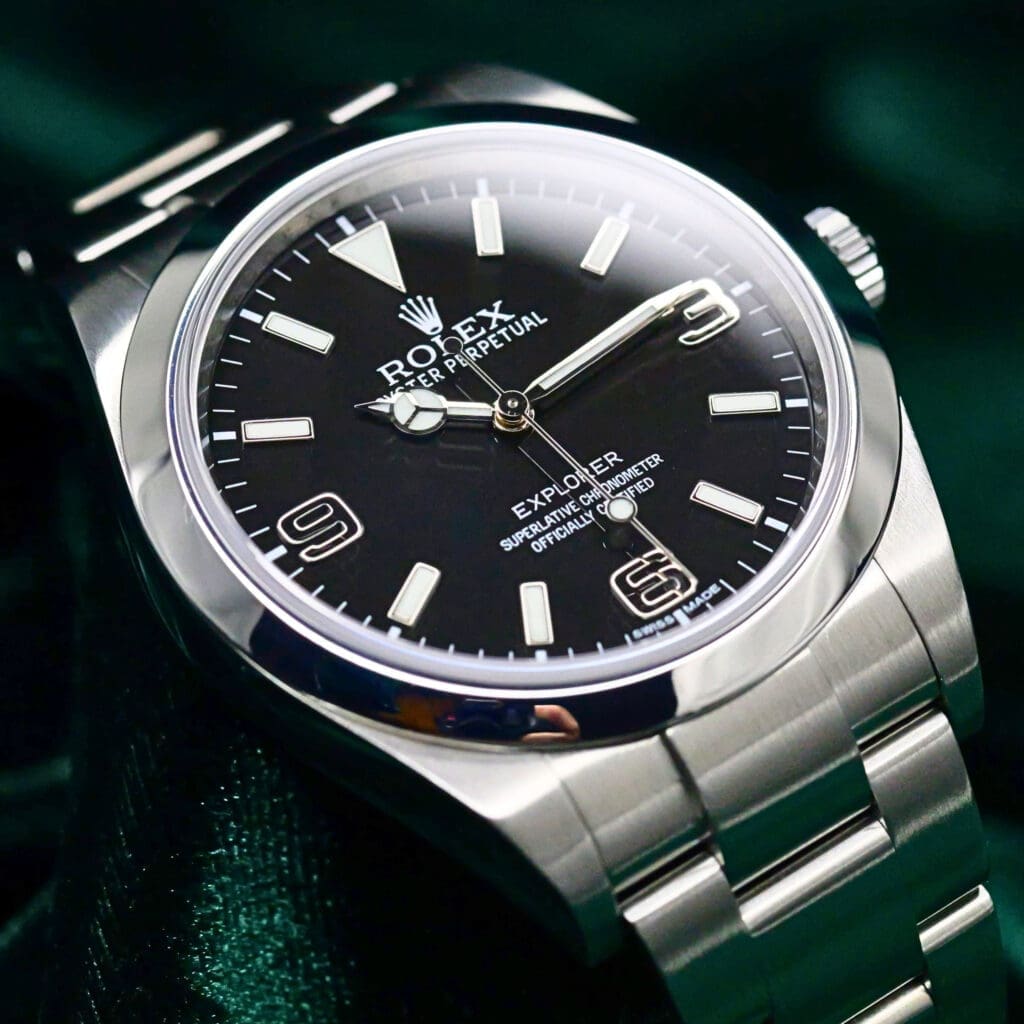



The Rolex Explorer earned its reputation through Sir Edmund Hillary and Tenzing Norgay’s ascent of Mount Everest in 1953. Rolex equipped the expedition with Oyster Perpetuals, and the watch’s reliability in extreme cold, low pressure, and constant impact became part of the model’s DNA.
The Explorer evolved through several key references. The 36mm ref. 1016 ran from 1963 to 1989 and remains the vintage Explorer most collectors chase. In 2010, Rolex broke tradition with the 39mm ref. 214270, a deliberately larger Explorer for buyers who found 36mm too small.
In 2021, Rolex went back to 36mm with the ref. 124270 and added a two-tone option in the 124273. In March 2023, Rolex introduced the 40mm ref. 224270 for buyers who still wanted the larger format.
If you want the full breakdown across every reference and what to look for in each, our Explorer buying guide covers it.
MK1 vs MK2 Dial: What 214270 Buyers Need to Know
If you’re shopping for a pre-owned 214270, the dial variant matters more than the year. The reference ran from 2010 to 2021 with two distinct dial executions, and they’re not priced the same on the secondary market.
The MK1 dial (2010–2015) had shorter hands and white-gold 3, 6, and 9 numerals with no luminescence. Collectors complained the hands looked stubby against the larger 39mm dial, and the numerals disappeared in the dark.
In 2016, Rolex updated the dial to the MK2: longer hands that reach the minute track properly, and Chromalight luminescence applied behind the numerals. Most buyers today specifically hunt the MK2 for the better legibility, which is why it commands a small premium.
When you see two 214270 listings at very different prices, the MK1/MK2 split is usually the reason.
Differences Between the Rolex Air-King vs Explorer
This comparison focuses on the modern Air-King 126900 and the Explorer 214270 because those are the two references buyers actually cross-shop. Here’s how they break down across the points that affect the buying decision.
1. Case Size and Finish

The Air-King 126900 comes in a 40mm Oystersteel case with brushed surfaces and polished sides, plus crown guards added in the 2022 update. It sits noticeably bolder on the wrist than the Explorer.
The Explorer 214270 has a 39mm Oystersteel case at 11.2mm thick with a 47mm lug-to-lug, brushed top with polished sides, and a smooth polished bezel. It’s the only 39mm Explorer Rolex ever made; the model went back to 36mm with the 124270.
The 1mm case difference sounds minor on paper. On the wrist, the Air-King wears bigger because of the crown guards and busier dial; the Explorer disappears under a cuff.
2. Dial Design and Accents

The Air-King 126900 features a black dial with applied 3, 6, and 9 Arabic numerals, a full minute track, the green Air-King script and yellow Rolex coronet inherited from the Bloodhound dashboard, and Chromalight luminescence. The 6 numeral on the 126900 is now lume-filled, where the 116900 had a polished 6, a small but real visual upgrade.
The Explorer 214270 uses a black lacquer dial with applied white-gold indices, the signature 3, 6, and 9 numerals, a Mercedes hour hand, baton minute hand, and lollipop seconds hand. Chromalight lume sits in the hands and (on MK2 dials) under the numerals. It’s a quieter, more traditional dial than the Air-King.
3. Bracelet Finish and Clasp

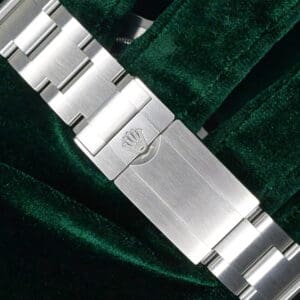
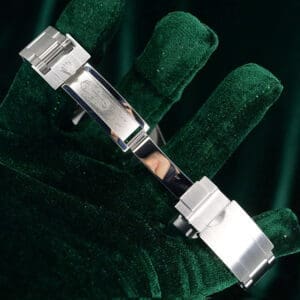
Both watches wear a three-link Oyster bracelet in Oystersteel with brushed top surfaces and polished sides. Both use an Oysterlock safety clasp with the 5mm Easylink comfort extension.
The 126900 got a wider bracelet and updated clasp during the 2022 refresh, which fixed a common 116900 complaint about the bracelet looking slightly under-built for the case. The 214270’s bracelet is older in design but still uses solid links throughout, including the end links.
4. Movement and Power Reserve
The Air-King 126900 runs on Caliber 3230, Rolex’s newer-generation movement launched in 2020. You get a 70-hour power reserve, the Chronergy escapement, a Parachrom hairspring, and Paraflex shock absorbers. It’s COSC-certified and Superlative Chronometer–certified to -2/+2 seconds per day after casing.
The Explorer 214270 uses Caliber 3132 with a 48-hour power reserve, Parachrom hairspring, and Paraflex shock absorbers. It’s also COSC and Superlative Chronometer–certified to -2/+2 seconds per day (Rolex updated this certification standard in 2015, mid-way through the 214270’s run).
The practical difference: take the Air-King off Friday evening, it’s still running Monday morning. Take the Explorer off Friday, it stops by Sunday. Not a deal-breaker either way, just something to know.
If you want the technical layer, our breakdown of Rolex’s modern movements walks through how the 3230 family improved on the 3130 series.
5. Style and Wrist Presence
The Air-King is a watch that gets noticed. The green script, yellow coronet, and busy dial don’t blend in, and the crown guards plus 40mm case give it sport-watch presence. It works well in casual and office settings if you’re comfortable being asked about it.
The Explorer is the opposite. It’s the watch that hides in plain sight. Black dial, simple 3-6-9 layout, no date window, no color accents. It works with a suit, with a polo, with a hoodie. That versatility is why so many collectors call the Explorer the most versatile sport Rolex.
6. Production Status and Market Demand
This is the biggest practical difference for buyers in 2026: the Air-King 126900 is still in production, the Explorer 214270 is discontinued.
The 126900 currently retails at $8,150 in the US. Pre-owned values sit around $8,000 to $8,200, essentially at retail and slightly below in some cases. WatchCharts data shows it trading at roughly 0.8% below retail, which is unusual for a current Rolex sport model.
The Explorer 214270 was discontinued in 2021 and replaced by the 36mm 124270. Pre-owned 214270 prices climbed past $10,000 in 2021–2022 right after discontinuation, then corrected back down.
Current 2026 secondary market values land around $7,000 to $7,500, with full-set examples (box, papers, original strap link) at the higher end. MK2 dials trade slightly above MK1 dials at similar condition.
If you’re buying for daily use, the Air-King is easier to source new. If you’re buying with any eye on long-term collectibility, a discontinued reference like the 214270 has a fixed supply that an in-production watch doesn’t.
Not every Rolex holds value the same way, so it’s worth understanding what drives it.
Side-by-Side Comparison (at a Glance)
| Feature | Rolex Air-King 126900 | Rolex Explorer 214270 |
| Production status | Current (in production) | Discontinued in 2021 |
| Case size | 40mm Oystersteel, brushed top, polished sides, crown guards | 39mm Oystersteel, brushed top, polished sides, 11.2mm thick |
| Dial | Black with 3-6-9 Arabic numerals, green script, yellow coronet, Chromalight lume | Black lacquer, white-gold indices and 3-6-9 numerals, Chromalight lume |
| Hands | Baton minute hand, green lollipop seconds hand | Mercedes hour hand, baton minute hand, lollipop seconds hand |
| Bracelet | Oyster three-link, Oystersteel, Oysterlock clasp with 5mm Easylink | Oyster three-link, Oystersteel, Oysterlock clasp with 5mm Easylink |
| Movement | Caliber 3230, 70-hour power reserve, Chronergy escapement | Caliber 3132, 48-hour power reserve, Parachrom hairspring |
| Certification | COSC + Superlative Chronometer (-2/+2 sec/day) | COSC + Superlative Chronometer (-2/+2 sec/day) |
| Water resistance | 100m | 100m |
| 2026 retail (US) | $8,150 | Discontinued |
| 2026 pre-owned market | ~$8,000 to $8,200 | ~$7,000 to $7,500 (MK2 trades higher) |
| Style | Bold, aviation-inspired, motorsport-derived dial | Understated, versatile tool watch |
Should You Buy a Rolex Air-King or an Explorer?
If you’re choosing between these two, it comes down to visibility vs versatility, and new availability vs discontinued appeal. Here’s a clear breakdown to help you decide.
Choose the Rolex Air-King 126900 if:
- You want a current Rolex sport model at retail-adjacent pricing.
- You’re comfortable wearing a watch that gets noticed on the wrist.
- You like the bold, polarising “Bloodhound” dial (and you’re firmly in the camp that loves it).
- You want the newer Caliber 3230 with a 70-hour power reserve.
- You prefer a model that is generally easier to source from an authorised dealer.
Choose the Rolex Explorer 214270 if:
- You prefer a watch that stays subtle and “disappears” on the wrist.
- You want something that works across everything (suit, casual, or sporty fits).
- You like the 39mm case, which sits right between the 36mm and 40mm Explorer models.
- You value a discontinued reference with fixed supply and long-term appeal.
- You’re willing to hunt for the right example (ideally MK2 dial, full set, unpolished case).
Related Models from Majestix
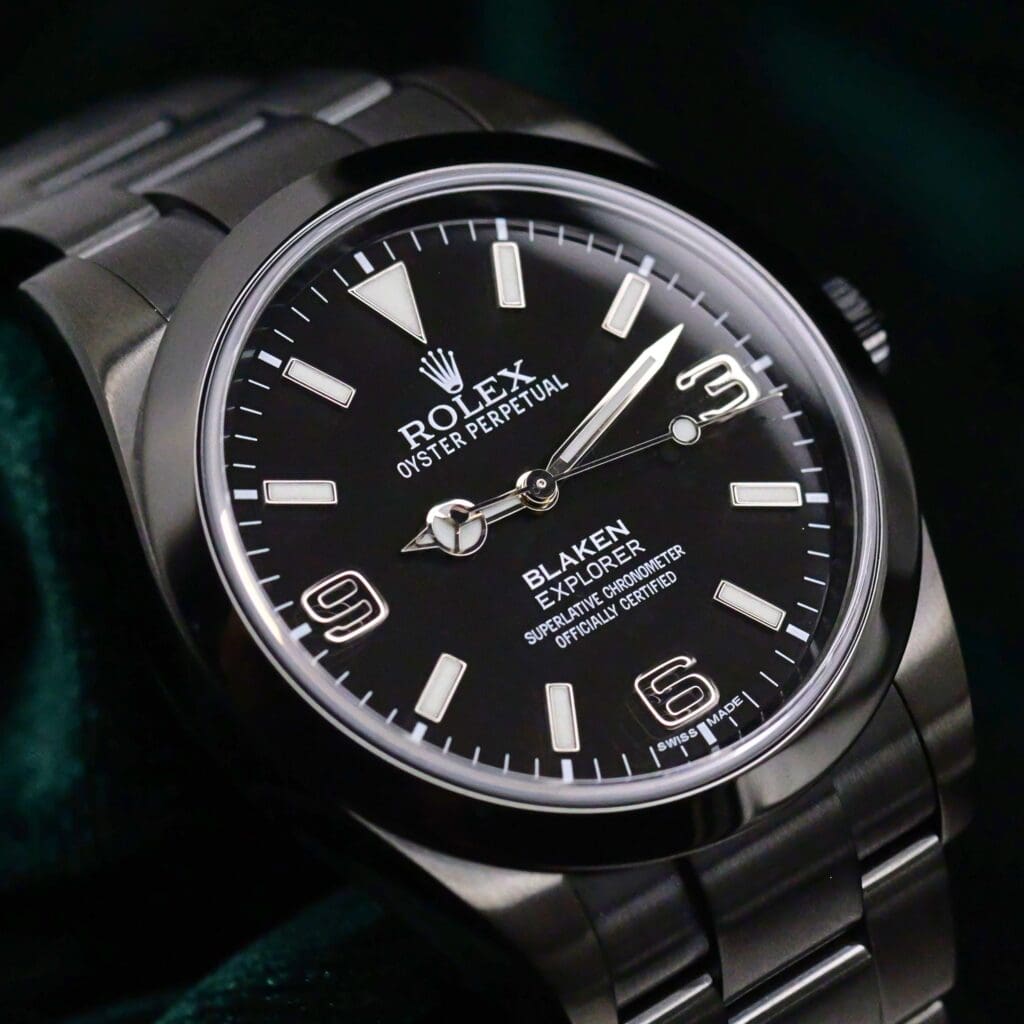
Rolex Explorer Blaken Black Dial Oyster Bracelet DLC Black Stainless Steel 39mm MINT CONDITION COMPLETE SET 214270
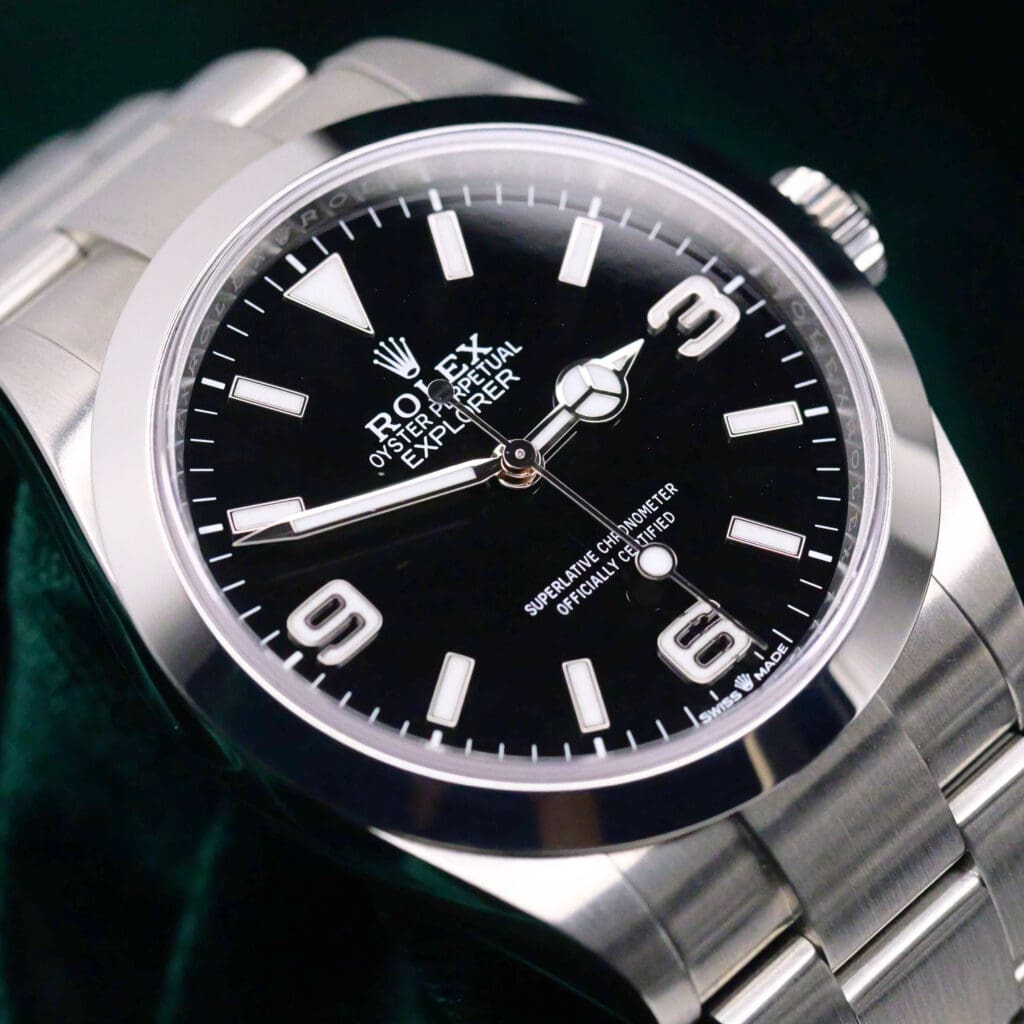
2025 Rolex Explorer Black Dial Oyster Bracelet Stainless Steel 40mm MINT CONDITION COMPLETE SET 224270

Rolex Explorer I Black Dial Stainless Steel 39mm MINT CONDITION COMPLETE SET 214270

2026 NEW UNWORN Rolex Explorer II "Polar" White Dial 42mm COMPLETE SET 226570

Rolex Explorer II "Polar" White Dial Stainless Steel 40mm MINT CONDITION COMPLETE SET 16570
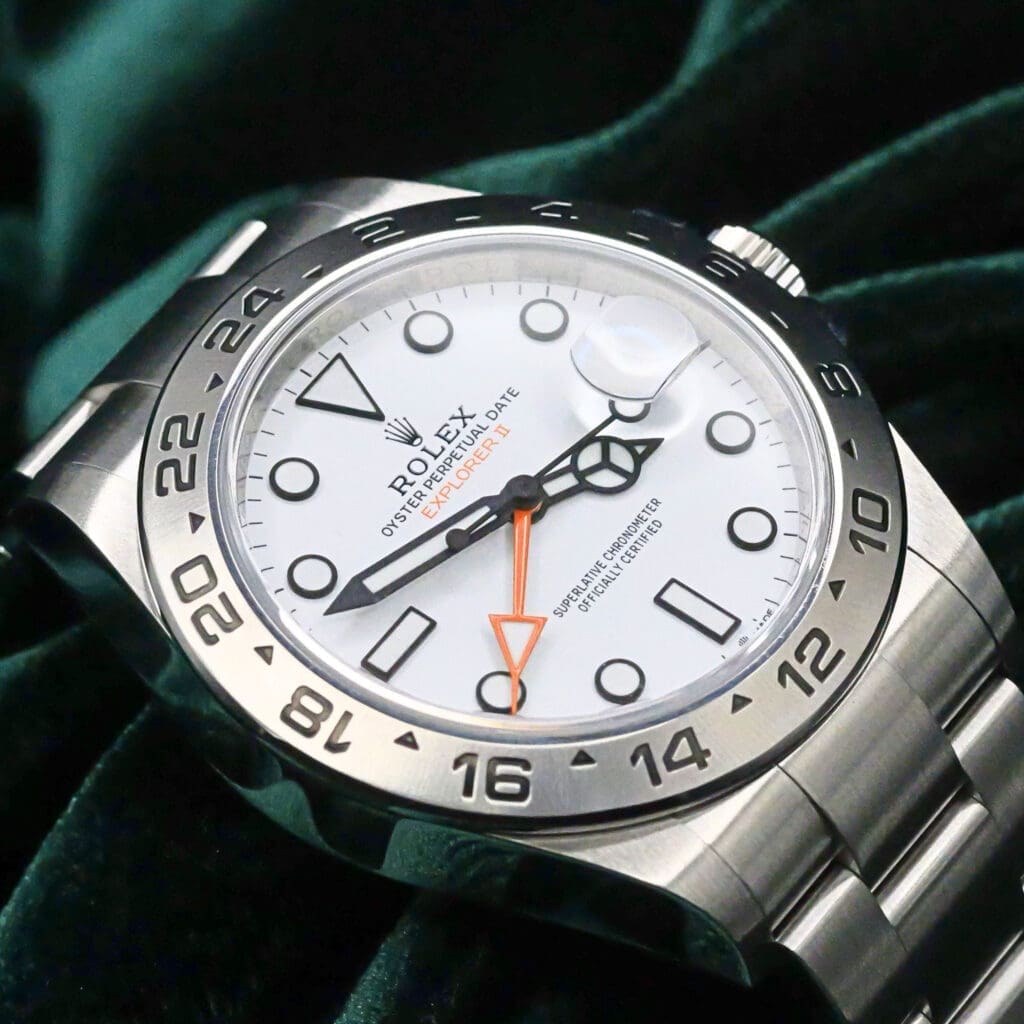
2026 NEW UNWORN Rolex Explorer II "Polar" White Dial Stainless Steel 42mm 226570
If your priority is personality and modern spec, the Air-King stands out. If you want quiet confidence and all-around wearability, the Explorer is hard to beat.
Where to Buy Authentic Air-King and Explorer
There are a handful of legitimate places to source either of these references pre-owned. Chrono24 is the largest dealer marketplace by volume, good for comparing listings across hundreds of sellers, but you have to vet each dealer yourself.
eBay through the Authenticity Guarantee program is workable for pieces under $10,000, since eBay sends the watch through a third-party authentication step before it reaches you. Grailzee runs auction-style sales and tends to surface fairer pricing on watches that aren’t trending.
We also sell, buy, and trade luxury watches, and the reason clients come to us instead of a big marketplace is what happens before the purchase.
We give you layered communication: an actual tour video of the specific watch (not stock photos pulled from Rolex’s site), plus condition notes that cover what most listings skip, like lug surfaces, bracelet stretch, dial originality, and MK1 vs MK2 confirmation on a 214270.
You’re not buying off a listing. You’re talking to someone who has the watch in hand.
That’s reflected in our 4.9-star Google rating, which comes from clients who appreciate having that conversation before they commit. If you’re hunting a specific reference and can’t find it, we can also help source it for you.
If you want that kind of walkthrough on a 126900 or a 214270, reach out and we’ll line up the options that match what you’re after.
FAQs
Is the Rolex Air-King 126900 a Good Investment?
The Air-King 126900 is best treated as a watch to wear, not a watch to flip. It currently trades at or just below retail on the secondary market, which is unusual for a current Rolex sport model. Most carry premiums of 20% or more.
The upside is you can usually find one at fair value without paying a hype tax. The trade-off is it doesn’t appreciate the way a Submariner or GMT does. (For context on where current Rolex sport models actually trade, our Rolex pricing guide lays out the going rates.)
Why Is the Explorer 214270 Cheaper Than the Air-King 126900?
The 214270 trades lower because it was discontinued in 2021 and the market corrected after the 2021–2022 spike. Right after discontinuation, prices jumped from around $8,000 to over $10,000.
Then Rolex released the 124270 (36mm) and 224270 (40mm), giving buyers two current-production alternatives, and the 214270’s premium faded. It’s now one of the better values in the modern sport Rolex catalog.
Should I Buy a 214270 MK1 or MK2 Dial?
Most buyers should target an MK2 dial unless you specifically want the earlier execution. The MK2 (2016–2021) fixed the two real complaints about the MK1: short hands that didn’t reach the minute track, and non-luminous numerals.
The MK2 has longer hands and Chromalight applied behind the 3, 6, and 9. The MK1 has a small following among collectors who like its quirks, but for daily wear, the MK2 is the better watch.
Is the Air-King 126900 a Pilot’s Watch?
Not really, despite the name. The “Air-King” name dates to a 1945 Rolex tribute to RAF pilots, but the modern 126900’s dial design comes from the Bloodhound LSR supersonic car project, not from aviation instruments.
It’s a sports watch with an aviation-themed name and a motorsport-themed dial. If you want an actual pilot’s watch from a major brand, the IWC Pilot or Breitling Navitimer fit that brief better.
Can the 214270 Be Serviced if Rolex No Longer Makes Parts for It?
Yes, Rolex services discontinued models for many years after they left production, and the Caliber 3132 shares its base architecture with the long-running 3130 family used across multiple references.
Parts availability for the 214270 is currently strong. Service intervals run roughly every 7 to 10 years; expect a Rolex Service Center service to land in the $700 to $900 range depending on what the watch needs. We’ve broken down what an Explorer service actually costs in a separate guide.
Final Thoughts on the Rolex Air-King vs Explorer
Choosing between the Air-King 126900 and the Explorer 214270 mostly comes down to which dial you can live with daily and whether you want a current model or a discontinued one.
The Air-King makes a statement and gives you the newer movement at retail-adjacent pricing. The Explorer disappears on the wrist and gives you a watch with a fixed supply that quietly holds its character.
A couple of bonus tips before you decide. Handle both in person if you can. The Air-King’s dial photographs much busier than it looks on the wrist, and a lot of buyers who initially dismiss it change their mind once they try one.
If you’re going pre-owned on either, prioritize unpolished cases and full sets over the deepest discount. Original surfaces and box and papers are where long-term value lives in the Rolex secondary market. (We’ve covered why unpolished cases hold their value better in a separate guide.)
999+ Timepieces Available
Explore Our Timepieces
Authenticated, unworn, and ready to ship worldwide.
Rolex · Audemars Piguet · Patek Philippe · Omega · Cartier · Richard Mille · Hublot · Tudor
Newly Listed
Vacheron Constantin Overseas Dual Time Silver Dial Brown Leather Strap 18K Rose Gold 41mm MINT CONDITION COMPLETE SET 7900V/000R-B336
$41,894.00
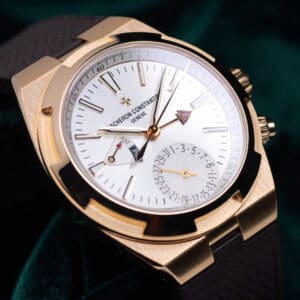
Vacheron Constantin Overseas Dual Time Silver Dial 18K Rose Gold Brown Rubber Strap 41mm MINT CONDITION COMPLETE SET 7900V/000R-B336
$41,894.00
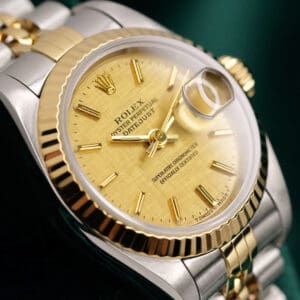
Rolex Lady-Datejust Champagne Linen Dial 18k Yellow Gold Fluted Bezel Jubilee Bracelet Two Tone Steel & Gold 26mm MINT CONDITION COMPLETE SET 69173
$9,345.00
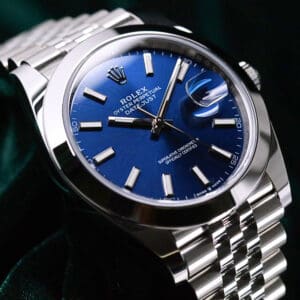
2026 Rolex Datejust Blue Dial Smooth Bezel Jubilee Bracelet Stainless Steel 41mm MINT CONDITION COMPLETE SET 126300
$13,796.00
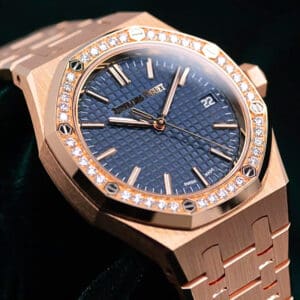
Audemars Piguet Royal Oak Selfwinding "50th Anniversary" Bleu Nuit Nuage 50 Blue Dial Diamond Bezel 18K Rose Gold 37mm MINT CONDITION COMPLETE SET 15551OR.ZZ.1356OR.02
$99,745.00
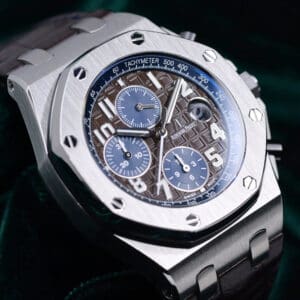
Audemars Piguet Royal Oak Offshore Chronograph "Havana" Brown Dial Blue Subdials Brown Leather Strap Stainless Steel 42mm MINT CONDITION COMPLETE SET 26470ST.OO.A099CR.01
$24,827.00
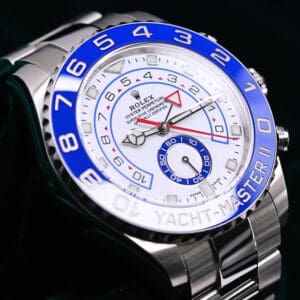
Rolex Yacht-Master II White Dial Blue Ceramic Bezel Oyster Bracelet Stainless Steel 44mm MINT CONDITION COMPLETE SET 116680
$19,409.00
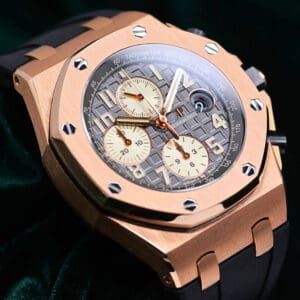
Audemars Piguet Royal Oak Offshore Chronograph “Half Brick” Ruthenium Grey Dial 18K Rose Gold Black Rubber Strap 42mm MINT CONDITION COMPLETE SET 26470OR.OO.A125CR.01
$40,892.00
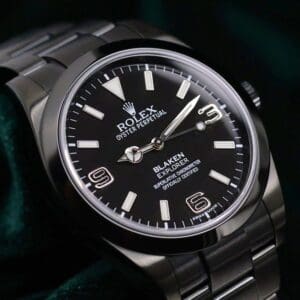
Rolex Explorer Blaken Black Dial Oyster Bracelet DLC Black Stainless Steel 39mm MINT CONDITION COMPLETE SET 214270
$16,000.00
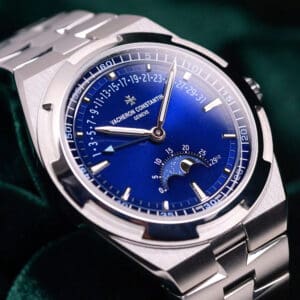
2025 Vacheron Constantin Overseas Moon Phase Retrograde Date Blue Dial Stainless Steel Bracelet 41mm MINT CONDITION COMPLETE SET 4000V/210A-B911
$52,800.00
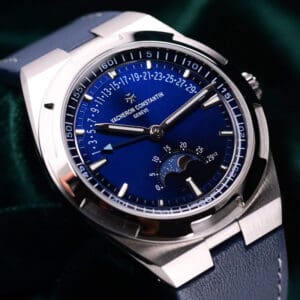
2025 Vacheron Constantin Overseas Moonphase Retrograde Date Blue Dial Blue Leather Strap Stainless Steel 41mm MINT CONDITION COMPLETE SET 4000V/210A-B911
$52,800.00
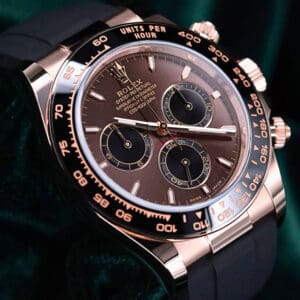
Rolex Cosmograph Daytona Chocolate Brown Dial Black Ceramic Bezel Black Subdials Black Oysterflex 18K Rose Gold 40mm MINT CONDITION 126515LN-0010
$58,396.00