
The base steel Omega Globemaster retails for $7,900 to $8,300 at an authorized dealer (AD). The same watch trades at $4,300 to $5,500 on Chrono24 in pre-owned condition.
That gap shapes every buying decision that follows. Most people researching this watch have no idea it exists before they walk into an AD.
The Globemaster was the first watch in the world to receive Master Chronometer certification from METAS, the Swiss Federal Institute of Metrology. It carries a COSC-certified Co-Axial movement, a 60-hour power reserve, and magnetic resistance roughly 125 times stronger than what disrupts standard mechanical watches.
None of that shows up in its secondary market price.
This Omega Globemaster buying guide covers four things. You will learn what the Globemaster is and where it fits in the Omega lineup. You will see which configuration to choose, whether new or pre-owned makes more sense with real numbers, and what to check before committing to a pre-owned purchase.
What Is the Omega Globemaster?
The Omega Globemaster is a dress-sport watch within Omega’s Constellation family. Omega launched its current form in 2015. Its full name is the Omega Constellation Globemaster, and it sits inside the Constellation line rather than standing alone as a separate collection.
The name has a vintage origin. In the 1950s, Omega sold its Constellation models in the US under the Globemaster name because of a trademark dispute. Omega revived the name in 2015 when it relaunched the line. That history explains why the caseback medallion references the old Geneva Observatory chronometry trials.
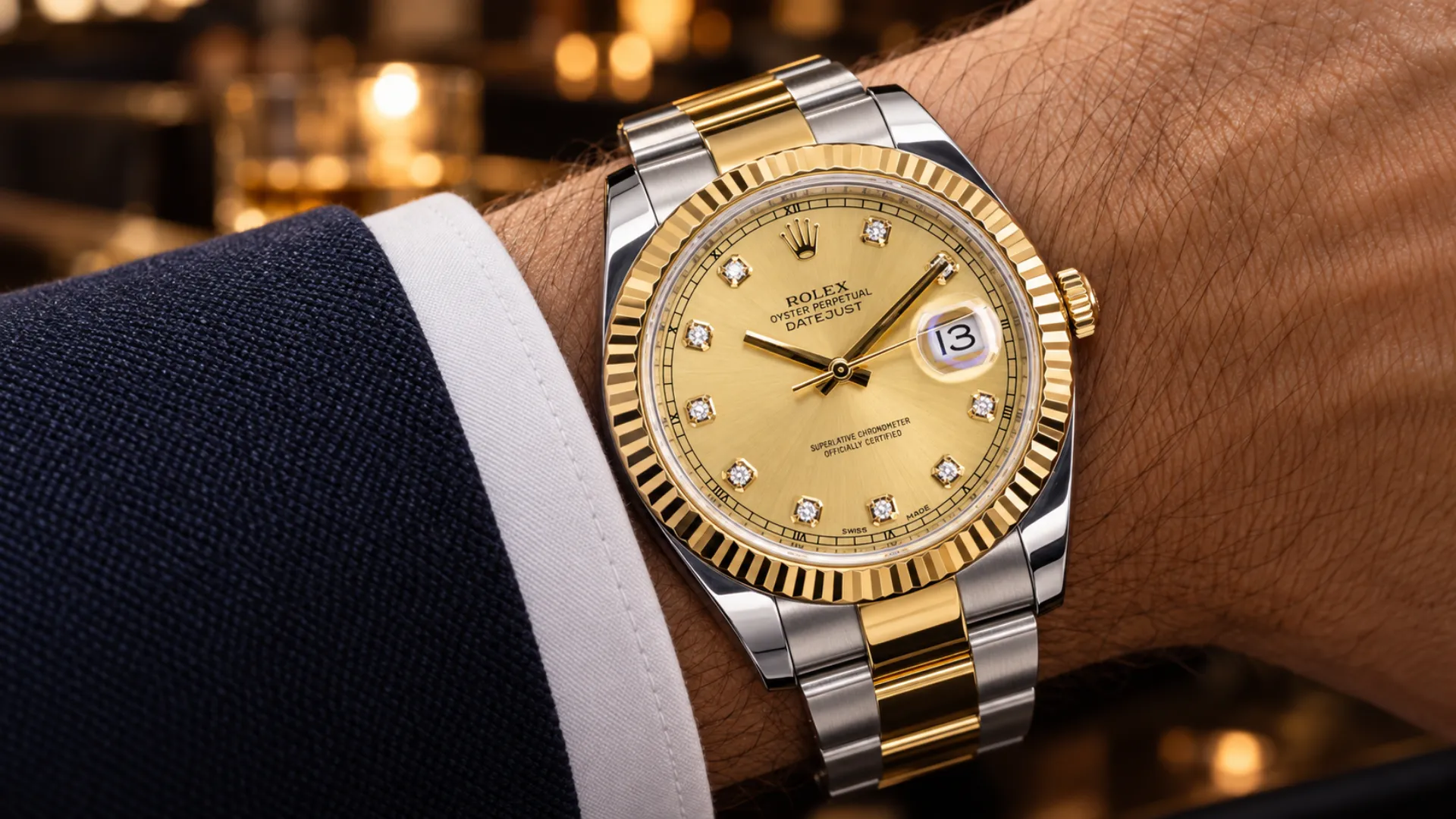
The watch comes in two configurations. The 39mm three-hand model shows time and date. The 41mm Annual Calendar auto-adjusts for months with fewer than 31 days. Its clearest market competitor is the Rolex Datejust. Both watches share the same fluted bezel, the same dress-sport positioning, an overlapping size range, and a similar price bracket.
Why the Omega Globemaster Stands Apart

The Globemaster’s main differentiator is its Master Chronometer certification. METAS, not COSC, certifies the fully cased watch through eight tests. Those tests include 15,000-gauss magnetic resistance and accuracy between 0 and +5 seconds per day.
That magnetic resistance figure matters in real wear. Most standard mechanical movements fail under magnetic fields of 60 to 120 gauss. A smartphone resting next to a typical watch can magnetize the movement enough to throw it several minutes off per day.
The Globemaster’s caliber 8900 handles that kind of daily exposure without losing accuracy.
COSC, the Official Swiss Chronometer Testing Institute, tests only uncased movements. METAS tests the fully assembled watch under real wearing conditions, which sets a stricter standard. Every Globemaster carries both certifications.
The tungsten carbide bezel also matters for daily wearers. Rolex builds the Datejust’s fluted bezel from white gold, which picks up scratches with regular wear. The Globemaster’s bezel uses tungsten carbide and stays nearly scratch-proof on the flat surfaces.
The sapphire exhibition caseback shows the caliber 8900 and the Geneva Observatory medallion on every reference. The Datejust offers no display caseback at any price point.
Omega Globemaster 39mm vs. 41mm

The 39mm three-hand suits most buyers better than the 41mm. The reasoning is practical, and the next two sections break it down.
The 39mm Three-Hand Globemaster Fits Most Buyers Best

The 39mm Globemaster measures 39mm wide, 12.63mm thick, and 46.7mm lug-to-lug, with a 20mm lug width. It comes in stainless steel, two-tone steel and yellow gold, two-tone steel and Sedna gold (Omega’s proprietary rose-gold alloy), solid Sedna gold, and platinum.
The steel references include bracelet variants (ref. 130.30.39.21.xx.xxx) and strap variants (ref. 130.33.39.21.xx.xxx). The bracelet version trades most actively on the secondary market. You will find more sold listings on Chrono24 and WatchExchange, tighter pricing, and a clearer path to resale.
One complaint comes up consistently on Omega Forums and Reddit r/Watches. The steel bracelet has no micro-adjust clasp, and that matters more in daily wear than it might seem upfront.
If your wrist size fluctuates between seasons, the fit shifts from slightly loose to slightly tight with no middle setting. When buying from an AD, ask for an additional OEM leather strap with a deployant clasp as part of the deal. ADs rarely move on price but tend to flex on accessories.
The 41mm Annual Calendar Globemaster Suits Complication Lovers

The 41mm adds an annual calendar complication. The mechanism auto-corrects for months with 30 or 31 days and only needs one manual date reset per year, on March 1, because it cannot account for February’s shorter length. Omega has never released the Annual Calendar on a bracelet, only on strap.
The secondary market data on Annual Calendar references tells a clear story. WatchCharts rates the ref. 130.53.41.22.03.001 at an Extreme Risk score of 82 out of 100. The reference dropped 14.4% over the 12 months to early 2026, while the WatchCharts Omega Index gained 4.8% over the same period (source).
If you specifically want the annual calendar complication and plan to use it, the 41mm is a solid watch. If you feel neutral about the complication, the depreciation data alone should push you toward the 39mm.
Should You Buy the Omega Globemaster New or Pre-Owned?

For most buyers, the Globemaster makes far more financial sense to buy pre-owned. The retail-to-secondary-market gap runs 35 to 45% depending on the reference. Steel supply on the grey market stays deep enough that finding a clean example with box and papers takes little effort.
The ref. 130.30.39.21.03.001 (steel, blue dial, bracelet) retails at approximately $8,300 as of 2025. Pre-owned with box and papers on Chrono24, the same reference trades in the $4,900 to $5,500 range in excellent condition. That puts it roughly 33 to 40% below retail.
While ref. 130.33.39.21.03.001 (steel, blue dial, strap) trades slightly lower at $4,300 to $4,600 pre-owned, approximately 45% below retail according to WatchCharts secondary market data.
Both references underperform the Omega brand average, where in-production watches typically trade 33.4% below retail. The Globemaster’s wider discount comes from lower mainstream recognition compared to the Speedmaster and Seamaster lines. If you plan to wear this watch, that discount is a gift.
The cost gap looks clear in practice. A buyer who purchases the ref. 130.30.39.21.03.001 new from an AD pays around $8,300 plus tax. The same reference pre-owned in excellent condition with full box and papers runs $5,000 to $5,200 on Chrono24.
The $3,000 to $3,300 difference is what the new-watch experience costs. That same budget covers a new Tudor Black Bay 58 or a solid pre-owned Grand Seiko SBGW235.
Buying new from an AD makes sense in a few specific situations. Most buyers will not fall into one of these cases, but they exist:
- You want the Omega international warranty
- You are purchasing a two-tone or Sedna gold reference where pre-owned supply is thin
- The price difference does not factor into your decision
For the base steel references, pre-owned is the stronger choice most of the time. Supply on Chrono24 and WatchExchange stays healthy. The caliber 8900 has a well-documented service history in the collector community, and it is a durable movement.
Buying at 35 to 40% below retail means you absorb less depreciation before you even strap the watch on. If you ever sell, you start from a much closer position to secondary market value. We’ve covered the broader Omega vs Rolex resale picture in a separate guide if you want the full breakdown.
Gold Globemaster models deserve a separate note. The consensus on Omega Forums stays consistent. Buyers warn against paying retail for a gold Globemaster.
The secondary market discount on solid Sedna gold references runs steep. The buyer pool willing to pay near-retail for a gold Omega dress watch in the grey market stays small. Buy gold pre-owned, or negotiate aggressively at an AD.
Best Omega Globemaster References to Buy

For most buyers, the ref. 130.30.39.21.03.001 is the reference to buy whether new or pre-owned. That configuration brings together the steel 39mm case, the blue pie-pan dial, and the bracelet.
This configuration is the most widely available on the secondary market and the most actively traded. It also holds its relative value better than other Globemaster references. The blue dial moves faster than silver in Chrono24 sold listings. The bracelet version delivers a more complete package for daily wear and resale than the strap-only configuration.
If you prefer two-tone, the steel and yellow gold variant (ref. 130.23.39.21.02.001) sells pre-owned in the $6,500 to $8,000 range, still a meaningful step below retail. It reads more formally than the all-steel version. The two-tone suits buyers who want a dressier look without paying for solid gold.
The Annual Calendar in any material is worth passing on unless the complication specifically drew you to the watch. The Extreme Risk secondary market rating, declining prices, and absence of a bracelet option make a weak case for most buyers.
The platinum Globemaster is a collector reference with no practical relevance to most buyers reading this guide.
Pre-Owned Omega Globemaster Buying Checklist
Pre-owned Globemasters are generally reliable watches to buy. That said, five specific things are worth checking before you commit. Miss any of these and you will either renegotiate after the fact or eat costs you didn’t plan for.
1. Check the Tungsten Carbide Bezel for Edge Chips
The flat surfaces of the tungsten carbide bezel are nearly scratch-proof, but the ridge edges can chip on hard impact. Small scratches on the flat top will not bother most buyers.
Edge chips are a separate issue. They do not buff out and stay clearly visible in person. Check the bezel ridge under a bright light or jeweler’s loupe, particularly on references from 2015 to 2018 that have seen a decade of daily wear.
2. Confirm the Bracelet and Clasp Are Original
The Globemaster’s bracelet clasp carries the Omega logo and reference number. An aftermarket or replacement clasp lowers the asking price and raises questions about what else the previous owner changed.
Buyers on Chrono24 and WatchExchange flag non-original clasps as a negotiation point, and they are right to do so. If someone has swapped the clasp, budget $200 to $400 to source an original replacement and work that cost into your offer.
3. Inspect the Exhibition Caseback for Service Damage
The sapphire caseback is one of the better features on this watch. It can pick up scratches when someone handles it without proper tools during a service. Flip the watch over and look for fine scratches on the sapphire crystal and any marks around the medallion edge.
Light surface marks are common with age. Heavy cross-hatch scratching tells you someone opened the caseback without a proper die wrench. That same carelessness likely carried into the rest of the service.
4. Verify Service History on 2015 to 2019 Models
The caliber 8900 carries a recommended service interval of 8 to 10 years under Omega’s current guidance. Any Globemaster from the 2015 to 2019 range is now at or approaching that window.
A seller who cannot produce service records on a 9 or 10-year-old watch is not necessarily hiding something, since many buyers simply never service on schedule. Budget $400 to $700 for an Omega-authorized service and use that figure in your price negotiation.
Our Omega service cost breakdown lays out what to expect by movement and complication.
A movement that has gone a decade without service will need attention. The cost stays the same whether you know before buying or discover it after.
5. Require Box and Papers or Negotiate the Discount
Box and papers do not change how the watch wears. They do change what you can ask when you sell. A Globemaster with full box and papers commands a $300 to $600 premium over the same reference without documentation on Chrono24.
If the seller asks near that premium without papers, negotiate the price down or find a complete set elsewhere.
Omega Globemaster vs. Rolex Datejust

At pre-owned prices, the Globemaster is worth buying. A steel 39mm model with box and papers usually sits around $4,500 to $5,500. At that range, it offers some of the strongest value among METAS-certified dress watches on the grey market.
At retail, the comparison to the Datejust 126300 gets tighter. The Datejust retails at $9,550 for the steel model with a fluted bezel and holds its value significantly better. It often trades at 80 to 90% of retail on the secondary market.
We’ve laid out the full Globemaster vs Datejust head-to-head in a separate guide if you want the deeper comparison.
A buyer who prioritizes resale returns should know this upfront. The Datejust is the financially safer retail purchase. The Globemaster is not.
The picture shifts when you compare what each watch delivers on the wrist at $5,000 pre-owned. At that price, the Globemaster delivers a METAS-certified Co-Axial movement, 100-meter water resistance (safe for swimming but not deep diving), a scratch-resistant tungsten carbide bezel, and an exhibition caseback that reveals the caliber 8900 through sapphire crystal.
That is a strong package at $5,000.
The fair criticism of the Globemaster is that it lacks the collector following of the Speedmaster or vintage Constellation. Threads on Omega Forums and Reddit r/Watches consistently describe it as underappreciated or a sleeper. That assessment is accurate.
It also means buyers can pick up a clean example without competing against a waiting list or paying above grey market asking prices. Whether that counts as a drawback or the whole appeal depends on what kind of buyer you are.
Final Thoughts on the Omega Globemaster Buying Guide
The Globemaster makes a strong case at the pre-owned price. You get a METAS-certified Co-Axial movement, a scratch-resistant tungsten carbide bezel, and an exhibition caseback in a steel dress-sport watch for $4,500 to $5,500.
The steel 39mm blue dial on the bracelet is the reference to go after. It is the most liquid, the most available, and gives you the cleanest resale path if your preferences change later. If you want to see how the rest of the lineup stacks up against this reference, our Omega buying guide walks through the broader Omega range.
Two tips before you commit. On Chrono24, filter for “Full Set” before you start browsing. The $300 to $600 premium for box and papers comes back at resale every time. If the movement has not been serviced in the last five years, request records or factor the service cost into your offer.If you are ready to start looking, browse our pre-owned Omega inventory. Every watch ships with a full condition report and a tour video so you know exactly what you are getting before it arrives.