
Both of these dive watches got real updates in 2025 and 2026, which means most of what’s written about them online is now out of date. The Tudor Black Bay 58 moved to a METAS Master Chronometer movement and a slimmer case. The Omega Planet Ocean got a full 4th-generation refresh, dropped the helium escape valve, and went back to a flatter 42mm.
That changes the comparison. The Black Bay still leads on vintage styling and value retention. The Seamaster still leads on technical depth and certification. But the gap on movement specs has closed, and the Planet Ocean now wears very differently than the version most buyers remember.
Below is the full breakdown of Tudor Black Bay vs Omega Seamaster debate, ending with which buyer each watch is actually for.
Tudor Black Bay Overview
The Black Bay is Tudor’s modern dive watch line, launched in 2012 and built directly on the brand’s 1950s and 60s Submariner lineage. The signature touches (snowflake hands, domed crystal, riveted bracelet, oversized winding crown) all trace back to specific Tudor military and civilian references from that era.
What’s changed under the surface in 2025-2026 is the move to METAS Master Chronometer certification across the core 39mm and 41mm models. The new generation runs the in-house Calibre MT5400-U built with Kenissi.
That movement is tested for accuracy at 0/+5 seconds per day across temperatures and positions, antimagnetic to 15,000 gauss, and verified for water resistance and power reserve under independent oversight.
Retail pricing for steel Black Bay models in 2026 sits between $4,975 and $5,650. The ceramic, S&G, and chronograph variants push into the $7,000-$8,600 range.
Pre-owned prices on WatchCharts run roughly 30% below retail for the most popular steel references, with the BB58 selling in a median of around 11-12 days based on early 2026 data. We cover the full Black Bay range and pricing in a separate guide if you want the line-by-line breakdown.
Omega Seamaster Overview
The Omega Seamaster is older and broader. The line dates to 1948, originally designed for British naval officers, and now spans four distinct collections: the Diver 300M, the Planet Ocean, the Seamaster 300, and the Aqua Terra.
The big 2026 news is the Planet Ocean’s 4th-generation refresh. Omega returned the case to 42mm, slimmed the profile, dropped the helium escape valve from the standard models, and dropped in the new Co-Axial Master Chronometer Calibre 8912.
The Diver 300M, Aqua Terra, and Seamaster 300 lines all carry Master Chronometer certification with magnetic resistance to 15,000 gauss and Co-Axial escapements designed for longer service intervals.
The year 2026 retail starts around $6,700 for the steel Diver 300M and runs to roughly $8,500 for the new Planet Ocean 600M. Pre-owned, the Diver 300M trades around $4,200-$4,300, about 35% below retail. That reflects Omega’s broader inventory and slower price retention compared with Rolex and Tudor. The full Seamaster lineup breakdown covers the four sub-collections in detail if you’re not yet sure which one you actually want.
What Changed in 2026 for Both Watches
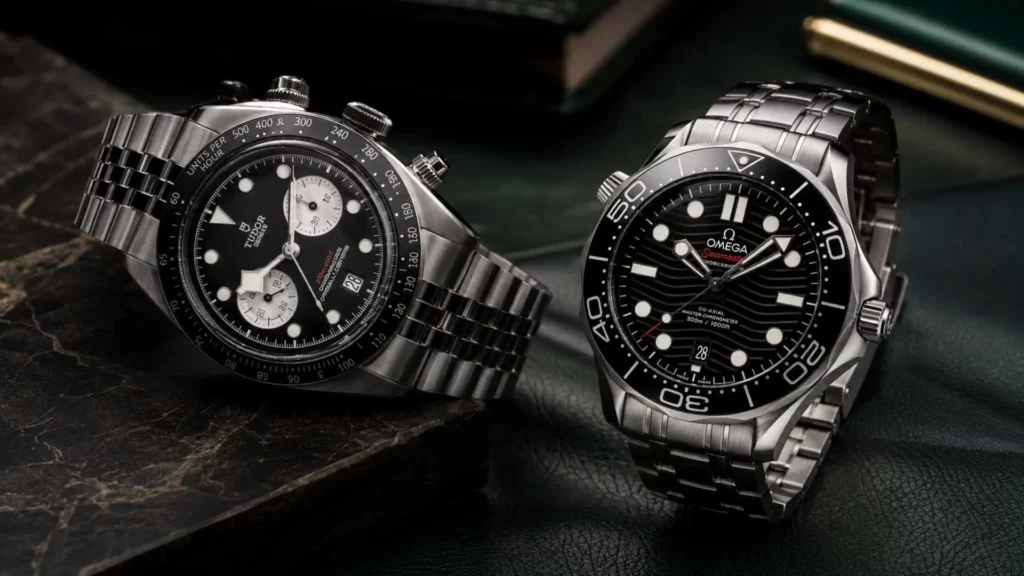
Tudor Black Bay 58 (Ref. M7939A1A0NU). Tudor introduced the Master Chronometer generation of the BB58 with a burgundy dial in 2025. Watches & Wonders 2026 followed up with the black-gilt version most buyers had been waiting for.
The case is now 11.7mm thin (down from 11.9mm), the crown is recessed flush against the case for better water resistance, and the dial dropped from three lines of text to two.
The movement is the new MT5400-U with a 65-hour power reserve. The riveted bracelet, 5-link bracelet, and rubber strap all come with Tudor’s T-fit micro-adjust clasp standard.
Tudor Black Bay Ceramic (Ref. 7941A1ACNU). For 2026, Tudor introduced a full ceramic bracelet option for the Black Bay Ceramic, the brand’s first all-ceramic bracelet. Retail is $7,725 on the ceramic bracelet or $1,600 less on the original hybrid rubber/leather strap.
Omega Planet Ocean 600M (Ref. 217.30.42.21.01.001). The biggest visual change in either lineup. Omega returned the Planet Ocean to its original 2005 case size of 42mm, slimmed the profile, and dropped the helium escape valve from the standard models.
The bracelet has been redesigned with flat brushed and polished links. The new Master Chronometer Calibre 8912 sits inside, with the inner ring now in grade 5 titanium. Retail lands around $8,500 on bracelet.
If you’ve read older Black Bay vs Seamaster comparisons, the specs there are likely describing watches that are no longer the current production reference. The notes below all reflect the 2026 lineup.
Tudor Black Bay vs Omega Seamaster: Notable Differences
The comparison breaks across six practical categories. Each one matters differently depending on whether you’re buying for daily wear, actual diving, or long-term value.
1. Design and Heritage
The Black Bay leans on direct visual cues from Tudor’s mid-century Submariners. Snowflake hands borrowed from the French Marine Nationale watches of the 1970s. A domed sapphire crystal that mimics acrylic profiles of the 1958 Big Crown reference 7924. A riveted-style bracelet that recalls the originals from that era.
It looks like a 1960s tool watch with modern internals.
The Seamaster line is more varied. The Diver 300M carries Omega’s wave-pattern dial, skeletonized arrow hands, and a helium escape valve at 10 o’clock — features tied to its 1993 design and James Bond era.
The Planet Ocean references the 1957 Seamaster 300 with broad arrow hands and a more utilitarian look. The Aqua Terra goes the other way entirely, with a flat dial, faceted indices, and dressier proportions.
If you want a watch that reads as vintage on the wrist, the Black Bay is the easier pick. If you want something that feels current, the Seamaster’s contemporary finishing is sharper.
2. Movement and Accuracy
This is where the gap has narrowed most in 2026. Tudor’s MT5400-U (BB58) and MT5602 (41mm Black Bay) are now both METAS Master Chronometer certified, just like Omega’s Calibre 8800, 8900, and 8912.
Both run silicon balance springs, both are antimagnetic to 15,000 gauss, both are tested for accuracy at 0/+5 seconds per day.
Power reserve breaks slightly differently. Tudor runs 65-70 hours depending on the caliber, while Omega’s Master Chronometer movements run 55-60 hours.
Service intervals favor Omega. The Co-Axial escapement is designed for longer intervals between services, typically 8-10 years versus Tudor’s recommended 7-10 year window.
For most owners, both watches will keep time well inside their certifications. The real difference shows up in the secondary market: a serviced Co-Axial movement is a more involved job than a serviced traditional Swiss lever escapement, and that gets priced in.
We’ve broken down Omega service pricing in detail if you want the actual numbers before factoring them into a buying decision.
3. Case and Material
The Black Bay uses 316L stainless steel for the standard models, with bronze, gold, two-tone, and full ceramic options for specific references. The 2026 BB58 is 11.7mm thin at 39mm wide — close to the proportions of the 1950s originals it references.
The Seamaster offers more material variety. Steel is standard, but the Planet Ocean has long been available in O-MEGASTEEL (a proprietary harder steel alloy), grade 5 titanium, and ceramic.
The new 4th-gen Planet Ocean adds grade 5 titanium for the inner ring even on the steel model, which improves corrosion resistance underwater.
Case dimensions matter for fit. The BB58 at 39mm x 11.7mm wears smaller than spec suggests. The Diver 300M at 42mm x 13.5mm wears larger. The new Planet Ocean at 42mm is slimmer than the outgoing 43.5mm version but still sits taller than the BB58.
4. Water Resistance
The Black Bay 58 and 41 are both rated to 200 meters, which is more than enough for recreational diving and any swimming or watersports.
The Seamaster splits depending on the line. The Diver 300M is rated to 300 meters with a helium escape valve at 10 o’clock.
The new 4th-gen Planet Ocean drops to 600 meters but, importantly, no longer has the helium escape valve on standard models. Omega moved the saturation diving capability up to the Planet Ocean Ultra Deep at 6,000 meters.
For everyday wear, all three depth ratings are functionally identical. The helium valve question only matters if you are actually saturation diving in a commercial context, which describes very few buyers.
5. Bezel and Crystal
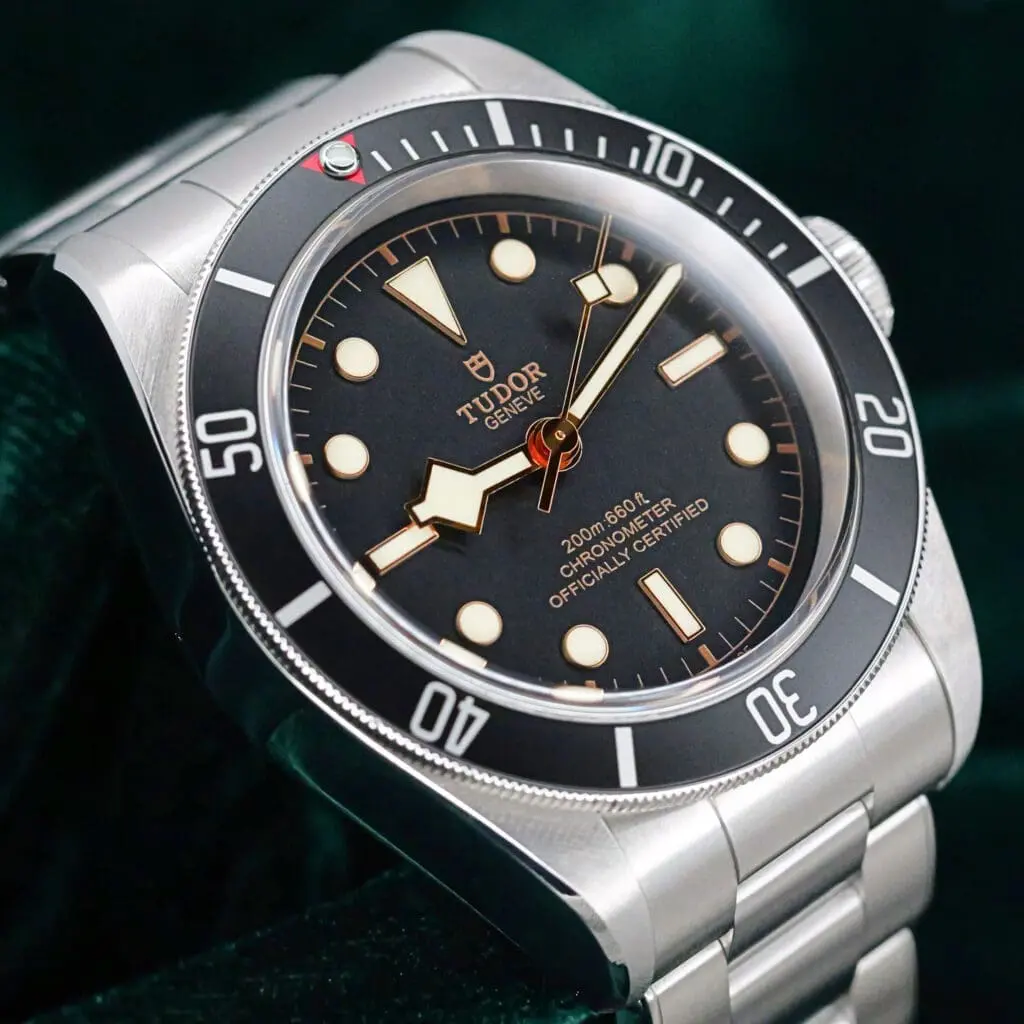
Tudor uses a black anodized aluminum bezel insert on the standard Black Bay 58 and 41, with engraved markings that develop a subtle patina over years of wear. The 2026 BB58 has more pronounced bezel knurling (wider ridges and sharper peaks) for better grip with wet hands.
The crystal is a domed box-style sapphire that mimics the optical character of an old acrylic crystal, with mild edge distortion when viewed at angles.
Omega uses scratch-resistant polished ceramic bezels across the Diver 300M and Planet Ocean lines, with markings filled in white enamel via Omega’s laser-engraving process.
Ceramic stays glossy permanently (no patina, no scratches) but it can chip if struck against a hard surface.
The crystal is flat sapphire on the new Planet Ocean and slightly domed on the Diver 300M, both with anti-reflective coating on the inside.
Neither approach is objectively better. Aluminum ages with character, ceramic stays perfect indefinitely. Pick based on whether you want the watch to show its life or stay pristine.
6. Bracelets and Straps
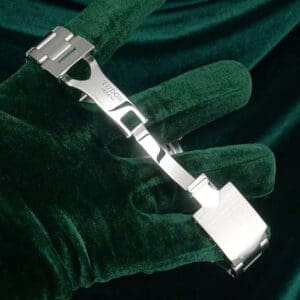
The Black Bay 58 ships on a riveted 3-link steel bracelet, a 5-link steel bracelet, or a rubber strap, all with Tudor’s T-fit clasp.
T-fit is a tool-free micro-adjust system with an 8mm range, controlled via a small lever on the underside of the clasp. It’s a functional clasp, not a luxury one — the BB58’s clasp is steel, not the polished-and-machined kind you find on a Rolex Submariner.
We get into how the Black Bay actually compares to the Submariner on more than just the clasp in a separate breakdown.
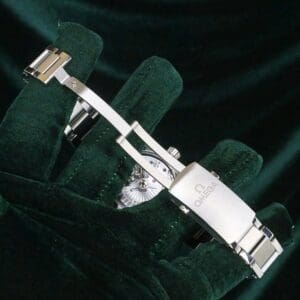
The Diver 300M and Planet Ocean ship on Omega’s metal bracelets with the brand’s quick-adjust system on the clasp, which gives you about 4-6mm of fit adjustment. Rubber straps are the alternative, with rubber fold-over deployment clasps.
The new 4th-gen Planet Ocean bracelet has slimmer flat links with two brushed rows and one polished center row.
Both clasp systems work. Tudor’s T-fit has a wider adjustment range than Omega’s quick-adjust, which matters more in summer when wrist swell is real.
Price and Market Demand
Retail pricing in 2026 lines up like this. The steel Black Bay 58 starts at $4,975 on rubber and goes up to $5,350 on the 5-link bracelet. The Black Bay 41 sits in a similar range, with the Black Bay Ceramic on full ceramic bracelet topping the standard lineup at $7,725.
The Diver 300M starts at $6,700 in steel. The new 4th-gen Planet Ocean 600M is around $8,500 on bracelet. The Aqua Terra 41 with the standard Master Chronometer Caliber 8900 retails at $7,100.
Pre-owned changes the equation. Based on WatchCharts data through 2026, a steel Diver 300M (Ref. 210.30.42.20.03.001) trades at roughly $4,300, about 36% below retail.
A BB58 79030N trades closer to $3,500, about 30% below original retail. The BB58 also moves faster on the secondary market, a median of around 11-12 days to sell, versus roughly 22 days for the Diver 300M.
What that means in practice: Tudor’s pricing is closer to retail on the secondary market because it’s harder to find at AD level for some models, while Omega’s broader production keeps secondary pricing softer.
Notable Tudor Black Bay References
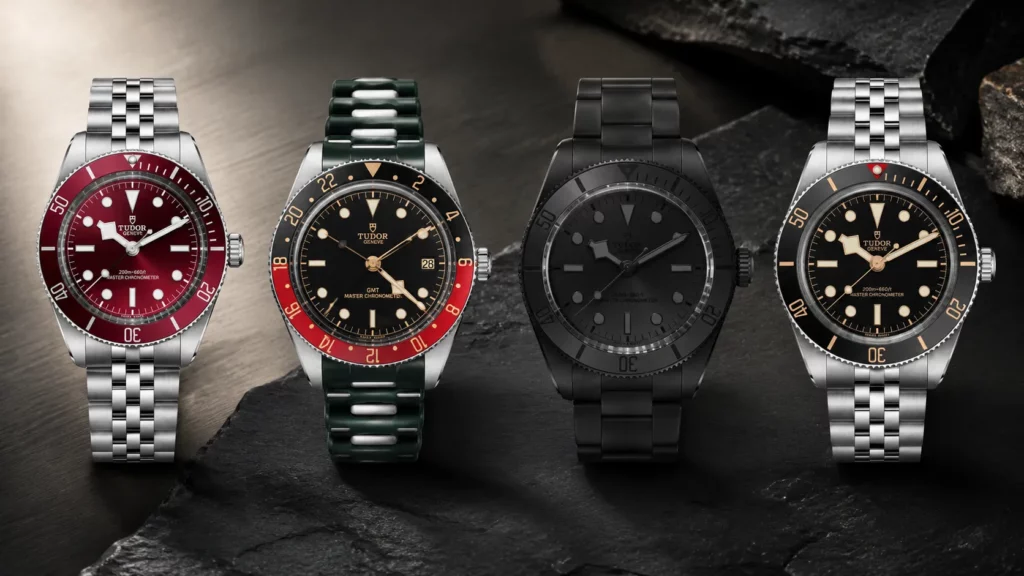
Tudor’s lineup runs from the 37mm BB54 up through the 43mm BB68, with the 39mm BB58 and 41mm core Black Bay anchoring the range. These are the four worth knowing.
1. Black Bay 58 Ref. M7939A1A0NU (2026 Master Chronometer)
The current-generation BB58 comes with METAS Master Chronometer certification, a 39mm x 11.7mm case, the MT5400-U movement, a 65-hour power reserve, and 200m water resistance. It is available with black-gilt or burgundy dials, plus riveted 3-link, 5-link, or rubber strap options. Retail pricing ranges from $4,975 on rubber to $5,350 on the 5-link bracelet.
For most buyers, this is the Black Bay to look at first. It’s the slimmest, most heritage-correct, and now technically the most certified version Tudor has made of this model.
2. Black Bay 41 Ref. 79230N (Burgundy Bezel)
The 41mm core Black Bay carries the burgundy bezel insert that has defined the line since 2012. MT5602 movement, 70-hour power reserve, METAS Master Chronometer certification on the latest generation, 200m water resistance. Retail roughly $4,300-$4,500 on rivet bracelet.
This is the version to look at if your wrist is over 7 inches or you want the broader case presence the 39mm doesn’t quite deliver.



3. Black Bay 58 GMT Ref. 7939G1A0NRU
Tudor’s GMT version of the BB58 architecture adds a true GMT complication and a “Coke” red-and-black bezel. It is METAS certified, has a 65-hour power reserve, and comes standard with the T-fit clasp. The 5-link bracelet version joined the lineup in 2026, with retail pricing at $5,650.
For travelers or anyone who wants a second time zone, this is the most well-proportioned GMT in Tudor’s range.
4. Black Bay Ceramic Ref. 7941A1ACNU (Full Ceramic Bracelet)
The 2026 update to the Black Bay Ceramic introduced Tudor’s first full ceramic bracelet. The case, bezel, and bracelet are all finished in matte black ceramic.
It measures 41mm, is METAS Master Chronometer certified, offers 200m water resistance, and runs on the MT5602 movement. Retail pricing is $7,725 on the full ceramic bracelet or $6,125 on the original hybrid strap.
This is the showpiece of the current Black Bay range. Ceramic across the entire watch is rare at this price point and the wear-resistance is exceptional.
Notable Omega Seamaster References
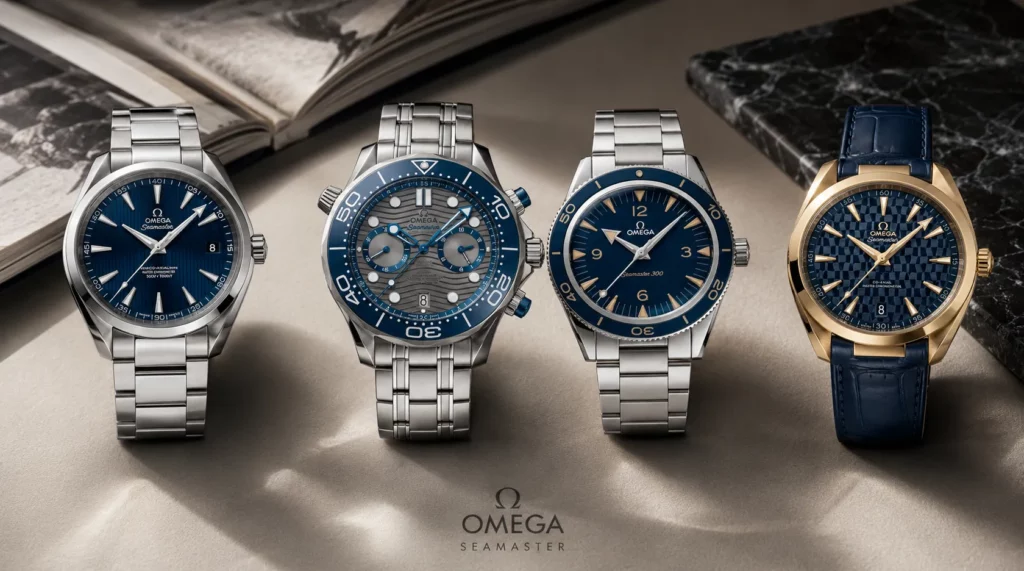
The Seamaster spans four distinct collections, so the four references below sit in different places — one each from Diver 300M, Planet Ocean, Seamaster 300, and Aqua Terra.
1. Seamaster Diver 300M Ref. 210.30.42.20.03.001
The standard Diver 300M features a blue wave dial, a 42mm steel case, a ceramic bezel, and Omega’s Master Chronometer Calibre 8800 with a 55-hour power reserve. It also has a helium escape valve, screw-down crown, and 300m water resistance.
This is the most recognized modern Seamaster. It represents the post-2018 redesign of the watch James Bond has worn since 1995. Retail pricing is $6,700 on the bracelet, while pre-owned examples trade at around $4,300 with strong liquidity.
2. Seamaster Planet Ocean 600M Ref. 217.30.42.21.01.001 (2026 4th-Gen)
The new fourth-generation Planet Ocean uses a 42mm steel case, down from the previous 43.5mm size. The standard model removes the helium escape valve and adds a flat sapphire crystal, Omega’s Master Chronometer Calibre 8912, 600m water resistance, and a grade 5 titanium inner ring.
It retails for roughly $8,500 on the new flat-link bracelet. This is Omega’s most significant update for 2026, especially for collectors familiar with older Planet Ocean models. It wears noticeably flatter and feels more refined for daily use.
3. Seamaster 300 Ref. 234.30.41.21.03.001
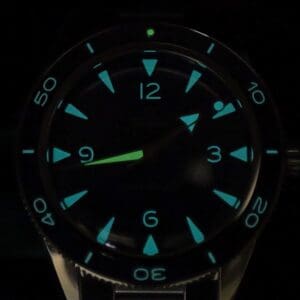
The heritage-styled Seamaster 300 features a 41mm steel case, vintage-cream lume, sandwich dial construction, Omega’s Master Chronometer Calibre 8912, and 300m water resistance.
Retail pricing sits around $6,800. For buyers who want the Seamaster name with a more vintage-inspired look than the Diver 300M, this is the better fit. It is also the closest in spirit to the Black Bay 58.



4. Seamaster Aqua Terra 150M Ref. 220.10.41.21.10.001
The 41mm Aqua Terra features a green teak-pattern dial, a 6 o’clock date window, Omega’s Master Chronometer Calibre 8900, a 60-hour power reserve, and 150m water resistance.
It retails for $7,100 on the bracelet. The Aqua Terra is worth noting because it is the everyday Seamaster; the GADA option for buyers who want Master Chronometer specs in a non-dive case profile.
We’ve also written a full Aqua Terra buying guide for buyers who want to drill into that specific line, and a separate Aqua Terra vs Diver 300M comparison if you’re choosing between those two.
Which Watch Holds Its Value Better?
WatchCharts pricing through 2026 paints a clear picture. The Black Bay 58 79030N trades at roughly 30% below retail with a median time-to-sell of around 11-12 days. The Diver 300M (210.30.42.20.03.001) sits at about 36% below retail with a median sell time of roughly 22 days.
That gap reflects a few things. Tudor produces fewer Black Bay 58s than Omega produces Diver 300Ms. AD waitlists exist on certain BB58 colorways. The Black Bay’s vintage-leaning design has aged well.
Omega’s broader production and wider model range give the Seamaster softer secondary pricing, but it also means it’s easier to find pre-owned at strong discounts. That’s the opposite side of the same coin.
Long-term, both watches have appreciated over the past five years on the WatchCharts indices, but the BB58 has tracked the broader luxury watch market more closely than the Diver 300M.
Where to Buy Authentic Watches Online
There are a handful of legitimate online channels for buying a Tudor Black Bay or Omega Seamaster pre-owned. Chrono24 is the largest dealer marketplace, with vetted seller ratings, an escrow option for buyer protection, and Authenticity Guarantee on certain listings.
If it’s your first time using the platform, we’ve written what to watch for when buying on Chrono24, worth a read before you commit.
eBay has come a long way through its Authenticity Guarantee program. For watches above $2,000, the watch is shipped to eBay’s authentication center for inspection before the buyer receives it.
Grailzee is a watch-specific auction platform with shorter listing windows that can surface stronger pricing for patient buyers. Independent grey-market dealers and watch forums are also part of the landscape, though they require more buyer due diligence.
For a wider look at the pre-owned luxury watch buying landscape, our pillar guide walks through every channel and what to expect from each.
We also sell, buy, and trade luxury watches, and the reason clients choose us over a big marketplace usually comes down to the layered communication before the purchase.
999+ Timepieces Available
Explore Our Timepieces
Authenticated, unworn, and ready to ship worldwide.
Rolex · Audemars Piguet · Patek Philippe · Omega · Cartier · Richard Mille · Hublot · Tudor
Newly Listed
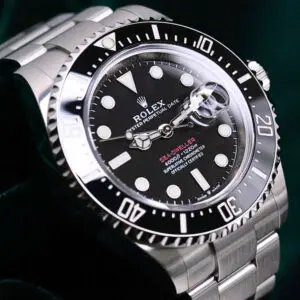
Rolex Sea-Dweller "Red Letter" Black Dial Black Cerachrom Bezel Oyster Bracelet Stainless Steel 43mm MINT CONDITION COMPLETE SET 126600
$13,120.00
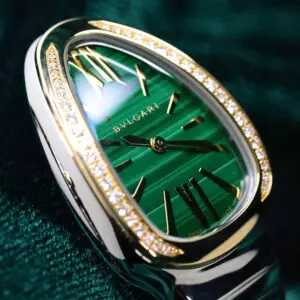
2026 NEW UNWORN Bvlgari Serpenti Tubogas Studs Capsule Limited Edition Green Dial Diamond Bezel Steel & 18k Yellow Gold 35mm COMPLETE SET 104360
$24,255.00

Vacheron Constantin Overseas Chronograph Blue Dial Blue Leather Strap Stainless Steel 42.5mm MINT CONDITION COMPLETE SET 5500V/110A-B148
$37,793.00
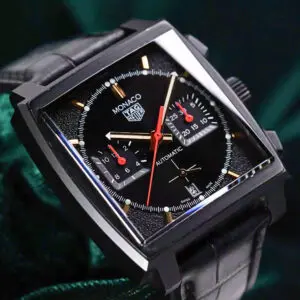
Tag Heuer Monaco Chronograph “Dark Lord” Special Edition Black Dial Black Leather Strap DLC Titanium 39mm MINT CONDITION COMPLETE SET CBL2180.FC6497
$8,135.00
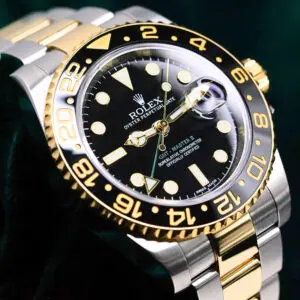
Rolex GMT-Master II “Green Arrow” Black Dial Black Ceramic Bezel Oyster Bracelet Two-Tone 18K Yellow Gold Stainless Steel 40mm MINT CONDITION COMPLETE SET 116713LN
$15,740.00

Vacheron Constantin Overseas Chronograph Blue Dial Stainless Steel 42.5mm MINT CONDITION COMPLETE SET 5500V/110A-B148
$37,793.00
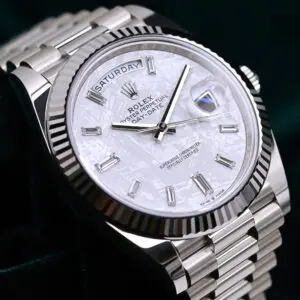
Rolex Day-Date Meteorite Baguette Diamond Dial Fluted Bezel President 18K White Gold 40mm MINT CONDITION COMPLETE SET 228239
$78,629.00
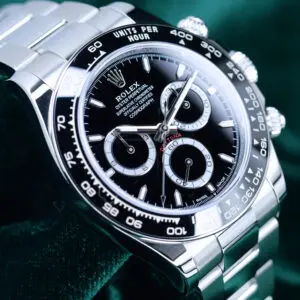
2026 Rolex Cosmograph Daytona Black Dial Black Ceramic Bezel Oyster Bracelet Stainless Steel 40mm MINT CONDITION COMPLETE SET 126500LN
$33,594.00
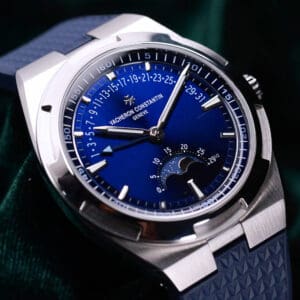
2025 Vacheron Constantin Overseas Moonphase Retrograde Date Blue Dial Blue Rubber Strap Stainless Steel 41mm MINT CONDITION COMPLETE SET 4000V/210A-B911
$52,800.00
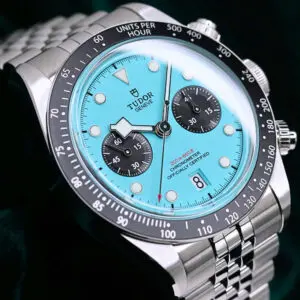
2025 Tudor Black Bay Chrono "Flamingo Blue" Turquoise Dial Black Bezel Stainless Steel 41mm MINT CONDITION COMPLETE SET 79360N-0024
$10,494.00

Audemars Piguet Royal Oak Offshore Chronograph "Batman" Black Dial Blue Accents Black Rubber Strap Stainless Steel 42mm MINT CONDITION COMPLETE SET 26470ST.OO.A028CR.01
$25,715.00
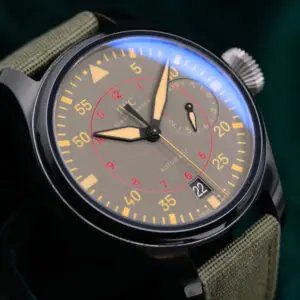
IWC Big Pilot's Watch Top Gun Miramar Grey Dial Green Textile Strap Black Ceramic 48mm MINT CONDITION COMPLETE SET IW501902
$7,240.00
We’ll send you tour videos of the actual watch you’re considering, not stock photos. Detailed condition notes from someone who has handled the piece. A real conversation with a person who can answer questions about the specific reference, the box and papers, the service history, and how the watch wears in person. You’re not buying blind off a listing.
That’s reflected in our 4.9-star Google rating, which comes from clients who appreciate having that kind of walkthrough before committing $5,000 or $8,000 to a watch. You can also see what’s in stock right now if you want to start with what we currently have.
If you’re trying to decide between the new 2026 BB58 Master Chronometer and a clean pre-owned 2018-2024 example, or between the 4th-gen Planet Ocean and the outgoing 43.5mm version, reach out. We’ll send tour videos and condition notes on whichever direction you’re leaning.
Which Watch Should You Choose?
The decision usually comes down to two questions: what aesthetic do you actually want on your wrist, and what role is this watch playing in your life?
Choose the Tudor Black Bay if:
- You want vintage tool-watch styling without going actual vintage
- The 39mm BB58 case proportions matter for your wrist size
- Long-term value retention is part of your buying decision
- You prefer aluminum bezels that age over ceramic that stays perfect
If Tudor is the direction you’re leaning, our broader Tudor lineup overview covers the brand outside the Black Bay too.
Choose the Omega Seamaster if:
- You want broader model variety across Diver 300M, Planet Ocean, Aqua Terra, and Seamaster 300
- Higher water resistance or saturation diving capability matters
- You prefer the contemporary finish of ceramic bezels and skeletonized hands
- The James Bond and Olympic associations carry weight for you
- Longer service intervals on the Co-Axial movement appeal to you
For Omega buyers, the full Omega buying guide walks through the Speedmaster, Constellation, Aqua Terra, and the rest of the catalog beyond just the Seamaster.
Neither of these watches will disappoint. Both are properly made, properly certified, and built to last decades of daily wear.
The mistake most buyers make isn’t picking the “wrong” watch; it’s buying a reference that doesn’t fit their wrist or their lifestyle and then trying to rationalize it. Try both on if you can.
Final Thoughts on Tudor Black Bay vs Omega Seamaster
The 2026 version of this comparison is closer than the 2023 or 2024 version was. Tudor’s move to METAS Master Chronometer certification across the Black Bay line has narrowed the technical gap with Omega.
Omega’s 4th-gen Planet Ocean refresh has made that watch more wearable than it has been in over a decade. Both brands are now competing on similar ground: certified accuracy, magnetic resistance, modern materials, and heritage-correct design.
Two things worth knowing before you buy. First, a properly serviced pre-owned example from 2018-2024 will perform identically to a brand-new 2026 piece for daily wear, which makes the secondary market a serious option for value-conscious buyers.
Second, both watches will need a service every 7-10 years and that service runs $600-$1,200 depending on the caliber and where you take it. Factor that into the long-term cost of ownership.
Pick the one that fits your wrist and your week, not the one that looks better in product photos. Photos lie. Wrists don’t.