
You find a watch online. The photos look great. The specs check out. You pull the trigger, and when it arrives, something feels wrong. The case hangs over your wrist. The bracelet rattles. Or you find out a month later that you paid full price for a watch that was six years overdue for a $700 service.
Most buying guides stop at categories: movement type, case material, brand reputation. None of them tell you what really goes wrong in a real purchase, which is the part that costs people money.We buy and sell hundreds of watches a year at Majestix. What to look for when buying a watch comes down to three layers: fit, specs, and value protection. Here is how to work through each one.
The Three-Layer Check Explained
Most buyers start with the brand and end with price. That is the wrong order. A watch that fits badly never gets worn regardless of the movement inside it. A watch with clean specs but a hidden service history is a problem waiting to happen.
The Three-Layer Check is how we evaluate a watch before buying or selling. Work through it in sequence and you’ll catch what most buyers only spot in hindsight:
- Layer 1: Fit. Lug-to-lug, lifestyle match, bracelet quality.
- Layer 2: Specs. Movement, water resistance, case material, crystal.
- Layer 3: Value protection. Service history, box and papers, seller, physical condition.
Layer 1: Start With Fit, Not Brand

Before price, before movement type, the watch has to fit. More watches end up sitting in drawers because of fit issues than most buyers want to admit.
Check Lug-to-Lug Before Case Diameter
Case diameter is the number on every listing: 40mm, 42mm, 39mm. It is also the least useful number for figuring out whether a watch will fit your wrist. The measurement that matters is lug-to-lug, the distance from the tip of one lug to the tip of the opposite lug.
A 40mm watch with a 50mm lug-to-lug hangs off a 6.5-inch wrist. A 42mm watch with a 47mm lug-to-lug can sit perfectly on the same wrist. The diameter tells you how wide the dial is. Lug-to-lug tells you whether the watch bridges across your wrist or sits flush on it.
Most spec sheets list this measurement. If a listing doesn’t, check the brand’s official site or ask the seller. On Watchuseek and r/Watches, this comes up constantly. It is the most common fit mistake first-time buyers make, by some distance.
Match the Watch to Your Real Life
Be honest about how the watch will fit into your real routine. A dress watch bought by someone who works outdoors will usually spend more time in the box than on the wrist. The issue comes down to lifestyle fit more than taste.
A few honest scenarios:
- If you sit at a desk most of the week with occasional dinners out, a 36–40mm sport watch in steel handles everything.
- If you rotate between several watches and some sit untouched for weeks, an automatic movement will stop and need resetting every time you pick it up. That gets old quickly.
- If you’re regularly near water, water resistance stops being optional.
Buy the watch that fits your daily life, not an idealized version of it.
Test the Bracelet or Strap, Aside from the Case
Most buyers assess the case and dial and consider the job done. The bracelet is where build quality either holds up or falls apart.
Check the clasp. It should click shut with a solid, definite snap. Screwed links hold better than push-pin links over years of wear. On sport watches like the Rolex Submariner or Tudor Black Bay, solid end-links (where the bracelet connects to the case) are a quality indicator that gets overlooked constantly.
Hold the watch by the case and give it a gentle shake. More than a slight rattle in the bracelet means worn links or loose tolerances. Both are worth flagging before you agree on any price.
Layer 2: Know the Specs That Matter

The spec sheet tells you what a watch has. It does not tell you what ownership feels like. Four specs shape that experience more than anything else.
1. Pick a Movement That Fits Your Habits
Skip the quartz-vs-automatic debate for a moment. The real question is on how you will wear this watch.
If you put it on every morning, an automatic is fine. It self-winds from wrist movement and rarely needs attention. If you rotate between several watches and some sit more than 48 hours at a stretch, an automatic will stop regularly and need manual resetting. That wears thin fast.
Some buyers care about the mechanical side. The engineering behind an ETA 2824, a Sellita SW200, or an in-house calibre. That is legitimate. But if what you want is something you can ignore for a week and pick up running, a well-made quartz from Citizen or the Seiko Eco-Drive line (solar-powered, no battery changes) is the practical answer.
2. Read Water Resistance Ratings Correctly
This is the most consistently misunderstood spec in the watch world. The numbers on paper do not map to real-world use the way most buyers expect.
| Rating | What It Means in Practice |
| 30m / 3ATM | Splash-proof. Handwashing is fine; swimming is not. |
| 50m / 5ATM | Brief swimming in calm water. |
| 100m / 10ATM | Recreational swimming, snorkeling. |
| 200m / 20ATM | Surface water sports, recreational diving. |
One more thing almost nobody mentions; water resistance degrades. The gaskets inside the case age and lose their seal over time. A pre-owned watch rated at 100m that hasn’t had a service or seal check in several years may not hold that rating anymore.
If you plan to wear any watch near water, a pressure test from a watchmaker costs $30–$60 and gives you a straight answer.
3. Pick a Case Material That Holds Up
Four materials cover the vast majority of what you’ll find at retail and in the pre-owned market.
| Material | Pros | Cons | Best for |
| 316L stainless steel | Durable, serviceable, broad price range | Heavier than titanium | Sport watches, daily wear |
| Titanium | Lighter, more scratch-resistant | Hard to repolish, flatter matte finish | Active wear, larger watches |
| Gold (yellow, rose, white) | Luxury material premium, classic look | Soft, scratches faster than steel | Dress watches |
| Ceramic (bezel) | Scratch-resistant, colorfast | Can chip on hard impact | Bezels (GMT, dive) |
Steel is the standard for nearly every sport watch under $5,000. Titanium sounds like an obvious upgrade, but the matte finish reads differently in person than it does in product photography. Try one on before committing.
With gold, just understand that a portion of what you’re paying for is the metal itself, separate from the watchmaking. Ceramic shows up on bezels because it outlasts steel under normal daily wear, which is why Rolex uses it on the GMT-Master II and Omega on the Seamaster Planet Ocean.
Confirm the Crystal Type Before You Commit
The crystal is the clear cover over the dial. Three types you’ll see:
- Sapphire crystal. The standard on any watch priced above roughly $300. Resists surface scratches well under daily wear. Can crack under a sharp direct blow, but keys and counters rarely touch it. This is what you should expect on any serious purchase.
- Mineral glass. Scratches more easily but is cheaper to replace, typically $50–$150 depending on the reference. Common on Seiko, Orient, and entry-level pieces.
- Acrylic (hesalite). Scratches readily but polishes out with a cloth and compound. Found on vintage pieces and some deliberate throwbacks, including the original Omega Speedmaster Moonwatch reference still sold today.
Crystal type is often missing from retail listings. If you cannot confirm it from the spec sheet, ask.
Layer 3: Protect the Value Before You Pay

This is where real money either gets protected or lost. Most of these checks take under ten minutes.
Factor in the Service Cost Before Agreeing on Price
A watch priced below market is not automatically a deal. If it needs servicing, that discount is not savings. It is a payment schedule.
Service costs by movement tier:
| Movement / Brand | Typical service cost |
| Entry-level ETA or Miyota (Hamilton, Tissot, Seiko) | $150–$300 |
| Omega Co-Axial (Omega Service Center) | $400–$700 |
| Rolex (Rolex Service Center) | $800–$1,200 |
| Patek Philippe, Audemars Piguet | $1,500–$3,000+ |
If a pre-owned Omega Seamaster is listed $400 below market but hasn’t been serviced in eight years, you are not saving $400. You are buying a $500 service bill. Ask every seller when the watch was last serviced and whether they have documentation. If they cannot answer, factor a Rolex service into your offer the same way you would any other line item, and adjust accordingly.
Looking for a Pre-Owned Watch Without the Service Surprise?
Every watch we sell at Majestix is inspected on the bench before it ships, with service history and condition notes spelled out before you commit. Send us a listing you’re considering and we’ll tell you what the photos aren’t showing.
999+ Timepieces Available
Explore Our Timepieces
Authenticated, unworn, and ready to ship worldwide.
Rolex · Audemars Piguet · Patek Philippe · Omega · Cartier · Richard Mille · Hublot · Tudor
Newly Listed
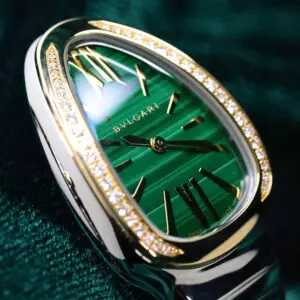
2026 NEW UNWORN Bvlgari Serpenti Tubogas Studs Capsule Limited Edition Green Dial Diamond Bezel Steel & 18k Yellow Gold 35mm COMPLETE SET 104360
$24,255.00
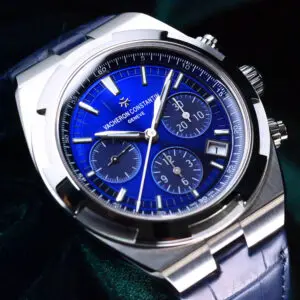
Vacheron Constantin Overseas Chronograph Blue Dial Blue Leather Strap Stainless Steel 42.5mm MINT CONDITION COMPLETE SET 5500V/110A-B148
$37,793.00
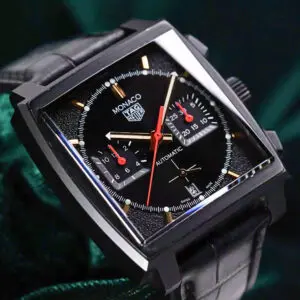
Tag Heuer Monaco Chronograph “Dark Lord” Special Edition Black Dial Black Leather Strap DLC Titanium 39mm MINT CONDITION COMPLETE SET CBL2180.FC6497
$8,135.00
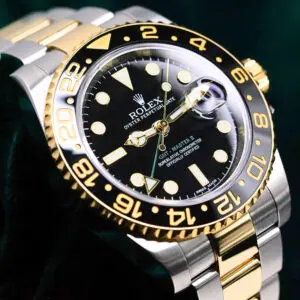
Rolex GMT-Master II “Green Arrow” Black Dial Black Ceramic Bezel Oyster Bracelet Two-Tone 18K Yellow Gold Stainless Steel 40mm MINT CONDITION COMPLETE SET 116713LN
$15,740.00
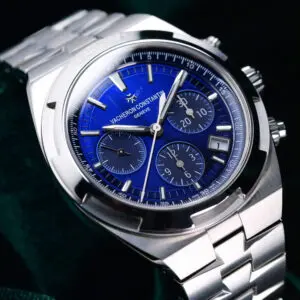
Vacheron Constantin Overseas Chronograph Blue Dial Stainless Steel 42.5mm MINT CONDITION COMPLETE SET 5500V/110A-B148
$37,793.00
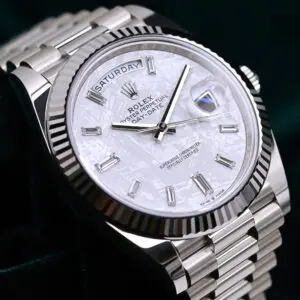
Rolex Day-Date Meteorite Baguette Diamond Dial Fluted Bezel President 18K White Gold 40mm MINT CONDITION COMPLETE SET 228239
$78,629.00
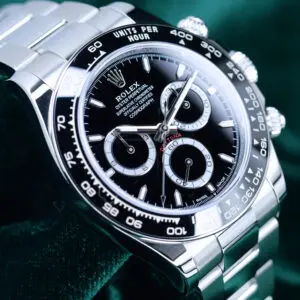
2026 Rolex Cosmograph Daytona Black Dial Black Ceramic Bezel Oyster Bracelet Stainless Steel 40mm MINT CONDITION COMPLETE SET 126500LN
$33,594.00
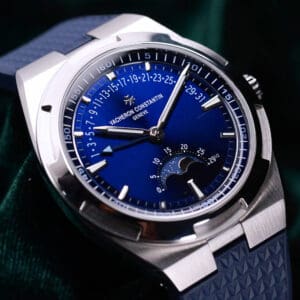
2025 Vacheron Constantin Overseas Moonphase Retrograde Date Blue Dial Blue Rubber Strap Stainless Steel 41mm MINT CONDITION COMPLETE SET 4000V/210A-B911
$52,800.00
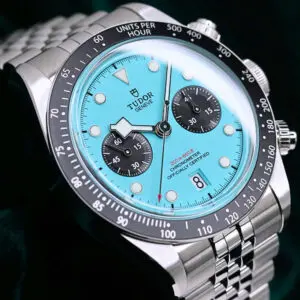
2025 Tudor Black Bay Chrono "Flamingo Blue" Turquoise Dial Black Bezel Stainless Steel 41mm MINT CONDITION COMPLETE SET 79360N-0024
$10,494.00
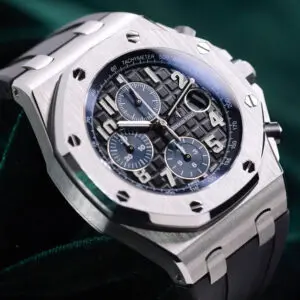
Audemars Piguet Royal Oak Offshore Chronograph "Batman" Black Dial Blue Accents Black Rubber Strap Stainless Steel 42mm MINT CONDITION COMPLETE SET 26470ST.OO.A028CR.01
$25,715.00
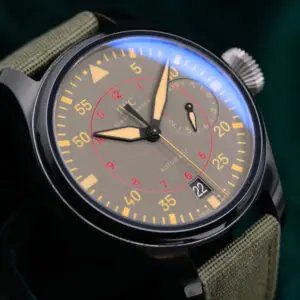
IWC Big Pilot's Watch Top Gun Miramar Grey Dial Green Textile Strap Black Ceramic 48mm MINT CONDITION COMPLETE SET IW501902
$7,240.00
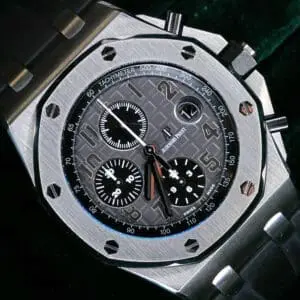
Audemars Piguet Royal Oak Offshore Chronograph "Elephant" Gray Dial Stainless Steel Rubber Strap 42mm 26470ST.OO.A104CR.01
$23,974.50
Understand When Box and Papers Matter
Every guide says get box and papers. Almost none explain when they meaningfully affect value, and when they’re irrelevant.
- Rolex sport references (Submariner, GMT-Master II, Daytona): A complete set with original box, inner and outer packaging, hangtags, and dated papers can add $500 to $3,000 or more depending on the year and configuration. Collectors and dealers pay real premiums for full sets on these specific references. If you’re weighing a piece without the full set, whether to buy a Rolex without box and papers is its own decision worth thinking through carefully.
- Omega Seamaster or Speedmaster: A full set typically adds $200–$600 in the pre-owned market. Worth having, not worth overpaying for.
- Entry-level watches (Seiko Presage, Hamilton Khaki, Tissot PRX): Box and papers carry near-zero resale weight. If a seller is adding $200 to the asking price because the box is present on a $400 watch, that is not a legitimate premium.
- Vintage pieces from before 1990: Papers are rare by default. Their absence is expected and does not affect market value.
Vet the Seller Before You Vet the Watch
A good watch from the wrong seller is a bad deal.
Look for third-party reviews on Google or Trustpilot, not testimonials curated on the seller’s own site. Confirm the return policy exists in writing and understand exactly what it covers. A seller who cannot give a straight answer on condition, service history, or return terms is telling you something worth listening to.
For online purchases, ask for a video of the seconds hand running and the crown operating through its positions. Ask for a wrist shot of the watch being worn. It confirms physical possession and shows you how the watch sits on a wrist. These are completely standard requests. Any serious seller accommodates them immediately.
Inspect the Physical Condition Like a Dealer
Five things to check before committing to any pre-owned purchase:
- Case finishing. Sport watches should have clean, sharp transitions between brushed and polished surfaces. Soft, blurry edges between those surfaces mean the case has been over-polished, which is a real value problem on watches like the Audemars Piguet Royal Oak, Patek Nautilus, and Vacheron Constantin Overseas, where contrasting finishes are central to the design.
- Dial condition. Even surface, no flaking, no discoloration around the edges or indices. A repainted dial collapses resale value and usually means past water damage. Under magnification, original printing has a consistent depth and texture. Repaints show brush marks and uneven thickness.
- Crystal. Surface scratches on sapphire are generally fine. A watchmaker can polish them out. A chip or crack indicates a hard impact worth asking about specifically.
- Crown. Pull it through its click positions, two or three depending on the movement. Each stop should be distinct. The crown should wind smoothly without grinding or drag. Any wobble or resistance points to wear or moisture ingress.
- Bracelet. As covered in Layer 1, hold the case and shake. Some movement is normal. Significant rattle between the links means heavy wear and potentially a bracelet that needs replacing. Price accordingly.
Final Thoughts on What to Look for When Buying a Watch
Knowing what to look for when buying a watch mostly comes down to asking the right questions before any money moves. Does the watch fit your wrist and the way you live? Do the specs make sense for how you will wear it? Does the price reflect the real condition, including what servicing might cost? Get those three things right and most expensive mistakes get avoided.
Two more things worth knowing. If you cannot try the watch in person, only buy from a seller with a genuine return window of at least seven days. And before any price negotiation on a pre-owned piece, check Chrono24 and WatchCharts for recent sold prices rather than ask prices, since sold prices are what people are paying.
Our walkthrough on what to watch for on Chrono24 covers the listing patterns that matter. `For a wider view of the pre-owned landscape, our pillar guide on where to buy pre-owned watches maps out which channels work for which buyers.
Want a Second Set of Eyes Before You Buy?
If you are weighing a specific watch and want a dealer’s read on it before you commit, send us the listing. We buy and sell hundreds of pieces a year at Majestix, and a quick look usually surfaces what the photos and seller notes do not.
If you would rather start from a piece we have already inspected, our current inventory has full condition notes, service history, and tour videos for every watch we list. If you have a specific reference in mind that isn’t on our floor, we can help you source one too. Either way, no pressure, just an honest read on whether the watch is what it looks like.
999+ Timepieces Available
Explore Our Timepieces
Authenticated, unworn, and ready to ship worldwide.
Rolex · Audemars Piguet · Patek Philippe · Omega · Cartier · Richard Mille · Hublot · Tudor
Newly Listed
2026 NEW UNWORN Bvlgari Serpenti Tubogas Studs Capsule Limited Edition Green Dial Diamond Bezel Steel & 18k Yellow Gold 35mm COMPLETE SET 104360
$24,255.00
Vacheron Constantin Overseas Chronograph Blue Dial Blue Leather Strap Stainless Steel 42.5mm MINT CONDITION COMPLETE SET 5500V/110A-B148
$37,793.00
Tag Heuer Monaco Chronograph “Dark Lord” Special Edition Black Dial Black Leather Strap DLC Titanium 39mm MINT CONDITION COMPLETE SET CBL2180.FC6497
$8,135.00
Rolex GMT-Master II “Green Arrow” Black Dial Black Ceramic Bezel Oyster Bracelet Two-Tone 18K Yellow Gold Stainless Steel 40mm MINT CONDITION COMPLETE SET 116713LN
$15,740.00
Vacheron Constantin Overseas Chronograph Blue Dial Stainless Steel 42.5mm MINT CONDITION COMPLETE SET 5500V/110A-B148
$37,793.00
Rolex Day-Date Meteorite Baguette Diamond Dial Fluted Bezel President 18K White Gold 40mm MINT CONDITION COMPLETE SET 228239
$78,629.00
2026 Rolex Cosmograph Daytona Black Dial Black Ceramic Bezel Oyster Bracelet Stainless Steel 40mm MINT CONDITION COMPLETE SET 126500LN
$33,594.00
2025 Vacheron Constantin Overseas Moonphase Retrograde Date Blue Dial Blue Rubber Strap Stainless Steel 41mm MINT CONDITION COMPLETE SET 4000V/210A-B911
$52,800.00
2025 Tudor Black Bay Chrono "Flamingo Blue" Turquoise Dial Black Bezel Stainless Steel 41mm MINT CONDITION COMPLETE SET 79360N-0024
$10,494.00
Audemars Piguet Royal Oak Offshore Chronograph "Batman" Black Dial Blue Accents Black Rubber Strap Stainless Steel 42mm MINT CONDITION COMPLETE SET 26470ST.OO.A028CR.01
$25,715.00
IWC Big Pilot's Watch Top Gun Miramar Grey Dial Green Textile Strap Black Ceramic 48mm MINT CONDITION COMPLETE SET IW501902
$7,240.00
Audemars Piguet Royal Oak Offshore Chronograph "Elephant" Gray Dial Stainless Steel Rubber Strap 42mm 26470ST.OO.A104CR.01
$23,974.50