
Two Rolex models with similar names get compared constantly, but the Rolex Sea-Dweller vs Sky-Dweller conversation really comes down to two very different watches built for two very different jobs. One is a saturation diver. The other is an annual calendar with a second time zone. They share a name pattern and not much else.
This comparison is use-case driven. It looks at how each watch fits into daily wear in 2026, not status, price, or collectability. The goal is to help you pick the model that matches how you wear a watch.
A few things have shifted since these two were last compared head-to-head. Rolex raised retail prices across all collections on January 1, 2026. The Sky-Dweller moved from the 326934 to the 336934 with an updated caliber 9002 movement. And current secondary market values for both lines look different than they did a couple of years ago.
The sections below reflect where prices and references sit now, not where they sat in 2023.
What Changed in 2026
A few updates matter for buyers comparing these two right now.
Rolex raised retail prices across the catalog on January 1, 2026. The Sea-Dweller 126600 moved up about 3.4% to roughly $13,150 retail, and Sky-Dweller steel models absorbed similar increases. The price hike was modest by Rolex standards but compounds with earlier years. Cumulative retail inflation on these references is now significant compared to pre-2020 pricing.
The Sky-Dweller 326934 was discontinued in 2023 and replaced by the 336934. The new reference keeps the 42mm Oystersteel and white gold case but runs the updated caliber 9002 movement with the Chronergy escapement, replacing the long-running 9001.
The mint green and bright black lacquered dials are new to the lineup, and there are now subtle dial-side tells (twin coronets at 6 o’clock) marking the generation change.
The Sea-Dweller line added a Rolesor option in 2019. The 126603 brought two-tone Oystersteel and 18k yellow gold to the Sea-Dweller for the first time in the model’s history. It sits alongside the steel 126600 in current production.
Secondary market values have moved. Sea-Dweller 126600 prices have softened from their 2022 highs and now trade slightly below retail at most marketplaces. Sky-Dweller steel models have done the opposite, holding solid premiums above retail despite a few years of broader market correction.
Rolex Sea-Dweller Overview

The Rolex Sea-Dweller was built for saturation diving and long underwater work where pressure and reliability matter more than slimness or comfort. It was introduced in 1967 with a depth rating that pushed past what recreational dive watches were doing, and it has stayed in that overbuilt territory since.
The current 126600 measures 43mm across and about 15.5mm thick, which puts it in serious tool-watch territory next to a Submariner or GMT-Master II. It carries more like an instrument than a daily Rolex, which is what the buyer base wants.
The Sea-Dweller suits buyers who appreciate overbuilt engineering and don’t mind the size and weight that come with it. If the goal is something refined and slim, this is not that watch. The technical details (depth rating, helium escape valve, case construction) are covered in the comparison sections below.
Our full Sea-Dweller buying guide walks through the whole catalog of references in depth.
Most Popular Sea-Dweller References
- Rolex Sea-Dweller 126600 (current 43mm steel)
- Rolex Sea-Dweller 126603 (current 43mm two-tone Rolesor)
- Rolex Sea-Dweller 116600 (discontinued SD4K)
- Rolex Sea-Dweller 16600 (discontinued classic 40mm)
Rolex Sky-Dweller Overview

The Rolex Sky-Dweller was built for travelers and business users who manage time zones and schedules. Unlike Rolex’s tool watches, it isn’t engineered for harsh environments. It’s engineered to make time and date information easy to read and easy to adjust.
It combines a dual time zone with an annual calendar, with the Ring Command bezel acting as the function selector that ties the system together. The result is a dial that stays clean while the watch carries one of Rolex’s most complex regular-production movements. The mechanics of how the system reads and operates are covered in the comparison sections below.
Our Sky-Dweller breakdown goes deeper on how the calendar and Ring Command work together.
That complexity is why the Sky-Dweller gets called Rolex’s most complicated catalog watch. It also explains why it took collectors a while to warm up to it after the 2012 launch. Once the steel and white gold version arrived in 2017, demand jumped and hasn’t cooled since.
The full Sky-Dweller buying guide covers the catalog by dial color, bracelet, and reference.
Most Popular Sky-Dweller References
- Rolex Sky-Dweller 336934 (current 42mm White Rolesor, caliber 9002)
- Rolex Sky-Dweller 336933 (current 42mm Yellow Rolesor, caliber 9002)
- Rolex Sky-Dweller 326934 (discontinued 2023 White Rolesor, caliber 9001)
- Rolex Sky-Dweller 326933 (discontinued 2023 Yellow Rolesor, caliber 9001)
More Sky-Dwellers
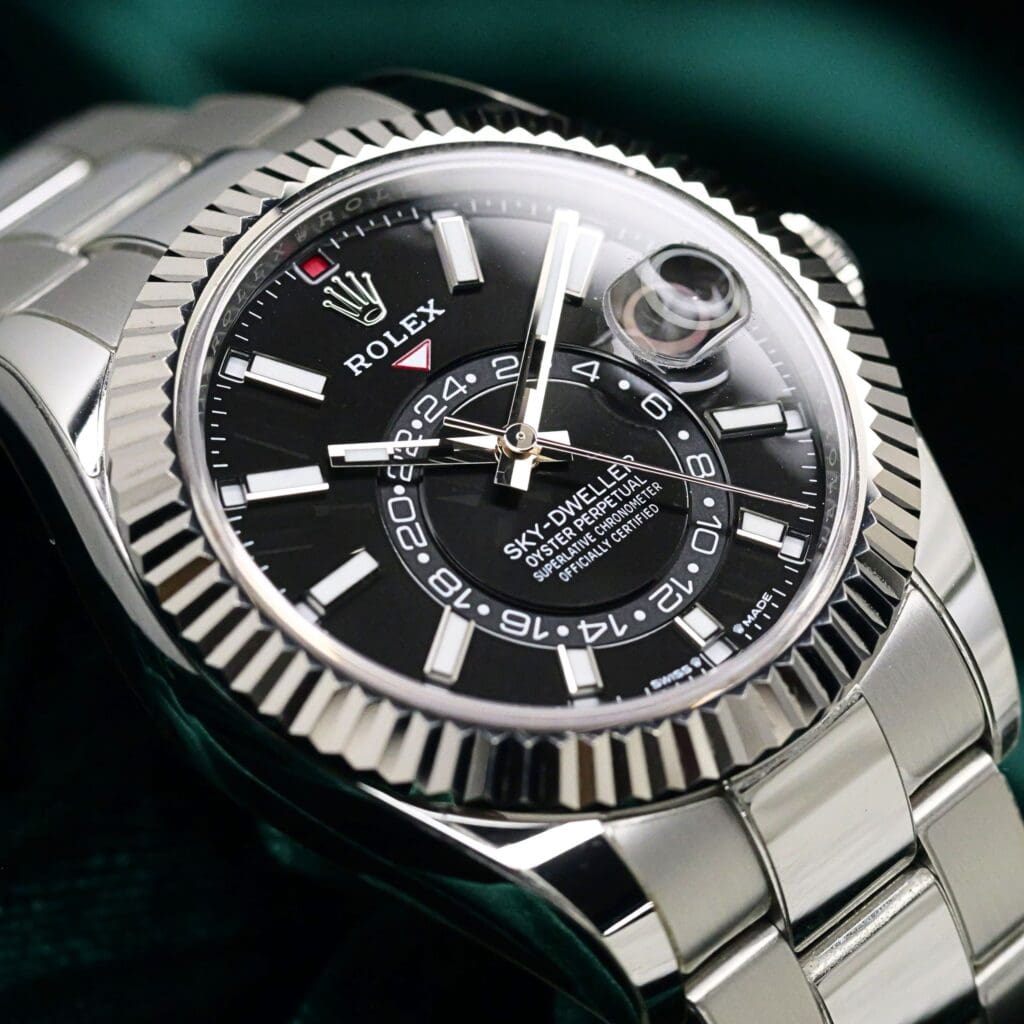
2025 Rolex Sky-Dweller Bright Black Dial 18k White Gold Fluted Bezel Stainless Steel Oyster Bracelet 42mm MINT CONDITION COMPLETE SET 336934
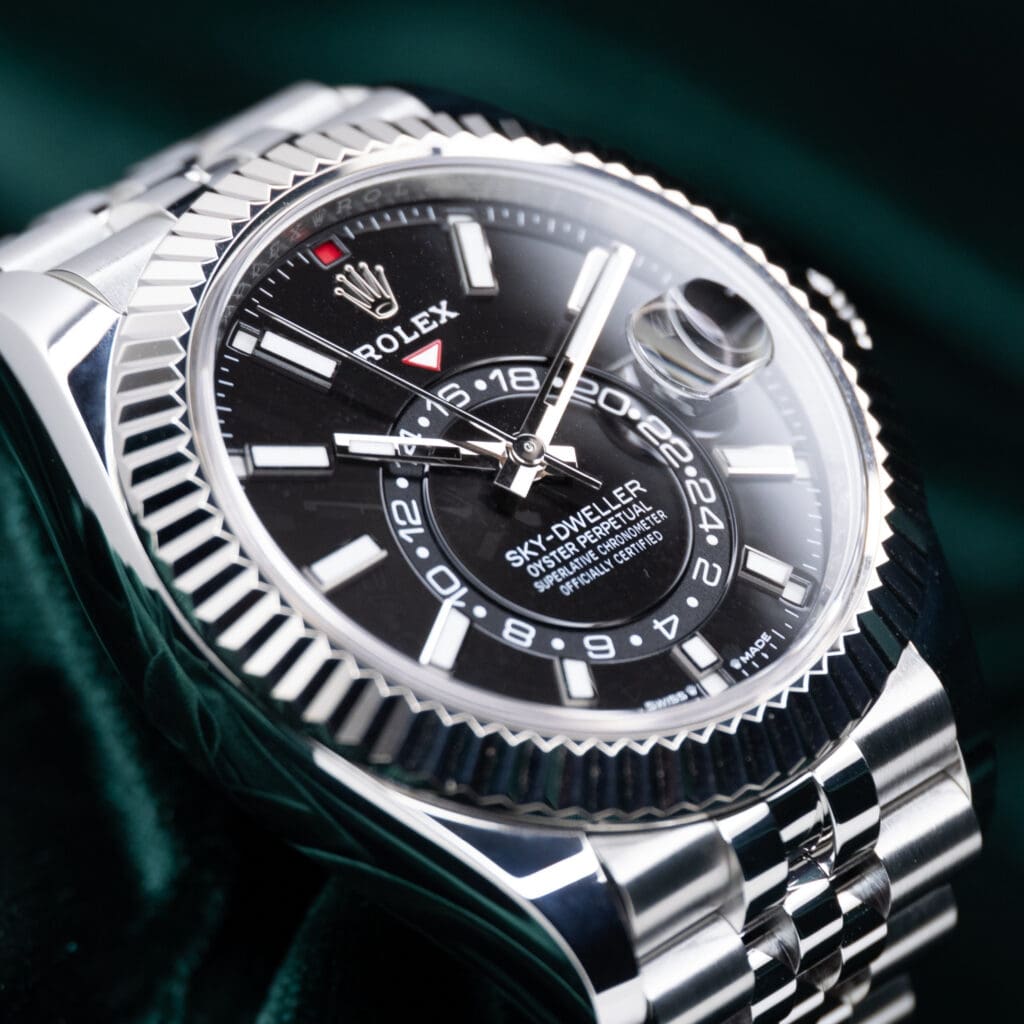
Rolex Sky-Dweller Black Dial Fluted Bezel Jubilee Bracelet Stainless Steel 42mm MINT CONDITION COMPLETE SET 336934-0008
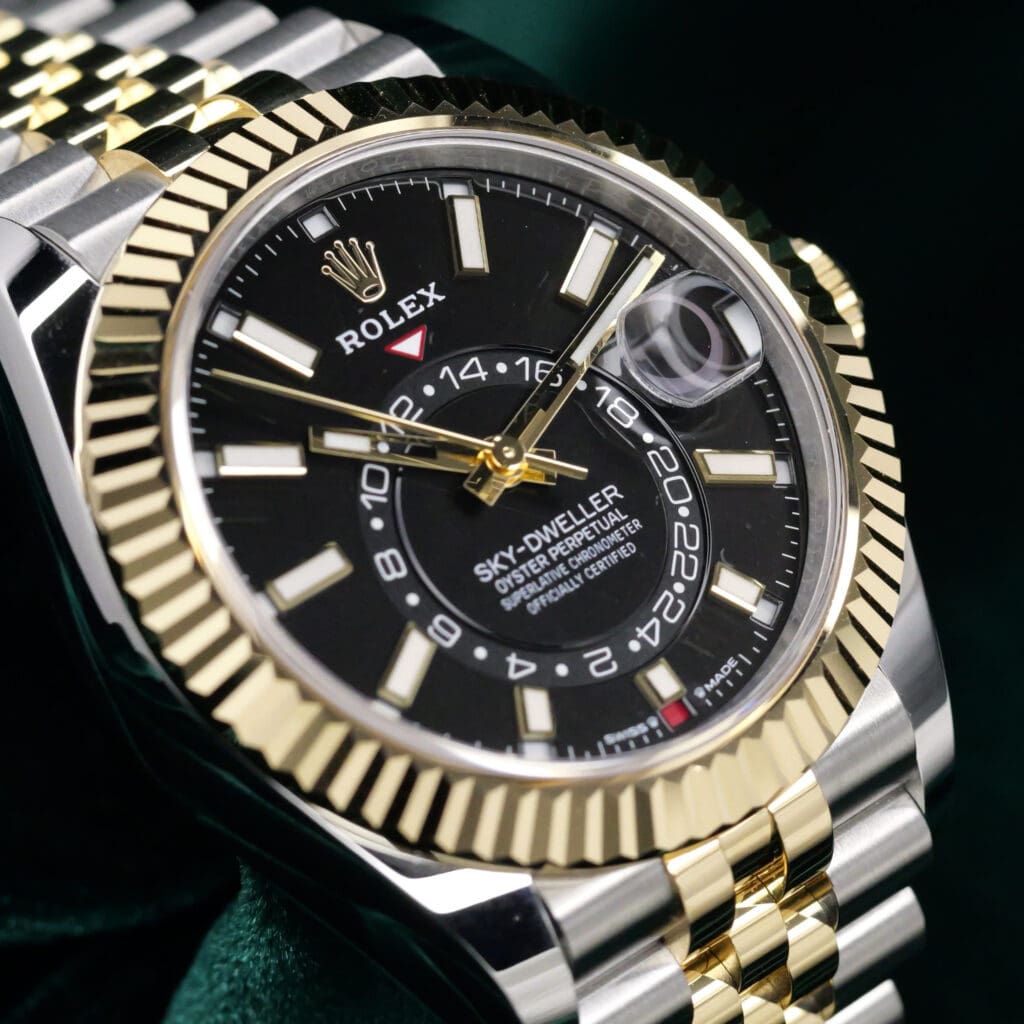
2026 NEW UNWORN Rolex Sky-Dweller Black Dial Yellow Gold Fluted Bezel Two Tone Jubilee Bracelet 18k Yellow Gold Stainless Steel 42 mm COMPLETE SET 336933-0004
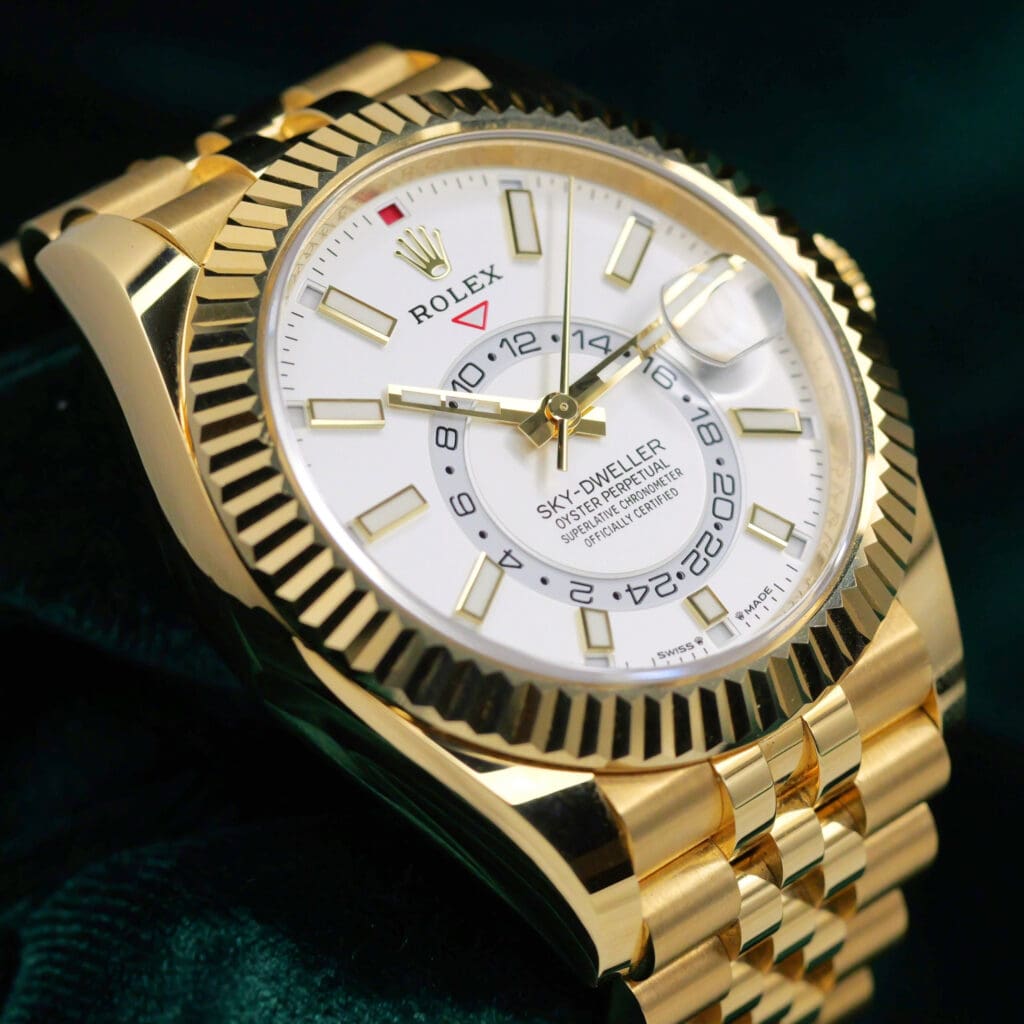
Rolex Sky-Dweller White Dial Yellow Gold Fluted Bezel Jubilee Bracelet 18k Yellow Gold 42mm MINT CONDITION COMPLETE SET 336938-0006
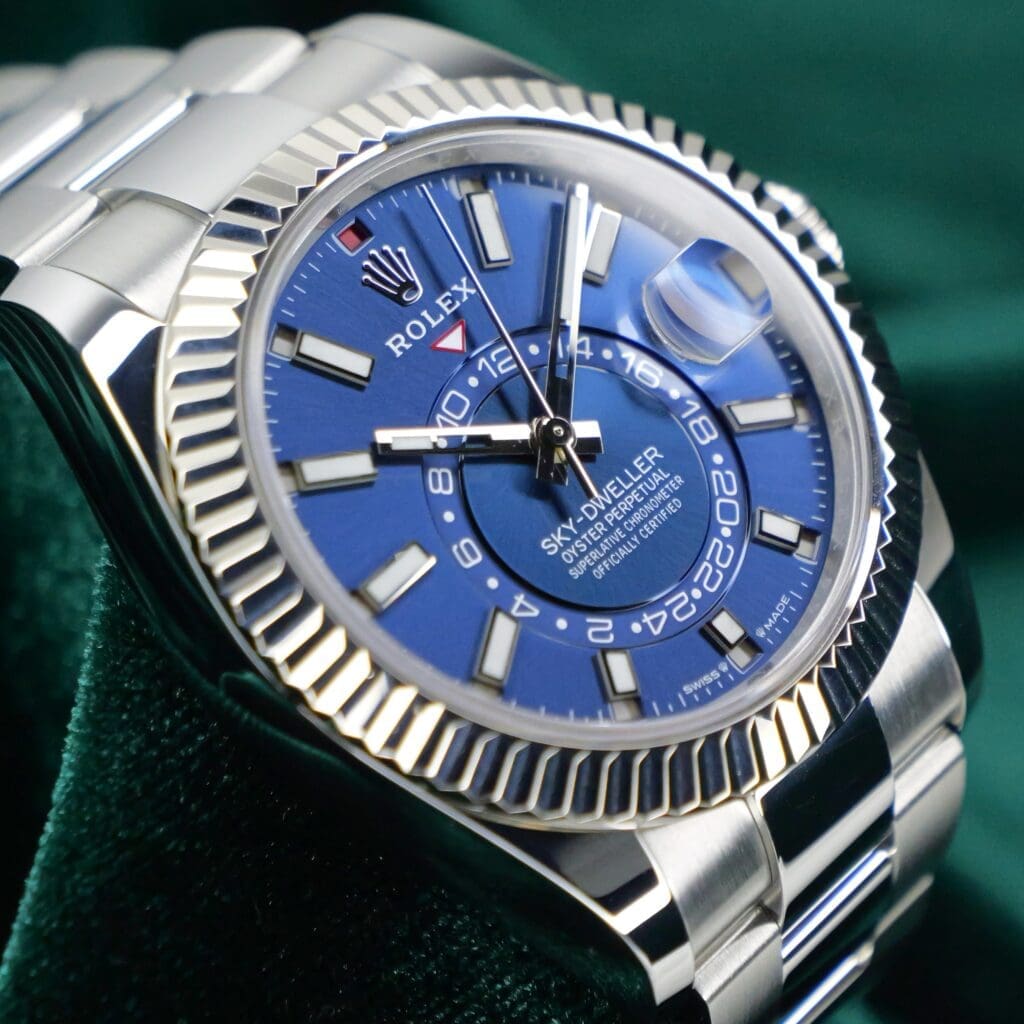
Rolex Sky-Dweller Blue Dial 18K White Gold Fluted Bezel Stainless Steel 42mm MINT CONDITION COMPLETE SET 336934
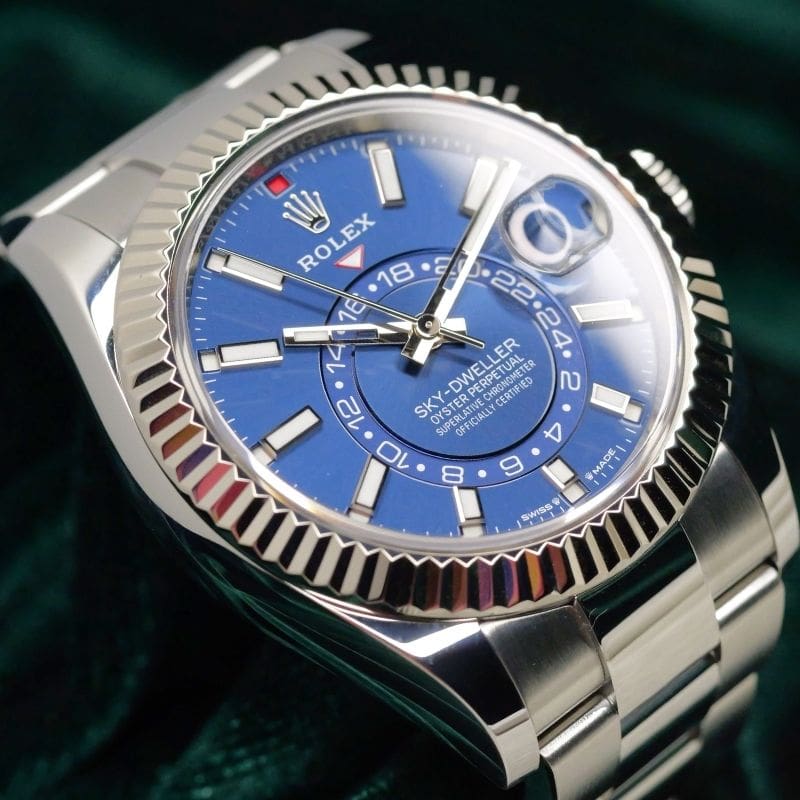
Rolex Sky-Dweller Bright Blue Dial Fluted Bezel Oyster Bracelet Two-Tone 18K White Gold Stainless Steel 42mm MINT CONDITION COMPLETE SET 336934
Sea-Dweller vs Sky-Dweller: Key Differences That Matter
These watches were built to solve different problems, and once you look past the names the differences show up quickly. Here’s how they compare on the things that affect daily wear.
Purpose and Design Philosophy
The Sea-Dweller is a tool watch. Every choice (case thickness, the helium escape valve, the depth rating, the bracelet construction) is built around pressure resistance and reliability in extreme conditions. Function leads, finish follows.
The Sky-Dweller is built around information. The complications exist to simplify daily life for someone moving between time zones, not to survive harsh environments. Different brief, different answer.
Case Size and Wrist Presence
The Sea-Dweller 126600 is 43mm and around 15.5mm thick. It carries tall on the wrist and you notice the height under a cuff. After a few hours of desk work you remember it’s there.
The Sky-Dweller is 42mm but only about 14mm thick, with a wider diameter that spreads the weight more evenly across the wrist. Both watches are large, but the Sky-Dweller tends to wear flatter, less top-heavy, easier under a dress shirt. Buyers crossing over from a Datejust find the Sky-Dweller adapts faster than the Sea-Dweller does.
Water Resistance and Durability
The Sea-Dweller is rated to 1,220 meters with a helium escape valve. That spec is engineered for saturation diving, not recreational use, and most buyers will never get near it.
The Sky-Dweller is rated to 100 meters, which covers swimming and everyday water exposure but isn’t a dive watch. For non-divers (which is most of the buying base for both watches) the gap matters less than the spec sheet suggests. Day-to-day, both are robust enough that you stop thinking about water resistance.
Timekeeping and Complications
The Sea-Dweller keeps it simple: time and date, period. The dive bezel handles elapsed-time tracking. There’s no learning curve.
The Sky-Dweller is the opposite. Local time, second time zone on the 24-hour disc, and an annual calendar with the month indicated by 12 apertures around the dial perimeter.
In daily use, most owners rely on local time and the calendar. The second time zone earns its keep when you travel or work with people in another country. Owners who don’t travel often will get less out of the watch than the spec sheet suggests.
Wearability and Comfort
Thickness and balance matter more over years of ownership than depth ratings do. The Sea-Dweller’s height makes it noticeable under cuffs and in seated work, and that doesn’t fade with familiarity. It’s a watch you stay aware of.
The Sky-Dweller slides under sleeves more easily. The Jubilee bracelet option (added to Rolesor models in 2021) adds a softer wrist feel that some Sky-Dweller buyers prefer to the Oyster. The Sea-Dweller comes on an Oyster only, with the Glidelock extension built into the clasp for wear over a wetsuit. Useful underwater, slightly chunky in an office.
We walk through the Jubilee vs Oyster trade-offs in detail in a separate guide.
Everyday Versatility
In outdoor and active settings the Sea-Dweller looks completely at home. In a meeting, on a dressy night out, or under any formal cuff, it doesn’t blend in. It draws attention as a serious tool watch sitting in the wrong room.
The Sky-Dweller flips that. It reads more refined in office and travel settings thanks to the polished bezel, fluted finish, and information-forward dial. It’s not invisible (42mm with a fluted bezel never is) but it sits more naturally in business contexts.
Price and Market Demand
The secondary market in 2026 tells a different story than it did three years ago. Here’s where things sit now. For broader context on how Rolex pricing has moved across the catalog, our Rolex pricing guide tracks retail and secondary trends by model.
Sea-Dweller Prices and Demand
The current Sea-Dweller 126600 trades at around $12,900 on the secondary market in 2026, which puts it slightly below the post-increase retail of $13,150. That’s notable. It’s one of the few current-production Rolex sports models that can be bought below retail.
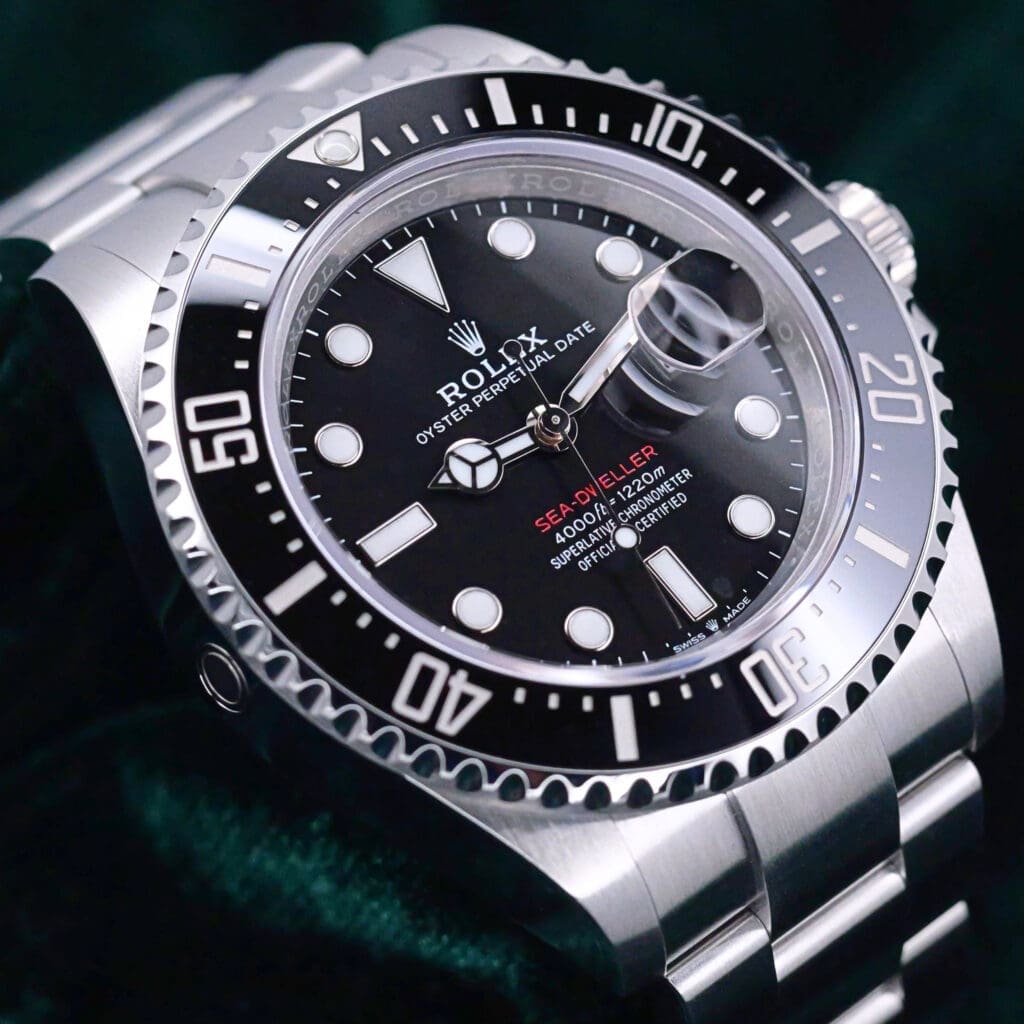



The discontinued 116600 (SD4K) trades higher, generally between $13,000 and $17,000 depending on condition, because of its short three-year production run from 2014 to 2017. The earlier 16600, the long-running aluminum bezel reference produced from 1988 to 2008, sits around $8,800 on average, with clean examples with box and papers fetching more.
The Rolex Sea-Dweller market index has performed softer than the broader Rolex market over the past five years, down about 16% versus a roughly flat overall market. That reflects a smaller buyer base focused on tool-watch capability rather than broad collector demand.
Buyers torn between the Sea-Dweller and a Submariner often end up comparing the two head-to-head; our Submariner vs Sea-Dweller breakdown covers that decision.
Sky-Dweller Prices and Demand
The current Sky-Dweller 336934 in steel trades around $23,700 on the secondary market in 2026, against a retail price of $16,600. That premium of roughly 40% above retail is well above what most Rolex sports references command and reflects sustained scarcity at authorized dealers.
The discontinued 326934 (the previous-generation white Rolesor) trades around $24,000 in 2026, with the 2023 discontinuation supporting prices despite the newer 336934 being available. The 336933 yellow Rolesor trades around $21,500. Steel and two-tone Sky-Dwellers are generally hard to find at retail and continue to carry premiums in the 20-40% range over MSRP.
The Sky-Dweller index sits notably higher than the Sea-Dweller index. That gap reflects wider demand rather than build quality. Both watches are built to Rolex’s full standard.
What This Means for Buyers
Sea-Dwellers are generally accessible on the secondary market. Prices sit at or below retail for the current 126600, which is unusual for a current Rolex sports model. The discontinued 116600 carries a premium, but the modern 126600 is one of the easier Rolex purchases to make in 2026 if size and tool-watch styling fit you.
Sky-Dwellers are harder to find at or near retail. Steel and Rolesor versions sell at premiums, and authorized dealer wait times for popular dials still run into multi-year territory in many markets. The secondary market is where most Sky-Dweller buying happens, and the premium is the cost of skipping the wait.
The AD vs grey market trade-off shows up most clearly on references like this one.
Both watches hold their place in Rolex’s broader market, but the Sky-Dweller shows stronger price momentum overall. That difference reflects demand, not quality, and it shapes how easily each watch can be bought or sold.

Top Rolex Sea-Dweller References
1. Rolex Sea-Dweller Ref. 16600
Reference 16600 is the longest-running classic Sea-Dweller and the last with an aluminum bezel and the original 40mm case. Produced from 1988 to 2008, it covers the bridge between vintage Rolex and the modern ceramic era. It’s the most wearable Sea-Dweller for buyers who want depth capability without the modern bulk of the 43mm cases.
Key Specs:
- Case: 40mm stainless steel
- Bezel: Black aluminum dive bezel
- Dial: Black with white text
- Movement: Caliber 3135
- Water Resistance: 1,220 meters / 4,000 feet
- Crystal: Sapphire, no Cyclops
- Market Price (2026): roughly $8,500–$12,000 depending on year and condition
2. Rolex Sea-Dweller Ref. 116600 (SD4K)
The 2014-2017 reference is a collector favorite because of how short it was on the market. It introduced the ceramic Cerachrom bezel while keeping the classic 40mm case and the no-Cyclops crystal. For buyers who want modern materials in the original Sea-Dweller proportions, this is the only reference that checks every box.
Key Specs:
- Case: 40mm stainless steel
- Bezel: Black Cerachrom ceramic dive bezel
- Dial: Black with Chromalight lume
- Movement: Caliber 3135
- Water Resistance: 1,220 meters / 4,000 feet
- Crystal: Sapphire, no Cyclops
- Market Price (2026): roughly $13,000–$17,000
3. Rolex Sea-Dweller Ref. 126600 (Red Sea-Dweller)
The current production Sea-Dweller, released in 2017 for the model’s 50th anniversary. The 43mm case and Cyclops were both new, both polarizing at launch, both standard equipment now. The red “SEA-DWELLER” dial text nods to the vintage references, while the caliber 3235 and 70-hour power reserve are fully modern.
Buyers weighing more depth capability often look at the 44mm Deepsea. We cover how the Sea-Dweller stacks up against the Deepsea in a separate guide.
Key Specs:
- Case: 43mm Oystersteel
- Bezel: Black Cerachrom ceramic dive bezel
- Dial: Black with red “SEA-DWELLER” text
- Movement: Caliber 3235, 70-hour power reserve
- Water Resistance: 1,220 meters / 4,000 feet
- Crystal: Sapphire with Cyclops
- Retail Price (2026): ~$13,150
- Market Price (2026): roughly $12,500–$13,500
4. Rolex Sea-Dweller Ref. 126603 (Two-Tone Rolesor)
Released in 2019, this was the first Sea-Dweller to combine Oystersteel and 18k yellow gold. The yellow gold bezel and center bracelet links give it a noticeably warmer look than the steel 126600, while the dive specs stay the same. It opened the Sea-Dweller to a different buyer than the strictly tool-watch crowd.
Key Specs:
- Case: 43mm Oystersteel and 18k yellow gold
- Bezel: Yellow gold ceramic insert
- Dial: Black or champagne, with green accents on the dial text
- Movement: Caliber 3235, 70-hour power reserve
- Water Resistance: 1,220 meters / 4,000 feet
- Market Price (2026): roughly $16,000–$18,000

Top Rolex Sky-Dweller References
1. Rolex Sky-Dweller Ref. 336934
The current-generation steel Sky-Dweller, released in 2023 with the caliber 9002 upgrade covered in “What Changed in 2026” above. The 42mm Oystersteel and white gold case dimensions are unchanged from the previous 326934.
Key Specs:
- Case: 42mm Oystersteel
- Bezel: White-gold fluted Ring Command bezel
- Dial: Black, bright blue, white, or mint green
- Movement: Caliber 9002, 72-hour power reserve
- Water Resistance: 100 meters / 330 feet
- Bracelet: Oyster or Jubilee
- Retail Price (2026): ~$16,600
- Market Price (2026): roughly $22,000–$25,000 depending on dial
2. Rolex Sky-Dweller Ref. 336933
The two-tone version of the 336934, pairing Oystersteel with 18k yellow gold for the case, bezel, and center bracelet links. The warmer look gives the Sky-Dweller more visual presence without going to a full precious-metal price tag. Runs the same caliber 9002 movement as the 336934.
Key Specs:
- Case: 42mm Oystersteel and 18k yellow gold (Yellow Rolesor)
- Bezel: Yellow-gold fluted Ring Command bezel
- Dial: Multiple dial options
- Movement: Caliber 9002, 72-hour power reserve
- Water Resistance: 100 meters / 330 feet
- Bracelet: Oyster bracelet
- Market Price (2026): roughly $20,000–$23,000
3. Rolex Sky-Dweller Ref. 326934
The previous-generation white Rolesor Sky-Dweller, discontinued in 2023 after a six-year run on the steel and white gold case. It runs the original caliber 9001 and offered the classic dial palette of bright blue, black, and white. The blue dial Jubilee variant became one of the most sought-after Sky-Dwellers in the run and still drives strong secondary demand.
Key Specs:
- Case: 42mm Oystersteel
- Bezel: White-gold fluted Ring Command bezel
- Dial: Bright blue, black, white
- Movement: Caliber 9001, 72-hour power reserve
- Water Resistance: 100 meters / 330 feet
- Bracelet: Oyster bracelet (Jubilee added in 2021)
- Market Price (2026): roughly $22,000–$26,000
Should You Buy the Sea-Dweller or the Sky-Dweller?
The choice usually comes clear once you match the watch to your actual routine rather than the idea of it.
Choose the Sea-Dweller if:
- You want a real tool watch and you’re fine with the size and thickness that come with it
- You don’t need complications beyond time and date
- You’re buying for the engineering and the heritage, not the office
- You’re shopping for a Rolex sports model and want one of the few that still trades near or below retail
Choose the Sky-Dweller if:
- You travel often or coordinate with people in different time zones
- You want a complication that earns its place day to day (annual calendar plus second time zone)
- You wear watches under cuffs in business settings and want something that disappears more than it announces itself
- You’re willing to pay a premium over retail for a watch you can actually buy this year rather than wait three for
Most buyers recognize themselves in one of these lists pretty quickly. The Sea-Dweller is a divers-and-engineers watch that happens to be a Rolex. The Sky-Dweller is a travel watch dressed up as one. They aren’t really competing for the same wrist.
Where to Buy Authentic Watches Online
There are a handful of legitimate online channels for buying either of these watches. Chrono24 carries the largest aggregate listings for both references, with dealers and private sellers competing on price — if you haven’t used it before, what to watch for on Chrono24 is a useful primer.
eBay’s Authenticity Guarantee program covers Rolex watches above a threshold and adds a verification layer that wasn’t there a few years back. Grailzee runs auctions for pre-owned luxury watches that can occasionally surface fair-priced examples, particularly for the discontinued 116600 and 326934 references.
Independent grey-market dealers and watch forums (Rolex Forums, WatchUSeek) are another category where Sea-Dweller and Sky-Dweller deals occasionally appear, with the trade-off being that you do your own homework on the seller.
We also sell, buy, and trade luxury watches. The reason clients choose us over a large marketplace is the layered communication before the purchase decision.
Before you commit, we send tour videos of the actual watch on the actual bracelet, detailed condition notes with macro shots of the case and bezel, and direct conversation with a real person who has handled the piece. You’re not buying blind off a stock photo and a paragraph of marketing copy.
That’s reflected in our 4.9-star Google rating, which comes from clients who appreciate having a real conversation before sending five figures across the wire.
If you want that kind of walkthrough on a current 126600 or 336934, a discontinued 116600 or 326934, or one of the Rolesor references (126603 or 336933), reach out and we’ll line up options that match what you’re looking for. You can also browse our current collection to see what’s in stock right now.
999+ Timepieces Available
Explore Our Timepieces
Authenticated, unworn, and ready to ship worldwide.
Rolex · Audemars Piguet · Patek Philippe · Omega · Cartier · Richard Mille · Hublot · Tudor
Newly Listed
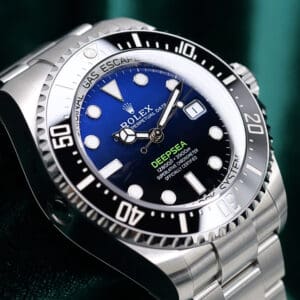
2026 NEW UNWORN Rolex Deepsea "James Cameron" D-Blue Black and Blue Dial Black Ceramic Bezel Stainless Steel 44mm COMPLETE SET 136660-0005
$20,208.00
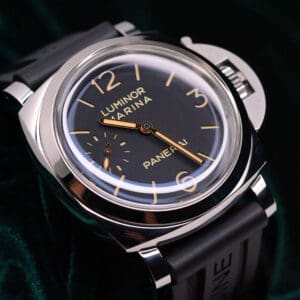
Panerai Luminor Marina 1950 3 Days Limited Edition Black Sandwich Dial Stainless Steel Black Rubber Strap 47mm MINT COMPLETE SET PAM00422
$7,503.00
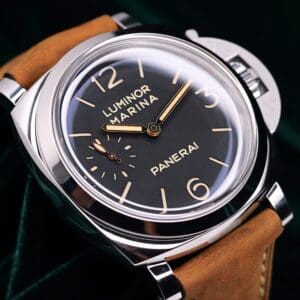
Panerai Luminor Marina 1950 3 Days Black Dial Stainless Steel Brown Leather Strap 47mm LIMITED EDITION MINT CONDITION COMPLETE SET PAM00422
$7,503.00
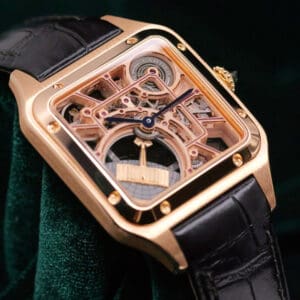
Cartier Santos-Dumont Micro-Rotor Skeleton Dial Black Alligator Strap 18k Rose Gold 43.5 x 31mm MINT CONDITION COMPLETE SET WHSA0030
$40,425.00
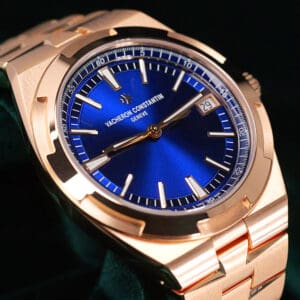
2026 Vacheron Constantin Overseas Blue Dial 18k Rose Gold 41mm MINT CONDITION COMPLETE SET 4520V/210R-B705
$72,764.00
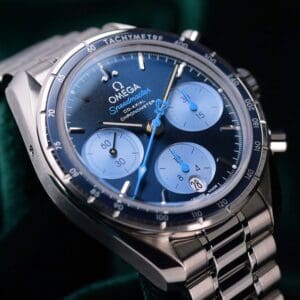
Omega Speedmaster 38 Orbis Edition Blue Dial Stainless Steel 38mm MINT CONDITION COMPLETE SET 324.30.38.50.03.002
$6,599.00
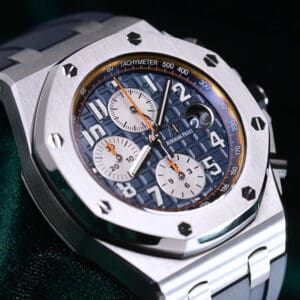
Audemars Piguet Royal Oak Offshore Chronograph “Navy” Blue Dial Orange Accents Blue Rubber Strap Stainless Steel 42mm MINT CONDITION COMPLETE SET 26470ST.OO.A027CA.01
$22,245.00
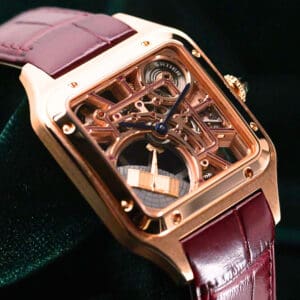
Cartier Santos-Dumont Micro-Rotor Skeleton Dial 18K Rose Gold Burgundy Alligator Strap 31mm MINT CONDITION COMPLETE SET WHSA0030
$40,425.00
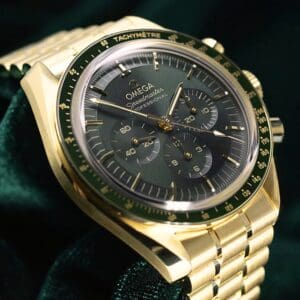
Omega Speedmaster Professional Moonwatch "Moonshine" Green Dial 18K Yellow Gold 42mm MINT CONDITION COMPLETE SET 310.60.42.50.10.001
$35,695.00
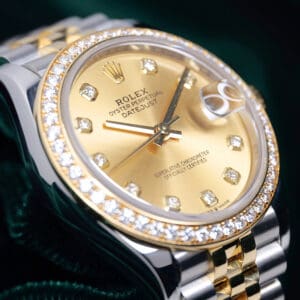
Rolex Datejust 31 Champagne Diamond Dial Diamond Bezel Jubilee Yellow Gold & Stainless Steel 31mm MINT CONDITION COMPLETE SET 278383RBR
$31,990.00
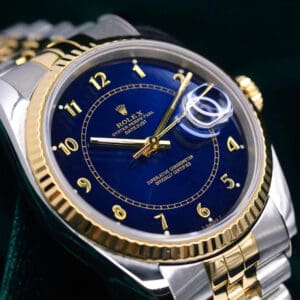
Rolex Datejust Blue Arabic Numeral Refinished Dial Fluted Bezel Jubilee Bracelet 18k Yellow Gold Stainless Steel 36mm MINT CONDITION 16233
$7,975.00
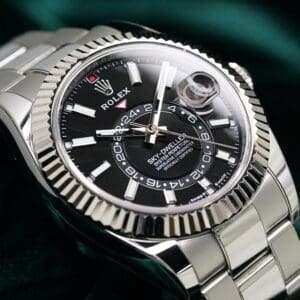
2025 Rolex Sky-Dweller Bright Black Dial 18k White Gold Fluted Bezel Stainless Steel Oyster Bracelet 42mm MINT CONDITION COMPLETE SET 336934
$22,895.00
Final Thoughts on Sea-Dweller vs Sky-Dweller
The Sea-Dweller is built around pressure and mechanical resilience; the Sky-Dweller is built around schedules and information. Picking between them is mostly picking which problem fits your week.
Two bonus tips before you commit. First, try the Sea-Dweller on under a dress shirt cuff before buying. The 15.5mm case height is a real wrist-presence issue and not everyone is comfortable with it once the cuff is closed.
Second, set the Ring Command bezel on the Sky-Dweller yourself before you buy. The system is intuitive once you’ve done it, but it’s worth a hands-on minute first so you know how the complication you’re paying a premium for actually operates — and our step-by-step on setting a Sky-Dweller walks through every function if you’d rather practice first.
A watch that fits your daily habits is the one you’ll keep reaching for. If you’re still mapping out where these two sit alongside the rest of the catalog, our full Rolex buying guide walks through the lineup model by model.