
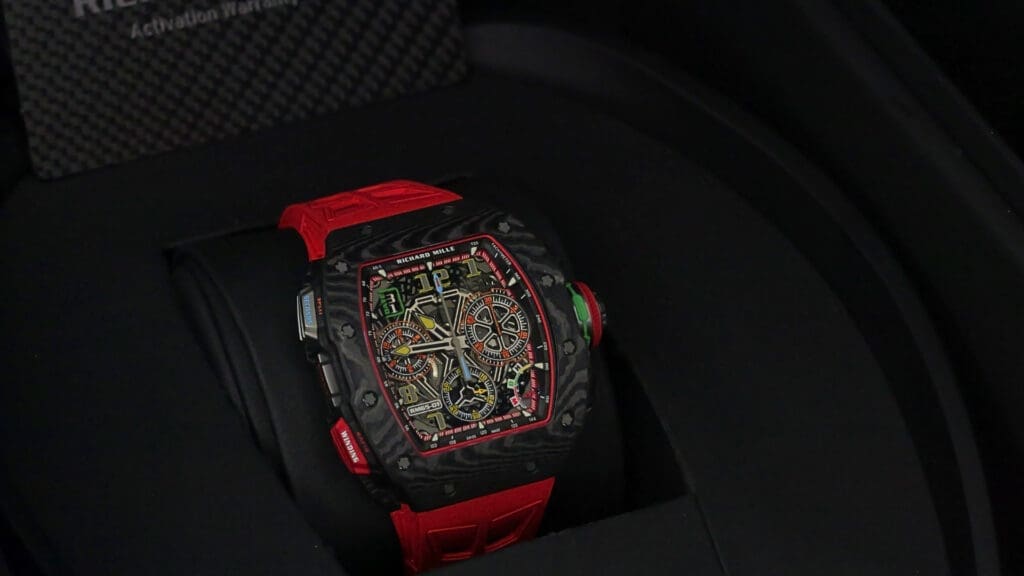
An automatic watch is a piece of precision engineering, built to keep time as long as it’s cared for properly. But what happens when you’re not wearing it? Leaving it on a desk or tossing it in a drawer can lead to scratches, magnetism, or moisture damage that quietly harm its movement and finish.
In this guide, you’ll learn the best ways to store an automatic watch safely, so your timepiece stays accurate, protected, and ready to wear whenever you pick it up.
Best Ways to Store Your Automatic Watch Safely
1. Use a Watch Winder
If you don’t plan to wear your automatic watch every day, place it in a watch winder. A winder is a small device that keeps your watch moving in gentle rotations, just like it would on your wrist. This prevents the oils inside the movement from sitting still and hardening over time.
Not every watch needs the same setting. Check your watch’s recommended “turns per day” (TPD). For example, a Rolex Datejust usually needs around 650 TPD, while an Omega Seamaster may need closer to 800 TPD. A good winder will let you adjust these numbers and choose clockwise, counter-clockwise, or bi-directional rotations. Always pick one with anti-magnetic shielding and quiet motors, so it won’t disturb you or affect the accuracy of the watch.
2. Store in a Watch Box or Safe

Never leave your watch loose on a desk or nightstand. Place it inside a watch box or a safe that has soft, padded compartments. The lining should be suede, microfiber, or leather to prevent scratches on the case and bracelet.
If your watch is made of precious metals like gold or platinum, look for a box with anti-tarnish fabric. For extra security, keep your watches inside a fireproof or biometric safe. A safe also protects against humidity changes if it has a built-in sealing system.
3. Control Humidity and Temperature
Moisture and sudden temperature changes are enemies of automatic watches. Keep your watch in a stable environment:
- Temperature: 18–24°C (65–75°F)
- Humidity: 45–55%
Too much heat dries out the oils, and too much cold thickens them, which both affect accuracy. High humidity can also cause rust inside the movement and on steel parts. Place silica gel packets inside your watch box or safe to absorb excess moisture. If you live in a humid climate, a small dehumidifier inside your storage cabinet works even better.
4. Protect from Magnetism
Magnetic fields interfere with the balance spring inside your watch, which causes it to run fast or slow. Keep your watch at least 30 centimeters (12 inches) away from electronics like laptops, smartphones, tablets, and speakers.
Many luxury watches today, like the Omega Master Chronometer series, have anti-magnetic movements. But most automatic watches, including classic Rolex and Tudor models, are still vulnerable. If you own several pieces, invest in an anti-magnetic watch case to store them safely.
5. Clean the Watch Before Storing
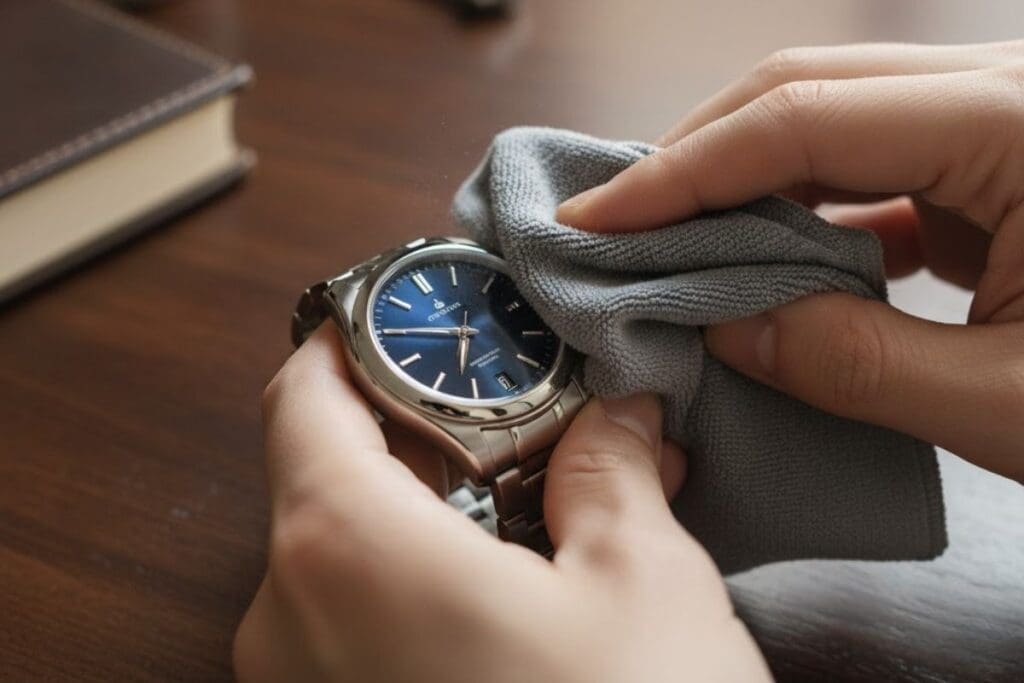
Always clean your watch before putting it away. Sweat, oils from your skin, and tiny dust particles can cause corrosion or dull the finish if left for too long.
Do this every time before storage:
- Wipe the case and bracelet with a clean microfiber cloth.
- If your watch is water-resistant, lightly dampen the cloth to remove smudges, then dry it completely.
- For leather straps, make sure they are dry before storage. Moisture trapped in leather leads to cracking or mold growth.
6. Rotate Wearing or Wind Regularly
Even if you don’t wear a watch often, you should still wind it. Most automatic watches have a power reserve between 38 and 72 hours. Once the reserve runs out, the movement stops, and the oils inside settle.
To prevent this, do one of the following:
- Rotate wearing: Pick a different watch from your collection every week to keep them all running.
- Manual winding: If the watch isn’t on a winder, wind it 20–40 turns of the crown every couple of weeks. This keeps the movement active and the lubricants evenly spread.
How Long Can You Leave an Automatic Watch Unworn?
An automatic watch doesn’t run forever without movement. Once the power reserve runs out, the watch will stop, but that doesn’t mean it’s damaged. Most standard automatic watches hold power for 1.5 to 3 days, while some high-end models can last for a week or more. Leaving a watch unworn for a few days won’t harm it, but if it sits for weeks or months without winding, the lubricants inside the movement begin to settle.
Typical Power Reserves by Watch Type:
- Standard Automatic (Rolex Datejust, Omega Seamaster, Tudor Black Bay): 38–72 hours
- Extended Reserve (IWC Big Pilot, Panerai Luminor 8 Days): 7–10 days
- Ultra-High Reserve (Hublot MP-11, Lange 31): 14–31 days
- Complicated Watches (Perpetual Calendar, Annual Calendar, Moonphase): 40–72 hours
Final Takeaways on How to Keep an Automatic Watch
To keep your automatic watch in top condition, store it properly. Our top recommendation is to use a padded watch box, safe, or watch winder to prevent scratches and keep the movement running. Always keep your watch away from magnetic sources, moisture, and extreme temperatures, and make sure it’s clean before storing.
Even if you don’t wear it often, wind your watch regularly or use a winder to keep the movement lubricated. With the right storage and care, your automatic watch will stay accurate, protected, and ready to wear at any time.
FAQs About Storing an Automatic Watch
1. Can I leave my automatic watch unworn for a long time?
Yes, you can leave an automatic watch unworn for weeks or months without permanent damage. It will simply stop once its power reserve runs out. However, long periods of inactivity allow lubricants to thicken or settle, so occasional winding helps maintain smooth movement and accuracy.
2. Do I really need a watch winder?
No, a watch winder isn’t strictly necessary, but it is helpful for watches with complications like moonphase, perpetual calendar, or GMT functions. A winder keeps the movement active and prevents frequent resetting. For simple time-and-date watches, manual winding every few weeks is usually sufficient.
3. How often should I wind my automatic watch if it’s not on a winder?
Wind your automatic watch every two to three weeks when it’s not being worn. This keeps the movement active and prevents oils from settling. Typically, 20–40 turns of the crown are enough. Always wind slowly to avoid stressing the internal gears or overwinding.
4. Is it safe to store automatic watches in a safe?
Yes, storing your watch in a safe is both secure and protective, provided humidity is controlled. Silica gel packets or a small dehumidifier inside the safe help prevent moisture damage. A stable, dry environment protects the movement, prevents rust, and maintains the watch’s finish.
5. Should I store my watch lying flat or upright?
Either position is generally safe. However, some watches may show slight timing differences depending on position. Rotating the storage position occasionally, or using a padded watch box, helps maintain accuracy, reduces pressure on the bracelet, and prevents scratches on the case.