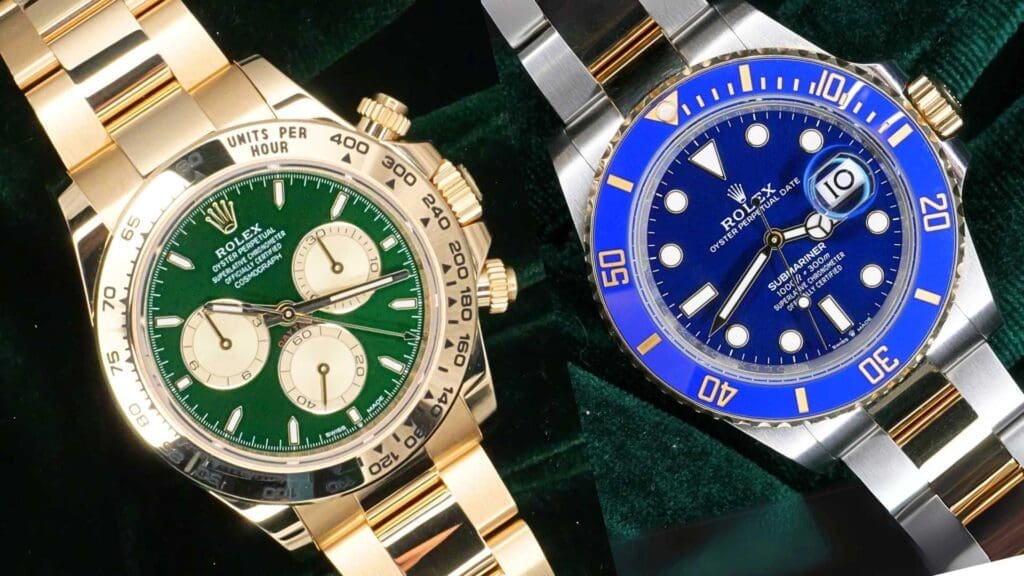
The Rolex Daytona vs Submariner debate brings together two of the most recognizable sports watches Rolex has ever produced. Both sit at the top of the brand’s professional lineup, but they were built for very different jobs. One was made to time speed on a racetrack. The other was made to keep working at depth.
Buyers compare them constantly because they share a lot on paper. Both come in stainless steel, both use Rolex’s latest in-house movements, and both hold value better than most luxury watches on the market.
The real differences come down to how each watch functions, how it wears day to day, how hard it is to get, and what it’s likely to do on the secondary market.
This guide breaks the comparison down by what actually matters in 2026: current pricing, wait times, daily wearability, the new releases that have shifted the conversation this year, and a clear answer on which one makes sense as a first Rolex.
Rolex Daytona Overview
The Rolex Daytona was originally built as a racing chronograph. Rolex designed it to measure elapsed time and calculate average speed, using a tachymeter bezel and three sub-dials. When it launched in 1963, the brief was simple: give race drivers a reliable lap-timing tool, not a fashion accessory.
The link to motorsport is literal. The name comes from Daytona International Speedway, and the layout reflects its purpose. The dial is busy by design. Multiple sub-dials and pushers exist to be used during timing events. Compared to dive watches that strip everything down to legibility and water resistance, the Daytona is more complex because it prioritizes precision timing.
Over the decades, the Daytona’s role has shifted. It still functions as a professional chronograph, but it has also become Rolex’s most sought-after steel sports watch. Limited production, a fully in-house chronograph movement, and decades of collector demand have pushed prices well above retail on the secondary market.
Our full Daytona buying guide goes deeper on what to expect across references, dial variants, and condition tiers.
Most owners today aren’t wearing a Daytona for racing. It’s worn as a sports watch with chronograph mechanics that collectors actually care about. The capability is still there, but the appeal now lies as much in ownership and collectability as in function.


The 2026 Update
At Watches & Wonders 2026, Rolex introduced the Cosmograph Daytona Ref. 126502 in Rolesium, a steel and platinum combination fitted with a white grand feu enamel dial and an anthracite Cerachrom bezel edged with platinum. It also became the first steel-cased Daytona with a sapphire caseback, showing the Caliber 4131 underneath.
Pricing is set at $57,800 and Rolex describes it as off-catalogue, placing it well above the standard Oystersteel Daytona Ref. 126500LN, which retails at $16,900.
It’s not a replacement for the standard steel Daytona. It sits alongside it as an “Exceptional Watch” tier piece. But it’s worth knowing about if you’re shopping the Daytona right now, because it shifts what a steel Daytona can look like.

Notable Daytona References
- Rolex Daytona 126500LN — The current-generation steel Daytona, released in March 2023. Available in white “Panda” and black dial configurations. The Caliber 4131 brought a 72-hour power reserve, the case got slightly thinner at 11.9mm, and the bezel gained a thin steel ring around the ceramic insert.
- The white dial typically commands a small premium over the black, and we break down every Daytona dial variant in a separate reference piece.
- Rolex Daytona 116500LN — Introduced in 2016, this was Rolex’s first steel Daytona with a black Cerachrom bezel. Discontinued when the 126500LN replaced it, but still in heavy demand on the secondary market. Many collectors prefer its slightly chunkier proportions and the 4130 movement.
- Rolex Daytona 6239 (“Paul Newman”) — One of the earliest Daytona references and the first to carry the “Daytona” name on the dial. The exotic-dial variants tied to Paul Newman became some of the most valuable vintage watches ever made. Authentic examples cross seven figures at auction.
- Rolex Daytona 6263 (“Big Red”) — Known for the red “Daytona” text above the running-seconds sub-dial. A manual-wind reference from the pre-automatic era, and a cornerstone vintage piece for collectors who want the racing chronograph in its purest form.
- Rolex Daytona 16520 (“Zenith Daytona”) — Produced from 1988 to 2000. The reference that took the Daytona automatic for the first time, using a modified Zenith El Primero base. Slimmer case than the modern references, and prices have climbed sharply over the past few years as collectors recognize its transitional importance.
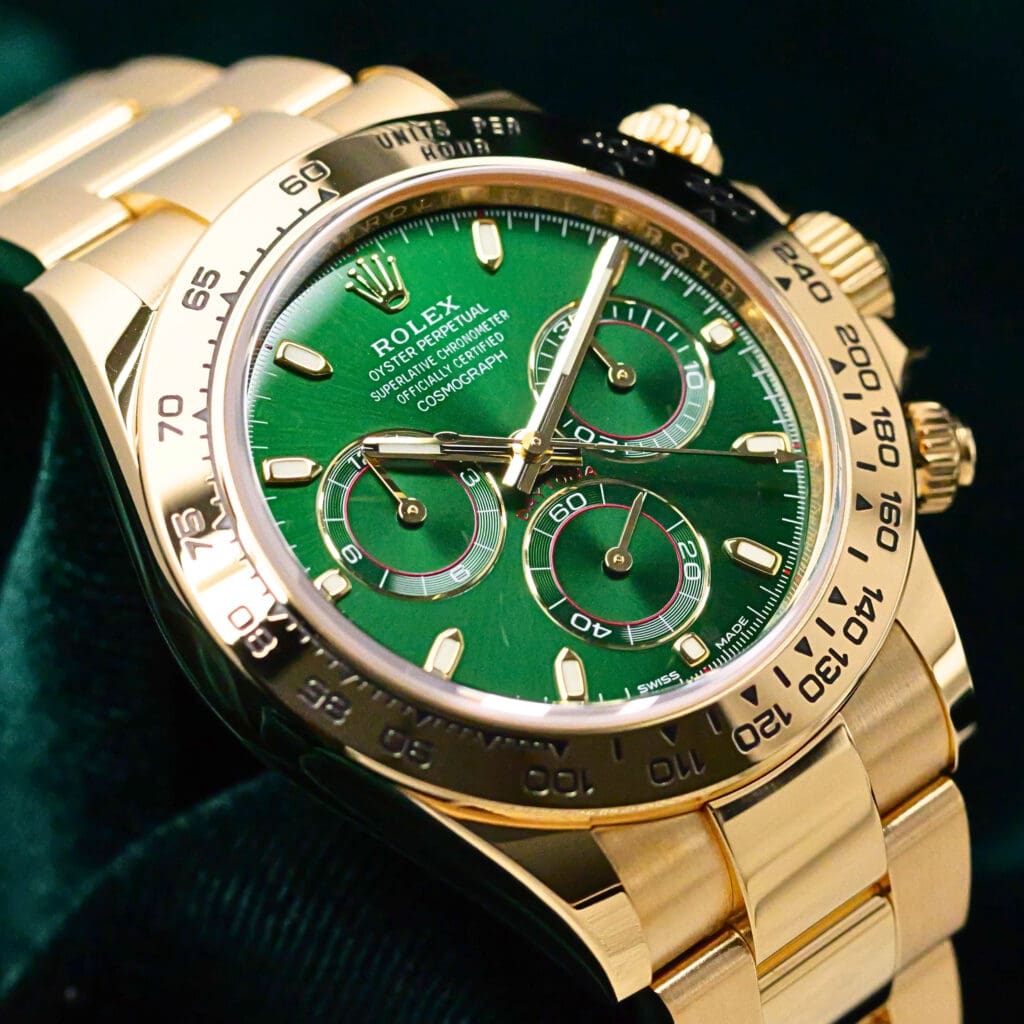
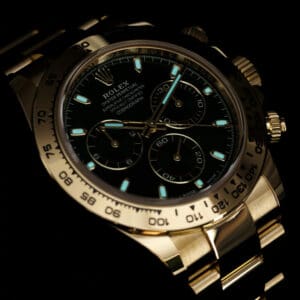
- Rolex Daytona 116508 (Green Dial “John Mayer”) — Introduced in 2016, this full 18k yellow gold Daytona pairs a sunburst green dial with champagne subdials and a matching gold tachymeter bezel. Powered by the Caliber 4130, it carries a 72-hour power reserve and the pre-2023 case proportions. The reference gained mainstream attention after John Mayer publicly called it a sleeper pick, which quickly pushed demand higher. What started as an under-the-radar configuration is now one of the most recognizable modern Daytonas, often trading well above retail depending on condition and set completeness.
Rolex Submariner Overview
The Rolex Submariner is the watch that wrote the rulebook for the modern dive watch. Released in 1953, it was built as a professional underwater tool with a clear job description: reliable timing, strong legibility, and water resistance that a working diver could trust.
Its formula of rotating timing bezel, high-contrast dial, and rugged Oyster case became the template every other dive watch references.
The Submariner started as a working tool. Early models were built for professional use, and Rolex tightened the design gradually as diving needs evolved: better water resistance, clearer bezels, stronger lume. As materials improved, sapphire crystals replaced acrylic, ceramic bezels replaced aluminum, and the movements were updated. The watch never lost its original purpose.
It’s still one of the easiest Rolex models to live with day to day. The dial is clear, the bezel is intuitive, and the case wears well in almost any setting. It works at the beach, at work, at dinner. Because it stays simple and practical, the Submariner remains one of the most popular Rolex watches for owners who want a single watch that handles almost everything.
If you want the full picture across modern and discontinued references, our Rolex Submariner buying guide covers it end to end.

Notable Submariner References
The Submariner has gone through more visible evolution than the Daytona. We cover every reference and what changed between them in a dedicated explainer. Below are the references that come up most in buying conversations.
- Rolex Submariner Date 126610LN — The modern Submariner Date in steel. 41mm Oyster case, Caliber 3235 with a 70-hour power reserve, and the most widely worn Submariner today. The default choice for buyers who want one Rolex sports watch that does everything.
- Rolex Submariner Date 126613LB (“Bluesy”) — Released in 2020 as part of the updated Submariner line, this two-tone reference combines Oystersteel and 18k yellow gold with a sunburst blue dial and matching Cerachrom bezel. The case increased to 41mm, but with slimmer lugs and a more balanced profile on the wrist. Powered by the Caliber 3235, it offers a 70-hour power reserve and improved efficiency over the previous generation.
- Rolex Submariner 124060 — The current-generation no-date Submariner. Same 41mm case as the Date version, Caliber 3230 inside. Loved by purists for its clean dial: no Cyclops, no date window, just a symmetrical face. Sales have climbed steadily as people rediscover the no-date format. We walk through the full date vs no-date comparison for buyers stuck between the two.
- Rolex Submariner 14060 — A no-date reference produced from the late 1980s through the early 2000s. Slimmer case, aluminum bezel, and a sweet-spot price point for buyers who want pre-ceramic Submariner DNA without committing to vintage.
- Rolex Submariner 16610 — One of the most iconic Submariner Date references ever made. Twenty-plus year production run, aluminum bezel insert, and proportions many collectors still consider perfect. Often described as the last “old-school” Submariner before ceramic took over.
- Rolex Submariner 5513 — A vintage cornerstone produced from the 1960s to the late 1980s. Long production run, no date, and a direct link to the Submariner’s early dive-watch identity. Still a relatively accessible vintage Rolex if condition is honest.



Rolex Daytona vs Submariner: The Real Differences
This comparison focuses on how each watch functions, how it wears, how it’s priced, and how it behaves on the secondary market. Both are iconic Rolex sports models, but the ownership experience is not the same.
Chronograph vs Dive Bezel in Daily Use
The Daytona is a chronograph. Its pushers, sub-dials, and tachymeter bezel exist to measure performance, originally for motorsport, now mostly as mechanical theater. In daily use, this means more dial information and a more complex movement underneath, even if you rarely press the pushers.
If you’re new to the bezel and want a primer on what the scale actually does, we walk through the tachymeter step by step.
The Submariner is a dive watch first. Its rotating bezel tracks elapsed time in a way anyone can use without thinking. Line up the triangle with the minute hand, glance at it later, done. For most owners, that bezel gets used far more than a Daytona’s chronograph does. Cooking, parking meters, workouts, flights. It’s the most useful Rolex bezel in the lineup.
Case Size, Thickness, and Wearability
On paper the two watches are close, but they wear differently. The Daytona 126500LN is 40mm wide and 11.9mm thick with shorter lugs, which gives it a more controlled, less aggressive presence on the wrist. The Submariner 126610LN is 41mm wide and 12.5mm thick with longer lugs, which means it covers more wrist real estate and feels slightly more substantial.
Neither is uncomfortable. The Daytona feels precise. The Submariner feels solid. Smaller wrists tend to land on the Daytona slightly more often, but the difference is small enough that bracelet sizing matters more than spec sheets here.
Dial Layout and Legibility
The Daytona’s dial is visually dense: three sub-dials, a tachymeter scale, more printed text. It’s organized well, but it asks more of the eye. That complexity is part of the appeal for buyers who like watching mechanics work.
The Submariner does the opposite. Big hour markers, a clean minute track, almost no printed text. It’s the kind of dial you can read in a half-second from across a room. That clarity is one of the main reasons it works as well as it does as an everyday watch.
Bezel Function
The Daytona’s tachymeter bezel is fixed and exists to calculate average speed over a known distance. Historically important. Daily-life useful: almost never. Most Daytona owners never use it as designed.
The Submariner’s unidirectional dive bezel is one of the most genuinely useful complications Rolex makes. Quick to set, easy to read, hard to bump out of position. It’s the reason this watch ends up being the one people actually use even when they own four others. New to it? Here’s a quick primer on how it works.
Visual Presence and Versatility
The Daytona reads as sport-luxury. Polished surfaces, ceramic bezel, and intricate dial work give it a refined, slightly dressy feel that lands closer to a statement piece than a pure tool watch. It works under a cuff. It also draws attention.
The Submariner keeps its tool-watch identity. Matte and polished surfaces, simple dial, working bezel. It moves between casual, professional, and outdoor settings without effort. If you only own one luxury watch and want it to fit every situation, the Submariner is the safer answer.

Rolex Daytona vs Submariner: Price and Wait Times in 2026
The pricing gap between these two has always been wide, and in 2026 it’s still the single biggest practical difference between them. For context across the rest of the lineup, our Rolex pricing guide tracks current retail and secondary-market values for every major model.
At retail, the steel Submariner Date 126610LN currently lists at around $10,400 USD. The steel Daytona 126500LN lists at around $16,900 USD. Rolex implemented a 2.2% increase on steel models in January 2026. Both are difficult to walk in and buy at retail, with the Daytona considerably harder than the Submariner.
The secondary market is where the two diverge sharply.
The Daytona 126500LN trades on the secondary market between roughly $30,000 and $36,000 USD with full set, depending on dial choice and provenance. The white “Panda” dial typically commands a premium over the black. The previous-generation 116500LN, now discontinued, trades around $27,000 to $36,000 USD with papers.
The Submariner Date 126610LN trades much closer to retail. The 126610LN sees secondary-market pricing of roughly $13,000 to $15,400 USD, while the no-date Submariner 124060 typically lands between $11,000 and $13,500. Both sit modestly above retail, but nowhere near Daytona-style premiums.
Wait Times Have Shifted
The other thing to know in 2026: wait-list reality has changed compared to the 2022 peak.
For the steel Daytona, realistic wait times at most authorized dealers are still measured in years. Three to seven years is typical, and many dealers have stopped accepting new waitlist registrations entirely. Buying through the grey market, and paying the premium, is the only realistic path for most people.
We compare the trade-offs between AD and grey market buying in detail if you’re weighing both.
The Submariner is more attainable than it was at the market peak. Wait lists exist but have shortened. The 126610LN can sometimes be found at retail with patience and an existing AD relationship, and the secondary-market premium has compressed considerably from where it was three years ago.
How Each Holds Value Long-Term
Daytona prices spiked during the 2020–2022 boom, corrected through 2023, and have stabilized at levels still well above retail. Supply is the structural reason. Rolex makes far fewer Daytonas than the market wants, and that’s not changing.
The Submariner appreciated during the same period and has been more predictable since. Both the 124060 and 126610LN have held 20–50% premiums above retail through their production runs. If you’re thinking about long-term value, the Daytona has more upside but also more volatility. The Submariner is the steadier asset.
Here’s the broader picture on how Rolex models hold value across the catalog.
Which Is the Better First Rolex Sports Watch?
The Submariner is almost always the better first Rolex of these two. It’s easier to buy, costs less, and works as a single-watch collection in a way the Daytona doesn’t.
The Daytona makes more sense as a second or third Rolex, when you already have a daily wearer covered and want something specifically for the chronograph, the collector status, or the long-term hold. Buying a Daytona as a first watch usually means paying a heavy grey-market premium for something you may not get the most out of day to day.
The dive bezel sees more real use than the chronograph for most owners, and the Submariner’s simpler dial makes it the easier watch to live with at work, at dinner, and on weekends.
There are exceptions. If you genuinely care about chronograph mechanics, or you’ve wanted a Daytona since you were ten, buy the Daytona. The right first watch is the one you’ll actually wear.
For broader perspective on where each model sits in the Rolex hierarchy, our overall Rolex buying guide breaks down the full lineup.
Should You Buy the Rolex Daytona or Submariner?
Choosing between these two comes down to how you’ll use the watch and what you actually value in ownership. Both deliver Rolex build quality. They suit very different buyers.
Reasons to Choose the Rolex Daytona
- You’re genuinely interested in chronograph mechanics and the engineering behind a column-wheel, vertical-clutch movement
- You want a more exclusive Rolex sports watch with strong collector appeal and limited availability
- You’re comfortable paying a significant premium over retail and value long-term market strength
- You want a sport-luxury watch that feels distinct rather than purely utilitarian
- You see the watch as both a wearable piece and a long-term hold
Reasons to Choose the Rolex Submariner
- You want a watch that works effortlessly as a daily wearer in almost any setting
- You value simplicity, legibility, and a bezel you’ll actually use
- You prefer a more rugged, tool-watch feel with higher water resistance (300m vs 100m)
- You want strong value retention without paying extreme secondary-market premiums
- You’re looking for one Rolex that handles work, travel, and weekends with no compromise
Where to Buy a Rolex Daytona or Submariner Online
There are a handful of legitimate online channels for buying either watch. Chrono24 is the largest global marketplace for pre-owned watches and runs an authentication program for higher-value listings. Here’s what to look out for when buying on Chrono24 before you commit.
eBay’s Authenticity Guarantee program now covers most luxury watches and physically authenticates them before delivery. Grailzee is an auction-format alternative that’s gained traction with collectors looking for specific configurations.
We also sell, buy, and trade luxury watches, and the reason clients come to us instead of a big marketplace is the conversation that happens before the purchase. We send tour videos of the actual watch, not stock photos. We share honest condition notes.
You get to talk to a real person who has the watch in front of them and can answer the small questions a listing photo can’t: how the bracelet feels, how the lume reads in low light, whether the case has been polished.
That’s reflected in our 4.9-star Google rating, which comes from clients who appreciate the layered communication before committing to a watch in this price range.
If you want that kind of walkthrough on a specific Daytona or Submariner reference, we can help you source one and line up the options that fit what you’re after.
Frequently Asked Questions
Is the Rolex Daytona harder to get than the Submariner?
Yes, significantly harder. The steel Daytona has multi-year wait lists at authorized dealers, and many ADs have closed their waitlists entirely. The Submariner is also on wait lists but has become noticeably more attainable since the 2022 market peak.
If you walk into a Rolex AD asking for either watch with no purchase history, the Submariner is the one you have a realistic shot at, eventually. The Daytona will likely require buying grey market.
Can you swim or dive with a Rolex Daytona?
The Daytona is rated to 100m water resistance, which is fine for swimming and snorkeling but not built for serious diving. The Submariner is rated to 300m and was designed specifically for diving, with a unidirectional bezel for tracking elapsed bottom time.
If you actually plan to dive with your watch, the Submariner is the right tool. If you just want something water-safe for the pool or beach, both work.
Which holds value better, Daytona or Submariner?
The Daytona has historically appreciated more aggressively but with more volatility, while the Submariner offers steadier, more predictable value retention. Daytona prices spiked sharply through 2022, corrected through 2023, and have stabilized well above retail.
The Submariner has held 20–50% premiums above retail more consistently. For long-term collectors, the Daytona has more upside; for buyers who want stability, the Submariner is the safer call.
Should I buy at retail from an AD or pay grey market?
For the Daytona, retail is rarely an option without a long AD purchase history. Most buyers go grey market. For the Submariner, retail is achievable with patience and a relationship at an authorized dealer.
Buying grey market gets you the watch immediately at a premium; waiting for retail saves money but can take years. Factor in opportunity cost and how long you actually want to wait before deciding.
What’s the difference between the New Daytona 126502 and the standard 126500LN?
The 126502 is a 2026 off-catalogue Rolesium model with a grand feu enamel dial, anthracite bezel, and a sapphire caseback. The 126500LN is the standard production steel Daytona. The 126502 sits in Rolex’s “Exceptional Watches” tier at a much higher price point and far lower production volume. The 126500LN remains the Daytona most buyers compare against the Submariner.
Final Thoughts on Rolex Daytona vs Submariner
Choosing between the Rolex Daytona and the Rolex Submariner comes down to how you plan to use the watch and how comfortable you are with the secondary market. Both are well built and both hold value, but they serve very different buyers.
The Daytona is more expensive at retail and far more expensive on the secondary market, where supply constraints keep premiums high. It’s slimmer and more refined on the wrist, but the appeal is driven by exclusivity and chronograph mechanics more than daily utility.
The Submariner is the easier watch to live with. Better water resistance, simpler dial, a bezel you’ll actually use, and pricing closer to retail. It’s also more attainable in 2026 than it was three years ago.
Two bonus tips before you commit. First, try both on in person if you can. Case shape and bracelet feel matter more than spec sheets, and you can’t tell which one fits your wrist from photos.
Second, prioritize box and papers on either watch. The resale gap between watch-only and full-set examples is meaningful on both models, and it’s worth the small premium up front when you eventually move it on.
999+ Timepieces Available
Explore Our Timepieces
Authenticated, unworn, and ready to ship worldwide.
Rolex · Audemars Piguet · Patek Philippe · Omega · Cartier · Richard Mille · Hublot · Tudor
Newly Listed

2026 Tudor Black Bay 58 Black Dial Jubilee Bracelet Stainless Steel 39mm MINT CONDITION COMPLETE SET 7939A1A0NU
$5,717.00

NEW UNWORN Rolex Submariner Date “Sub Date” Black Dial Black Ceramic Bezel Oyster Bracelet Stainless Steel 41mm COMPLETE SET 126610LN
$15,595.00
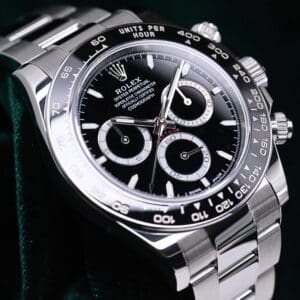
Rolex Cosmograph Daytona "Reverse Panda" Black Dial Black Ceramic Bezel Oyster Bracelet Stainless Steel 40mm MINT CONDITION COMPLETE SET 126500LN
$32,009.00
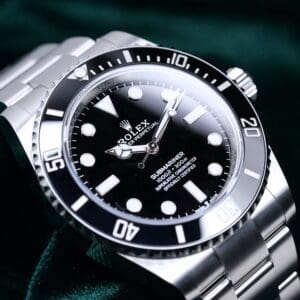
2026 NEW UNWORN Rolex Submariner No Date Black Dial Black Ceramic Bezel Oyster Bracelet Stainless Steel 41mm COMPLETE SET 124060
$15,219.00
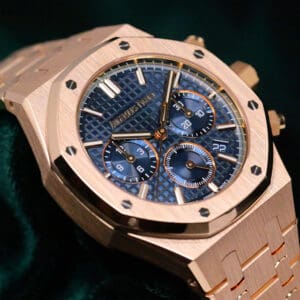
Audemars Piguet Royal Oak Selfwinding Chronograph Bleu Nuit Nuage 50 Blue Dial Bracelet 18k Rose Gold 38mm MINT CONDITION COMPLETE SET 26715OR.OO.1356OR.01
$104,942.00
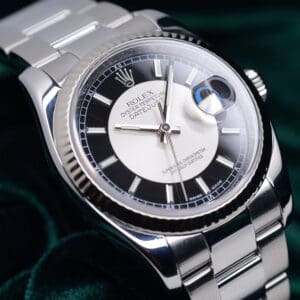
Rolex Datejust “Tuxedo” Black and Silver Dial 18K White Gold Fluted Bezel Stainless Steel Oyster 36mm MINT CONDITION COMPLETE SET 116234
$10,671.00
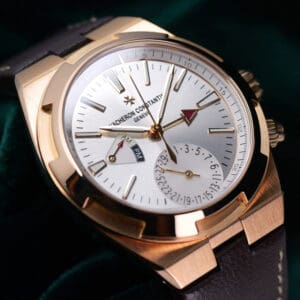
Vacheron Constantin Overseas Dual Time Silver Dial Brown Leather Strap 18K Rose Gold 41mm MINT CONDITION COMPLETE SET 7900V/000R-B336
$41,894.00
Rolex Sea-Dweller Deepsea James Cameron D-Blue Dial Black Ceramic Bezel Oyster Bracelet Stainless Steel 44mm MINT CONDITION 116660-0003
$14,272.00
Vacheron Constantin Overseas Dual Time Silver Dial 18K Rose Gold Brown Rubber Strap 41mm MINT CONDITION COMPLETE SET 7900V/000R-B336
$41,894.00
Rolex Lady-Datejust Champagne Linen Dial 18k Yellow Gold Fluted Bezel Jubilee Bracelet Two Tone Steel & Gold 26mm MINT CONDITION COMPLETE SET 69173
$9,345.00
2026 Rolex Datejust Blue Dial Smooth Bezel Jubilee Bracelet Stainless Steel 41mm MINT CONDITION COMPLETE SET 126300
$13,796.00
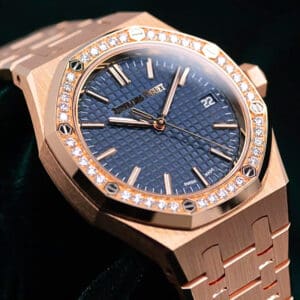
Audemars Piguet Royal Oak Selfwinding "50th Anniversary" Bleu Nuit Nuage 50 Blue Dial Diamond Bezel 18K Rose Gold 37mm MINT CONDITION COMPLETE SET 15551OR.ZZ.1356OR.02
$99,745.00