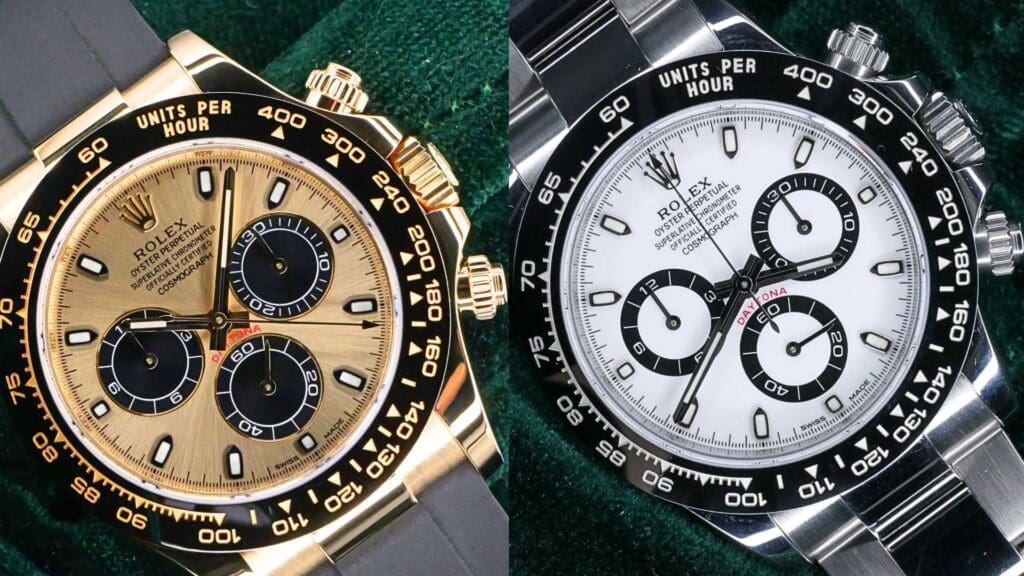
A Rolex Daytona can look familiar at first glance, but the dial can change everything about how the watch feels, wears, and trades. Small details on the dial are often what separate a common reference from one people chase for years. Those differences are not always obvious to casual buyers, but seasoned collectors know they are where the real stories and premiums are found.
Colors, layouts, finishes, and even tiny text differences can affect the value and long-term appeal of a Daytona. That is why the dial matters just as much as the case or movement. In this guide to Rolex Daytona dials explained, you will learn what makes these dials unique, the main types you will see, and which versions are rare or collectible.
We will also cover how to spot an original dial and avoid common mistakes. If you want to understand what you are really looking at before buying, keep reading.
What Makes Rolex Daytona Dials Unique
Rolex Daytona dials are unique because they combine racing-focused design, strict symmetry, and tight production control, especially on models like the Cosmograph Daytona ref. 116500LN and 126500LN. Every dial is built to stay readable at speed while holding Rolex’s visual balance standards.
What sets these dials apart is the details packed into a small space. Sub-dials must line up perfectly, text spacing stays consistent, and lume plots are applied evenly. Rolex rejects dials that look “almost right,” which is why variations are limited and noticeable. This level of control gives Daytona dials a clean, intentional look that feels precise rather than decorative.
Daytona dials are also tied closely to reference numbers. A small dial change can signal a different generation, movement update, or production run. That connection is why collectors study dials first before anything else on a Daytona. In many cases, the dial alone is enough to confirm authenticity, era, and desirability.
Types of Rolex Daytona Dials
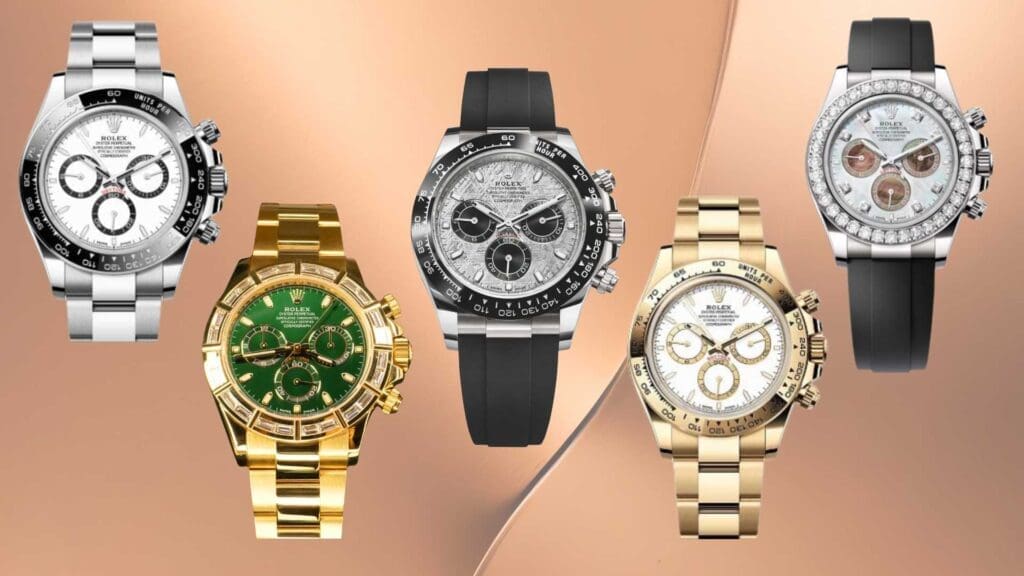
Rolex has produced many Daytona dial styles over the years. And each one changes how the watch looks, wears, and is perceived in the market. Below are the main Rolex Daytona dial types you’ll see today and in the past production, explained in plain terms so you know exactly what sets each one apart:
Panda
The Panda dial features a white main dial with black sub-dials. It is one of the most recognizable Daytona looks, especially on the steel Daytona with a ceramic bezel. This dial stands out because the contrast is strong and the legibility is excellent. The black sub-dials clearly separate the chronograph registers, making timing functions easy to read.
Reverse Panda
The Reverse Panda dial flips the color layout, using a black dial with white sub-dials. You’ll often see this on older references and select modern variations. This style feels slightly more aggressive and racing-focused. The lighter sub-dials pop against the dark background, giving the watch depth and balance.
Paul Newman
The Paul Newman dial is one of the most famous Daytona dials ever made. It features square-ended sub-dial markers, contrasting colors, and an outer track that looks different from standard Daytonas. These dials were originally unpopular and often swapped out during service. That mistake made original examples rare today.
Paul Newman dials are prized for their vintage look and connection to racing history. If you see one claimed as original, verification is critical because values are extremely high and fakes are common.
Sunburst
Sunburst dials have a brushed finish that reflects light differently depending on the angle. Rolex uses this finish on several Daytona dial colors, including silver, champagne, and some darker tones. This dial type feels more refined than sporty. It shifts appearance in natural light and looks dressier on the wrist.
Meteorite
Meteorite dials are made from real meteorite material, sliced thin and treated to show natural crystalline patterns. No two meteorite dials look the same. This dial adds instant uniqueness to a Daytona. The surface has texture and pattern you cannot replicate artificially. Meteorite dials are mostly found on gold or platinum Daytonas and are produced in limited numbers.
Colored
Colored Daytona dials include shades like green, blue, yellow, and others produced in limited runs or specific references. These dials are bold and draw attention immediately. Some colors become instant hits, while others stay niche. Market demand can shift quickly depending on trends and celebrity exposure.
Diamond
Diamond-set Daytona dials use factory-set diamonds as hour markers or across the dial surface. These are not aftermarket additions when done correctly. Diamond dials change the personality of the Daytona completely. They lean more toward luxury than racing. While they are less popular with traditional sports-watch collectors, they appeal to buyers who want something flashier and rarer.
Mother-of-Pearl
Mother-of-pearl dials have a soft, iridescent surface that changes color under different lighting. Rolex uses natural materials, so each dial looks different. These dials are subtle rather than loud. They are often paired with diamonds or precious metal cases. Mother-of-pearl Daytonas appeal to collectors who want something uncommon without going extreme.
Matte Vintage
Matte vintage Daytona dials lack shine and reflections, giving the watch a flat, tool-watch appearance. Collectors like matte dials because they show age. Fading, patina, and minor imperfections are expected and even desired. Original matte dials are harder to find untouched, which makes condition extremely important.
Rare and Collectible Rolex Daytona Dial Variants
Rare Daytona dials are usually “rare” for one of three reasons: Rolex made very few of them, buyers ignored them at the time, or later service work quietly removed them from the market. The most famous example is the Paul Newman “exotic” dial on vintage references like the 6239, 6241, 6263, and 6265.
The Paul Newman dials were often swapped during service decades ago, so finding an original, correct dial is a big deal. Condition matters a lot here, because relume and heavy cleaning can kill the value fast. In the modern era, one of the best-known collectibles is the “Patrizzi” dial on some Zenith-movement Daytonas (like the 16520).
The sub-dials on a Patrizzi can turn a warm brown over time due to aging, and collectors pay up for even, attractive discoloration. It is not “damage” but a beautiful feature. You will also hear collectors talk about small, nerdy dial variations that move prices. A few popular ones include:
- “Floating Cosmograph” text on certain vintage dials, where spacing and placement differ from the standard layout
- “Sigma” dials (marked with small sigma symbols) that hint at specific era/material choices on vintage pieces
- “APH” dial on some 116520 Daytonas, where the “COSMOGRAPH” spacing looks slightly different than typical prints
- Early production dial layouts were tied to a narrow range of serials, where fonts, sub-dial rings, or minute tracks differed
How to Identify an Original Rolex Daytona Dial
An original Rolex Daytona dial matches the exact reference, era, and factory layout, with consistent printing, correct sub-dial spacing, and clean finishing that aligns with Rolex standards.
Here are the steps before trusting any “original dial” claim:
1. Match the Dial to the Reference and Era
Start by confirming that the dial matches the exact Daytona reference and its production period. A modern ceramic Daytona uses a different dial layout than vintage references. If the fonts, markers, or layout don’t align with the correct era, treat it as a warning sign and investigate further before moving on.
2. Inspect Printing and Text Quality
Rolex dial printing stays sharp and consistent, even under magnification. Look closely at the lettering and text spacing. Clean edges and even thickness are good signs. Blurred text, heavy fonts, or uneven ink usually point to refinishing or aftermarket work, which can affect both value and originality.
3. Check Sub-Dial Alignment and Spacing
Sub-dials should sit evenly and line up cleanly with surrounding text and markers. Check that spacing feels balanced and centered. Crooked rings, uneven gaps, or off-center placement often signal a replacement or altered dial, especially on chronograph models like the Daytona.
4. Confirm Markers, Hands, and Lume
Hour markers should sit straight and match the correct hand style for the reference. Pay attention to lume color and texture. It should make sense for the watch’s age. Bright white lume on an older watch can raise questions unless proper service records explain the update.
5. Review Service History and Documentation
Rolex service centers sometimes replace damaged dials during servicing. That doesn’t mean the watch is fake, but it can affect collector value. Ask for service records, clear photos, and serial details so you understand what parts are original and what may have been replaced.
6. Verify Against Trusted Examples
Compare the dial to confirmed examples from reputable dealers, auction results, or reference guides. Small differences become obvious when viewed side by side. If a seller avoids close-up photos or pushes you to decide quickly, that’s usually a sign to step back and walk away.
Final Takeaways on Rolex Daytona Dials
Rolex Daytona dials are unique. Their styles differ, and certain variants like Paul Newman dials or Patrizzi sub-dials get serious collector attention. Before you buy, slow down and ask for the photos that matter, like straight-on dial shots, macro text close-ups, and side angles that show markers and rehaut detail.
Follow the practical steps provided to spot a correct dial versus something swapped, refinished, or aftermarket. If the seller pushes “rare dial” as the whole story, treat it as noise until the reference, era, and service history match. If you feel unsure, it is fine to walk away and keep looking.