The Patek Aquanaut vs Nautilus debate stays alive because they read like the same idea on paper, then feel different on the wrist. One wins with an integrated steel bracelet and a silhouette everyone recognizes. The other wins by being the Patek you can actually wear day to day without treating it like a fragile object.
Most buyers get stuck because they shop for photos and reputation instead of fit, function, and reference logic. The 2026 picture has also shifted in ways the older comparisons miss.
The steel Aquanaut Travel Time 5164A and the steel bracelet 5167/1A are both gone from Patek’s catalog, the steel Nautilus 5712/1A was discontinued in 2025, and Patek used Watches & Wonders 2026 to mark the Nautilus 50th anniversary with four new limited editions.
This guide explains what each line was built to do, what changed in the 2026 catalog, which references actually matter now, and how collectors are thinking about both lines today.
Patek Aquanaut: What This Line Was Built to Do

Patek introduced the Aquanaut in 1997 as a more modern, casual alternative to the Nautilus. It kept the rounded-octagonal case idea but moved toward a cleaner, sportier look with an embossed dial and a strap-first design. The Aquanaut was never meant to replace the Nautilus. It was meant to advance the idea.
This line targets buyers who want a Patek they can wear regularly without hesitation. The rubber Tropical strap holds up to heat, sweat, and water better than leather, and it keeps the watch lighter on the wrist than any bracelet-driven Patek.
Patek has spent the last few years sharpening the Aquanaut’s identity around that strap. The steel Aquanaut Travel Time 5164A was discontinued in 2024, and the steel bracelet 5167/1A-001 followed in 2025.
The rubber strap 5167A-001 stayed in the catalog. Read together, these moves say something clear: the Aquanaut is now the rubber-strap sports Patek, and integrated steel bracelets belong to the Nautilus line.
Modern Aquanaut references run on the self-winding Caliber 26-330 S C, which replaced the older 324 S C around 2019-2020. The newer movement adds a stop-seconds function and an instantaneous date jump, both useful in daily wear.
Most buyers should think of the line as four real entry points: the steel time-only 5167A-001, the white gold time-only 5168G, the white gold Travel Time 5164G, and the chronograph references 5968A (steel) and 5968G (white gold).

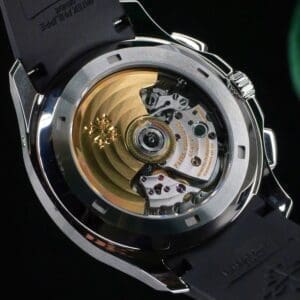
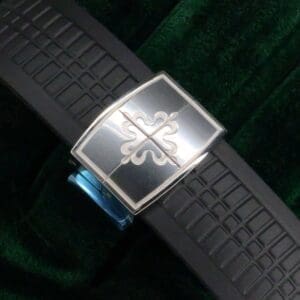
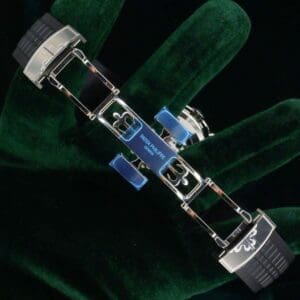
Our dedicated Patek Philippe Aquanaut buying guide goes deeper on each of these references.
Patek Nautilus: What This Line Was Built To Do

Patek launched the Nautilus in 1976, and the integrated bracelet plus porthole-inspired case became the foundation of the design. The original 3700/1A “Jumbo” set the template that every modern luxury steel sports watch borrows from.
The Nautilus is built for buyers who want presence and recognition. The integrated bracelet drives how the watch wears: flat, wide, and architectural. This is the Patek where the bracelet is the main event, not the case.
The 2026 catalog is now an all-precious-metal lineup for men’s references. The steel 5711/1A was discontinued in 2021, the steel moonphase 5712/1A in 2025, and the current production three-hand flagship is the white gold 5811/1G. Steel still lives on the women’s side through the 7118 and 7010, but the iconic men’s steel Jumbo era is officially closed.
For the 50th anniversary at Watches & Wonders 2026, Patek released a focused set of limited editions rather than a flood. We covered the full set in the next section because it changes how the line should be shopped right now.
Most buyers should think of the line through three lenses: the discontinued steel icons (5711/1A, 5712/1A, 3700/1A) for collectors chasing scarcity, the current production white gold 5811/1G as the working flagship, and the complications (5980, 5990, 5726, 5740) for buyers who want the design plus a real movement story.
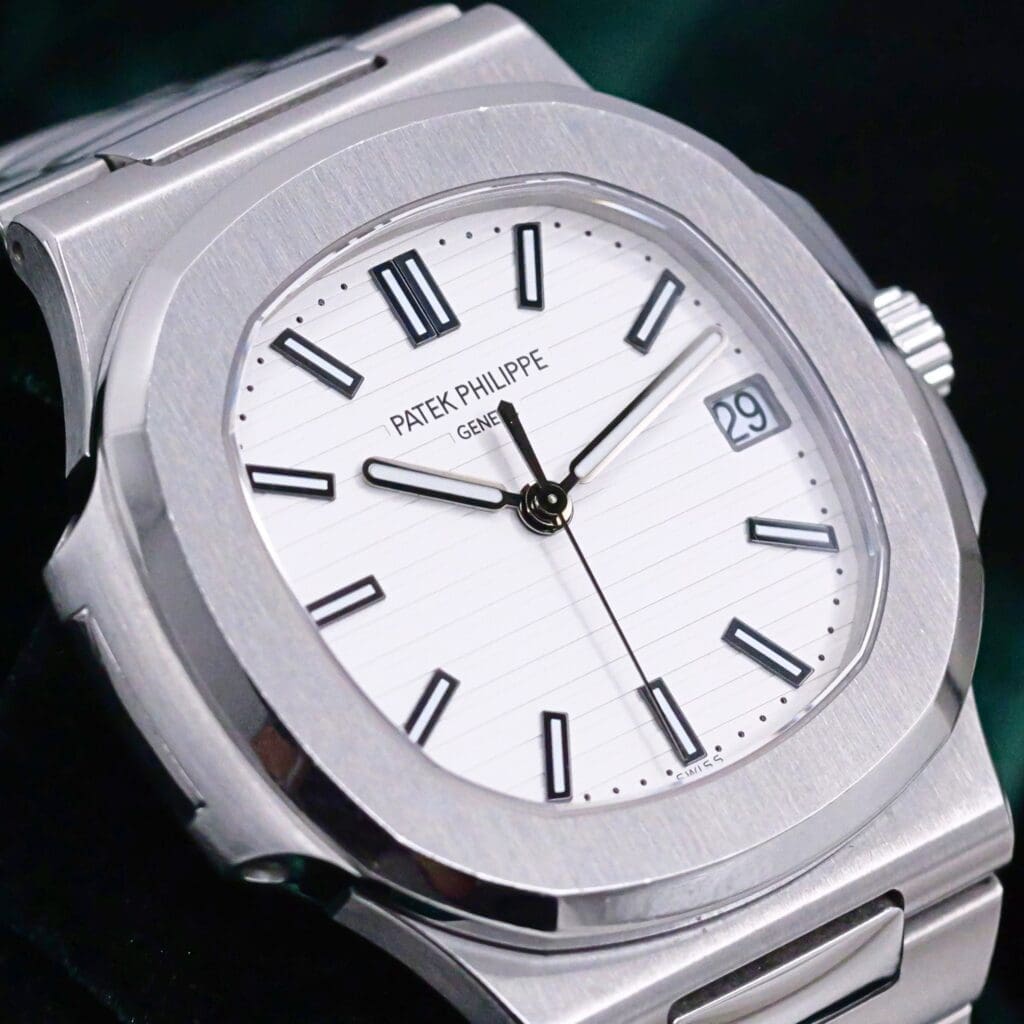

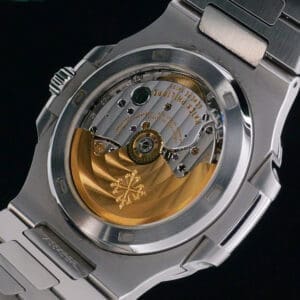

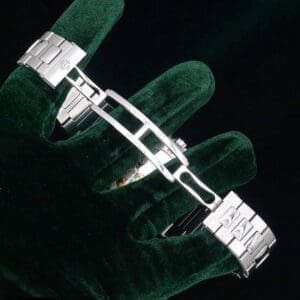
Our Patek Philippe Nautilus buying guide breaks each of these reference families down in detail.
Nautilus 50th Anniversary in 2026: What This Changes
At Watches & Wonders 2026, Patek marked 50 years of the Nautilus with four limited-edition references. None of them are steel, and none of them are easy allocations.
The headline piece is the 5610/1P-001: a 38mm platinum case at 6.9mm thick, time-only, with the signature platinum diamond at 9 o’clock. It runs the ultra-thin Caliber 240 with an anniversary-engraved 22k gold mini-rotor. Limited to 2,000 pieces.
Patek also released two 41mm Jumbo references in white gold. The 5810/1G-001 sits on a traditional integrated white gold bracelet (limited to 2,000 pieces), and the 5810G-001 wears a navy composite strap with cream stitching (limited to 1,000 pieces). Both are time-only with no date window, which is a deliberate return to the purest dial expression of the original.
The fourth piece is a desk watch, limited to 100 examples, aimed at the most established collectors.
What this changes for a buyer comparing Aquanaut and Nautilus:
- The Nautilus line is now leaning into ultra-thin, time-only purity at the top of the range, which sharpens the contrast with the Aquanaut’s everyday rubber-strap identity.
- The 5811/1G stays the working flagship for buyers who want a current production Nautilus they can actually wear, since the anniversary pieces are allocation-only at retail and trade well above sticker.
- Steel hopefuls have to look pre-owned. There is no new steel Nautilus arriving from this anniversary cycle.
If your decision was waiting on whether 2026 would bring a steel anniversary Nautilus, the answer is no. That likely keeps pre-owned 5711/1A pricing structurally supported through the rest of the anniversary year.
For context on how this sits within the broader Patek Philippe lineup, the brand’s sport collection is now firmly stratified by metal and identity.
Patek Aquanaut vs Nautilus: Main Differences

Most people think the Aquanaut and Nautilus comparison comes down to hype or price, but it usually comes down to something simpler. The four design choices below show why the right pick depends on your wrist and your routine.
1. Case Structure
The Aquanaut case stays tighter and more contained because Patek designed it around a strap. The rounded-octagonal shape has smoother transitions, so it reads sporty without looking sharp. On the wrist it feels compact and stable because the strap drops straight down instead of flaring outward.
The Nautilus wears wider because the case and bracelet act as a single piece. The flat shape, the side “ears,” and the wide first links spread across more wrist real estate. Even at similar diameters, the Nautilus often appears larger because its architecture catches light like metalwork.
2. Dial Pattern
Aquanaut dials use an embossed grid pattern collectors call the grenade texture. Patek pairs it with applied Arabic numerals and a clean minute track, which keeps it legible and modern. The texture adds depth without flashy finishing, so the dial reads sporty but still expensive up close.
Nautilus dials lean into horizontal embossing, with a sunburst base that shifts tone with the angle. Many references also have subtle edge-darkening, which makes the center pop and the dial feel wider. That light play is why the Nautilus reads dressy even in steel.
3. Strap-First vs Bracelet-First Design
The Aquanaut is now strap-only at the time-only steel level. With the 5167/1A bracelet variant gone in 2025, the rubber Tropical strap is the Aquanaut identity. It keeps weight down, handles sweat and water better than leather, and reduces wear anxiety because you are not dragging metal across surfaces all day.
The Nautilus is bracelet-first, and the bracelet is not optional to the identity. The integrated links carry alternating brushed and polished finishes, and the bracelet drapes flat like jewelry. Condition matters a lot because polishing softens edges and changes the look collectors actually pay for.
4. Price and Market Demand
You cannot price Aquanaut vs Nautilus as a single range. Each line behaves like several mini markets stacked together. Reference hierarchy controls value, liquidity, and downside risk, not just the model name. Think in anchors, not averages.
In broad terms, the Aquanaut is priced lower and moves more steadily, while the Nautilus starts higher and sees bigger price swings. The tier-by-tier breakdown below shows how that plays out across both lines in 2026.
Aquanaut Pricing and Demand
WatchCharts puts the Aquanaut collection average around $84,000 as of 2026. The tiers underneath that average are where the actual buying decisions get made.
- Cheapest entry: Aquanaut 4960A trades around $22,000 on the secondary market. Quartz movement, smaller case, lower collector pressure. Buyers treat it as an accessible Patek, not a core sports collectible.
- Core anchor: Aquanaut 5167A-001 retails around $27,000 and trades around $67,000 on the secondary market per WatchCharts as of 2026. Steel construction, simple layout, and daily wearability drive demand. This reference has shown steady long-term appreciation rather than hype-driven spikes.
- Discontinued bracelet variant: The 5167/1A-001 (steel bracelet) trades around $63,000 on Chrono24 and WatchCharts as of 2026. Discontinued in 2025, so the supply is now fixed.
- Discontinued steel Travel Time: The 5164A trades in the high $70,000s to low $90,000s post-discontinuation, depending on box and papers. Replaced by the white gold 5164G, which trades around $140,000.
- High-end outlier: Aquanaut 5650G Advanced Research trades around $500,000 as of 2026. Rarity and technical pedigree drive the price, not mainstream Aquanaut demand. It behaves more like a limited research piece than a sports watch.
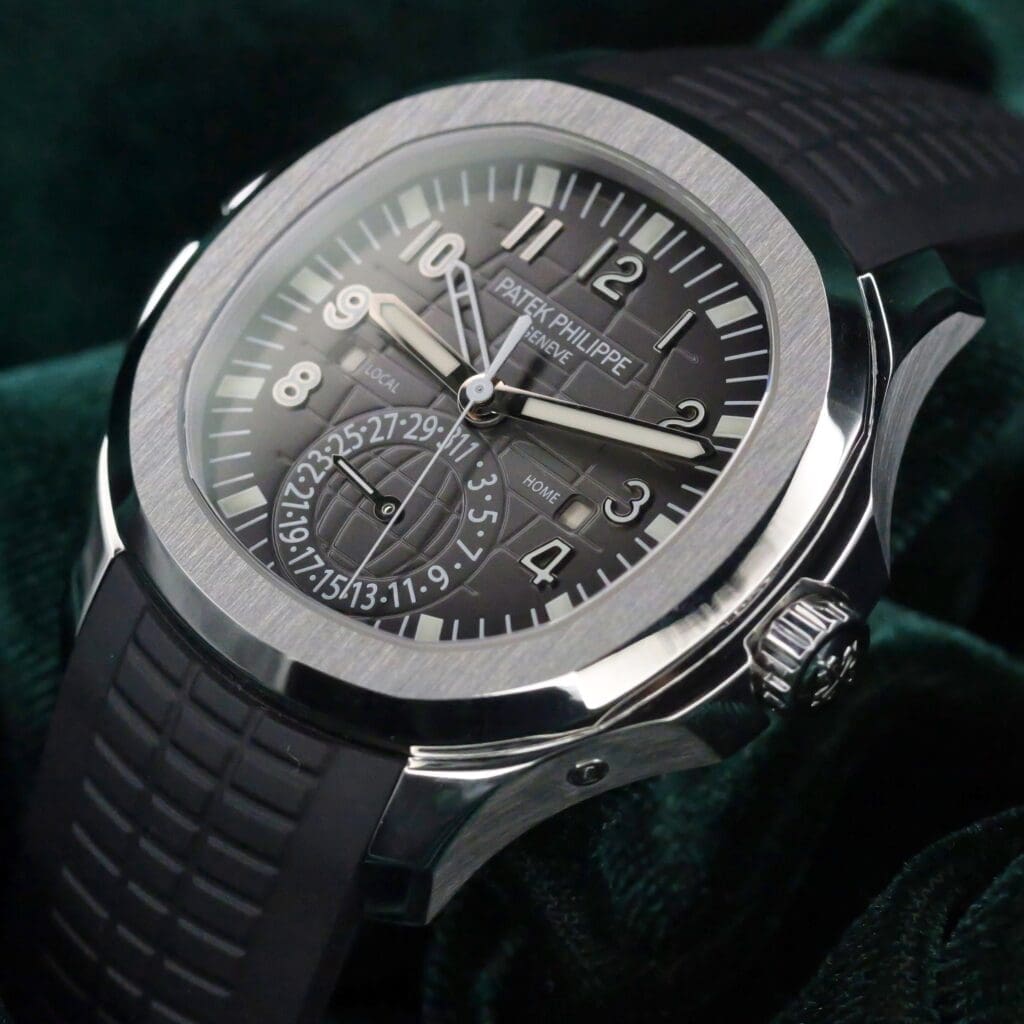


Aquanaut demand concentrates on the steel time-only 5167A-001 and the gold complications. These references stay liquid, wear easily, and attract buyers who plan to keep the watch in rotation.
Nautilus Pricing and Demand
The Nautilus collection average sits closer to $117,000 per WatchCharts as of 2026, and the tiering is wider than the Aquanaut.
- Cheapest entry: Nautilus 7010 (women’s quartz) trades around $40,000 to $73,000 depending on dial and bezel. Smaller size and quartz movement keep it outside the modern hype tier.
- Annual calendar in steel: Nautilus 5726/1A retails around $63,000 and trades around $75,000 to $80,000 on the secondary market. Annual calendar plus integrated bracelet identity supports steady demand.
- Discontinued steel icon: Nautilus 5711/1A is no longer in production. Clean examples with box and papers trade around $130,000 to $160,000 on Chrono24 and WatchCharts as of 2026, depending on dial and year. Discontinuation premium has held even through softer market conditions.
- Current production flagship: Nautilus 5811/1G retails around $89,767 and trades around $170,000 on the secondary market per WatchCharts as of 2026. White gold case, 41mm, and the updated two-part case construction. This is what Patek sells today.
- Steel chronograph: Nautilus 5980/1A trades around $99,000 on the secondary market. The most popular Nautilus on WatchCharts by sales volume.
- Top-end extreme: Nautilus 5980/1400R and similar gem-set references trade in the high six figures to seven figures. This tier behaves closer to high jewelry than a sports watch.
Nautilus demand centers on integrated-bracelet steel icons (now all discontinued) and the white gold 5811/1G. Prices move faster with hype cycles, and condition plays a significant role in value retention.
Popular Aquanaut References to Know

The Aquanaut lineup stays simple, which makes it easier to buy with confidence. You usually choose the function first, then dial in size and metal.
Ref. 5167A-001 — The Modern Steel Anchor
The 5167A-001 defines the modern Aquanaut. The 40.8mm case, clean dial, and rubber strap setup make it easy to wear in almost any setting. Now that the bracelet variant 5167/1A is discontinued, this reference is the only steel Aquanaut Patek still produces, which has tightened demand.
Key Specs:
- Case: Stainless steel, 40.8mm diameter, 8.1mm thick
- Dial: Embossed Aquanaut pattern, applied white gold Arabic numerals
- Crystal: Sapphire (front and caseback)
- Functions: Time and date
- Strap: Tropical composite
- Movement: Cal. 26-330 S C, automatic (replaced Cal. 324 S C around 2019-2020)
- Power Reserve: ~45 hours
- Water Resistance: 30m (Patek’s unified standard)
- 2026 Market: ~$67,000 per WatchCharts (retail ~$27,000)
Ref. 5168G-001 — White Gold “Jumbo” Aquanaut
The 5168G is the larger 42.2mm white gold Aquanaut, originally released for the 20th anniversary in 2017 and still in the catalog. Blue and khaki green dials are the most recognizable variants. It wears bigger and more presence-driven than the 5167A.
Key Specs:
- Case: 18k white gold, 42.2mm diameter
- Dial: Embossed Aquanaut pattern in blue or khaki green
- Functions: Time and date
- Strap: Tropical composite (color-matched)
- Movement: Cal. 26-330 S C, automatic
- 2026 Market: high $80,000s to low $90,000s depending on dial
Ref. 5164G — White Gold Travel Time
After Patek discontinued the steel 5164A in 2024, the 5164G in white gold became the production-current Aquanaut Travel Time. Pushers let you jump the local hour without stopping the watch, which makes it useful across time zones. Collectors who want a working travel complication in current production now look here.
Key Specs:
- Case: 18k white gold, 40.8mm diameter
- Dial: Embossed pattern with dual-time indicators
- Functions: Dual time, local-hour jump, date
- Strap: Tropical composite
- Movement: Cal. 324 S C FUS, automatic
- Power Reserve: ~45 hours
- 2026 Market: ~$140,000 per WatchCharts (retail ~$71,643)
Ref. 5968A-001 — Aquanaut Chronograph
The 5968A pushes the Aquanaut into true sports chronograph territory. The larger 42.2mm case and busier dial give it more wrist presence. Buyers pick it up as a statement piece rather than a minimalist daily. Condition matters more here because chronograph case surfaces show wear quickly.
Key Specs:
- Case: Stainless steel, 42.2mm diameter
- Dial: Embossed pattern with chronograph layout, often with orange accents
- Functions: Chronograph, time, date
- Strap: Tropical composite
- Movement: Cal. CH 28-520 C, automatic chronograph
- Power Reserve: ~55 hours
- Water Resistance: 30m
- 2026 Market: ~$130,000
Ref. 5060A — The First Aquanaut
The 5060A introduced the line in 1997 and set the foundation. It wears smaller and more compact than modern references, which gives it a restrained feel. Collectors value it for first-generation importance, not daily utility. Demand focuses on originality, case condition, and correct components.
Key Specs:
- Case: Stainless steel, ~36mm (compact early Aquanaut profile)
- Dial: Early embossed Aquanaut pattern
- Functions: Time and date
- Strap: Tropical composite
- 2026 Market: ~$36,000 depending on condition
Popular Nautilus References to Know

The Nautilus range carries more emotional weight and more history. Buyers usually decide between the discontinued steel icons, the current production white gold, or a complication-forward model. Bracelet architecture and condition drive value here.
Ref. 5811/1G-001 — The Current Production Flagship
The 5811/1G is what Patek actually makes today as the three-hand Nautilus. White gold case, 41mm diameter, 8.2mm thick, and a two-part case construction that nods to the original 3700. The clasp is updated with a fold-over micro-adjustment system. Smoke blue dial as standard.
Key Specs:
- Case: 18k white gold, 41mm diameter, 8.2mm thick
- Dial: Smoke blue, horizontal Nautilus embossing
- Functions: Time and date
- Bracelet: Integrated 18k white gold
- Movement: Cal. 26-330 S C, automatic
- Power Reserve: ~45 hours
- Water Resistance: 30m
- 2026 Market: ~$170,000 per WatchCharts (retail ~$89,767)
Ref. 5711/1A — The Discontinued Steel Icon
This is the watch most people picture when they hear “steel Nautilus.” Produced from 2006 to 2021, then discontinued. The 5711/1A-018 Tiffany Blue (170 pieces, co-signed dial) is the trophy version, and a single example sold at auction for $6.5 million in 2021.
Key Specs:
- Case: Stainless steel, 40mm diameter
- Dial: Blue-black (most common), white, olive green, or Tiffany Blue
- Functions: Time and date
- Bracelet: Integrated stainless steel
- Movement: Cal. 26-330 S C (later production); earlier examples used Cal. 324 S C
- 2026 Market: $130,000 to $160,000 for standard dials with box and papers; $1.7M+ for Tiffany Blue examples on Chrono24
Ref. 5712/1A — Discontinued Asymmetrical Moonphase
The 5712/1A was discontinued in 2025, making it one of the more recent additions to the “no longer in production” tier. Off-center layout balances complications with a slim profile. The micro-rotor Caliber 240 movement gives it visual character that the three-hand references don’t have.
Key Specs:
- Case: Stainless steel, 40mm diameter
- Dial: Horizontal embossing with asymmetrical sub-displays
- Functions: Date, moonphase, small seconds, power reserve
- Bracelet: Integrated stainless steel
- Movement: Cal. 240 PS IRM C LU, micro-rotor automatic
- Power Reserve: ~48 hours
- 2026 Market: ~$135,000
Ref. 5980/1A — Nautilus Chronograph (Steel)
The 5980/1A is the steel chronograph version of the Nautilus, with a thicker case and a busier dial. The most popular Nautilus on WatchCharts by recent sales volume. Watch condition closely because bracelet wear and case polishing affect value quickly here.
Key Specs:
- Case: Stainless steel, 40.5mm diameter
- Dial: Horizontal embossing with chronograph registers
- Functions: Chronograph, time, date
- Bracelet: Integrated stainless steel
- Movement: Cal. CH 28-520 C, automatic chronograph
- Power Reserve: ~55 hours
- 2026 Market: ~$99,000 per WatchCharts
Ref. 3700/1A — The Jumbo Originator
The 3700/1A started the Nautilus story in 1976. It wears flatter and more vintage than modern references, with the original 42mm case proportions and a monobloc construction. Collectors buy it for history and originality. Case sharpness and correct parts matter more than anything else here.
Key Specs:
- Case: Stainless steel, 42mm Jumbo proportions, monobloc construction
- Dial: Vintage horizontal Nautilus dial
- Functions: Time and date (no running seconds)
- Bracelet: Integrated stainless steel
- Movement: Cal. 28-255 C, automatic (early Nautilus caliber)
- 2026 Market: ~$126,000 depending on condition
Which Patek Fits Your Collection Better
Your first Patek sports watch usually becomes your collection’s anchor, so the real choice is simple: do you want wear-first utility or icon-first symbolism? Both are valid, but they push your subsequent purchases in different directions. Pick the line that fits how you actually live with a watch, not how you plan to talk about it.
Choose the Aquanaut if:
- You want a daily-wear Patek that feels natural on a composite strap and slides into casual life without trying too hard.
- You care about practical complications, especially in the white gold Travel Time 5164G.
- You want a strong Patek sports line without inheriting the integrated-bracelet icon baggage.
- You are looking at something like the 5167A-001, where the point is wrist time, not crowd reaction.
Choose the Nautilus if:
- You want the most recognizable Patek sports silhouette and the integrated-bracelet identity.
- Your collection is missing a true icon, and you want a watch that catches the eye of other collectors across a room.
- You are comfortable with reference-specific swings, variant premiums, and hype sensitivity that come with the name.
- You are looking at a discontinued steel legend like the 5711/1A or the current production white gold 5811/1G.
If you are also cross-shopping the Audemars Piguet side of integrated-bracelet sport watches, our full Royal Oak vs Nautilus comparison covers how the two icons stack up against each other.
For buyers weighing Patek against the Rolex sport tier, the Nautilus vs Submariner breakdown takes that comparison apart.
Where To Buy a Patek Aquanaut or Nautilus Online
There are a handful of legitimate online channels for buying a Patek Aquanaut or Nautilus on the secondary market. Chrono24 is the largest aggregator of luxury watch listings, with built-in escrow and a buyer protection program for cross-border purchases.
Our guide on buying a watch on Chrono24 specifically walks through what to check before committing.
eBay’s Authenticity Guarantee program inspects watches over a certain price threshold before they ship, which removes some of the older eBay risk. Grailzee runs auction-style listings for higher-end pieces and is more curated than open marketplaces.
Independent grey-market dealers and watch forums like WatchUSeek and Rolex Forums are also active for direct private sales, though due diligence falls fully on the buyer there.
We also sell, buy, and trade luxury watches, and the reason clients work with us instead of a big marketplace is layered communication before the purchase.
If you are still weighing a discontinued steel 5711/1A against a current production 5811/1G, or trying to decide whether the rubber-strap 5167A is the daily Patek you actually want, send us your shortlist.
We will pull tour videos and condition notes on what we have in stock or can source, and walk you through case sharpness, bracelet stretch on the discontinued steel references, and original Patek archive extracts where they exist.
Our breakdown of how watch condition is actually graded explains what each of those checks really tells you.
You talk to a real person who has put eyes on the watch before you wire money. That layered, no-rush approach is why our 4.9-star Google rating reads the way it does.
Reach out with the references on your shortlist and we will line up options that fit. If the exact reference you are after is not currently in stock, we can also help you source it through our network.
Final Thoughts on Patek Aquanaut vs Nautilus
The 2026 Aquanaut vs Nautilus decision is shaped by what is actually buyable. The Aquanaut is now the rubber-strap sports Patek. The Nautilus is now an all-precious-metal men’s lineup at the time-only level, with the steel icons on the secondary market and the 50th anniversary releases pulling collector attention to platinum and white gold.
If you value comfort and wrist time, the Aquanaut wins. If you want symbolism and recognition, the Nautilus carries the weight.
Two practical tips. First, check the caliber on any 5167A or 5711/1A you are looking at — the 324 S C to 26-330 S C transition around 2019-2020 affects long-term serviceability and resale.
Second, on any discontinued reference, ask for the original Patek archive extract before you wire money. It is the cleanest provenance check available outside the brand itself.
999+ Timepieces Available
Explore Our Timepieces
Authenticated, unworn, and ready to ship worldwide.
Rolex · Audemars Piguet · Patek Philippe · Omega · Cartier · Richard Mille · Hublot · Tudor
Newly Listed
Rolex Datejust White Dial Fluted Bezel Jubilee Bracelet Two-Tone 18K Yellow Gold Stainless Steel 36mm MINT CONDITION 16233
$8,663.00
Panerai Luminor Due Blue Dial Stainless Steel 42mm MINT CONDITION COMPLETE SET PAM01124
$7,681.00
Rolex Day-Date Champagne Dial Fluted Bezel President Bracelet 18k Yellow Gold 36mm MINT CONDITION 18038
$25,849.00
Panerai Luminor Marina 1950 3 Days Black Dial Black Rubber Strap Stainless Steel 44mm MINT CONDITION COMPLETE SET PAM01359
$6,353.00
Rolex Yacht-Master Rhodium Slate Dial Platinum Bezel Oyster Bracelet Stainless Steel 40mm MINT CONDITION COMPLETE SET 126622
$15,740.00
2025 Rolex Explorer Black Dial Oyster Bracelet Stainless Steel 40mm MINT CONDITION COMPLETE SET 224270
$10,495.00
Rolex Submariner Date "Starbucks" Black Dial Green Ceramic Bezel Oyster Bracelet Stainless Steel 41mm MINT CONDITION COMPLETE SET 126610LV-0002
$14,992.00
Rolex Datejust 36 Silver Anniversary Jubilee Diamond Dial Two-Tone 18K Yellow Gold Stainless Steel 36mm MINT CONDITION COMPLETE SET 16233
$10,739.00
2025 Panerai Luminor Logo Green Dial Stainless Steel Brown Leather Strap 44mm MINT CONDITION COMPLETE SET PAM01624
$6,529.00
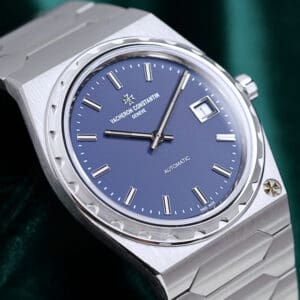
2026 NEW UNWORN Vacheron Constantin Historiques 222 "Jumbo" Blue Dial Stainless Steel 37mm COMPLETE SET 4200H/222A-B934
$60,895.00
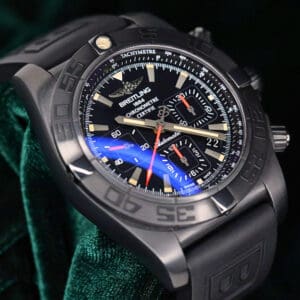
Breitling Chronomat 44 Blacksteel Black Dial Red Accents Black Rubber Strap Black DLC Stainless Steel 44mm MINT CONDITION COMPLETE SET MB0111C3/BE35
$6,526.00
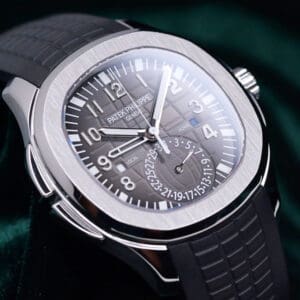
Patek Philippe Aquanaut Travel Time Black Dial Stainless Steel Black Rubber Strap 40.8mm Caliber 324 MINT CONDITION COMPLETE SET 5164A-001
$99,745.00