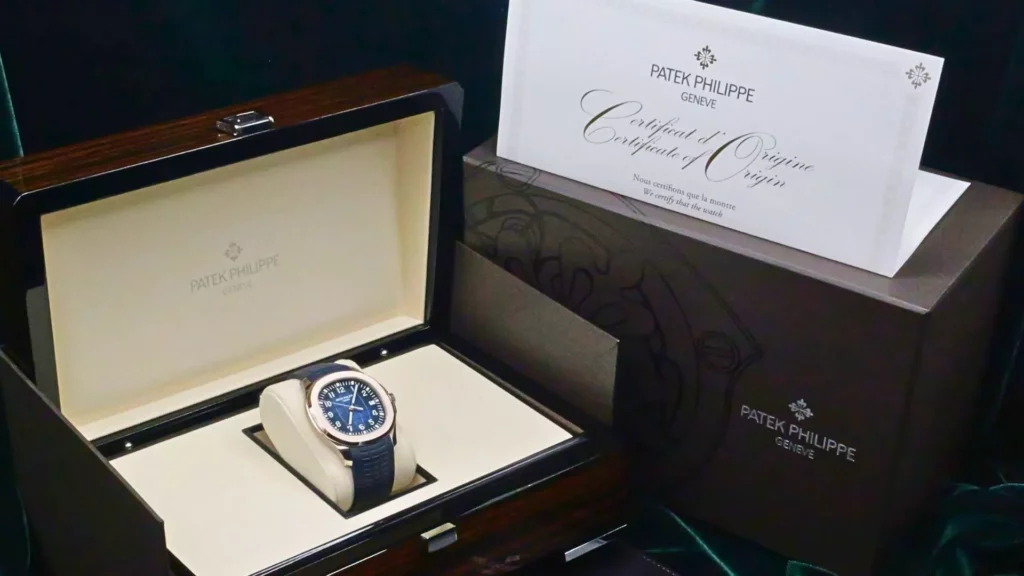
When buying a Patek Philippe, what you need is a clear answer to the harder question: how do you buy one, which model do you get, and how do you avoid a $30,000+ mistake?
Patek Philippe has built its reputation on restraint rather than hype. Production is limited, designs evolve slowly, and many models come with waitlists that can stretch for years. Because of this, availability, pricing, and even where you buy become just as important as the watch itself.
This Patek Philippe buying guide is designed to cut through the noise and focus on what actually matters before you commit. Start with the buyer profile section below. Everything else in this guide flows from there.
What Kind of Patek Philippe Buyer Are You?
Most of the advice in this guide changes depending on which buyer you are. Most Patek buying guides write for everyone at once, which means they’re really writing for no one.
Here are the three buyer profiles we see most often:

Which Patek Philippe Should You Buy First?
The best first Patek Philippe for most buyers is either the Calatrava ref. 5227 or the Aquanaut ref. 5168G, depending on your style and how much authorized dealer friction you want to deal with.
This is the question every first-timer and upgrader is really asking, and most guides won’t answer it directly. Here’s the honest breakdown by model.

The Calatrava: The Best First Patek to Buy?
For most first-timers, yes. The Calatrava is Patek’s dress watch line and the one model you can walk into an authorized dealer and buy without a wait. Ref. 5227 (39mm, white gold) and ref. 5196 (37mm, yellow or white gold) are the most common starting points.

Retail prices start around $30,000–$35,000. The finishing on these watches — the dial texture, the hand execution, the movement visible through the caseback — is the clearest argument for what Patek costs.
It’s not a sports watch. But if you want to understand what separates Patek from everything else at this price level, Calatrava answers that question immediately. The Calatrava also has a strategic role for buyers who eventually want a sports reference. More on that in the AD section below.
The Aquanaut Ref. 5168G: Skips the Waitlist Problem

The Aquanaut ref. 5168G is Patek’s sportier option and one of the few references where you have a real shot at buying in gold without a multi-year wait. Retail runs approximately $37,000–$43,000 depending on configuration.
It wears larger than the case dimensions suggest. The composite strap and textured dial translate cleanly from the Rolex sports aesthetic without feeling like a step sideways. If you’re coming from a Rolex sports watch background, the Aquanaut is the most natural transition into Patek. Former Rolex owners tend to adapt to it immediately.
The Annual Calendar Ref. 5396: Gives You the Most for Your Money

If you want a complication and have the budget, the Annual Calendar ref. 5396 is the most underrated watch in the Patek lineup. It runs on the Cal. 324 S QA LU 24H and retails around $55,000–$65,000 in gold.
The annual calendar needs one manual correction per year, at the end of February. You get day, date, month, and moon phase in a clean dial layout that most perpetual calendar watches charge twice as much for. Serious collectors know the 5396. First-timers often walk past it for flashier references, which is exactly why it holds its value quietly.
The Nautilus: Can You Buy at Retail Today?

Realistically, no. Not in steel, and not without years of AD history. The steel Nautilus ref. 5711/1A was discontinued in 2021. The current flagship is the ref. 5811/1G in white gold, retailing around $112,000, and it still carries a secondary market premium above that.
Steel Nautilus references are gone from retail channels. If you want one, you’re buying pre-owned at above retail prices, or you’re building an AD relationship over several years and hoping an allocation comes your way.
Quick Model Comparison
| Reference | Caliber | Case Material | Approx. Retail | AD Availability | Secondary Market |
|---|---|---|---|---|---|
| Calatrava 5227 | Cal. 324 S | White Gold | ~$33,000 | Good | At or near retail |
| Aquanaut 5168G | Cal. 324 S C | Rose/White Gold | ~$40,000 | Moderate | Slight premium |
| Annual Calendar 5396 | Cal. 324 S QA LU 24H | Rose/White Gold | ~$60,000 | Limited | Near retail |
| Nautilus 5811/1G | Cal. 26-330 S C | White Gold | ~$112,000 | Very Limited | Premium |
| Nautilus 5711/1A | Cal. 26-330 S C | Steel | Discontinued | Not available | 2–3x retail |
How to Buy a Patek Philippe New, Pre-Owned or Vintage
Patek Philippe is not a store you shop at. It’s a system you navigate. Here’s how each buying route works.
What Should You Expect When Buying a New Patek From an Authorized Dealer?
Patek operates three of its own Salons worldwide: Geneva, London, and Paris. Outside those, there are approximately 78 authorized dealers in the United States. These are independently owned businesses, not Patek-operated stores. Each AD gets its own watch allocation, manages its own client list, and decides internally who gets access to in-demand references.
The phrase you’ll hear everywhere is “build a relationship with your AD.” What it means in practice: ADs track your purchase history. A client who has bought multiple pieces over several years, had watches serviced through the AD, and shown genuine interest in the brand gets priority when allocated references come in.
A client who walks in cold and asks for a Nautilus does not.
The Calatrava Ladder is a real strategy, but it’s widely misunderstood. Buying a Calatrava doesn’t guarantee waitlist access to a Nautilus. What it does is give the AD a reason to know your name and creates an opening for a real conversation over time. The behavior after the purchase matters just as much as the purchase itself.
Here’s what signals “genuine collector” to an AD sales associate:
- You return after your purchase just to browse or ask about a strap, no agenda
- You ask about movements and complications, not resale values
- You never mention flipping, trading, or what the market is doing
- You service your watch through them
- You show interest in models outside the most allocated references
For steel sports references, a “waitlist” at most ADs means 3–5 years of consistent relationship-building, not 3–5 months of waiting.
If you have both a multi-brand jeweler AD and a standalone boutique in your city, start with the standalone. The staff there know the catalog well, understand collector behavior, and have more room to advocate for a client internally. It also helps to know what to say on your first visit. Don’t ask about allocation. Ask to look at a Calatrava or Annual Calendar. Ask about the movement. That kind of conversation tells the sales associate something about you.
What Are the Risks of Buying a Pre-Owned Patek Philippe?

differences explained
A lot of buyers treat the grey market and the pre-owned market as the same thing. They’re not, and the risks are completely different.
The pre-owned secondary market has significant volume. Reputable platforms authenticate watches before listing, provide written condition reports, and usually offer their own limited warranties. This is where you find discontinued references, rare configurations, and immediate availability without a waitlist.
The grey market is different. Grey market watches are new or unworn pieces that left authorized dealer inventory without going through an official sale. You can sometimes find them below retail for less desirable references, or well above it for allocated ones. The core risks are specific: no Patek warranty, no AD-stamped Certificate of Origin, and provenance that’s difficult to verify.
The secondary market gives you access to what retail can’t. Here’s when that route makes the most sense:
- You want a discontinued reference like the steel 5711/1A that’s no longer at retail
- You need immediate availability and don’t want to wait years at an AD
- You find a reference trading at or below retail on the secondary market
Buying new at an AD still makes more sense in specific situations. Here’s when to go that route:
- You want the full Patek warranty, currently 2 years and extendable through registration
- You want an AD relationship that opens doors to future allocations
- You want complete documentation certainty from day one
Is Buying Vintage Patek Philippe Right for a First-Time Buyer?
For most first-timers: no. For collectors with good guidance: absolutely.
Vintage Patek opens up at under $10,000 for pocket watches and $10,000–$20,000 for time-only wristwatches from the 1940s–60s. But the ownership experience is genuinely different from a modern reference. Vintage pieces are more fragile, water resistance is lower, and value is far more condition-sensitive.
The same reference from the same year can vary from $5,000 to $15,000+ depending entirely on whether the dial is original and unrestored.
One warning most vintage buyers don’t hear until after the fact: pre-authorize the exact scope of work before sending a vintage piece to Patek for service. Their standard process can include refinishing dials and cases to factory-new condition. On a vintage piece with an original patina dial, that erases the value entirely. Get specifics in writing before anything goes in.
At Majestix Collection, we recommend first-time vintage buyers start with a time-only piece under $15,000, get it authenticated independently, and treat it as a learning purchase before stepping into chronographs or grand complications.
How Do You Authenticate a Pre-Owned Patek Philippe?
To check if a pre-owned Patek Philippe is authentic, focus on a few key details.
- The Certificate of Origin should match the watch exactly.
- The dial should be inspected for signs of refinishing, and the movement and case serial numbers should align.
If anything feels unclear, you can request a Patek Extract from the Archives to confirm the watch’s original details.
This level of checking matters more with Patek because of something known as a frankenwatch. A frankenwatch is made from genuine Patek parts taken from different watches. The dial may be real, and the movement may also be real, but they were never originally paired together.
Because of that, the watch is not considered correct or original, and its value is significantly lower than a properly matched piece.
Use this checklist before committing to any pre-owned Patek:
1. Certificate of Origin
The reference number, movement number, and case number on the certificate should match the watch exactly. The certificate should carry the AD’s stamp and the original sale date.
2. Dial Originality
Look for uneven lume plots, text that appears slightly reprinted, applied markers that don’t sit flush, or a surface sheen that doesn’t match known examples. A refinished dial on a vintage piece wipes out a significant portion of the value.
3. Caseback Engravings
The reference and case number are engraved on the caseback and between the lugs. Font, depth, and spacing should be consistent. Anything that looks shallow, uneven, or different from the other engravings warrants a closer look.
4. Movement Finishing Through the Display Caseback
Patek movement finishing includes Côtes de Genève, beveled and polished edges, and a signed rotor. Uneven finishing, a misaligned rotor logo, or tooling marks around screw heads are red flags.
5. Pushers and Crown
These are reference-specific parts and a common area for substitution. Confirm they’re correct for the exact reference you’re buying, not just the model family.
6. Service History
Records of prior service aren’t required, but their presence or absence tells you something. A watch serviced by Patek will have documentation. One serviced by an independent watchmaker may or may not.
The Extract from the Archives is a paid service from Patek directly. You give them a movement number and they confirm the original factory specs: case material, dial configuration, and delivery date. It won’t tell you what the watch looks like today, but it tells you what it was built as. Request it before finalizing any significant secondary market purchase.
One rule with no exceptions: if a deal looks too good, there’s a reason. The secondary market for Patek is too well-documented for real bargains to look like bargains.
What Does a Patek Philippe Cost to Buy and Own?
The cost of a Patek Philippe starts high and can go much higher, but the purchase price is only part of the picture.
At retail, entry-level pieces like the Calatrava begin around $30,000, while complicated models can reach well into six or seven figures. On the secondary market, pricing varies depending on demand. Steel sports models like the Nautilus often sell for well above retail, while many gold dress watches trade closer to, or even below, their original price.
Ownership comes with ongoing costs. Servicing is required every few years and typically ranges from $1,500 to $3,000 for simpler watches. More complicated pieces, such as perpetual calendars or chronographs, can cost $3,000 to $5,000 or more to service. These costs are part of long-term ownership and should be expected, not treated as a surprise.
If you’re considering the grey market, prices for in-demand models are often higher than retail, sometimes significantly. At the same time, you may not get a manufacturer warranty or complete documentation, which affects both peace of mind and future resale value.
In terms of value, not all Patek watches behave the same. Steel sports models have historically held strong resale value and, in some cases, appreciated over time, although the market has cooled from its peak.
Gold dress watches with complications are different; they tend to hold value but are best bought for personal enjoyment rather than investment. Vintage pieces follow their own rules, where condition and originality matter more than the model itself.
The key takeaway is simple: buying a Patek is a long-term decision. The upfront cost is just the starting point, and understanding the ongoing expenses and market behavior will help you make a smarter purchase.At Majestix Collection, we tell every buyer the same thing regardless of budget: buy the watch you’d wear to dinner, not the one you’d hide in a safe. The collectors who regret their purchases are almost always the ones who bought for appreciation and ended up with a watch they never bonded with.
What Should You Check Before You Finalize Any Patek Philippe Purchase?

Use this as your pre-purchase checklist before committing to any Patek.
For a new purchase at an authorized dealer:
- Warranty card will be dated, signed, and stamped by the AD on the day of purchase
- Original Certificate of Origin is included and will be handed to you
- Confirm the after-sales service process at that specific AD location
- All original packaging is present: outer box, inner box, booklets, hangtags, and any accessories
For a pre-owned purchase:
- Full set present: Certificate of Origin, box, papers, purchase receipts
- Serial numbers on case and movement match the Certificate of Origin exactly
- Dial shows no signs of refinishing or restoration
- Case finishing is unpolished and original, ask the seller directly
- Extract from the Archives requested for any purchase above $20,000
- Written condition report provided by the seller
- Seller has verifiable transaction history and documented reviews for Patek specifically
For a vintage purchase:
- Dial originality confirmed by an independent specialist, not the seller
- Case polish and restoration history fully disclosed
- Service records present, or their absence clearly explained
- Scope of any future Patek servicing pre-authorized in writing before the watch is sent in
Walk away immediately if:
- Serial numbers don’t match or the seller can’t produce them for verification
- Documentation is missing with no credible explanation
- Price is significantly below current market with no clear reason given
- There is any pressure to decide quickly or pay before you’re ready
Final Thoughts on Buying a Patek Philippe
The Patek Philippe buying process is not complicated once you understand the system. There are three routes to ownership, a handful of models worth serious consideration, and a clear set of things to verify before you spend this kind of money.
The single most important takeaway from this guide: the AD relationship is behavioral, not transactional. The buyers who get the watches they want are the ones who look like collectors over time, not customers who showed up once with a large budget.
Start by identifying your buyer profile. Choose a model that fits your situation, not just the one with the most hype. If you’re going the pre-owned route, run the authentication checklist before you commit to anything.
Try the watch on your wrist before buying. Patek’s case proportions vary more than the spec sheets suggest, and the right reference often surprises people in person. And if you ever find yourself in Geneva, the Patek Philippe Museum in the Plainpalais district is worth a half day of your time. It changes how you see the brand, and that’s not a small thing when you’re about to spend five figures on one of their watches.