
The Rolex Kermit and Sprite both bring green into the professional Rolex lineup, but they appeal to very different buyers. The Kermit is the discontinued anniversary Submariner with the stronger collector angle. The Sprite is the modern GMT-Master II with the left-crown layout and a clearer role now that the Pepsi is gone.
So the better buy depends less on which one looks better in photos and more on what you value: a neo-vintage Submariner with scarcity behind it, or a current-production GMT that still feels unusual in the Rolex catalogue.
A lot has changed about this comparison since both watches first hit the market. Rolex discontinued the Pepsi GMT-Master II in April 2026, which shifted where the Sprite sits inside the steel GMT lineup. Kermit prices have moved too, with Flat 4 examples now commanding a clear premium over later production years.
This guide covers what matters in 2026: corrected specs, current market pricing, and the ownership realities that decide which watch fits your wrist.
Rolex Kermit (Submariner 16610LV) Background


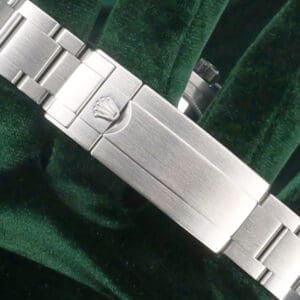

Rolex released the Submariner Date 16610LV in 2003 to mark the 50th anniversary of the Submariner. Production ran until 2010 and ended without a direct replacement. The 116610LV “Hulk”, the all-green Submariner with a ceramic bezel and matching green dial, took over the green Submariner slot. That gave the Kermit a defined seven-year production window from the start.
We walk through the full Hulk vs Kermit comparison in a separate guide if that’s the watch you’re weighing against the Kermit.
Collectors and forums settled on the Kermit nickname because the green aluminum bezel against the black dial reads like Kermit the Frog. The watch wears slimmer than modern Submariners because it pre-dates the Super Case, and many buyers notice this within a few seconds of putting it on, especially anyone coming from a 116610 or 126610.
What makes the Kermit collectible in 2026 is the production hierarchy inside that seven-year window. Early “Flat 4” bezels (Mk1, 2003 to 2004) carry a flat top on the numeral 4 in the bezel insert, and they command a sharp premium over the later “Sharp 4” generations.
Standard examples trade in the $14,000 to $18,000 range on Chrono24, while clean Flat 4 examples regularly clear $25,000 and the strongest unworn pieces push past $30,000.
Complete sets, bezel condition, original bracelet stretch, and correct serial-range parts carry far more weight here than they do on modern ceramic Subs. With the Kermit, you buy the specific example, not the reference number on the box.
If you’re still mapping out where the Kermit sits in the broader Submariner family before committing, our full Rolex Submariner buying guide walks through the lineup.

Here are the specs at a glance:
- Reference Number: 16610LV
- Production Period: 2003 to 2010
- Case Size: 40 mm
- Case Material: Oystersteel (904L stainless steel)
- Bezel: Green aluminum insert, unidirectional 60-minute dive bezel
- Crystal: Sapphire with Cyclops over the date
- Bracelet: Oyster bracelet, Oysterlock clasp with Glidelock extension
- Movement: Rolex Caliber 3135 automatic
- Power Reserve: 48 hours
- Water Resistance: 300 m
Rolex Sprite (GMT-Master II) Background



Rolex released the GMT-Master II 126720VTNR in 2022 as part of its regular lineup. Enthusiasts dubbed it the Sprite because the green and black Cerachrom bezel echoed the soft drink’s color scheme.
Rolex set it apart by moving the crown and date to the left side of the case, what watchmakers call a “destro” layout. That makes the Sprite the first and only left-handed Rolex sports watch in current production.
That destro configuration is the whole story of this reference. Rolex very rarely shifts case architecture on its professional models, so this layout sits alone in the modern catalog.
The watch still functions like any GMT-Master II, but you wind it, set it, and live with it differently. If you wear it on your left wrist, the crown faces outward instead of pressing into the back of your hand. That’s a real comfort difference once you’ve felt it.
The 2026 landscape changed how the Sprite reads inside the GMT-Master II line. With the Pepsi 126710BLRO now discontinued, the steel GMT options at authorized dealers are the Batman (blue/black), the Bruce Wayne (grey/black), and the Sprite (green/black).
The Sprite is now the only green-bezel GMT-Master II Rolex makes, and the only lefty in any sports model. That uniqueness has real implications for how the watch holds value. It sits in a category of one.
Collector reception stays split. Some buyers chase it because it isn’t a Pepsi or Batman. Others avoid it because the left crown feels unfamiliar after years of building muscle memory on right-handed Rolexes. Either reaction is valid.
If you’re weighing where the Sprite fits against the rest of the references, our full Rolex GMT-Master II buying guide covers the lineup.

Here are the specs at a glance:
- Reference Number: 126720VTNR
- Production Period: 2022 to present
- Case Size: 40 mm
- Case Material: Oystersteel
- Bezel: Green and black Cerachrom, bidirectional 24-hour GMT bezel
- Crystal: Sapphire with Cyclops over the date
- Bracelet: Oyster or Jubilee, Oysterlock clasp with Easylink 5 mm extension
- Movement: Rolex Caliber 3285 automatic
- Power Reserve: Approximately 70 hours
- Water Resistance: 100 m
Kermit vs Sprite: 4 Key Differences

These two share a green theme, but the differences shape how each watch fits into daily wear and long-term ownership. One leans into dive timing and physical robustness. The other centers on travel and time zone math. Here’s what actually separates them once you wear them.
1. Case Architecture and Water Resistance
Kermit is a dive case rated to 300 m, with a unidirectional 60-minute dive bezel. Pair that with the Oysterlock clasp and Glidelock extension, and you can resize the bracelet in 2 mm increments up to 20 mm without tools. The system is built for shifting between bare wrist and dive suit.
Sprite is a travel case rated to 100 m, with a bidirectional 24-hour bezel for tracking a second time zone. The bracelet uses Easylink instead, a 5 mm comfort extension that handles wrist swelling on hot days but doesn’t approach Glidelock’s range.
We’ve covered the Easylink vs Glidelock difference in detail in a separate article if you want to dig into the mechanism.
The practical read: 300 m versus 100 m doesn’t matter for shower or swim use. Both are fine. It matters if you actually dive, or if you simply want the bigger safety margin.

2. Crown Orientation and Daily Setting
Sprite puts the crown and date window at 9 o’clock, the destro layout. This suits right-wrist wear and reduces crown contact on the back of the hand. The look feels unconventional at first, then becomes the watch’s strongest visual identifier.
Kermit keeps the standard Rolex sports layout with the crown and date at 3 o’clock. Winding and setting feels like every other Rolex you’ve owned, which matters more than buyers expect. Muscle memory is real, and switching wrists or hand positions to set the time gets noticed.
The Sprite layout also affects resale conversation. A buyer coming off a Batman or a Submariner will pick up the Sprite and immediately reach for the wrong side. That’s not a deal-breaker, but it filters the buyer pool.
3. Functional Purpose and Movement
Kermit runs on Caliber 3135, the workhorse movement Rolex used across most date models before 2015. The 48-hour power reserve sits well below modern Rolex standards, which means it’ll stop if you leave it off the wrist over a weekend. Pair that with the 60-minute dive bezel and the watch is built for one job: timing things.
Sprite runs on Caliber 3285, newer, with a 70-hour power reserve and a jumping local hour hand. You can move the local hour forward or backward when you cross time zones without stopping the watch or losing the reference time. Combined with the 24-hour bezel, that gives you three time zones at once if you really need them.
The Kermit handles workouts, parking meters, and pasta. The Sprite is built for people who actually cross time zones in their week. Pick the tool that matches what you do.
More Submariners

Rolex Submariner No Date Black Dial Black Ceramic Bezel Stainless Steel Oyster Bracelet 41mm MINT CONDITION COMPLETE SET 124060-0001
2025 NEW Rolex Submariner Date Desk Clock Black Dial Black Ceramic Bezel Stainless Steel 80mm COMPLETE SET 909010LN

Rolex Submariner Date "Bluesy" Sunburst Blue Dial Blue Ceramic Bezel Two-Tone Yellow Gold Stainless Steel 41mm MINT CONDITION COMPLETE SET 126613LB
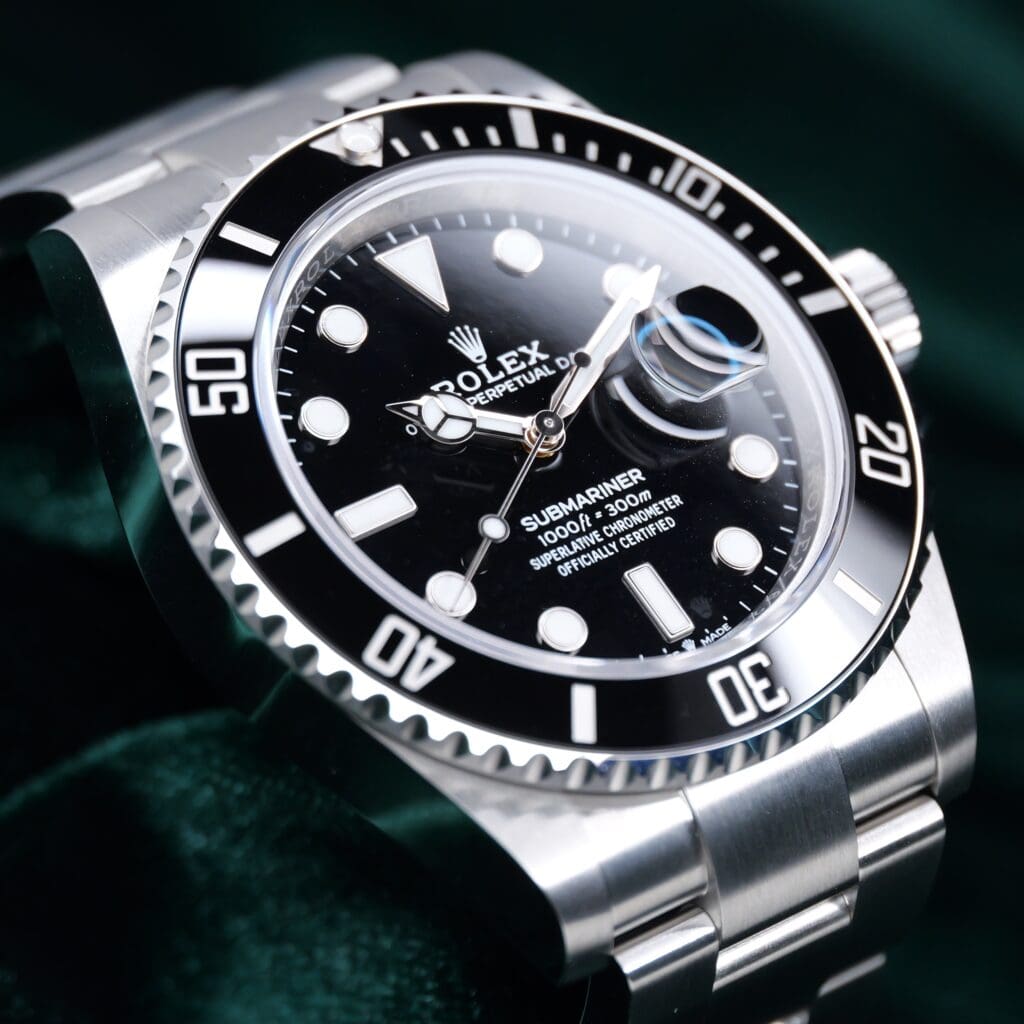
2026 NEW UNWORN Rolex Submariner Date Black Dial Black Ceramic Stainless Steel 41mm COMPLETE SET 126610LN-0001
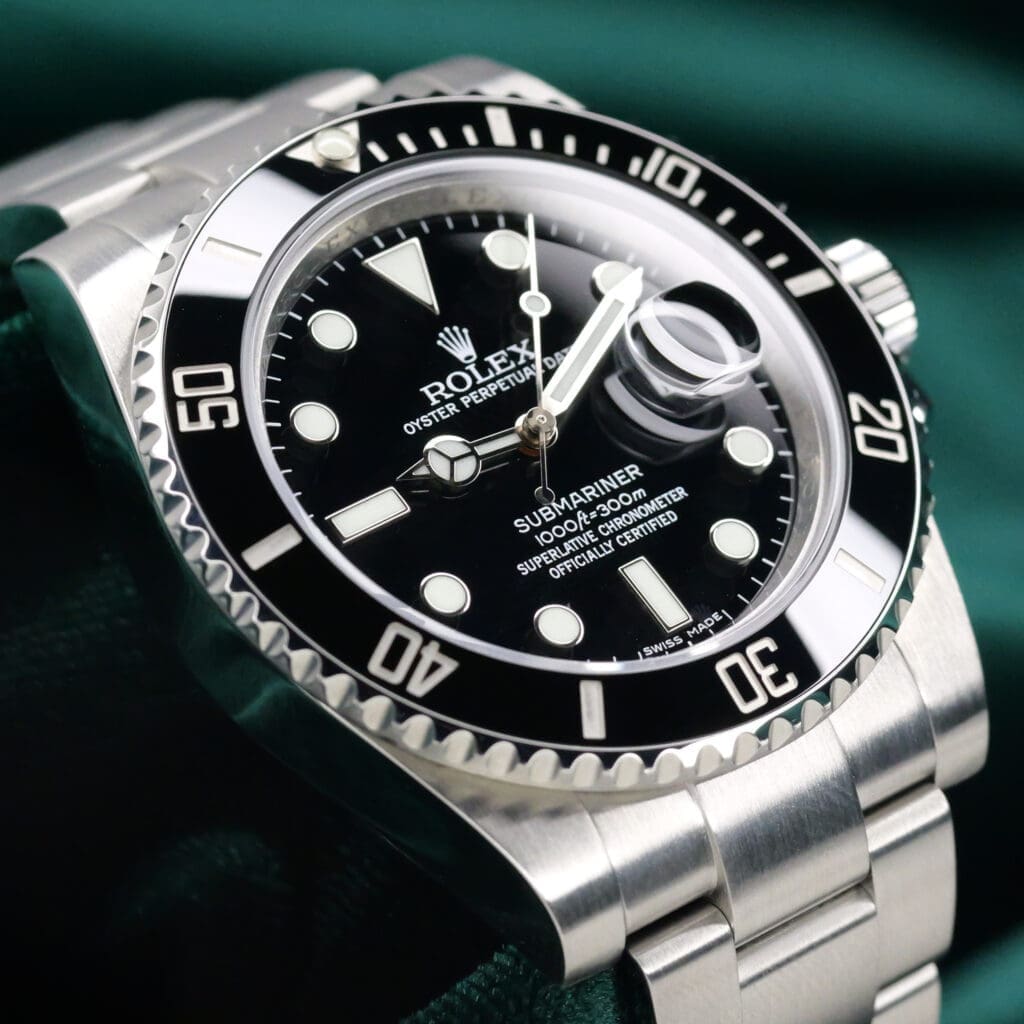
Rolex Submariner Date Black Dial Black Ceramic Bezel Stainless Steel 40mm MINT CONDITION COMPLETE SET 116610LN
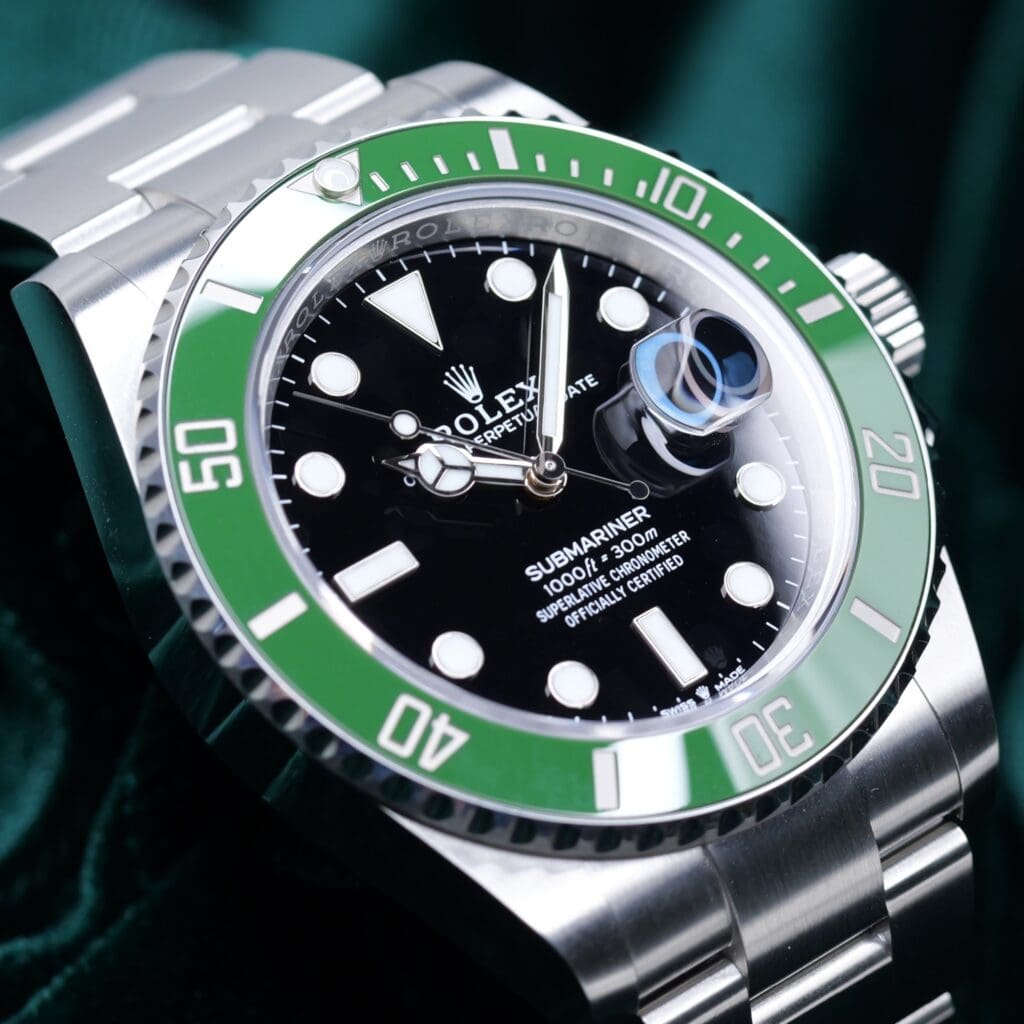
2026 NEW UNWORN Rolex Submariner Date "Starbucks" Black Dial Green Ceramic Bezel Stainless Steel 41mm COMPLETE SET 126610LV-0002
4. Price and Market Behavior in 2026
Both watches trade above retail, but the dynamics are different. The Rolex Sprite 126720 holds its value on the secondary market better than most other Rolex watches, with a market value around $16,679 trading roughly 35.6% above its retail price of $12,300, according to WatchCharts data updated in May 2026.
Chrono24 listings for 2026 unworn Sprite examples on Oyster sit around $17,900 to $19,250, with Jubilee configurations and full sets pushing higher.
The Kermit market splits clearly by generation. Standard pre-owned and unworn examples typically range from $15,000 to $18,000+, while a Flat 4 version can push the price to about $25,000 to $30,000, with some examples trading hands closer to $50,000 for the cleanest pieces.
WatchCharts shows the Kermit took a median of 39 days to sell in April 2026, faster than half the watches on its platform.
The gap matters for buying decisions. Sprite premium is demand-driven, and Rolex still produces it, so new supply enters every month and the premium is exposed to overall steel sports demand.
Kermit premium is scarcity-driven, fixed forever at the 2003 to 2010 production count, and bifurcated between the average examples and the genuinely collectible ones. Picking a Kermit is partly picking which side of that split you want to be on.
What the Pepsi Discontinuation Means for the Sprite
Rolex discontinued the Pepsi 126710BLRO in April 2026, the most significant change to the steel GMT-Master II line in years. For Sprite shoppers, this matters because it reshapes how the watch is positioned at authorized dealers and on the secondary market.
Before April, the Pepsi was the headline GMT-Master II, the color-bezel reference everyone wanted on the waitlist. With the Pepsi gone, demand has redistributed across the remaining steel options.
The Sprite now occupies a clearer slot: the only left-handed steel sports Rolex in production, and the only green-bezel GMT. That’s a category of one. Buyers who would have cross-shopped Pepsi against Sprite now either go straight to Sprite for the unique layout, jump to Batman for the conventional setup, or hunt the secondary market for discontinued Pepsi examples.
If you were specifically weighing those two before April, our Sprite vs Pepsi breakdown covers how the comparison looked in detail.
Practically, this means two things for a 2026 Sprite buyer. First, AD allocation for the Sprite may tighten as displaced Pepsi demand finds a new target. Second, the secondary market premium on the Sprite has structural support. Its uniqueness inside the lineup isn’t going anywhere as long as Rolex keeps it in production.
More GMT-Master II
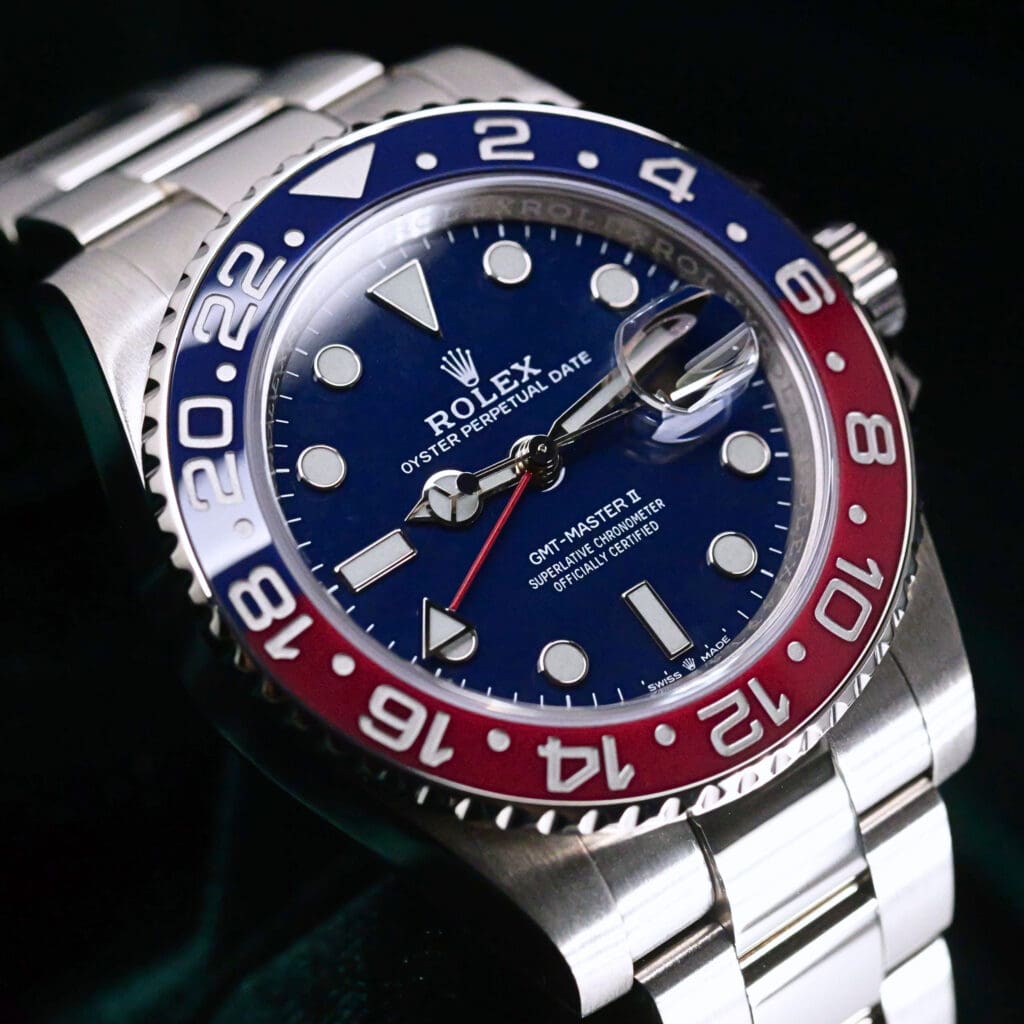
Rolex GMT-Master II "Pepsi" Blue Dial Red Blue Bezel 18K White Gold Oyster Bracelet 40mm MINT CONDITION COMPLETE SET 126719BLRO
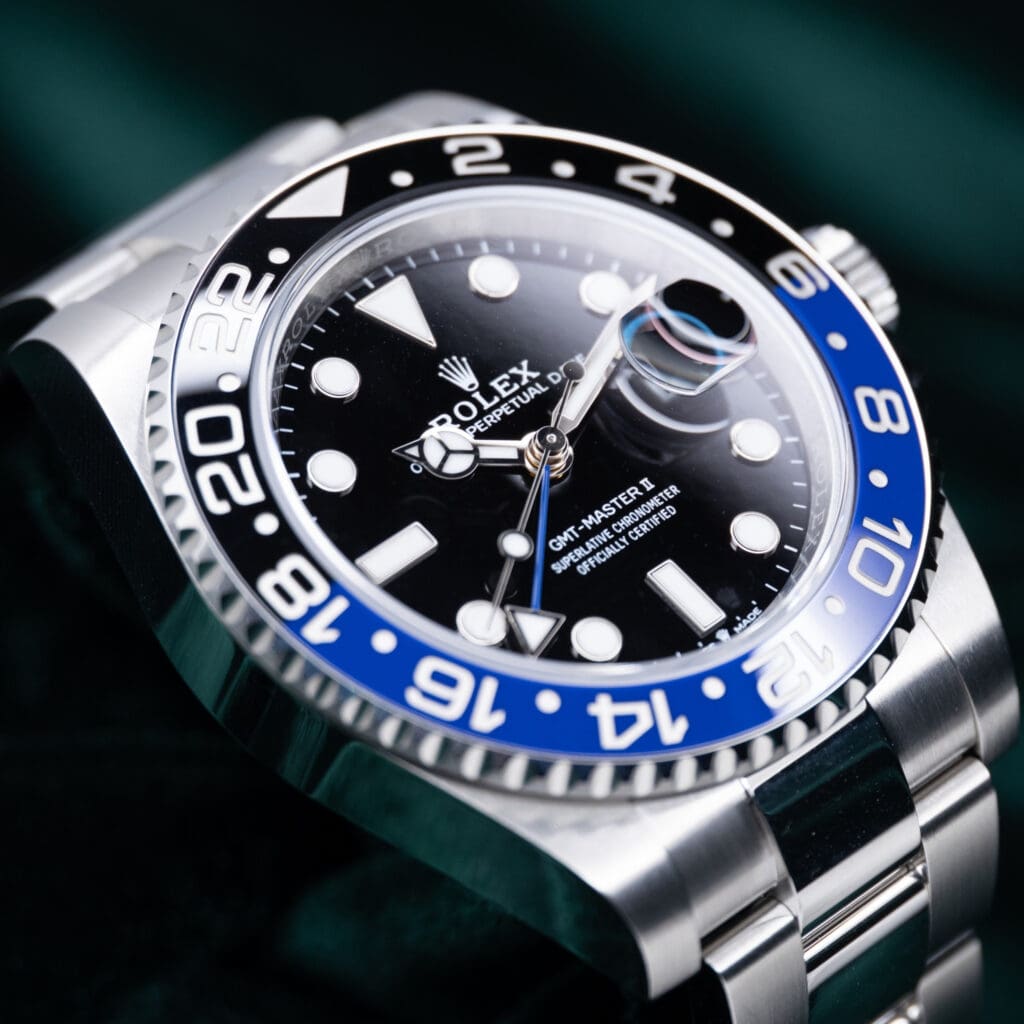
2026 NEW UNWORN Rolex GMT-Master II Batman Black Blue Bezel Oyster Bracelet Stainless Steel 40MM COMPLETE SET 126710BLNR-0003
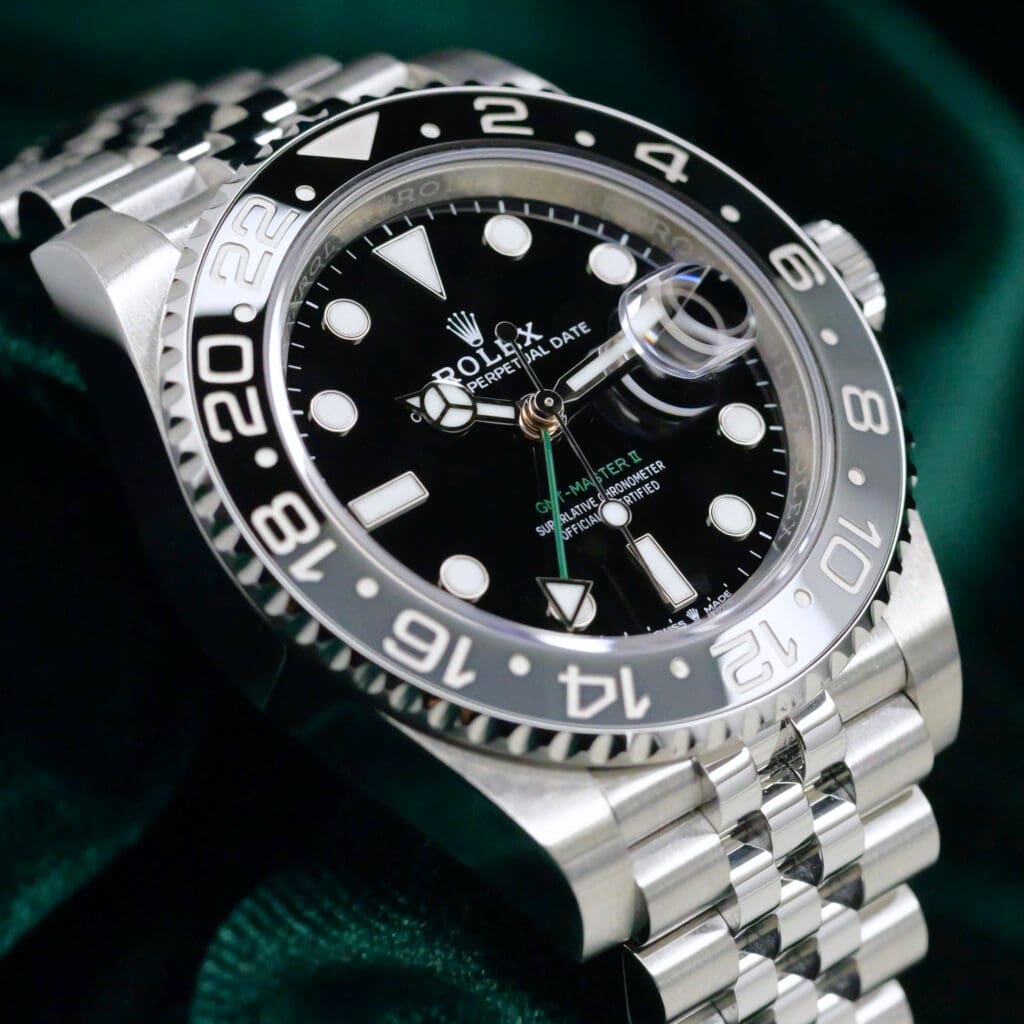
2025 Rolex GMT-Master II "Bruce Wayne" Black Dial Black Gray Ceramic Bezel Jubilee Bracelet Stainless Steel 40mm MINT CONDITION COMPLETE SET 126710GRNR-0003
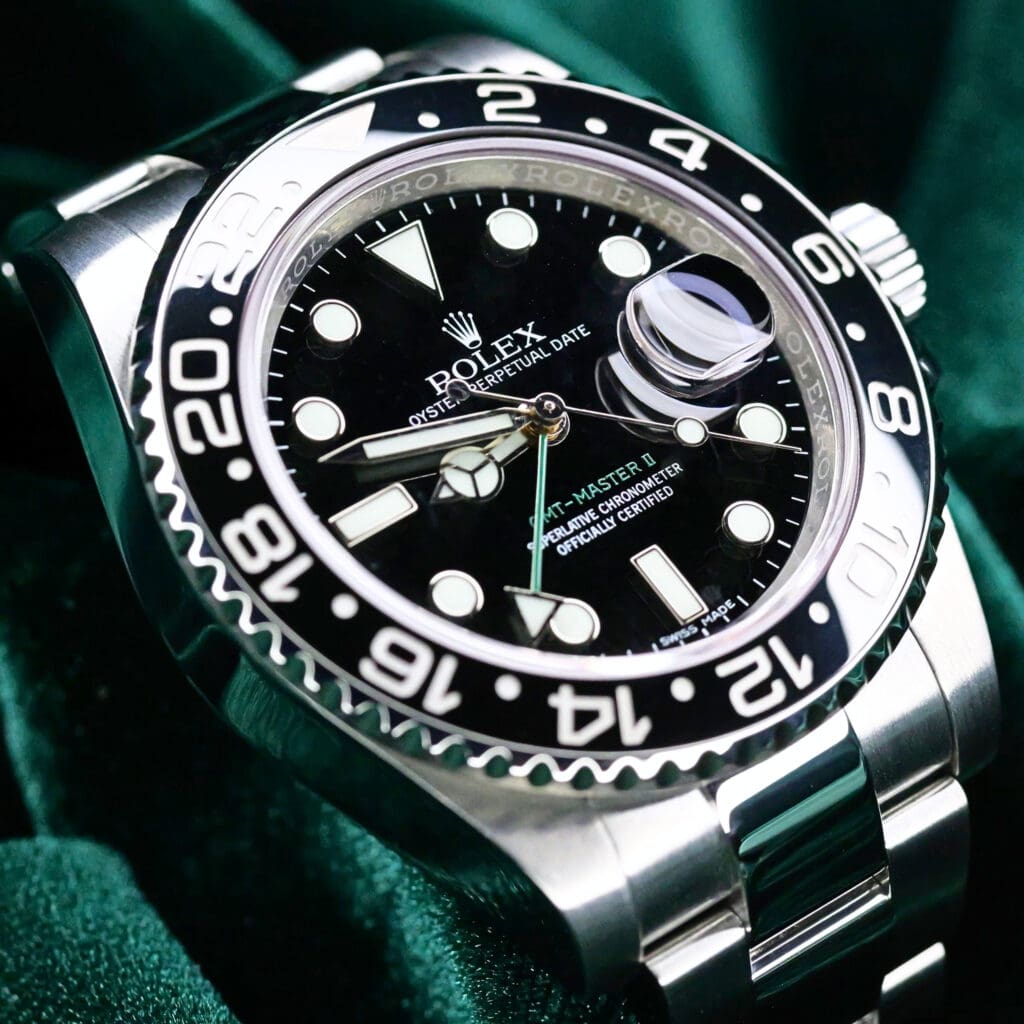
Rolex GMT-Master II "Green Arrow" Black Dial Black Ceramic Bezel Green GMT Oyster Bracelet Stainless Steel 40mm MINT CONDITION COMPLETE SET 116710LN
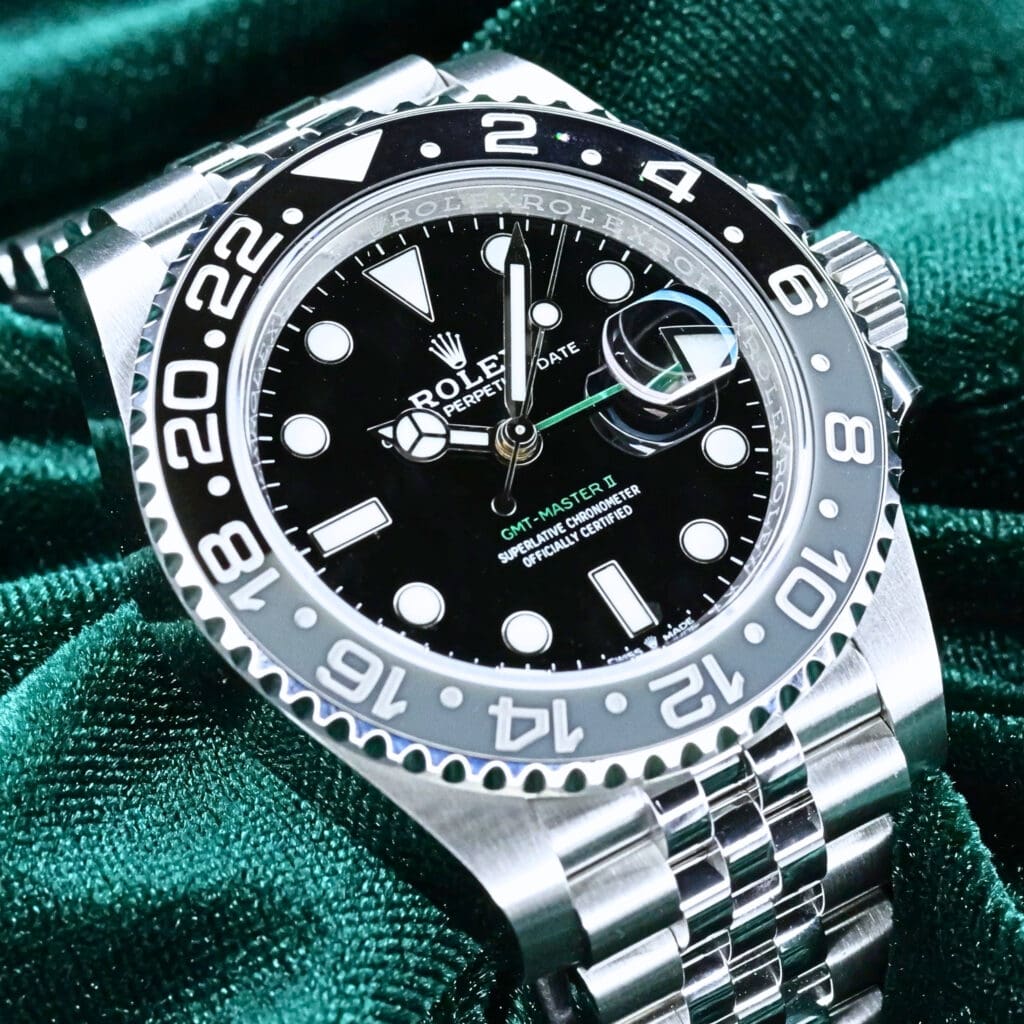
2026 NEW UNWORN Rolex GMT-Master II Bruce Wayne Black Gray Bezel Green GMT Hand Stainless Steel Jubilee 40mm COMPLETE SET 126710GRNR-0003

2026 NEW UNWORN Rolex GMT-Master II "Sprite" Black Dial Black Green Ceramic Bezel Oyster Bracelet Stainless Steel 40mm COMPLETE SET 126720VTNR
Kermit vs Sprite Specs Compared
The table below covers the practical specs that affect ownership, not surface-level differences.
| Spec | Rolex Kermit 16610LV | Rolex Sprite 126720VTNR |
| Model line | Submariner Date | GMT-Master II |
| Reference | 16610LV | 126720VTNR |
| Nickname | Kermit | Sprite |
| Case material | Oystersteel (904L) | Oystersteel |
| Case size | 40 mm | 40 mm |
| Water resistance | 300 m | 100 m |
| Bezel purpose | Elapsed-time dive timing | Second time zone tracking |
| Bezel direction | Unidirectional | Bidirectional |
| Bezel scale | 0–60 minutes | 24-hour |
| Bezel insert | Green aluminum | Green and black Cerachrom |
| Crystal | Sapphire with Cyclops | Sapphire with Cyclops |
| Date position | 3 o’clock | 9 o’clock |
| Crown position | 3 o’clock | 9 o’clock |
| Crown system | Triplock screw-down | Triplock screw-down |
| Movement | Caliber 3135 | Caliber 3285 |
| Power reserve | 48 hours | ~70 hours |
| Accuracy standard | Superlative Chronometer (-2/+2 sec/day) | Superlative Chronometer (-2/+2 sec/day) |
| Bracelet options | Oyster | Oyster or Jubilee |
| Clasp extension | Glidelock (up to 20 mm in 2 mm steps) | Easylink (5 mm) |
| Production status | Discontinued 2010 | In production |
| Original retail (last) | ~$6,400 (2010) | ~$12,300 (current) |
| Market price (2026) | $14k–$18k standard; $25k+ Flat 4 | $16.5k–$20k |
Rolex Kermit vs Sprite: Who Each One Is For
The decision comes down to what you’ll actually use more, dive timing or time zone tracking, and whether the Sprite’s left-side crown feels like a feature or a friction point. The Kermit keeps the standard Rolex layout for a wider buyer pool. The Sprite leans into a specific function and a specific identity.
Choose the Kermit if:
- You want a neo-vintage Submariner with the aluminum-bezel charm before Cerachrom took over the line
- You’re cross-shopping against the Hulk or Starbucks and prefer slimmer, pre-Super Case wrist presence
- The 300 m water resistance and 60-minute dive bezel match how you actually use a watch
- You’re prepared to do the homework on Flat 4 vs Sharp 4, serial ranges, and condition, because Kermit pricing rewards the diligent
- A broader resale audience matters to you, because the standard Submariner layout stays familiar to most buyers
Choose the Sprite if:
- You travel or work across regions and you’ll actually use the GMT hand and 24-hour bezel
- The destro layout appeals, either for right-wrist wear or to reduce crown contact on the back of your hand
- You want a current-production Rolex sports model that stands out from the usual GMT-Master II lineup
- You accept a narrower future buyer pool, since left-crown preference filters cross-shoppers more than a standard GMT
- You’re choosing it over a discontinued Pepsi specifically because you want the warranty and AD access that come with current production
Where to Buy a Kermit or Sprite Online
There are a few legitimate online channels for buying either of these references. Chrono24 is the largest dealer-to-buyer platform for luxury watches and gives you the widest inventory for both the Kermit and the Sprite, with seller ratings and an escrow option on most listings.
If you haven’t bought there before, our walkthrough of what to watch for on Chrono24 covers the listing red flags worth knowing.
eBay runs the Authenticity Guarantee program on watches over $2,000, which routes the watch through their authentication service before delivery. That’s useful if you want a third-party check before money changes hands.
Grailzee runs timed auctions on pre-owned luxury watches, which can surface clean Flat 4 Kermits and unworn Sprites at variable price points depending on the week.
Independent grey-market dealers and watch forums also handle both references, but quality varies and condition descriptions are inconsistent.
We also sell, buy, and trade luxury watches, and the reason clients pick us over a big marketplace is the layered communication before the purchase decision.
On a Kermit, that means we walk you through the Flat 4 vs Sharp 4 question on the specific piece, send tour videos of the actual bezel and bracelet under different lighting, and flag the condition details that move price by a few thousand dollars.
On a Sprite, we walk you through the things that affect both your wearing experience and your future resale: bracelet configuration, sticker status, dated full set, and the details that move price.
That layered process is what’s behind our 4.9-star Google rating. Clients value not buying blind off a listing.
If you want a walkthrough on a specific Kermit or Sprite before deciding, browse our current collection or reach out and we’ll line up a few options that match what you’re looking for.
999+ Timepieces Available
Explore Our Timepieces
Authenticated, unworn, and ready to ship worldwide.
Rolex · Audemars Piguet · Patek Philippe · Omega · Cartier · Richard Mille · Hublot · Tudor
Newly Listed
2026 NEW UNWORN Rolex Deepsea "James Cameron" D-Blue Black and Blue Dial Black Ceramic Bezel Stainless Steel 44mm COMPLETE SET 136660-0005
$20,208.00
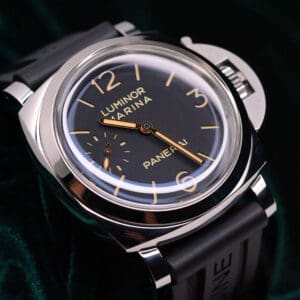
Panerai Luminor Marina 1950 3 Days Limited Edition Black Sandwich Dial Stainless Steel Black Rubber Strap 47mm MINT COMPLETE SET PAM00422
$7,503.00
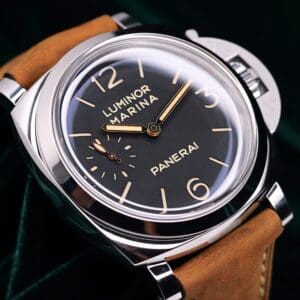
Panerai Luminor Marina 1950 3 Days Black Dial Stainless Steel Brown Leather Strap 47mm LIMITED EDITION MINT CONDITION COMPLETE SET PAM00422
$7,503.00

Cartier Santos-Dumont Micro-Rotor Skeleton Dial Black Alligator Strap 18k Rose Gold 43.5 x 31mm MINT CONDITION COMPLETE SET WHSA0030
$40,425.00
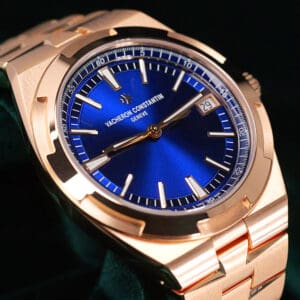
2026 Vacheron Constantin Overseas Blue Dial 18k Rose Gold 41mm MINT CONDITION COMPLETE SET 4520V/210R-B705
$72,764.00
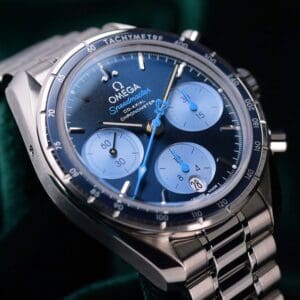
Omega Speedmaster 38 Orbis Edition Blue Dial Stainless Steel 38mm MINT CONDITION COMPLETE SET 324.30.38.50.03.002
$6,599.00

Audemars Piguet Royal Oak Offshore Chronograph “Navy” Blue Dial Orange Accents Blue Rubber Strap Stainless Steel 42mm MINT CONDITION COMPLETE SET 26470ST.OO.A027CA.01
$22,245.00
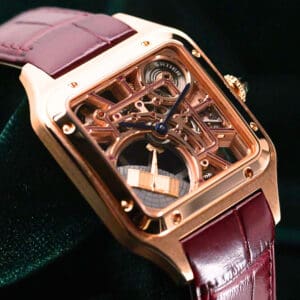
Cartier Santos-Dumont Micro-Rotor Skeleton Dial 18K Rose Gold Burgundy Alligator Strap 31mm MINT CONDITION COMPLETE SET WHSA0030
$40,425.00
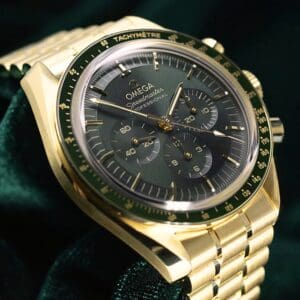
Omega Speedmaster Professional Moonwatch "Moonshine" Green Dial 18K Yellow Gold 42mm MINT CONDITION COMPLETE SET 310.60.42.50.10.001
$35,695.00
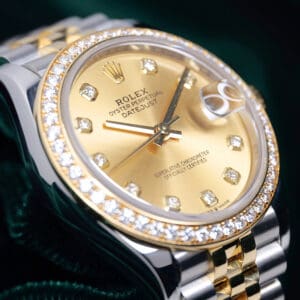
Rolex Datejust 31 Champagne Diamond Dial Diamond Bezel Jubilee Yellow Gold & Stainless Steel 31mm MINT CONDITION COMPLETE SET 278383RBR
$31,990.00
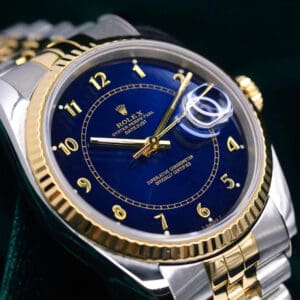
Rolex Datejust Blue Arabic Numeral Refinished Dial Fluted Bezel Jubilee Bracelet 18k Yellow Gold Stainless Steel 36mm MINT CONDITION 16233
$7,975.00
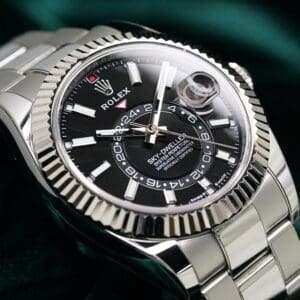
2025 Rolex Sky-Dweller Bright Black Dial 18k White Gold Fluted Bezel Stainless Steel Oyster Bracelet 42mm MINT CONDITION COMPLETE SET 336934
$22,895.00
Final Thoughts on Rolex Kermit vs Sprite
The Rolex Kermit vs Sprite decision in 2026 comes down to daily use and layout: the Kermit for dive utility and collector depth, the Sprite for travel function and a category-of-one identity now that the Pepsi is gone.
Two tips that don’t get said enough. If you’re leaning Kermit, set a hard budget gap between standard and Flat 4 examples before you start shopping. The price spread is wide, and “I’ll just see what comes up” turns into expensive drift.
If you’re leaning Sprite, wear one for a full afternoon on the wrist you actually use before buying. The destro layout looks great in photos and feels different in person.
Both trade above retail in 2026. The right call is the watch you’ll wear most weeks of the year.