
If you are considering a green Submariner, the Rolex Hulk vs Kermit is usually the comparison you keep coming back to. Both come from the same Submariner platform, both have real collector history, and both cost enough that picking the wrong one matters.
One is known for going all-in on green. The other is known for being the watch that started the green Submariner conversation. Same family, but they suit different collectors.
This guide breaks down the specs, construction differences, collector variants, and the current 2026 market for both references. Go through it before you decide. By the end, you will know
Rolex Hulk Overview

Rolex introduced the 116610LV at Baselworld in 2010 as the direct successor to the Kermit. Rolex designed it to move the Submariner Date forward, introducing something no steel Sub had seen before: a full green dial paired with a green Cerachrom ceramic bezel.
Collectors started calling it the Hulk almost immediately. The Super Case made the watch look more squared and angular, so it wore larger than earlier Submariners, while the all-green design led many to call it the “Hulk.” Rolex kept it in production for a full decade before retiring it in 2020 when the Submariner line moved to 41mm.
The 116610LV is the only steel Submariner ever made with a green dial, and Rolex has never repeated that configuration. It also brought solid bracelet links and Chromalight lume to the platform, both upgrades over the previous generation.
Key Specifications:
| Spec | Detail |
| Reference | 116610LV |
| Production | 2010 to 2020 |
| Dial | Green sunburst lacquer with Chromalight indices |
| Bezel | Green Cerachrom ceramic, platinum numerals |
| Case | 40mm, Super Case architecture, 904L Oystersteel |
| Bracelet | Fully solid links, Glidelock extension |
| Movement | Caliber 3135, 48-hour power reserve |
| Water Resistance | 300m |
Rolex Kermit Overview

Rolex released the 16610LV in 2003 to mark 50 years of the Submariner. It was a direct tribute to the original 1953 reference, and the green bezel was Rolex’s way of signaling the anniversary. No steel Submariner had carried a green bezel before it, and the Kermit nickname arrived almost immediately after launch.
The green bezel was a big change after years of all-black Submariner designs, and many collectors did not accept it at first. Over time, most came around. Collectors now recognize the 16610LV as the watch that proved color could work on a steel Rolex sports model.
Collectors have identified up to nine small variations during the Kermit’s seven-year production. The most desirable is the “Flat 4” version, named after the flat-topped number 4 on the 40-minute bezel marker. It appeared only in early production and is now the most sought-after Kermit variant.
Key Specifications:
| Spec | Detail |
| Reference | 16610LV |
| Production | 2003 to 2010 |
| Dial | Glossy black, Maxi-style luminous indices |
| Bezel | Green aluminum insert, unidirectional rotating |
| Case | 40mm, standard Oyster architecture, 904L Oystersteel |
| Bracelet | Solid outer links, hollow center links, Glidelock extension |
| Movement | Caliber 3135, automatic |
| Water Resistance | 300m |
Rolex Hulk vs Kermit: Most Notable Differences

The Hulk and Kermit share the same movement, case diameter, and water resistance rating. Here are the differences that actually set them apart. Each point below covers a spec or construction detail that directly affects how the watch looks, wears, and holds up over time.
1. Dial Color
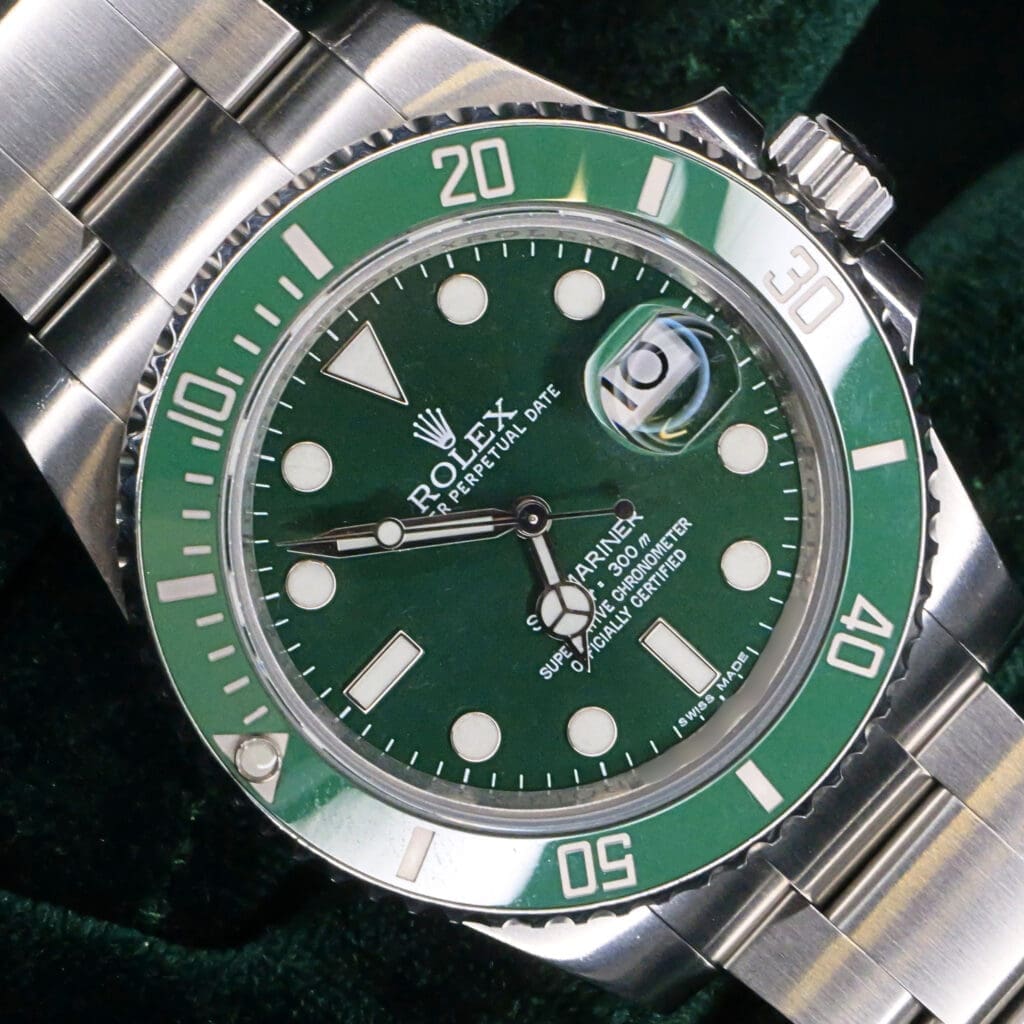
The Hulk has a green sunburst dial with a lacquer finish that reacts strongly to light. In bright sunlight, it appears vivid emerald, while in shade or indoor lighting, it deepens to a darker green. The color shifts noticeably with lighting conditions.
The Kermit has a glossy black dial that looks the same in most lighting conditions. It introduced the Maxi dial to the Submariner line, with larger luminous markers and wider hands than the standard 16610. The result is a bolder look while the dial color stays consistent.
2. Bezel Material and Shade
Cerachrom ceramic makes the Hulk’s bezel scratch-resistant, fade-proof, and visually consistent. The deep emerald shade matches the dial, and the platinum-coated numerals ensure permanent legibility.
The Kermit uses an aluminum bezel insert. It is softer than ceramic, so it scratches more easily and can fade with UV exposure over time. The shade also varied during the 16610LV’s production: early models appeared lighter lime green, while examples from 2009 to 2010 shifted to a darker apple green.
3. Case Architecture
Rolex’s Super Case defines the Hulk, with squared lugs, thicker crown guards, and wider bracelet end links. Although the diameter remains 40mm, the broader proportions make it wear noticeably larger and more assertive on the wrist. The visual mass of the case is what creates the size difference, not the measurements themselves.
The Kermit keeps the earlier Submariner case with tapered lugs that curve more naturally toward the wrist. This older case design gives the watch a slimmer profile and makes it easier to wear under a cuff. Lug-to-lug length sits around 47.5 to 48mm on both references, so the difference comes from case shape rather than overall size.
4. Bracelet Link
Fully solid center and outer links run through the Hulk’s bracelet. This was a direct upgrade over the previous generation, making it far more resistant to stretching over years of daily wear. The bracelet pairs with the Oysterlock clasp and the Glidelock extension system, allowing tool-free adjustments in 2mm increments up to 20mm, making quick sizing changes simple.
The Kermit uses the earlier Submariner bracelet construction with hollow center links. This was standard for Rolex sports watches at the time, but it can develop lateral play after years of daily wear. Because of this, bracelet stretch is one of the first things collectors check on pre-owned examples.
Price and Market Demand
Both watches trade well above their original retail prices, which is normal for a discontinued Rolex sports model. The Hulk launched at around $9,050 and now sits close to $20,000 on the secondary market as of 2026, with most clean examples landing between $18,000 and $22,000, based on WatchCharts and Chrono24 listing data.
The Kermit launched at roughly $6,400 and now trades between about $16,000 and $18,000, with early Flat 4 examples and full sets pushing past $20,000. Both references have more than doubled since production ended, which is what happens once Rolex closes the supply.
The Hulk remains the more liquid of the two. It moves quickly when priced right. Entry examples generally land between $18,000 and $19,000, and full sets reach $22,000 to $25,000. At the 2022 peak it briefly cleared $30,000, so today’s numbers still sit below that high.
Green Watches

Rolex Submariner Date "Hulk" Green Dial Green Ceramic Bezel Stainless Steel 40mm MINT COMPLETE SET 116610LV
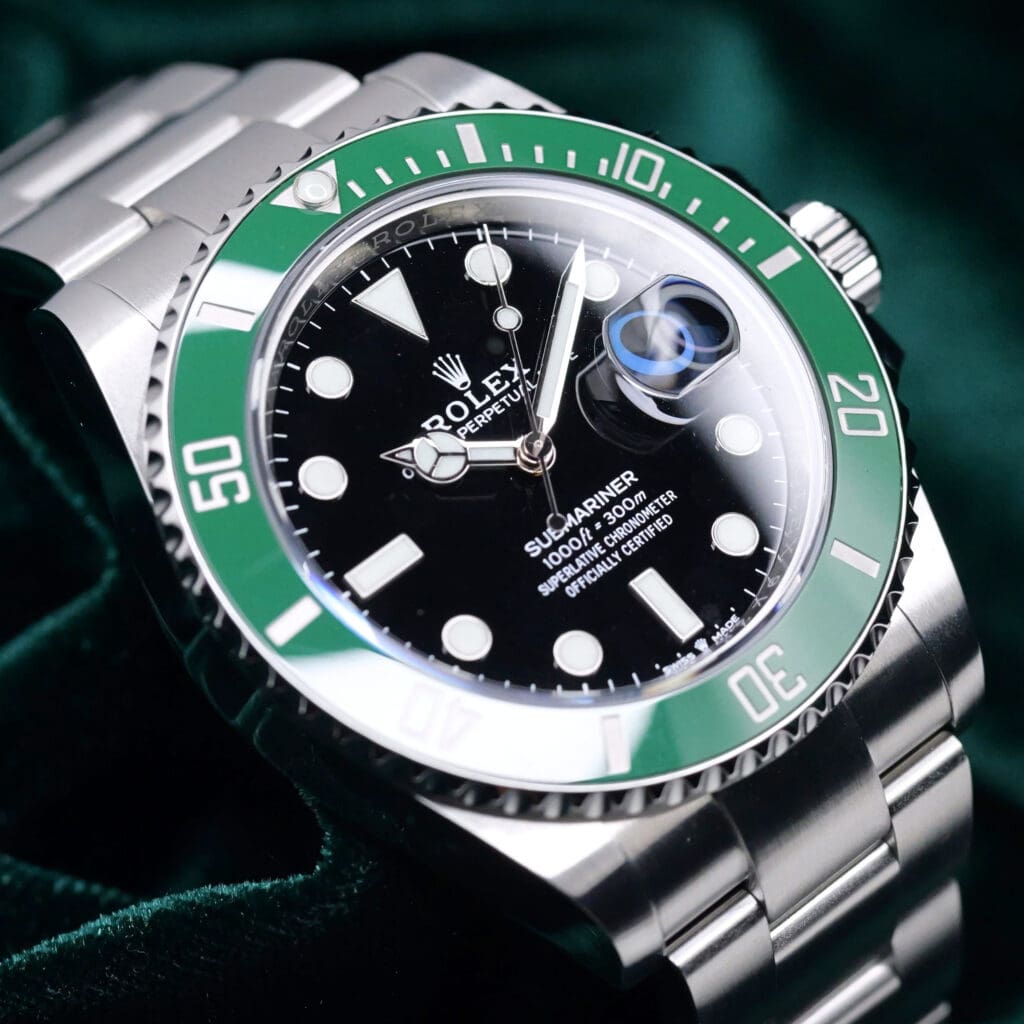
Rolex Submariner Date Starbucks Black Dial Green Ceramic Bezel Oyster Bracelet Stainless Steel 41mm MINT CONDITION COMPLETE SET 126610LV
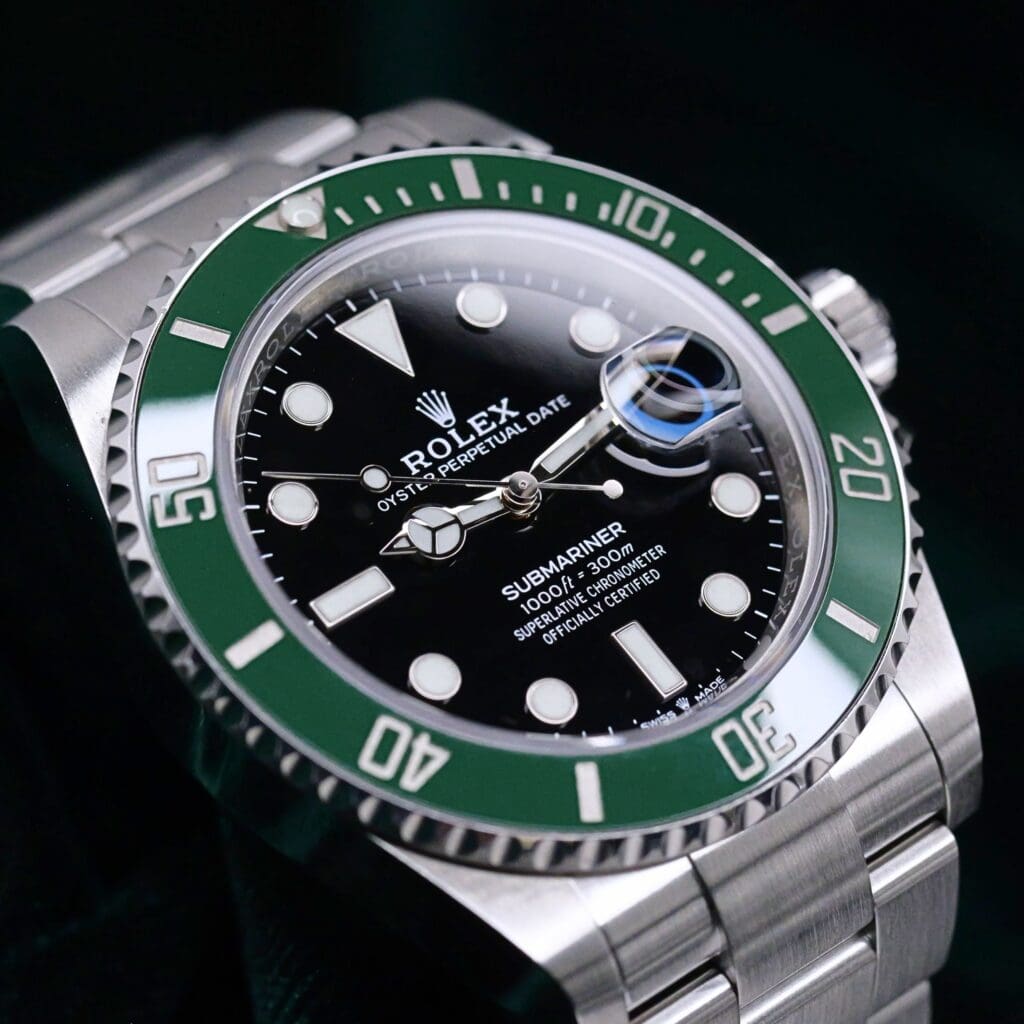
Rolex Submariner Date "Starbucks" Black Dial Green Ceramic Bezel Oyster Bracelet Stainless Steel 41mm MINT CONDITION COMPLETE SET 126610LV-0002
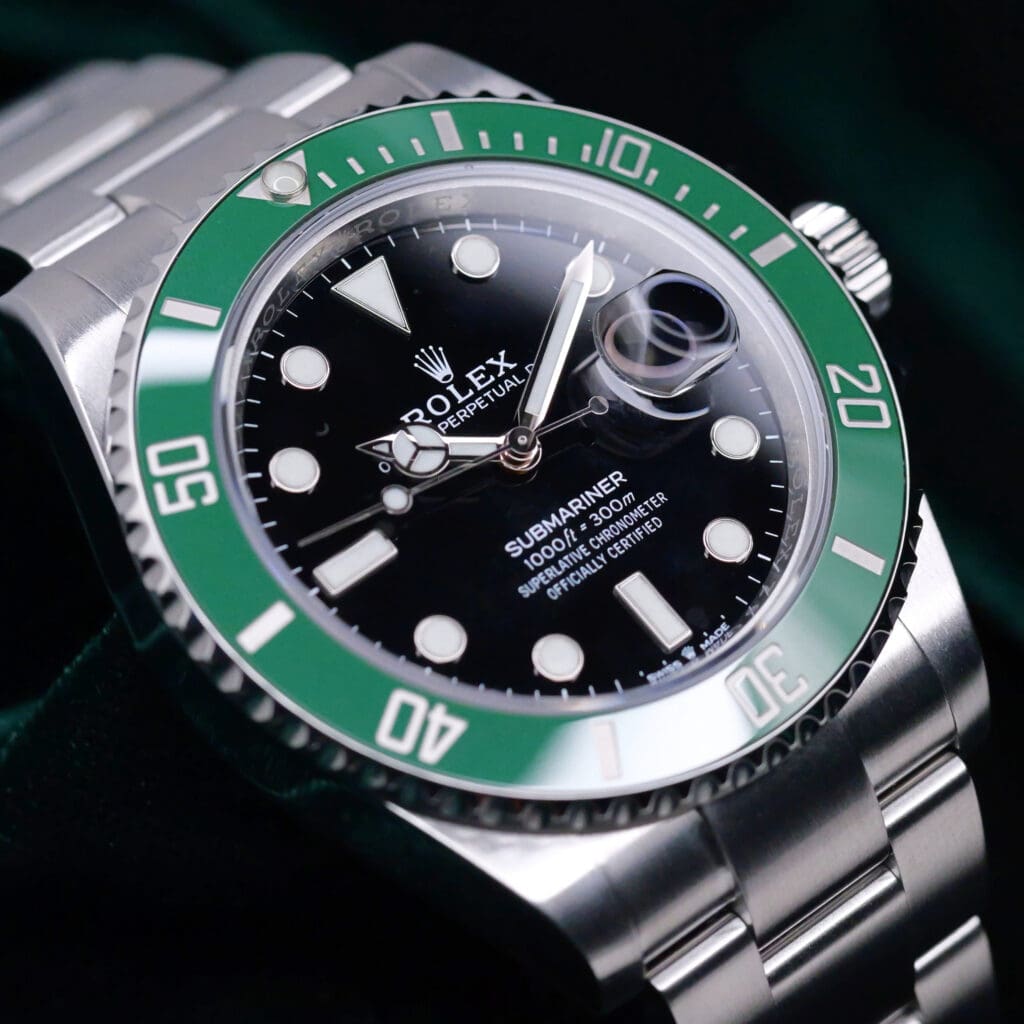
Rolex Submariner Date "Starbucks" Black Dial Green Ceramic Bezel Stainless Steel 41mm MINT CONDITION COMPLETE SET 126610LV-0002
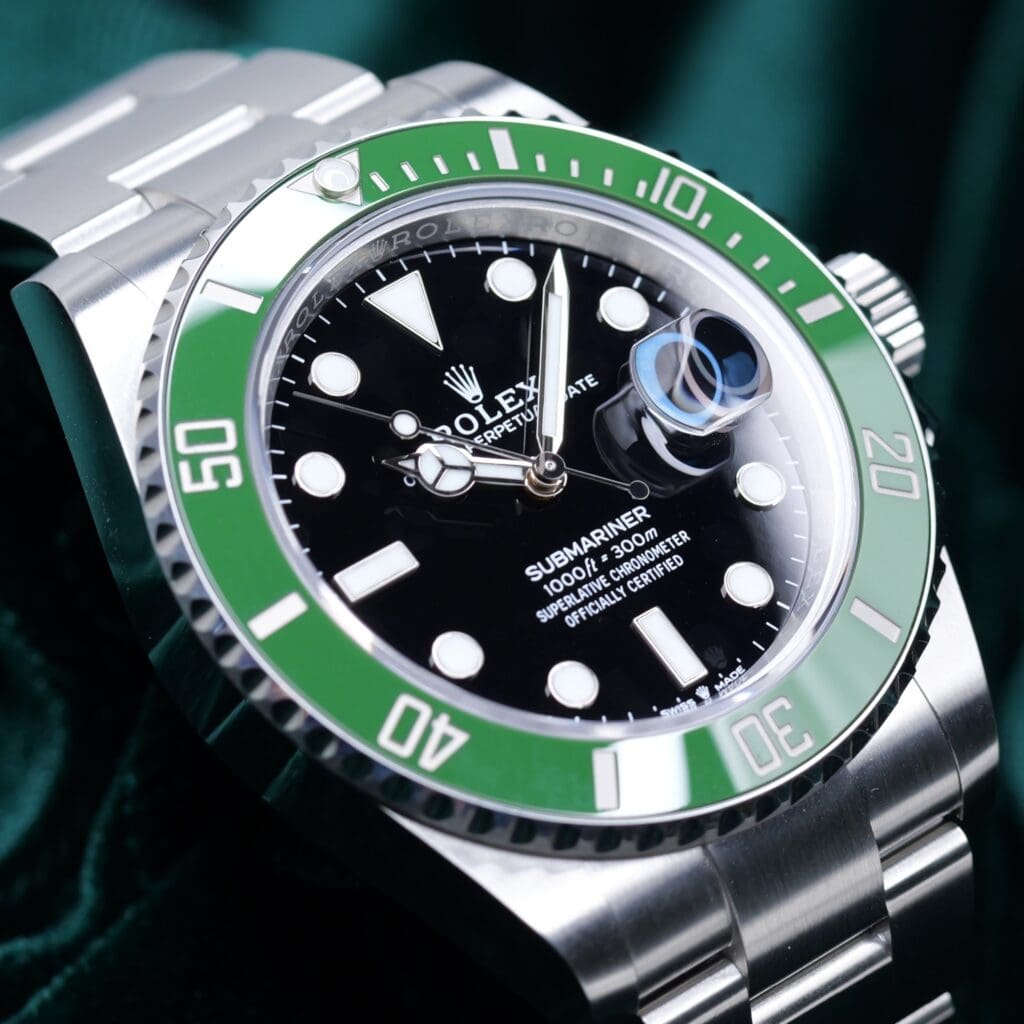
2026 NEW UNWORN Rolex Submariner Date "Starbucks" Black Dial Green Ceramic Bezel Stainless Steel 41mm COMPLETE SET 126610LV
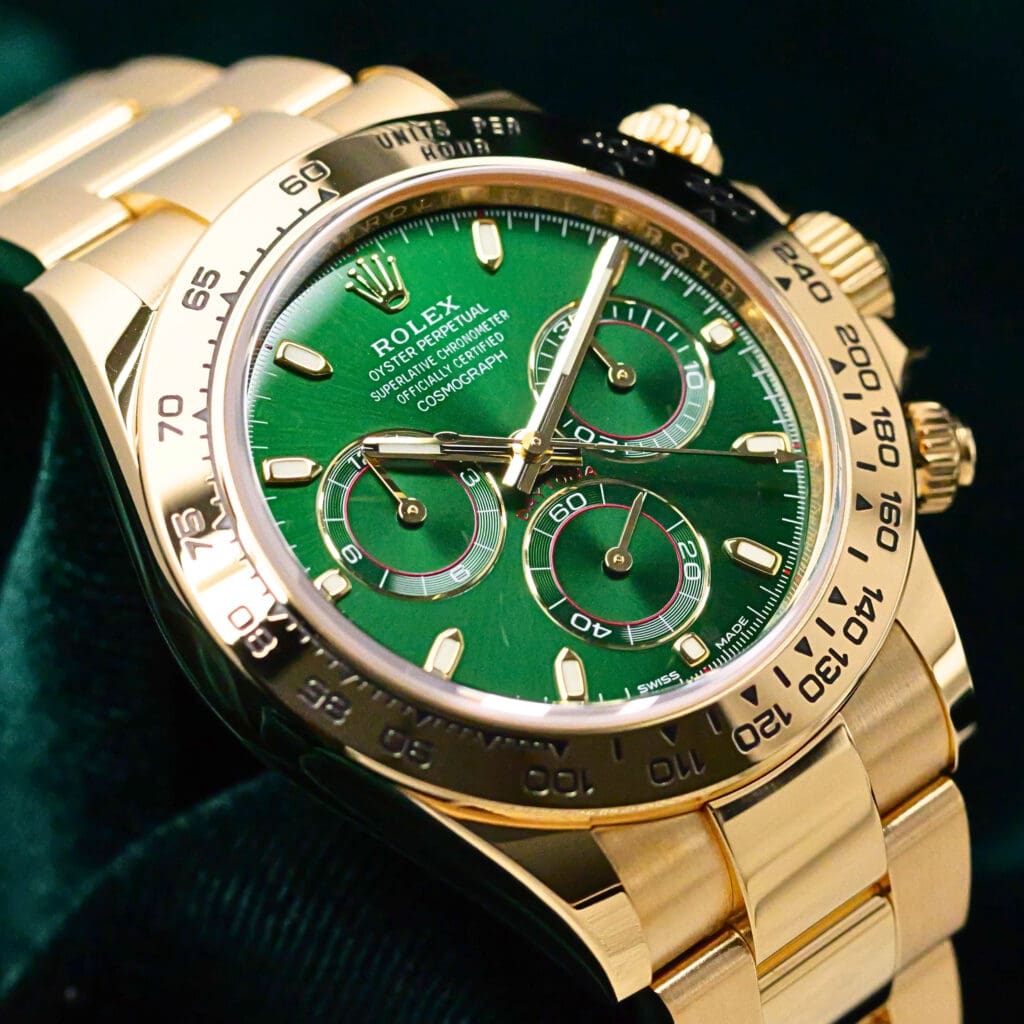
Rolex Daytona "John Mayer" Green Dial Green Subdials 18K Yellow Gold 40mm MINT CONDITION COMPLETE SET 116508
The Kermit market tells a different story than it did a couple of years ago. After the broader 2023 dip, it has firmed and turned back upward through 2026, not down. Market trackers put it in the mid-single digits year over year, with early Flat 4 examples climbing faster.
Standard pieces trade around $15,000 to $18,000, and Flat 4 bezels sit above that as a separate, more desirable early piece.
Condition drives price on both. Unpolished cases, original papers, and matching bracelet parts all add value. On the Kermit, bezel condition matters most, since aluminum scratches and fades.
On the Hulk, dial originality is the key check. The 116610LV came in three dial “marks” (Mk1 flat green, Mk2 sunburst, Mk3 sunburst with brighter lume), and a swapped or refinished dial is the main thing to rule out.
How Discontinuation Shapes Green Submariner Value
There is a fresh reason this matters in 2026. At Watches & Wonders in April 2026, Rolex discontinued the steel Pepsi GMT-Master II (126710BLRO), and dealers immediately reached for the Hulk as the reference point for what tends to happen next.
The pattern is consistent. Once Rolex closes a popular steel sports reference, clean secondary prices climb and then hold. The Hulk did exactly that after 2020, with no green-dial successor to absorb demand. Its replacement, the 126610LV “Starbucks,” went back to a black dial. If that successor is on your radar too, our Hulk vs Starbucks comparison breaks that pairing down.
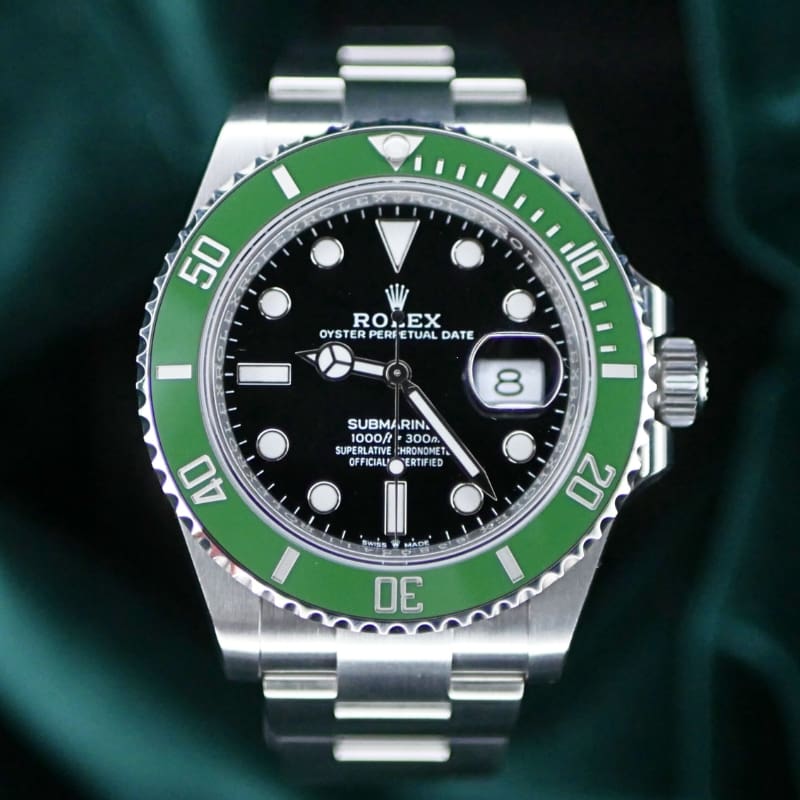
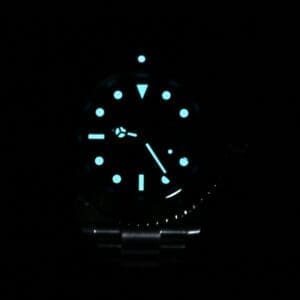
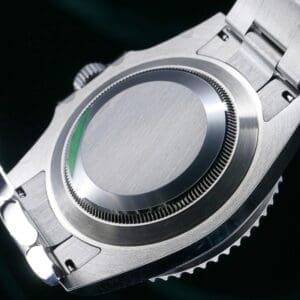
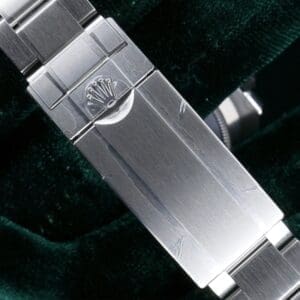
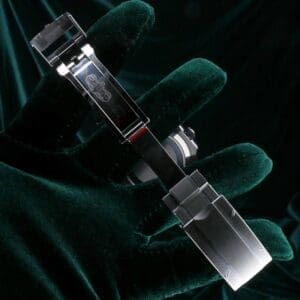
For a buyer choosing today, the takeaway is simple. Both the Hulk and Kermit are already discontinued, so neither will see fresh supply. The Hulk carries the stronger resale story, but the Kermit’s rebound shows the older green Sub is far from forgotten.
Side-by-Side Comparison (At a Glance)
The Hulk and Kermit are closer in spec than most people expect going in. Same caliber, same nominal case size, same depth rating. Where they separate is in material choices and construction details that affect how each watch looks, wears, and ages over time.
Here is the side-by-side view.
| Specification | Hulk | Kermit |
| Reference | 116610LV | 16610LV |
| Production Years | 2010–2020 | 2003–2010 |
| Case Diameter | 40mm (nominal) | 40mm (nominal) |
| Lug-to-Lug | ~47.6–48mm | ~47.5mm |
| Case Thickness | ~12.5mm | ~12.4–13mm |
| Case Architecture | Super Case, squared flat lugs | Standard Oyster, tapered lugs |
| Material | 904L Oystersteel | 904L Oystersteel |
| Dial | Green sunburst, light-reactive | Glossy black, static |
| Bezel Material | Cerachrom ceramic | Aluminum insert |
| Bezel Color | Deep emerald, consistent | Lime to olive green, batch variation |
| Movement | Caliber 3135 | Caliber 3135 |
| Power Reserve | ~48 hours | ~48 hours |
| Bracelet Links | Fully solid (center + outer) | Solid outer, hollow center |
| Clasp | Oysterlock + Glidelock | Oysterlock + Glidelock |
| Water Resistance | 300m | 300m |
Rolex Hulk vs Kermit: Which Rolex Should You Choose?
Both are strong watches. The decision comes down to what you actually want on your wrist every day. If you want the wider range in view first, our Rolex Submariner buying guide covers the full lineup. Here is a straight breakdown to help you decide.


Choose the Hulk If:
- You want the only steel Submariner ever made with a green dial
- You prefer a dial that shifts color throughout the day depending on the light
- You want a bezel that holds its color for decades without fading or scratching
- You prioritize a bracelet that resists stretch over years of daily wear
- You wear your watches with presence and want a case that reads bold on the wrist
- You plan to resell eventually and want a watch that moves fast on the secondary market
Choose the Kermit If:
- You want a glossy black dial that pairs with almost anything in your wardrobe
- You have a slimmer wrist and need tapered lugs that sit closer to the wrist
- You want the Flat 4 variant and the collector history behind it
- You want to enter the green Submariner family at a lower price point
- You appreciate a bezel that develops its own patina and character over time
- You prefer the classic pre-Super Case proportions that defined earlier Submariners
More Submariners
NEW UNWORN Rolex Submariner Date “Sub Date” Black Dial Black Ceramic Bezel Oyster Bracelet Stainless Steel 41mm COMPLETE SET 126610LN
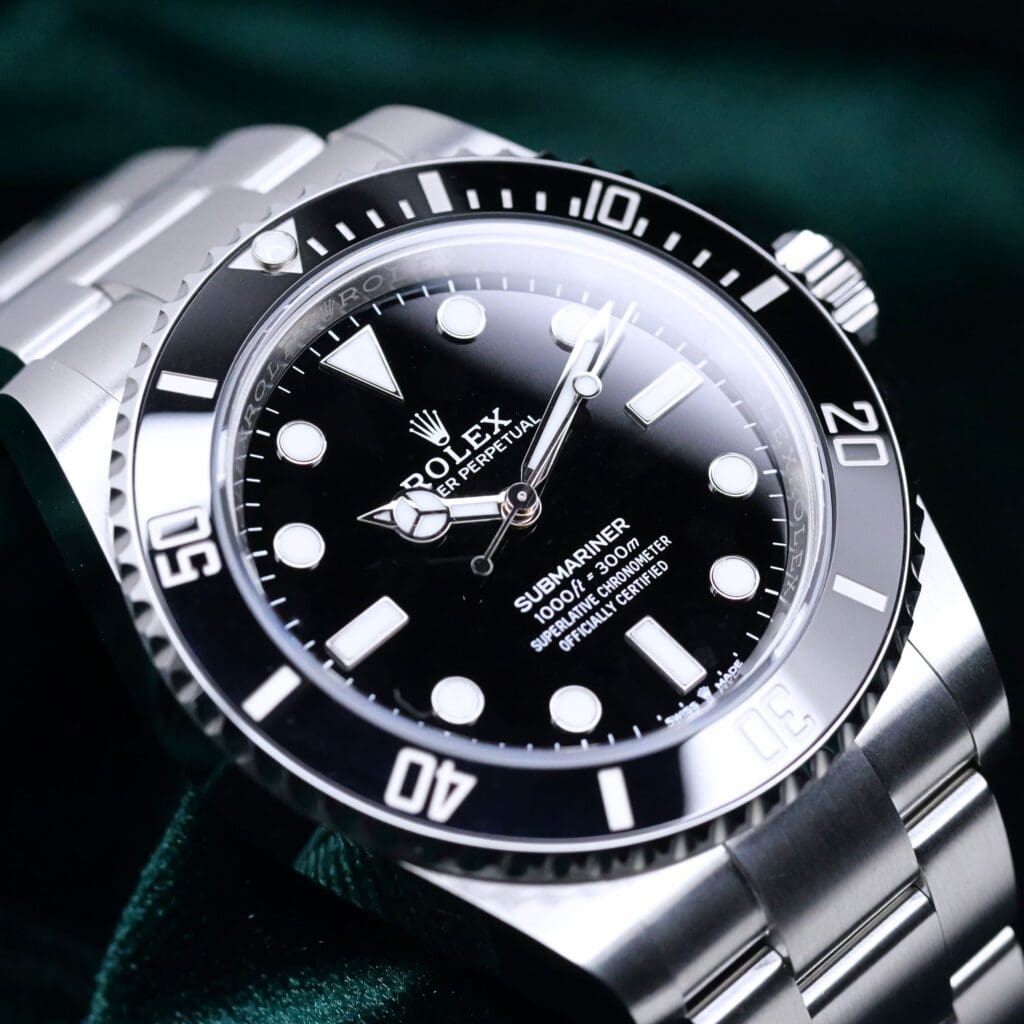
2026 NEW UNWORN Rolex Submariner No Date Black Dial Black Ceramic Bezel Oyster Bracelet Stainless Steel 41mm COMPLETE SET 124060
Rolex Submariner Date Starbucks Black Dial Green Ceramic Bezel Oyster Bracelet Stainless Steel 41mm MINT CONDITION COMPLETE SET 126610LV
Rolex Submariner Date "Starbucks" Black Dial Green Ceramic Bezel Oyster Bracelet Stainless Steel 41mm MINT CONDITION COMPLETE SET 126610LV-0002
Rolex Submariner Date "Starbucks" Black Dial Green Ceramic Bezel Stainless Steel 41mm MINT CONDITION COMPLETE SET 126610LV-0002

Rolex Submariner No Date Black Dial Black Ceramic Bezel Stainless Steel Oyster Bracelet 41mm MINT CONDITION COMPLETE SET 124060
Where to Buy Authentic Watches Online
Both of these are discontinued, so every purchase happens on the secondary market, and a few channels are worth knowing before you commit.
Chrono24 aggregates listings from dealers and private sellers worldwide and offers buyer protection on many transactions. eBay covers both references through its Authenticity Guarantee program, which inspects eligible watches before they ship. Grailzee runs enthusiast auctions where discontinued Subs surface regularly.
We also buy, sell, and trade luxury watches. The reason clients come to us instead of a big marketplace is the walkthrough before the decision. You get tour videos of the actual watch, honest condition notes, and a real conversation with someone who has handled it.
On a piece like the Hulk or Kermit, that means you are not judging a green Sub off three listing photos and a guess. That shows up in our 4.9-star Google rating, from buyers who wanted the full picture first.
If you are weighing a specific Hulk or Kermit and want that kind of look before you buy, reach out and we will line up a few clean examples that match what you are after.
Final Thoughts on Rolex Hulk vs Kermit
The Rolex Hulk vs Kermit comes down to two takes on the same idea. The Hulk is the bold, all-green modern Sub. The Kermit is the classic that started the green story. Both have earned real collector standing, and neither is coming back into production.
At this price, buy on condition first. For the Kermit, prioritize an unfaded bezel and check whether it is a Flat 4. For the Hulk, confirm the dial is original and, if you can, buy a full set, since the market now pays a clear premium for complete, unpolished examples. Then pick the one you will actually keep reaching for.
999+ Timepieces Available
Explore Our Timepieces
Authenticated, unworn, and ready to ship worldwide.
Rolex · Audemars Piguet · Patek Philippe · Omega · Cartier · Richard Mille · Hublot · Tudor
Newly Listed

Rolex Sky-Dweller Black Dial 18K White Gold Fluted Bezel Oyster Bracelet Stainless Steel 42mm MINT CONDITION COMPLETE SET 336934-0007
$21,945.00

2026 Rolex Datejust Green Ombre Dial Smooth Bezel Jubilee Bracelet Stainless Steel 41mm MINT CONDITION COMPLETE SET 126300
$16,480.00

2026 NEW UNWORN Cartier Santos-Dumont Silver Dial Platinum Mesh Bracelet Platinum 31mm COMPLETE SET WGSA0124
$64,790.00

2026 Tudor Black Bay 58 Black Dial Jubilee Bracelet Stainless Steel 39mm MINT CONDITION COMPLETE SET 7939A1A0NU
$5,717.00

NEW UNWORN Rolex Submariner Date “Sub Date” Black Dial Black Ceramic Bezel Oyster Bracelet Stainless Steel 41mm COMPLETE SET 126610LN
$15,595.00
Rolex Cosmograph Daytona "Reverse Panda" Black Dial Black Ceramic Bezel Oyster Bracelet Stainless Steel 40mm MINT CONDITION COMPLETE SET 126500LN
$32,009.00
2026 NEW UNWORN Rolex Submariner No Date Black Dial Black Ceramic Bezel Oyster Bracelet Stainless Steel 41mm COMPLETE SET 124060
$15,219.00
Audemars Piguet Royal Oak Selfwinding Chronograph Bleu Nuit Nuage 50 Blue Dial Bracelet 18k Rose Gold 38mm MINT CONDITION COMPLETE SET 26715OR.OO.1356OR.01
$104,942.00
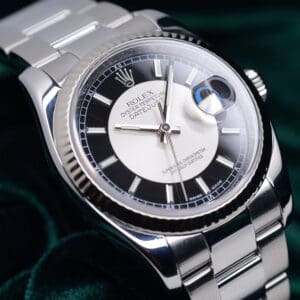
Rolex Datejust “Tuxedo” Black and Silver Dial 18K White Gold Fluted Bezel Stainless Steel Oyster 36mm MINT CONDITION COMPLETE SET 116234
$10,671.00
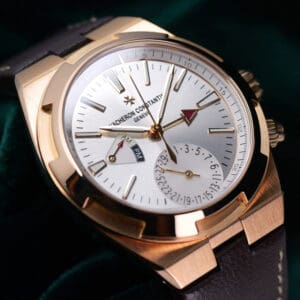
Vacheron Constantin Overseas Dual Time Silver Dial Brown Leather Strap 18K Rose Gold 41mm MINT CONDITION COMPLETE SET 7900V/000R-B336
$41,894.00
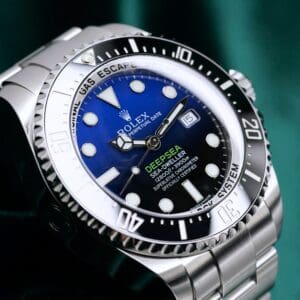
Rolex Sea-Dweller Deepsea James Cameron D-Blue Dial Black Ceramic Bezel Oyster Bracelet Stainless Steel 44mm MINT CONDITION 116660-0003
$14,272.00
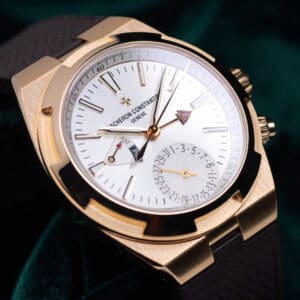
Vacheron Constantin Overseas Dual Time Silver Dial 18K Rose Gold Brown Rubber Strap 41mm MINT CONDITION COMPLETE SET 7900V/000R-B336
$41,894.00