The Rolex Easylink vs Glidelock comparison focuses on one of the most overlooked aspects of watch ownership: bracelet fit. Wrist size changes throughout the day due to temperature, physical activity, and blood flow, often by several millimeters. Rolex addressed this issue by developing two different clasp adjustment systems designed to adapt in real time, without tools and without compromising the integrity of the bracelet.
This article explains how Easylink and Glidelock differ in purpose, mechanical design, and real world use. You will learn when each system was introduced, how much adjustment each provides in exact measurements, which Rolex models use them, and how these systems affect comfort during daily wear versus sport and dive environments.
System Origins: Easylink vs Glidelock Background
Rolex developed Easylink and Glidelock to address different bracelet fit needs across its collections. Easylink provides a simple extension option that allows wearers to respond to minor wrist size changes during daily wear, prioritizing comfort and convenience.
Glidelock delivers a more advanced micro-adjustment system, offering greater control over bracelet length to meet the demands of professional and sport-focused models. Each system reflects a specific approach to fit, functionality, and intended use.
Easylink Background

The Easylink system was developed to give you a quick, tool-free method to extend your Rolex bracelet by a few millimeters when your wrist swells during daily activities. Unlike traditional micro-adjustments that require removing links, Easylink uses a folding mechanism hidden inside the clasp, allowing you to increase or decrease bracelet length in seconds.
Rolex designed this system with precision engineering, using robust stainless steel pins and reinforced hinges to ensure durability while keeping the extension nearly invisible. You will find Easylink on models like the Day-Date 36 and 40, Datejust 41, and selected Oyster Perpetual watches, where comfort and subtle adaptability are key priorities.
This mechanism emphasizes ease of use while maintaining the bracelet’s clean profile, giving your watch a balance of elegance and practicality.
How the Rolex Easylink Works
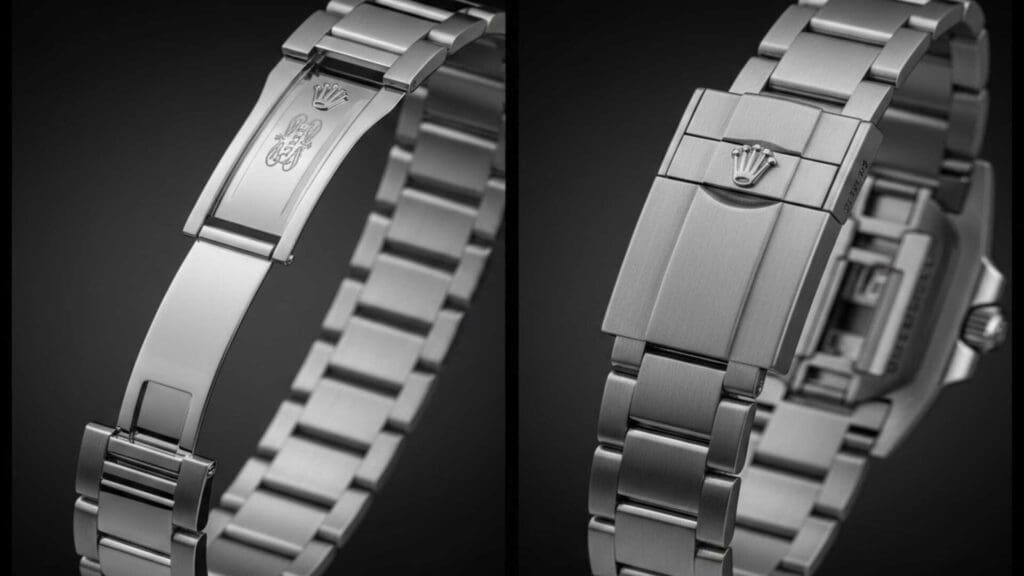
The Rolex Easylink works through a small folding link built into the clasp that you can deploy or retract with your fingers. When you pull the extension tab, the link unfolds to add approximately 5 millimeters of bracelet length, giving your wrist immediate relief from tightness caused by heat or activity.
The mechanism relies on a spring-loaded hinge and reinforced pins, which keep the extension secure during normal wear while allowing smooth movement when adjusting. You do not need any tools or specialized knowledge, just lift, slide, and fold it back. This design ensures your bracelet maintains its structural integrity and clean appearance while providing real-time adaptability for everyday comfort.
Glidelock Background
The Glidelock system was engineered to give you precise, incremental adjustment for professional-grade Rolex sports watches. It uses a ratchet-style clasp mechanism that allows you to lengthen or shorten the bracelet in 2 mm increments, providing up to 20 mm of total adjustment without removing the watch or using tools.
Rolex built Glidelock for models designed for high-performance environments, including the Submariner, Sea-Dweller, and Deepsea, where divers need to fit the bracelet over wetsuits or adjust for wrist changes under pressure. The system combines durability with a secure locking design, ensuring the clasp cannot slip under extreme conditions.
Glidelock demonstrates Rolex’s focus on mechanical innovation, making it one of the most reliable and precise adjustment systems in modern watchmaking.
How the Rolex Glidelock Works

The Rolex Glidelock operates with a ratchet-style clasp mechanism that allows you to adjust the bracelet length in 2 millimeter increments for a total range of up to 20 millimeters. You adjust it by lifting the clasp cover and sliding the inner rack to the desired position, then locking it securely in place. This system gives you precise control over the fit without removing links or using tools.
Rolex designed Glidelock specifically for professional dive watches such as the Submariner, Sea-Dweller, and Deepsea, where divers need to fit the bracelet over a wetsuit or adjust it during long underwater excursions. The mechanism combines high durability, secure locking, and smooth operation, making it suitable for extreme environments while maintaining comfort and reliability for everyday wear.
Easylink vs Glidelock: Technical Differences
When you compare Easylink and Glidelock, the differences go beyond the adjustment range. Each system reflects a distinct engineering philosophy that affects how your Rolex feels and performs.
Easylink focuses on quick, subtle comfort, with a minimal mechanical footprint designed to blend seamlessly into the bracelet. Glidelock prioritizes precision and robustness, allowing for multiple fine adjustments under demanding conditions while maintaining clasp security.
The two systems also differ in mechanical complexity, materials reinforcement, and intended use scenarios, which directly influence weight distribution, wrist stability, and overall wearing experience.
Understanding these technical distinctions helps you choose a system that matches your lifestyle, activity level, and the specific Rolex model you own.
Adjustment Range
Both Easylink and Glidelock provide tool-free adjustment, but the scope and precision of each system are very different:
- The Easylink adds a 5-millimeter extension to the bracelet. It is designed for small, everyday changes in wrist size caused by temperature, movement, or hydration. The adjustment is fast, discreet, and ideal for office or casual wear, allowing you to quickly relieve tightness without altering the overall bracelet balance.
- Glidelock offers up to 20 millimeters of adjustment in 2-millimeter increments. This allows precise control over the bracelet length, making it suitable for fitting over wetsuits or adjusting for significant wrist changes during diving or active sports. Each increment locks securely, ensuring stability under extreme conditions that Easylink cannot accommodate.
Engineering & Mechanical Design
The construction of Easylink and Glidelock demonstrates Rolex’s tailored engineering approach for different use cases:
- Easylink relies on a folding link mechanism with a spring-loaded hinge and reinforced pins. The design keeps the clasp profile slim and unobtrusive, blending seamlessly with the bracelet. Its simplicity ensures reliability and smooth operation without affecting the watch’s overall aesthetic or structural integrity.
- Glidelock uses a ratchet-style rack system inside the clasp, allowing incremental adjustments along a sliding track. The mechanism evenly distributes stress across the clasp and bracelet, ensuring no slippage under pressure. It requires precise machining and assembly but delivers high performance in extreme conditions while maintaining a secure fit.
Material, Weight & Durability
Both systems use Rolex’s high-quality materials, but their construction affects weight and longevity differently:
- Easylink components are made from 904L stainless steel or Rolesor, matching the bracelet’s material. The system adds minimal weight and does not alter the watch’s balance, while the reinforced hinge ensures long-term durability for daily wear scenarios.
- Glidelock also uses 904L stainless steel but includes precision-machined components for higher stress resistance. The system is slightly heavier due to the ratchet mechanism, but this weight contributes to stability. Glidelock is built to endure repeated adjustments and maintain smooth operation under challenging conditions.
Fit, Comfort & Wearing Experience – Why People Prefer One vs. Another
The wearer experience is where the differences between Easylink and Glidelock become most noticeable:
- Easylink provides everyday comfort with a quick 5-millimeter adjustment. It relieves tightness from wrist expansion during normal activities while maintaining a slim, elegant profile that suits dress and professional models.
- Glidelock provides precision and adaptability for active or professional use. Divers, athletes, and outdoor enthusiasts value the incremental adjustments that ensure the watch fits securely over wetsuits or during high-intensity activity. The clasp delivers a stable, reliable feel in demanding situations while maintaining comfort during regular wear.
Easylink vs Glidelock: Pros and Cons
Understanding the pros and cons of Easylink and Glidelock helps you see beyond marketing claims and focus on real-world usability. Each system offers distinct advantages depending on how you wear your watch and the environments you encounter.
Easylink provides subtle convenience for daily changes, while Glidelock emphasizes precision and reliability under more demanding conditions. Evaluating these strengths and limitations side by side gives you a clearer perspective on which system aligns with your lifestyle and Rolex model.
Rolex Easylink
Pros:
- Quick deployment allows instant bracelet adjustment without touching tools or pins.
- Minimal mechanical complexity reduces wear and potential maintenance issues over time.
- Keeps the bracelet tension balanced, avoiding pressure points during long periods of wear.
Cons:
- Adjustment range is limited to minor changes, unsuitable for significant wrist expansion.
- Not engineered for high-intensity or underwater use.
- Cannot provide the incremental precision needed for specialized activities or professional sports.
Rolex Glidelock
Pros:
- Provides secure incremental adjustments, allowing you to fine-tune fit for unusual conditions like wetsuits or thick gloves.
- The system distributes stress evenly, reducing strain on bracelet pins and clasp components.
- Designed for extreme reliability in professional environments, ensuring stability under repeated adjustments.
Cons:
- Clasp is visibly larger and heavier, which can affect aesthetics on smaller or dress-focused watches.
- More moving parts require careful handling to maintain long-term smooth operation.
Slightly more complex to adjust initially compared to simpler extension systems.
Buyer Decision Breakdown — Which Is Better for You?
Choosing between Easylink and Glidelock depends on how you wear your Rolex and the situations you encounter daily. If you primarily use your watch for office, travel, or casual activities, Easylink offers quick, effortless comfort without altering the bracelet’s appearance. Glidelock is better suited for diving, sports, or high-intensity activities, providing precise, secure adjustments that handle extreme wrist changes and maintain stability under stress.
Consider the specific model you own, your activity level, and how much adjustment flexibility you need. Understanding these factors ensures you select the system that maximizes both comfort and performance for your lifestyle.
Side-by-Side Comparison Table
The table below summarizes the key specifications, mechanisms, compatible models, and ideal use cases for each system. This comparison makes it easier for you to understand which adjustment system fits your lifestyle and Rolex model.
| Category | Easylink | Glidelock |
| Adjustment Range | 5mm | 8–20mm |
| Mechanism Type | Folded link | Ratchet rack system |
| Models | Datejust, OP, GMT-Master II | Submariner, Sea-Dweller |
| Clasp Profile | Slimmer | Larger, tool-style |
| Best Use Case | Daily comfort | Precision + sport use |
Final Takeaways on Rolex Easylink vs Glidelock
When deciding between Easylink vs Glidelock, think about how your lifestyle interacts with your watch. Easylink is ideal if you prioritize subtle convenience and want a system that seamlessly blends with the bracelet without adding bulk. Glidelock works best if you need secure, precise adjustments for challenging conditions or frequent changes in wrist fit.
You should also consider the long-term maintenance and handling of each system, as Glidelock requires careful alignment for smooth operation. Paying attention to these factors helps you get the most comfort, reliability, and longevity from your Rolex, ensuring the bracelet performs optimally in every situation.