
Order a Coke and you know what you’re getting: darker, punchier, a little moodier. Order a Pepsi and it’s bright, sweet, the one most people recognize. That used to be the easy shortcut for Rolex Coke vs Pepsi.
Then April 2026 happened. Rolex pulled the steel Pepsi from the catalog at Watches and Wonders Geneva, and both colorways now live on the secondary market. The choice is no longer one discontinued watch against one current one. It’s two discontinued steel GMTs with very different stories.
This guide covers what changed in 2026: history, reference-level specs, bezel materials, movements, bracelets, and post-discontinuation pricing so you can pick the GMT that fits your wrist and your budget.
What Rolex’s 2026 Discontinuation Changed for Coke vs Pepsi Buyers
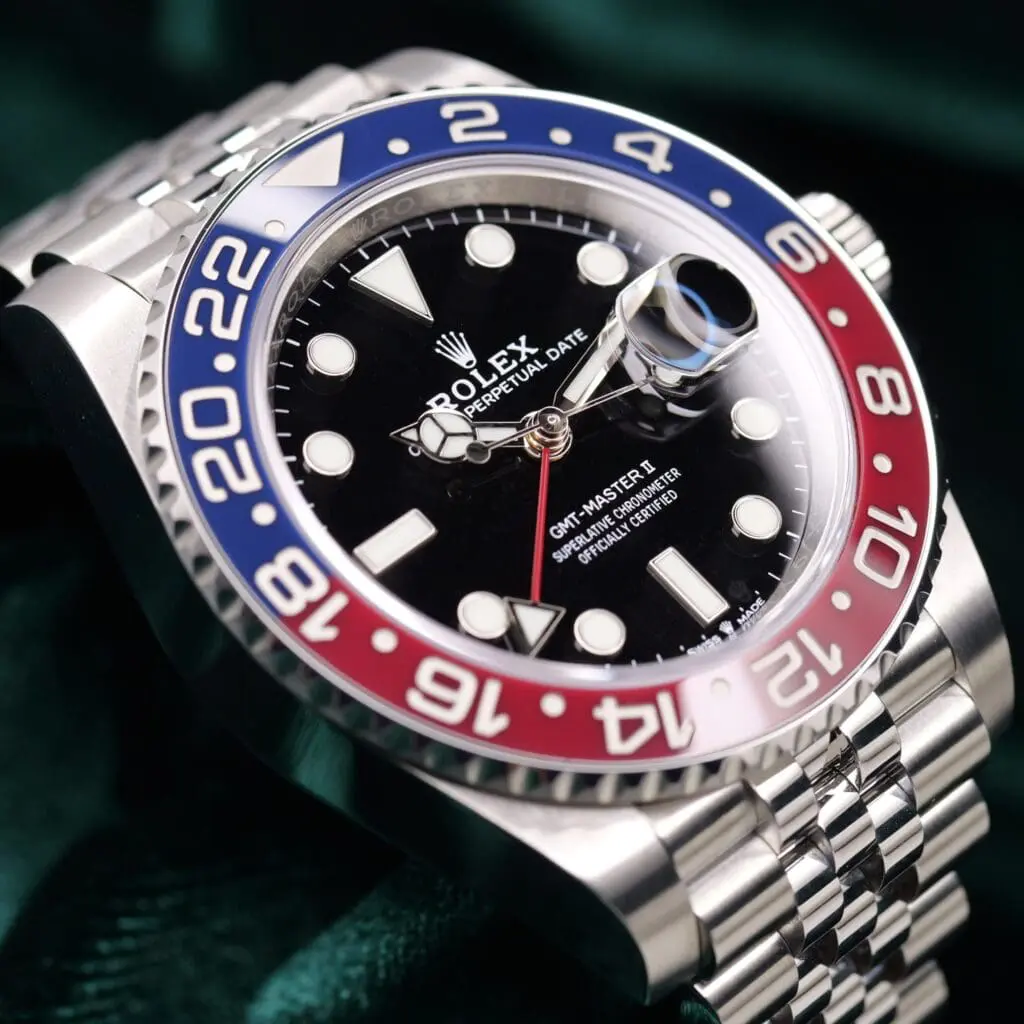
Both watches are now secondary-market only. On April 14, 2026, at the opening of Watches and Wonders Geneva, Rolex pulled the steel GMT-Master II 126710BLRO Pepsi and the white-gold 126719BLRO from the catalog. The remaining steel GMT lineup is Batman, Batgirl, Bruce Wayne, and Sprite. Not a single red-bezel GMT is in current production.

Our full GMT-Master II buying guide walks through how those four sit against each other if you’re now reconsidering the rest of the lineup.
The fallout was immediate. Chrono24 reported a 500% surge in purchase requests for the steel Pepsi during March 2026 as discontinuation rumors built, and active listings dropped roughly 25% as owners pulled inventory. By late April, secondary market median was around $25,000 for the steel Pepsi, with unworn 2026-dated examples pushing $40,000 and beyond.
For Coke buyers, the shift was indirect but real. Bloomberg’s Subdial Watch Index data showed Pepsi-driven speculation lifting interest in adjacent GMT references, including the Coke.
With Pepsi no longer the “current production” benchmark in the comparison, both watches now compete as discontinued steel GMTs. One with aluminum, one with ceramic, both with their own collector logic.
There’s a second 2026 storyline worth knowing before you buy either. Rolex’s published patent application (EP 4 311 820 A1) for a red-and-black zirconia Cerachrom bezel has been public since January 2024.
That’s the technical breakthrough that would finally allow a ceramic Coke. As of Watches and Wonders 2026, no ceramic Coke was announced, but the patent is real, the chemistry works, and the discontinuation of the Pepsi cleared the catalog slot a future Coke could fill.
Rolex Coke Overview

Rolex produced the GMT-Master II ref. 16710 from 1989 to 2007, and it’s the reference most collectors picture when they say Coke. The earlier ref. 16760, nicknamed “Fat Lady” for its thicker case profile, kicked off the GMT-Master II line in 1983 and ran until 1988 with the Coke bezel as its only colorway. Both are 40mm stainless steel. Neither has ever been made in ceramic.
The Coke name is collector slang, not Rolex’s. The brand has only ever called these watches the GMT-Master II, but the red-and-black split reads like the soda branding, and the nickname stuck across the entire 24-year run.
Collectors gravitate to the 16710 because it’s the sweet spot between vintage charm and daily-wear practicality: sapphire crystal, 100m water resistance, and the classic slimmer GMT case feel before Rolex moved to the wider Super Case design.
It’s also a reference that rewards careful buying. The 16710 was the first GMT-Master II offered with three interchangeable bezel options (Pepsi, Coke, and black), and inserts were swapped routinely over decades of ownership. Originality matters if you care about the watch holding collector value.
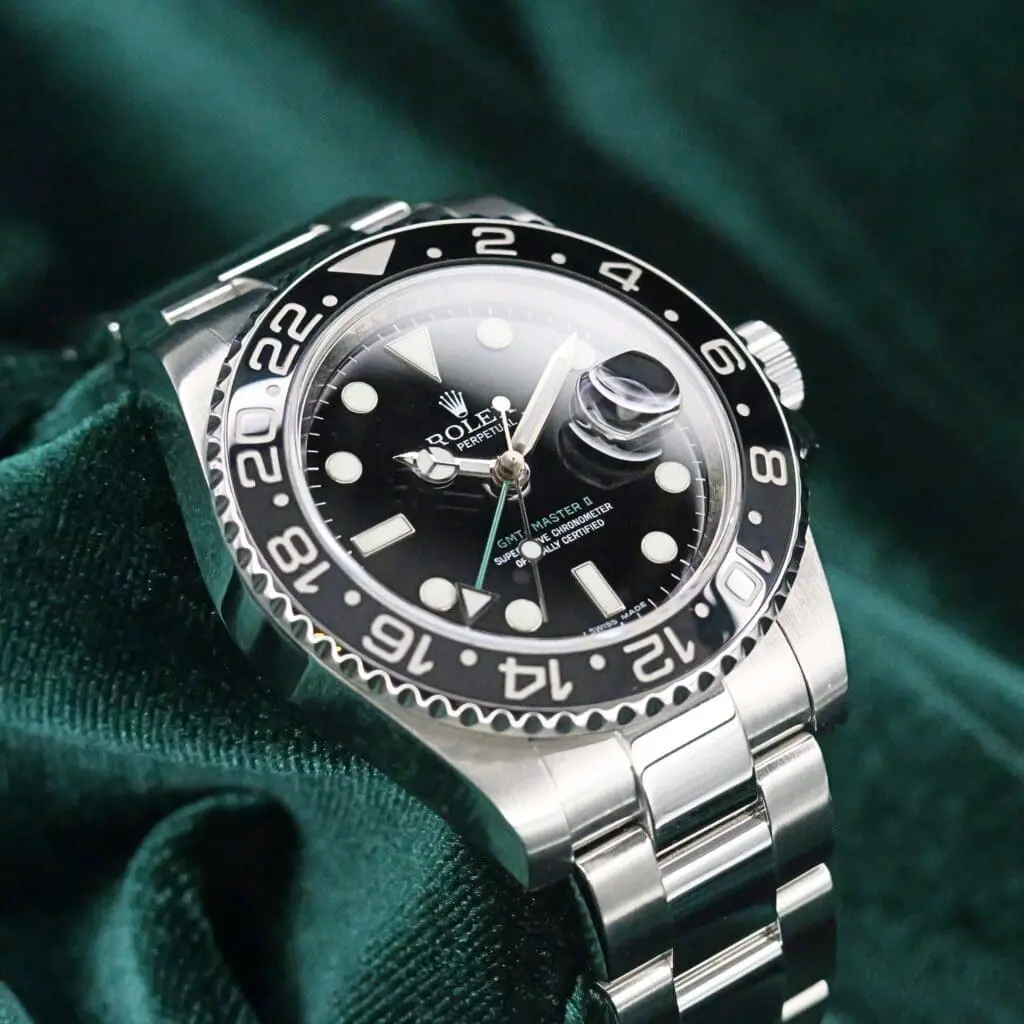

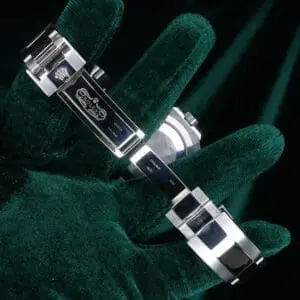

The aging curve on aluminum bezel inserts is part of the appeal. Reds fade toward orange, blacks soften to charcoal, and tritium dial lume (used in 16710s until around 1997, replaced by LumiNova and later Super-LumiNova) develops its own patina. A clean original Coke insert on a 1990s case is harder to find every year.
Key Specifications:
- Reference Numbers: 16760 (1983-1988) and 16710 (1989-2007)
- Case Size: 40mm
- Case Material: Stainless steel (Oystersteel)
- Bezel: Bidirectional 24-hour with anodized aluminum black-and-red “Coke” insert
- Movement: Caliber 3085 (16760), Caliber 3185 with late examples using Caliber 3186 (16710)
- Bracelet: Oyster most common; Jubilee available on later 16710s
- Crystal: Sapphire with Cyclops
Rolex Pepsi Overview

The Pepsi nickname goes back to the earliest GMT-Master era in the 1950s, but the modern steel Pepsi most buyers mean today is the GMT-Master II 126710BLRO, introduced in 2018 and discontinued in April 2026. Eight references carried the Pepsi bezel across 71 years of production. The 126710BLRO was the last steel one.
Our dedicated Pepsi buying guide walks through how each Pepsi reference stacks up if you’re weighing earlier examples against the 126710BLRO.
Rolex internally refers to the modern Pepsi references by the BLRO suffix, short for Bleu Rouge, French for “blue red.” The 126710BLRO launched on the Jubilee bracelet only, with the Oyster option added later in the production run. Both configurations are now permanently out of production.
What makes the 126710BLRO worth understanding even now is the materials story. Earlier Pepsi bezels (the GMT-Master 1675 from 1959 onward, the 16710 from 1989 to 2007) used anodized aluminum inserts that fade in sunlight and scratch from daily wear.
Rolex spent years working out the ceramic chemistry to produce red on a Cerachrom bezel. The alumina base used for blue, black, and green Cerachroms couldn’t hold red coloration. The solution was a specialized two-step sintering process for the red-blue split, which is why the 126710BLRO Cerachrom stays crisp and glossy where aluminum inserts soften and fade.
The 126710BLRO also runs Caliber 3285 with a 70-hour power reserve, Chronergy escapement, and a blue Parachrom hairspring. That’s the modern Rolex GMT engineering package, and combined with the ceramic bezel and the Jubilee/Oyster optionality, it’s what people are really chasing on the secondary market now.
Key Specifications:
- Reference Number: 126710BLRO
- Case Size: 40mm
- Case Material: Oystersteel
- Bezel: Bidirectional 24-hour with red-and-blue Cerachrom ceramic insert, platinum-filled numerals
- Movement: Caliber 3285
- Bracelet: Jubilee or Oyster
- Crystal: Sapphire with Cyclops
- Production: 2018 to April 2026 (discontinued)
More GMT-Master II
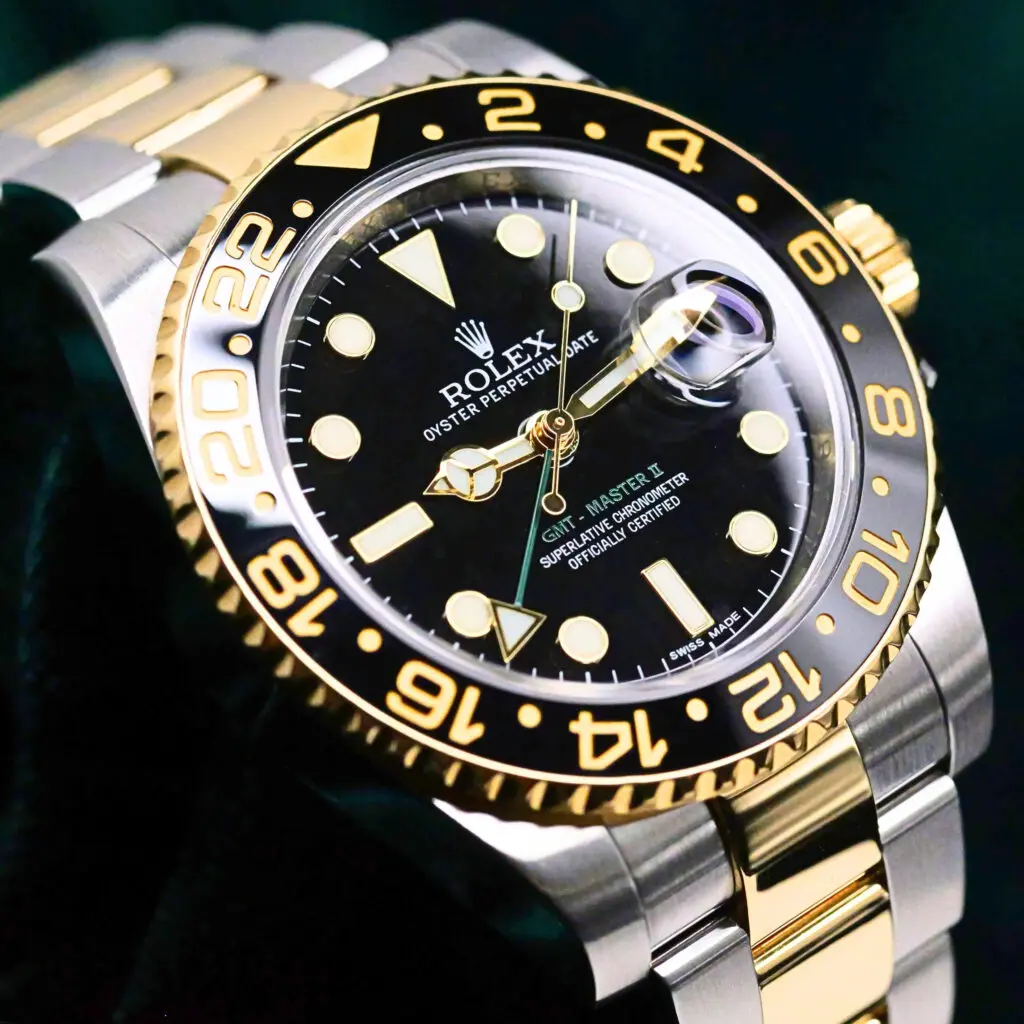
Rolex GMT-Master II “Green Arrow” Black Dial Black Ceramic Bezel Oyster Bracelet Two-Tone 18K Yellow Gold Stainless Steel 40mm MINT CONDITION COMPLETE SET 116713LN
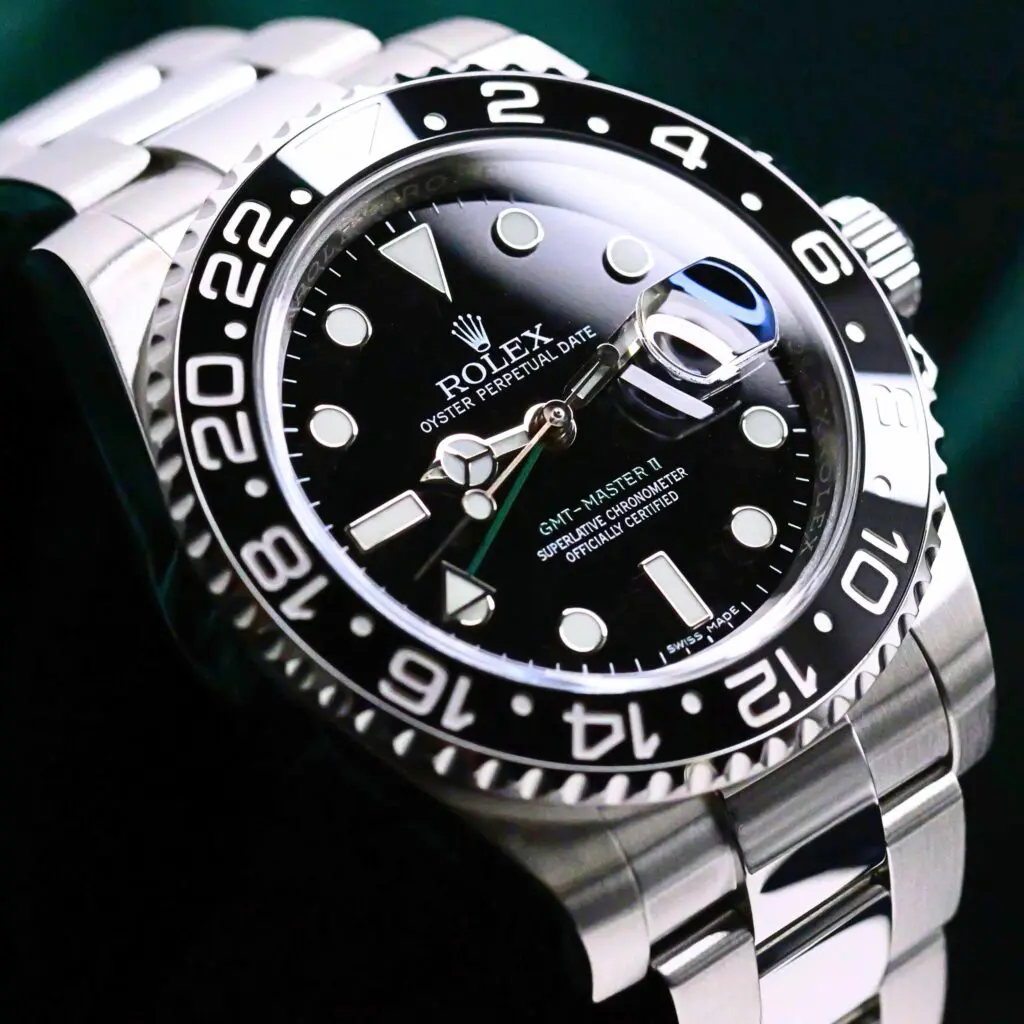
Rolex GMT-Master II "Green Arrow" Black Dial Black Ceramic Bezel Oyster Bracelet Stainless Steel 40mm MINT CONDITION COMPLETE SET 116710LN
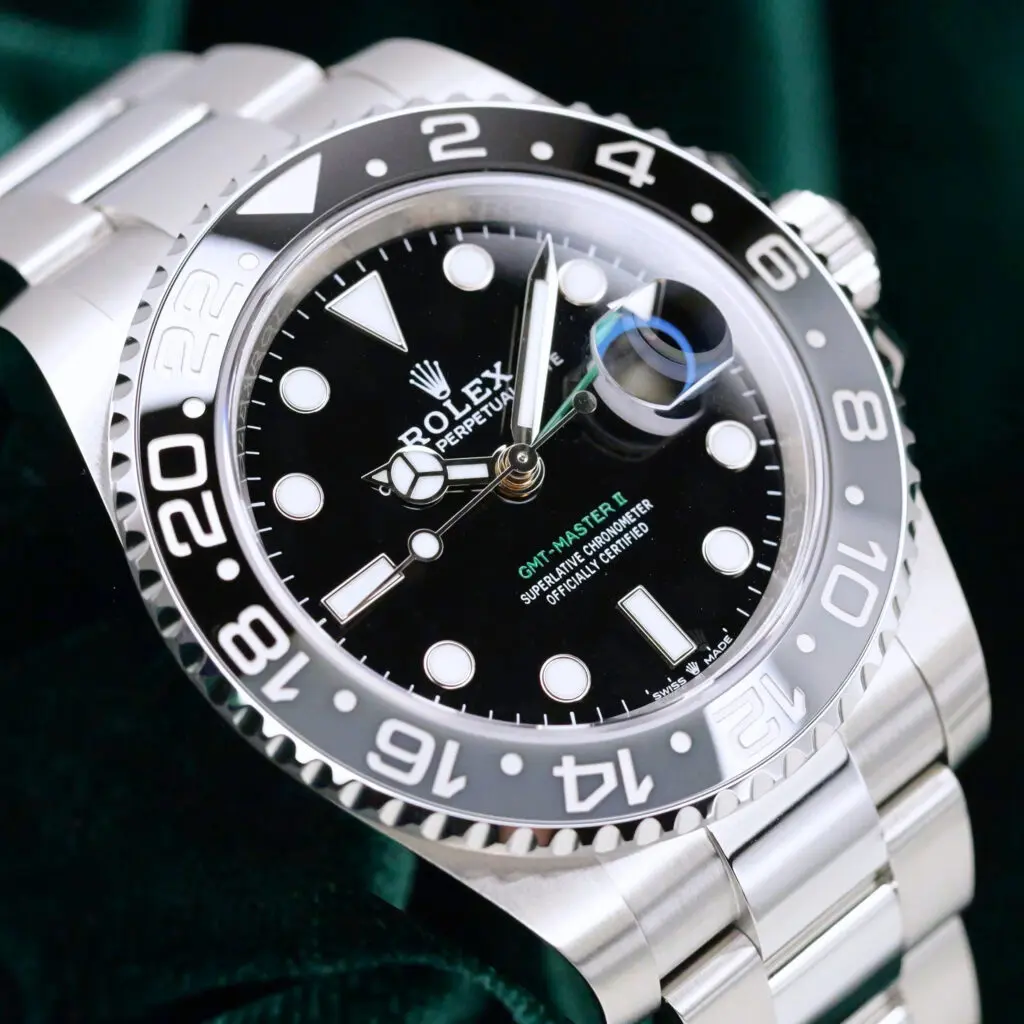
2026 NEW UNWORN Rolex GMT-Master II Bruce Wayne Black Dial Grey and Black Ceramic Bezel Stainless Steel Oyster Bracelet 40mm COMPLETE SET 126710GRNR-0004
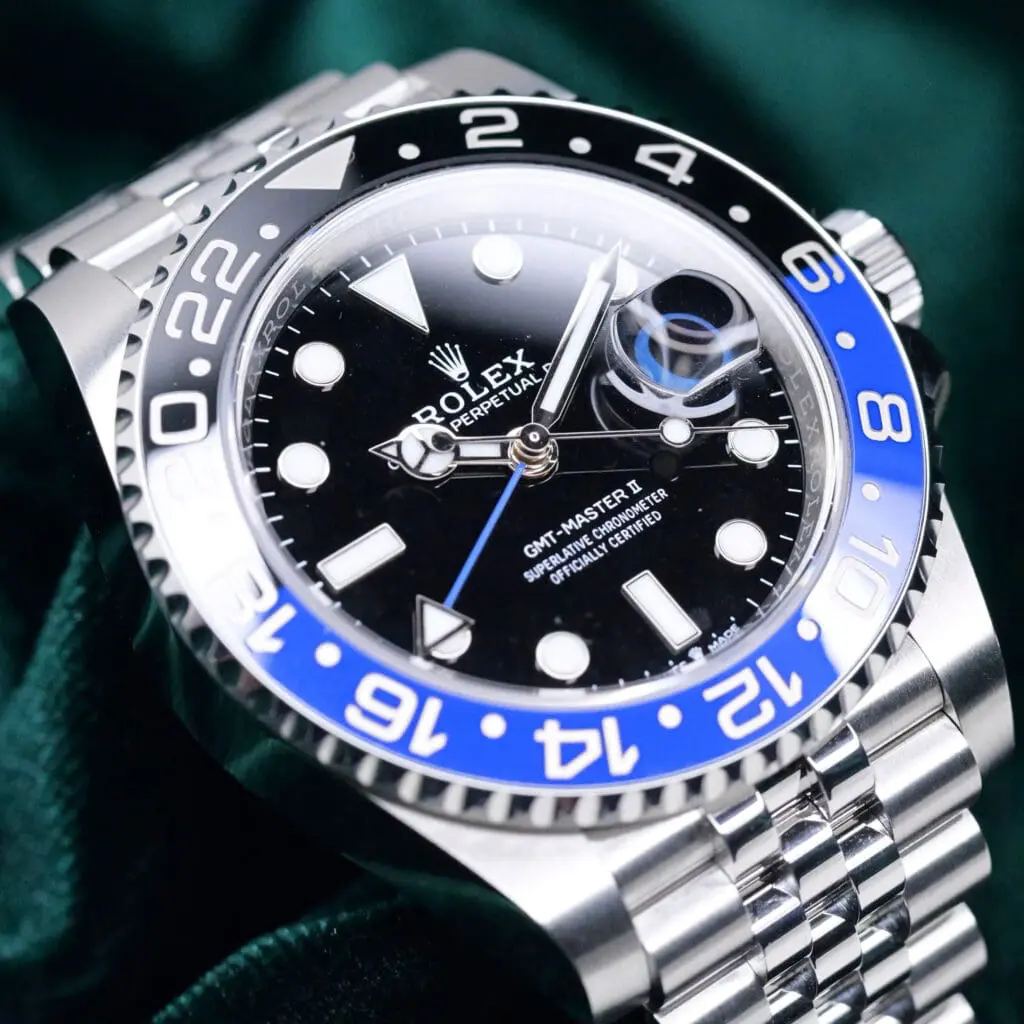
2025 NEW UNWORN Rolex GMT-Master II "Batgirl" Black Dial Blue Black Ceramic Bezel Jubilee Bracelet Stainless Steel 40mm COMPLETE SET 126710BLNR-0002
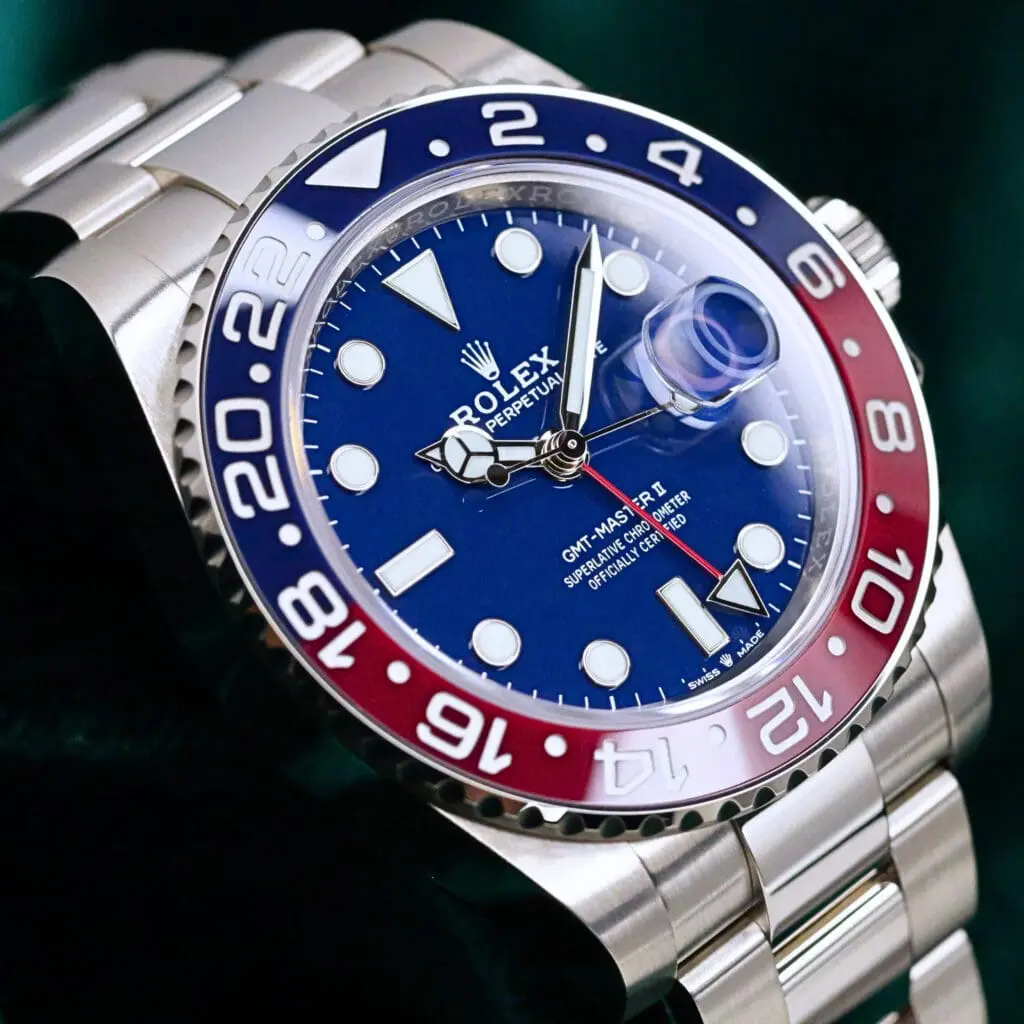
Rolex GMT-Master II "Pepsi" Blue Dial Blue Red Ceramic Bezel Oyster Bracelet 18K White Gold 40mm MINT CONDITION COMPLETE SET 126719BLRO
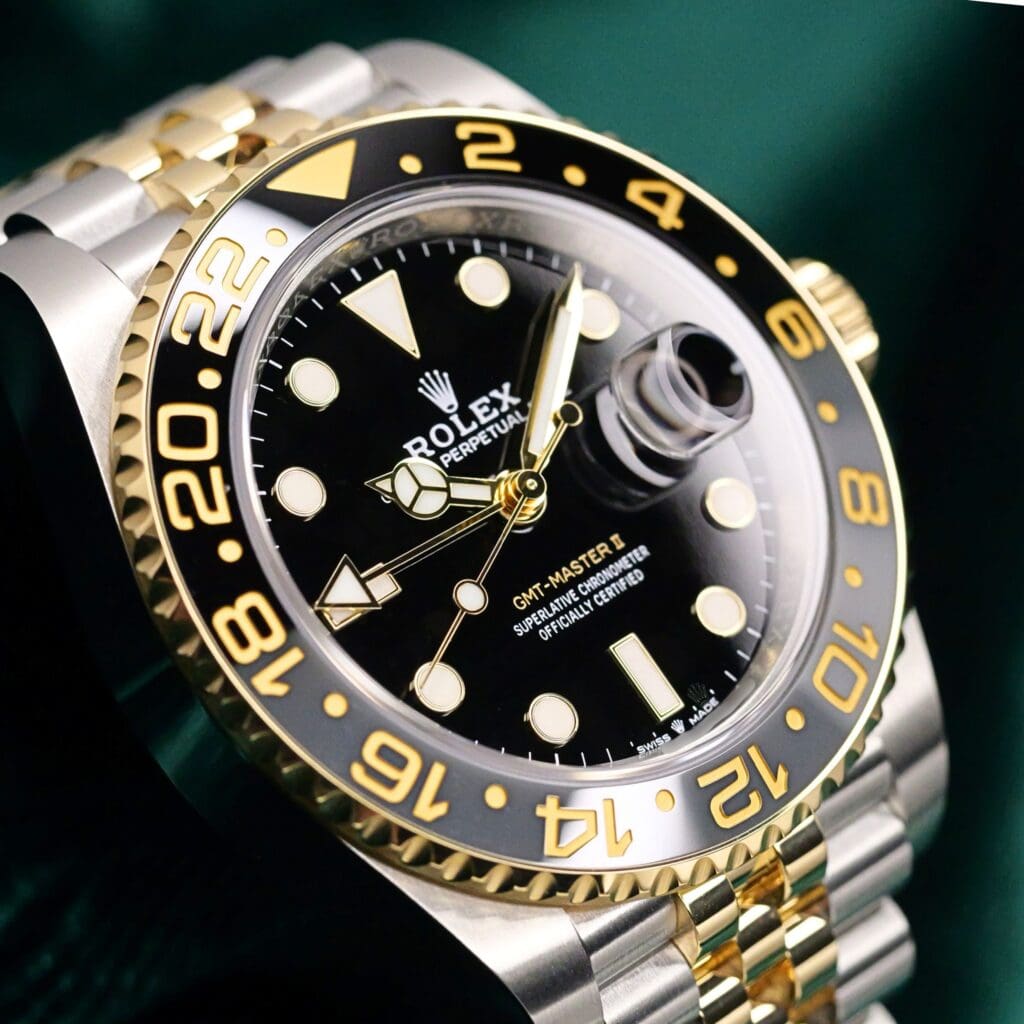
Rolex GMT-Master II Zombie Black Dial Black/Grey Ceramic Bezel Jubilee Bracelet Two-Tone 18K Yellow Gold Stainless Steel 40mm MINT CONDITION COMPLETE SET 126713GRNR
5 Key Differences Between Coke and Pepsi in 2026
This is where the decision gets clear. Coke and Pepsi share the same GMT foundation, but after the 2026 discontinuation, the comparison changed. Here’s where they really diverge as secondary-market buys today.
1. Bezel Material and Aging
This is the cleanest contrast on the watch. Aluminum tells you the watch’s age. Ceramic hides it.
Coke runs an anodized aluminum bezel insert, which means a 30-year-old example wears a patina you cannot fake. Originality matters here. Inserts were swapped routinely between Coke, Pepsi, and black across the 16710’s run, so a verified original on a clean case is a real find and prices reflect it.
Pepsi runs red-and-blue Cerachrom ceramic. It does not fade, does not scratch under normal wear, and looks the same in 2030 as it did when it left Geneva. The trade-off is no character arc. You get factory-fresh forever, but you do not get the warm patina story.
2. Production Era and Market Status
Rolex Coke has been out of production since 2007. Every example is pre-owned. Most buying focuses on the 16710 from 1989-2007, with the 16760 Fat Lady as the thicker, earlier alternative. The market is shaped by scarcity and condition, not by current-year demand.
Rolex Pepsi is also discontinued as of April 14, 2026. That’s the key shift from older versions of this comparison. The 126710BLRO is no longer the “current production icon” you wait years for at an AD. It’s a recently discontinued reference with a hot post-announcement market.
Chrono24 saw a 500% jump in purchase requests during March 2026 as rumors built, and listings dropped roughly 25% as owners held back inventory.
999+ Timepieces Available
Explore Our Timepieces
Authenticated, unworn, and ready to ship worldwide.
Rolex · Audemars Piguet · Patek Philippe · Omega · Cartier · Richard Mille · Hublot · Tudor
Newly Listed
Rolex Sea-Dweller "Red Letter" Black Dial Black Cerachrom Bezel Oyster Bracelet Stainless Steel 43mm MINT CONDITION COMPLETE SET 126600
$13,120.00
2026 NEW UNWORN Bvlgari Serpenti Tubogas Studs Capsule Limited Edition Green Dial Diamond Bezel Steel & 18k Yellow Gold 35mm COMPLETE SET 104360
$24,255.00
Vacheron Constantin Overseas Chronograph Blue Dial Blue Leather Strap Stainless Steel 42.5mm MINT CONDITION COMPLETE SET 5500V/110A-B148
$37,793.00
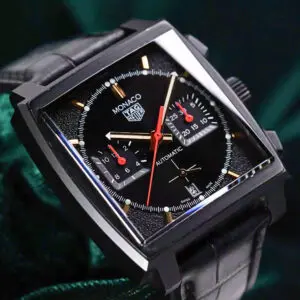
Tag Heuer Monaco Chronograph “Dark Lord” Special Edition Black Dial Black Leather Strap DLC Titanium 39mm MINT CONDITION COMPLETE SET CBL2180.FC6497
$8,135.00
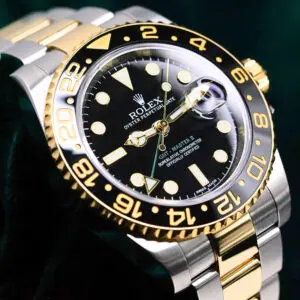
Rolex GMT-Master II “Green Arrow” Black Dial Black Ceramic Bezel Oyster Bracelet Two-Tone 18K Yellow Gold Stainless Steel 40mm MINT CONDITION COMPLETE SET 116713LN
$15,740.00
Vacheron Constantin Overseas Chronograph Blue Dial Stainless Steel 42.5mm MINT CONDITION COMPLETE SET 5500V/110A-B148
$37,793.00
Rolex Day-Date Meteorite Baguette Diamond Dial Fluted Bezel President 18K White Gold 40mm MINT CONDITION COMPLETE SET 228239
$78,629.00
2026 Rolex Cosmograph Daytona Black Dial Black Ceramic Bezel Oyster Bracelet Stainless Steel 40mm MINT CONDITION COMPLETE SET 126500LN
$33,594.00
2025 Vacheron Constantin Overseas Moonphase Retrograde Date Blue Dial Blue Rubber Strap Stainless Steel 41mm MINT CONDITION COMPLETE SET 4000V/210A-B911
$52,800.00
2025 Tudor Black Bay Chrono "Flamingo Blue" Turquoise Dial Black Bezel Stainless Steel 41mm MINT CONDITION COMPLETE SET 79360N-0024
$10,494.00

Audemars Piguet Royal Oak Offshore Chronograph "Batman" Black Dial Blue Accents Black Rubber Strap Stainless Steel 42mm MINT CONDITION COMPLETE SET 26470ST.OO.A028CR.01
$25,715.00

IWC Big Pilot's Watch Top Gun Miramar Grey Dial Green Textile Strap Black Ceramic 48mm MINT CONDITION COMPLETE SET IW501902
$7,240.00
3. Movement Generation
The Coke runs older GMT calibers (Cal. 3085 in the 16760, Cal. 3185/3186 in the 16710), the Pepsi runs the modern Cal. 3285. In practice that’s a 20-hour power reserve gap. Coke calibers give you roughly 48-50 hours; the Pepsi’s 3285 gives you closer to three days, plus the Chronergy escapement’s improved magnetic resistance.
For most owners the bigger consideration is service. A 3185 from a 1995-production 16710 is now well into the period where worn parts need replacement, and finding genuine service parts depends on Rolex Service Center stocking. The 3285 is current and serviceable for the foreseeable future.
GMT-Master service costs vary depending on movement generation and what needs replacing, so factor it in before pricing a 16710.
4. Bracelet Options
Coke 16710s came mostly on the Oyster bracelet, with Jubilee available on later production examples. What you find on the secondary market depends on what the original owner ordered.
Pepsi 126710BLRO launched on Jubilee only in 2018, with Oyster added later. Because both configurations were available simultaneously in late production, current secondary listings include both. That gives Pepsi buyers more flexibility; Jubilee for the dressier wrist presence, Oyster for the tool-watch feel.
If you’re still weighing the two, our Jubilee vs Oyster breakdown covers how each wears day to day.
5. Price and Market Behavior in 2026
This is where the discontinuation hits hardest. Pre-April 2026, Pepsi traded around $20,000-$23,000 secondary against an $11,800 retail. Post-discontinuation, the floor lifted. The historical parallel dealers are watching is the Submariner Hulk (ref. 116610LV), which roughly doubled in secondary market value in the two years after its 2020 discontinuation.
Coke pricing in 2026:
- 16710 Coke: around $10,000-$17,000+ depending on condition, originality, and full set status
- 16760 Fat Lady: around $12,000-$14,200 in good condition, more for sharp originals
- Resale behavior moves with insert originality, case condition, and full sets more than hype
Pepsi pricing in 2026 (post-discontinuation):
- 126710BLRO median: around $25,000 by late April 2026, per WatchCharts and Subdial Watch Index data
- Unworn 2026-dated examples: pushing $40,000 and higher per dealer commentary in Robb Report
- Earlier production years (2018-2024): trading lower but still well above 2025 levels
- Bloomberg’s Subdial Watch Index tracked roughly a $3,000 jump from January to late March 2026 alone
Coke is the cheaper entry into a discontinued steel GMT, and Pepsi is now the speculative play with a roughly 12-month window before the market settles into its new normal.
For context on how these post-discontinuation figures fit into the broader Rolex market, our Rolex pricing guide tracks how the major sport references have moved.
Coke vs Pepsi Side-By-Side Snapshot

Coke vs Pepsi Side-By-Side Snapshot
Coke and Pepsi share the GMT-Master II DNA but live in different eras of Rolex engineering. One is a five-digit classic shaped by condition and originality, the other is a recently retired modern reference still finding its post-discontinuation floor.
Both watches share the 40mm Oystersteel case, sapphire crystal with Cyclops, bidirectional 24-hour graduated bezel, true GMT function with an independent local hour hand, and 100m water resistance. The table below covers only the specs that differ.
| Feature | Rolex Coke | Rolex Pepsi |
| Reference Numbers | 16760 (1983-1988), 16710 (1989-2007) | 126710BLRO (2018-April 2026) |
| Production Status | Discontinued 2007 | Discontinued April 14, 2026 |
| Bezel Material | Aluminum insert | Cerachrom ceramic |
| Bezel Colorway | Black and red | Red and blue |
| Bracelet | Oyster (mostly); Jubilee on later 16710 | Jubilee or Oyster |
| Clasp | Oysterlock (era-correct variations) | Oysterlock with Easylink 5mm extension |
| Movement | Cal. 3085 (16760), Cal. 3185/3186 (16710) | Cal. 3285 |
| Escapement | Swiss lever | Chronergy |
| Hairspring | Nivarox / Parachrom on late 3186 | Blue Parachrom |
| Shock Protection | KIF | Paraflex |
| Accuracy | COSC (-4/+6 sec/day) | Superlative Chronometer (-2/+2 sec/day) |
| Power Reserve | ~48-50 hours | ~70 hours |
| Lume | Tritium pre-1997, then LumiNova/Super-LumiNova | Chromalight |
| Original Retail | Historical retail ~$2,900-$5,700 | $11,800 USD |
| 2026 Secondary | ~$10,000-$17,000+ (16710) | ~$25,000 median; $40,000+ unworn |
Which Rolex Should You Choose?
You’re not choosing between better and worse. With both watches discontinued, you’re choosing between two collector-driven GMTs at very different price points, with different material stories and different market dynamics.
When the Coke Is the Right Pick
- You want the lowest entry price into a discontinued steel GMT-Master II, with most 16710 examples landing under $17,000
- You prefer a darker, more restrained wrist presence — black dominates and red is the accent
- You like the aluminum-bezel aging story, where fading reds and softened blacks add character instead of detracting from value
- You want the slimmer five-digit case feel before the Super Case design came in
- You’re comfortable shopping carefully on insert originality and case condition (both are make-or-break on a 16710)
- You’re potentially watching the ceramic Coke patent story and want a vintage piece that could become more collectible if Rolex announces a modern Coke
If you’re weighing the Coke against the next-up steel GMT, our Coke vs Batman breakdown covers how the two compare on bezel, era, and price.
When the Pepsi Is the Right Pick
- You want the modern execution (ceramic bezel, current-generation movement, longer power reserve) without compromise
- You’re buying with a 5-10 year horizon and you’re comfortable that the market is still finding its post-discontinuation floor
- You want bracelet flexibility — both Jubilee and Oyster configurations exist on the secondary market
- You’re tracking the Hulk Submariner precedent and believe the discontinued steel Pepsi may follow a similar upward curve
- You want the most recognizable GMT colorway, the one most people associate with the model
- You’re prepared to pay a meaningful premium — median around $25,000 in 2026, with unworn pieces pushing $40,000+
If the post-discontinuation Pepsi premium has you eyeing alternatives, our Pepsi vs Batman breakdown covers how the next steel GMT in the lineup compares.
Where to Buy Authentic Watches Online
A handful of legitimate online channels exist for buying a discontinued GMT-Master II, whether you’re going for a Coke or a Pepsi.
Chrono24 is the largest international marketplace for pre-owned watches and runs a buyer-protection escrow program. If you’ve never used it before, what to watch for on Chrono24 covers seller verification, escrow, and the common pitfalls.
eBay offers its Authenticity Guarantee program on watches over a certain price threshold, which routes the watch through eBay’s authentication center before it reaches you.
Grailzee is an enthusiast-focused auction platform with watch-specific listings. Forums like WatchUSeek and Rolex Forums also host private-party listings, which require more buyer diligence but sometimes surface clean original examples.
We also sell, buy, and trade luxury watches — including the GMT-Master II references covered above. The reason clients work with us instead of an open marketplace is the walkthrough before you commit.
We provide tour videos of the actual watch (not stock photos), detailed condition notes on the case, bracelet, insert, and dial, and direct conversation with the person who has inspected the watch.
On a 16710 Coke, that means insert verification, lume color check, and case sharpness. On a 126710BLRO Pepsi, that means production year confirmation, bracelet config check, and complete-set verification.
That walkthrough is reflected in our 4.9-star Google rating, which comes from clients who wanted to know exactly what they were buying before wiring funds on a five-figure watch.
If you want that kind of evaluation on a specific Coke 16710, 16760 Fat Lady, or a 126710BLRO Pepsi, reach out and we’ll send tour videos and condition notes on what we currently have or can source for you.
Final Thoughts on Rolex Coke vs Pepsi
The Coke vs Pepsi decision used to be discontinued-vintage against current-production-icon. As of 2026, both watches are on the same side of the catalog. Coke is the cheaper, character-driven entry, with pricing shaped by originality and condition. Pepsi is the post-discontinuation play, priced like the speculative event it currently is.
Two quick takes before you buy. First, condition outweighs hype on both: a clean original 16710 with a sharp insert holds value through any cycle, and a complete-set 126710BLRO survives a correction. If you’re considering a watch-only example to save money, whether to buy a Rolex without box and papers is worth reading first.
Second, the price spread within each reference matters more than the headline figure. A 16710 Coke ranges roughly 70% between watch-only and full-set examples, and Pepsi prices can differ by $5,000-$8,000 between early 2018-2020 pieces and 2024-2026 stock with sealed papers. Know which end you’re shopping before agreeing on price.
Buy the watch you want to wear, not the watch you’re hoping the market validates next year.