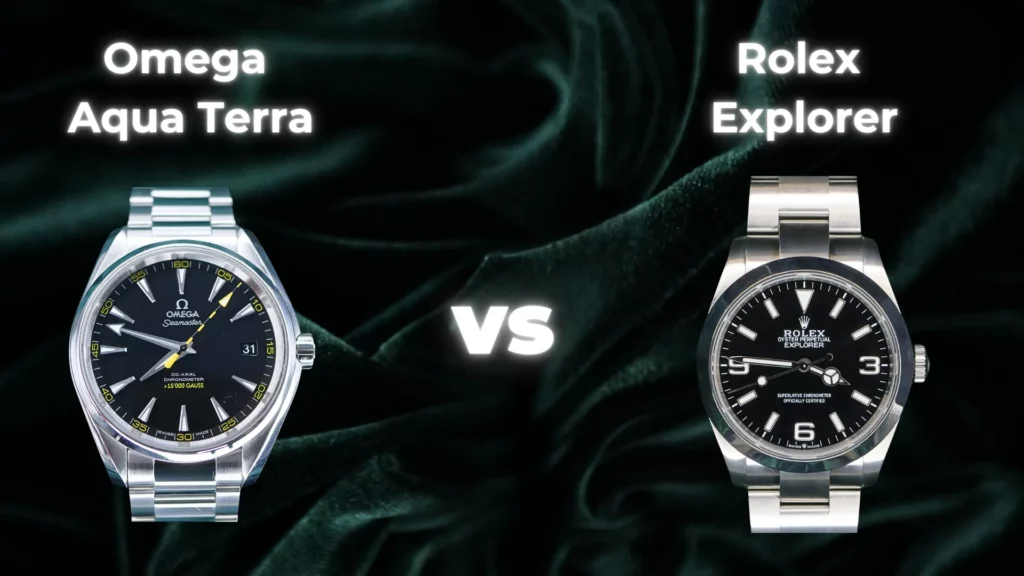
People keep comparing the Omega Aqua Terra and the Rolex Explorer because both promise the same thing: one watch, daily wear, no second-guessing. The short list almost always lands here. The catch is that they get to that promise from opposite ends of the spectrum.
One leans into modern engineering and price flexibility on the secondary market. The other barely changes year to year and lets demand do the work. Once you see the gap that way, the choice gets a lot easier to make.
What Is the Omega Aqua Terra?

Omega launched the Aqua Terra in 2002 as the non-diver Seamaster that still handles real water. It carries 150 m water resistance and a screw-down crown across most modern references. The case sits closer to a dress watch in profile, but the build is sporty enough to hold up on a bracelet, with tight tolerances and a solid clasp.
The line is built for buyers who don’t want to switch watches when the day shifts. The technical pull is the movement: most current references run Co-Axial Master Chronometer calibers certified by METAS, which tests accuracy across positions, temperatures, and magnetic fields.
What makes the Aqua Terra stand out is the pairing of a refined dial with serious engineering, including 15,000 gauss anti-magnetism on Master Chronometer models. Magnets live everywhere now (laptops, phones, MagSafe cases), and the watch shrugs them off without needing a soft-iron inner cage.
Collectors like the Aqua Terra for range. Multiple case sizes, dial colors, and complications like the Worldtimer all sit in the catalog without bloating the watch on the wrist. Resale is more stable than people assume, which means you can buy on taste and specs rather than chasing hype. We cover the full lineup in our Omega Aqua Terra buying guide.
The visual cues to know are the teak-style dial grooves, the polished bezel, and the case with sharp brushed-and-polished facets. It looks simple in photos. In person, the symmetry and finishing are what keep it from reading generic.
Notable references include:
- Ref. 2503.50.00
- Ref. 231.10.39.21.03.001 Skyfall
- Ref. 220.10.41.21.03.001
- Ref. 220.10.38.20.03.001
999+ Timepieces Available
Explore Our Timepieces
Authenticated, unworn, and ready to ship worldwide.
Rolex · Audemars Piguet · Patek Philippe · Omega · Cartier · Richard Mille · Hublot · Tudor
Newly Listed
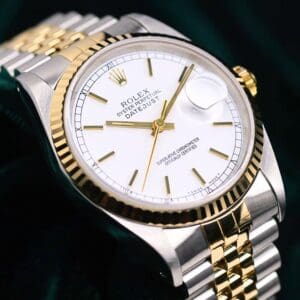
Rolex Datejust White Dial Fluted Bezel Jubilee Bracelet Two-Tone 18K Yellow Gold Stainless Steel 36mm MINT CONDITION 16233
$8,663.00
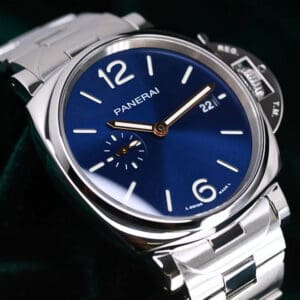
Panerai Luminor Due Blue Dial Stainless Steel 42mm MINT CONDITION COMPLETE SET PAM01124
$7,681.00
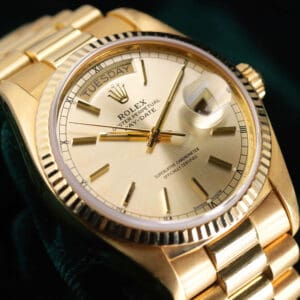
Rolex Day-Date Champagne Dial Fluted Bezel President Bracelet 18k Yellow Gold 36mm MINT CONDITION 18038
$25,849.00
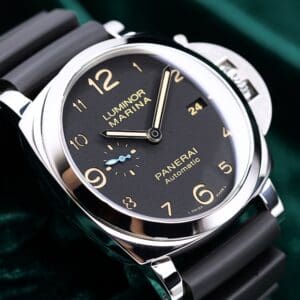
Panerai Luminor Marina 1950 3 Days Black Dial Black Rubber Strap Stainless Steel 44mm MINT CONDITION COMPLETE SET PAM01359
$6,353.00
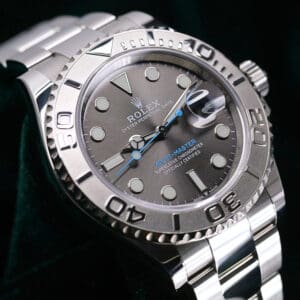
Rolex Yacht-Master Rhodium Slate Dial Platinum Bezel Oyster Bracelet Stainless Steel 40mm MINT CONDITION COMPLETE SET 126622
$15,740.00
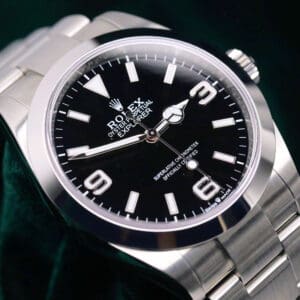
2025 Rolex Explorer Black Dial Oyster Bracelet Stainless Steel 40mm MINT CONDITION COMPLETE SET 224270
$10,495.00
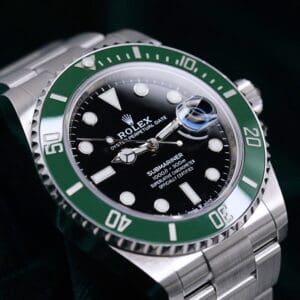
Rolex Submariner Date "Starbucks" Black Dial Green Ceramic Bezel Oyster Bracelet Stainless Steel 41mm MINT CONDITION COMPLETE SET 126610LV-0002
$14,992.00
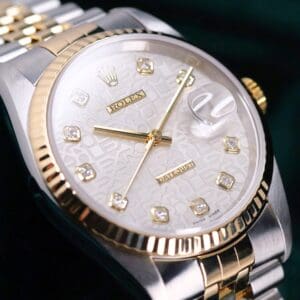
Rolex Datejust 36 Silver Anniversary Jubilee Diamond Dial Two-Tone 18K Yellow Gold Stainless Steel 36mm MINT CONDITION COMPLETE SET 16233
$10,739.00
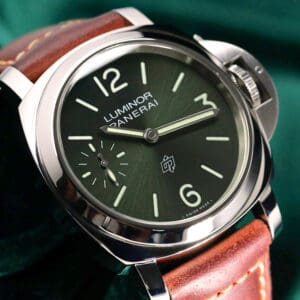
2025 Panerai Luminor Logo Green Dial Stainless Steel Brown Leather Strap 44mm MINT CONDITION COMPLETE SET PAM01624
$6,529.00
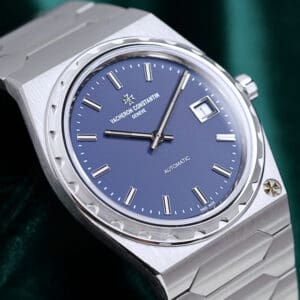
2026 NEW UNWORN Vacheron Constantin Historiques 222 "Jumbo" Blue Dial Stainless Steel 37mm COMPLETE SET 4200H/222A-B934
$60,895.00
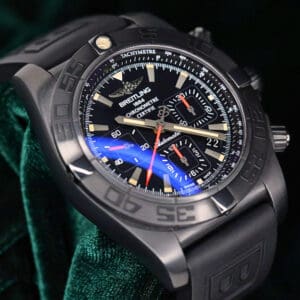
Breitling Chronomat 44 Blacksteel Black Dial Red Accents Black Rubber Strap Black DLC Stainless Steel 44mm MINT CONDITION COMPLETE SET MB0111C3/BE35
$6,526.00
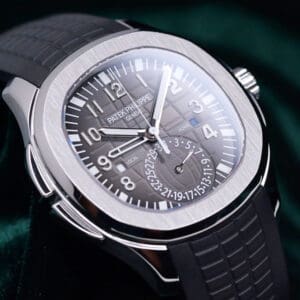
Patek Philippe Aquanaut Travel Time Black Dial Stainless Steel Black Rubber Strap 40.8mm Caliber 324 MINT CONDITION COMPLETE SET 5164A-001
$99,745.00
What Is the Rolex Explorer?

The Explorer traces back to the early 1950s, built as a legibility-first Oyster watch and refined slowly rather than redesigned every few years. Modern references keep the original layout but upgrade the case, lume, and movement to Rolex’s current standards.
This line is for someone who wants the cleanest Rolex tool watch and doesn’t care about complications. The Explorer’s whole identity is clarity and durability. An Oyster case rated to 100 m, a bracelet that takes daily knocks, and a dial you can read in a second.
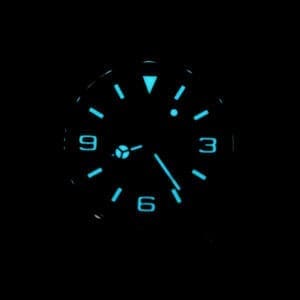
Where it earns its place is in the small stuff. The watch wears slim, reads fast, and stays on time thanks to Rolex’s Superlative Chronometer regulation. The lume is strong, the smooth bezel is tough, and the bracelet rarely feels flimsy after years of wear.
Collectors keep coming back because the Explorer avoids trend spikes. It carries deep brand equity without the loud premiums of Submariners or GMTs, which means you can wear it daily without feeling like you’re strapping on a fragile investment. The full reference history sits in our Rolex Explorer buying guide.
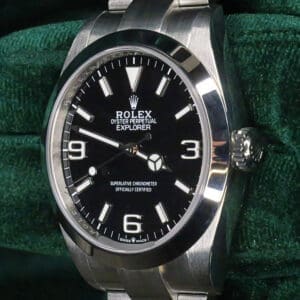
Visual cues to know are the smooth bezel, Mercedes hands, and the 3-6-9 dial. It’s the Rolex that signals purpose, not flash, which is exactly why it keeps drawing buyers who already own a few watches and want one that stays out of the way.
Notable references include:
- Ref. 6350
- Ref. 1016
- Ref. 114270
- Ref. 214270
- Ref. 224270 Explorer 40

Main Differences: Omega Aqua Terra vs Rolex Explorer
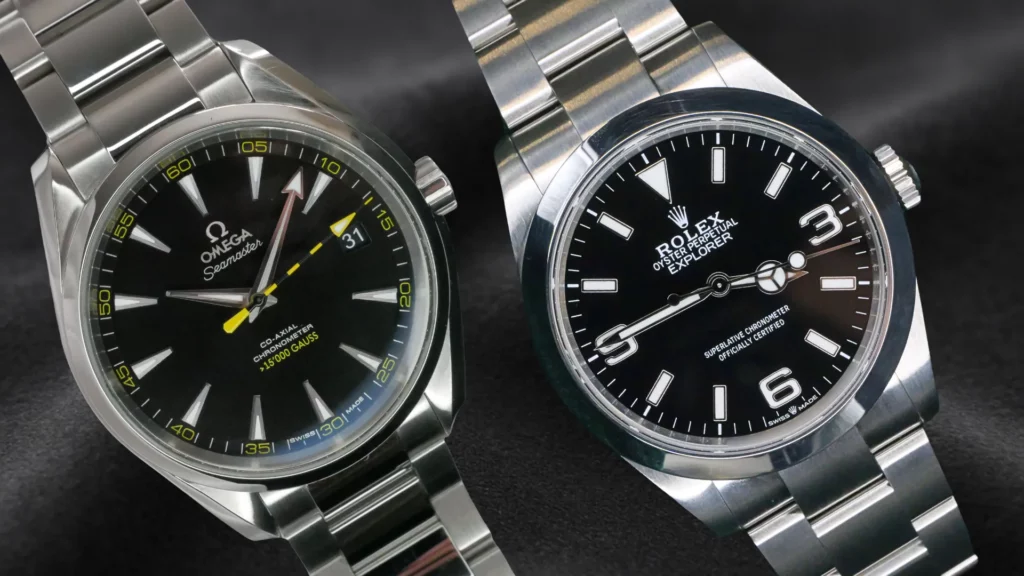
This is where the comparison gets practical. On the surface, both look simple and capable. The differences show up when you dig into how they wear, how they run, and how they hold value over time.
The sections below cover the areas that matter most for ownership. These details shape comfort, reliability, and long-term satisfaction more than brand names ever will.
1. Case Design
The Aqua Terra wears like a refined sports watch. Omega shapes the case with lyre-style lugs, sharp facets, and more polished surfaces that catch light. Most buyers land on 38 mm or 41 mm versions with 150 m water resistance, which adds flexibility for swimming and travel.
The Explorer stays intentionally simple. Rolex keeps it compact: 36 mm or 40 mm, smooth bezel, flat legible dial. The Oyster case offers 100 m water resistance and a more muted finish. On the wrist, it feels tool-first and blends into any setting without trying.
2. Movement and Accuracy
The Aqua Terra leads on movement tech. Modern references use Co-Axial Master Chronometer calibers like the 8800 (38 mm) or 8900 (41 mm), tested by METAS. They resist 15,000 gauss and run at roughly 0 to +5 seconds per day. The line also got the new Caliber 8750 in the 2025 Aqua Terra 30, which extends Master Chronometer certification down into the smallest automatic case.
The Explorer takes the long-reliability route. Rolex fits the current 224270 with Caliber 3230, certified to the Superlative Chronometer standard of -2/+2 seconds per day, with a 70-hour power reserve. It looks plain on paper next to the Omega, with no anti-magnetism marketing and no extra certification, but it stays accurate without fuss.
3. Bracelet and Clasp
The Aqua Terra bracelet leans dressier. Omega uses mixed finishing and softer edges, which gives it a smoother drape. The historical knock has been the lack of micro-adjustment on the clasp.
Omega started fixing that in 2024 by rolling out a micro-adjust comfort clasp on black lacquer dial models. The 2025 Aqua Terra 30 references launched with the new clasp standard, so this feature is steadily expanding across the catalog.
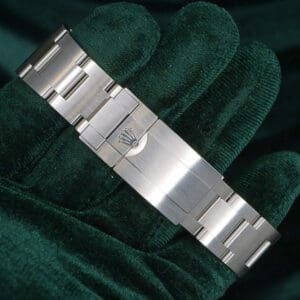
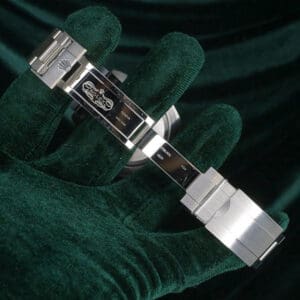
The Explorer’s Oyster bracelet feels more utilitarian. Brushed surfaces, a solid clasp, and Easylink (Rolex’s tool-free 5 mm extension) built in for quick adjustments mid-day. Easylink is one of those small details you stop noticing after a week and miss the moment you wear a watch without it.
4. Price and Market Demand
The trend splits cleanly between the two lines. Aqua Terra prices stay well below retail even when the broader market lifts, while Explorer prices cluster at or just above retail. That’s demand behavior, not brand quality, doing the work. Buyers chase Aqua Terras for value. They chase Explorers for retention.
For the Aqua Terra, a current 41 mm steel reference like 220.10.41.21.03.001 retails at $7,100 and trades around $4,189 on the secondary market, roughly 41% below retail. Older steel references sit even lower in the $700 to $3,400 range depending on condition, signaling thin demand at the entry end.
Precious-metal Aqua Terras get hit just as hard, with the yellow gold ref. 220.50.41.21.10.001 trading near $39,000 against a much higher retail.
The Explorer shows the opposite pattern. The current 224270 retails at $8,350 and trades around $8,571, about 2.6% above retail. Rolex raised steel Explorer prices in January 2026 (the 124270 moved to roughly $8,450), which tightened the picture further. The shift fits the broader pattern in our Rolex pricing guide.
At the high end, the vintage 1016 has no retail anchor at all. Recent sold examples on Chrono24 and eBay range from around $11,500 for honest-condition pieces to $30,000-plus for clean Mk1 dials with full provenance.
The lesson for buyers: an Explorer asks for more upfront, but an Aqua Terra asks you to accept depreciation as part of ownership. Neither is wrong. They just answer different questions. The wider Omega vs Rolex resale comparison shows the same pattern across both catalogs.
Iconic Omega Aqua Terra References

The Aqua Terra makes the most sense when you read it by movement generation, not by looks. Omega kept the design familiar and upgraded calibers, certification, and magnetic resistance in steps. That makes the reference number more important than usual when shopping.
Below are the four Aqua Terra references that best show how the line evolved and why specific versions still draw demand on the secondary market.
1. Ref. 2503.50.00
This was the early modern Aqua Terra that balanced sport specs with a dress-friendly case. Buyers liked it for the 150 m water resistance and clean dial at a time when Omega hadn’t yet pushed heavy certification language. It still wears well today, especially for collectors who like 39 mm.
Most owners approach this reference wear-first. The classic proportions and lower entry cost matter more than appreciation. Resale is soft, but daily usability holds up.
Key Specs:
- Case Diameter: 39 mm
- Bracelet: Stainless steel three-link
- Movement: Omega Caliber 2500, automatic Co-Axial
- Power Reserve: 48 hours
- Water Resistance: 150 m
- Crystal: Sapphire
- Pricing (2026): ~$5,700 retail (historic) | ~$3,145 market
2. Ref. 231.10.39.21.03.001 Skyfall
The Skyfall reference holds steady demand across cycles. The Bond association helped visibility, but the real driver is sizing. The sub-39 mm case fits most wrists and avoids the oversized trend that’s now reversing.
Collectors treat this as a liquidity-safe Aqua Terra. Resale moves faster than most Omega dress-sport models, even if the value floor is soft. The buy logic is flexibility, not appreciation.
Key Specs:
- Case Diameter: 38.5 mm
- Bracelet: Stainless steel three-link
- Movement: Omega Caliber 8500, automatic Co-Axial
- Power Reserve: 60 hours
- Water Resistance: 150 m
- Crystal: Sapphire
- Pricing (2026): ~$7,800 retail (historic) | ~$3,671 market
3. Ref. 220.10.38.20.03.001
This 38 mm reference brought modern Master Chronometer specs into a compact case. Buyers who didn’t want to step up to 41 mm got current Omega tech without compromise: METAS certification, 15,000 gauss anti-magnetism, and the Caliber 8800 movement. We break down the size choice in our Aqua Terra 38 vs 41 comparison.
Most owners buy this on the spec-to-price ratio. Resale lands in the same general band as the 41 mm version, so the size choice comes down to wrist preference rather than market behavior.
Key Specs:
- Case Diameter: 38 mm
- Bracelet: Stainless steel three-link
- Movement: Omega Caliber 8800, Master Chronometer
- Power Reserve: 55 hours
- Anti-Magnetism: 15,000 gauss
- Water Resistance: 150 m
- Crystal: Sapphire
- Pricing (2026): ~$7,100 retail | ~$4,219 market
4. Ref. 220.10.41.21.03.001
This is the modern baseline for the Aqua Terra. Full Master Chronometer certification, the Caliber 8900, and a 41 mm case give it the contemporary presence most buyers expect from a modern sports watch. It’s also the most popular Aqua Terra reference on the secondary market by sales volume.
Owners buying this one know what they’re getting into. Steady depreciation in exchange for reliability and performance is the trade. The watch isn’t a future collectible. It’s a working piece that earns its keep on the wrist.
Key Specs:
- Case Diameter: 41 mm
- Bracelet: Stainless steel three-link
- Movement: Omega Caliber 8900, Master Chronometer
- Power Reserve: 60 hours
- Anti-Magnetism: 15,000 gauss
- Water Resistance: 150 m
- Crystal: Sapphire
- Pricing (2026): ~$7,100 retail | ~$4,189 market
Iconic Rolex Explorer References

The Explorer is best understood by era and proportion, not by spec sheets. Rolex keeps the design steady and refines small things over time: dial execution, lume, bracelet construction, movement efficiency. That makes minor reference changes carry more weight than they would on most other lines.
Below are the four Explorer models that show how the line evolved and why specific references continue to drive demand and market confidence in 2026.
1. Ref. 1016
The 1016 defined the Explorer for decades. Long production and visual consistency made it the reference collectors recognize on sight, and it’s the one that anchors most serious vintage Explorer conversations today.
Buyers approach this as a historical asset, not a daily watch. Originality drives value far more than wearability: matte vs gloss dial, dial revision (Mk1 through Mk6), bezel condition, and bracelet provenance all swing prices by thousands. Owners accept maintenance risk in exchange for scarcity and long-term appreciation.
If you’re new to the era, our vintage Rolex buying guide walks through what to look for.
Key Specs:
- Case Diameter: 36 mm
- Bracelet: Oyster bracelet
- Movement: Rolex Caliber 1570
- Power Reserve: 48 hours
- Water Resistance: 100 m
- Crystal: Plexiglass
- Pricing (2026): no retail anchor | ~$11,500 to $30,000+ depending on condition and dial variant
2. Ref. 114270
This was the modern 36 mm Explorer that dropped vintage complications and ran on familiar proportions with sapphire and updated manufacturing. It’s still the entry point for buyers who want a current-feeling Explorer without paying current-production money.
Most owners treat this as a low-risk daily Rolex. Pricing has been stable, demand is steady, and resale is straightforward. It currently trades roughly $1,000 below the 214270 and $2,000 below the in-production 124270, which keeps it on the radar as a value play within the Explorer line.
Key Specs:
- Case Diameter: 36 mm
- Bracelet: Oyster bracelet
- Movement: Rolex Caliber 3130
- Power Reserve: 48 hours
- Water Resistance: 100 m
- Crystal: Sapphire
- Pricing (2026): no current retail | ~$6,500 market
3. Ref. 214270
The 214270 changed the Explorer’s wear profile by going to 39 mm, which pulled in buyers who wanted a modern presence without abandoning the Explorer identity. It also became a transitional reference. Rolex went back to 36 mm with the 124270 in 2021, then added the 40 mm 224270 in 2023.
Collectors split on sizing. Mk1 and Mk2 dial variants matter to value, with the 2016 Mk2 update adding larger handsets and improved lume. Market activity is high, and the reference now trades roughly $500 below the 124270 and around $2,000 below the 224270.
Key Specs:
- Case Diameter: 39 mm
- Bracelet: Oyster bracelet
- Movement: Rolex Caliber 3132
- Power Reserve: 48 hours
- Water Resistance: 100 m
- Crystal: Sapphire
- Pricing (2026): no current retail | ~$7,594 market
4. Ref. 224270 Explorer 40
The 224270 is the current 40 mm steel Explorer and the one most new buyers default to. Released in 2023, it gave the line a size that matches modern Rolex sport-watch proportions while keeping the smooth bezel and 3-6-9 dial intact. Rolex’s January 2026 price increases pushed steel sport models up across the board, and the Explorer line moved with them.
Most owners buy this for stability, not speculation. It launched on the secondary market at around $11,000 in mid-2023, slowly settled to retail over the next two years, and now trades just above retail with a median 18-day sell time on the market. That makes it one of the most liquid references in the Rolex catalog.
Key Specs:
- Case Diameter: 40 mm
- Bracelet: Oyster bracelet with Easylink
- Movement: Rolex Caliber 3230
- Power Reserve: 70 hours
- Accuracy: -2/+2 seconds per day
- Water Resistance: 100 m
- Crystal: Sapphire
- Pricing (2026): ~$8,350 retail | ~$8,571 market
Aqua Terra or Explorer: Modern All-Rounder or Timeless Tool?
The decision comes down to how you define an everyday watch, not which one wins on paper. One leans into modern engineering, broader specs, and value pricing on the secondary market. The other leans into consistency, familiarity, and long-term market pull.
Both watches succeed because they solve the same problem from opposite directions. The points below help you sort which side of that split fits how you actually wear a watch.
Choose the Omega Aqua Terra if:
- You want more spec per dollar. Master Chronometer certification, 15,000 gauss anti-magnetism, and METAS testing are real performance, not marketing.
- You want a watch that shifts from casual to dressy without looking like a dedicated tool watch.
- You’re comfortable with depreciation as the trade-off for getting modern engineering at a sub-retail entry point.
Choose the Rolex Explorer if:
- You want the simplest Rolex daily watch with the most consistent design language over decades.
- You care about price stability and easy resale, especially on current production references like the 224270.
- You want a model line where older references, particularly the 1016, can carry collector premiums when condition and originality line up.
Where to Buy Authentic Watches Online
There are a handful of legitimate online channels for buying either of these. Chrono24 is the largest grey-market platform, with Buyer Protection on most listings and a wide spread of dealers and private sellers across price tiers. We cover what to know before buying on Chrono24 in a separate guide.
eBay offers the Authenticity Guarantee program on watches over $2,000, where pieces are physically inspected before shipping to the buyer. Grailzee runs daily auctions on luxury watches with a community-driven format that often surfaces deals on less-trendy references like the Aqua Terra.
We also sell, buy, and trade luxury watches, including available Aqua Terras and Explorers. The reason clients work with us instead of a big marketplace is the layered communication before the purchase.
We send tour videos of the actual watch (not stock photos), share detailed condition notes including any micro-marks or service history, and answer questions on the phone or over text from someone who has the piece in hand. You’re not buying off a listing and hoping the photos match.
That approach is reflected in our 4.9-star Google rating, which comes from clients who appreciate having a real conversation with someone who has actually inspected the watch.
If you want that kind of walkthrough on a specific Aqua Terra or Explorer reference, reach out and we’ll line up a few options that match what you’re after, including condition notes, full pricing, and tour videos before you commit to anything.
Final Thoughts on Omega Aqua Terra vs Rolex Explorer
The real takeaway from Omega Aqua Terra vs Rolex Explorer comes down to philosophy, not numbers. One watch reflects steady technical progress through movement upgrades, METAS certification, and incremental fixes like the 2024 micro-adjust clasp. The other stays relevant by barely changing and letting demand do the work.
Two practical tips before you decide. First, try both on a bracelet before committing. The Aqua Terra wears wider than its diameter suggests, while the Explorer wears truer to size.
Second, factor service costs in: a full Omega service runs roughly $700 to $900, while a Rolex Explorer service typically lands around $800 to $1,000. That gap matters more on a 5- to 7-year ownership window than the buy-in price difference suggests.
Pick the watch that matches how you actually wear one, not the one that wins on a spec sheet. That’s the only comparison that holds up over time.
999+ Timepieces Available
Explore Our Timepieces
Authenticated, unworn, and ready to ship worldwide.
Rolex · Audemars Piguet · Patek Philippe · Omega · Cartier · Richard Mille · Hublot · Tudor
Newly Listed
Rolex Datejust White Dial Fluted Bezel Jubilee Bracelet Two-Tone 18K Yellow Gold Stainless Steel 36mm MINT CONDITION 16233
$8,663.00
Panerai Luminor Due Blue Dial Stainless Steel 42mm MINT CONDITION COMPLETE SET PAM01124
$7,681.00
Rolex Day-Date Champagne Dial Fluted Bezel President Bracelet 18k Yellow Gold 36mm MINT CONDITION 18038
$25,849.00
Panerai Luminor Marina 1950 3 Days Black Dial Black Rubber Strap Stainless Steel 44mm MINT CONDITION COMPLETE SET PAM01359
$6,353.00
Rolex Yacht-Master Rhodium Slate Dial Platinum Bezel Oyster Bracelet Stainless Steel 40mm MINT CONDITION COMPLETE SET 126622
$15,740.00
2025 Rolex Explorer Black Dial Oyster Bracelet Stainless Steel 40mm MINT CONDITION COMPLETE SET 224270
$10,495.00
Rolex Submariner Date "Starbucks" Black Dial Green Ceramic Bezel Oyster Bracelet Stainless Steel 41mm MINT CONDITION COMPLETE SET 126610LV-0002
$14,992.00
Rolex Datejust 36 Silver Anniversary Jubilee Diamond Dial Two-Tone 18K Yellow Gold Stainless Steel 36mm MINT CONDITION COMPLETE SET 16233
$10,739.00
2025 Panerai Luminor Logo Green Dial Stainless Steel Brown Leather Strap 44mm MINT CONDITION COMPLETE SET PAM01624
$6,529.00
2026 NEW UNWORN Vacheron Constantin Historiques 222 "Jumbo" Blue Dial Stainless Steel 37mm COMPLETE SET 4200H/222A-B934
$60,895.00
Breitling Chronomat 44 Blacksteel Black Dial Red Accents Black Rubber Strap Black DLC Stainless Steel 44mm MINT CONDITION COMPLETE SET MB0111C3/BE35
$6,526.00
Patek Philippe Aquanaut Travel Time Black Dial Stainless Steel Black Rubber Strap 40.8mm Caliber 324 MINT CONDITION COMPLETE SET 5164A-001
$99,745.00