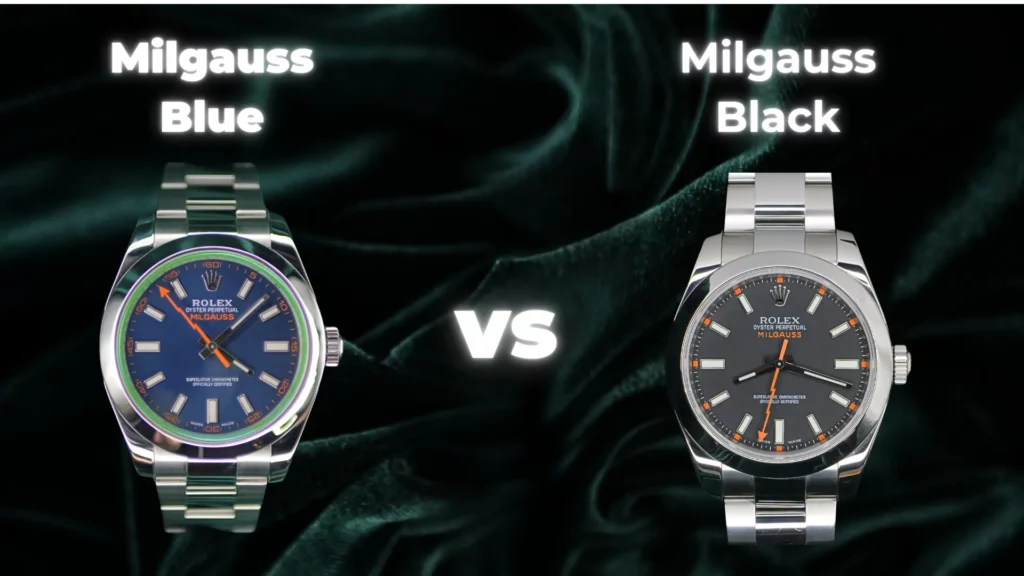
Choosing between the Milgauss blue vs black feels easy until you see both in person. The blue dial pulls your eye right away. The black dial stays quieter and more controlled. The real difference shows up once the watch is on your wrist and part of your routine.
Both share the same Milgauss case, movement, and anti-magnetic build. Yet they read as two different watches. One feels expressive and a little playful. The other feels restrained and versatile, with a stronger tool-watch streak.
This guide focuses on what matters after the initial excitement fades: dial behavior, on-wrist presence, and collector demand now that Rolex discontinued the Milgauss in 2023. It also covers the 2026 anniversary talk that buyers keep asking about. By the end, you will know which dial fits your rotation and your buying logic.
Milgauss Blue Overview
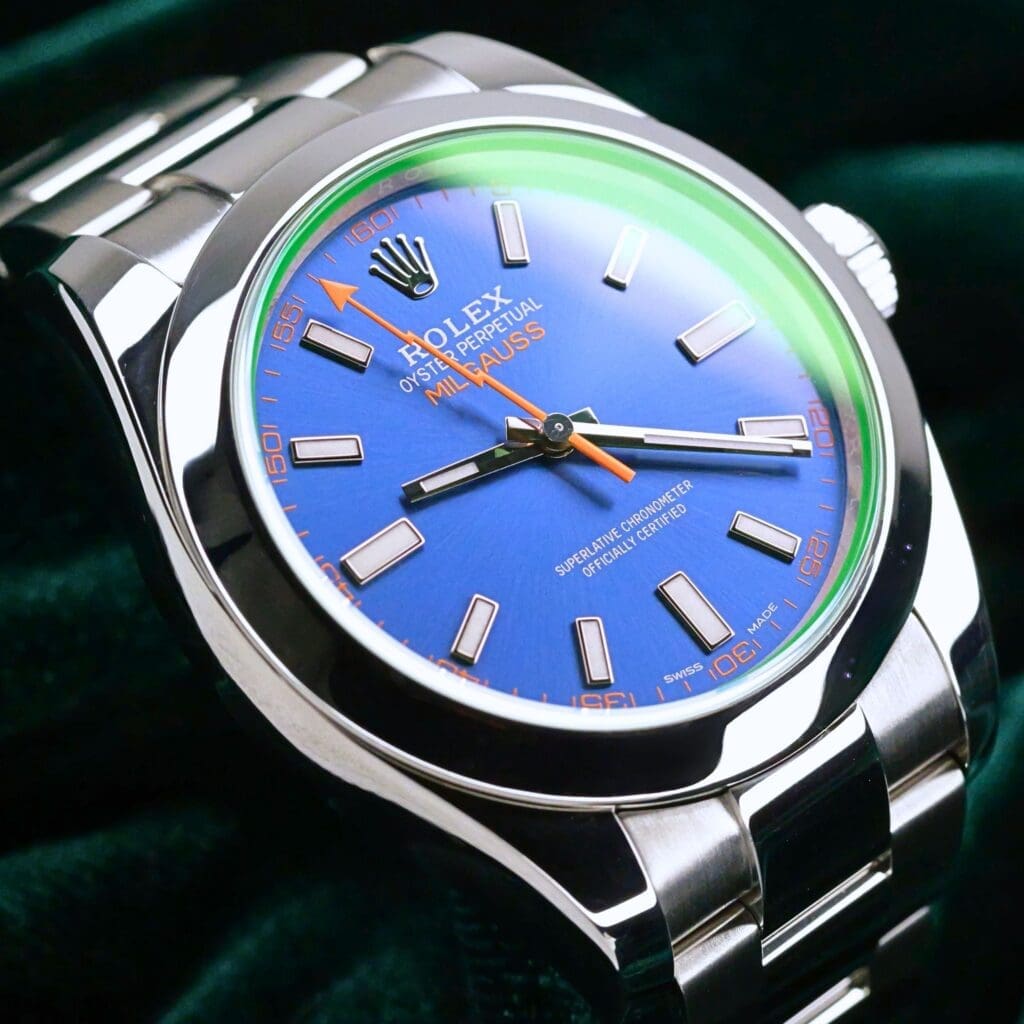


The Milgauss blue dial is the version that pulled the modern Milgauss into wider collector attention. Rolex used the ref. 116400GV with the Z-Blue dial, introduced in 2014 as the more colorful option in the lineup. The specs stayed the same, but the dial changed the whole feel on the wrist.
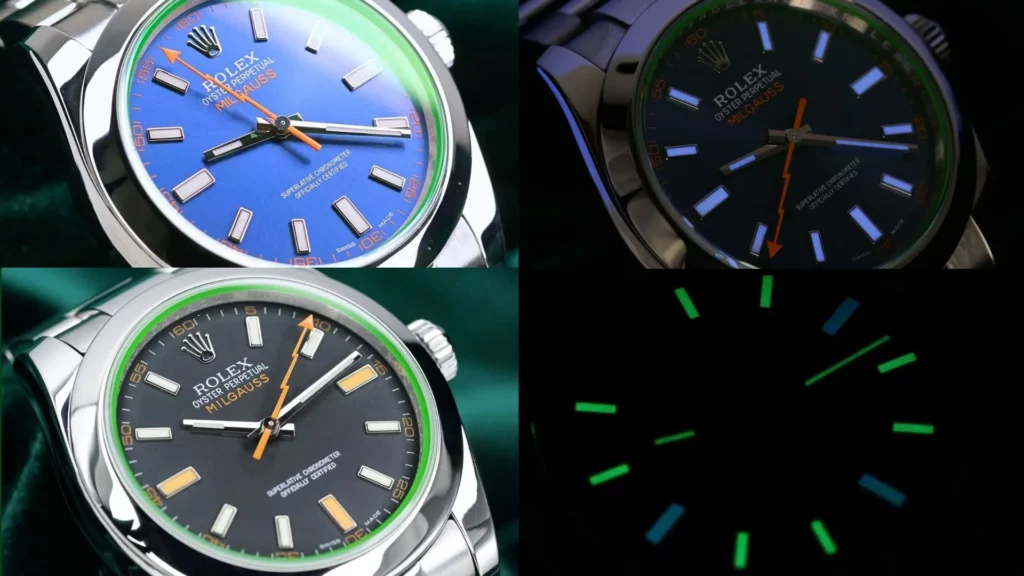
The Z-Blue dial shifts depending on the light. In daylight, the sunburst finish looks brighter and more vivid. Indoors, the tone cools and reads more electric. The green-tinted sapphire crystal adds a faint green cast around the edges.
Collectors often pick the blue dial because it stands out fast. You spot it across a room without trying. Few steel Rolex models lean this hard into color while staying easy to wear, and that visibility drives a lot of the demand.
The details do most of the work. You get the sunburst blue dial, the orange accents, and the lightning seconds hand. The green crystal keeps the look tied to the GV identity. It reads as fun, but the build still feels serious.

Key Specifications:
- Reference Number: 116400GV (Blue Dial)
- Case Size: 40 mm
- Dial: Sunburst blue (Z-Blue)
- Crystal: Green-tinted sapphire
- Bezel: Smooth, polished steel
- Bracelet: Oyster
- Movement: Caliber 3131
- Anti-magnetic Rating: 1,000 gauss
Milgauss Black Overview

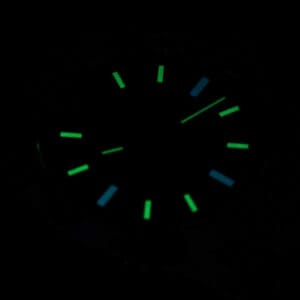
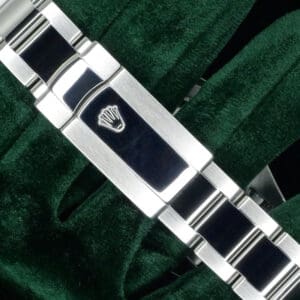
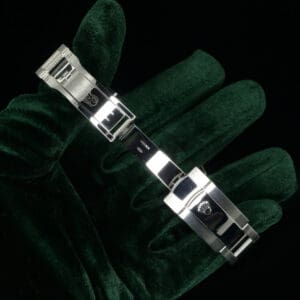
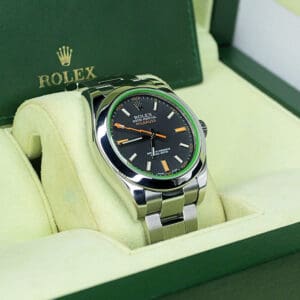
Rolex built black-dial Milgauss models across multiple generations, which is why black feels like the baseline for the line. The vintage ref. 1019 ran from the mid-1960s into the late 1980s and kept a clean, tool-first look with no lightning seconds hand. The modern restart began in 2007 with the 116400 and 116400GV, and the line was discontinued in 2023.
Each black reference wears differently. The 1019 stayed utilitarian, with a matte dial and a more understated case style. The 116400 added a lightning seconds hand and orange accents under a clear sapphire crystal. The 116400GV Black keeps those modern cues but adds the green-tinted sapphire.
Collectors used “GV” as shorthand for the green crystal, from the French glace verte, once the 116400GV settled into the market. The Z-Blue name followed the 2014 blue dial release. The same 116400GV platform also comes in black, which makes black the closest match to blue in build and era.
Collectors often choose black because it wears more easily and stays consistent in mixed light. The darker dial balances the polished bezel and center links, so the watch feels less loud. It also lets buyers prioritize condition, complete-set status, and low polishing, which matter more than dial choice after discontinuation.
If you want to keep a Milgauss looking sharp, our primer on spotting a magnetized watch is worth a read, even on a watch built to resist it.
The Milgauss signatures still show clearly on black. You get the lightning seconds hand, orange accents, and the green-tinted sapphire that define the GV. Under the hood, the anti-magnetic identity is the point, with the Caliber 3131 and the soft-iron Faraday cage built around the movement.

Key Specifications:
- Reference Number: 116400GV (Black Dial)
- Case Size: 40 mm
- Dial: Black
- Crystal: Green-tinted sapphire
- Bezel: Smooth, polished steel
- Bracelet: Oyster
- Movement: Caliber 3131
- Anti-magnetic Rating: 1,000 gauss
Milgauss Blue vs Black: Main Differences

Milgauss blue vs black comes down to how you want the dial to show up in real wear. Both share the same 40 mm case, smooth bezel, and green sapphire crystal on the 116400GV. The difference is how the dial reads in light, how loud it feels on the wrist, and how easily it blends into your rotation.
1. Dial Appearance
Blue makes the Milgauss look more alive on the wrist. The Z-Blue sunburst finish reflects light in bands, so the dial looks brighter in daylight and sharper under LED lighting. The layout is the same, but the blue base makes the markers and orange accents stand out more. The green sapphire crystal adds a faint green cast, mostly around the edges.
Black makes the Milgauss look cleaner and easier to read. The dark dial holds contrast better, so the markers and lume stand out in mixed light. The orange details still pop, but the dial stays controlled and does not compete with the polished case. The green crystal still shows, but it reads as a subtle tint rather than a full dial change.
2. Dial in Different Light
Blue changes more during normal wear. It moves from bright cobalt to deeper navy as you tilt your wrist, because the sunburst brushing catches light hard. Warm indoor light makes the blue look darker and richer. Cool light makes it look brighter and more electric. The green crystal adds another layer, letting the dial pick up a slight teal cast near the perimeter.
Black stays consistent across settings. Daylight, office lighting, and shade all look similar on the dial. You still notice the green crystal effect, but it shows more on the crystal edge than on the dial surface. That makes the watch easier to predict in photos and in person. What you see at first glance is what you get.
3. Wrist Presence and Versatility
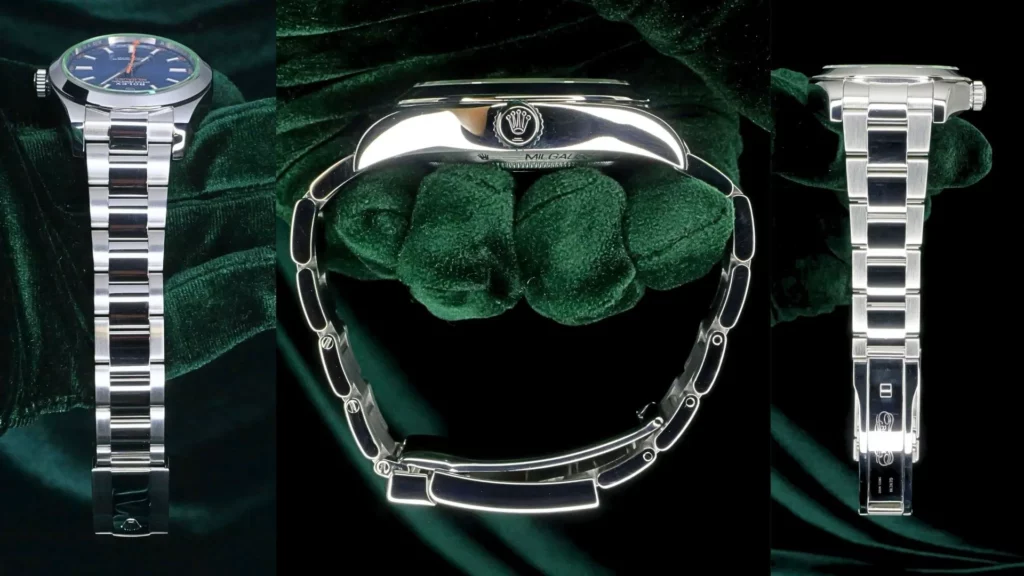
Blue wears louder even with the same 40 mm case. The Milgauss already has a polished bezel and bracelet, and the blue dial adds color and reflections on top. If you already wear other black-dial sports watches, the blue Milgauss stands apart. It gives your steel Rolex a different look and is easier to spot at a glance.
Black wears more balanced because it offsets the polish. The darker dial tones down the bezel and bracelet, so the watch feels calmer day to day. It pairs easily with office clothes and darker outfits because the dial reads neutral. You keep the Milgauss cues, like the lightning seconds hand and orange accents, but the watch fits more situations.
4. Price and Market Demand
Both Milgauss dials started from the same place. Retail at discontinuation sat around $9,400 for the 116400GV regardless of dial. The market separated them after 2023, and the gap has widened since.
As of 2026, the 116400GV carries an estimated market value of roughly $10,000 to $10,250 across all conditions, according to WatchCharts. Clean Z-Blue examples now list higher, commonly in the $12,500 to $14,500 range on Chrono24 and eBay, with full sets at the top of that band. Demand for the more distinctive look, not any difference in construction, drives the premium.
The black 116400GV trades a little lower on average. Standard pre-owned examples cluster around $9,500 to $11,500, while clean, complete sets push toward $13,000. The spread stays wider on black because buyers weigh condition more heavily than color. Case sharpness, bracelet wear, and completeness move the price more than the dial itself.
The vintage black-dial 1019 plays in a different league entirely. Depending on dial variant and originality, 1019 examples trade roughly between $25,000 and $60,000 at auction houses like Phillips and Christie’s and on the wider secondary market. Originality discipline matters enormously there, so it is a collector decision rather than a daily-wear one.
What matters most is how each sells. The 116400GV took a median of about 18 days to sell in early 2026, faster than roughly 79% of watches tracked by WatchCharts, so liquidity is strong either way. Blue tends to move quickest because buyers search for it by name. Black sells at a steadier pace and usually gives buyers more negotiating room.
For the bigger picture, our take on whether Rolex watches hold their value puts the Milgauss in context against the rest of the lineup.
If you already know which dial you want and just need a clean example, send us the spec you’re after and we’ll tell you what’s realistic at today’s prices.
What the 2026 Milgauss Comeback Talk Means for Buyers
The short version: the Milgauss did not return at Watches & Wonders 2026, so the discontinued 116400GV is still the only Milgauss you can buy. That keeps demand on the blue and black GV right where it has been.
The speculation had real footing. The Milgauss turned 70 in 2026, and Rolex tends to revive a discontinued model only when it has a new technical story to tell. The Land-Dweller’s Calibre 7135 with the Dynapulse escapement is inherently anti-magnetic without a soft-iron Faraday cage, which would let a future Milgauss run thinner and lighter than the old 116400GV.
Plenty of dealers and collectors expected an anniversary revival on the back of that.
It did not happen. Rolex’s 2026 releases centered on the 100th anniversary of the Oyster case, headlined by a redesigned Yacht-Master II, an enamel-dial Daytona, and a Jubilee Gold Day-Date. No Milgauss appeared.
For a buyer choosing between blue and black today, that is the useful part. A reissue with a new movement could have pulled attention and money toward a fresh reference, softening demand on the discontinued models. With no new Milgauss in the catalog, the 116400GV keeps its position as the current Milgauss on the market.
If Rolex does bring it back in a later year, the green-crystal GV becomes the “last of the Faraday-cage era,” which collectors tend to value. Either way, the dial you choose now is a watch people will still want.
999+ Timepieces Available
Explore Our Timepieces
Authenticated, unworn, and ready to ship worldwide.
Rolex · Audemars Piguet · Patek Philippe · Omega · Cartier · Richard Mille · Hublot · Tudor
Newly Listed

Vacheron Constantin Overseas Chronograph "Reverse Panda" Black Dial Silver Subdials Stainless Steel 42.5mm MINT CONDITION COMPLETE SET 5500V/110A-B481
$34,095.00

Rolex Sky-Dweller Black Dial 18K White Gold Fluted Bezel Oyster Bracelet Stainless Steel 42mm MINT CONDITION COMPLETE SET 336934-0007
$21,945.00

2026 Rolex Datejust Green Ombre Dial Smooth Bezel Jubilee Bracelet Stainless Steel 41mm MINT CONDITION COMPLETE SET 126300
$16,480.00

2026 NEW UNWORN Cartier Santos-Dumont Silver Dial Platinum Mesh Bracelet Platinum 31mm COMPLETE SET WGSA0124
$64,790.00

2026 Tudor Black Bay 58 Black Dial Jubilee Bracelet Stainless Steel 39mm MINT CONDITION COMPLETE SET 7939A1A0NU
$5,717.00

NEW UNWORN Rolex Submariner Date “Sub Date” Black Dial Black Ceramic Bezel Oyster Bracelet Stainless Steel 41mm COMPLETE SET 126610LN
$15,595.00
Rolex Cosmograph Daytona "Reverse Panda" Black Dial Black Ceramic Bezel Oyster Bracelet Stainless Steel 40mm MINT CONDITION COMPLETE SET 126500LN
$32,009.00
2026 NEW UNWORN Rolex Submariner No Date Black Dial Black Ceramic Bezel Oyster Bracelet Stainless Steel 41mm COMPLETE SET 124060
$15,219.00
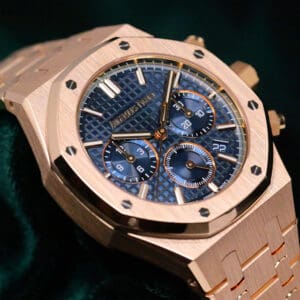
Audemars Piguet Royal Oak Selfwinding Chronograph Bleu Nuit Nuage 50 Blue Dial Bracelet 18k Rose Gold 38mm MINT CONDITION COMPLETE SET 26715OR.OO.1356OR.01
$104,942.00
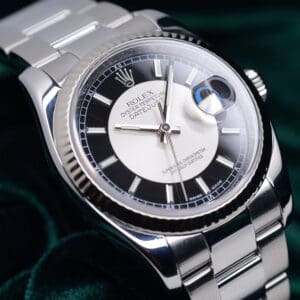
Rolex Datejust “Tuxedo” Black and Silver Dial 18K White Gold Fluted Bezel Stainless Steel Oyster 36mm MINT CONDITION COMPLETE SET 116234
$10,671.00
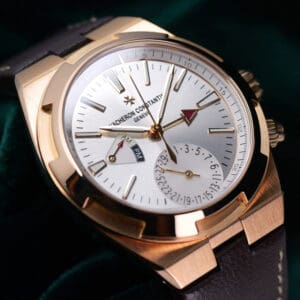
Vacheron Constantin Overseas Dual Time Silver Dial Brown Leather Strap 18K Rose Gold 41mm MINT CONDITION COMPLETE SET 7900V/000R-B336
$41,894.00
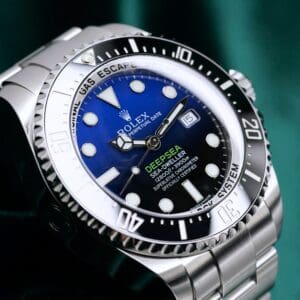
Rolex Sea-Dweller Deepsea James Cameron D-Blue Dial Black Ceramic Bezel Oyster Bracelet Stainless Steel 44mm MINT CONDITION 116660-0003
$14,272.00
Specifications Comparison
Compare the Milgauss blue vs black on paper and you land in the same place. Rolex built both on the same 116400GV platform, so you are not choosing a better watch. You are choosing which dial you want to live with every day.
| Category | Milgauss Blue Dial | Milgauss Black Dial |
| Reference Number | 116400GV Z-Blue | 116400GV Black |
| Release Year | 2014 | 2007 |
| Model Line | Milgauss | Milgauss |
| Case Diameter | 40 mm | 40 mm |
| Case Material | Oystersteel | Oystersteel |
| Case Construction | Monobloc middle case, screw-down crown, solid caseback with Faraday cage | Monobloc middle case, screw-down crown, solid caseback with Faraday cage |
| Bezel Material | Polished steel | Polished steel |
| Bezel Function | Fixed | Fixed |
| Bracelet | Oyster three-link | Oyster three-link |
| Clasp | Oysterclasp with Easylink | Oysterclasp with Easylink |
| Movement | Caliber 3131 | Caliber 3131 |
| Escapement | Swiss lever | Swiss lever |
| Hairspring | Parachrom | Parachrom |
| Shock Protection | Paraflex | Paraflex |
| Accuracy | Superlative Chronometer −2/+2 sec/day | Superlative Chronometer −2/+2 sec/day |
| Power Reserve | ~48 hours | ~48 hours |
| Crystal | Green-tinted sapphire (GV) | Green-tinted sapphire (GV) |
| Dial | Sunburst blue | Black |
| Water Resistance | 100 meters | 100 meters |
Which Milgauss Should You Choose?
They look similar at first, but blue and black behave differently once lighting, contrast, and real wear come into play. Use the points below to pick the Milgauss that fits your daily life.
Choose the Blue Dial If:
- You want the most recognizable modern Milgauss look, led by the Z-Blue dial added in 2014.
- You enjoy a dial that shifts from brighter cobalt to deeper navy as your wrist moves.
- You want the green crystal tint to feel more obvious, especially around the outer edge.
- You accept paying a premium for the look buyers chase most, and you want a piece that sells quickly.
Choose the Black Dial If:
- You want the Milgauss idea with the easiest dial to wear across work, travel, and casual fits.
- You prefer higher contrast and steadier dial behavior in mixed lighting.
- You would rather spend on condition, complete-set status, and service history than pay for dial demand.
- You want the lightning seconds hand and green-crystal personality, with a quieter overall look.
Still weighing the Milgauss against its siblings? Our Milgauss vs Air-King comparison covers how it reads next to the other anti-magnetic option in the range. For the tool-watch angle, the Milgauss vs Explorer breakdown is the one to read.
Where to Buy Authentic Watches Online
There are a few legitimate online channels for a discontinued 116400GV. Chrono24 has the deepest pool of listings worldwide and an escrow option that holds your payment until the watch is verified. eBay is a real option through its Authenticity Guarantee program, where higher-value watches get inspected before they reach you.
Grailzee runs watch-focused auctions if you would rather bid than buy outright. Watch forums like Rolex Forums and WatchUSeek also have active sales sections, though you take on more of the vetting yourself.
We also buy, sell, and trade luxury watches. On a watch like the Milgauss, where dial color and condition drive the price, the conversation before the purchase matters.
We send tour videos of the actual watch rather than stock photos, point out the things a listing photo hides, and talk you through case sharpness, bracelet stretch, and whether the set is complete. You are not buying blind off a thumbnail.
That approach is reflected in our 4.9-star Google rating, which comes from clients who wanted a straight answer before spending five figures.
If you are deciding between a blue and a black 116400GV and want eyes on a few specific examples, reach out and we can help you source one that matches your budget, and tell you honestly how each one looks in the metal. For the wider lineup, our Rolex Milgauss buying guide is a good next stop.
Final Thoughts on Milgauss Blue vs Black
The Milgauss blue vs black choice comes down to how you want the watch to show up day to day. Both use the same 116400GV platform, the same Caliber 3131, and the same anti-magnetic build. You are choosing personality, not performance. Blue is expressive and quick to catch the eye. Black stays calm and goes with more.
Pick blue if you want the Milgauss to stand apart in a steel sports lineup. Pick black if you want the Milgauss idea in its most versatile form. With no new Milgauss arriving in 2026, the 116400GV is still the one to buy, so focus on condition first: a sharp, unpolished case, a tight bracelet, and a complete set will out-earn dial color at resale every time.
Two quick tips before you commit: ask for the date stamp on the warranty card to confirm the production year, and check the bracelet for stretch by holding it horizontally, since a sagging Oyster is the most common tell of a hard-worn example. The right choice is the one you will still reach for years from now.