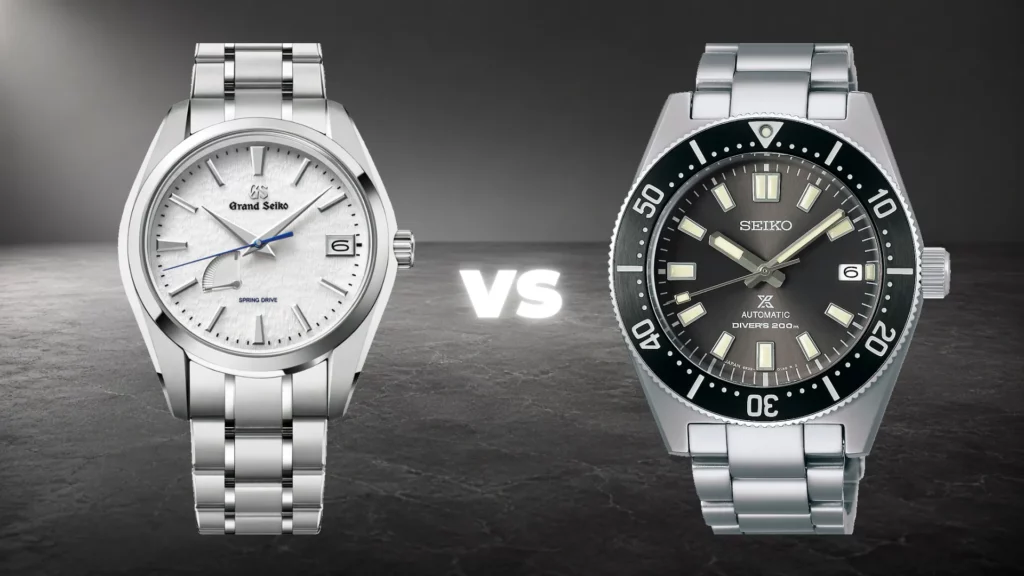
If you’re comparing Grand Seiko vs Seiko and wondering why the price gap is so wide, you’re not imagining it. The two brands share a corporate parent and the same Japanese roots. Side by side on a shelf, they can even look like cousins.
But pick both up and handle them for a few minutes, and the difference shows fast. You feel it in the movement, see it in the finishing, and notice it again when you check what each one is worth a few years later.
This guide breaks down where the two brands split: how the movements compare, how the cases are finished, and how each holds its value on the used market. By the end, you’ll know which one is worth your money.
Grand Seiko Overview
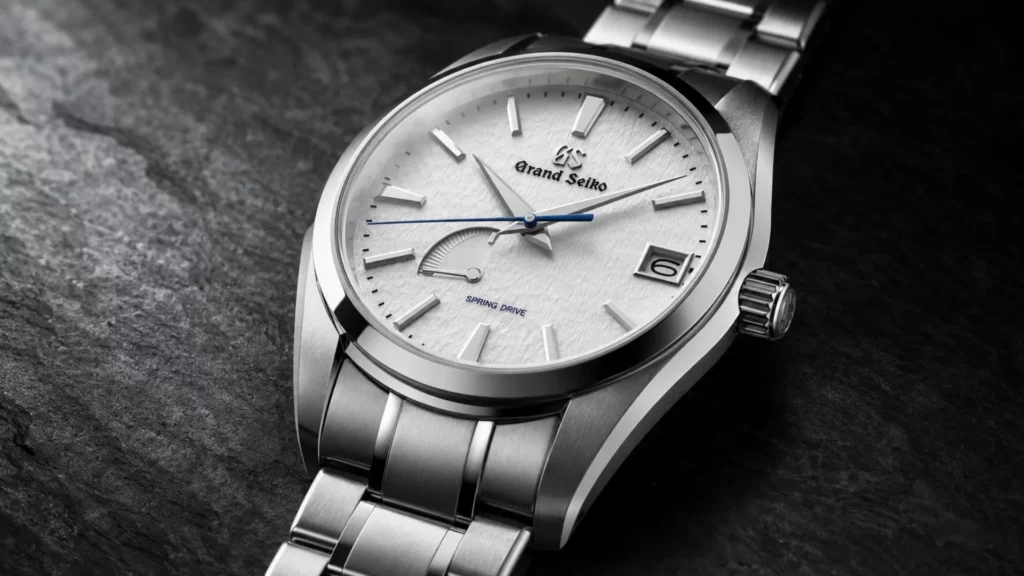
Image courtesy of Grand Seiko Official Website (source)
Grand Seiko launched in 1960 with one goal: build a Japanese watch that could match the best Swiss brands on precision and finishing. It sold only in Japan until 2010, when it went international. In 2017, it split off as its own brand and dropped “Seiko” from the dial entirely.
The lineup today runs across five collections. Heritage uses the classic 44GS case, Elegance is slimmer and more formal, and Sport is 200m-capable with a GMT. Evolution 9 is a newer, thinner platform, and Masterpiece covers the ultra-limited precious-metal pieces. Our Heritage vs Evolution 9 comparison breaks down where those two platforms differ.
Every Grand Seiko uses a Zaratsu-polished case and an in-house movement, each one regulated by hand at a dedicated workshop.
Grand Seiko draws a specific kind of buyer: someone who notices how a case edge catches the light and knows what a gliding Spring Drive hand means. The name on the dial matters less to them than what sits behind it.
The secondary market has grown steadily since then, and the Snowflake (SBGA211) has become its best-known reference.
Notable Grand Seiko references:
- SBGA211
- SBGM221
- SBGE255
Seiko Overview

Image courtesy of Seiko Official Website (source)
Seiko started in 1881 as a small watch shop in Tokyo, and made its first wristwatch in 1924. In 1969, it launched the world’s first quartz wristwatch, the Seiko Astron, which knocked Swiss watchmakers back a full decade. That single product made Seiko a global name.
Today, the brand spans a wide range of buyers, from sub-$200 automatics to artisanal Presage pieces with lacquer and porcelain dials. The Seiko 5 is the entry automatic line, Prospex handles sport and dive, Presage is the craft-focused dress range, and Astron covers solar and GPS.
The brand’s real strength is variety: a capable 200-meter diver under $500, a porcelain-dial dress watch around $1,000, and an active secondary market for vintage references like the SKX007. There’s also a massive modding community built around Seiko cases.
Notable Seiko references:
- SPB143
- SPB317
- SRPB43
Grand Seiko vs Seiko: Most Notable Differences
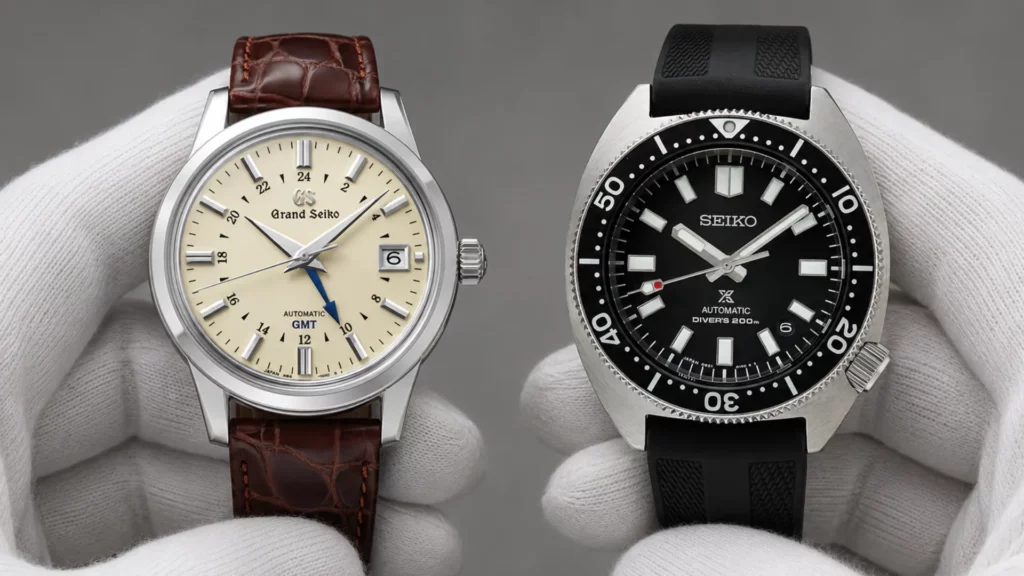
Image courtesy of Grand Seiko (source) and Seiko (source)
The differences between these two brands are measurable. The specs below are where the gap shows up on your wrist.
1. Movement Accuracy
Grand Seiko holds an exacting standard across all three of its movement types. The 9S Hi-Beat is rated to ±5 seconds per day, the 9R Spring Drive to ±1 second per day, and the 9F quartz to ±10 seconds per year. Every movement is regulated by hand before it ships. If you’re choosing between the slim 9F quartz and the gliding Spring Drive, our quartz vs Spring Drive breakdown puts the two side by side.
Seiko’s mid-range automatics (6R35 family) are rated to roughly ±15 to 25 seconds per day. That’s solid for daily use. The 6R35 hacks, hand-winds, and has a 70-hour power reserve, all of which is genuinely useful at the price.
2. Case Finishing
Grand Seiko applies Zaratsu polishing across its entire lineup. This hand-polishing process creates completely flat, distortion-free mirror surfaces, with razor-sharp transitions between brushed and polished zones. It cannot be replicated at production scale, which is why no Seiko at any price point matches it.
At Seiko’s mid-range, cases are machine-brushed with polished bevels on select models. On Presage Craftsmanship and LX references, finishing quality improves, but it is still produced at scale.
3. Crystal Standard
Grand Seiko uses sapphire crystal across every reference in the lineup, and most models use dual-curved sapphire with inner anti-reflective coating. At Seiko, sapphire is a tier-dependent upgrade. At Grand Seiko, it is a baseline standard that applies regardless of price point.
Seiko uses Hardlex crystal on entry and mid-range models. Hardlex is more shatter-resistant than sapphire but scratches faster under daily wear. Sapphire crystal appears on upper-tier Prospex and Presage models only.
4. Bracelet and Clasp
Grand Seiko bracelets use solid links throughout, finished to match the case. The three-fold push-button clasp includes fine-tooth micro-adjustment, and a tool-free micro-adjust clasp has rolled out across newer references. The bracelet carries the same Zaratsu finish as the case, which few watches at any price can claim.
Mid-range Seiko bracelets use hollow end links with pin-and-collar link adjustment. Clasp quality varies by model and is a consistent point of criticism. The bracelets work, but they feel noticeably less premium than the cases warrant.
5. Case Thickness
Grand Seiko mechanical and Spring Drive models run thick on average, 12 to 14mm for most Heritage and Sport references. The quartz 9F models are the exception, sitting notably slimmer at around 11 to 11.5mm, which makes them the right pick for formal or under-cuff wear. Thickness at Grand Seiko is worth factoring in before you buy.
Seiko automatics in the Prospex and Presage range generally run 10 to 13mm thick. That works under a shirt cuff without much trouble and keeps the profile practical for daily wear.
6. Water Resistance
Grand Seiko Sport references reach 200m water resistance on select models, while Heritage and Elegance pieces generally sit at 100m. Grand Seiko does not match Prospex on dive specs, in either depth rating or model range.
Seiko Prospex covers 100m to 300m water resistance across the lineup, with ISO-certified dive ratings on key SPB references. It is built for serious tool-watch use.
7. Collection Range
Grand Seiko concentrates entirely on dress, refined sport, and GMT categories. There are no entry-level pieces, no casual sport options, and no tool-specific daily wearers. Every watch is a deliberate, single-context purchase.
Seiko covers sport, dive, field, dress, solar, GPS, and collaboration watches across a price range from roughly $150 to $2,000 for standard production models. A buyer can cover several uses with Seiko without spending much.
Price and Market Demand
Seiko and Grand Seiko don’t compete in the same market. They sit in different price brackets and draw different buyers, so each one is worth looking at on its own.
Seiko spans $150 to $2,000 for standard models, with most automatics in the $300 to $800 range and Presage Craftsmanship and Prospex SPB near $1,500. Most depreciate modestly, though discontinued classics like the SKX007, early 6105 divers, and select Presage limited editions trade above retail.
Grand Seiko sits higher. Entry 9F quartz models start around $2,500 to $3,000, while Spring Drive references like the SBGA211 Snowflake retail near $6,900 and trade around $4,500 to $5,600 used, depending on condition and box/papers.
In-production models trade 25 to 35% below retail, per WatchCharts, so ownership cost is easy to estimate. Configuration matters more than the model name here: titanium, a full set with box and papers, a sought-after or discontinued dial, and the original bracelet all lift value.
Limited and seasonal references like the SBGA413 Shunbun have outperformed the broader Grand Seiko market, with clean examples climbing past retail. Our Snowflake vs Shunbun comparison looks at how those two stack up on value. Liquidity is strong too. The SBGA211 Snowflake sold in a median of 18 days in April 2026, faster than 95% of watches, per WatchCharts.
Notable Grand Seiko References
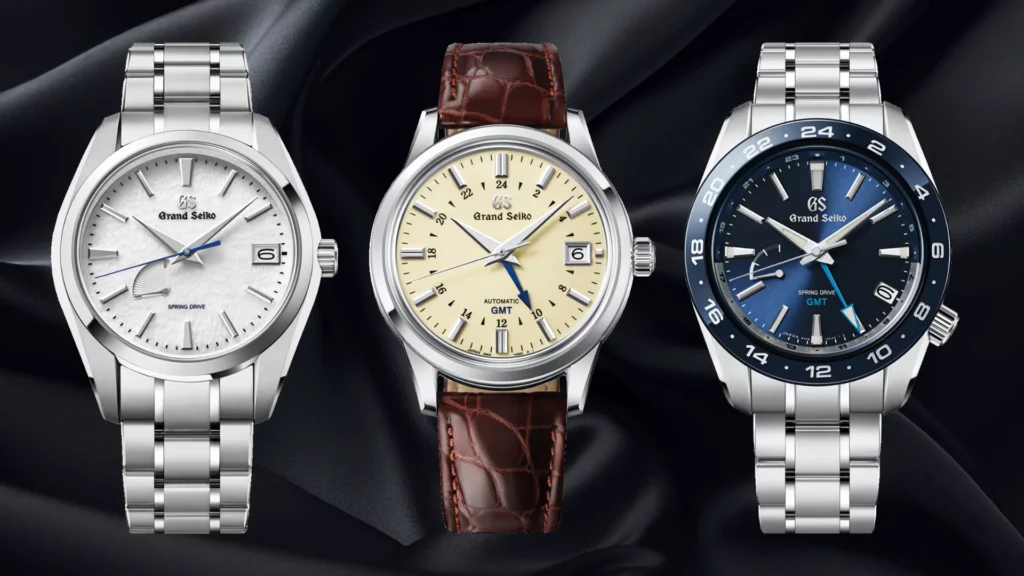
Image courtesy of Grand Seiko Official Website
SBGA211: [source]
SBGM221: [source]
SBGE255: [source]
These three come up most often when buyers weigh Grand Seiko against Seiko, and each one is a different reason to cross over.
1. Grand Seiko Ref. SBGA211
The Spring Drive caliber is what makes this reference technically unusual. A mechanical mainspring powers it, but a quartz Tri-synchro governor regulates the escapement. The result is a seconds hand that glides instead of ticking.
The titanium case and bracelet are about 30% lighter than steel, so a watch this thick sits far more comfortably on the wrist than the spec suggests.
The Snowflake dial is not painted. It is a three-dimensional silver-plated surface textured to evoke the snow-covered fields around Grand Seiko’s Shinshu studio, and it shifts under changing light.
- Case size: 41mm x 12.5mm
- Material: High-intensity titanium, dual-curved sapphire crystal
- Movement: 9R65 Spring Drive, ±1 sec/day, 72-hour power reserve
- Water resistance: 100m
- Typical price range: $4,500 to $5,600 (secondary market)
2. Grand Seiko Ref. SBGM221
The SBGM221 runs at 28,800 vph, with an independently adjustable local hour hand. The cream sunburst dial reads clearly under all lighting, and the red GMT hand adds function without disrupting the dress character. On the wrist, it sits tidily across a range of sizes.
It also moves quickly on the secondary market. It is the practical entry point for buyers who want the full Grand Seiko package, movement finishing included, in a travel-capable dress watch.
- Case size: 39.5mm x 14mm
- Material: Stainless steel, box-shaped sapphire crystal
- Movement: 9S66 automatic GMT, -3 to +5 sec/day, 72-hour power reserve
- Water resistance: 30m
- Typical price range: $3,500 to $4,800 (secondary market)
3. Grand Seiko Ref. SBGE255
The SBGE255 matches the Snowflake’s accuracy, now in a larger sport case. The fixed ceramic 24-hour bezel reads a second time zone at a glance. That suits frequent travelers who want a tool-capable watch with full Grand Seiko case finishing.
This reference works for buyers who want Spring Drive accuracy in a sports context. It wears larger than the Elegance line and handles casual and outdoor wear far better than a Heritage dress reference would.
- Case size: 40.5mm x 14.7mm
- Material: Stainless steel with ceramic bezel, sapphire crystal
- Movement: 9R66 Spring Drive GMT, ±1 sec/day, 72-hour power reserve
- Water resistance: 200m
- Typical price range: $4,000 to $6,500 (secondary market)
Notable Seiko References
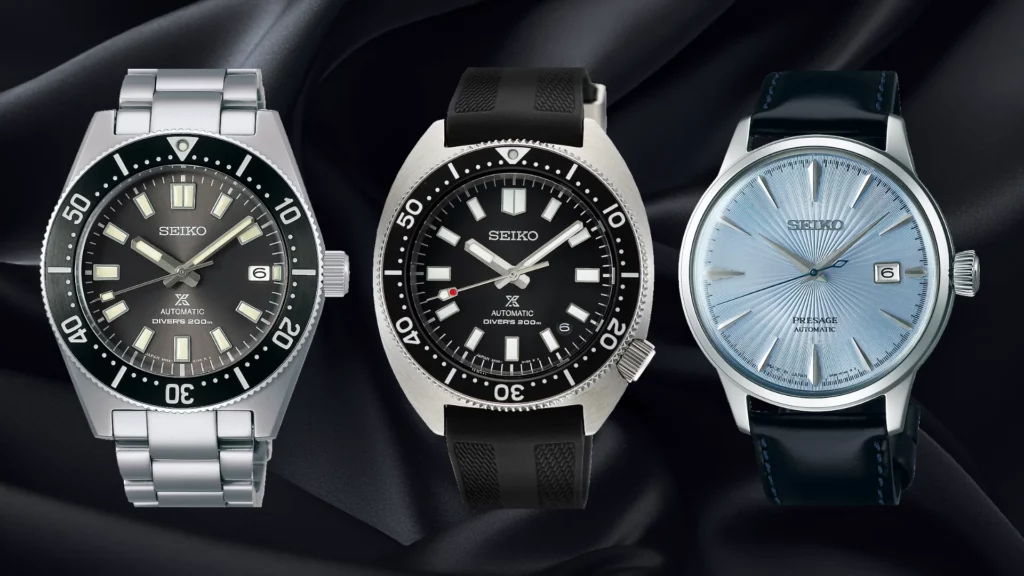
Image courtesy of Seiko Official Website
SPB143: [source]
SPB317: [source]
SRPB43: [source]
These three are the Seiko references most worth weighing against Grand Seiko. Each one shows what the brand does well for a fraction of the cost.
1. Seiko Ref. SPB143
The SPB143 pulls its design from Seiko’s original 1965 62MAS dive watch. The cushion case shape is distinct from anything else at this price, and it suits buyers who want vintage character with modern specs. Current retail sits around $1,200, with clean used examples trading lower.
- Case size: 40.5mm
- Material: Stainless steel, sapphire crystal
- Movement: 6R35 automatic, 70-hour power reserve
- Water resistance: 200m
- Typical price range: $700 to $1,000 (secondary market)
2. Seiko Ref. SPB317
The SPB317 is the slimmer take on the Prospex cushion diver. It fits closer to a dress-sport hybrid than a pure tool watch, with a crown at four o’clock that stays out of the way. Good for buyers who want dive-rated capability in something that can cross over to casual wear.
- Case size: 41mm x 12.3mm
- Material: Stainless steel, sapphire crystal
- Movement: 6R35 automatic, 70-hour power reserve
- Water resistance: 200m
- Typical price range: $700 to $950 (secondary market)
3. Seiko Ref. SRPB43
The SRPB43 is the reference that introduced most buyers to Presage. The sunburst blue dial looks far more expensive than it is, and the movement hacks and hand-winds. It is a strong first serious automatic for someone coming from fashion watches.
- Case size: 40.5mm
- Material: Stainless steel, box-shaped crystal
- Movement: 4R35 automatic, approximately 41-hour power reserve
- Water resistance: 50m
- Typical price range: $200 to $350 (secondary market)
How to Decide Between Grand Seiko and Seiko
Both are well-built Japanese watches, but they are made for different buyers. The right pick depends on what you want from a watch. Here’s when each brand makes the most sense. Our Grand Seiko buying guide maps out the full lineup if you lean that way.
Choose Grand Seiko if:
- You care most about movement accuracy and hand-finished cases.
- You want sapphire crystal and Zaratsu polishing standard on every model.
- You want a slim, ultra-accurate 9F quartz in the $2,500 to $3,000 range.
- You would rather own one deliberate watch than build a broad collection.
- You value Spring Drive’s ±1 sec/day accuracy and its gliding seconds hand.
Choose Seiko if:
- You want multiple watches across sport, dive, and dress without a big budget.
- You need dive-rated water resistance up to 300m.
- You want a thinner automatic that sits easily under a shirt cuff.
- You are still figuring out what you want before committing to one watch.
- You like aftermarket customization and a large modding community.
Where to Buy Authentic Grand Seiko and Seiko Watches
With either brand, authenticity is the thing to protect. New pieces come from brand boutiques and authorized dealers, which is the safest route for a current model with full warranty if you don’t mind paying retail. We lay out the trade-offs between authorized dealers and the grey market in a separate guide.
Most of the value sits on the secondary market, where Grand Seiko trades well below retail and discontinued Seiko references turn up. Platforms like Chrono24, eBay, and Grailzee list plenty of both, but you are buying from individual sellers, so the vetting is on you. If you go that route, our guide to buying on Chrono24 covers what to check before you pay.
Before you pay, confirm the box and papers, check the movement and serial, and ask for real photos of the exact watch.
That last step is where a specialist helps. At Majestix Collection, the Grand Seiko pieces we carry are authenticated and inspected before they’re listed, so the condition you see is the condition you get. If you would rather skip the vetting altogether, it is a cleaner way to buy.
999+ Timepieces Available
Explore Our Timepieces
Authenticated, unworn, and ready to ship worldwide.
Rolex · Audemars Piguet · Patek Philippe · Omega · Cartier · Richard Mille · Hublot · Tudor
Newly Listed
Vacheron Constantin Overseas Dual Time Silver Dial Brown Leather Strap 18K Rose Gold 41mm MINT CONDITION COMPLETE SET 7900V/000R-B336
$41,894.00
Rolex Sea-Dweller Deepsea James Cameron D-Blue Dial Black Ceramic Bezel Oyster Bracelet Stainless Steel 44mm MINT CONDITION 116660-0003
$14,272.00
Vacheron Constantin Overseas Dual Time Silver Dial 18K Rose Gold Brown Rubber Strap 41mm MINT CONDITION COMPLETE SET 7900V/000R-B336
$41,894.00
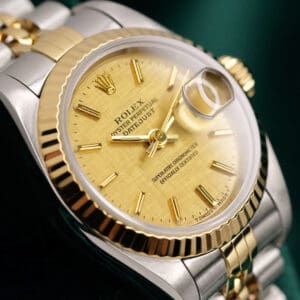
Rolex Lady-Datejust Champagne Linen Dial 18k Yellow Gold Fluted Bezel Jubilee Bracelet Two Tone Steel & Gold 26mm MINT CONDITION COMPLETE SET 69173
$9,345.00
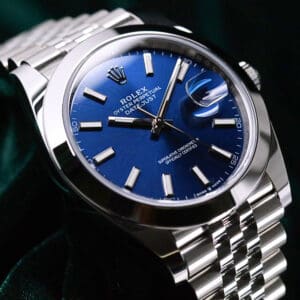
2026 Rolex Datejust Blue Dial Smooth Bezel Jubilee Bracelet Stainless Steel 41mm MINT CONDITION COMPLETE SET 126300
$13,796.00
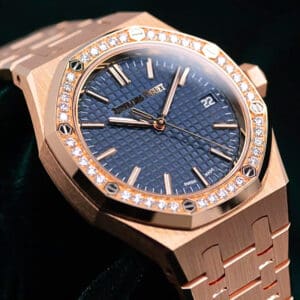
Audemars Piguet Royal Oak Selfwinding "50th Anniversary" Bleu Nuit Nuage 50 Blue Dial Diamond Bezel 18K Rose Gold 37mm MINT CONDITION COMPLETE SET 15551OR.ZZ.1356OR.02
$99,745.00
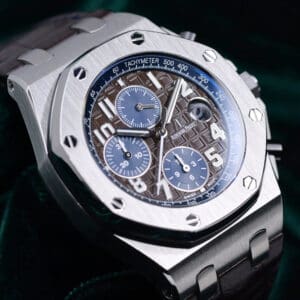
Audemars Piguet Royal Oak Offshore Chronograph "Havana" Brown Dial Blue Subdials Brown Leather Strap Stainless Steel 42mm MINT CONDITION COMPLETE SET 26470ST.OO.A099CR.01
$24,827.00
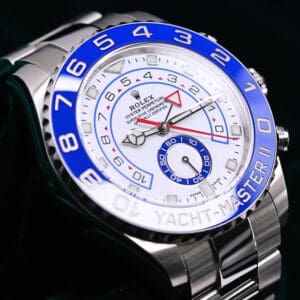
Rolex Yacht-Master II White Dial Blue Ceramic Bezel Oyster Bracelet Stainless Steel 44mm MINT CONDITION COMPLETE SET 116680
$19,409.00
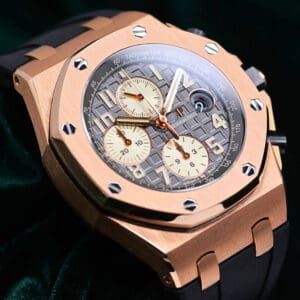
Audemars Piguet Royal Oak Offshore Chronograph “Half Brick” Ruthenium Grey Dial 18K Rose Gold Black Rubber Strap 42mm MINT CONDITION COMPLETE SET 26470OR.OO.A125CR.01
$40,892.00
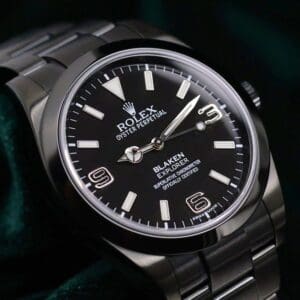
Rolex Explorer Blaken Black Dial Oyster Bracelet DLC Black Stainless Steel 39mm MINT CONDITION COMPLETE SET 214270
$16,000.00
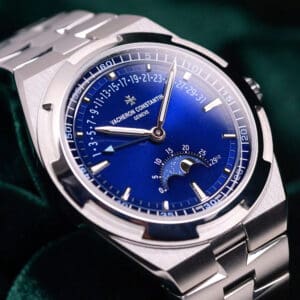
2025 Vacheron Constantin Overseas Moon Phase Retrograde Date Blue Dial Stainless Steel Bracelet 41mm MINT CONDITION COMPLETE SET 4000V/210A-B911
$52,800.00
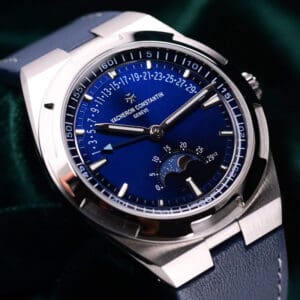
2025 Vacheron Constantin Overseas Moonphase Retrograde Date Blue Dial Blue Leather Strap Stainless Steel 41mm MINT CONDITION COMPLETE SET 4000V/210A-B911
$52,800.00
Final Thoughts on Grand Seiko vs Seiko
Grand Seiko vs Seiko is ultimately a question about what stage of watch ownership you’re in. Seiko gives you breadth, a wide range of well-built watches at prices that don’t force you to choose. Grand Seiko gives you depth, one category done at a standard that’s hard to argue with. The finishing is real. The movement accuracy is real.
Two tips before you buy either. On a Grand Seiko, think about servicing first, since Spring Drive needs a specialized service center rather than your local watchmaker. Our rundown of what watch servicing involves is worth a read before you buy. On a used Seiko, look closely at the dial and chapter-ring alignment, since quality control varies from piece to piece and a small misalignment is easy to miss in photos.
If you know what you want and you’re ready to commit, Grand Seiko earns the price. If you’re still figuring that out, Seiko is a better place to be. When a Grand Seiko is the one you want, you can see our authenticated pieces, with full condition notes and real photos, at Majestix Collection.
Authenticated Grand Seiko Watches
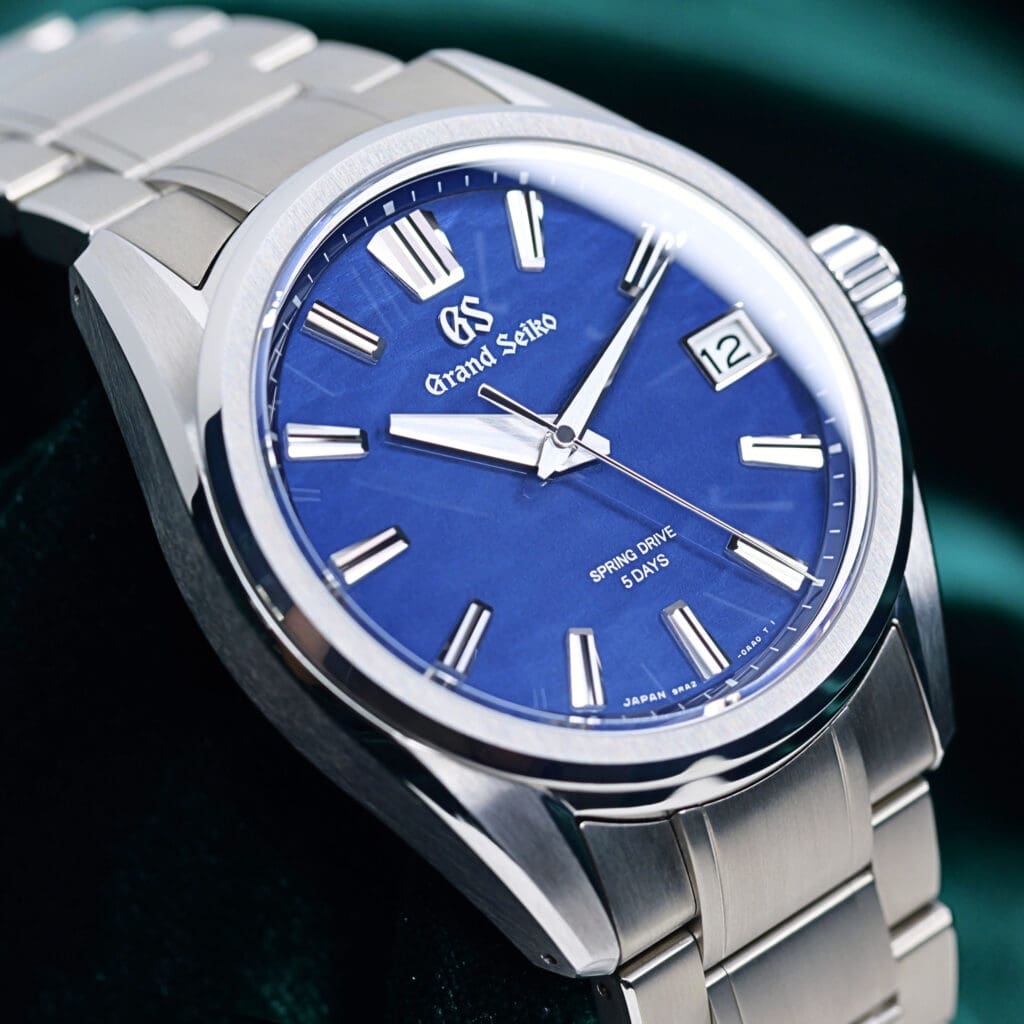
Grand Seiko Spring Drive 5 Days "Lake Suwa" Blue Dial Titanium 40mm MINT CONDITION COMPLETE SET SLGA019G

Grand Seiko Heritage Collection 20th Anniversary Limited Edition of 1,300 pcs. Brown Dial Stainless Steel 42mm MINT CONDITION SBGR311

2025 Grand Seiko Evolution 9 Collection Hi-Beat “Moonlit Birch” Navy Dial Navy Leather Strap Stainless Steel MINT CONDITION COMPLETE SET SLGW007
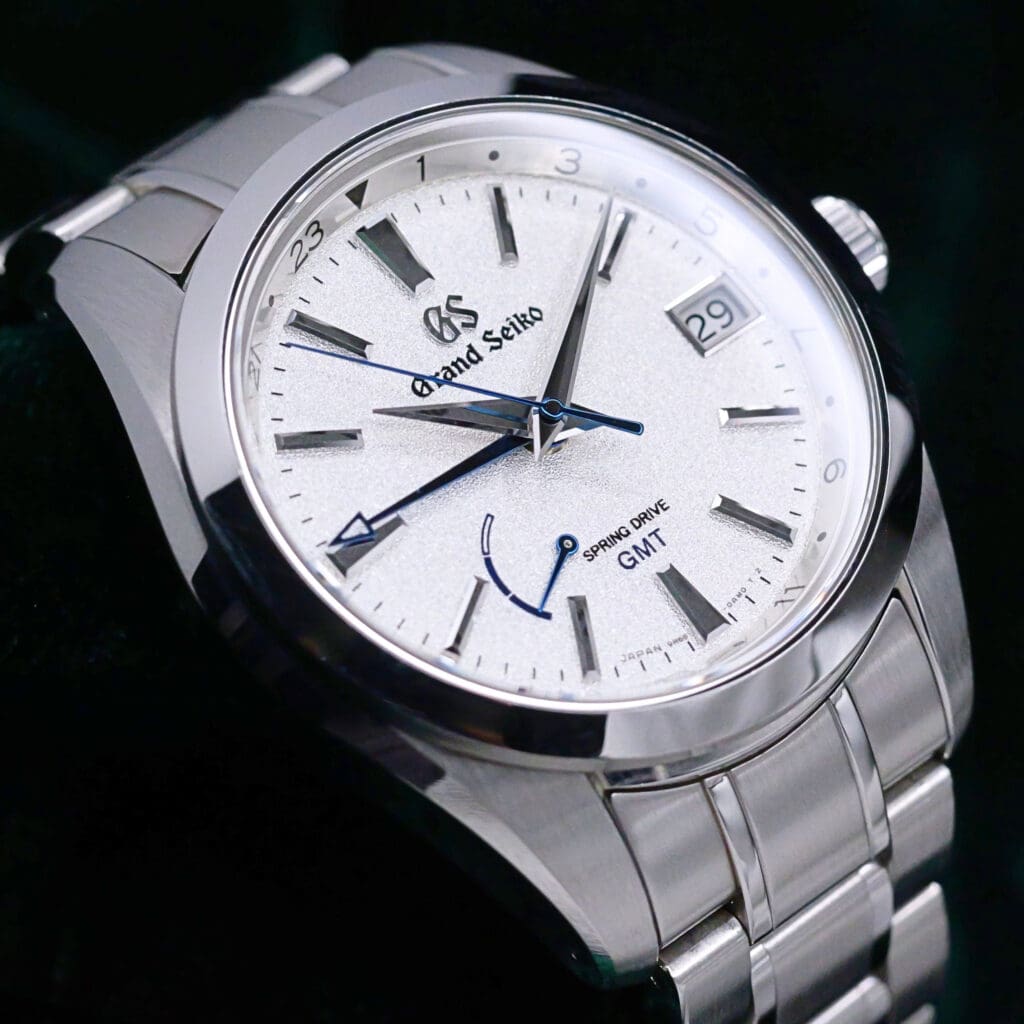
Grand Seiko Spring Drive GMT Limited Edition Blizzard Silver Dial Stainless Steel 41mm MINT CONDITION COMPLETE SET SBGE249
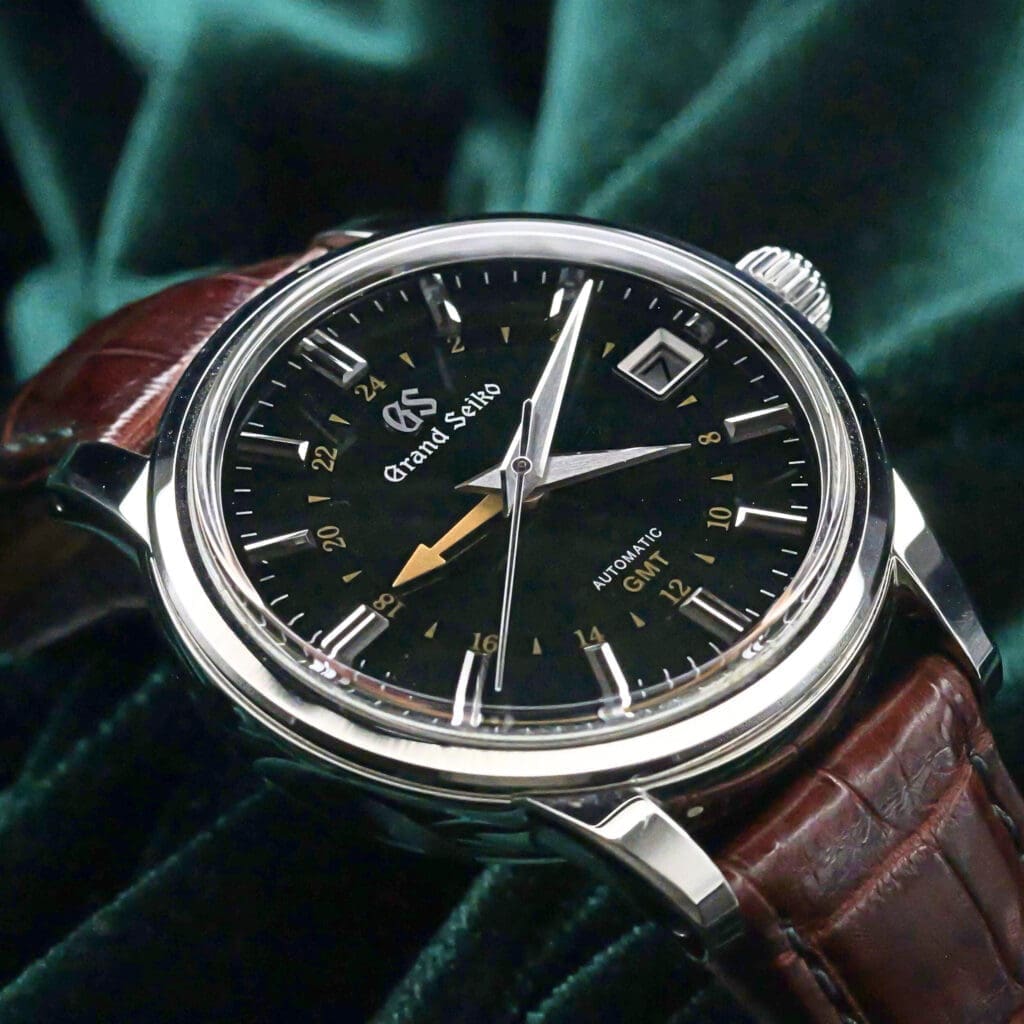
Grand Seiko GMT Elegance Collection Toge 39.5MM British Racing Green Dial Brown Leather Strap Stainless Steel MINT CONDITION COMPLETE SET SBGM241

2024 NEW UNWORN Grand Seiko Spring Drive "Snowflake" 41MM White Dial Titanium COMPLETE SET SBGA211