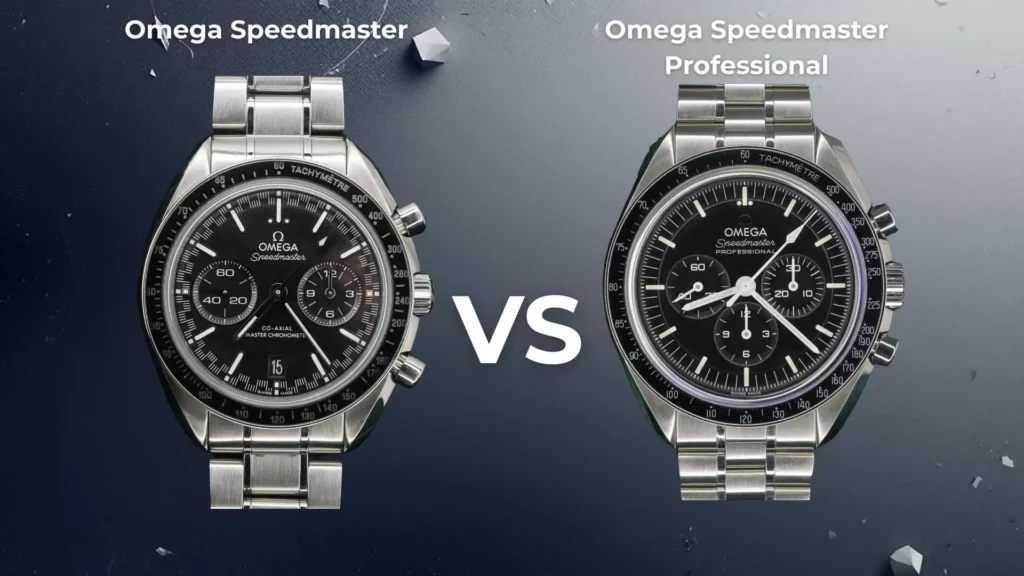
What makes a watch worthy of being called the “Moonwatch”? Is it the legacy, the design, or the sixty-plus years of collectors buying the same watch without hesitation? When discussing the Omega Speedmaster vs Professional, most buyers are really comparing two generations of the same Moonwatch. Not two different watches.
Both references share the same asymmetrical case, the same black dial layout, and the same manual-wind chronograph architecture. What separates them is the movement inside and the year Omega built them.
Cal. 1861 references like Ref. 311.30.42.30.01.005 were discontinued in 2021. Cal. 3861 references like the current Speedmaster Professional Ref. 310.30.42.50.01.001 replaced them with a Co-Axial Master Chronometer upgrade. So which generation belongs on your wrist?
In this guide, we compare the two Moonwatch generations across movement, case design, heritage, price, and secondary market performance, so you can make that call with real information. (If you’re looking at the smaller automatic Speedmaster Reduced instead, that’s a separate comparison — see our Speedmaster Reduced vs Professional breakdown.)
Omega Speedmaster Cal. 1861 Generation
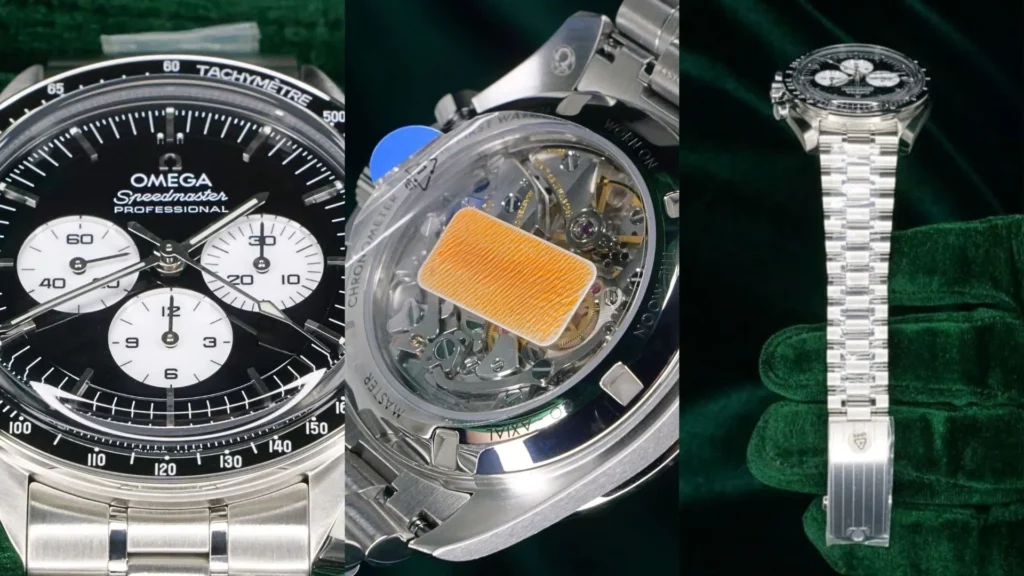
Omega introduced the Speedmaster in 1957 as part of its professional chronograph lineup, designed for racing and precision timing. Early references like the CK2915 introduced the broad arrow hands and tachymeter scale that became the Moonwatch’s signature look. By the 1960s, the Speedmaster ST105.003 and ST105.012 had caught NASA’s attention.
A punishing test battery — covering temperature extremes, vacuum conditions, shock, and vibration — resulted in the Speedmaster becoming the official watch for manned space missions. No other watch passed every test.
Ref. 311.30.42.30.01.005 is the final hesalite expression of that legacy. It runs the manual-wind Caliber 1861, a movement that succeeded the original Cal. 321 in 1968 and powered every Moonwatch through 2021. Omega discontinued it when the Cal. 3861 arrived, but it still trades actively on the secondary market.
Collectors know exactly what it is and why it matters. For a broader look at the full Speedmaster range beyond the Moonwatch, our Omega Speedmaster buying guide covers all the major references.
Key Specifications — Ref. 311.30.42.30.01.005
| Spec | Detail |
| Reference Number | 311.30.42.30.01.005 |
| Case Size | 42 mm |
| Case Material | Stainless steel |
| Case Design | Asymmetrical with crown guards |
| Case Thickness | 14.3 mm |
| Bezel | Black aluminum tachymeter |
| Bracelet | Stainless steel three-link |
| Movement | Caliber 1861 (manual wind) |
| Power Reserve | ~48 hours |
| Crystal | Hesalite |
| Water Resistance | 50 m |
| Functions | Chronograph — central seconds, 30-minute and 12-hour subdials, small seconds |
| Production Status | Discontinued (2021) |
Omega Speedmaster Cal. 3861 Generation
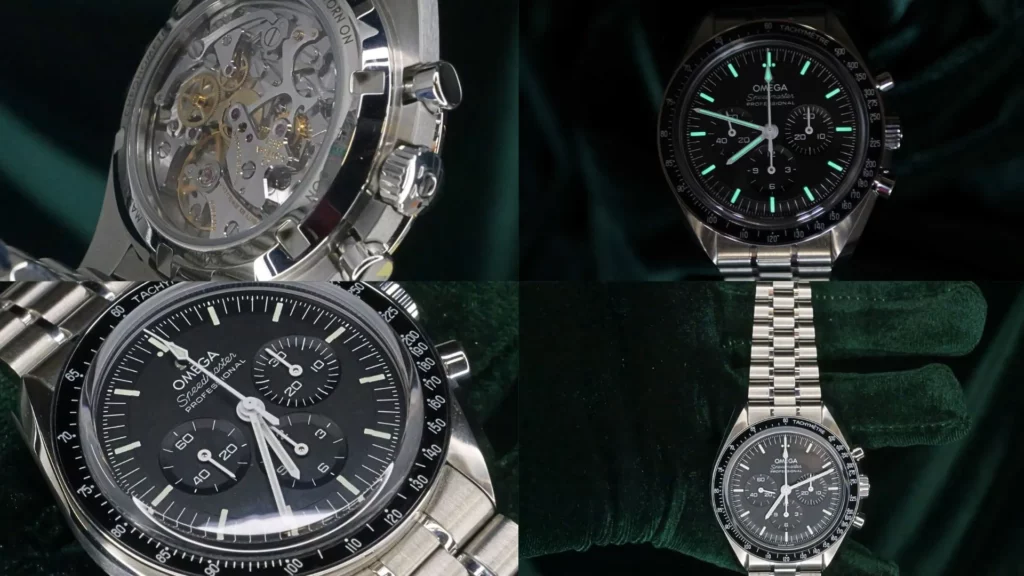
In January 2021, Omega replaced both hesalite and sapphire Cal. 1861 Moonwatches with two new references powered by the Caliber 3861. It’s a Co-Axial Master Chronometer movement that passed METAS certification and raised the anti-magnetic threshold to 15,000 gauss. Ref. 310.30.42.50.01.001 is the hesalite version; Ref. 310.30.42.50.01.002 is the sapphire.
Beyond the movement, the case got a small but real update. At 13.6mm thick, it shaved 0.7mm off the outgoing Cal. 1861 hesalite’s 14.3mm height. Omega also lightened the font on the tachymeter bezel, revised the caseback engravings, and applied the Omega logo rather than printing it.
For 2026, Omega continued expanding the Moonwatch Professional line. In January, the brand released two reverse panda “Black and White” references: one in stainless steel (Ref. 310.30.42.50.01.004, retailing at $10,400) and one in Moonshine Gold, both running the Cal. 3861.
If you’re shopping the current Professional range, the standard black-dial hesalite (Ref. 310.30.42.50.01.001) remains the core reference.
Key Specifications — Ref. 310.30.42.50.01.001
| Spec | Detail |
| Reference Number | 310.30.42.50.01.001 |
| Case Size | 42 mm |
| Case Material | Stainless steel |
| Case Design | Asymmetrical with crown guards |
| Case Thickness | 13.6 mm |
| Bezel | Black aluminum tachymeter |
| Bracelet | Stainless steel three-link (improved taper) |
| Movement | Caliber 3861 (manual wind, Co-Axial Master Chronometer) |
| Power Reserve | ~50 hours |
| Crystal | Hesalite |
| Water Resistance | 50 m |
| Functions | Chronograph — central seconds, 30-minute and 12-hour subdials, small seconds |
| Production Status | Currently in production |
Omega Speedmaster vs Professional: Key Differences
Both references are Moonwatches. That’s worth repeating, because the comparison can look misleading at first glance. What you’re evaluating is whether the movement upgrade justifies the price gap, and whether the history tied to the Cal. 1861 generation matters to you personally.
1. Movement
Caliber 1861 is a manual-wind column-wheel chronograph with a lever escapement and 48-hour power reserve. It’s the movement that went to the Moon, and Omega kept it in production largely unchanged for decades.
Caliber 3861 uses a Co-Axial escapement, METAS Master Chronometer certification, and 15,000-gauss magnetic resistance. Power reserve runs 50 hours, and it qualifies for Omega’s 5-year warranty program. For most buyers, the day-to-day difference is small.
Both require daily winding. But by measurable standard, the 3861 is the better caliber. If you’ve ever wondered whether your watch has been affected by magnetic fields, we cover how to tell if your watch has been magnetized in a separate guide.
2. Case Dimensions
Both references measure 42mm in diameter, so they wear identically from that angle. Thickness is where they differ. Cal. 1861 hesalite (311.30.42.30.01.005) sits at 14.3mm. Cal. 3861 hesalite (310.30.42.50.01.001) drops to 13.6mm. Not dramatic, but noticeable under a shirt cuff.
3. Case Design
Neither reference uses a symmetrical case. Both use the asymmetrical Moonwatch shape with integrated crown guards that has defined the Speedmaster Professional since the mid-1960s. Omega’s deliberate choice to keep that shape unchanged means the current watch looks almost identical to the Apollo 11 reference from 1969.
4. Heritage
Omega’s Speedmaster history runs in clear chapters: 1957 for motorsport timing, 1965 for NASA certification, 1969 for Apollo 11. What most buyers overlook is Apollo 13. In April 1970, the crew used their Speedmaster chronographs to manually time a 14-second engine burn that corrected their reentry trajectory after the service module explosion.
A wristwatch used as a critical navigation instrument in an emergency — that’s what separates this watch’s history from every other tool watch.
Cal. 1861 references are the last generation with direct genealogical continuity to those missions. Cal. 3861 carries the same lineage in spirit, but it’s the newer chapter.
Price and Market Demand
Per WatchCharts, the discontinued Cal. 1861 hesalite (Ref. 311.30.42.30.01.005) currently trades on the secondary market at roughly $3,800–$4,500 depending on condition and whether the watch has original box and papers. It originally retailed around $5,350 before discontinuation.
Current Cal. 3861 hesalite (Ref. 310.30.42.50.01.001) retails new at $7,800. On the secondary market, it trades at approximately $5,000–$5,600, the normal depreciation pattern for a watch still widely available at retail.
Pre-owned buyers can get a watch that looks and wears almost identically for $1,000–$1,500 less by choosing the Cal. 1861 generation. Whether that saving is worth prioritizing over the newer movement is the core question of this comparison.
For long-term value context: the 3861 hesalite has tracked roughly 9% below the broader Omega Speedmaster index over the past five years. It’s not an investment play. It’s a stable one. For a broader picture of how Omega holds up against Rolex on the resale market, our Omega vs Rolex resale value breakdown goes deeper.
If you’d like tour videos and condition notes on the Cal. 1861 or Cal. 3861 references we currently have available, reach out and we’ll put together a walkthrough for you.
Hesalite vs Sapphire: What’s the Difference on the Moonwatch?
Both Moonwatch generations offer hesalite and sapphire crystal options, and the choice matters more than most buyers expect.
Hesalite is the material Omega used on the original NASA-certified Moonwatch. It’s an acrylic polymer, softer than sapphire and easier to scratch, but chosen for two specific reasons. It won’t shatter under sudden pressure changes. And when it does scratch, the marks are shallow enough to polish out. Many collectors consider that a feature rather than a flaw.
Ref. 310.30.42.50.01.001 hesalite caseback is engraved with “The First Watch Worn on the Moon.” It’s the historically faithful choice.
Ref. 310.30.42.50.01.002, the sapphire version, uses scratch-resistant sapphire up front and a display caseback so you can see the Cal. 3861 movement. It’s the more practical choice for daily wear. On the secondary market it trades 10–20% higher than the hesalite equivalent.
For the Cal. 1861 generation, the same split applies. Ref. 311.30.42.30.01.006, the “Sapphire Sandwich” named for its sapphire front and caseback, currently trades around $4,500–$5,000.
Pick hesalite if staying true to the original Moonwatch specification matters to you. Pick sapphire if scratch resistance and a view of the movement are the priority.
Side-by-Side Comparison
Related Models from Majestix
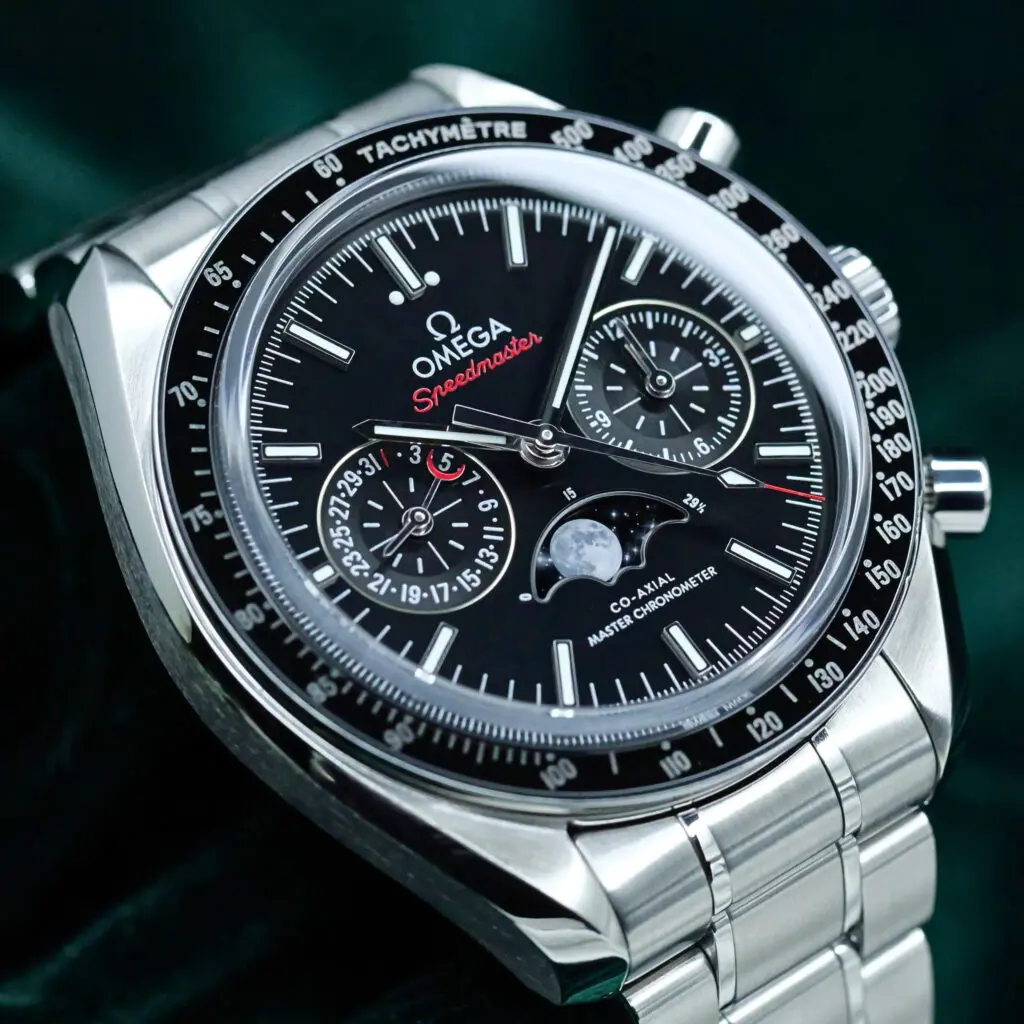
Omega Speedmaster Moonphase Black Dial Stainless Steel 44.25mm MINT CONDITION COMPLETE SET 304.30.44.52.01.001
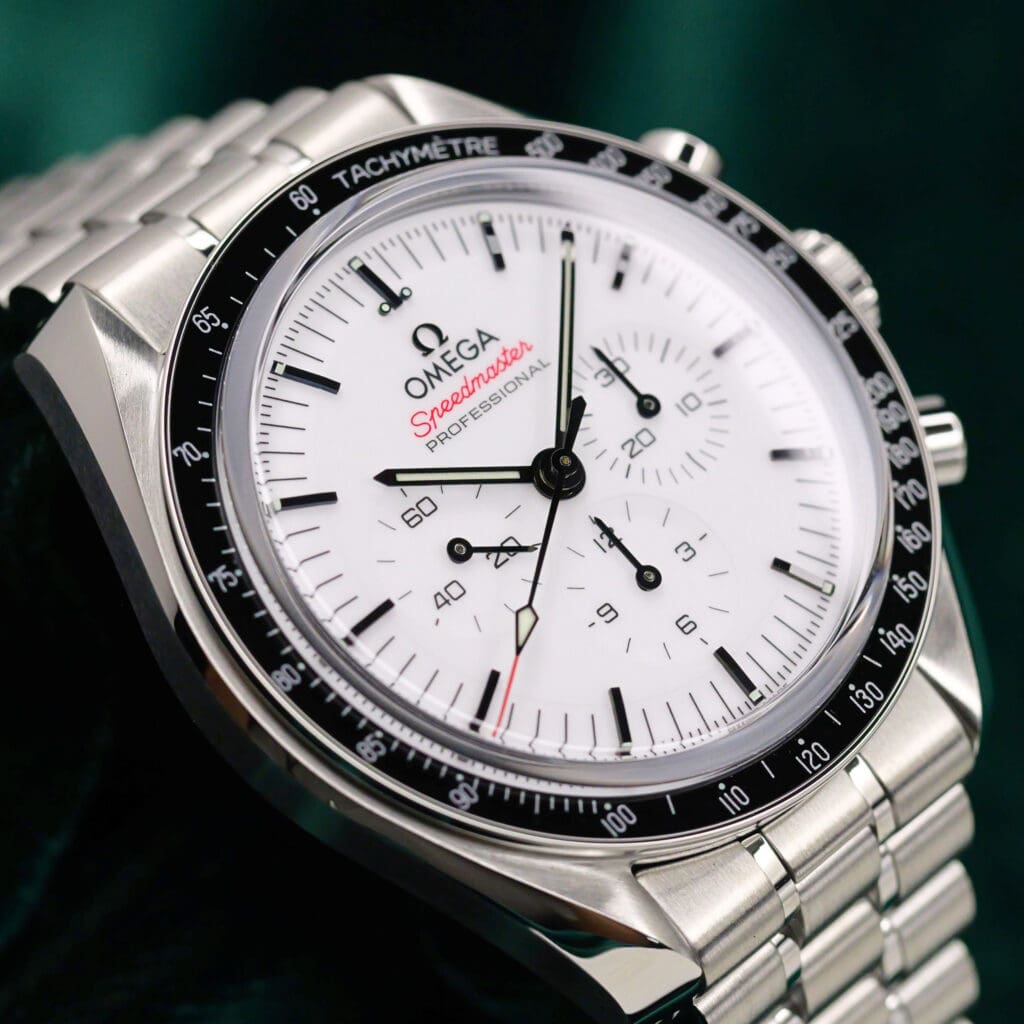
2026 NEW UNWORN Omega Speedmaster Moonwatch Professional White Dial Stainless Steel 42mm COMPLETE SET 310.30.42.50.04.001
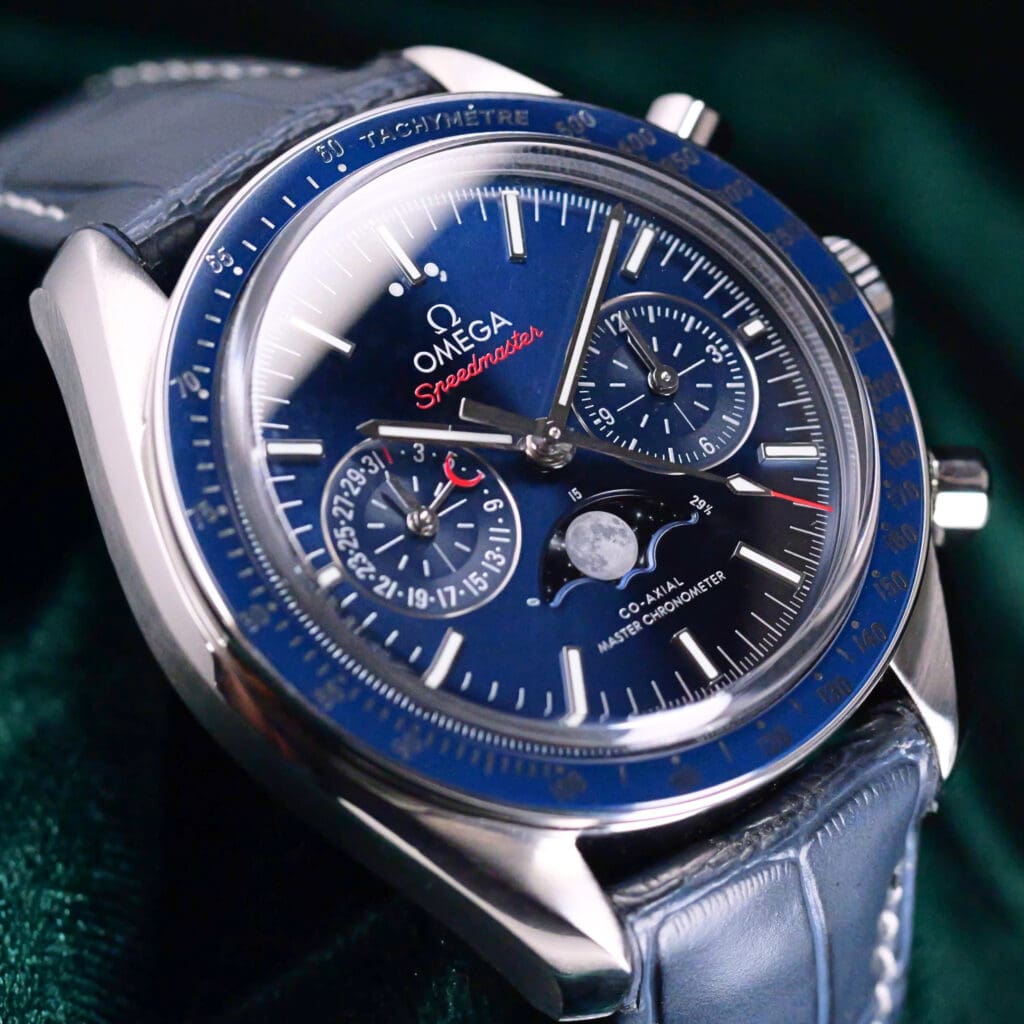
Omega Speedmaster Moonphase Blue Dial Blue Leather Strap Stainless Steel 44.25mm MINT CONDITION COMPLETE SET 304.33.44.52.03.001

Omega Speedmaster "Orbis Edition" 38mm Blue Dial Blue Bezel Stainless Steel Bracelet MINT COMPLETE SET 324.30.38.50.03.002
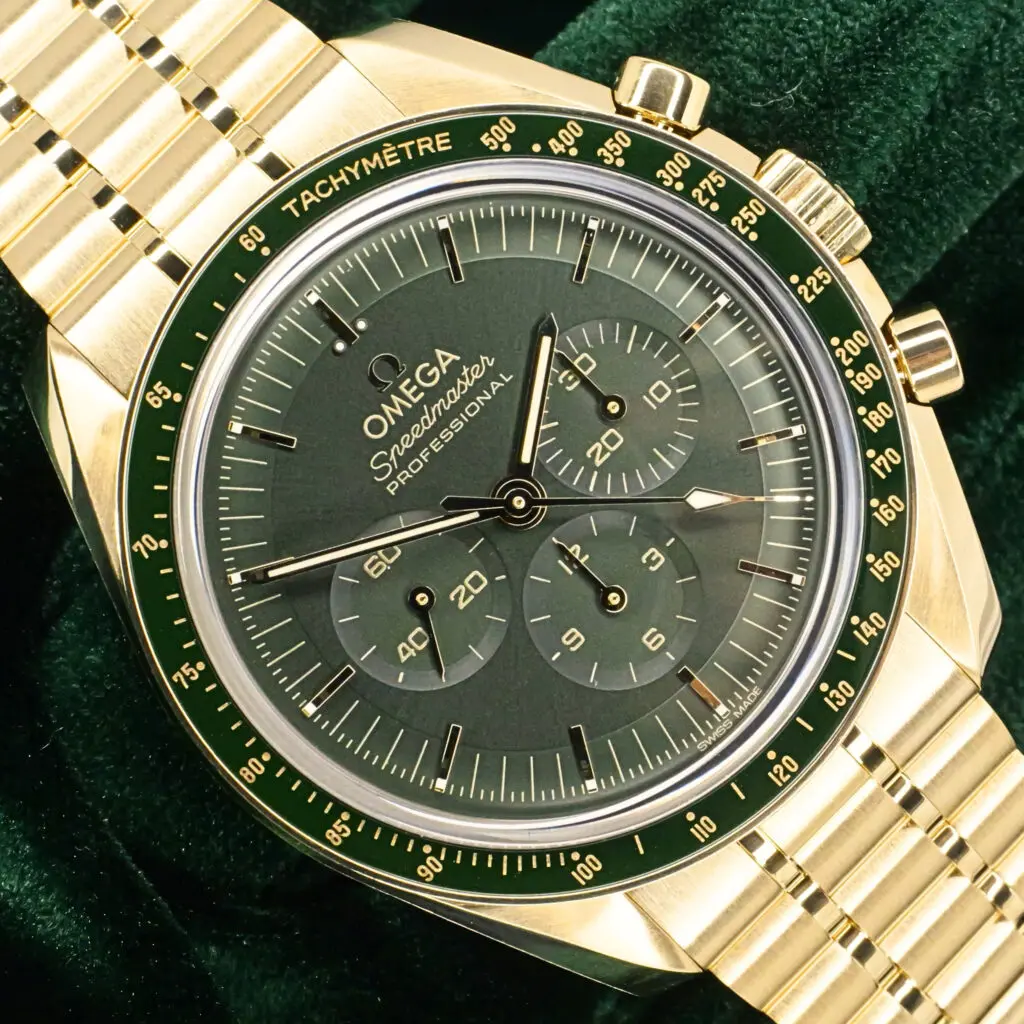
Omega Speedmaster Professional Moonwatch "Moonshine" Green Dial 18K Yellow Gold 42mm MINT CONDITION COMPLETE SET 310.60.42.50.10.001
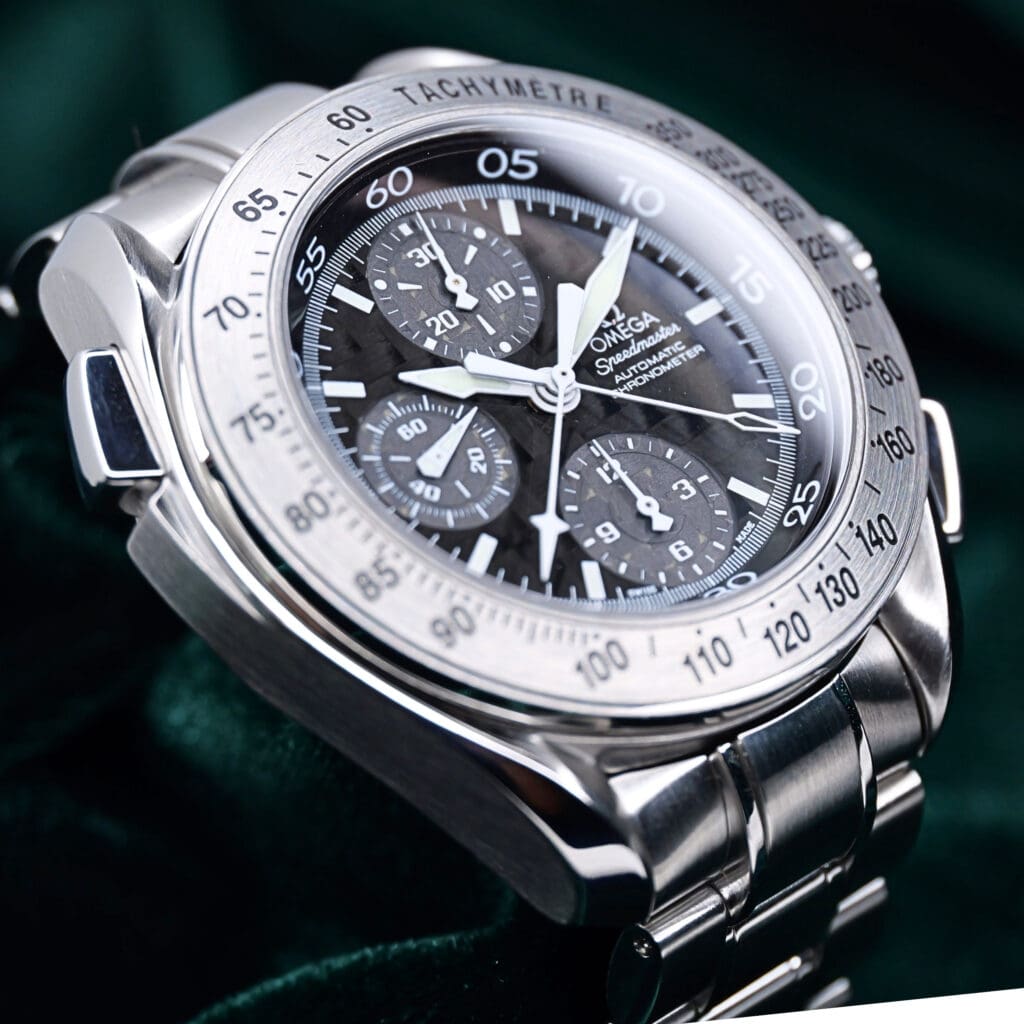
Omega Speedmaster Split-Seconds "Rattrapante" Black Carbon Fiber Dial Stainless Steel 42mm MINT CONDITION 3540.50
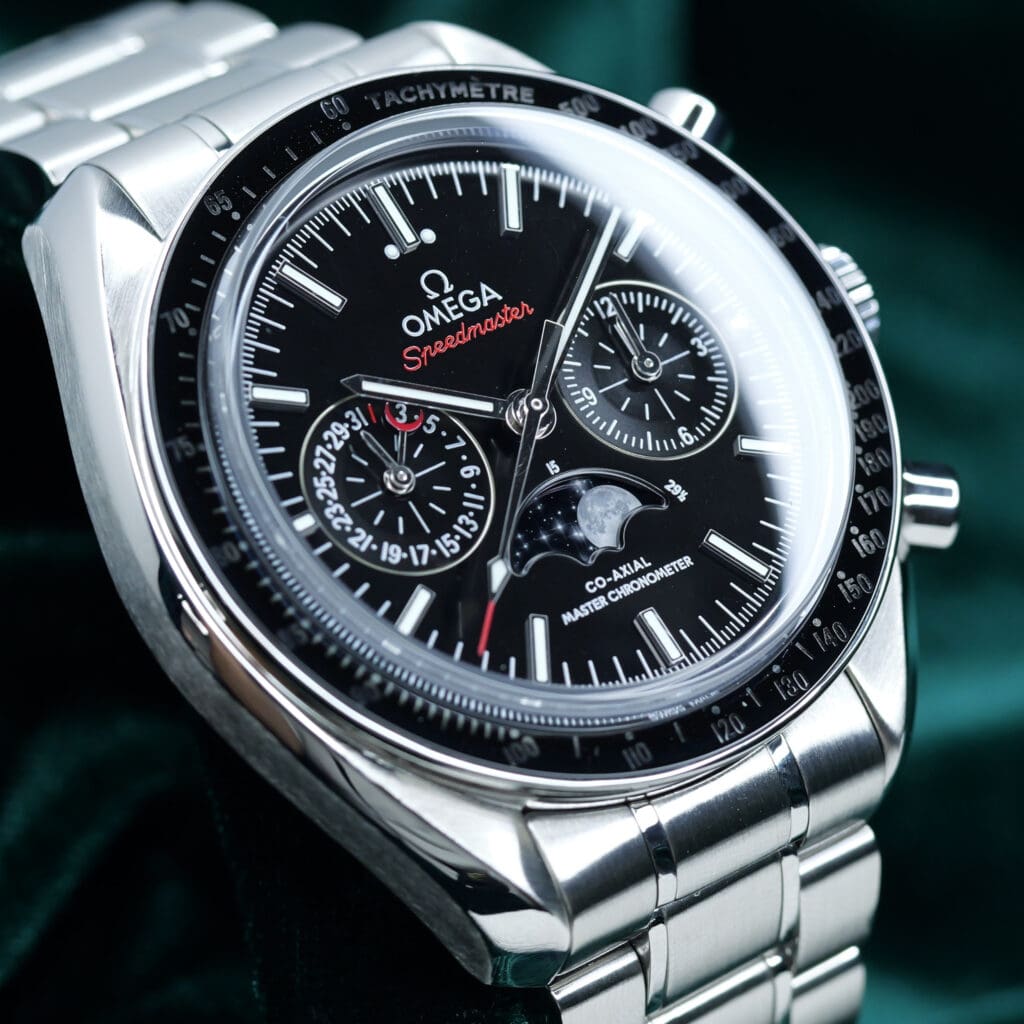
Omega Speedmaster Moonphase Co-Axial Master Chronometer Chronograph Black Dial Stainless Steel 44.25mm MINT CONDITION COMPLETE SET 304.30.44.52.01.001
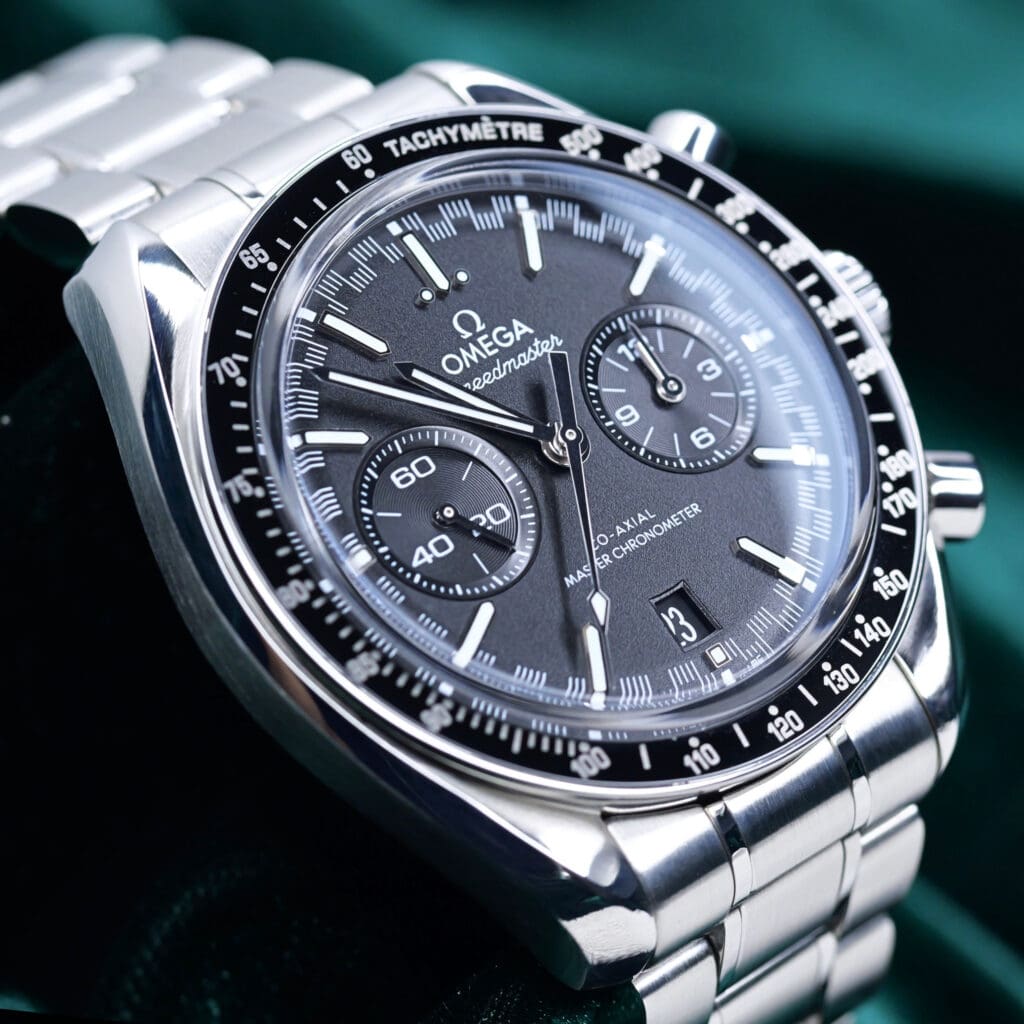
Omega Speedmaster Racing Co-Axial Master Chronometer Black Dial Stainless Steel 44.25mm MINT CONDITION COMPLETE SET 329.30.44.51.01.001
The table below gives you a quick look at how the Cal. 1861 and Cal. 3861 Moonwatch generations compare on paper. The two watches look very similar at first glance, but the movement, thickness, certification, bracelet, and price gap can make a real difference depending on how you plan to wear and buy your Speedmaster.
| Feature | Omega Speedmaster (Ref. 311.30.42.30.01.005) | Omega Speedmaster Professional (Ref. 310.30.42.50.01.001) |
| Case Design | Asymmetrical Moonwatch case | Asymmetrical Moonwatch case |
| Case Material | Stainless steel | Stainless steel |
| Case Size | 42 mm | 42 mm |
| Case Thickness | 14.3 mm | 13.6 mm |
| Bezel | Black aluminum tachymeter | Black aluminum tachymeter |
| Crystal | Hesalite | Hesalite |
| Movement | Caliber 1861 (manual wind) | Caliber 3861 (manual wind, Co-Axial) |
| Certification | Standard chronometer | METAS Master Chronometer |
| Magnetic Resistance | Standard | Up to 15,000 gauss |
| Power Reserve | ~48 hours | ~50 hours |
| Water Resistance | 50 m | 50 m |
| Bracelet | Stainless steel three-link | Updated three-link with improved taper |
| Retail Price (original) | ~$5,350 | $7,800 |
| Secondary Market (2026) | ~$3,800–$4,500 | ~$5,000–$5,600 |
| Production Status | Discontinued (2021) | Currently in production |
How to Choose Between the Cal. 1861 and Cal. 3861
Choose the Cal. 1861 (Ref. 311.30.42.30.01.005) if:
- You want the movement generation that flew on Apollo missions
- Pre-owned value matters — you’re getting very close to the same watch for $1,000–$1,500 less
- You prefer the original caseback engraving and 14.3mm profile
- You’re a first-time Moonwatch buyer looking for the lowest sensible entry price
Choose the Cal. 3861 (Ref. 310.30.42.50.01.001) if:
- You want Omega’s current benchmark movement with Co-Axial escapement and METAS certification
- Long-term service support matters — buying the in-production reference keeps your options open
- You’re buying new from an authorized dealer and want the 5-year warranty
- You plan to wear it hard in environments where magnetic resistance is a real concern
Worth noting: the two watches look nearly identical on the wrist. Someone who doesn’t know both references won’t know which one you’re wearing. For all practical purposes, the difference lives inside the case. If the Speedmaster is on your radar but you’re also weighing the Seamaster, we lay out the Speedmaster vs Seamaster comparison in a separate guide.
Related Models from Majestix
2026 NEW UNWORN Omega Speedmaster Moonwatch Professional White Dial Stainless Steel 42mm COMPLETE SET 310.30.42.50.04.001
Omega Speedmaster Professional Moonwatch "Moonshine" Green Dial 18K Yellow Gold 42mm MINT CONDITION COMPLETE SET 310.60.42.50.10.001
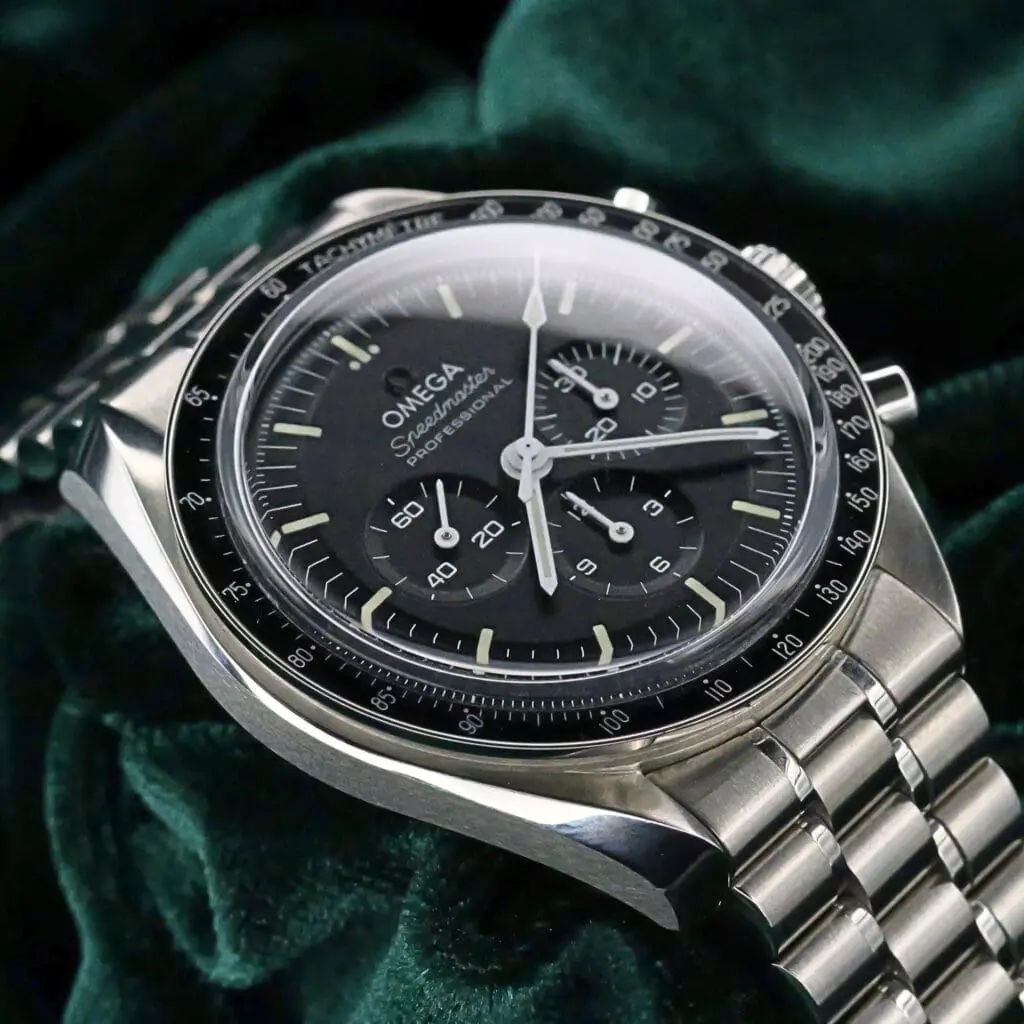
2025 NEW UNWORN Omega Speedmaster Moonwatch Professional Black Dial Stainless Steel 42mm COMPLETE SET 310.32.42.50.01.002

2026 NEW UNWORN Omega Speedmaster Moonwatch Professional "Reverse Panda" Black Dial White Subdials Stainless Steel 42mm COMPLETE SET 310.30.42.50.01.004

Omega Speedmaster Professional Moonwatch "Silver Snoopy Award" 50th Anniversary Silver Dial Blue Subdials Blue Ceramic Bezel Blue Fabric Strap Stainless Steel 42mm MINT CONDITION COMPLETE SET 310.32.42.50.02.001
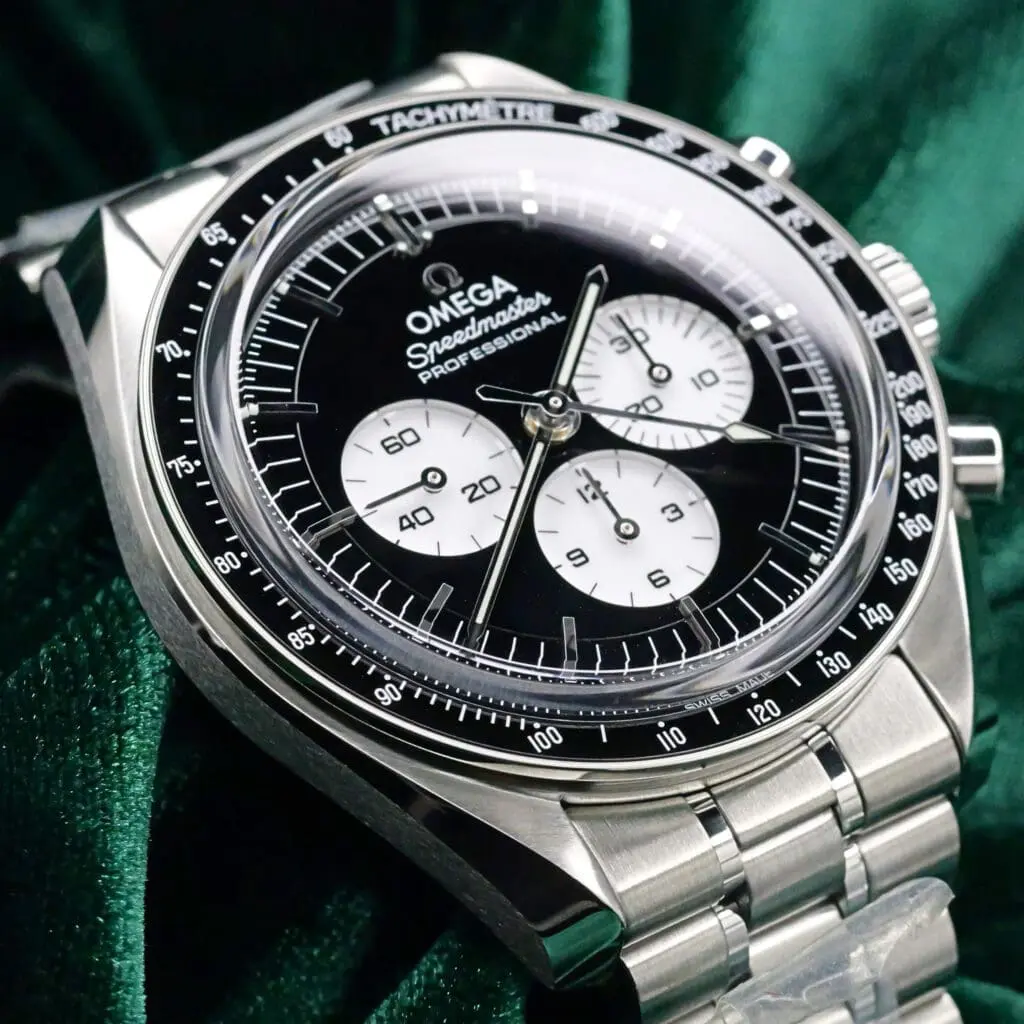
2026 NEW UNWORN Omega Speedmaster Moonwatch Professional "Reverse Panda" Black Dial White Subdials Stainless Steel 42mm COMPLETE SET 310.30.42.50.01.004
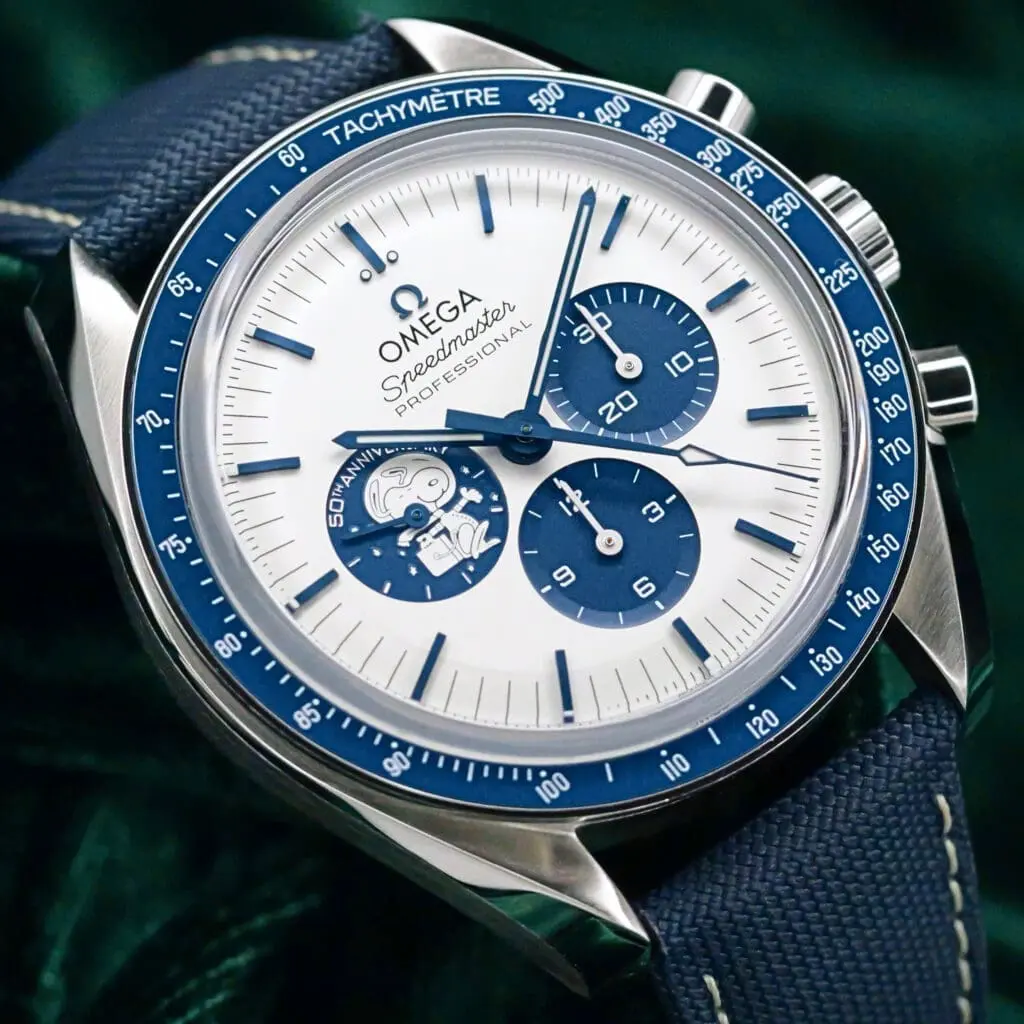
Omega Speedmaster Professional Moonwatch "Silver Snoopy Award" Silver Dial Blue Ceramic Bezel Blue Nylon Strap Stainless Steel 42mm MINT CONDITION COMPLETE SET 310.32.42.50.02.001
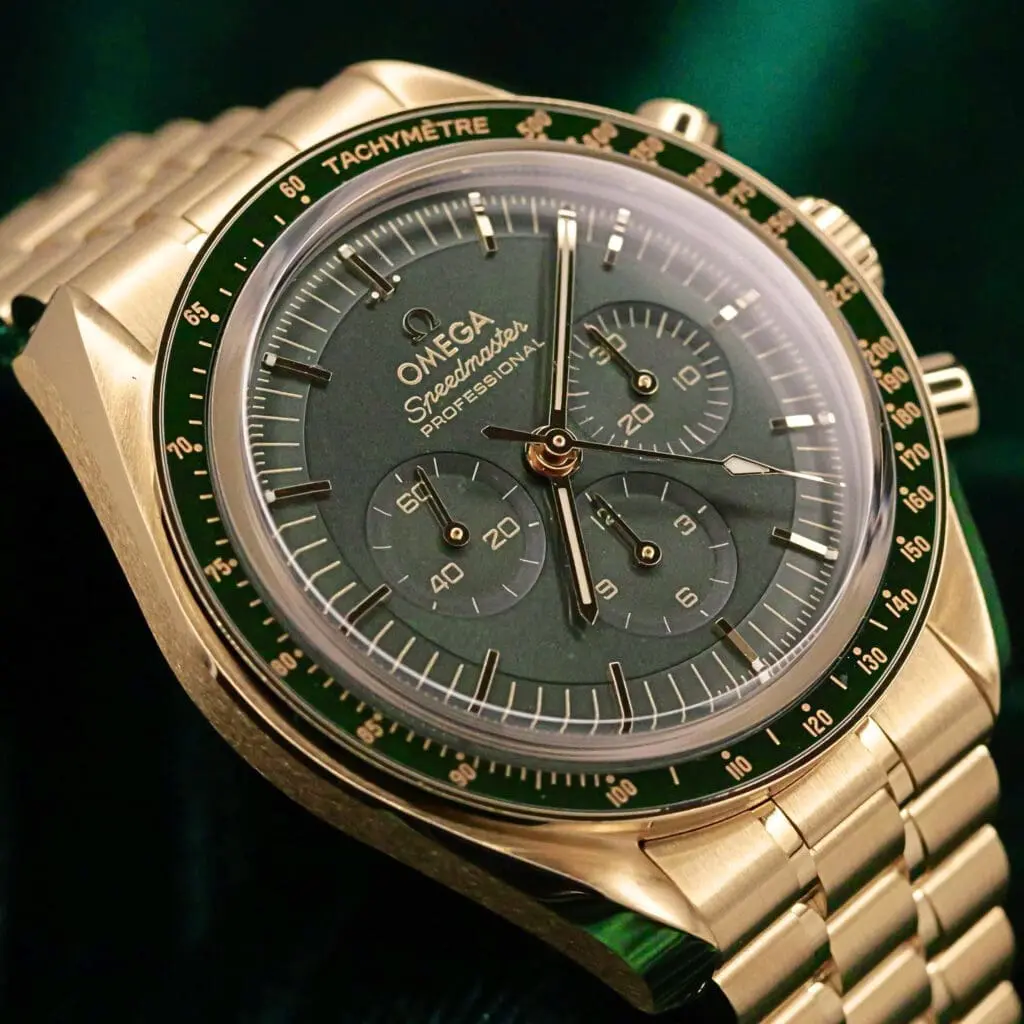
2026 NEW UNWORN Omega Speedmaster Professional Moonwatch Green Dial Yellow Gold 42 mm COMPLETE SET 310.60.42.50.10.001
Where to Buy Authentic Speedmaster Watches Online
For pre-owned Moonwatch references, a few online channels are worth knowing. Chrono24 is the largest peer-to-peer marketplace for pre-owned luxury watches, listing both Cal. 1861 and Cal. 3861 references from dealers and private sellers globally.
eBay runs an Authenticity Guarantee program on watches above a certain price threshold, adding third-party verification before delivery. Grailzee is a newer platform focused on collector-to-collector sales with a more curated inventory.
Watch forums, particularly WatchUSeek and Rolex Forums, also carry a steady supply of Speedmaster listings from private sellers, often priced below marketplace rates.
We sell, buy, and trade pre-owned luxury watches including both Moonwatch generations. Before you commit to a watch, we give you layered communication: tour videos of the actual piece, detailed condition notes on the dial, case, and crystal, and a direct conversation with someone who has physically handled it. You’re not making a decision from a stock photo.
That approach is reflected in our 4.9-star Google rating, built by clients who wanted to know exactly what they were getting before committing.
If you want that kind of walkthrough on a Cal. 1861 or Cal. 3861 reference, reach out and we’ll line up the options we currently have. You can also browse what’s currently in stock to see which references are available right now.
Final Thoughts on Omega Speedmaster vs Professional
Both generations are the same watch where it counts: the look, the feel, the history, and the reason people keep wanting one. Cal. 1861 is the movement that flew on Apollo. Cal. 3861 is the better caliber by modern benchmarks. If you’re still mapping the broader Omega lineup before deciding, our Omega buying guide covers the full collection.
Neither is the wrong choice. If budget is a real factor, the discontinued generation delivers the full Moonwatch experience for meaningfully less money. If you want the current production model with Omega’s latest engineering, the 3861 is worth the premium.
One thing that catches buyers off guard: the manual wind. You’re winding this watch every day. For some people, that ritual becomes part of owning it. For others, it’s an inconvenience. Know which camp you’re in before you decide. And regardless of which generation you choose, budget for periodic servicing — see our guide to Omega watch servicing costs to know what to expect.
999+ Timepieces Available
Explore Our Timepieces
Authenticated, unworn, and ready to ship worldwide.
Rolex · Audemars Piguet · Patek Philippe · Omega · Cartier · Richard Mille · Hublot · Tudor
Newly Listed
2026 NEW UNWORN Bvlgari Serpenti Tubogas Studs Capsule Limited Edition Green Dial Diamond Bezel Steel & 18k Yellow Gold 35mm COMPLETE SET 104360
$24,255.00
Vacheron Constantin Overseas Chronograph Blue Dial Blue Leather Strap Stainless Steel 42.5mm MINT CONDITION COMPLETE SET 5500V/110A-B148
$37,793.00
Tag Heuer Monaco Chronograph “Dark Lord” Special Edition Black Dial Black Leather Strap DLC Titanium 39mm MINT CONDITION COMPLETE SET CBL2180.FC6497
$8,135.00
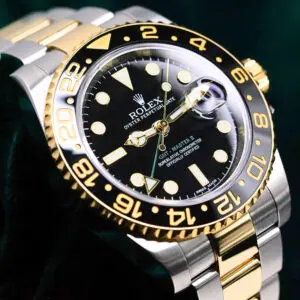
Rolex GMT-Master II “Green Arrow” Black Dial Black Ceramic Bezel Oyster Bracelet Two-Tone 18K Yellow Gold Stainless Steel 40mm MINT CONDITION COMPLETE SET 116713LN
$15,740.00
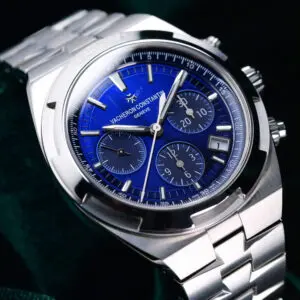
Vacheron Constantin Overseas Chronograph Blue Dial Stainless Steel 42.5mm MINT CONDITION COMPLETE SET 5500V/110A-B148
$37,793.00
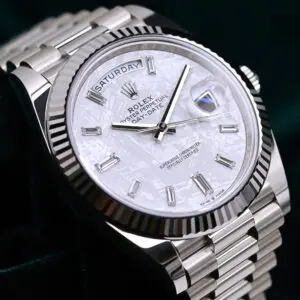
Rolex Day-Date Meteorite Baguette Diamond Dial Fluted Bezel President 18K White Gold 40mm MINT CONDITION COMPLETE SET 228239
$78,629.00
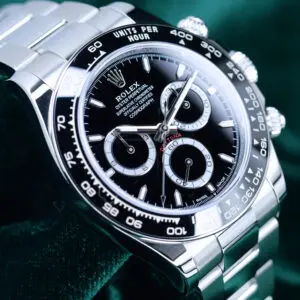
2026 Rolex Cosmograph Daytona Black Dial Black Ceramic Bezel Oyster Bracelet Stainless Steel 40mm MINT CONDITION COMPLETE SET 126500LN
$33,594.00
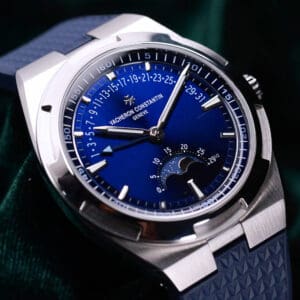
2025 Vacheron Constantin Overseas Moonphase Retrograde Date Blue Dial Blue Rubber Strap Stainless Steel 41mm MINT CONDITION COMPLETE SET 4000V/210A-B911
$52,800.00
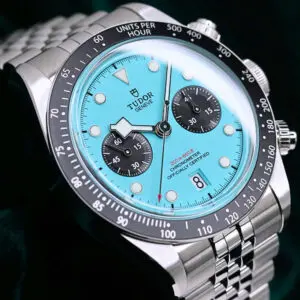
2025 Tudor Black Bay Chrono "Flamingo Blue" Turquoise Dial Black Bezel Stainless Steel 41mm MINT CONDITION COMPLETE SET 79360N-0024
$10,494.00

Audemars Piguet Royal Oak Offshore Chronograph "Batman" Black Dial Blue Accents Black Rubber Strap Stainless Steel 42mm MINT CONDITION COMPLETE SET 26470ST.OO.A028CR.01
$25,715.00
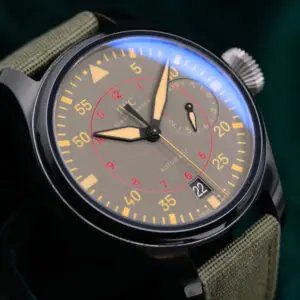
IWC Big Pilot's Watch Top Gun Miramar Grey Dial Green Textile Strap Black Ceramic 48mm MINT CONDITION COMPLETE SET IW501902
$7,240.00
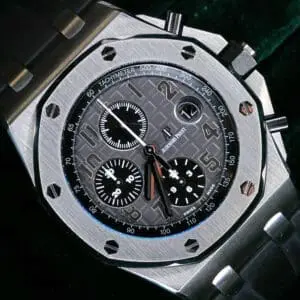
Audemars Piguet Royal Oak Offshore Chronograph "Elephant" Gray Dial Stainless Steel Rubber Strap 42mm 26470ST.OO.A104CR.01
$23,974.50