
Omega Speedmaster vs Rolex Submariner is a comparison most buyers run into sooner or later. These are the two names that come up when the budget gets serious. At first glance, the story sounds simple. One links to space missions, the other to deep-sea diving. But once you try them on, the choice stops being about history and starts becoming personal.
On the wrist, they head in different directions. Speedmaster leans into timing and dial detail; you feel the pushers and see the subdials working. Submariner stays cleaner and more straightforward, and the bezel becomes part of your day without much thought. Both make sense as everyday steel sports watches, but they live differently once you own them.
This guide focuses on that part. What changes after the purchase, how each one fits into real life, and which one you are more likely to keep five years from now.
Omega Speedmaster Background


Omega launched the Speedmaster in 1957 as part of its first professional tool watch lineup. It began as a racing chronograph built for drivers who needed precise lap timing at speed. Moving the tachymeter to the bezel freed up the dial and made quick readings easier. A reliable timing instrument made for real use — if you want a deeper dive on reading the tachymeter scale, our guide to using it walks through the math step by step.
It fits someone who wants to engage with their watch. You wind it in the morning and feel the crown turn, then press the pushers with a firm click. Case sits low and steady, which helps during long days at a desk or on the move.
In 1965, NASA flight-qualified the Speedmaster after extensive testing for crewed missions. Astronauts wore it throughout the Apollo era, including on the lunar surface. Moonwatch reputation came from documented mission use. That achievement still shapes how people view the model.
Collectors, pay attention: the design stayed consistent for decades. You can trace small shifts in dial text, bracelet construction, and case finishing across different eras. Those changes do not rewrite the watch, but they alter how it feels on the wrist.
Chronograph layout and tachymeter bezel define the Speedmaster at a glance. Modern versions run on Calibre 3861, which brought Master Chronometer certification and resistance to magnetic fields up to 15,000 gauss. You choose it for the hands-on chronograph feel and the earned link to space exploration. Our Omega buying guide covers the full lineup if you want to see where the Speedmaster sits across the collection.

Popular Omega Speedmaster References:
- Omega Speedmaster Ref. 311.30.42.30.01.005
- Omega Speedmaster Ref. 310.30.42.50.01.001
- Omega Speedmaster Ref. 311.30.40.30.01.001
- Omega Speedmaster Ref. 3513.30
For a full breakdown of which Speedmaster reference fits which buyer, see the Speedmaster buying guide.
Rolex Submariner Background


Rolex introduced the Submariner in 1953 as a purpose-built dive watch. Early versions handled 100 meters and set the foundation with a rotating bezel and clear, high-contrast markers. Over time, Rolex strengthened the case and improved sealing as diving standards evolved. Today’s models reach 300 meters and maintain that same tool-first mindset.
For a dependable everyday watch, nothing in this comparison comes closer. In daily wear, it sits balanced and steady, with an Oyster case and Oyster bracelet that taper comfortably toward the clasp. Dial reads fast in low light, and the bezel turns with a firm, precise click. It feels ready for water, sweat, and daily knocks without feeling bulky.
What set it apart beyond depth ratings was the bezel design. Unidirectional rotation became the standard for tracking elapsed dive time in a safety-focused way — turn it the wrong direction by accident and you err toward more time remaining, not less. If the rotating bezel is new to you, our guide to using a dive bezel walks through the technique.
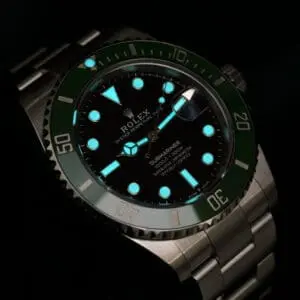
Rolex reinforced the platform with the Triplock crown and stronger lume for harsh conditions. Modern references feature a Cerachrom bezel and upgraded clasps that improve durability and long-term wear.
Collectors value the Submariner because Rolex maintains a consistent core design. Case profile, black dial, and rotating bezel remain steady across generations. Small shifts in lug shape, dial text, and bezel details define each era. Those differences help explain the model’s slow and deliberate evolution.
Recent versions use Chromalight lume for a longer glow-in-the-dark effect. Rolex also updated the movement to Calibre 3235 (date) and 3230 (no-date), bringing a 70-hour power reserve and improved accuracy. Even with those updates, it stays instantly recognizable as a Submariner.

Popular Rolex Submariner References:
- Rolex Submariner Ref. 14060
- Rolex Submariner Ref. 16610
- Rolex Submariner Ref. 124060
- Rolex Submariner Ref. 5513
Omega Speedmaster vs Rolex Submariner: Key Differences

When you compare the Omega Speedmaster vs. the Rolex Submariner, the differences come down to function, build, size, and market positioning. One focuses on chronograph timing and layered mechanics. The other centers on water resistance and structural durability.
Below are the key areas where they clearly separate.
1. Daily Function
Speedmaster runs a complete chronograph system with two pushers. A center seconds hand runs with subdials that track minutes and hours, so you can measure longer sessions without resetting. If you want to get the most out of the chronograph functions, there’s more to the pushers than just start and stop.
Submariner’s defining feature is its unidirectional rotating bezel. You line it up with the minute hand and follow a clear 60-minute scale. Bezel only turns forward, which protects the reading from shifting by mistake.
2. Water Resistance
Speedmaster Professional usually carries a 50-meter rating. Sealed case handles rain, hand washing, and normal daily moisture. Pushers and crown stay protected under standard use. It suits routines where water contact stays light and controlled.
Rated to 300 meters, the Submariner uses a screw-down Triplock crown system. Its Oyster case forms a tight shell around the movement to resist pressure. Seals stay secure during swimming and diving. This depth rating reflects engineering built specifically for water activity.

3. Case Diameter
Modern Speedmaster measures 42 mm, with a lug-to-lug span of about 47.5 mm. Wide dial and tachymeter bezel give it a larger wrist presence. A flat caseback spreads the weight evenly and helps the watch stay steady. This size also supports the chronograph layout without crowding the dial.
Current Submariner measures 41 mm and keeps the dial more compact. A rotating bezel frames the face and visually reduces its size. On the wrist, the case sits centered and balanced, making it feel stable during everyday movement.
4. Manual vs. Automatic: What the Movement Choice Means Day to Day
Speedmaster requires manual winding; Submariner winds itself automatically. This is one of the most practical differences between the two watches, and it shapes your daily routine more than most specs on paper.
With the Speedmaster, you wind the crown each morning — roughly 30 to 35 turns to build a full charge. Many owners find this a deliberate ritual. You feel the mechanism engaging, check that the hands are tracking correctly, and set the watch going for the day. It takes about 30 seconds but demands consistency.
Submariner winds through wrist movement. Wear it regularly and the Calibre 3230 or 3235 stays charged without any input. Skip a day and the 70-hour reserve gives you a buffer. If you rotate between watches or travel, it picks up where it left off with minimal fuss. We have a separate guide with tips on keeping an automatic watch charged when you’re not wearing it if that comes up regularly.
Neither approach is wrong. But if you rotate several watches, or if you know you’ll forget to wind, the Submariner fits a lower-maintenance routine. If you want that daily tactile interaction with your watch, the Speedmaster rewards it.

Price and Market Demand
Speedmaster prices fall into two primary levels. Regular steel models trade below retail on the secondary market, which is the opposite of what Rolex does.
Current 3861 Calibre Moonwatch (Ref. 310.30.42.50.01.001) retails at $7,800 and trades around $5,500 on the secondary market as of 2026. That gap makes it one of the more accessible entry points among well-known steel sports watches.
At the lower end, the older 1861 Calibre hesalite Moonwatch (Ref. 311.30.42.30.01.005) was discontinued in 2021 and trades around $4,600–$4,800 pre-owned. Same case and layout as the current generation, older movement underneath.
Submariner pricing works differently. Current-generation 126610LN retails at $11,350 as of 2026, up 5.8% from 2025.
On the secondary market it trades well above retail, typically $13,000–$16,000 depending on condition and documentation. Rolex controls supply tightly, so retail access requires purchase history with an authorized dealer or an extended waitlist. Grey market is where most buyers end up.
No-date 124060 offers a slightly cleaner dial without the date window and retails at $10,050. Secondary market sits around $11,000–$12,500, making it the more accessible Submariner entry point for buyers who prefer the symmetrical dial.
Overall, Speedmaster value rises through limited editions, while Submariner value stays durable across steel references. For a side-by-side look at how Rolex and Omega compare on long-term resale value, that topic has its own breakdown.
Notable Omega Speedmaster References
Related Models from Majestix
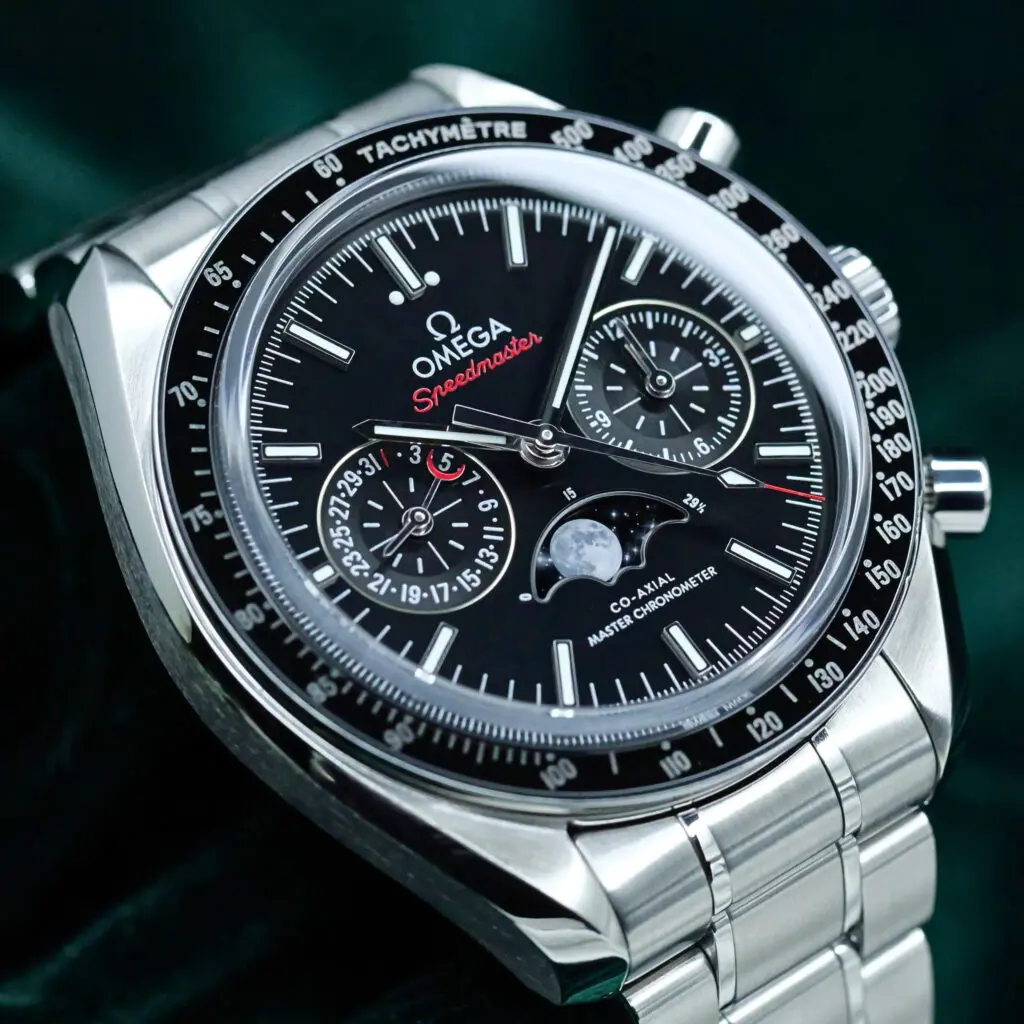
Omega Speedmaster Moonphase Black Dial Stainless Steel 44.25mm MINT CONDITION COMPLETE SET 304.30.44.52.01.001
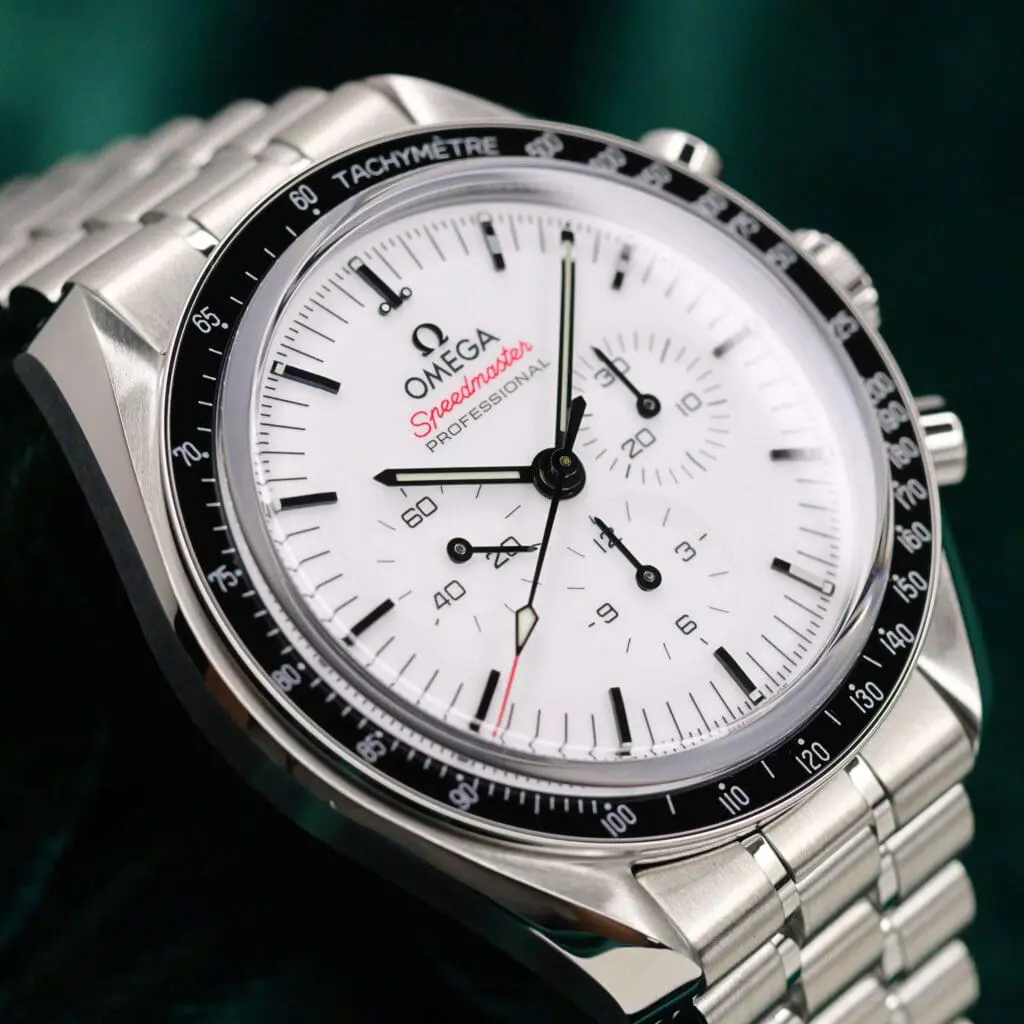
2026 NEW UNWORN Omega Speedmaster Moonwatch Professional White Dial Stainless Steel 42mm COMPLETE SET 310.30.42.50.04.001
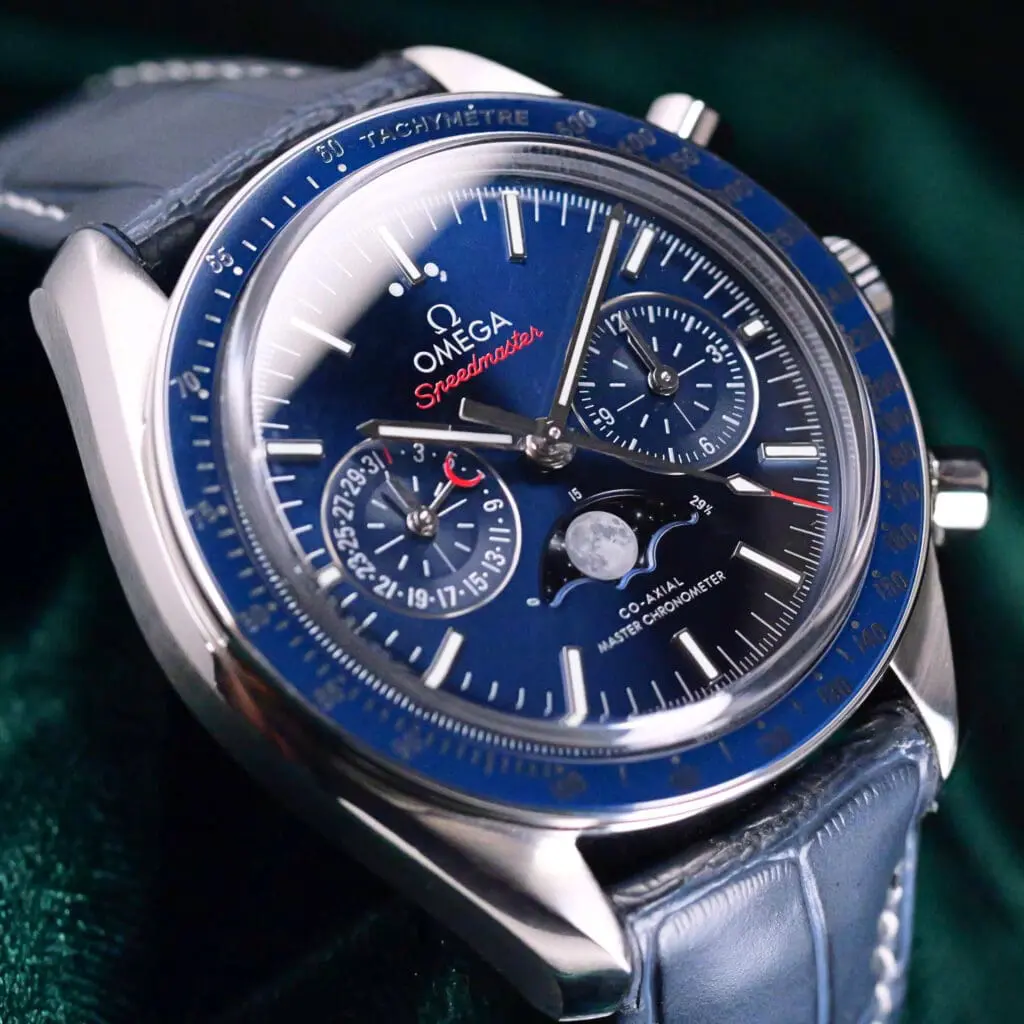
Omega Speedmaster Moonphase Blue Dial Blue Leather Strap Stainless Steel 44.25mm MINT CONDITION COMPLETE SET 304.33.44.52.03.001
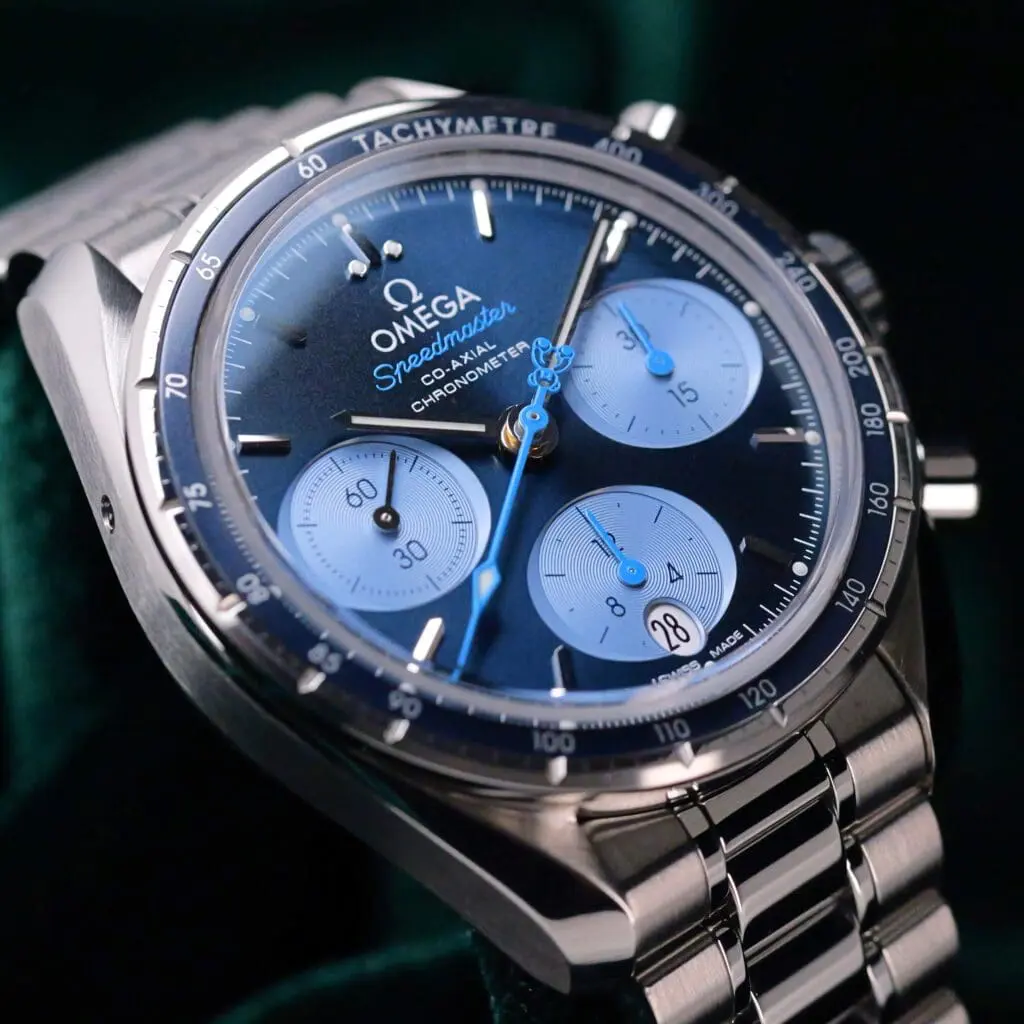
Omega Speedmaster "Orbis Edition" 38mm Blue Dial Blue Bezel Stainless Steel Bracelet MINT COMPLETE SET 324.30.38.50.03.002
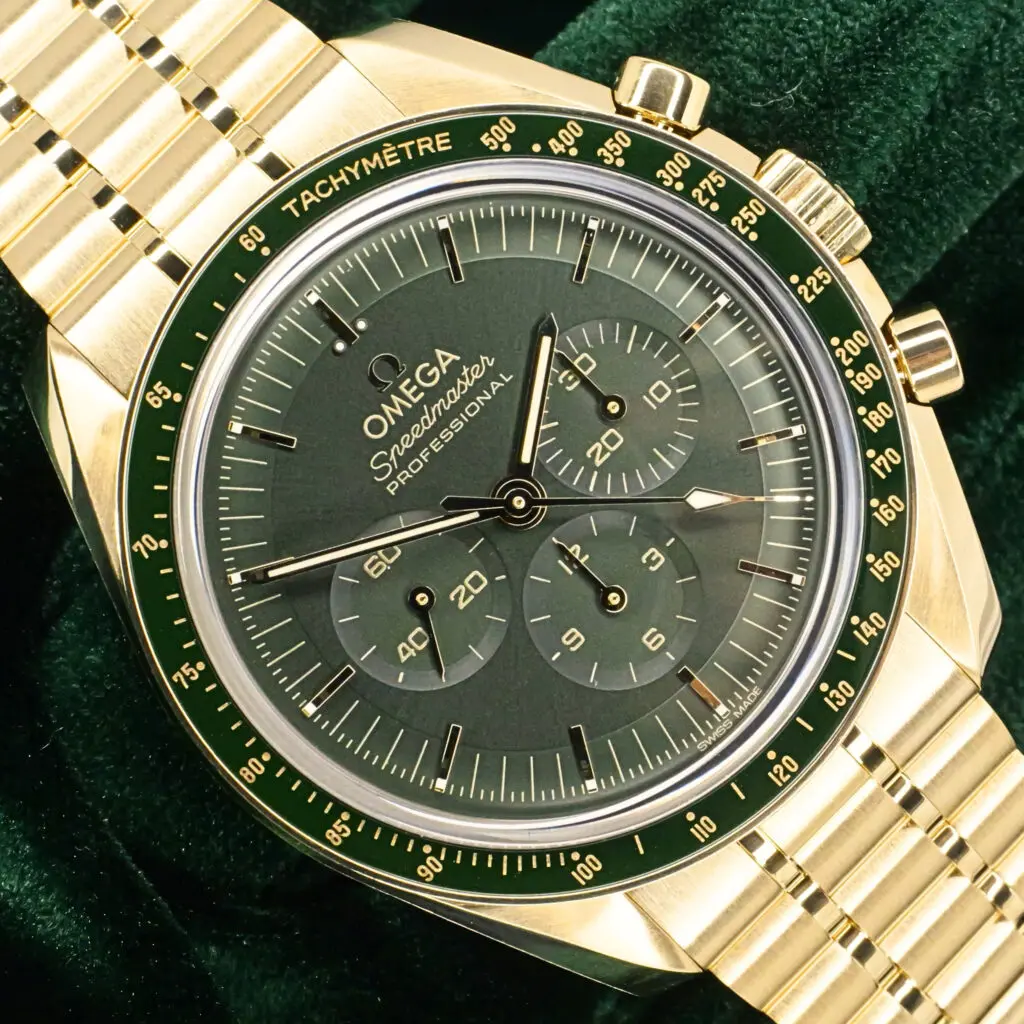
Omega Speedmaster Professional Moonwatch "Moonshine" Green Dial 18K Yellow Gold 42mm MINT CONDITION COMPLETE SET 310.60.42.50.10.001
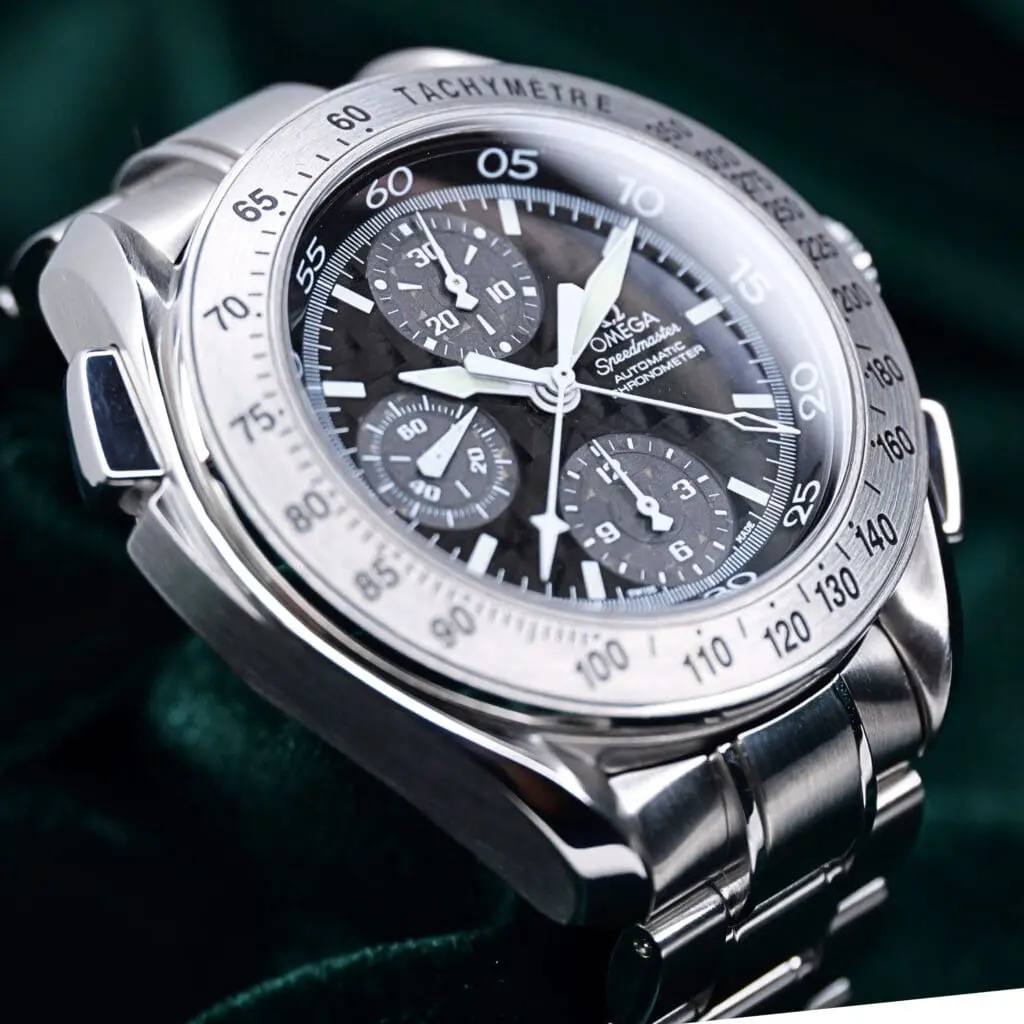
Omega Speedmaster Split-Seconds "Rattrapante" Black Carbon Fiber Dial Stainless Steel 42mm MINT CONDITION 3540.50
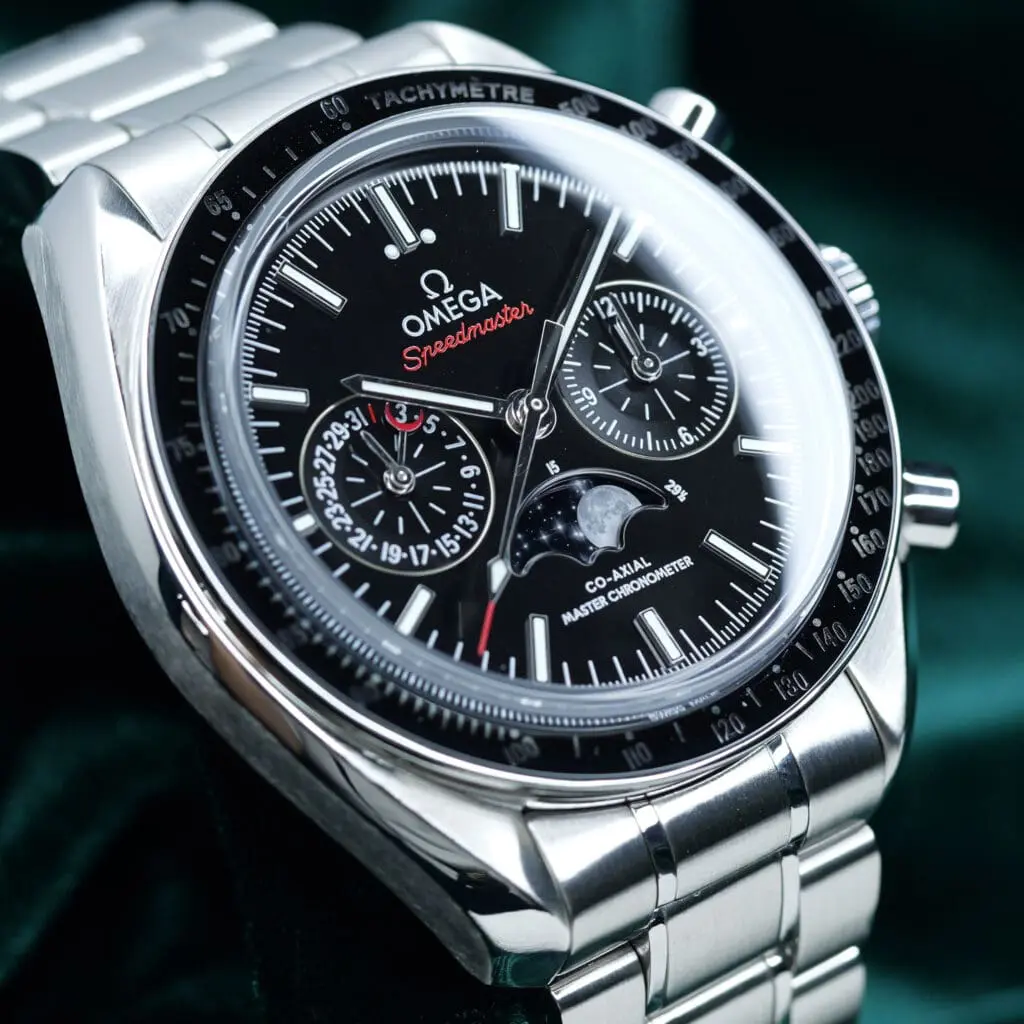
Omega Speedmaster Moonphase Co-Axial Master Chronometer Chronograph Black Dial Stainless Steel 44.25mm MINT CONDITION COMPLETE SET 304.30.44.52.01.001
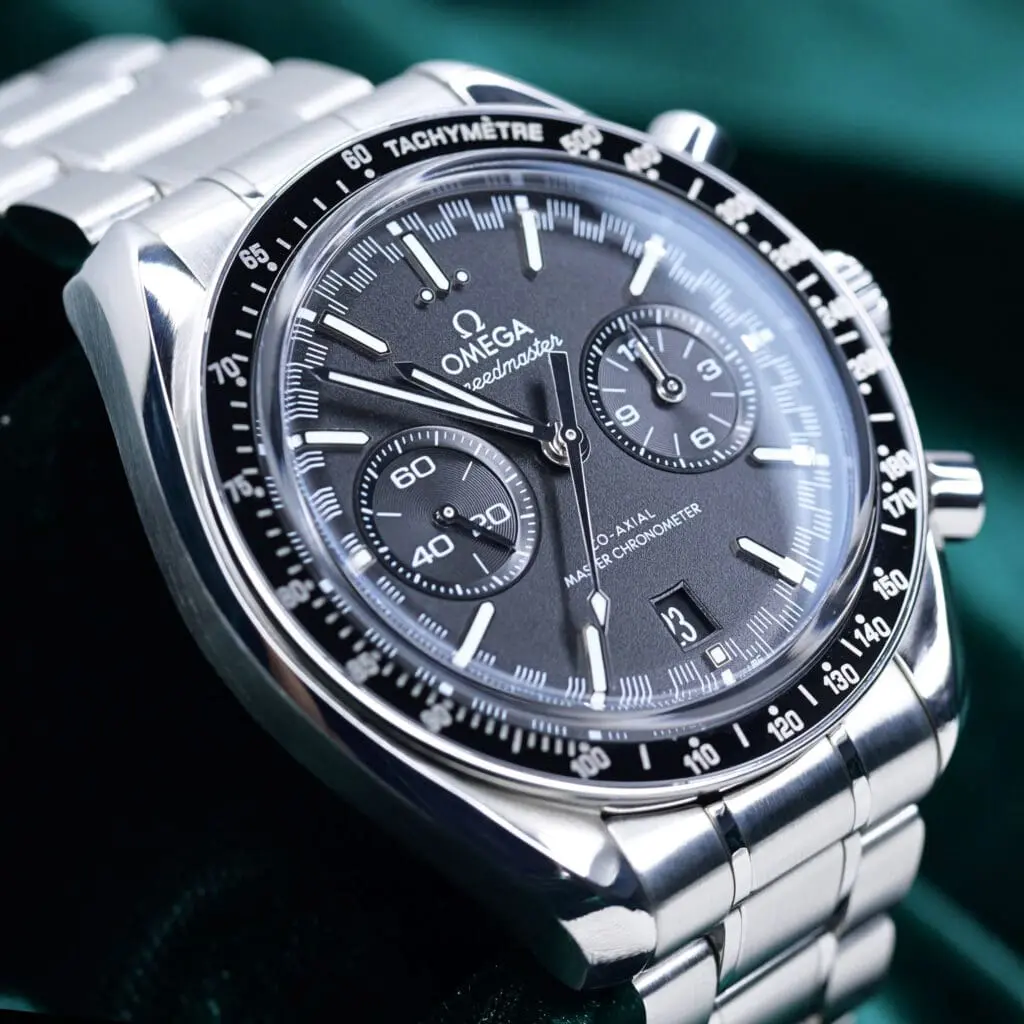
Omega Speedmaster Racing Co-Axial Master Chronometer Black Dial Stainless Steel 44.25mm MINT CONDITION COMPLETE SET 329.30.44.51.01.001
Speedmaster comes in many forms, but a few references set the tone for the whole line. These are the models most buyers look at first. They show how the watch evolves from its original layout to newer updates while keeping the same core design.
1. Omega Speedmaster Ref. 311.30.42.30.01.005
Among pre-owned Moonwatches, this one offers the most traditional feel — Hesalite crystal, solid steel caseback, and a manual-wind routine tied to the NASA-era identity. Hesalite prevents glare and gives the dial a softer, warmer look than sapphire.
Discontinued in 2021 and replaced by the current 3861 generation, pre-owned examples remain popular for buyers who want the authentic look at a lower price point.
Key Specs:
| Spec | Detail |
| Movement | Omega Calibre 1861, manual wind chronograph |
| Case Diameter | 42 mm |
| Crystal | Hesalite |
| Caseback | Solid steel |
| Water Resistance | 50 meters |
| Power Reserve | Approx. 48 hours |
| Secondary Market Price | Approx. $4,600–$4,800 |
2. Omega Speedmaster Ref. 310.30.42.50.01.001
Current-production Moonwatch. Same 42 mm footprint, but gains the 3861 Calibre with Master Chronometer certification, anti-magnetic rating up to 15,000 gauss, and a slimmer case profile at 13.2 mm. Hesalite crystal and solid caseback stay true to the original Moonwatch configuration.
Secondary market sits around $5,500, notably below its $7,800 retail, making it one of the few modern luxury sports watches you can buy pre-owned at a meaningful discount.
Key Specs:
| Spec | Detail |
| Movement | Omega Calibre 3861, manual wind, Master Chronometer |
| Case Diameter | 42 mm |
| Case Thickness | Approx. 13.2 mm |
| Crystal | Hesalite |
| Caseback | Solid steel |
| Water Resistance | 50 meters |
| Power Reserve | Approx. 50 hours |
| Magnetic Resistance | Up to 15,000 gauss |
| Retail Price | $7,800 |
| Secondary Market Price | Approx. $5,500 |

3. Omega Speedmaster Ref. 311.30.40.30.01.001
Case trims down to 39.7 mm with straight lugs, so it sits more compact on the wrist. Shorter lug span helps prevent overhang and keeps the dial looking tighter. You still get the classic Speedmaster chronograph layout, with proportions closer to those of early references.
Key Specs:
| Spec | Detail |
| Movement | Omega Calibre 1861, manual wind chronograph |
| Case Diameter | 39.7 mm |
| Case Thickness | Approx. 14 mm |
| Crystal | Sapphire |
| Water Resistance | 50 meters |
| Power Reserve | Approx. 48 hours |
| Price Range | Approx. $4,500–$5,500 |
4. Omega Speedmaster Ref. 3513.30
Running a 39 mm case, this one sits compact and balanced. Automatic chronograph removes the need for daily winding. Silver dial with black subdials keeps the classic Speedmaster contrast, along with the tachymeter bezel, three-register layout, and a date at 3 o’clock.
Key Specs:
| Spec | Detail |
| Movement | Omega Calibre 1152, automatic chronograph |
| Case Diameter | 39 mm |
| Case Thickness | Approx. 14 mm |
| Crystal | Sapphire |
| Water Resistance | 50 meters |
| Power Reserve | Approx. 44 hours |
| Price Range | Approx. $1,600–$2,300 |
Notable Rolex Submariner References
More Submariners
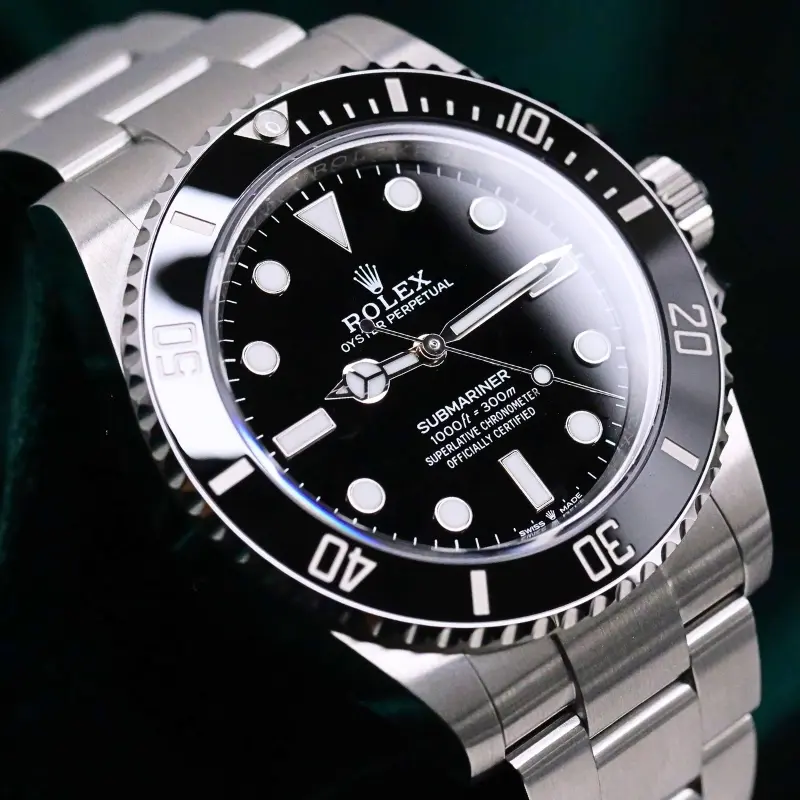
2026 NEW UNWORN Rolex Submariner Black Dial Black Ceramic Bezel Stainless Steel Oyster Bracelet 41mm COMPLETE SET 124060-0001
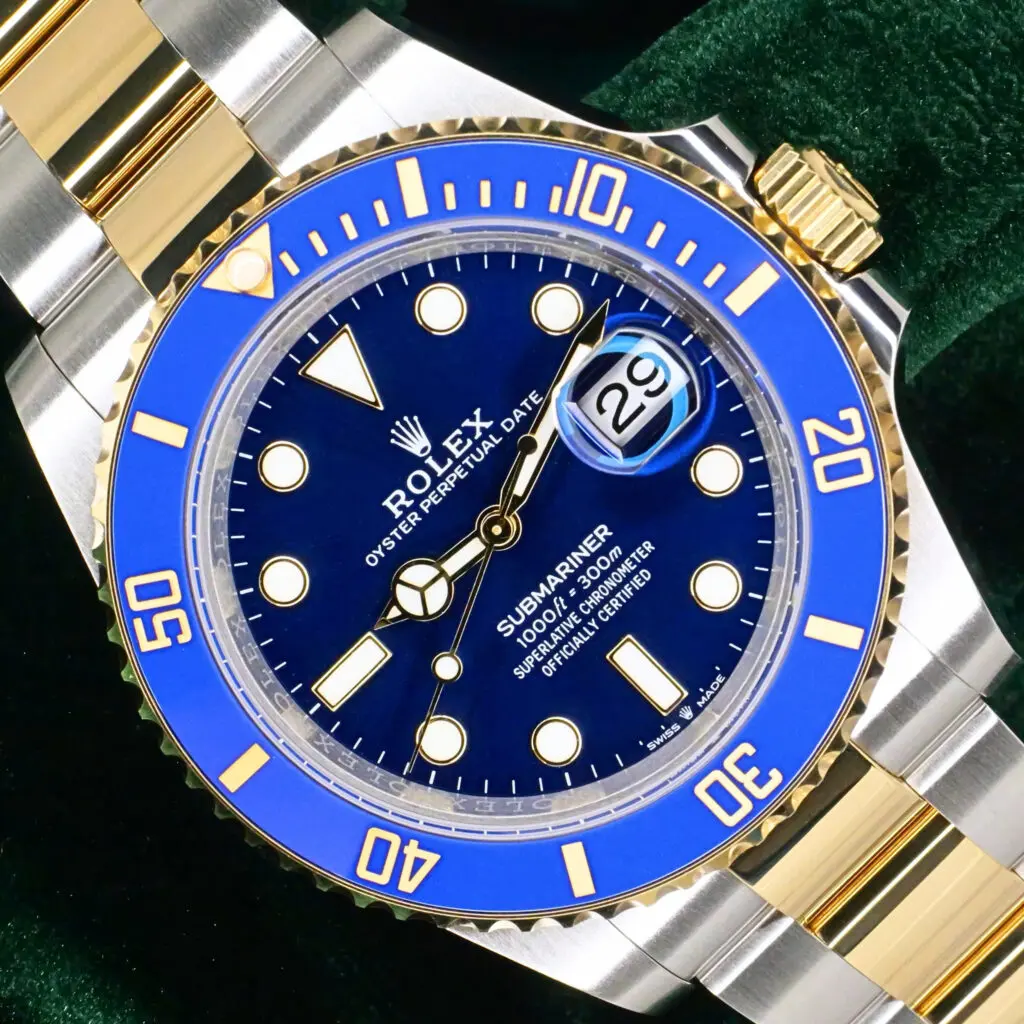
Rolex Submariner Date "Bluesy" Royal Blue Dial Blue Ceramic Bezel Oyster Bracelet Two-Tone 18K Yellow Gold Stainless Steel 41mm MINT CONDITION COMPLETE SET 126613LB
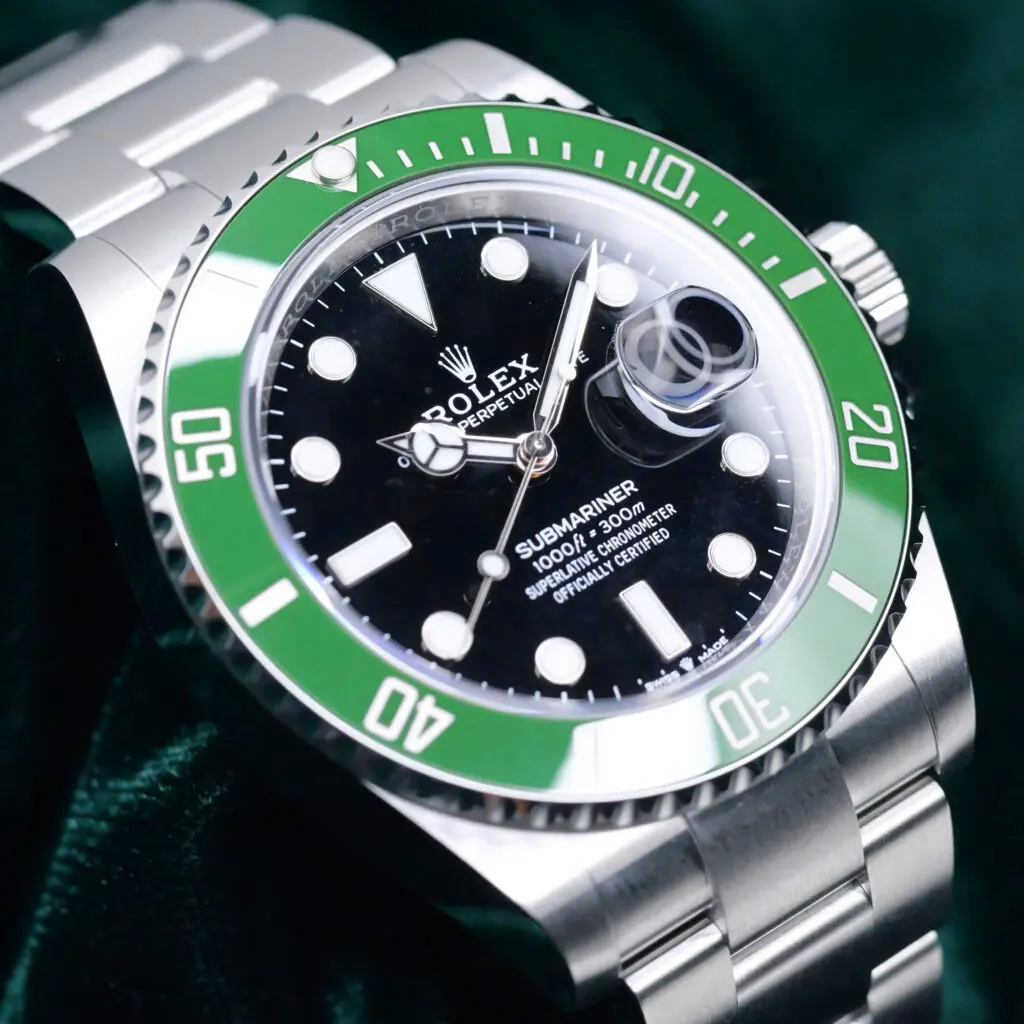
2026 NEW UNWORN Rolex Submariner Date Starbucks Black Dial Green Ceramic Bezel Stainless Steel 41mm COMPLETE SET 126610LV-0002
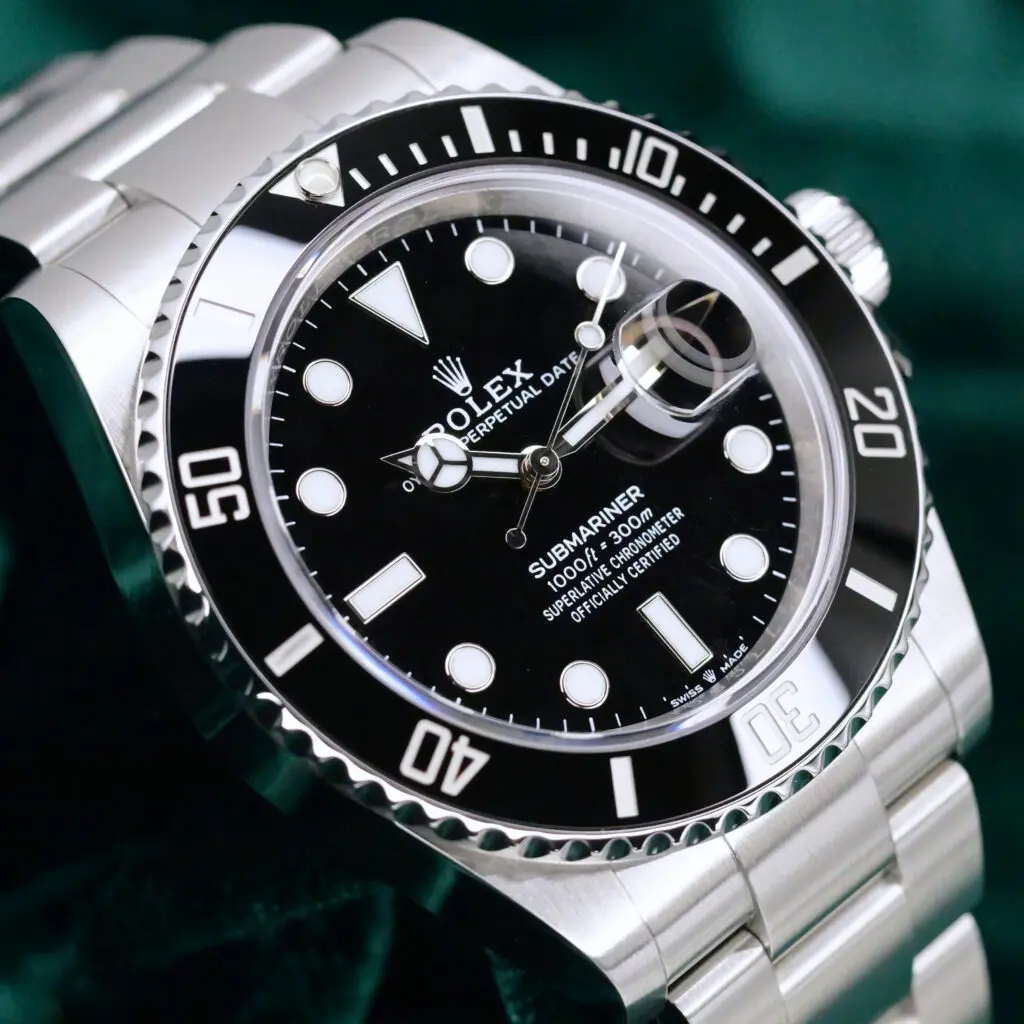
Rolex Submariner Date Black Dial Black Ceramic Bezel Oyster Bracelet Stainless Steel 41mm MINT CONDITION COMPLETE SET 126610LN
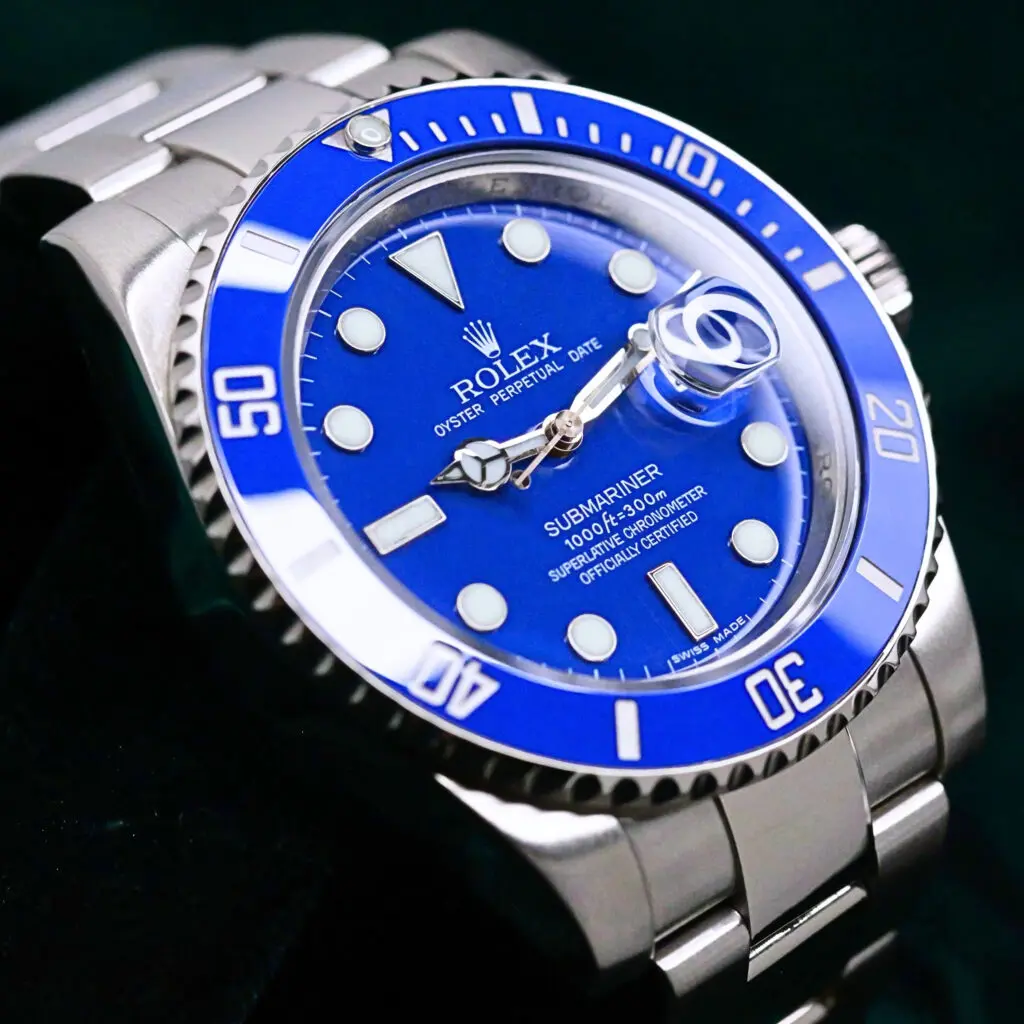
Rolex Submariner Date "Smurf" Blue Dial Blue Bezel Oyster Bracelet 18K White Gold 40mm MINT CONDITION COMPLETE SET 116619LB
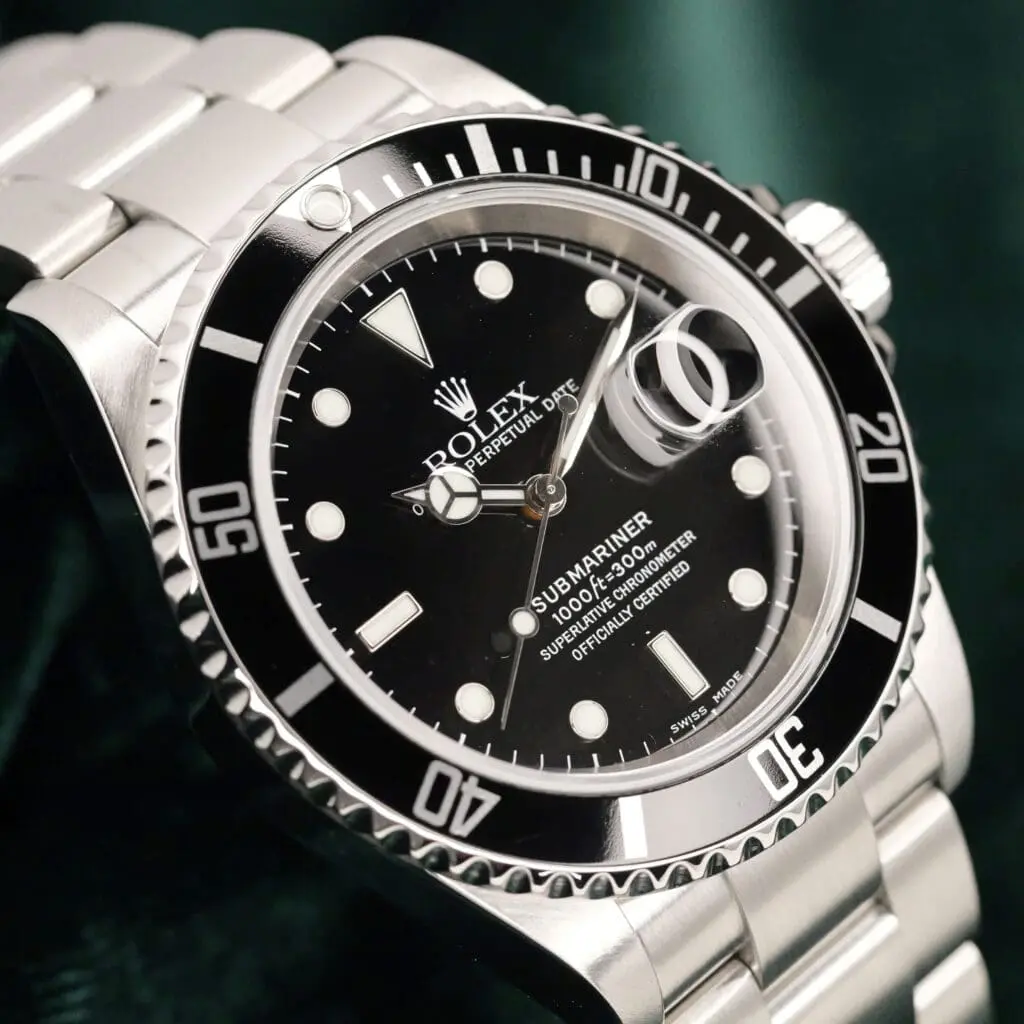
Rolex Submariner Date Black Dial Black Bezel Stainless Steel 40mm MINT CONDITION COMPLETE SET 16610
References below illustrate how the model has evolved across generations. Core dive layout stays consistent, while Rolex refined the case geometry, bezel material, movement generation, and bracelet system over time. These updates changed how the watch feels on the wrist and how collectors evaluate each reference today.
1. Rolex Submariner Ref. 124060
Introduced in 2020 alongside the date version, the 124060 is the current no-date Submariner. Case grew from 40 mm to 41 mm, slimmer lugs pulled the proportions closer to vintage references, and the movement upgraded to Calibre 3230. Dial stays symmetrical with no date window — a cleaner look that a dedicated group of buyers specifically prefers.
At $10,050 retail in 2026, it sits $1,300 below the date version. Secondary market prices run around $11,000–$12,500 depending on condition and completeness. If the choice between date and no-date is still open, the full date vs. no-date comparison goes deep on the differences.
Key Specs:
| Spec | Detail |
| Movement | Rolex Calibre 3230, automatic |
| Case Diameter | 41 mm |
| Crystal | Sapphire |
| Water Resistance | 300 meters |
| Power Reserve | Approx. 70 hours |
| Retail Price (2026) | $10,050 |
| Secondary Market Price | Approx. $11,000–$12,500 |
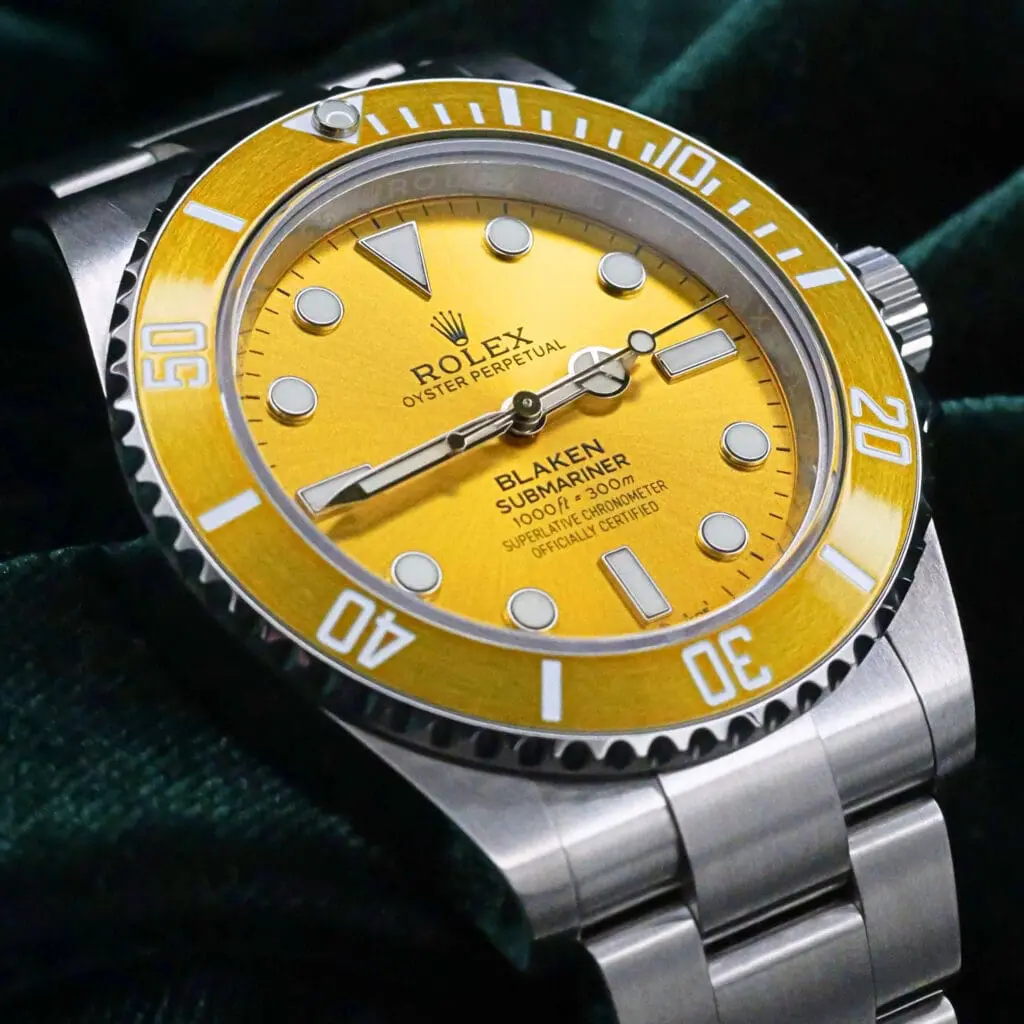

2. Rolex Submariner Ref. 126610LN
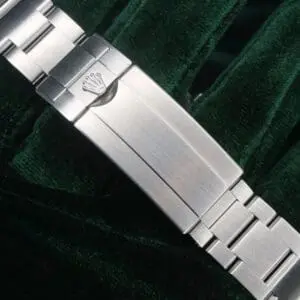
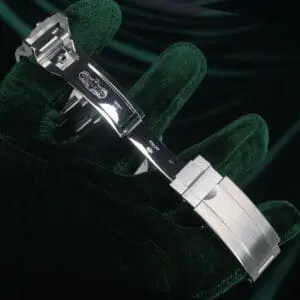
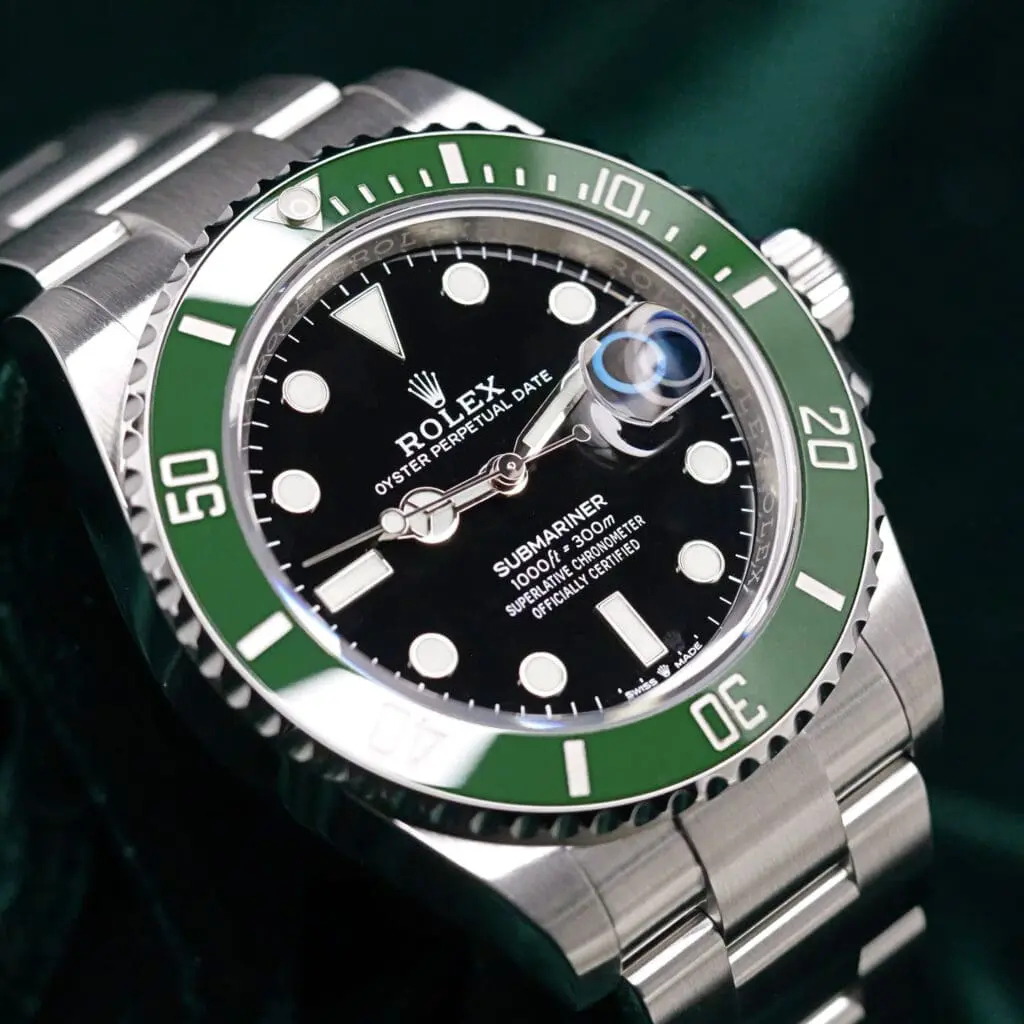
Replacing the 116610LN in 2020, the 126610LN is the current Submariner Date. Rolex kept the Cerachrom ceramic bezel but moved to Calibre 3235, sharing the same updated movement platform as the no-date. Oyster bracelet gained a slimmer profile with a glide-lock clasp extension system for wet-suit use.
Retail sits at $11,350 in 2026, after a 5.8% increase in January. On the secondary market, pre-owned examples typically trade at $13,000–$16,000 depending on year, condition, and whether box and papers are included. Unworn examples with a recent warranty card command the top end of that range. Our Rolex Submariner buying guide covers all current and recent references in full detail.
Key Specs:
| Spec | Detail |
| Movement | Rolex Calibre 3235, automatic |
| Case Diameter | 41 mm |
| Crystal | Sapphire with date magnifier |
| Water Resistance | 300 meters |
| Power Reserve | Approx. 70 hours |
| Retail Price (2026) | $11,350 |
| Secondary Market Price | Approx. $13,000–$16,000 |
3. Rolex Submariner Ref. 16610


Among five-digit era references, the 16610 is the Submariner Date most collectors reference first. Rolex paired the 40 mm steel case with Calibre 3135, a movement known for reliability and long service intervals. Slimmer case profile keeps it closer to the classic Submariner proportions many collectors prefer over the current maxi case.
Key Specs:
| Spec | Detail |
| Movement | Rolex Calibre 3135, automatic |
| Case Diameter | 40 mm |
| Case Thickness | Approx. 12.5 mm |
| Crystal | Sapphire with date magnifier |
| Water Resistance | 300 meters |
| Power Reserve | Approx. 48 hours |
| Price Range | Approx. $8,800–$9,000 |
4. Rolex Submariner Ref. 5513
One of the longest-running vintage no-date references, the 5513 remains popular for its clean dial and classic proportions. 40 mm case, acrylic crystal, and a warmer dial appearance than modern sapphire models. Powered by Calibre 1520 or 1530, it offers simple reliability with a power reserve of about 42 hours.
Key Specs:
| Spec | Detail |
| Movement | Rolex Calibre 1520 or Calibre 1530, automatic |
| Case Diameter | 40 mm |
| Case Thickness | 14 mm |
| Crystal | Acrylic |
| Water Resistance | 200 meters |
| Power Reserve | Approx. 42 hours |
| Price Range | Approx. $12,000–$20,000 |
Which Omega Speedmaster vs Rolex Submariner Should You Choose?
Choosing between the Omega Speedmaster and the Rolex Submariner usually comes down to how you plan to use the watch. Speedmaster centers on timing functions and manual interaction, while Submariner focuses on durability, water capability, and clear legibility. Points below outline where each model fits best.
Choose the Omega Speedmaster if:
- You want a chronograph you will use for timing tasks during the day
- You enjoy manual winding and the small routine of interacting with the watch
- Moonwatch design and its place in space history appeal to you
- You prefer a busier dial that looks like a real instrument on the wrist
- Your routine stays mostly dry, so 50 m water resistance is enough
- You want a well-known steel sports watch you can buy pre-owned below retail
If you want to see how the Speedmaster stacks up against Omega’s dive line, our Speedmaster vs Seamaster comparison covers both in detail.
Choose the Rolex Submariner if:
- You want daily durability with 300 m water resistance
- You prefer a clean dial that reads quickly at a glance
- You want a watch that works in the ocean, the gym, and the office
- You prefer an automatic movement with no winding routine
- You value strong resale liquidity, especially with steel references — and what a Submariner service typically costs is worth factoring into long-term ownership
- You are comfortable paying a grey-market premium to skip the waitlist
Where to Buy Authentic Watches Online
999+ Timepieces Available
Explore Our Timepieces
Authenticated, unworn, and ready to ship worldwide.
Rolex · Audemars Piguet · Patek Philippe · Omega · Cartier · Richard Mille · Hublot · Tudor
Newly Listed

Vacheron Constantin Overseas Perpetual Calendar Ultra-Thin Silver Dial 18K Rose Gold Bracelet 41.5mm MINT CONDITION COMPLETE SET 4300V/120R-B064
$115,385.00
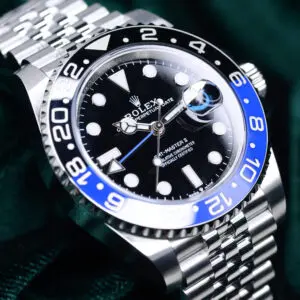
2026 Rolex GMT-Master II “Batgirl” Black Dial Blue Black Ceramic Bezel Jubilee Bracelet Stainless Steel 40mm MINT CONDITION COMPLETE SET 126710BLNR
$22,034.00
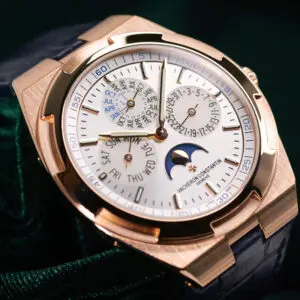
Vacheron Constantin Overseas Perpetual Calendar Ultra-Thin Silver Dial Blue Leather Strap 18K Rose Gold 41.5mm MINT CONDITION COMPLETE SET 4300V/120R-B064
$115,385.00
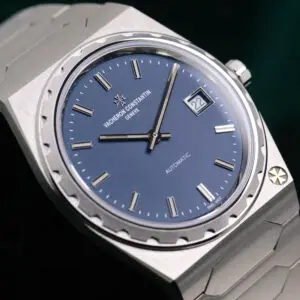
2026 NEW UNWORN Vacheron Constantin Historiques 222 Blue Dial Stainless Steel 37mm COMPLETE SET 4200H/222A-B934
$58,795.00
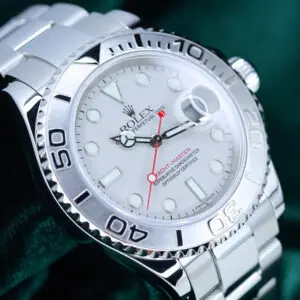
Rolex Yacht-Master Rolesium Platinum Dial Platinum Bezel Oyster Stainless Steel 40mm MINT CONDITION COMPLETE SET 16622
$14,690.00

Audemars Piguet Royal Oak Offshore Chronograph “Vampire” Black Dial Red Accents Black Ceramic Bezel Stainless Steel 42mm MINT CONDITION 26470SO.OO.A002CA.01
$34,649.00
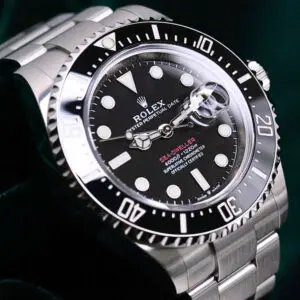
Rolex Sea-Dweller "Red Letter" Black Dial Black Cerachrom Bezel Oyster Bracelet Stainless Steel 43mm MINT CONDITION COMPLETE SET 126600
$13,120.00
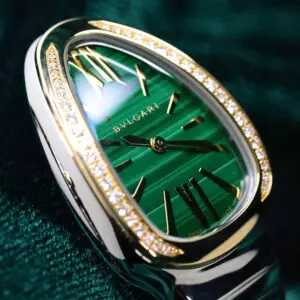
2026 NEW UNWORN Bvlgari Serpenti Tubogas Studs Capsule Limited Edition Green Dial Diamond Bezel Steel & 18k Yellow Gold 35mm COMPLETE SET 104360
$24,255.00
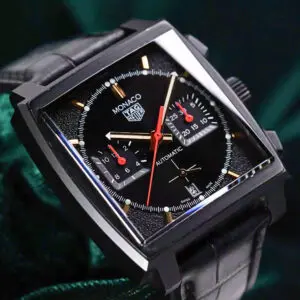
Tag Heuer Monaco Chronograph “Dark Lord” Special Edition Black Dial Black Leather Strap DLC Titanium 39mm MINT CONDITION COMPLETE SET CBL2180.FC6497
$8,135.00
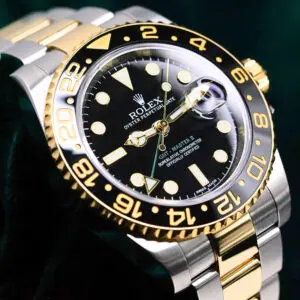
Rolex GMT-Master II “Green Arrow” Black Dial Black Ceramic Bezel Oyster Bracelet Two-Tone 18K Yellow Gold Stainless Steel 40mm MINT CONDITION COMPLETE SET 116713LN
$15,740.00
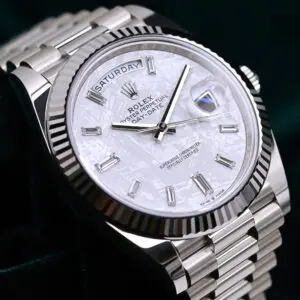
Rolex Day-Date Meteorite Baguette Diamond Dial Fluted Bezel President 18K White Gold 40mm MINT CONDITION COMPLETE SET 228239
$78,629.00
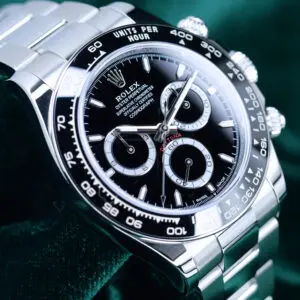
2026 Rolex Cosmograph Daytona Black Dial Black Ceramic Bezel Oyster Bracelet Stainless Steel 40mm MINT CONDITION COMPLETE SET 126500LN
$33,594.00
A few legitimate online channels are worth knowing before you buy either of these watches. Chrono24 aggregates listings from dealers and private sellers worldwide, with buyer protection on most transactions.
eBay’s Authenticity Guarantee program covers watches above a certain price threshold, adding a verification step before the watch ships. Grailzee focuses on pre-owned luxury watches with a community-driven approach.
Watch forums like WatchUSeek and Reddit’s r/Watchexchange are also active for private sales, though they require more due diligence from the buyer.
We also sell, buy, and trade both of these references at Majestix Collection. What sets us apart from a big marketplace is the buying experience before the sale: tour videos of the actual watch, detailed condition notes on the case, crystal, bracelet, and clasp.
You get a real conversation with someone who has handled the piece. That approach is reflected in our 4.9-star Google rating, which comes from clients who wanted to know exactly what they were getting before they committed.
If you want that kind of walkthrough on a specific Speedmaster or Submariner reference, reach out and we’ll put together a shortlist based on what you’re looking for. You can also browse what we currently have available to see which references are in stock.
Final Thoughts on Omega Speedmaster vs Rolex Submariner
Once the watch moves from research to real wear, this decision usually becomes clearer. Early comparisons focus on specs and history, but ownership quickly shifts the focus to feel and daily routine.
A few things worth knowing before you decide: if budget is a real constraint, Speedmaster’s pre-owned market is more forgiving — the 3861 Moonwatch trades below retail, so you can get a current-generation piece for less than list price.
If water activity is part of your routine, the 300-meter rating and automatic movement of the Submariner removes a layer of daily concern.
If resale matters down the line, Rolex steel references hold their value in a way Omega generally does not match, outside of specific limited editions.
Neither watch is a compromise. They serve different people with different habits, and the one you’ll wear every day is the better watch for you. For a wider look at how to shop pre-owned luxury watches across both brands, the pre-owned luxury watch buying guide is the place to start.