
Most water damage we see doesn’t come from diving. It comes from an owner who trusted the number on the dial. A watch marked 30m or 100m is rarely as waterproof as it sounds, and misreading that number is the quickest way to fog up or flood a watch you love.
This guide breaks down what those ratings really mean and what you can safely do at each level. It also covers the everyday habits that wear a watch’s seals down without you noticing.
What Watch Water Resistance Ratings Mean
The rating on your watch (shown in meters, ATM, or bar) is a lab result, not a depth limit. It measures the static pressure the case held in a test tank. How deep you can safely go in real life is a separate question.
The units are easy once you know them. One ATM (or one bar) equals about 10 meters of water pressure. So 100m, 10 ATM, and 10 bar all mean the same thing.
The test uses still water held at one steady pressure, while real water moves around. That movement is why a watch can leak at a depth well inside its rating.
What Each Rating Lets You Do
The chart below is the one worth keeping in mind. We read these ratings the way we’d advise a buyer who plans to get the watch wet rather than the way the brochure does.
| Rating | Also Written As | Safe For | Keep It Away From |
| 30m | 3 ATM / 3 bar | Rain, splashes, handwashing | Swimming, showering, any submersion |
| 50m | 5 ATM / 5 bar | The above, plus brief shallow swimming | Snorkeling, showering, watersports |
| 100m | 10 ATM / 10 bar | Swimming, snorkeling | Scuba diving, jumping in from height |
| 200m | 20 ATM / 20 bar | Recreational scuba diving | Saturation and technical diving |
| 300m+ | 30 ATM / 30 bar+ | Serious and professional diving | Very little, once it’s serviced |
If your watch has no water resistance marking at all, treat it as not water resistant and keep it away from water entirely, including the rain.

Why the Meter Number Is Not a Depth
Real-world movement can spike the pressure far past the static number on the dial. Brands test the case in a still tank at one steady pressure. The moment you dive into a pool, swing your arm through the water, or stand under a strong jet, the pressure jumps past that number for a split second.
That is the gap between static pressure (steady, like the test) and dynamic pressure (sudden, like real movement). A 50m watch can meet a spike it was never rated for during something as ordinary as a cannonball into the pool.
Two standards sit behind these numbers. ISO 22810 covers everyday water-resistant watches. ISO 6425 is the stricter dive standard, and only watches that pass it can be marked “Diver’s.” A watch that just says “Water Resistant 100m” is held to a lower bar than a “Diver’s 100m” watch at the same depth.
The Crown Is Where Most Watches Flood

More watches flood through the crown than through the crystal or the caseback. The crown is the small knob you pull out to set the time, and the seal is open every time it’s pulled out.
Many luxury sports watches use a screw-down crown (Rolex’s Twinlock and Triplock, Omega’s screw-in system) that threads shut against a gasket. If it isn’t screwed all the way in, the watch has about the water resistance of an open window, so check it before anything gets wet.
Protecting that seal mostly comes down to timing. Don’t pull the crown out or press the chronograph pushers while the watch is underwater, and don’t set the time or date while it’s wet. Both open the seal at the worst possible moment.
How Water Resistance Fades Over Time
Water resistance isn’t permanent, and it fades as the seals age. The rubber gaskets sealing the crown, caseback, and crystal dry out, harden, and compress over the years. A 10-year-old watch rated 300m that has never been serviced may no longer be water-tight, even if it looks perfect.
This is why a pressure test matters. A watchmaker seals the watch in a chamber and checks whether it holds, usually for a small fee. We pressure-test every rated watch we sell, and we’d tell any owner to do the same before trusting an older piece near water.
As a rough guide, have the seals checked every couple of years if you swim with the watch, and replaced during a full service, which is usually every 4 to 5 years for most mechanical watches.
Heat and Chemicals Do More Damage Than Depth

Hot water, steam, and chemicals wreck seals faster than deep water ever will. Heat expands the metal case and the gaskets at different rates, opening tiny gaps, and it dries the rubber out. That is why even a 300m dive watch should stay out of the shower, the sauna, and the hot tub.
Temperature swings cause another common problem called condensation. If you see fog under the crystal, moisture has already gotten inside. Soap, chlorine, perfume, and salt water all attack the gaskets too.
If your watch does touch the sea or a pool, rinse it under fresh tap water afterward and clean the bracelet properly before putting it away. Salt and chlorine left to sit will corrode the seals and eat at the bracelet.
Luxury Watches With Surprisingly Low Ratings

Price has almost nothing to do with water resistance. Some of the most expensive watches we handle are rated for little more than rain.
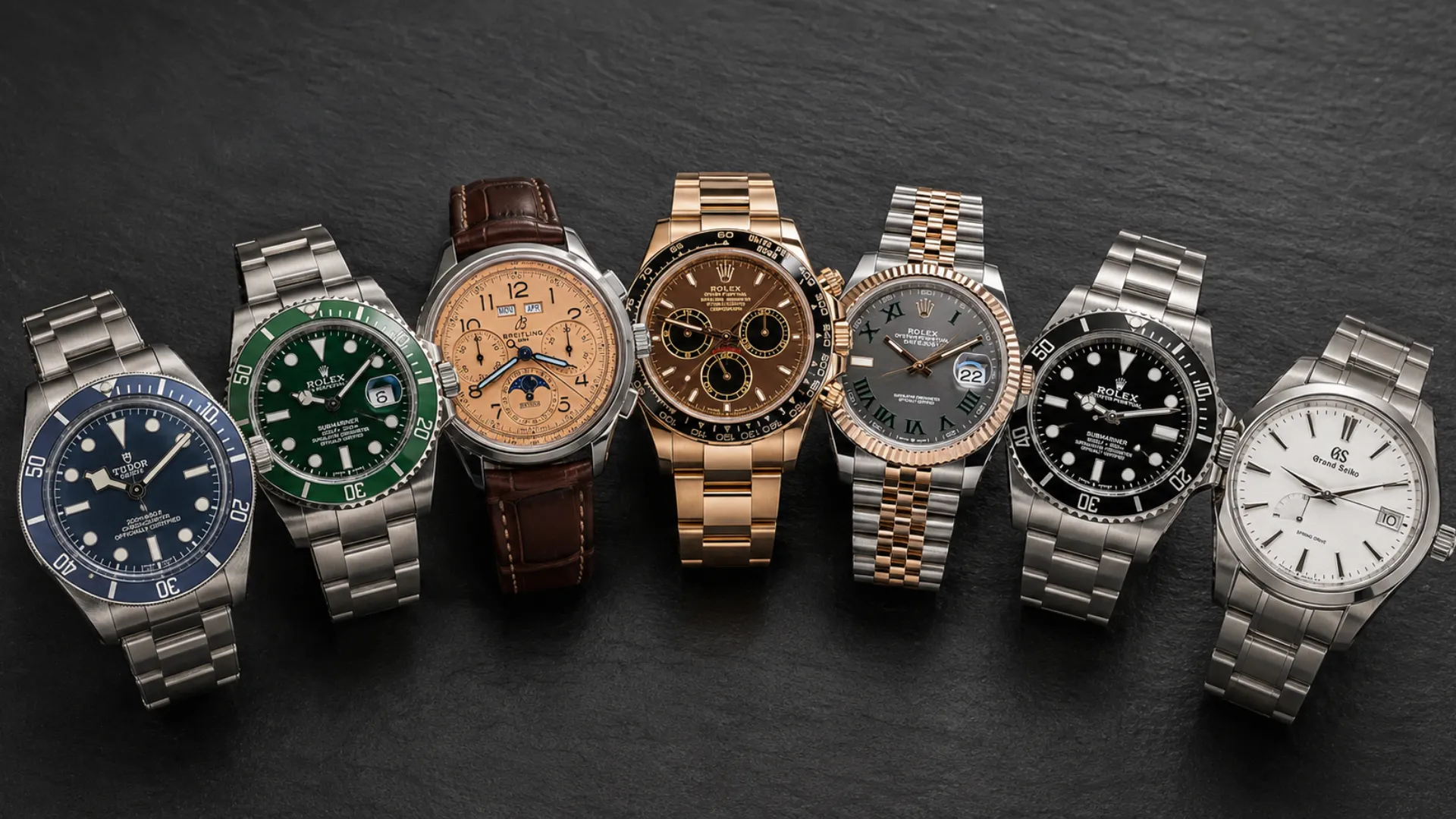
The Audemars Piguet Royal Oak and the Omega Speedmaster Moonwatch are both 50m watches. The Cartier Santos and most Rolex Datejust and Day-Date models sit at 100m, and many IWC Portugieser dress watches at just 30m. None of those are swimming companions.
The Patek Philippe Nautilus shows how far this can go. The famous 5711 was rated to 120m, but the current Nautilus dropped to just 30m. You can pay the same money for the same name and get a quarter of the water resistance.
Compare that to the watches built for water. The Rolex Submariner is rated to 300m, the Tudor Black Bay to 200m, the Omega Seamaster Diver 300M to 300m, and the Rolex Sea-Dweller and Deepsea to 1,220m and 3,900m. If you want a watch you can swim or dive in, the rating matters far more than the logo on the dial.
What to Do If Water Gets Inside
If you see condensation or fog under the crystal, act quickly, because trapped moisture turns into rust. A little fog that clears within minutes of a temperature change is usually minor. Fog that lingers, or visible droplets, means water is sitting inside against the movement.
Get the watch to a watchmaker as soon as you can. There are steps you can take before you reach one, removing trapped moisture without opening the case can limit damage in the short term. But don’t try to dry it in rice or by leaving it in the sun, since both can make things worse. The faster the case is opened, dried, and resealed, the better the odds of no lasting damage.
Frequently Asked Questions
Can I shower with my watch?
No, keep it off in the shower no matter the rating. Soap and shampoo leave a film that wears down the gaskets, and the heat and steam slip past seals that cold water never would. A watch can pass a depth test and still fog up in a ten-minute shower.
If you own a Rolex and are wondering about pool and sea use specifically, our guide on whether your Rolex can handle pool conditions covers what to expect by model.
Can I swim with a 50m watch?
Briefly and gently, yes, but it isn’t built for it. A 50m rating covers shallow, calm swimming, but not diving in, snorkeling, or watersports. If you swim regularly, a 100m or 200m watch is the safer everyday choice.
Is 100m water resistance enough for everyday wear?
For most people, 100m is all the water resistance they need day to day. It shrugs off rain, handwashing, a splash at the sink, and pool or ocean swimming without complaint. The only things it rules out are scuba diving and high-impact entries like diving off a board. If you want a watch you never have to think about near water, 100m is the number to look for.
What is a helium escape valve, and do I need one?
It’s a tiny valve on some deep divers that releases trapped helium after saturation diving. You’ll find it on watches like the Omega Seamaster and the Rolex Sea-Dweller. Unless you work as a commercial diver, you’ll never need it, so treat it as a number on the spec sheet and nothing more.
Does my warranty cover water damage?
Usually not, and that surprises a lot of owners. Most brands only honor a water claim if the watch failed at its rated depth with the crown screwed down and the seals intact. Damage from an open crown, a hot shower, or gaskets that have aged out falls on the owner, which is the real reason to stay on top of servicing.
Final Thoughts on Watch Water Resistance
The whole topic comes down to treating the rating as a guide rather than a guarantee. Read it conservatively, keep the crown screwed down, stay out of hot water, and have the seals checked every couple of years. Do that and most watches will stay dry for life.
If you buy pre-owned, ask the seller when the watch was last pressure-tested, since the rating means little without a recent check. It also helps to look closely at the crystal edges and caseback for chips or gaps, because a tiny crack can ruin water resistance no matter what the dial promises.
For a fuller picture of what to look for when buying pre-owned, our complete watch care guide covers condition, maintenance, and ownership habits in one place.
Not sure what your watch is really rated for or whether the seals still hold? Send us the model and we’ll tell you where it stands. Every rated watch we handle gets pressure-tested, so you’ll get a straight answer before it goes anywhere near water.