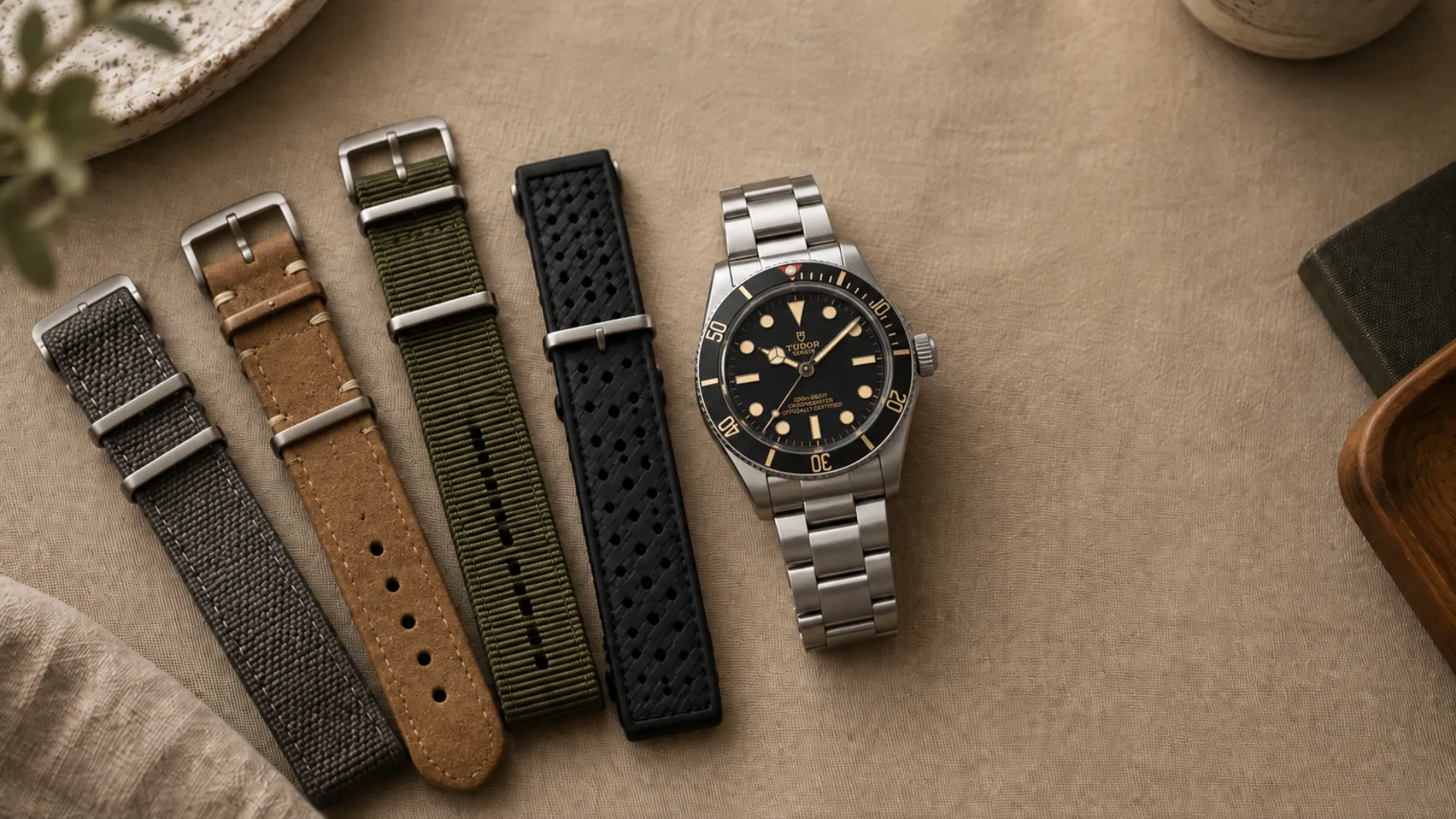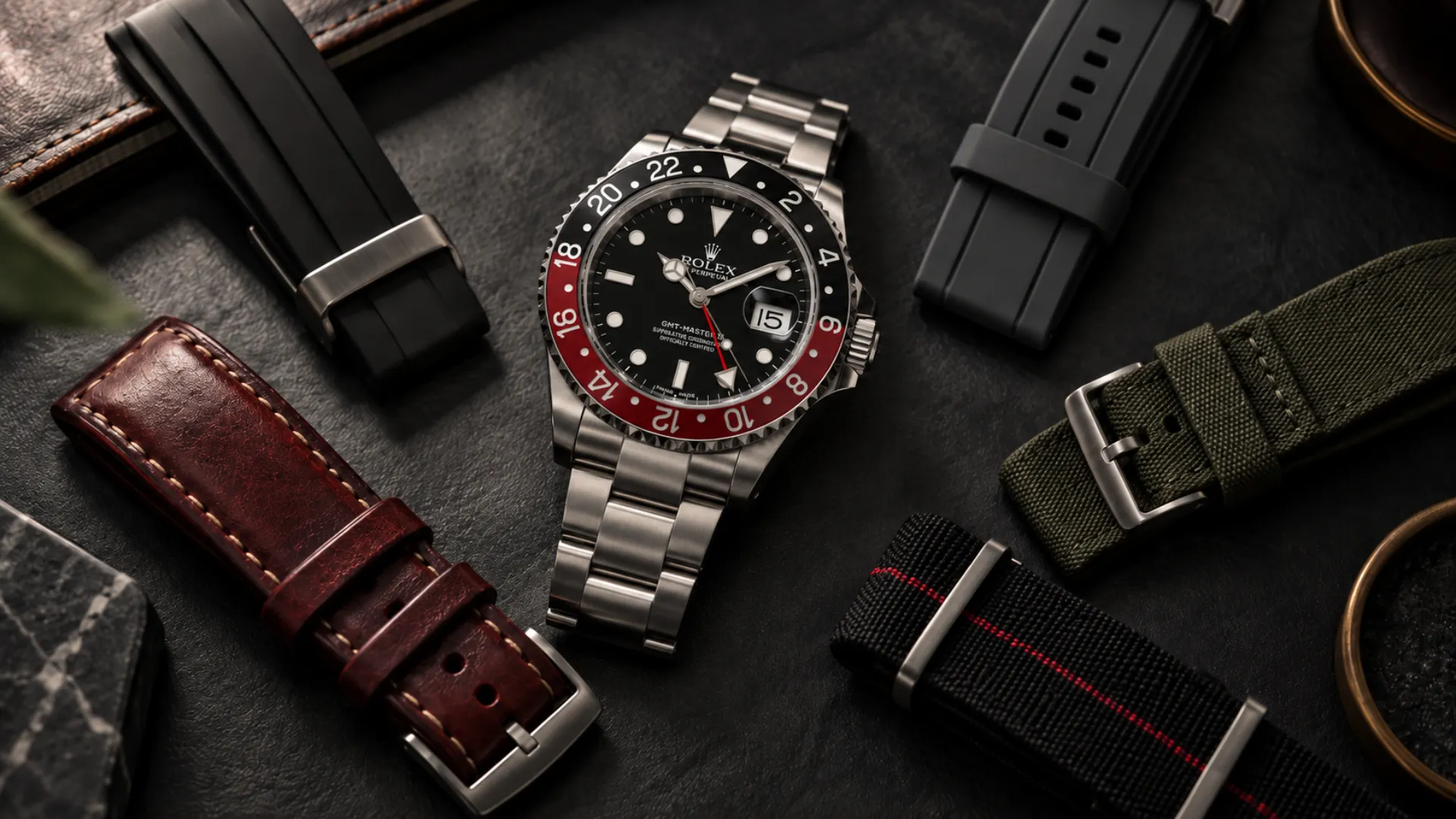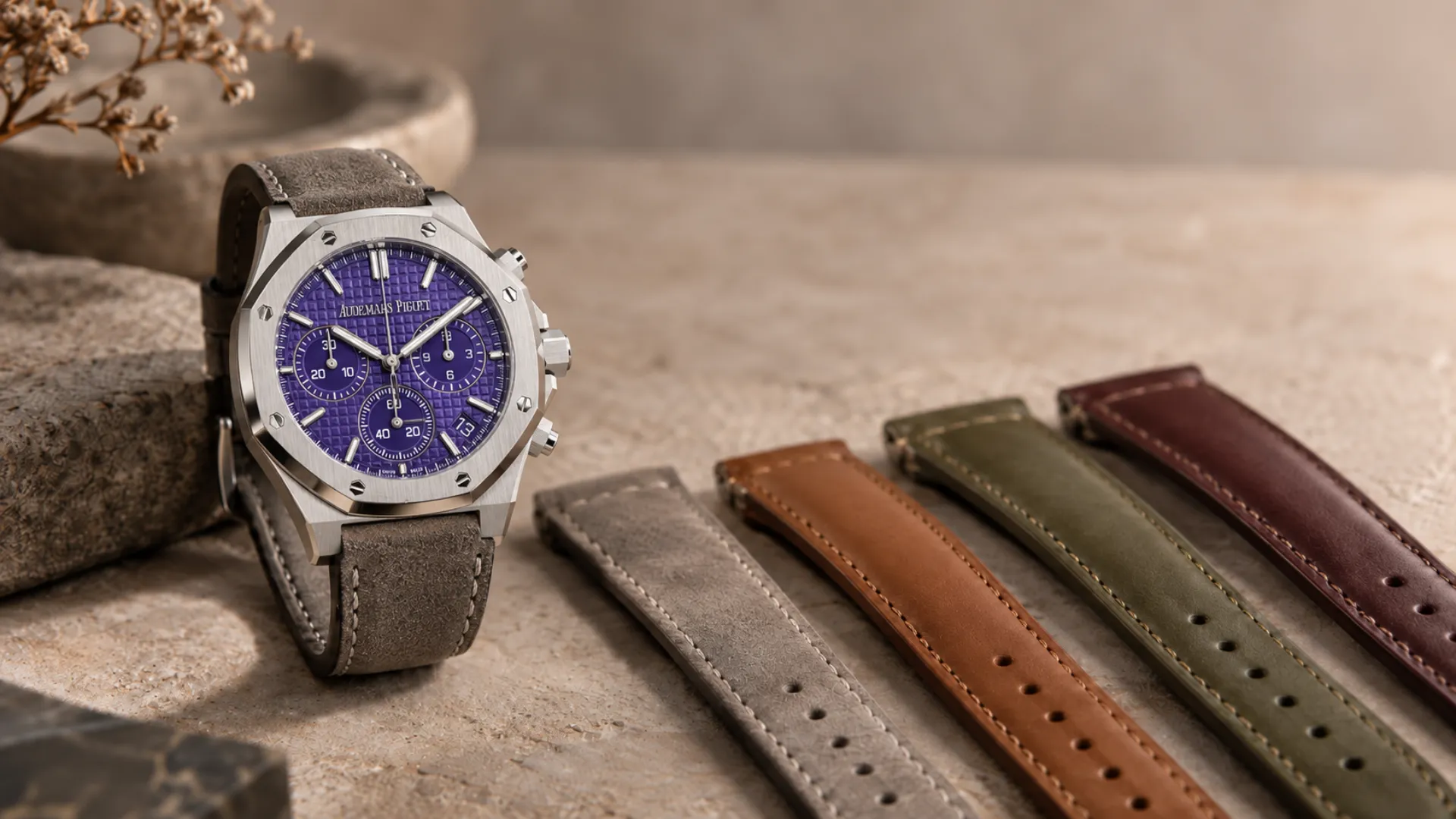

A loose crown, a foggy crystal, a bracelet full of grime — these are the things that quietly destroy a watch before you even notice. We see it all the time. Someone walks in with a Rolex Datejust 126300 or an Omega Speedmaster 3861 that looks ten years older than it is, and the fix is almost always the same: basic care habits that were skipped from day one.
Whether you just bought your first luxury watch or you have a rotation of six, every piece needs attention. With our experience working with collectors and caring for our own personal collections, we have seen how skipping basic habits leads to scratched crystals, dried-out gaskets, and movements running minutes off per day.
In this guide, we will walk you through the 11 most important watch care practices — from daily winding to long-term servicing — so your watch stays accurate and holds its value. Read each one and start building these into your routine.
1. Always Wind Your Watch Off Your Wrist
Winding your watch while it is on your wrist may feel convenient, but it puts unnecessary stress on the crown and movement. Twisting the crown on your wrist can slightly bend the winding stem, which over time may cause misalignment or even damage the internal mechanism.
Remove the watch, hold it steady in one hand, and turn the crown gently with the other. For manual-wind calibers like the Omega 1861 or Patek Philippe 215 PS, wind slowly until you feel resistance, then stop. Forcing the crown past resistance can snap the mainspring.
For automatic movements like the Rolex Caliber 3235 or Seiko 6R35, 20-30 turns of the crown are enough to get the watch running if it has stopped. After that, wrist movement keeps the rotor spinning and the mainspring charged. Most modern automatics have a power reserve between 48 and 72 hours, so if you skip wearing it for a weekend, you will need to wind it again Monday morning.
2. Do Not Change the Date Between 9 PM and 3 AM
This is one of the most common mistakes new watch owners make, and one of the most expensive to fix. Between roughly 9 PM and 3 AM, the date mechanism’s gears are physically engaged, slowly advancing the date disc. If you manually force the date during this window, you can strip or crack the tiny teeth on these gears.
The safe approach: set the time to 6:00 before changing the date. This guarantees the gears are fully disengaged. Once you have set the correct date, advance the time forward through 12:00 (watching for the date to flip to confirm AM/PM) until you reach the current time.
This applies to any watch with a date function, from a Tudor Black Bay 79230N to a Grand Seiko SBGA413. Watches with annual or perpetual calendars, like the Patek Philippe 5320G or IWC Portugieser Annual Calendar, are even more vulnerable — those repairs can cost thousands.
3. Keep Your Watch Away From Magnets
Mechanical watches are sensitive to magnetic fields, which can disrupt the delicate balance of the movement and cause inaccurate timekeeping. Everyday items such as smartphones, laptops, speakers, magnetic clasps, and even some handbags can produce magnetic fields strong enough to affect your watch.
Most standard mechanical movements can be affected by as little as 50 to 100 gauss, which common electronics easily exceed. A magnetized hairspring causes its coils to stick together, making the watch run minutes fast per day or stop entirely.
Some watches are built to resist this. The Omega Aqua Terra >15,000 Gauss and the Rolex Milgauss (with its green-tinted sapphire crystal and Caliber 3131) are designed for high-magnetic environments.
The Omega uses a co-axial movement with non-ferromagnetic components, making it resistant to fields above 15,000 gauss. But most watches, including popular models like the Rolex Submariner 124060 or the Cartier Santos WSSA0018, are not anti-magnetic.
To stay safe, keep your watch at least 10-15 cm away from phones and laptops when you take it off. If your watch suddenly starts running several minutes fast per day, magnetism is the most likely cause — here is how to tell if your watch is magnetized. A watchmaker can demagnetize it in seconds with a handheld degausser — it is a quick, inexpensive fix.
4. Use the Right Cleaning Method for Your Watch
Luxury watches are made from materials with different sensitivities. Stainless steel, titanium, and gold typically rank between 2.5 and 5 on the Mohs hardness scale, making them resistant to scratches but still vulnerable to chemical corrosion. Leather straps can dry out or discolor when exposed to soaps or detergents, while rubber and silicone bands can degrade, losing flexibility and color when exposed to harsh chemicals.
Even mild household cleaners can damage the seals that keep your watch water-resistant, potentially allowing moisture to enter the case. For a deeper dive into safe methods for every material, see our full guide on luxury watch cleaning.
For the case and crystal: Use a soft, dry microfiber cloth. This handles fingerprints, skin oils, and dust. Wipe your watch down every evening after wearing it — this single habit prevents most buildup.
For metal bracelets (stainless steel, titanium, gold): A lightly damp cloth with clean water works for regular cleaning. For deeper cleaning of an Oyster or Jubilee bracelet, use a soft-bristled toothbrush with lukewarm water and work between the links. Skip the soap — its molecules can get trapped in the small gaps between pins and links, and cause damage over time. Dry the bracelet completely when done.
For leather straps: Never submerge them. Wipe with a barely damp cloth after wearing and let them air dry flat. Every few months, apply a watch-specific leather conditioner (like Saphir or Collonil) to prevent cracking and drying.
For rubber and silicone straps (like those on a Hublot Big Bang or a Breitling Superocean): Rinse with lukewarm water after heavy wear or sweat exposure. These bands can handle water, but extended UV exposure or contact with oils and chemicals will degrade them over time. Keep them out of direct sunlight when storing.
5. Understand Your Water Resistance Rating
One of the biggest misconceptions in watch ownership is confusing “water resistant” with “waterproof.” No watch is waterproof. Every watch has limits, and those limits decrease as the gaskets age.
Here is what the ratings mean in practice:
30m / 3 ATM: Splash resistant only. Safe for hand washing and light rain. Do not submerge.
50m / 5 ATM: Light swimming in shallow water for brief periods. Not suitable for diving or snorkeling.
100m / 10 ATM: Swimming and snorkeling are fine. This is the minimum rating you want for pool or ocean use. Models like the TAG Heuer Aquaracer WBP201A carry this rating.
200m / 20 ATM: Recreational diving. The Rolex Submariner 124060 and Omega Seamaster Diver 300M 210.30.42.20.01.001 are rated here. These are genuine dive watches.
300m+ / 30+ ATM: Professional diving. The Omega Planet Ocean 600m and Rolex Sea-Dweller 136660 handle extreme depth.
Regardless of the rating, always make sure the crown is fully screwed down or pushed in before any water exposure. An open crown bypasses all water resistance. Also, never expose any watch to hot water, steam, or saunas — heat expands the metal faster than the gaskets, opening gaps for moisture. Water resistance testing should be done annually if you regularly swim or dive with your watch.
6. Care for Different Watch Strap Materials
Different watch straps require specific care to preserve their appearance and durability.
Leather straps can crack or fade if exposed to moisture, sweat, or direct sunlight for extended periods. Treat them occasionally with watch-specific leather conditioners and avoid submerging them in water. Rotate between two straps if you wear leather daily — this gives each strap time to fully dry and extends both lifespans. A quality leather strap from a brand like Hirsch or Di-Modell typically lasts 1-2 years with regular wear, longer if you rotate.
Rubber and silicone straps can withstand water but may degrade over time due to UV exposure or contact with oils and chemicals. Rinse them with lukewarm water after heavy wear or exposure to sweat. If you notice the rubber getting stiff or showing hairline cracks, replace it — a worn rubber strap can snap without warning.
Metal bracelets should be inspected regularly for loose pins or clasps and cleaned gently with a soft, damp cloth to remove dirt and oils. Check the folding clasp for play — if the bracelet is starting to feel loose, a watchmaker can tighten the clasp or replace worn spring bars. Oyster-style bracelets (used by Rolex, Tudor, and others) are robust but still collect debris between the links, especially at the clasp end-links.
7. Avoid Scratches and Physical Damage
Following simple tips to protect your watch from scratches, such as rotating watches based on activity type, using more durable models for sports or heavy work, and reserving delicate or dress watches for formal occasions, can help keep your watch showing minimal wear.
Remove your watch during high-impact activities: gym workouts, yard work, home repairs, and contact sports. A Casio G-Shock DW5600 is built for abuse — a Jaeger-LeCoultre Reverso is not.
When you set your watch down, place it face up on a soft surface. Desks, countertops, and door frames are the most common sources of everyday scratches. Consider using a watch roll or soft pouch for travel. For extra protection, some owners apply clear protective film (like those from RollStrap or WatchGuard) to the case sides and clasp — this is especially popular on polished center links that show scratches easily.
Store your watches in a padded watch box or on a watch stand when not in use. Avoid stacking watches or placing them where they can slide into each other.
8. Check Your Seals and Gaskets Regularly
Even water-resistant watches can lose their seal integrity over time, allowing moisture, dust, or debris to enter the case. Worn gaskets compromise water resistance and can lead to corrosion or movement damage if not addressed promptly.
The rubber gaskets around the crown, case back, and crystal dry out and compress over years of use. Temperature changes speed this up. A watch that was rated for 200m when new may only handle 50m (or less) after five years without gasket replacement.
Check your watch’s seals and gaskets during routine servicing or yearly if you wear it frequently in water. Replacing worn components with manufacturer-approved parts ensures the watch maintains its water resistance and protects the internal movement. If you ever see condensation under the crystal — even a small patch of fog — bring the watch to a professional immediately. For emergency steps while you wait, read our guide on how to remove water from a watch without opening it. Moisture inside a case causes rust on steel components, and that damage spreads fast.
9. Use a Watch Winder the Right Way
If you own automatic watches and rotate between them, a watch winder keeps the movement running when the watch is off your wrist. This keeps lubricants distributed and avoids the need to reset the time and date every time you pick up a different piece.
But not all winders are the same, and incorrect settings can cause unnecessary wear. The key spec to match is TPD — turns per day. Each movement has a recommended TPD range. The Rolex Caliber 3135 works well at around 650 TPD in one direction. The ETA 2824-2 typically needs about 800 TPD bi-directional. The Omega Co-Axial 8900 prefers around 800 TPD.
Avoid cheap winders with hard mounts, excessive speed, or no adjustable TPD. A reliable winder from brands like Wolf, Barrington, or Rapport gives you control over direction and speed and has soft cushion mounts that protect the case from contact marks.
If you do not use a winder, that is fine too. Simply wind the watch manually and set the time when you want to wear it. Letting an automatic watch stop will not damage it — the “oils will settle” concern is largely outdated with modern synthetic lubricants. What matters more is that the watch gets serviced on schedule.
10. Know When to Service Your Watch
Watch for signs. Slow or fast timekeeping, condensation inside the case, or unusual sounds indicate it is time for a service. Document every service with receipts and notes — this service history matters significantly for resale value.
Every luxury brand has its own recommended service interval. Sticking to these schedules prevents small issues from becoming expensive repairs:
- Rolex: Every 8-10 years (per current Rolex guidelines). Calibers like the 3235 use Rolex’s proprietary Chronergy escapement and Paraflex shock absorber, which extend the interval compared to older movements.
- Omega: Every 5-8 years. Co-Axial movements reduce friction at the escapement, which extends lubricant life.
- Patek Philippe: Every 3-5 years depending on the complication. Perpetual calendars and minute repeaters need more frequent attention.
- Tudor: Every 5-10 years for modern in-house movements like the MT5602.
- Cartier: Every 5-7 years for mechanical models.
Vintage watches or heavily worn pieces may require shorter intervals due to older components and increased wear. A full mechanical service typically includes disassembly, ultrasonic cleaning, lubrication, parts replacement, timing regulation across multiple positions, water resistance testing, and case/bracelet refinishing (if requested). Expect 3-6 weeks turnaround and costs ranging from $300-500 for standard movements to $1,000+ for complicated calibers. For a complete breakdown of what happens during a full service, read our guide on servicing a watch.
11. Read Your Watch Manual and Learn Your Movement
Take the time to really understand your watch and how it works. Every brand and movement has its own quirks — different winding methods, power reserves, and service schedules — that affect how you should handle and care for it.
Read the manual. If you lost it, most brands publish their manuals online — Rolex, Omega, TAG Heuer, and Breitling all have PDF versions on their websites. The manual tells you the exact power reserve, the correct winding direction, water resistance details, and specific care warnings for your caliber.
Know the difference between a screw-down crown (common on dive watches like the Submariner) and a push-pull crown (found on dress watches like the Cartier Tank). A screw-down crown must be fully tightened before water exposure. A push-pull crown should always be pressed flush with the case.
Learning these details helps you avoid mistakes, extend your watch’s life, and catch problems early before they become expensive repairs.
Frequently Asked Questions About Watch Care
Can I Shower With a Water-Resistant Watch?
We recommend against it, even with high water resistance ratings. Hot water and steam cause thermal expansion that stresses gaskets and seals. Soap and shampoo can degrade rubber gaskets faster. The pressure from a showerhead is also different from the static pressure used in water resistance testing. If your watch gets wet in the shower, rinse it with cool fresh water and dry it thoroughly.
How Do I Know if My Watch Is Magnetized?
Your watch will run noticeably fast — often gaining several minutes per day. A quick test: hold a small compass near the watch. If the compass needle deflects when you bring the watch close, it is magnetized. Any watchmaker can demagnetize it in under a minute with a degaussing tool, and it typically costs nothing or very little. Some watches with silicon hairsprings, like newer Rolex models with the Parachrom Blu hairspring, are more resistant to magnetism but not completely immune.
Should I Keep My Automatic Watch Running When Not Wearing It?
There is no harm in letting it stop. Modern synthetic lubricants (such as those from Moebius, used by most Swiss manufacturers) do not “settle” or congeal the way older oils did. When you are ready to wear the watch again, wind it manually and set the time. A watch winder is convenient if you rotate often, but it is not a mechanical necessity.
How Much Does Watch Servicing Cost?
A full service on a standard three-hand mechanical watch typically costs between $300 and $800, depending on the brand and where you have it done. Factory service centers (like Rolex Service Centers or Omega’s certified facilities) charge more but use original parts and maintain your warranty. Independent watchmakers can be more affordable and faster, but make sure they are certified and experienced with your specific brand. Chronographs and complications cost more — expect $800 to $2,000+ for a full chronograph overhaul.
Can I Polish Scratches Out of My Watch at Home?
We do not recommend home polishing. Polishing removes a thin layer of metal and softens the sharp edges, bevels, and transitions that define the case design. Once those edges are rounded off, they cannot be restored. Collectors and experienced buyers can spot an over-polished watch immediately, and it can reduce resale value by 10-20% or more. If scratches bother you, ask a professional to do a targeted refinish on the affected area only, rather than polishing the entire case.
Final Thoughts on How to Care for a Watch
From correct winding and date setting to understanding water resistance ratings, strap care, and service schedules — each habit in this guide adds up. None of them are difficult on their own. The hard part is doing them consistently.
The one tip most people overlook: keep a simple log of when you last had the watch serviced, what was done, and any parts that were replaced. This record protects you if something goes wrong during the warranty period, and it adds real value if you ever decide to sell. A watch with documented service history will always command a higher price than one without