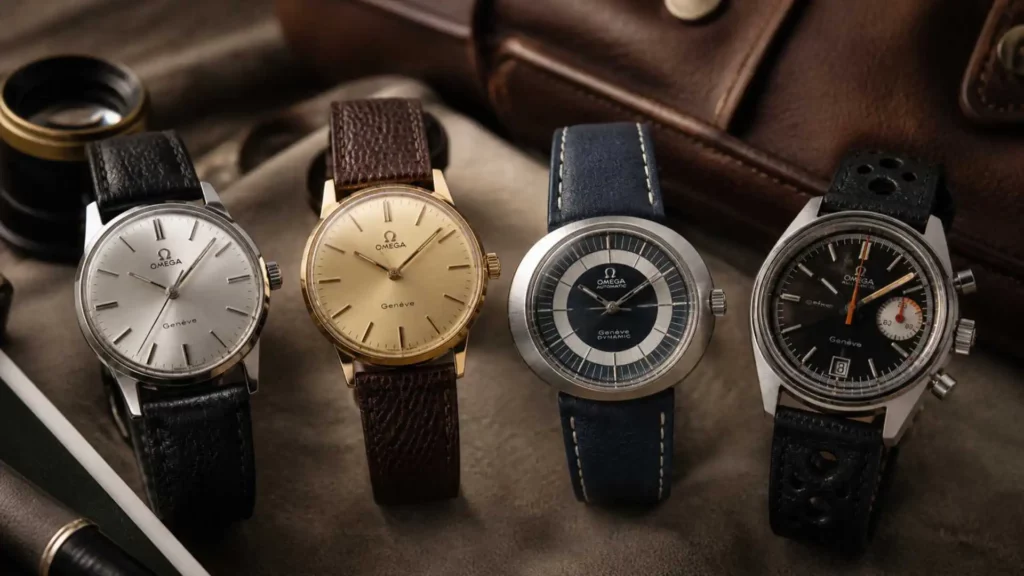
Thinking about buying a vintage Omega Genève but unsure which model actually makes sense for your wrist and your budget? The Omega Genève line has built a reputation as one of Omega’s most accessible vintage collections, offering clean design, reliable Swiss movements, and a wide range of references that still show up in today’s collector market.
You’ll find everything from simple dress watches to more distinctive variations that quietly hold their value when chosen correctly. Trusted watch references and established Omega collector archives highlight how diverse the Genève lineup really is, which explains why buyers often feel overwhelmed at the start.
The Omega Genève Buying Guide breaks down the key models, what sets them apart, and which ones are worth your attention if you want a piece that fits both style and long-term value. The Majestix Collection also highlights standout Genève pieces that collectors tend to focus on when narrowing down strong references.
Keep reading and you’ll get a clearer picture of which Omega Genève actually deserves a place in your collection.
What an Omega Genève Really Is?
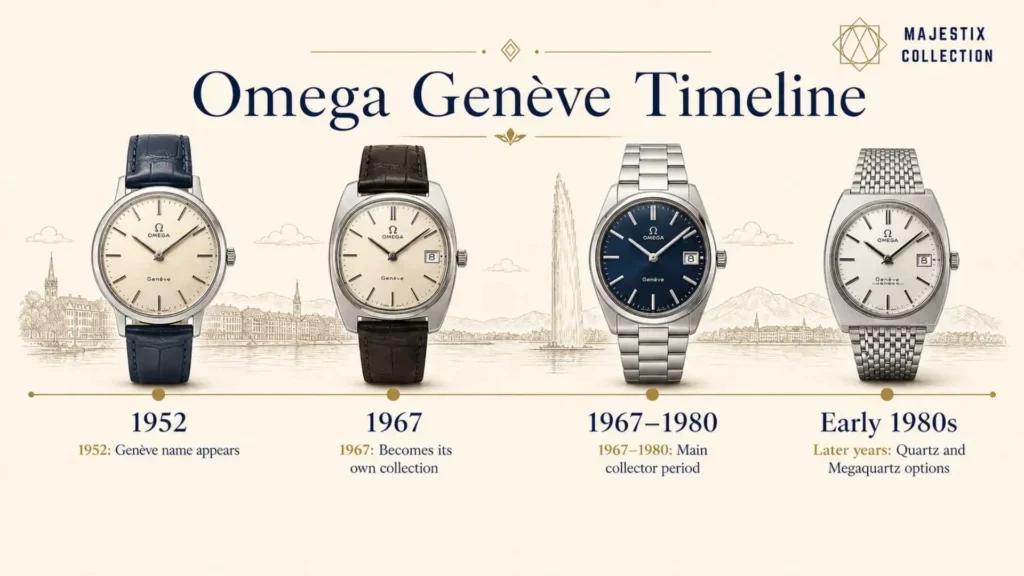
The Omega Genève is a vintage Omega line produced from the 1950s through the early 1980s, positioned as an accessible dress watch within Omega’s broader lineup alongside the Seamaster and Constellation families.
The “Genève” name first appeared on Omega dials in 1952. At that time, it wasn’t a standalone collection. Instead, Omega used “Genève” to indicate watches with at least half of their production completed in Geneva. It served as a mark of quality and origin rather than a dedicated model range.
That positioning changed in 1967 when Omega officially developed Genève into its own collection. The goal was clear to offer a refined Swiss watch experience to entry-level buyers who wanted Omega craftsmanship but were not ready for higher-tier models like the Constellation.
Most Genève watches you encounter today come from this 1967 to 1980 period, which defines the collection’s modern identity. You’ll find Omega Genève watches in a variety of case materials, including stainless steel, gold-plated, gold-capped, and solid gold.
The line also spans several movement types, from manual calibres like the cal. 601 and 613 to automatic movements such as the cal. 552, 565, 1012, and 1022. Later production even introduced quartz options, including the Megaquartz series, reflecting Omega’s shift during the quartz era.
How to Choose the Right Omega Genève for You
There is no single “best” Omega Genève. The right choice depends on your wrist size, budget, and how you plan to wear it daily or occasionally.
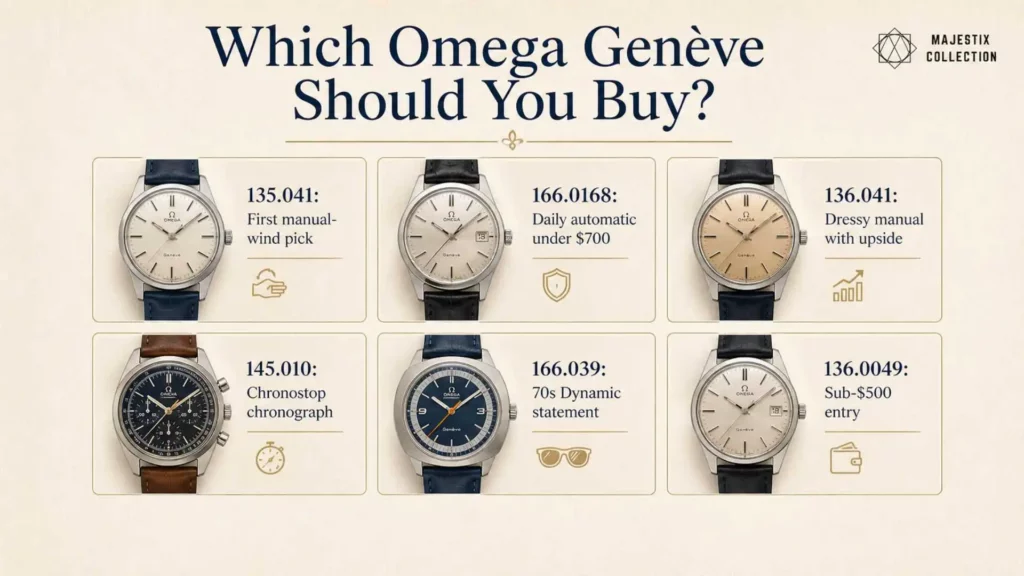
Below are six key references worth focusing on, each with clear specs, strengths, and realistic market positioning so you know exactly what you are getting.
1. Best Manual-Wind Pick for First-Time Buyers
The Genève 135.041 is a 35mm manual-wind dress watch powered by the Omega Cal. 601. It delivers a clean, minimal dial layout that makes it one of the most straightforward vintage Omega entries without unnecessary complications.
Key Specs
- Case size: 35mm
- Movement: Manual-wind Cal. 601
- Functions: Time-only
- Case material: Stainless steel or gold-capped
This reference is often recommended because the Cal. 601 is known for its smooth winding feel and reliable performance after servicing. It also benefits from a simple dial layout that reduces the risk of poorly modified or heavily altered examples.
2. Best Daily-Wear Automatic Under $700
The Genève 166.0168 is a practical everyday option powered by the Cal. 1012 automatic movement, known for its slim profile and reliable performance in the Genève lineup. This model wears comfortably and holds up well for regular use, making it one of the more wearable vintage Omega options.
The quickset date adds convenience, especially compared to earlier automatic systems.
Key Specs
- Case size: 36mm
- Movement: Automatic Cal. 1012
- Functions: Quickset date
- Case material: Stainless steel or gold-plated
Clean stainless examples typically trade between $400 and $700, while gold-plated versions sell lower due to wear concerns on high-contact areas.
3. Best Dressy Manual With Upside
The Genève 136.041 uses the Cal. 601 manual movement, but it introduces a more refined case design and dial variations that include sunburst and linen textures. This reference stands out for its dress-focused proportions and more refined finishing compared to earlier 135-series models.
Linen dials in particular have become more sought after, although condition matters more than texture alone.
Key Specs
- Case size: 34–35mm range
- Movement: Manual-wind Cal. 601
- Functions: Time-only
- Case material: Stainless steel, gold-capped, or solid gold
Expect pricing between $600 and $1,400, with premiums for untouched dials and gold-capped cases.
4. Best for Chronograph Lovers on a Budget
The Genève Chronostop 145.010 is the only chronograph variant in the Genève line, powered by the Cal. 865. It features a unique single-pusher timing system instead of a traditional multi-register chronograph layout.
Key Specs
- Case size: Approximately 35–36mm
- Movement: Manual-wind Cal. 865 chronograph
- Functions: Single pusher timing function
- Case material: Stainless steel
This reference carries more complexity, which also means higher risk in the secondary market due to dial swaps and frankenwatch builds. Originality is critical here. Prices range from $1,200 to $2,500, depending heavily on authenticity and condition. Specialist sellers are strongly preferred.
5. Best 70s Statement Piece
The Dynamic 166.039 breaks away from traditional Genève design language with its oval case and integrated strap system, making it more of a sport-oriented vintage piece. This model wears differently due to its ergonomic case shape and dial alignment, which makes it stand out compared to standard round dress watches.
Key Specs
- Case size: 36mm (mid-size)
- Movement: Automatic Cal. 565 or related variants depending on production year
- Functions: Date
- Case material: Stainless steel
Market pricing sits at $500 to $900 for 36mm models, while larger variants can reach $800 to $1,800, often influenced by demand rather than mechanical differences.
6. Best Sub-$500 Entry Point
The Genève 136.0049 remains one of the most accessible ways to enter vintage Omega ownership, using the Cal. 613 manual movement, which includes a date function. This reference requires careful inspection, especially for case wear on gold-plated versions, which are more prone to visible aging at the lugs and edges.
Key Specs
- Case size: 34–35mm
- Movement: Manual-wind Cal. 613
- Functions: Date complication
- Case material: Stainless steel or gold-plated
Prices generally range from $350 to $550, depending on condition and originality.

Genève vs Seamaster vs De Ville: Which Should You Choose?
Most first-time vintage Omega buyers narrow their options to the Genève, Seamaster, and De Ville lines. Each one serves a different purpose, so your choice depends on how you plan to wear the watch and what matters most to you in a vintage piece.
If you want to go deeper into the head-to-head between the two closest siblings, our Genève vs Seamaster breakdown covers the differences in detail.
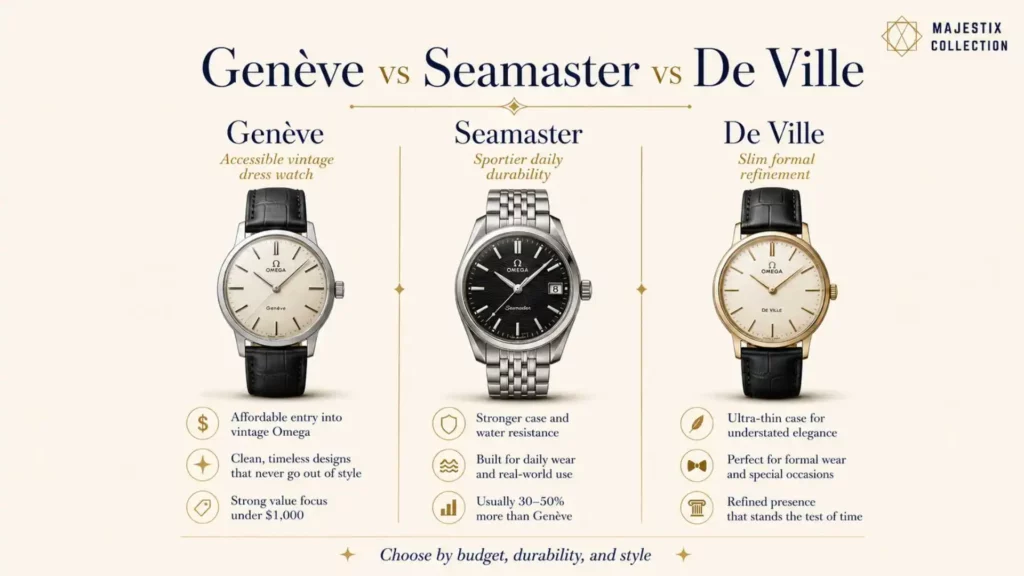
Choose the Genève if:
- You get a clean vintage dress watch under $1,000
- You focus on simple time-only or date-driven designs
- You do not prioritize water resistance or tool watch durability
- You access one of the most affordable ways into vintage Omega
The Genève line works best when you want a straightforward Swiss watch with classic proportions without paying premium pricing. It keeps the design simple and prioritizes accessibility over technical features.
Choose the Seamaster if:
- You get a true tool watch with real water resistance
- You can wear it confidently for more active daily use
- You typically pay 30 to 50 percent more than comparable Genève models
- You benefit from stronger case construction and sport-focused design
The Seamaster line suits you when you want a vintage Omega built for regular wear. It delivers more durability, but that added capability comes at a higher price.
Choose the De Ville if:
- You choose ultra-thin, dress-focused designs
- You enjoy more refined case profiles than the Genève
- You may find higher-grade movements in similar production years
- You prefer a more formal and polished wrist presence
The De Ville line fits you best when you want a slimmer, more elegant watch that leans strongly toward formal wear. It emphasizes refinement over versatility.
How to Spot Issues Before You Buy an Omega Genève
Vintage Omega watches often include redials, Frankenwatches, and gold-plating wear-through, so you need to inspect each piece carefully before you commit to a purchase. Use this checklist every time to avoid costly mistakes and protect resale value.
1. Check the Dial for Redial Signs
Start with the dial because it reveals the most about originality. You want to see sharp Omega logo printing, consistent fonts, and clean lume application. If the dial looks too smooth or slightly “off,” it often indicates a refinish.
Under angled light, a genuine dial shows crisp printing with visible depth, while a redial usually looks flat or slightly blurry. Pay attention to lume plots as well. They should match the hands in tone and aging. If a seller refuses to provide a 30-degree angled photo, you should walk away immediately.
2. Inspect the Case for Wear-Through and Over-Polishing
Gold-plated Genève cases require extra attention. Focus on the lug edges and case sides, since plating wears off there first and exposes the base metal underneath.
For stainless steel cases, look closely at the original bevels and sharpness of the lugs. Over-polishing rounds out the edges and removes factory lines.
A sharp, well-defined case usually indicates better preservation, while soft and rounded edges suggest heavy polishing that reduces both value and authenticity.
3. Confirm the Correct Reference and Movement Pairing
Every Omega Genève should match its case reference with the correct movement caliber. You can verify this using the Vintage Omega Database or trusted reference charts.
If the movement does not match the expected caliber, the watch likely contains swapped parts. This creates what collectors call a Frankenwatch, which significantly lowers value and reliability.
4. Watch for Frankenwatch Warning Signs
Frankenwatches often combine genuine and incorrect parts from different watches. You need to look for inconsistencies such as:
- Hands that do not match the dial style or era
- A movement caliber that does not belong to the case reference
- A case back that comes from a different model
- Service replacement parts that do not match the production period
Some references carry higher risk than others. The Chronostop 145.010 and certain specialty dials like the 136.0041 Breguet variant require extra caution because they attract more assembly-based fakes.
5. Ask for a Complete Five-Photo Set Before Buying

Careful inspection starts with proper documentation from the seller, not guesswork. Clear, complete photos help you verify authenticity, condition, and originality before you commit to a purchase.
Never rely on a single listing photo. You should always request a full set that shows:
- Dial straight-on in natural daylight
- Dial at a 30-degree angle
- Case back exterior markings
- Case back interior with caliber stamp visible
- Movement fully uncovered
If the seller cannot provide all five images, you should treat the listing as high risk. A legitimate seller will usually have no issue sharing detailed documentation, especially for vintage Omega pieces.
What an Omega Genève Service Costs in 2026
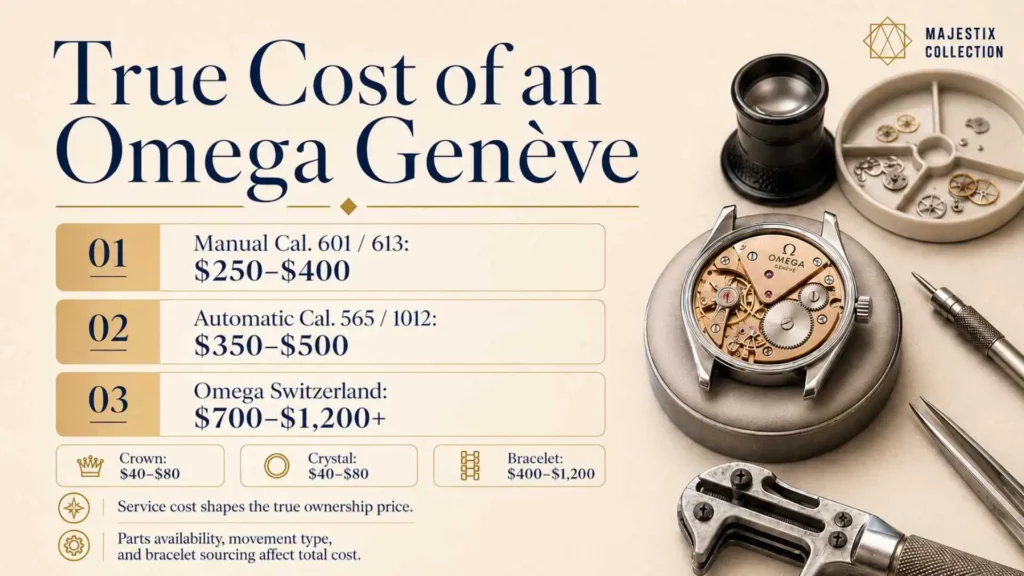
Service cost plays a major role in the true price of a vintage Omega Genève, and you should always factor it into your offer before buying. Older buying guides often quote outdated service rates, but our current Omega service cost breakdown reflects higher labor costs and tighter parts availability.
For a manual Cal. 601 or Cal. 613, an independent watchmaker typically charges $250 to $400 for a full service. These movements are simpler to maintain, which keeps costs relatively accessible.
For an automatic Cal. 565 or Cal. 1012, expect service costs to range from $350 to $500 due to additional complexity and movement components.
If you go through Omega Switzerland, you should budget $700 to $1,200+ for vintage servicing. In some cases, Omega may also decline older watches if replacement parts are no longer available.
Additional costs can add up quickly:
- Crown replacement: $40 to $80
- Crystal replacement: $40 to $80 per part
- Original Omega bracelets (if sourced separately): $400 to $1,200, and in some cases they can cost more than the watch head itself
Understanding these costs upfront helps you evaluate whether a listing is genuinely a good deal or simply underpriced because it hides upcoming service work.
Final Thoughts on the Omega Genève Buying Guide
This Omega Genève buying guide shows that the Omega Genève offers one of the most accessible entry points into vintage Swiss watch collecting. You get the best results when you focus on originality, correct references, and real sold prices instead of asking figures.
This mindset helps you separate genuine value from listings that only look appealing at first glance. Think in terms of long term ownership rather than quick purchase decisions.
Factor in servicing costs, verify conditions properly, and avoid rushing into incomplete listings. If you stay disciplined, the Genève line rewards you with strong vintage character at reasonable prices.
For a wider view of where the Genève sits in the brand’s lineup, our full Omega buying guide covers the rest of the family. You can also explore the Majestix Collection vintage Omega inventory to compare well-preserved examples and understand how different references perform in today’s market.
If a specific Genève reference is on your shortlist and you can’t find a clean one, we can help you source the right example.
999+ Timepieces Available
Explore Our Timepieces
Authenticated, unworn, and ready to ship worldwide.
Rolex · Audemars Piguet · Patek Philippe · Omega · Cartier · Richard Mille · Hublot · Tudor
Newly Listed
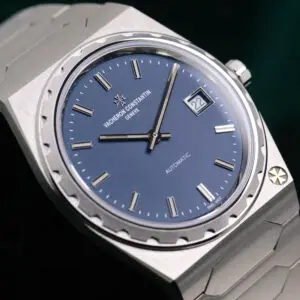
2026 NEW UNWORN Vacheron Constantin Historiques 222 Blue Dial Stainless Steel 37mm COMPLETE SET 4200H/222A-B934
$58,795.00
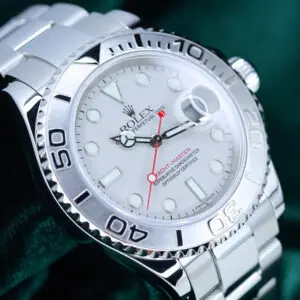
Rolex Yacht-Master Rolesium Platinum Dial Platinum Bezel Oyster Stainless Steel 40mm MINT CONDITION COMPLETE SET 16622
$14,690.00

Audemars Piguet Royal Oak Offshore Chronograph “Vampire” Black Dial Red Accents Black Ceramic Bezel Stainless Steel 42mm MINT CONDITION 26470SO.OO.A002CA.01
$34,649.00
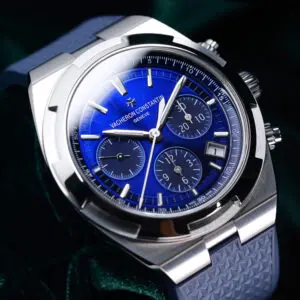
Vacheron Constantin Overseas Chronograph Blue Dial Blue Rubber Strap Stainless Steel 42.5mm MINT CONDITION COMPLETE SET 5500V/110A-B148
$35,993.00
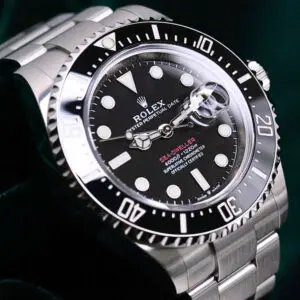
Rolex Sea-Dweller "Red Letter" Black Dial Black Cerachrom Bezel Oyster Bracelet Stainless Steel 43mm MINT CONDITION COMPLETE SET 126600
$13,120.00
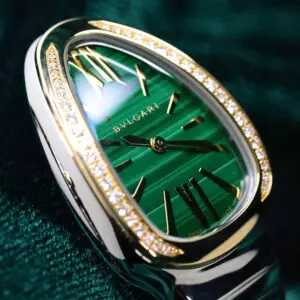
2026 NEW UNWORN Bvlgari Serpenti Tubogas Studs Capsule Limited Edition Green Dial Diamond Bezel Steel & 18k Yellow Gold 35mm COMPLETE SET 104360
$24,255.00
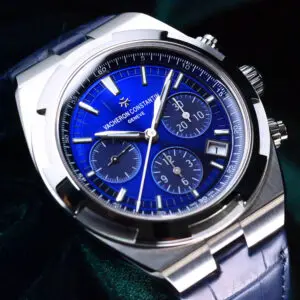
Vacheron Constantin Overseas Chronograph Blue Dial Blue Leather Strap Stainless Steel 42.5mm MINT CONDITION COMPLETE SET 5500V/110A-B148
$37,793.00
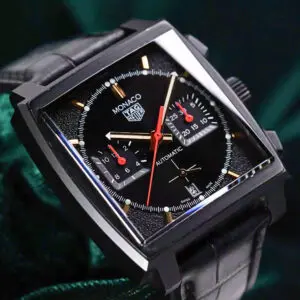
Tag Heuer Monaco Chronograph “Dark Lord” Special Edition Black Dial Black Leather Strap DLC Titanium 39mm MINT CONDITION COMPLETE SET CBL2180.FC6497
$8,135.00
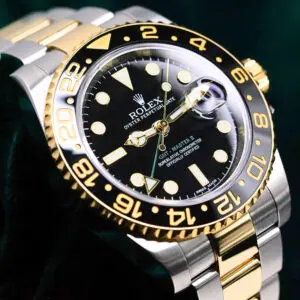
Rolex GMT-Master II “Green Arrow” Black Dial Black Ceramic Bezel Oyster Bracelet Two-Tone 18K Yellow Gold Stainless Steel 40mm MINT CONDITION COMPLETE SET 116713LN
$15,740.00
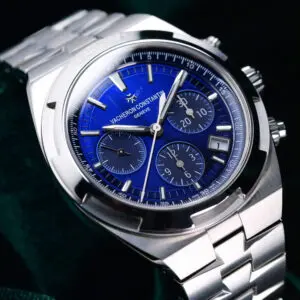
Vacheron Constantin Overseas Chronograph Blue Dial Stainless Steel 42.5mm MINT CONDITION COMPLETE SET 5500V/110A-B148
$37,793.00
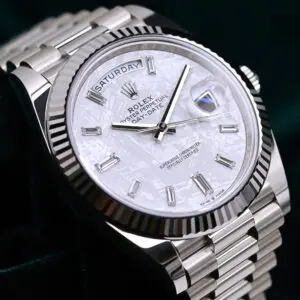
Rolex Day-Date Meteorite Baguette Diamond Dial Fluted Bezel President 18K White Gold 40mm MINT CONDITION COMPLETE SET 228239
$78,629.00
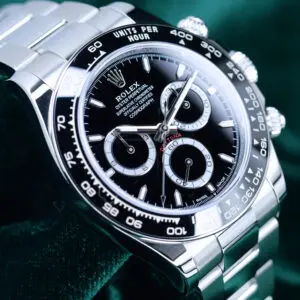
2026 Rolex Cosmograph Daytona Black Dial Black Ceramic Bezel Oyster Bracelet Stainless Steel 40mm MINT CONDITION COMPLETE SET 126500LN
$33,594.00