Table of Contents
A loose watch slides around your wrist and feels awkward. A tight one leaves marks and wears down the bracelet faster. Getting the right fit matters not only for comfort but also to protect your luxury timepiece. Well, guess what? —You don’t need to guess your way through it. With the right tools and method, you can safely remove watch links at home without damaging your bracelet.
This guide will walk you step by step on how to remove links from a watch, covering different bracelet types from Rolex to Omega and more. If you’re ready to size your watch correctly and keep it secure on your wrist, follow along.
Understand the Type of Watch Bracelet You Have
Before you start removing links, you need to know what kind of bracelet your watch uses. Different watches use different link systems, and each requires a specific approach. Adjusting the wrong way can strip screws, bend pins, or even damage the bracelet.
Bracelet Type | Common Brands / Models | How It Works | Notes / Risks |
Pin-and-Collar | Seiko, Citizen, some Rolex models | A metal pin is held in place by a tiny collar (sleeve) inside the link. | Collar is very small and easy to lose. Work over a tray or cloth. |
Screw-in Links | Rolex Oyster, Omega, Audemars Piguet Royal Oak, Patek Philippe | Each link is secured with a miniature screw. | High risk of stripping screws if wrong tool is used. Apply even pressure. |
Split Pin / Friction Pin | Many stainless steel watches (mid-range brands) | Links are held with a simple pin secured by friction. | Pins can bend if forced incorrectly. Always push in the direction of engraved arrows. |
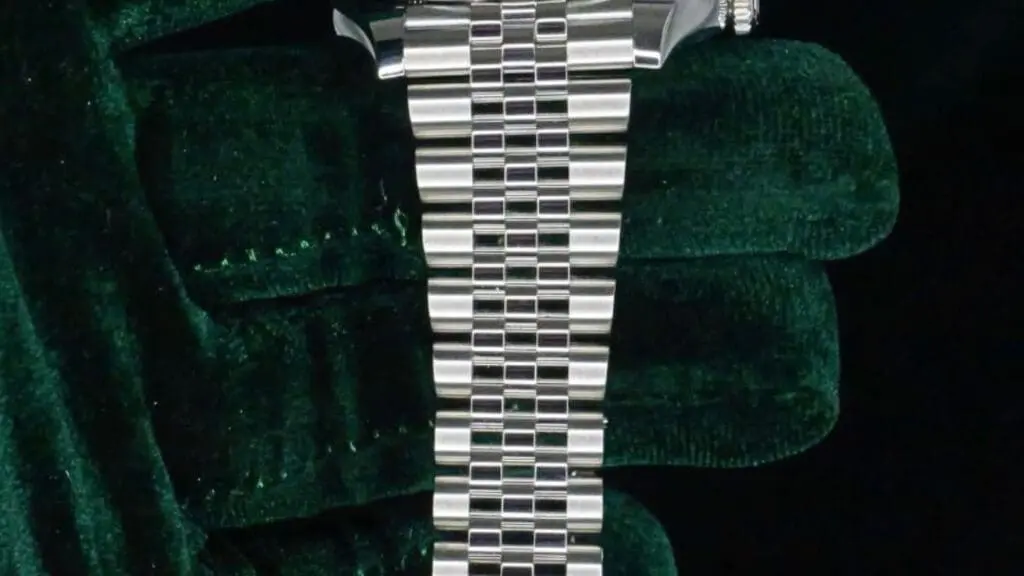
Non-Removable Links with Clasp Adjustment | Rolex Jubilee, Rolex President, some Omega models | Bracelet links stay fixed, sizing is done via micro-adjustments in the clasp. | More limited adjustment range; may still require professional resizing for major changes. |
Tools You Need to Remove Watch Links
Using the right equipment ensures a clean job and prevents scratches, bent pins, or stripped screws. Before adjusting your bracelet, gather the proper tools.
For Pin-and-Collar System
- Pin pusher (0.8–1.0 mm tip)
- Bracelet holder or block
- Small hammer or watchmaker’s mallet
- Tweezers or needle-nose pliers
- Microfiber cloth or mat
For Screw-in Links
- Precision screwdriver set (1.0–1.6 mm sizes)
- Bracelet holder
- Non-magnetic tweezers
- Thread locker (watchmaker’s grade, optional)
- Microfiber cloth
Split Pin / Friction Pin
- Pin punch (0.8–1.0 mm tip)
- Bracelet holder
- Small hammer
- Flat pliers
- Microfiber cloth
Step-by-Step: How to Remove Links from a Watch
Step 1: Prepare Your Workspace
Place your watch on a clean, soft microfiber cloth to protect the case and bracelet from scratches. Avoid working on hard surfaces or carpeted floors where small pins and screws can easily get lost.
Make sure that the workspace is well-lit, ideally with a desk lamp or daylight, so you can clearly see pins, collars, screws, and any tiny arrows engraved inside the links.
Step 2: Identify Which Links Are Removable
Carefully examine the inside of your bracelet. Most metal bracelets have small arrows engraved on removable links. These arrows indicate the direction the pins should be pushed out.
For screw-in link bracelets, inspect the bracelet to locate the screw heads. Note which side the screw head is on because screws are only meant to turn in one direction to loosen properly. Avoid forcing screws the wrong way—they can strip easily.
If you’re unsure which links to remove, measure your wrist and compare it to the bracelet length. Start removing from the links near the clasp rather than the end links near the watch head to maintain symmetry.
Step 3: Remove Links (Based on Bracelet Type)
For Pin-and-Collar System:
- Place the bracelet securely in a bracelet holder or block with the arrow pointing in the direction you will push the pin.
- Position the pin pusher on the end of the pin and gently tap it with a small hammer or mallet until the pin starts moving out.
- Once the pin is partially out, use tweezers or needle-nose pliers to carefully remove it.
- Remove the collar (tiny sleeve) inside the link and set it aside safely—losing it can make reassembly impossible.
- Repeat for additional links as needed.
For Screw-in Links:
- Select the correct precision screwdriver for your bracelet. Using the wrong size can strip the screw head.
- Place the bracelet in the holder to prevent twisting while unscrewing.
- Turn the screw counterclockwise slowly and steadily until it comes out completely.
- Place the screw in a small container or tray to avoid losing it.
- Repeat for each link that needs removal.
For Split Pin / Friction Pin:
- Place the bracelet in a holder with the engraved arrow pointing in the push direction.
- Align the pin punch with the end of the pin and tap gently with a small hammer.
- Once the pin starts to move, use flat pliers to pull it out completely.
- Keep the removed pins in a small tray to avoid losing them.
Step 4: Remove an Equal Number of Links from Both Sides
Always remove links evenly from both sides of the clasp to keep the bracelet centered on your wrist. Uneven removal can make the watch sit crooked or uncomfortable.
After removing one or two links, test the fit by placing the watch on your wrist. This prevents removing too many links at once and ensures you achieve a comfortable fit. Adjust further only as necessary.
Step 5: Reconnect the Bracelet Securely
Insert the pin or screw back in the opposite direction from removal.
- For pins, ensure they sit completely flush with the bracelet surface and the collar (if applicable) is correctly positioned.
- For screws, gently tighten using the correct screwdriver. You may apply a tiny drop of watchmaker’s thread locker if recommended by the manufacturer to prevent loosening.
Double-check each reconnected link for stability. A loose pin or screw can cause the bracelet to come apart unexpectedly.
Once complete, inspect the bracelet visually and by gently tugging on it to ensure all links are secure and evenly aligned. Your watch should now fit comfortably, with the clasp centered and the bracelet sitting correctly on your wrist.
When to Seek Professional Help
If your watch has delicate or complex bracelets—such as the Rolex Oyster, Jubilee, or President, or Omega Seamaster and Speedmaster—attempting adjustments without the right tools or experience can cause permanent damage. Stripped screws, bent pins, or lost collars are common risks when working on these bracelets at home.
If you feel resistance while removing a link or notice a component is stuck, it’s safer to stop and consult a professional watchmaker. You should also seek professional help for bracelets made from precious metals (gold, platinum) or ceramic links, as these materials scratch or deform easily.
Final Takeaways on How to Remove Links from a Watch
Resizing your watch bracelet safely comes down to using the correct tools and following the proper technique. Taking the time to do it carefully ensures each link is removed without scratching or damaging your watch.
Removing links properly protects your investment. Each Rolex link, for example, can cost $50–$150 depending on the model, so losing pins, collars, or screws can become expensive. Always keep the removed parts in a small container or a watch parts tray and store them safely for future adjustments or reassembly.
FAQ About Watch Bracelet Link Removal
How do I know which links are removable?
Check the inside of your bracelet for small engraved arrows showing pin direction. For screw-in links, locate the screw heads and note their orientation. Remove links near the clasp first to maintain balance. Measure your wrist and test the fit after removing a few links before proceeding further.
What tools do I need to remove watch links at home?
For pin-and-collar bracelets, use a pin pusher, small hammer, tweezers, and bracelet holder. Screw-in links need precision screwdrivers, non-magnetic tweezers, and a holder. Friction pin bracelets require a pin punch, small hammer, flat pliers, and holder. Always work on a soft microfiber cloth to prevent scratches.
How do I remove links safely?
Place the bracelet in a holder and follow the removal steps for your bracelet type. Tap pins gently with a hammer, then use pliers or tweezers to pull them out. Unscrew links slowly counterclockwise. Keep all pins, screws, and collars in a tray to avoid losing parts during removal.
Should I remove links evenly from both sides?
Yes, always remove links equally from both sides of the clasp. This keeps the bracelet centered and balanced on your wrist. Test the fit after removing one or two links before continuing. Uneven removal can make the watch sit crooked, feel uncomfortable, and compromise overall fit and appearance.
When should I seek professional help?
Consult a professional for delicate or complex bracelets like Rolex Oyster, Jubilee, President, or Omega Seamaster and Speedmaster. Also seek help if pins or screws resist removal or for bracelets made from precious metals or ceramics, as these can scratch, bend, or become damaged when adjusted at home.