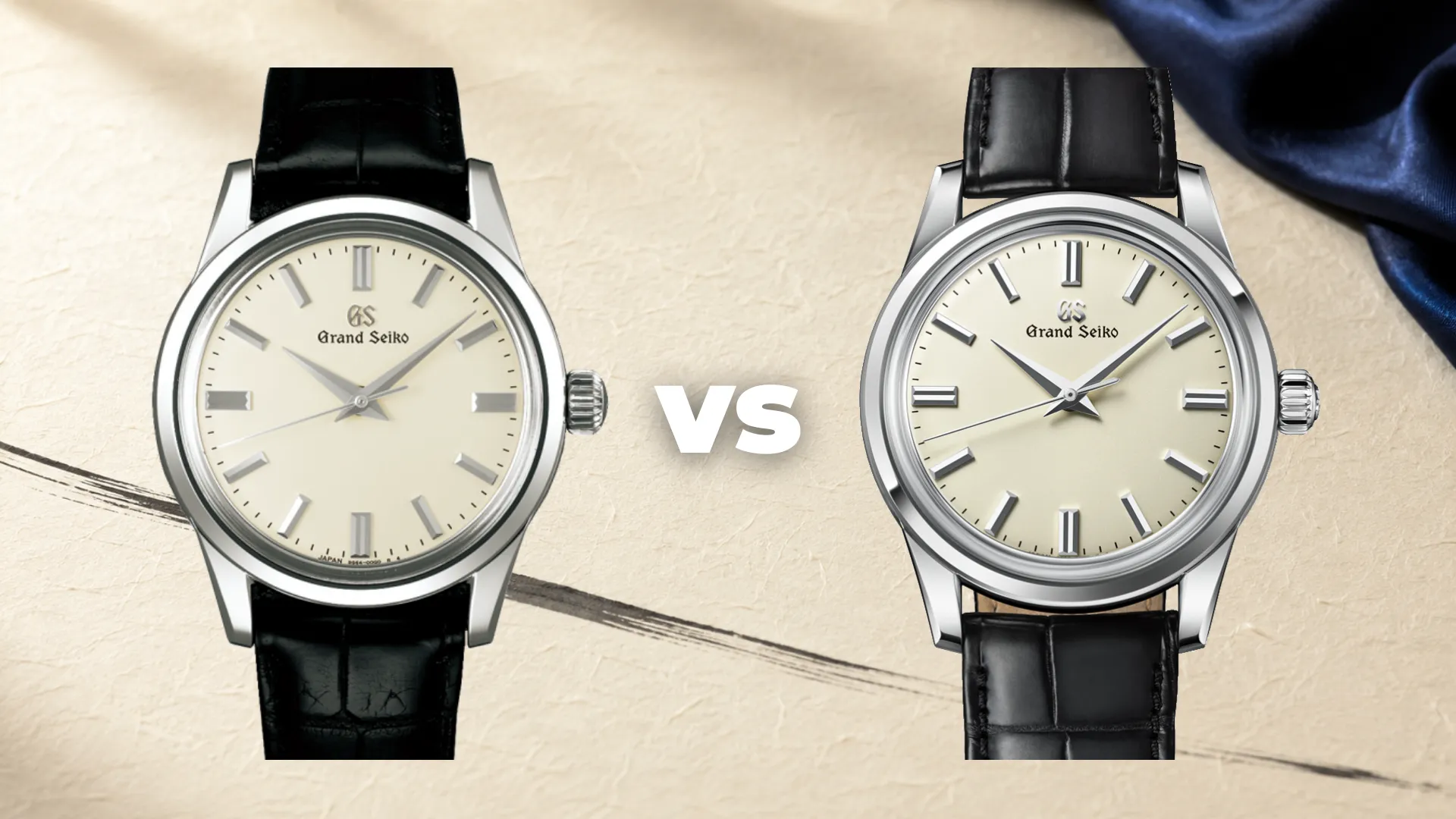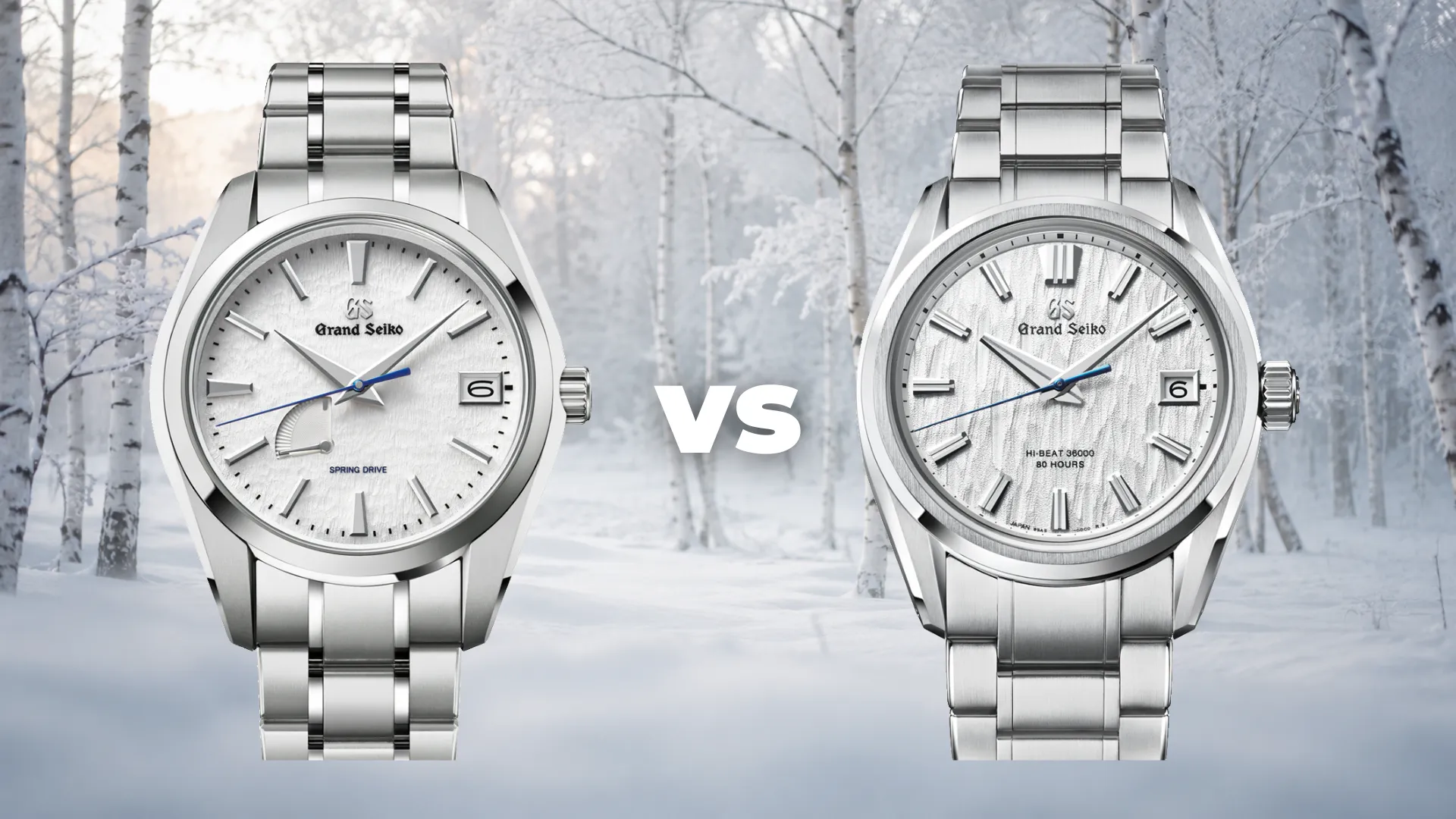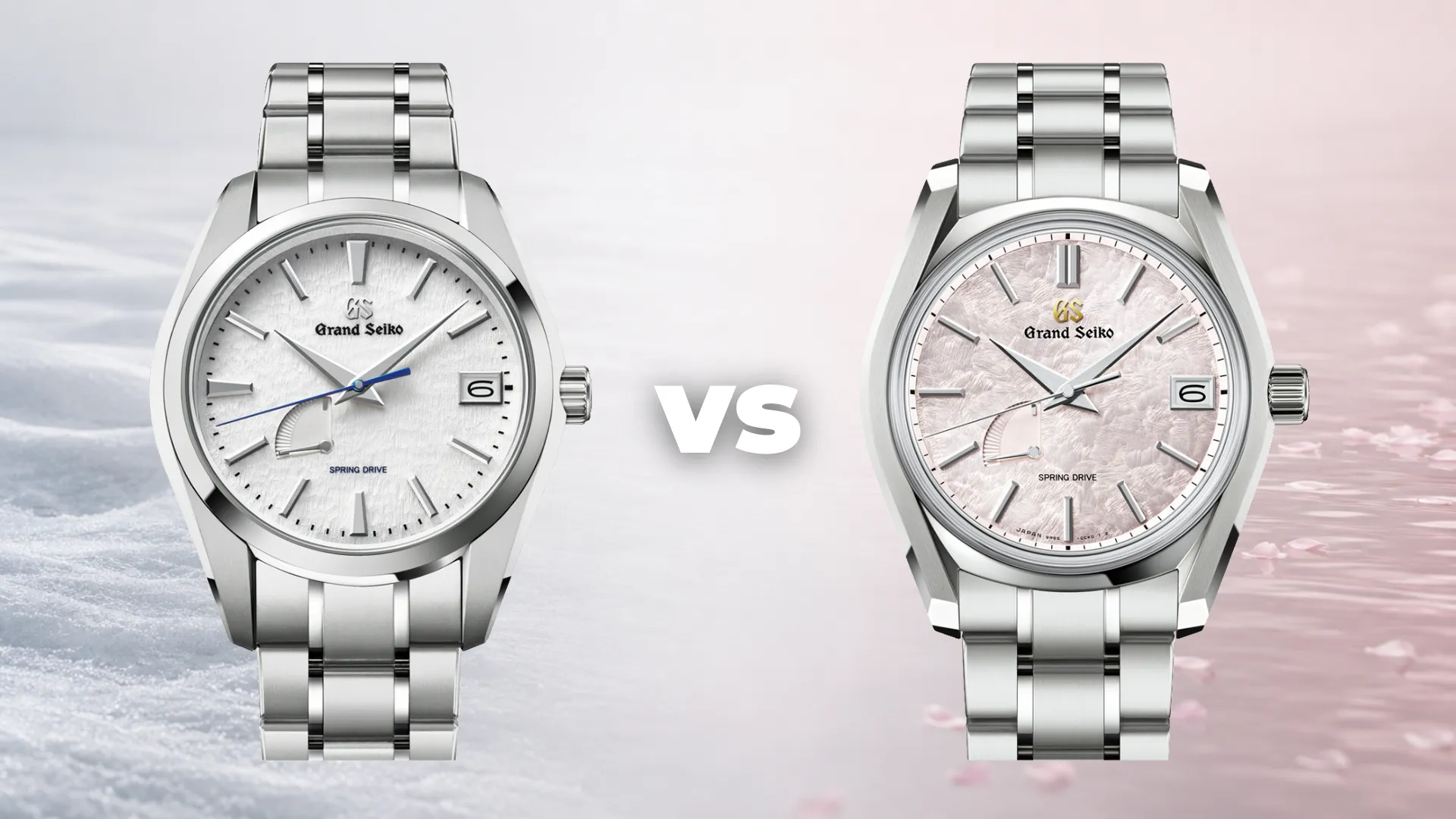
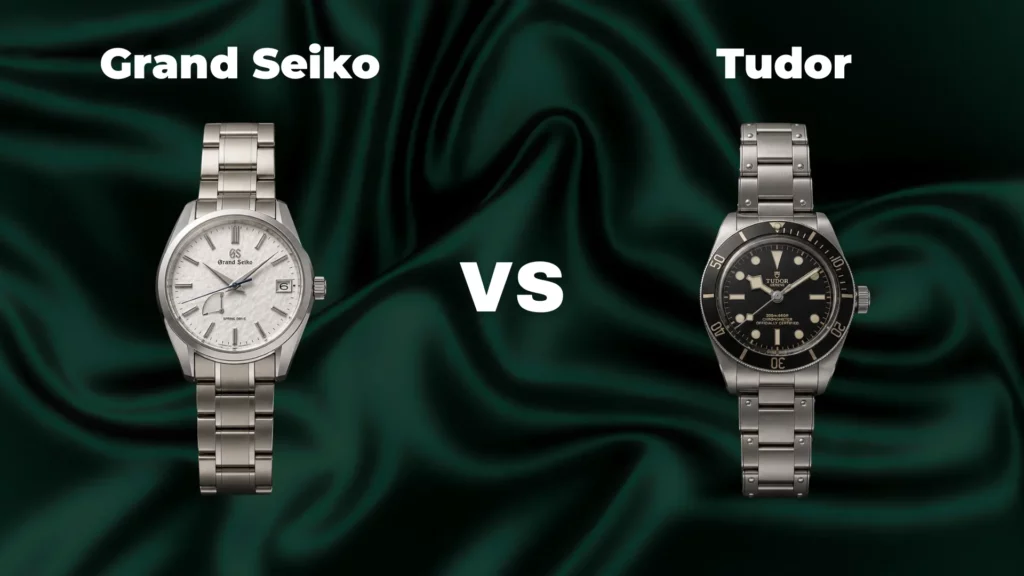
If you’re stuck on Grand Seiko vs Tudor, you’re not alone. These two brands share a price bracket, attract similar buyers, and often get underestimated because their strengths are easy to miss at first glance.
One is a Swiss tool watch with serious dive heritage. The other is a Japanese manufacturer that has spent decades quietly out-finishing brands that cost twice as much.
The decision isn’t obvious, and it shouldn’t be. Grand Seiko and Tudor are built on completely different ideas about what a watch should do. This article lays out the real differences so you can figure out which one fits your life, not just your wrist.
Grand Seiko Overview

Grand Seiko was created in 1960 as a statement of Japanese watchmaking ambition, with a focus on precision, finishing, and serious competition with Swiss manufacturers.
The first Grand Seiko models were mechanical, hand-wound, and held to internal accuracy standards stricter than COSC at the time.
The brand reached a turning point in 1967 with the 44GS case design, now called the “Grammar of Design.” That rulebook covers sharp case planes, broad flat surfaces, and crisp transitions between polished and brushed finishes. It still drives every Grand Seiko case made today.
In 2017, Grand Seiko became a fully independent entity with its own logo on the dial, separate from Seiko.
The movement variety is the most important thing to understand about the brand. The lineup covers four types: 9F HAQ quartz, Hi-Beat automatic, manual-wind Hi-Beat, and Spring Drive. The Spring Drive especially has no Swiss equivalent at this price, which is covered in detail in the Movement Type section below.
Notable Grand Seiko References:
- SBGA211 (Snowflake)
- SBGA413 (Shunbun)
- SBGX261
- SBGM221
- SLGH005 (White Birch)


Tudor Black Bay Overview

Tudor was founded in 1946 by Hans Wilsdorf, the same man behind Rolex, with one goal: offer Rolex-level reliability at a more reachable price.
For decades, Tudor supplied dive watches to professional organizations, most notably the French Navy’s Marine Nationale. That history gave Tudor a reputation for practical dive watches made for military diving, daily wear, and harsh underwater work.
The Black Bay launched in 2012 and changed the brand’s direction. It pulled visual cues from Tudor’s 1950s dive archive: a domed crystal, large luminous plots, and the snowflake-shaped hour hand that first appeared on Tudor dials in 1969.
The collection helped Tudor reestablish itself in the American market when it returned in 2013.
The real shift came in 2016, when Tudor introduced its first in-house movement for the Black Bay, replacing ETA movements. The MT-series calibers are developed with Kenissi and are COSC-certified. From 2023 onward, most current-production Black Bay models also carry METAS Master Chronometer certification, with magnetic resistance up to 15,000 gauss.
Today the collection spans 31mm to 43mm, with GMTs, chronographs, and multiple sport variants.
Notable Tudor Black Bay References:
- Black Bay 58 (ref. 79030B / 79030N)
- Black Bay 58 GMT (ref. 7939G1A0NRU)
- Black Bay 41 (ref. 79230)
- Black Bay 54 (ref. 79000N)
- Black Bay Pro (ref. 79470)


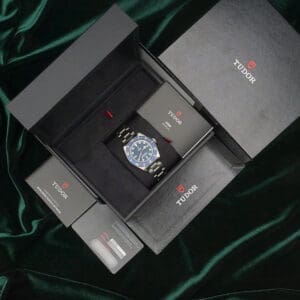
Grand Seiko vs Tudor: Six Differences That Matter
This is where the buying decision gets made. The differences below are structural and technical, and they point toward very different ownership experiences.
1. Movement Type
Grand Seiko offers four distinct caliber families, and the Spring Drive is the headliner.
It uses a mainspring for power but a tri-synchro regulator with a quartz oscillator to control energy release. The result is ±1 second per day accuracy, a frictionless glide wheel instead of a traditional escapement, and a seconds hand with zero tick or step. Higher-tier models with the 9RA2 push that to ±0.5 seconds per day.
The Hi-Beat automatic 9SA5 runs at 36,000 vph with 80 hours of power reserve and uses a dual-impulse escapement. The HAQ quartz 9F61 reaches ±10 seconds per year, making it more accurate than any mechanical caliber in this price bracket.
Tudor’s Black Bay lineup uses one movement family: in-house automatics developed with Kenissi.
The standard movement, the MT5602-U, runs at 28,800 vph with 70 hours of power reserve. The GMT variant uses the MT5450-U at 65 hours. The Chrono runs the MT5813 at 70 hours. All current movements carry COSC chronometer certification (±4 seconds per day).
Master Chronometer-certified models add 15,000 gauss magnetic resistance and run more accurately in real-world use.
Tudor’s movement range is narrower than Grand Seiko’s, although the METAS standard gives it a clear advantage in magnetic resistance over standard GS Heritage models.
2. Case Finishing
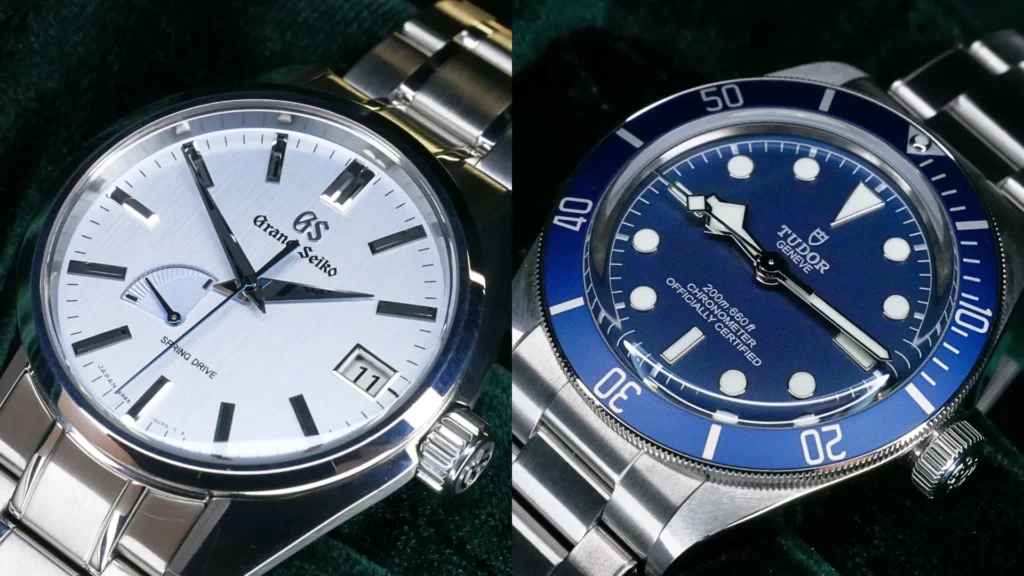
Grand Seiko uses Zaratsu hand-polishing across all case surfaces. This flat-plate technique creates mirror-sharp edges with zero rounding at the transition points. Each line between a polished face and a brushed surface is precise and hard.
Applied indices are polished at multiple angles to catch light from every direction.
Textured dials, the Snowflake’s windswept white surface, the Shunbun’s gradient green-gold, the Birch’s bark-like relief are produced in small workshops using regional craft techniques. Textured Grand Seiko dials shift noticeably in natural light, with small visual differences that feel clear in person.
Tudor’s case finishing is clean and honest for the price, while Grand Seiko delivers a higher level of surface detail and hand-finished sharpness.
Black Bay cases use a straightforward mix of brushed and polished surfaces. The dials are sunburst or lacquered with prominent luminous plots and bold applied indices. The construction is durable and well-executed.
A Black Bay looks right in hand. A Grand Seiko under the same light looks like something that took three times as long to build, because it likely did.
3. Case Proportions

Grand Seiko Heritage and Elegance models run 37mm to 41mm in diameter, but many steel references sit 12mm to 14mm thick.
The bracelet-to-case transition on several GS references has drawn criticism for looking top-heavy, with the case appearing wider than the bracelet taper suggests.
Titanium models address this through weight rather than slimness, cutting roughly 30% of the mass of a steel equivalent. Newer Evolution 9 manual-wind models have reached under 10mm thick, but that’s a specific and newer part of the lineup, we cover how Heritage and Evolution 9 differ in detail if the line distinction matters to your shortlist.
The Tudor Black Bay 58 at 39mm wide and approximately 47.5mm lug-to-lug is one of the most well-proportioned dive watches in mid-luxury. It sits flat under a cuff and is compact enough to forget it’s there.
The BB41 at 41mm and 14.4mm thick is more demanding and can catch on shirt cuffs during the day.
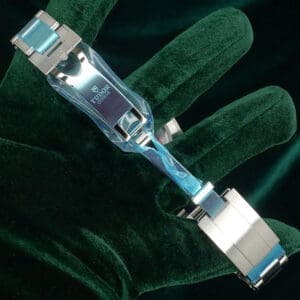
The T-Fit clasp, now standard on most current models, allows quick bracelet adjustments without tools, a real daily wear convenience that GS does not match at the same level.
4. Water Resistance
Every Tudor Black Bay model, across all sizes and materials, carries a consistent 200 meters of water resistance. That spec holds across the BB58, BB41, BB54, BB68, Black Bay Pro, and the chronograph variants, with no exceptions.
Grand Seiko varies by collection. Heritage and Elegance models typically carry 100 meters. Sport and Evolution 9 models reach 200 meters or more.
For most Grand Seiko Heritage references that buyers cross-shop with Tudor, the standard is 100 meters, which suits everyday wear and swimming more than serious dive use.
5. Bracelet Engineering

Tudor’s current Black Bay bracelets come in two styles: the riveted three-link Oyster-style and the five-link Jubilee-style.
The T-Fit clasp is standard on most current models and allows bracelet length adjustment without any tools, on the fly. Older Tudor models that lack T-Fit require a push-pin or a watchmaker for resizing.
The Jubilee five-link sits more flexibly on the wrist and is noticeably softer than the rivet option for all-day wear.
Grand Seiko bracelets use a three-fold clasp with push-button release. On titanium models, the bracelet matches the case material cleanly.
On steel models, half-link availability and adjustability on older references have been recurring complaints. Recent Grand Seiko releases have improved the clasp, but across the full lineup, Tudor has the practical edge on bracelet ergonomics.
6. Occasion Range
The Black Bay is a dive watch family, and every design choice shows it. The rotating bezel, bold snowflake hands, and high-contrast dial keep it in casual and sport territory.
It softens somewhat on a Jubilee bracelet, but it reads as a sport watch at any formal event. Tudor’s non-Black Bay collections exist, but they are not the brand’s core identity.
Grand Seiko’s catalog spans far more ground within one brand. The Heritage Collection covers sport-adjacent models with no rotating bezel all the way to genuinely dressy pieces that work with a suit.
The Elegance Collection goes further toward thin, quiet dress watches. Sport and Evolution 9 models match Tudor’s tool watch function.
If you want a single watch that handles more than one social context, Grand Seiko’s range gives you options the Black Bay family simply does not offer.
Price and Market Demand
Both brands usually trade below retail on the secondary market, but they behave differently. Tudor tends to be more liquid, while Grand Seiko depends heavily on movement type and reference demand.
Market values move, so the ranges below should be treated as working estimates rather than fixed prices. And both brands trade below retail on the secondary market, but the behavior is very different (source).
Tudor Black Bay Market Prices
Tudor Black Bay models are easier to understand on the secondary market because demand is more consistent across the collection.
| Reference | Retail (USD) | Secondary Market |
| Black Bay 41 (core steel) | ~$3,800–$4,200 | $2,500–$3,400 |
| Black Bay 58 (79030N / 79030B) | ~$3,800–$4,100 | $2,700–$3,800 |
| Black Bay 58 GMT (7939G1A0NRU) | ~$5,350 | $4,000–$4,600 |
| Black Bay Pro (79470) | ~$4,200–$4,500 | $3,200–$4,200 |
Tudor’s median secondary market price sits around $3,600, which tracks close to retail. Most in-production Black Bay models trade at 30–38% below retail, and that discount is consistent and predictable.
The BB58 GMT holds value better than the standard BB41 because demand is higher relative to available inventory. The BB41 core models show the deepest discounts in the family.
What moves Tudor prices up: a full set (box, papers, card), BB58 format over BB41, Jubilee bracelet preference, and METAS-certified generation over ETA.
Avoid ETA-era models with “Rotor Self-Winding” text on the dial. Tudor is among the most liquid watches in this price bracket. The BB58 consistently sells in under two weeks on major secondary platforms.
Grand Seiko Market Prices
Grand Seiko’s secondary market behaves very differently. Movement type is the single most important variable.
| Reference | Retail (USD) | Secondary Market |
| SBGX261 (HAQ Quartz) | ~$2,200–$2,500 | $1,400–$2,000 |
| SBGA211 Snowflake (Spring Drive) | ~$6,900 | $4,000–$5,500 |
| SBGA413 Shunbun (Spring Drive) | ~$6,900–$7,500 | $5,500–$8,500 |
| SLGH005 White Birch (Hi-Beat) | ~$9,100–$10,000 | $7,500–$10,500 |
Spring Drive references usually attract stronger collector interest than high-accuracy quartz references. Quartz Grand Seiko watches still make sense for buyers who value accuracy, low-maintenance ownership, and long-term practicality. We cover where 9F quartz makes more sense than Spring Drive in a separate piece.
The SBGA413 Shunbun and SLGH005 White Birch are stronger examples of collector-driven Grand Seiko demand because the dials are distinctive and the references are widely recognized.
Full sets matter for both brands, but they matter more for Grand Seiko when the original certificate and complete presentation are intact.
Already eyeing a specific reference? Send us a message and we’ll help you source it, we’ll tell you what’s in stock, what we can source, and what the realistic market price looks like right now. No quote forms, no callbacks. Just a real reply.
Five Grand Seiko References Worth Knowing

Grand Seiko’s catalog runs into hundreds of references. Five matter most for buyers cross-shopping with Tudor.
1. SBGA211 Snowflake
The Snowflake is the watch that introduced most Western collectors to Grand Seiko. The 40mm high-intensity titanium case keeps it noticeably light, and the white textured dial looks different in every lighting condition.
It runs the Spring Drive 9R65 covered earlier, with a 72-hour power reserve.
The SBGA211 is the most recognized Grand Seiko reference internationally. People who own one tend to reach for it over more expensive watches. The Spring Drive does that to people.
- Case size: 40mm
- Material: High-Intensity Titanium
- Movement: Spring Drive 9R65, ±1 sec/day, 72-hour power reserve
- Water resistance: 100m
- Typical secondary market range: $4,000–$5,500
2. SBGA413 Shunbun
The Shunbun dial, a gradient from warm gold to deep green, is one of the most visually distinct pieces in the catalog. It shares the same 40mm titanium case and 9R65 Spring Drive as the Snowflake, but the dial commands stronger collector demand and trades above it on the secondary market. We cover how the Snowflake and Shunbun stack up against each other if you’re choosing between the two.
The Shunbun is for buyers who want the Spring Drive in something with more visual presence. The seasonal color story behind the dial gives it more personal character than most watches at this price.
- Case size: 40mm
- Material: High-Intensity Titanium
- Movement: Spring Drive 9R65, 72-hour power reserve
- Water resistance: 100m
- Typical secondary market range: $5,500–$8,500
3. SBGX261
The SBGX261 is the most accessible Grand Seiko and one of the most underestimated. The 37mm steel case and clean black dial make it a no-fuss daily option.
The 9F61 HAQ quartz movement keeps time to ±10 seconds per year, meaning near-zero service appointments for accuracy over the watch’s life.
The trade-off is resale. HAQ quartz models carry the deepest secondary market discounts in the lineup. This is the right choice for buyers who plan to keep it indefinitely and care more about accuracy than resale.
- Case size: 37mm
- Material: Stainless steel
- Movement: HAQ Quartz 9F61, ±10 sec/year
- Water resistance: 100m
- Typical secondary market range: $1,400–$2,000
4. SBGM221
The SBGM221 is Grand Seiko’s core automatic GMT and the most direct comparison to Tudor’s GMT references. The 39.5mm steel case is one of GS’s more versatile sizes, and the Hi-Beat 9S56 caliber delivers solid precision with a 72-hour power reserve.
It wears quieter than most GMT watches, leaning more toward a refined travel watch than a sport piece. For buyers who need dual time zones with Grand Seiko finishing, this is the clearest entry point.
- Case size: 39.5mm
- Material: Stainless steel
- Movement: Hi-Beat GMT 9S56, 72-hour power reserve
- Water resistance: 100m
- Typical secondary market range: $3,500–$4,800
5. SLGH005 White Birch
The White Birch sits in the Evolution 9 tier, one step above Heritage. The 40mm steel case runs thinner than most Heritage references, and the birch bark-textured dial is produced in Shinshu. If you’re weighing the Snowflake against the White Birch, we break down the case, dial, and movement differences in a separate guide.
It runs the Hi-Beat 9SA5 covered earlier, dual-impulse escapement, 80 hours of power reserve.
This is for buyers who want Grand Seiko’s most advanced automatic in a case that wears more like a modern sport watch. The White Birch is one of the most technically complete references in the current catalog.
- Case size: 40mm
- Material: Stainless steel
- Movement: Hi-Beat 9SA5, 80-hour power reserve
- Water resistance: 100m
- Typical secondary market range: $7,500–$10,500
Five Tudor Black Bay References Worth Knowing
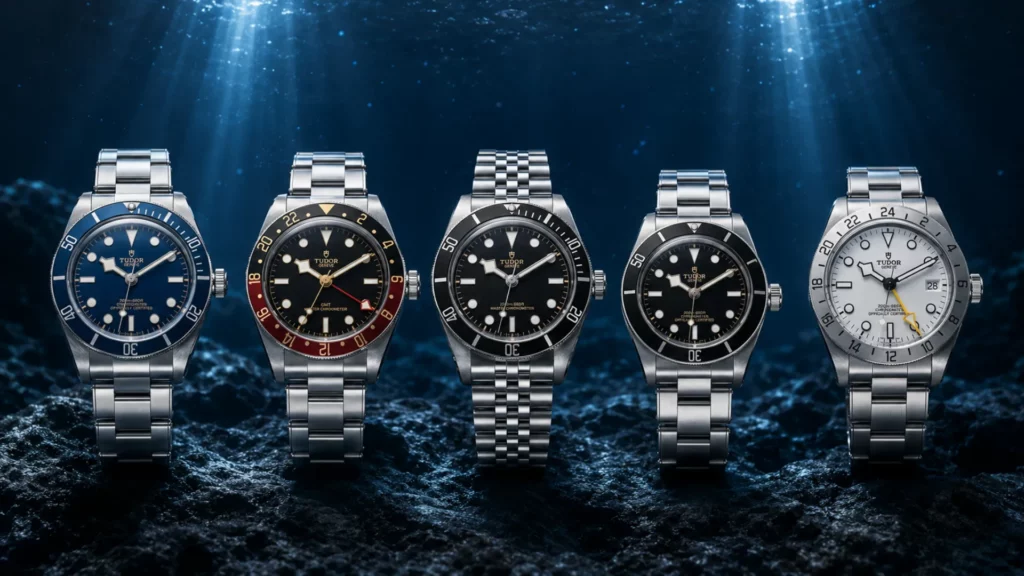
The Black Bay lineup has expanded considerably since 2012. Five references drive most of the collector demand, and our full Black Bay collection breakdown covers everything in the family if you want the wider context first.
1. Black Bay 58
The 39mm case is the reason most people buy this watch. At just under 48mm lug-to-lug, the BB58 sits on the wrist in a way that most 41mm dive watches cannot replicate. The riveted three-link bracelet, domed sapphire crystal, and snowflake hour hand pull from Tudor’s 1950s archive, but the movement inside is fully modern.
The MT5400 COSC-certified caliber delivers a 70-hour power reserve.
The BB58 Blue and Black are the most popular references in the entire collection. The slim profile wears under a cuff without drama, and the dial lume is among the best at this price.
Collectors who have owned several Tudors consistently reach for the BB58 on a regular Tuesday.
- Case size: 39mm
- Reference numbers: 79030N (black) / 79030B (blue)
- Material: Stainless steel
- Movement: MT5400, COSC, 70-hour power reserve
- Water resistance: 200m
- Typical secondary market range: $2,700–$3,800
2. Black Bay 58 GMT
At 12.8mm thick, this is the slimmest GMT Tudor has produced. The black-and-red “Coke” bezel references a colorway Rolex dropped from the GMT-Master II in the late 2000s. Tudor’s version generated immediate collector interest.
The MT5450-U inside is METAS Master Chronometer certified, with 65 hours of power reserve.
The older Black Bay Pro GMT ran at 14.6mm thick. That 1.8mm difference is real on the wrist, especially under a cuff. For most buyers who want the GMT function from Tudor, this is the reference to start with.
- Case size: 39mm
- Reference number: 7939G1A0NRU
- Material: Stainless steel
- Movement: MT5450-U, METAS Master Chronometer, 65-hour power reserve
- Water resistance: 200m
- Typical secondary market range: $4,000–$4,600
3. Black Bay 41
The 41mm Black Bay is where the collection started in 2012. The current generation carries the MT5602-U, now METAS Master Chronometer certified, a significant step up from the ETA era.
A five-link Jubilee bracelet option gives the BB41 a more refined daily wear feel than the rivet alone.
The BB41 has the softest secondary market in the Black Bay family. For buyers who care less about resale, the BB41 on a Jubilee bracelet is a capable all-day watch at retail. Used, it offers some of the best value in the collection.
- Case size: 41mm
- Reference number: 79230 (current gen)
- Material: Stainless steel
- Movement: MT5602-U, METAS Master Chronometer, 70-hour power reserve
- Water resistance: 200m
- Typical secondary market range: $2,500–$3,400
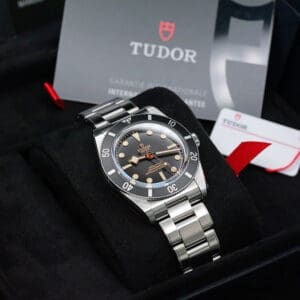
4. Black Bay 54
The 37mm case makes this the most compact dive watch in the Black Bay lineup. It references Tudor’s first waterproof watch from 1954.
The smaller diameter sits closer to vintage proportions and wears noticeably different from the 39mm BB58. The crown appears proportionally larger as a deliberate vintage cue.
Inside is the MT5400 caliber with 70 hours of power reserve.
The BB54 suits smaller wrists or buyers who find modern dive watches too large. It fills a clear gap for a buyer who wants the Black Bay aesthetic without the bulk.
- Case size: 37mm
- Reference number: 79000N
- Material: Stainless steel
- Movement: MT5400, COSC, 70-hour power reserve
- Water resistance: 200m
- Typical secondary market range: $3,100–$4,000
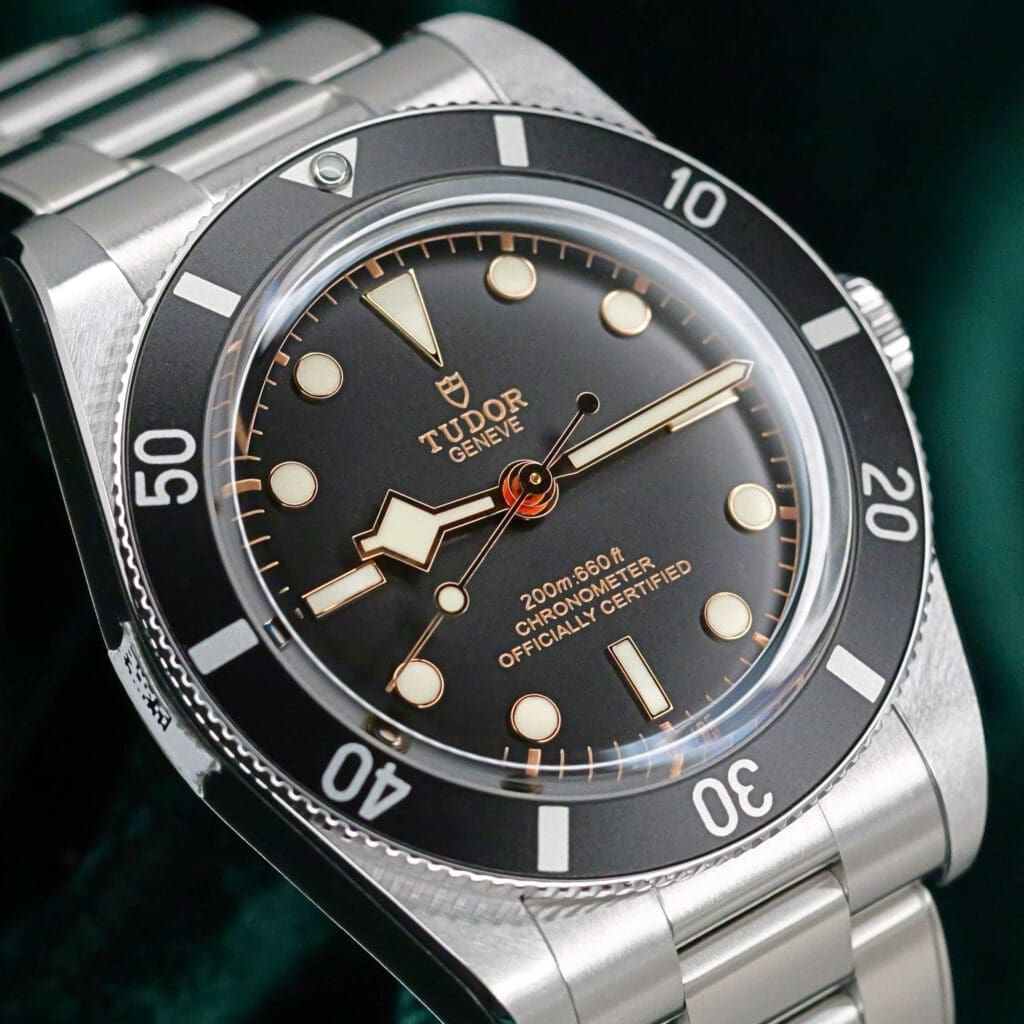


5. Black Bay Pro
The fixed bezel and orange GMT hand separate this from every other Black Bay. The Black Bay Pro draws more from Rolex’s Explorer II than any other reference in the collection, fixed steel bezel, 24-hour scale, expedition-tool design language.
The MT5652 is COSC-certified with 70 hours of power reserve. The 2025 opaline dial variant gave the Pro a cleaner, brighter look than the original black.
This is Tudor’s answer to buyers who want GMT function without a rotating dive bezel. The Black Bay Pro holds secondary market value better than the standard BB41 and has a distinct identity within the collection.
- Case size: 39mm
- Reference number: 79470
- Material: Stainless steel
- Movement: MT5652, COSC, 70-hour power reserve
- Water resistance: 200m
- Typical secondary market range: $3,200–$4,200
Which One Should You Choose?
Both brands make a strong case at overlapping prices, but they reward very different buyers. Here’s how to think through it honestly.
Choose Grand Seiko If:
- The Spring Drive is the main draw, and you want a movement type with no Swiss equivalent at this price
- Dial craft and Zaratsu case finishing matter more than tool watch function
- You need one watch that works from casual weekends to formal dinners without switching
- A lighter titanium option in the 37mm to 41mm range suits your wrist and lifestyle
- You plan to hold the watch long-term and are comfortable with a thinner secondary market
- You care more about 9F HAQ quartz accuracy than resale performance
Related Models from Majestix

Tudor Black Bay Chrono Black Dial Champagne Subdials Two Tone 18K Yellow Gold Stainless Steel Black Rubber Strap 41mm MINT CONDITION COMPLETE SET 79363N

Grand Seiko Heritage Collection 20th Anniversary Limited Edition of 1,300 pcs. Brown Dial Stainless Steel 42mm MINT CONDITION SBGR311

2025 Grand Seiko Evolution 9 Collection Hi-Beat “Moonlit Birch” Navy Dial Navy Leather Strap Stainless Steel MINT CONDITION COMPLETE SET SLGW007
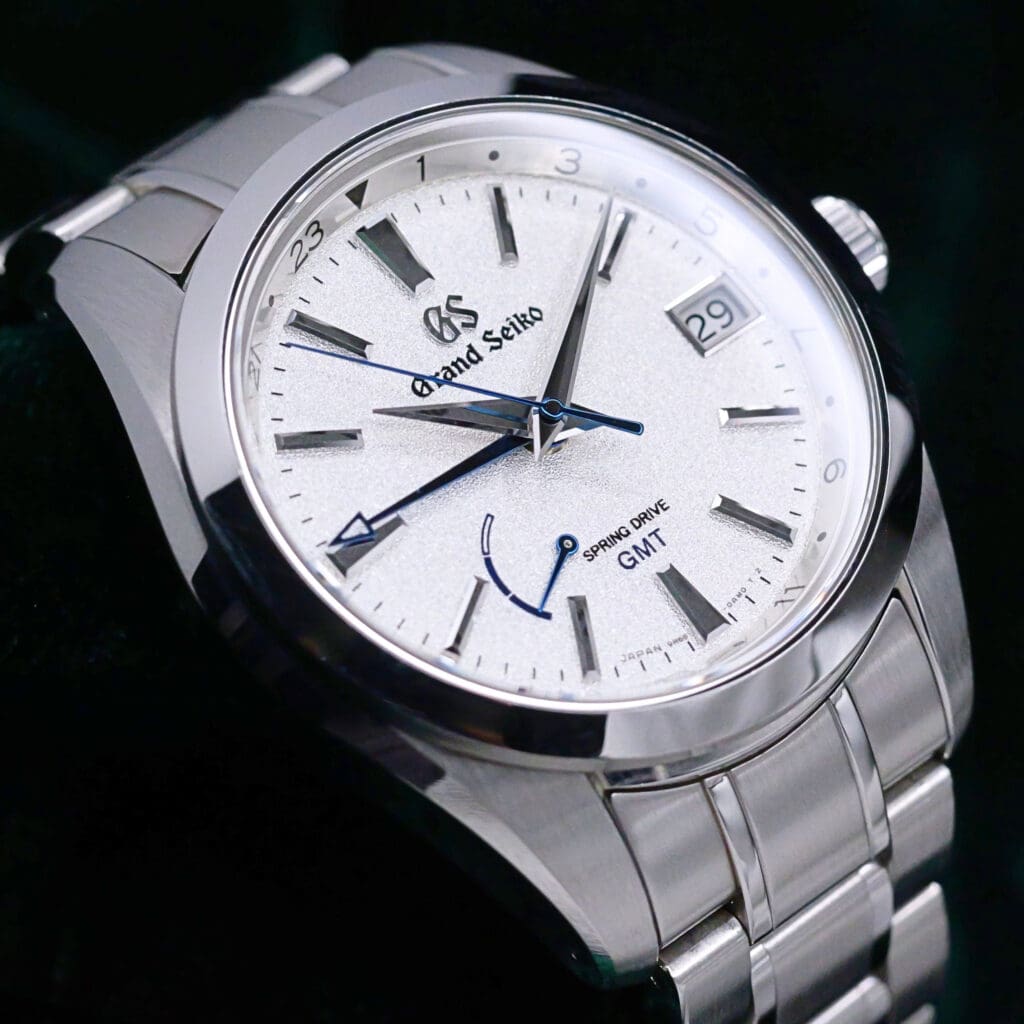
Grand Seiko Spring Drive GMT Limited Edition Blizzard Silver Dial Stainless Steel 41mm MINT CONDITION COMPLETE SET SBGE249

2025 NEW UNWORN Tudor Royal "Blue Royale" Blue Sunray Dial Diamond Hour Markers Diamond Bezel Two-tone Yellow Gold Stainless Steel 28mm COMPLETE SET 28323-0002

2025 NEW UNWORN Tudor Royal Champagne Roman Dial Two-Tone 18K Yellow Gold Stainless Steel Bracelet 28mm COMPLETE SET M28303-0004
Choose Tudor Black Bay If:
- You want consistent 200m water resistance across every size and configuration with no exceptions
- The BB58’s compact proportions fit your wrist better than most options at this price
- The BB58 GMT’s slim profile solves a real problem for GMT function under a cuff
- Resale liquidity matters with the BB58 is one of the most liquid references in the $3,000–$5,000 range
- METAS Master Chronometer certification matters for your daily context
- You prefer strong global AD availability and a more straightforward buying process
Related Models from Majestix
Tudor Black Bay Chrono Black Dial Champagne Subdials Two Tone 18K Yellow Gold Stainless Steel Black Rubber Strap 41mm MINT CONDITION COMPLETE SET 79363N
Grand Seiko Heritage Collection 20th Anniversary Limited Edition of 1,300 pcs. Brown Dial Stainless Steel 42mm MINT CONDITION SBGR311
2025 Grand Seiko Evolution 9 Collection Hi-Beat “Moonlit Birch” Navy Dial Navy Leather Strap Stainless Steel MINT CONDITION COMPLETE SET SLGW007
Grand Seiko Spring Drive GMT Limited Edition Blizzard Silver Dial Stainless Steel 41mm MINT CONDITION COMPLETE SET SBGE249
2025 NEW UNWORN Tudor Royal "Blue Royale" Blue Sunray Dial Diamond Hour Markers Diamond Bezel Two-tone Yellow Gold Stainless Steel 28mm COMPLETE SET 28323-0002
2025 NEW UNWORN Tudor Royal Champagne Roman Dial Two-Tone 18K Yellow Gold Stainless Steel Bracelet 28mm COMPLETE SET M28303-0004
The Tie-Breaker
For a single watch that covers more occasions and dress codes, Grand Seiko’s catalog runs deeper. And for the most wearable daily sport watch with proven resale at this price, the Black Bay 58 is genuinely hard to argue against.
Final Thoughts on Grand Seiko vs Tudor
The Grand Seiko vs Tudor decision comes down to what kind of ownership experience you want. Grand Seiko rewards people who slow down and look closely. Tudor rewards buyers who want a capable tool watch that feels easy to wear every day.
Two things worth knowing before you commit. First, Grand Seiko service intervals run 3–4 years and the cost is closer to what a Rolex service actually costs than a Tudor service; factor that into long-term ownership. Second, if budget is the deciding factor, an ETA-era Tudor Black Bay (pre-2016) trades $500–$800 below the in-house generation and is a strong pick if resale isn’t your priority.
At Majestix Collection, we think both are worth the money. The question is which one fits the version of you that wears it every day. If you’re earlier in the process and still mapping the wider field, our pre-owned luxury watch buying guide walks through what to check before you commit to either brand.
999+ Timepieces Available
Explore Our Timepieces
Authenticated, unworn, and ready to ship worldwide.
Rolex · Audemars Piguet · Patek Philippe · Omega · Cartier · Richard Mille · Hublot · Tudor
Newly Listed

2025 NEW Hermes Kelly Sellier en Desordre 20 Vert Mangrove Epsom Leather Permabrass Hardware
$38,900.00
2026 NEW UNWORN Audemars Piguet Royal Oak Chronograph Black Dial Black Ceramic Bezel Black Ceramic Bracelet 41mm COMPLETE SET 26240CE.OO.1225CE.02
$129,800.00
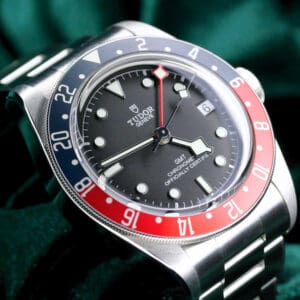
Tudor Black Bay GMT Pepsi Black Dial Red and Blue Bezel Stainless Steel 41mm MINT CONDITION COMPLETE SET 79830RB
$4,294.00
Breitling Superocean Heritage II Green Dial Black Ceramic Bezel Black Rubber Strap Stainless Steel 42mm MINT CONDITION COMPLETE SET AB2010121L1S1
$5,236.00
2025 Rolex Datejust Wimbledon Slate Gray Dial Fluted 18K White Gold Bezel Oyster Bracelet Stainless Steel 41mm MINT CONDITION COMPLETE SET 126334
$15,694.00
Rolex Day-Date II Brown Chocolate Dial Roman Numerals Fluted Bezel President Bracelet 18K White Gold 41mm MINT CONDITION COMPLETE SET 218239
$49,390.00
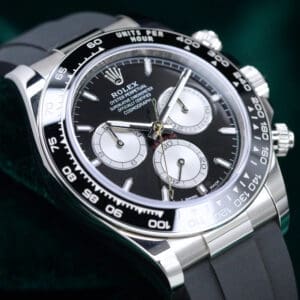
2026 NEW UNWORN Rolex Cosmograph Daytona "Baby Le Mans" Black Dial Silver Subdials Black Ceramic Bezel Black Oysterflex Strap 18K White Gold 40mm COMPLETE SET 126519LN-0002
$57,200.00
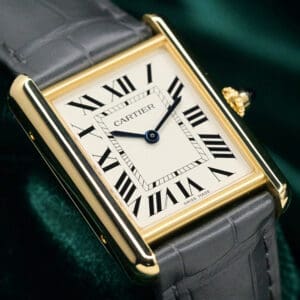
2025 Cartier Tank Louis Cartier Silver Dial Gray Alligator Strap 18K Yellow Gold 25.5mm MINT CONDITION COMPLETE SET WGTA0343
$12,495.00
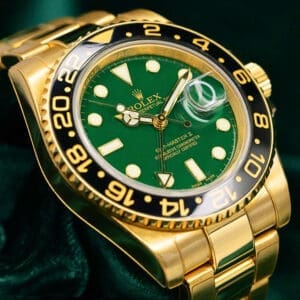
Rolex GMT-Master II Green Dial Black Ceramic Bezel Oyster Bracelet 18K Yellow Gold 40mm MINT CONDITION COMPLETE SET 116718LN
$46,745.00
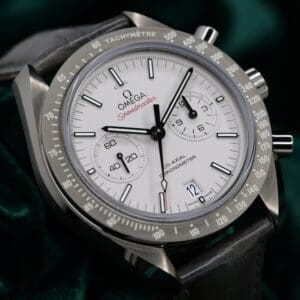
Omega Speedmaster Grey Side of the Moon Grey Dial Alligator Leather Strap Grey Ceramic 44.25mm MINT CONDITION 311.93.44.51.99.001
$8,690.00
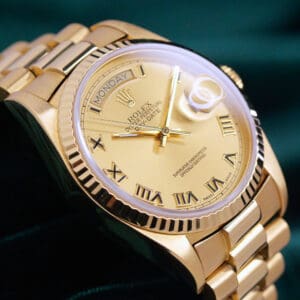
Rolex Day-Date 36 Champagne Gold Dial Roman Numeral Markers Fluted Bezel Presidential Bracelet 18K Yellow Gold NEAR MINT CONDITION 18038
$20,345.00
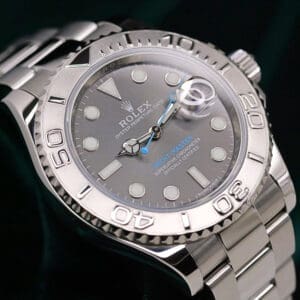
Rolex Yacht-Master Rhodium Grey Dial Platinum Bezel Oyster Bracelet Stainless Steel 40mm MINT CONDITION COMPLETE SET 116622
$14,300.00