
You know a guilloché dial the moment light hits it. The pattern moves as your wrist turns, and a plain dial next to it suddenly looks half-finished.
The pull for collectors has little to do with price. It comes from the craft itself, a hand skill that fewer and fewer people can still do, which is why serious buyers chase these dials.
This guide walks through the best guilloché dial watches worth owning now, how the dials are cut, and how to tell a real hand-cut one from a stamped copy before you pay for it.
What Makes a Guilloché Dial Worth Collecting
A guilloché dial is worth collecting because the pattern is cut into solid metal by hand, one line at a time, on antique machines that almost nobody builds anymore.
The craft is also called engine turning. An artisan, known as a guillocheur, guides a metal blank against a fixed cutter on a hand-cranked lathe, and the depth of each cut controls how the finished dial catches light.
Abraham-Louis Breguet put guilloché on watch dials around 1786, and it has marked serious craft ever since. By most estimates, fewer than a hundred guillocheurs still work in Switzerland today, and that scarcity is the whole appeal for a collector.
A printed dial is flat, while a cut dial has real ridges and valleys, so it shifts as you move your wrist. Your eye reads that texture as quality before you understand why.
Five Best Guilloché Dial Watches to Buy
These are the five we would put in front of a collector today, running from an everyday luxury piece up to a full grail. Prices are approximate and move around, especially with the independents.
1. Parmigiani Tonda PF Golden Siena for Everyday Wear

Parmigiani cuts its own dials in-house, and the Tonda PF is the rare guilloché watch you can wear every day without babying it. The grain d’orge dial (a fine barleycorn texture) in golden siena reads as a warm, quiet gold in photos and looks far richer in person.
It is one of the few integrated-bracelet sports watches where the dial work outshines the marketing. Buyers who handle one tend to stop cross-shopping the usual steel sports watches.
On the pre-owned market the Tonda PF has earned real respect, partly because its finishing is hard to photograph and easy to underrate. That gap tends to work in a patient buyer’s favor.
- Pattern: Grain d’orge (barleycorn)
- Case: 40mm, steel
- Movement: In-house automatic micro-rotor
- Approx price: Around US$18,000 pre-owned
2. Andersen Genève Jumping Hours for Independent Hunters

Svend Andersen helped create modern independent watchmaking. His jump-hour watches made his name, and the 40th Anniversary Jumping Hours honors them. Rather than a brass blank, the dial is cut from 21k blue gold, a material Andersen makes by mixing gold with iron and heating it until it turns blue.
The dial carries a hand-cut losanges magiques pattern, or magic lozenge, which shifts in the light as you turn the watch. It is a limited piece, so tracking one down is part of the challenge.
Andersen’s back catalog runs to world timers and playful complications that trade for serious money, so his name carries weight with collectors who follow the independents closely. An anniversary piece from a maker like this only gets harder to find over time.
- Pattern: Losanges magiques (magic lozenge)
- Dial: 21k blue gold
- Case: Compact precious-metal case
- Movement: Automatic jump hour
- Approx price: Around US$43,000, availability varies
3. Breguet Classique 7137 for Guilloché Purists

If you care about where this craft began, Breguet belongs on the list, and the Classique 7137 earns its place honestly. This is the house that first put guilloché on dials, and the 7137 wears three patterns at once.
Basketweave, clous de Paris (a hobnail texture of tiny pyramids), and damier checkerboard share one balanced dial without looking busy. For a collector who wants the source of the craft rather than a modern take on it, little else here compares.
The 7137 also carries Breguet’s fluted coin-edge case and a hidden secret signature, so it wears like a piece of history.
- Patterns: Basketweave, clous de Paris, damier
- Case: 39mm, white or rose gold
- Movement: Automatic with moon phase, power reserve, and date
- Approx price: Around US$45,000
4. J.N. Shapiro Resurgence for American Collectors

Joshua Shapiro is one of the few people alive working at this level, and the Resurgence is a fully American-made watch, which is genuinely rare. One look at the dial explains the reputation.
The dial is built from several stepped rings, each carrying Shapiro’s signature infinity weave, with a barleycorn outer track and a moiré small-seconds. It also comes in tantalum and dark zirconium for buyers who want something unusual on the wrist.
Shapiro cut dials for other brands before launching under his own name in 2018, and values on his early pieces have climbed as the waiting list grew. American hand guilloché is still a young market, which is part of the appeal.
- Patterns: Infinity weave, barleycorn, moiré
- Case: 38mm, steel, tantalum, or dark zirconium
- Movement: US-made mechanical, hand-finished
- Approx price: From around US$70,000
5. Voutilainen Vingt-8 for the Ultimate Grail

Kari Voutilainen sits at the summit of independent watchmaking, and the Vingt-8 was the watch built around his first in-house movement. Its charm is restraint. The silver dial stays quiet until you lean in, and only then does the guilloché show itself.
Look closer and it is all there, with a clous de Paris perimeter, a wave-pattern center, and a basketweave sub-seconds, every bit cut by hand. Voutilainen retired the Vingt-8 at the end of 2025, so it now trades only on the pre-owned market.
These watches change hands well above their original prices, and demand has always outrun what one small workshop could build. Among hand-guilloché dials, this is the safe-harbour grail.
- Patterns: Clous de Paris, wave, basketweave
- Case: Roughly 39mm, precious metal
- Movement: In-house Vingt-8 calibre with Voutilainen’s own escapement
- Approx price: Often US$100,000 and up, pre-owned
How Guilloché Dials Are Made

Almost every real guilloché pattern comes off one of two machines. Knowing which is which tells you a lot about how a dial was made and roughly what it should cost.
Rose Engine Patterns
The rose engine spins the dial against the cutter to create curved and radial patterns. This is where barleycorn (grain d’orge), waves, moiré, and flinqué come from.
These are the patterns that ripple. A barleycorn dial in raking light almost looks like it is moving, which is why a maker like Parmigiani leans on it so heavily.
Straight-Line Engine Patterns
The straight-line engine cuts in straight passes, which gives you geometric, gridded patterns. Clous de Paris (hobnail, made of tiny pyramids) and basketweave both come off this machine.
Clous de Paris is the texture most people picture without knowing its name, those rows of little pyramids. It is the finish Breguet is known for, and the same pattern found on the bezel of the Patek Philippe Calatrava.
Hand-Cut vs Machine-Made Guilloché Dials

Both hand-cut and machine-made dials get sold as guilloché, but only true hand-cutting gives you the depth and small irregularities that collectors pay for.
CNC machines and stamping copy the look cheaply. Done well, a CNC dial can fool trained eyes at arm’s length, so a machine-made dial is not automatically worthless.
A well-executed CNC dial on the right watch can be a smart buy. You pay hand-cut money when you specifically want the real optical depth and the story behind it.
The Audemars Piguet Royal Oak’s famous Tapisserie is worth a mention here, because it does not turn on a rose engine at all. It is cut on a pantograph-style machine, a point purists will happily argue about all night.
This is where buyers get caught on the pre-owned market. A watch listed simply as a guilloché dial might be a hand-cut independent or a stamped mass-market piece, and the price gap between the two can be huge. The word on its own tells you very little. Where you source a pre-owned watch matters more here than on almost any other dial.
How to Spot a Real Guilloché Dial
You can learn to read a dial with a loupe (a jeweler’s magnifier) in about a minute. This is the check we run before any guilloché piece changes hands. The dial is only one part of what to check before you buy.
| What to Loupe | Hand-Cut Shows | Stamped or CNC Shows |
| Line depth at intersections | Slight, natural variation | Uniform and machine-perfect |
| Pattern center registration | A tiny overshoot at the nodes | Dead-consistent every time |
| Light play at 45 degrees | Organic, uneven catch | Flat, even reflection |
The fastest tell is that a stamped dial often looks too perfect, with every pyramid identical and every line cut to the same depth. Hand work carries a faint human wobble, the kind of small inconsistency a machine never leaves behind.
None of these signs is proof on its own. Stack all three together and the truth usually shows itself.
Why Guilloché Dial Watches Hold Their Value
Guilloché dial watches tend to hold their value because the skill behind them is shrinking faster than demand for them.
The machines are the real bottleneck. Nobody builds new rose engines, so makers hunt down vintage Schaublin lathes or build their own from scratch, which caps how many hand-cut dials can ever exist.
There is a genuine entry point now, and it moved the market. Atelier Wen’s Perception brought a real hand-cut dial down to around US$3,300, made on rose engines that Cheng Yucai built himself in China.
Complexity carries its own price. A dial with one clean pattern takes real skill, but a dial with three patterns, like the Laine V38, means three separate setups and three chances to ruin the blank. That extra labor is why multi-pattern dials cost what they do.
From what we see day to day, hand-cut independents behave very differently at resale than mass-market watches wearing a stamped pattern. The craft tier drives the value, not the brand name on its own.
What Owning a Guilloché Dial Is Like
Living with a guilloché dial is mostly a pleasure, with two catches that most buyers only learn about later.
Deep patterns like clous de Paris trap dust and lint down in the valleys. A quick puff from a blower clears it, though you will notice it more than you would on a flat dial.
The harder problem is that a scratched guilloché dial is close to unrepairable. You cannot resurface a cut pattern the way you would a plain sunburst dial, because the texture is the metal itself. Since you cannot buff a mark out, keeping scratches off it in the first place matters more than usual.
For daily wear, shallower patterns like a fine barleycorn hide small marks better than deep hobnail does. If you want a guilloché dial you can wear hard, that is worth knowing before you commit.
This is why we inspect these dials harder than any other, and why the condition bar at resale is higher here. A mark you would shrug off on a plain dial can knock real money off a guilloché one.
Frequently Asked Questions About Guilloché Dials
Does a guilloché dial improve legibility?
A good guilloché dial can improve legibility by cutting glare and separating the zones of the dial. The engraved texture scatters reflections, so the dial stays readable at awkward angles instead of turning into a mirror. Makers also use different patterns to mark out subdials and chapter rings, which is one reason Breguet leaned on the craft in the first place.
Who invented the guilloché watch dial?
Abraham-Louis Breguet is credited with bringing guilloché to watch dials around 1786. The engraving method itself is older and was used on watch cases well before that. Breguet was the one who turned it into a dial signature, and the brand still treats it as a house calling card today.
Are guilloché dials only found on dress watches?
No, guilloché shows up on sports watches too, not only formal dress pieces. The best-known example is the Audemars Piguet Royal Oak, an integrated-bracelet sports watch defined by its Tapisserie texture. The finish spans everything from a thin dress watch to a chunky steel sports model.
Which guilloché pattern is the hardest to make?
Basketweave is widely rated one of the hardest guilloché patterns to cut cleanly. It calls for a series of precise, repeated advances after every cut, with no room to drift. Makers who cut it by hand describe it as brutal on the concentration. Honeycomb sits in the same painful category, since every intersection has to line up.
Where to Buy Guilloché Dial Watches
Sourcing matters more on guilloché than on almost any other dial, for one plain reason. The feature that makes it valuable is the same feature you cannot fully check from a photo.
You want real eyes and a loupe on the dial before any money moves. Is the pattern hand-cut or stamped? Is there lint or a hairline sitting in the valleys? Is the condition honest for the asking price? Knowing how condition is graded tells you whether that asking price is fair.
That is the part we handle. Majestix inspects each piece in person, shoots a full tour video, and writes condition notes from the actual watch rather than a borrowed listing. Then we talk it through with you properly.
None of these five sit in our inventory today, but they are exactly the kind of piece we source on request. Send us your shortlist.
999+ Timepieces Available
Explore Our Timepieces
Authenticated, unworn, and ready to ship worldwide.
Rolex · Audemars Piguet · Patek Philippe · Omega · Cartier · Richard Mille · Hublot · Tudor
Newly Listed
Rolex Cosmograph Daytona "Reverse Panda" Black Dial Black Ceramic Bezel Oyster Bracelet Stainless Steel 40mm MINT CONDITION COMPLETE SET 126500LN
$32,009.00
2026 NEW UNWORN Rolex Submariner No Date Black Dial Black Ceramic Bezel Oyster Bracelet Stainless Steel 41mm COMPLETE SET 124060
$15,219.00
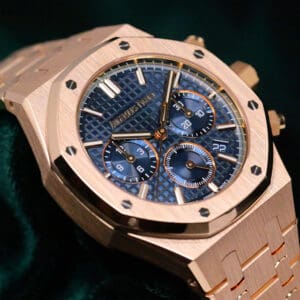
Audemars Piguet Royal Oak Selfwinding Chronograph Bleu Nuit Nuage 50 Blue Dial Bracelet 18k Rose Gold 38mm MINT CONDITION COMPLETE SET 26715OR.OO.1356OR.01
$104,942.00
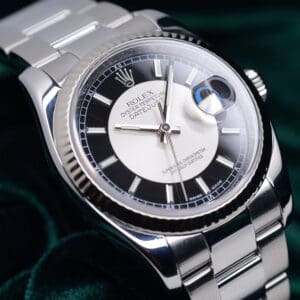
Rolex Datejust “Tuxedo” Black and Silver Dial 18K White Gold Fluted Bezel Stainless Steel Oyster 36mm MINT CONDITION COMPLETE SET 116234
$10,671.00
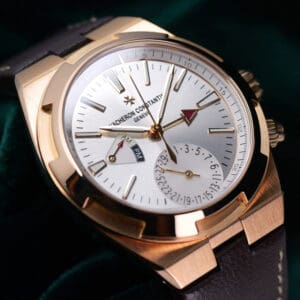
Vacheron Constantin Overseas Dual Time Silver Dial Brown Leather Strap 18K Rose Gold 41mm MINT CONDITION COMPLETE SET 7900V/000R-B336
$41,894.00
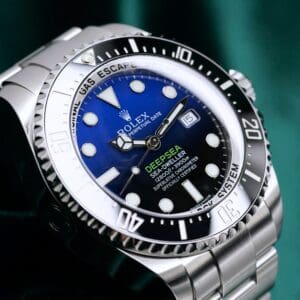
Rolex Sea-Dweller Deepsea James Cameron D-Blue Dial Black Ceramic Bezel Oyster Bracelet Stainless Steel 44mm MINT CONDITION 116660-0003
$14,272.00
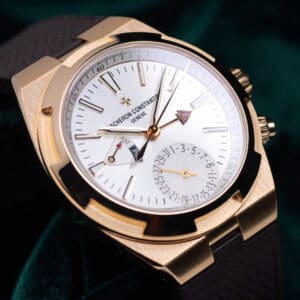
Vacheron Constantin Overseas Dual Time Silver Dial 18K Rose Gold Brown Rubber Strap 41mm MINT CONDITION COMPLETE SET 7900V/000R-B336
$41,894.00
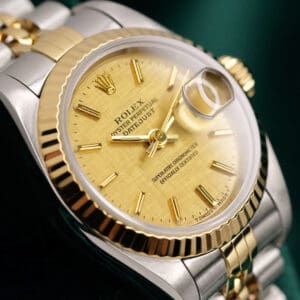
Rolex Lady-Datejust Champagne Linen Dial 18k Yellow Gold Fluted Bezel Jubilee Bracelet Two Tone Steel & Gold 26mm MINT CONDITION COMPLETE SET 69173
$9,345.00
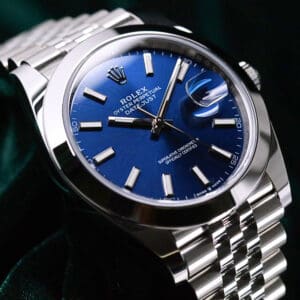
2026 Rolex Datejust Blue Dial Smooth Bezel Jubilee Bracelet Stainless Steel 41mm MINT CONDITION COMPLETE SET 126300
$13,796.00
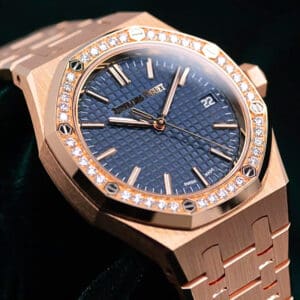
Audemars Piguet Royal Oak Selfwinding "50th Anniversary" Bleu Nuit Nuage 50 Blue Dial Diamond Bezel 18K Rose Gold 37mm MINT CONDITION COMPLETE SET 15551OR.ZZ.1356OR.02
$99,745.00

Audemars Piguet Royal Oak Offshore Chronograph "Havana" Brown Dial Blue Subdials Brown Leather Strap Stainless Steel 42mm MINT CONDITION COMPLETE SET 26470ST.OO.A099CR.01
$24,827.00
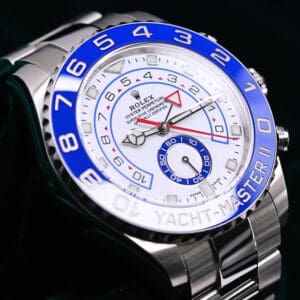
Rolex Yacht-Master II White Dial Blue Ceramic Bezel Oyster Bracelet Stainless Steel 44mm MINT CONDITION COMPLETE SET 116680
$19,409.00
Final Thoughts on Best Guilloché Dial Watches
The best guilloché dial watches reward the buyer who understands how a dial is made and what that craft is worth. Hand-cut work from Breguet, Parmigiani, Andersen, Shapiro, and Voutilainen buys you a skill with a shrinking pool of practitioners, which is the real reason to own one now.
Before you buy, judge the pattern at arm’s length as well as under a loupe, since that is how you will see it day to day. And a single clean pattern often ages better on the wrist than three busy ones competing for attention. Send us your shortlist when you are ready.