A single scratch can ruin the look of a luxury watch you’ve invested in. Every day wear exposes your timepiece to bumps, friction, and surfaces that leave marks. Protecting your watch preserves its value, keeps it working smoothly, and helps it last for years.
- Explore more: Watch Guides
In this guide, we’ll share 9 practical tips you can use every day to keep your watch looking and performing its best. Simple, clear, and easy to follow.
1. Understand Your Watch Materials
Knowing what your watch is made of is the first step to keeping it scratch-free. Different materials react differently to everyday wear, so understanding your watch helps you protect it properly.
Material | Scratch Resistance | Care Tips |
Sapphire Crystal | Very high; resists scratches | Avoid hard impacts that could crack it |
Stainless Steel | Moderate; resists minor scratches | Wipe regularly and store separately to prevent scuffs |
Gold & Platinum | Low; scratches easily | Handle carefully, avoid rough surfaces |
Ceramic | Very high; resists scratches | Avoid dropping or hard impacts |
Leather Straps | Low; prone to scuffs and wear | Keep dry, avoid friction, and condition periodically |
Knowing your watch’s materials allows you to tailor your care routine. For example, a gold case needs more cautious handling than stainless steel, and leather straps require gentle cleaning and conditioning. Start here, and the rest of the tips will be easier to follow.
2. Be Mindful of Your Daily Activities
Scratches often happen during everyday tasks, sometimes without you even noticing. Sports and physical activities like exercise, gardening, or DIY projects can easily cause bumps, so it’s best to remove your watch during these times. Even routine activities like cooking or cleaning pose risks, as pots, pans, and cleaning tools can scratch the case or crystal.
In the office or at home, desks, keyboards, and metal furniture edges can also leave marks. Make it a habit to assess your environment before putting on your watch—if there’s a chance of impact or friction, removing it temporarily is the simplest way to protect your timepiece.
3. Store Your Watch Properly
Leaving a watch loose on a table, drawer, or countertop exposes it to bumps, friction, and contact with other objects that can damage the case or crystal. Even minor accidents, like keys or pens brushing against the watch, can leave noticeable marks over time.
The best way to store your watch is in a dedicated watch box with individual padded compartments. If you own multiple watches, make sure each watch has its own slot to prevent them from rubbing against one another.
- Related: How to Store Your Rolex Safely
Soft pouches or cloth-lined drawers can also work, but avoid stacking watches or placing them in areas where they might slide or bump into hard surfaces. For leather straps, make sure that the strap is laid flat or gently coiled, as folding tightly can create creases and weaken the leather.
4. Avoid Contact with Hard Surfaces
Even minor knocks against hard surfaces can leave scratches on your watch’s case, bezel, or crystal. Common culprits include desks, countertops, door frames, metal furniture, and even car interiors. These everyday bumps may seem harmless, but over time, they can accumulate and noticeably damage your watch.
To minimize risk, develop simple habits like placing your watch face-up on soft surfaces whenever you set it down. Be extra careful when reaching across tables or countertops, and avoid sliding your wrist against walls, metal railings, or rough surfaces.
5. Regularly Clean Your Watch
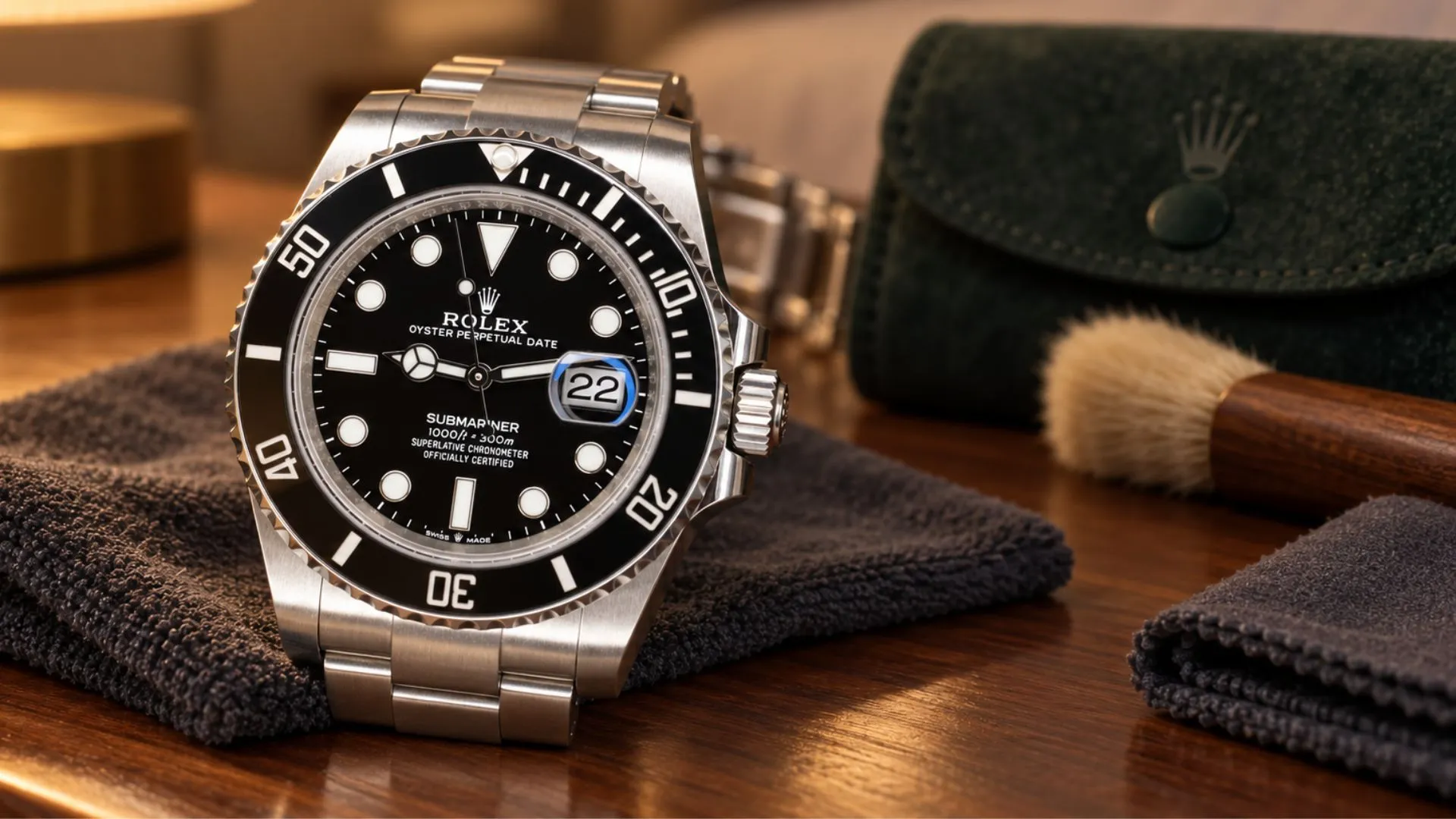
Dirt, dust, and oils from your skin can accumulate on your watch and, over time, contribute to scratches. Regular cleaning helps maintain both its appearance and functionality. Use a soft microfiber cloth to gently wipe the case and crystal, removing smudges and debris. For more thorough cleaning, a soft brush can reach small crevices, especially around the crown, bezel, and bracelet links.
Avoid harsh chemicals or regular soaps, as they can seep into tiny openings and damage the watch’s finish or movement. For metal bracelets, a damp cloth with mild, watch-safe cleaning solution works well, while leather straps benefit from occasional conditioning to prevent drying and cracking.
- Learn more about best practices for luxury watch cleaning
6. Consider Using a Watch Winder (for Automatics)
Automatic watches rely on wrist movement to stay wound, which means more handling and a higher risk of scratches. A watch winder keeps your watch running when not worn, reducing daily handling and accidental bumps.
Choose a winder with soft, snug holders and gentle rotation. Avoid cheap winders with hard mounts or excessive speed, which can damage the crown or case. Using a quality winder protects your watch’s finish while keeping its movement accurate and well-lubricated.
7. Use a Strap or Bracelet That Fits Properly
A watch that is too loose or too tight increases the risk of scratches. Loose bracelets can slide against your wrist or objects, causing friction and scuffs on the case or crystal. Tight straps, on the other hand, can create pressure points that leave marks or damage the leather over time.
For metal bracelets, ensure the links are adjusted so the watch sits comfortably without sliding. Leather straps should fit snugly but allow some movement to avoid creasing or wear. Rubber or silicone straps should also be properly sized to prevent rubbing against the case.
8. Avoid Exposure to Abrasive Environments
A single grain of sand can scratch sapphire crystal, stainless steel, or gold if it gets trapped under a bracelet or between the case and surface. Saltwater, sweat, and dust can also accelerate wear and cause micro-scratches, especially on softer metals like gold or plated finishes.
To protect your watch, remove it during activities involving sand, gravel, or construction work. For beach or outdoor exposure, use a protective cover or sleeve, and always rinse and dry your watch if it comes into contact with saltwater or dust. Even small precautions, like wiping off particles immediately, help preserve both the finish and long-term value of your luxury timepiece.
9. Consider Installing a Watch Protector Film
A watch protector film is a thin, nearly invisible layer that covers your watch’s crystal and sometimes the bezel. It prevents scratches from everyday contact, such as brushing against bags, jewelry, or surfaces with small particles.
Many brands and models have compatible films that can be purchased online, often offering extra benefits like anti-reflective coating or water resistance. Some films are designed to be ultra-thin, preserving the original look and feel of your watch.
Using a protector film can reduce the need for frequent polishing or professional servicing. It’s a simple, low-maintenance way to maintain the pristine appearance and long-term value of your timepiece.
Maintaining Your Watch’s Beauty and Value
Your watch deserves careful attention every day. Be aware of how you handle it, where you set it down, and the movements of your wrist that might cause friction or bumps.
Small moments of mindfulness go a long way. Pay attention to the surfaces around you, the environment you’re in, and how often you touch your watch. Treat it thoughtfully, and it will stay looking sharp, work reliably, and hold its value for years.
Want your watch to last? Read more expert tips in our blogs.